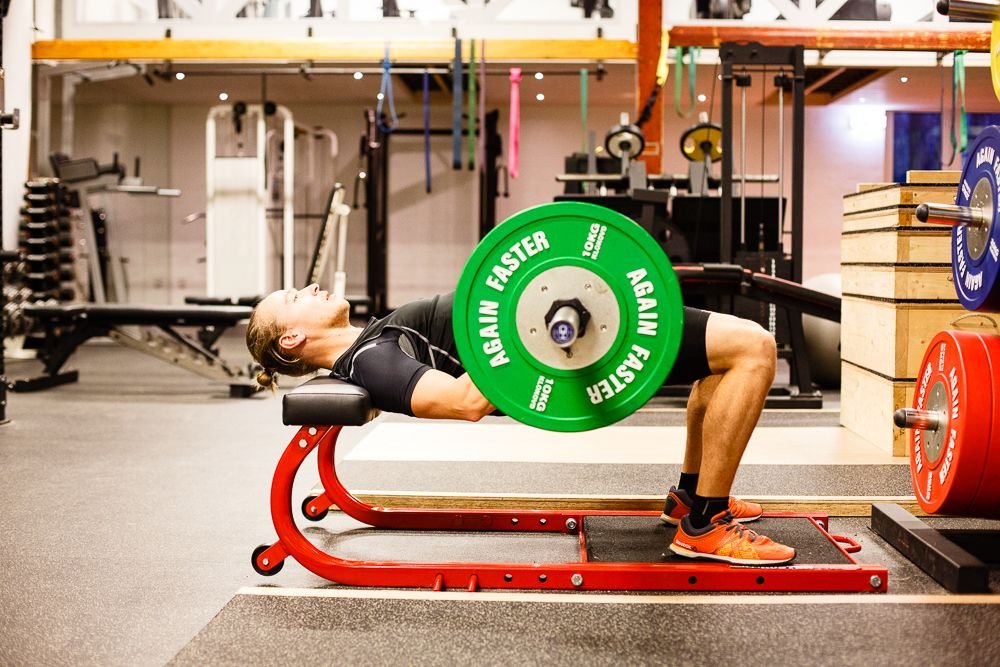
Two hip-extension exercises that are not interchangeable
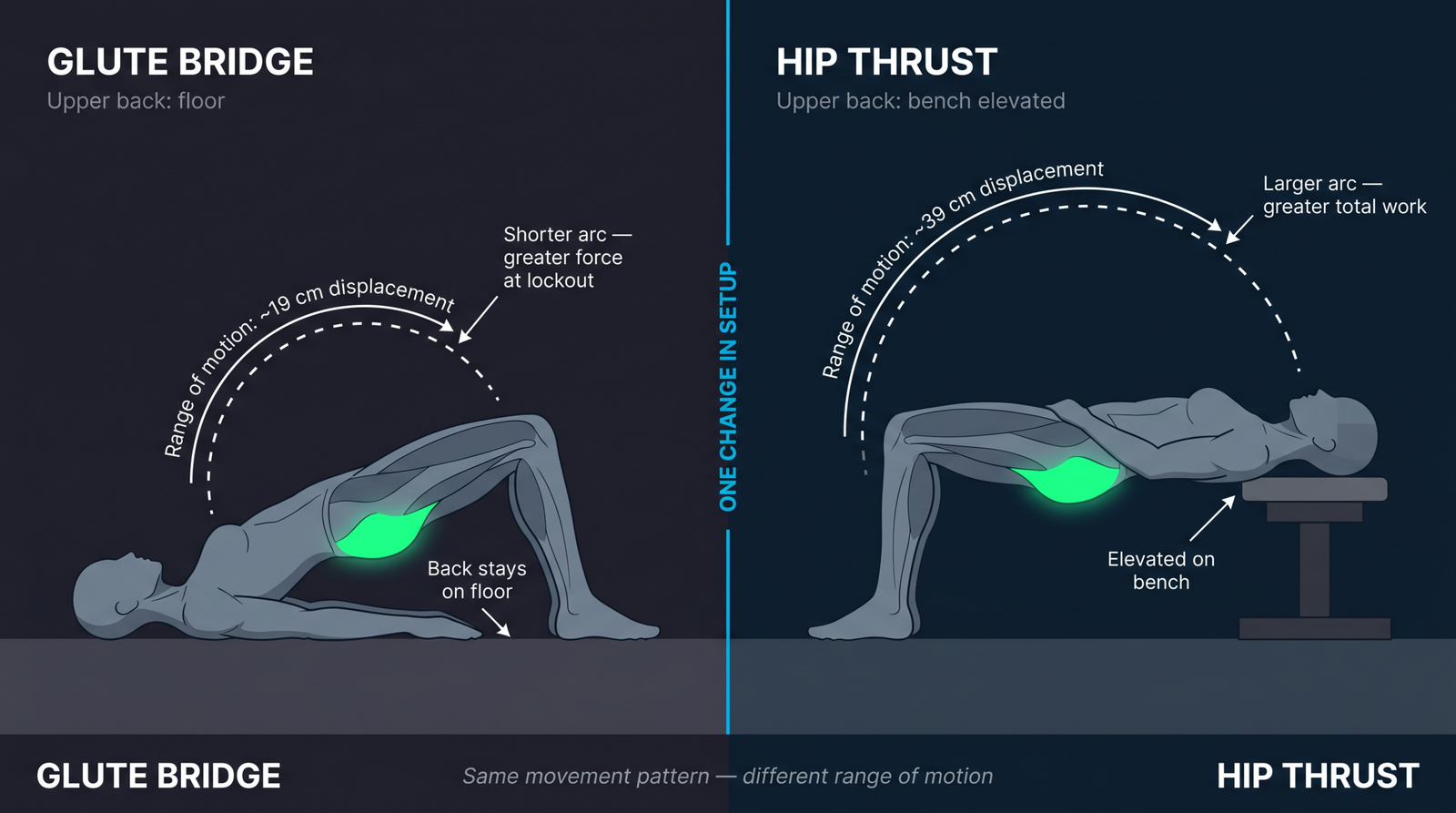
Barbell hip thrusts and floor glute bridges share one essential action: the glutes extend the hips against resistance. The difference is where the upper back rests. A hip thrust uses a bench, which allows the pelvis to travel through a relatively large arc. In a floor bridge the shoulders stay on the ground, reducing the travel and concentrating more of the movement close to lockout.
That difference changes the feel of the lift. A bench-supported thrust lets the hips start from a more flexed position and move farther before reaching full extension. A bridge can make the top position particularly demanding without requiring a long path. Neither feature automatically wins a muscle-growth contest. The useful question is whether the exercise lets you apply enough tension, progress the resistance and recover for your next session.
Equipment matters, especially in a compact home gym. A sturdy bench, barbell, plates and a protective pad make heavier thrusts practical. The floor bridge can begin with a dumbbell or a single plate and needs almost no setup space. If the gym is busy or the bench slides, the bridge may be the smarter choice that day.
Both lifts can complement squats, deadlifts and unilateral leg training. They should not replace every other lower-body pattern. The goal is to strengthen hip extension while maintaining stable feet, controlled ribs and a repeatable range of motion. Choose the movement you can train well, not the one that looks more impressive on a social-media clip.
What ten trained men revealed about range and force
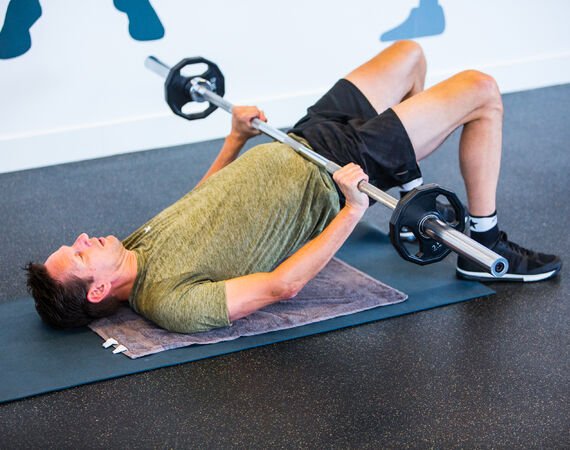
A 2024 biomechanics comparison tested ten resistance-trained men. Each performed three repetitions of the barbell hip thrust and barbell glute bridge in randomized order, using a load set at 80% of their hip-thrust one-repetition maximum. Researchers measured movement distance, concentric duration and impulse. This was a short mechanical experiment, not a long-term hypertrophy study.
| Measurement | Hip thrust | Glute bridge |
|---|---|---|
| Vertical displacement | 35.65 cm | 15.45 cm |
| Concentric time | 0.80 s | 0.58 s |
| Vertical positive impulse | 1,315 N s | 941 N s |
The thrust moved the load more than twice as far vertically and took longer during the upward phase. It also produced greater vertical impulse, which reflects force accumulated over time. That does not mean twice the hypertrophy stimulus, and it does not establish which lift will build more muscle after months of training. The bridge’s shorter arc may permit force to be emphasized near full hip extension.
The design has an important limitation: the external load was based on the hip-thrust maximum rather than an independent maximum for each movement. Equal kilograms do not necessarily create equal difficulty across different exercises. With only ten trained men and three repetitions per condition, these results are best treated as a description of mechanics, not a universal training prescription.
The practical takeaway is useful nonetheless. Use hip thrusts when you want to load hip extension through a larger path. Use bridges when you want a simple setup and a controlled lockout-focused movement. Judge your own sets by technique, effort and progression instead of reading too much into a single laboratory measurement.

Equipment Worth Exploring
Explore equipment, accessories and gear from our carefully selected range.


FID Bench MAX
Adjustable bench offering flat, incline, and decline positions + adjustable headrest.




EMG findings do not crown a hypertrophy winner
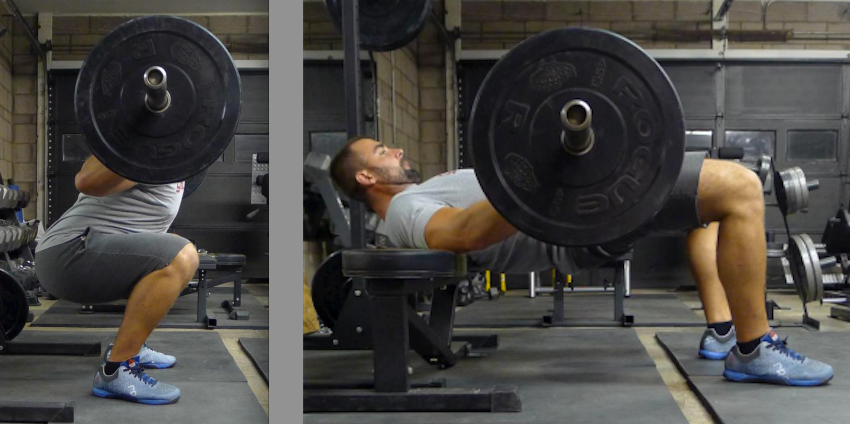
A separate ten-man experiment compared muscle electrical activity during the two barbell exercises. The glute bridge showed greater measured activity in several upper and lower gluteus maximus outcomes, while the hip thrust showed greater activity in the vastus lateralis. That is a useful counterpoint to the assumption that a bigger range of motion always creates the biggest activation reading.
But electromyography is not a direct measurement of muscle growth. Electrode placement, individual technique, muscle length, exercise familiarity and effort can influence the signal. A high reading in one set cannot tell us how much tissue a lifter will add over twelve weeks. Volume, proximity to failure, progressive overload, food intake and sleep remain essential.
Another nine-week supervised trial assigned 34 previously untrained adults to back-squat or hip-thrust training. MRI measurements found broadly similar glute growth across the two groups. Squats produced greater thigh gains, while strength increases were most pronounced in the exercise each group practiced. This is not a direct hip-thrust-versus-bridge trial, but it shows why acute activation should not be confused with long-term adaptation.
There is no decisive long-term evidence establishing that a properly loaded hip thrust is always superior to a properly loaded bridge for hypertrophy, or the reverse. Lifters also vary in limb lengths, hip comfort, available equipment and the loads they can control. Those differences are more useful for exercise selection than a one-size-fits-all ranking.
For bodybuilding, pick one main hip-extension lift, perform enough challenging sets and keep your movement standardized. If you enjoy both, put the heavier thrust earlier in the week and the bridge later as an accessory. Continue to train quads and hamstrings through squats, hinges and leg curls rather than expecting either glute lift to cover the entire lower body.

Leg Day Shirts & Workout Gear
Leg-day gym shirts and workout gear for lifters who never skip squats, lunges and lower-body punishment.

I Only Do Butt Stuff At The Meme Glute Lovers, Hip T-Shirt
Heavy lifts, good laughs, and a little “I Only Do Butt Stuff At” energy.

OnlyGains Only Gains Meme – Booty & Leg Day Squats, T-Shirt
Show some leg-day attitude with a playful “OnlyGains Only Gains” tee.

Hippo Thrust Meme Leg Day Booty Workouts & Glute Tank Top
Add some leg-day attitude to training with “Hippo Thrust Gym Meme”.

Let It Grow Booty Builder Hip Thrust Meme Athletic Tank Top
Your gym-day look, with a playful “Let It Grow” twist.

Never Skip Leg Day Flamingo – Fitness Meme Pullover Jum T-Shirt
Keep things casual with a little “Never Skip Leg Day Flamingo” attitude.

Leg Day Gains | LEGO Inspired Workout For Squat & Deadl Hoodie
Stay casual and show some leg-day attitude with “Leg Day Gains”.

I Love Squats | Valentine's Leg Day Decal & Bodybuildin Sticker
Put “I Love Squats” gym humor on your laptop, bottle, or gym gear.

Viking Deadlift Gym | Funny Leg Day Workout Vest & Musc Tank Top
Show some personality between sets with “Viking Deadlift”.

Santa Quads Is Coming To Town Gym | Funny Fitmas Leg Da Sticker
Stick a little “Santa Quads Is Coming To Town” humor on your favorite gear.

Leg Day Metallica Tee
Rep “Leg Day The Day That Never Comes Metallica” humor in and out of the gym.
Barbell hip thrust form: load the hips, not the low back
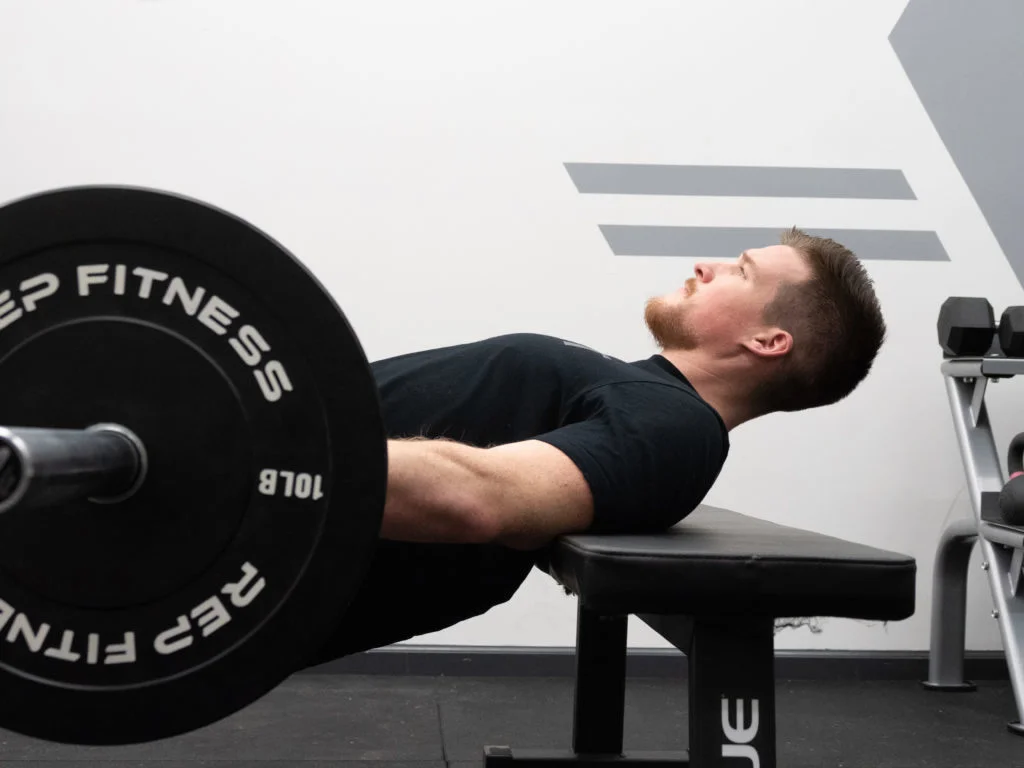
Place a bench against a stable surface so it cannot slide or tip. Sit on the floor with the lower portion of your shoulder blades against the bench edge. Roll a padded barbell across your thighs until it rests securely in the hip crease. Plant your feet approximately hip-to-shoulder width apart, then adjust until your shins are near vertical at the top. That is a starting cue, not a mandatory angle for every body type.
Brace the abdomen and drive through the whole foot. Raise the hips until the torso and thighs form a controlled line. Keep the ribs stacked above the pelvis and finish through hip extension rather than excessive lumbar arching. Lower the weight under control without bouncing the plates or losing upper-back contact. If you cannot reach a consistent top position, reduce the load.
Begin with two light sets of eight to rehearse the movement. Working sets can use three or four sets of six to twelve reps, generally finishing with one to three good reps in reserve. A short pause at the top helps expose sloppy lockouts, but there is no need to turn every repetition into a maximal isometric hold. Use the same tempo when comparing sessions.
Common errors include setting the feet so far away that the hamstrings dominate, allowing the knees to collapse inward, sliding up the bench and loading so heavily that every rep becomes a tiny shrug. Adjust one variable at a time. A thick bar pad can make heavy loading more comfortable, but it should not hide poor bar placement or painful pressure on the pelvis.
For a home gym, leave enough room around the plates and rack uprights. Secure the bench, test your setup with an empty bar and ensure you can remove the load safely after the final set. Heavy training is only productive when the equipment remains stable.
Turn the floor glute bridge into a real working set
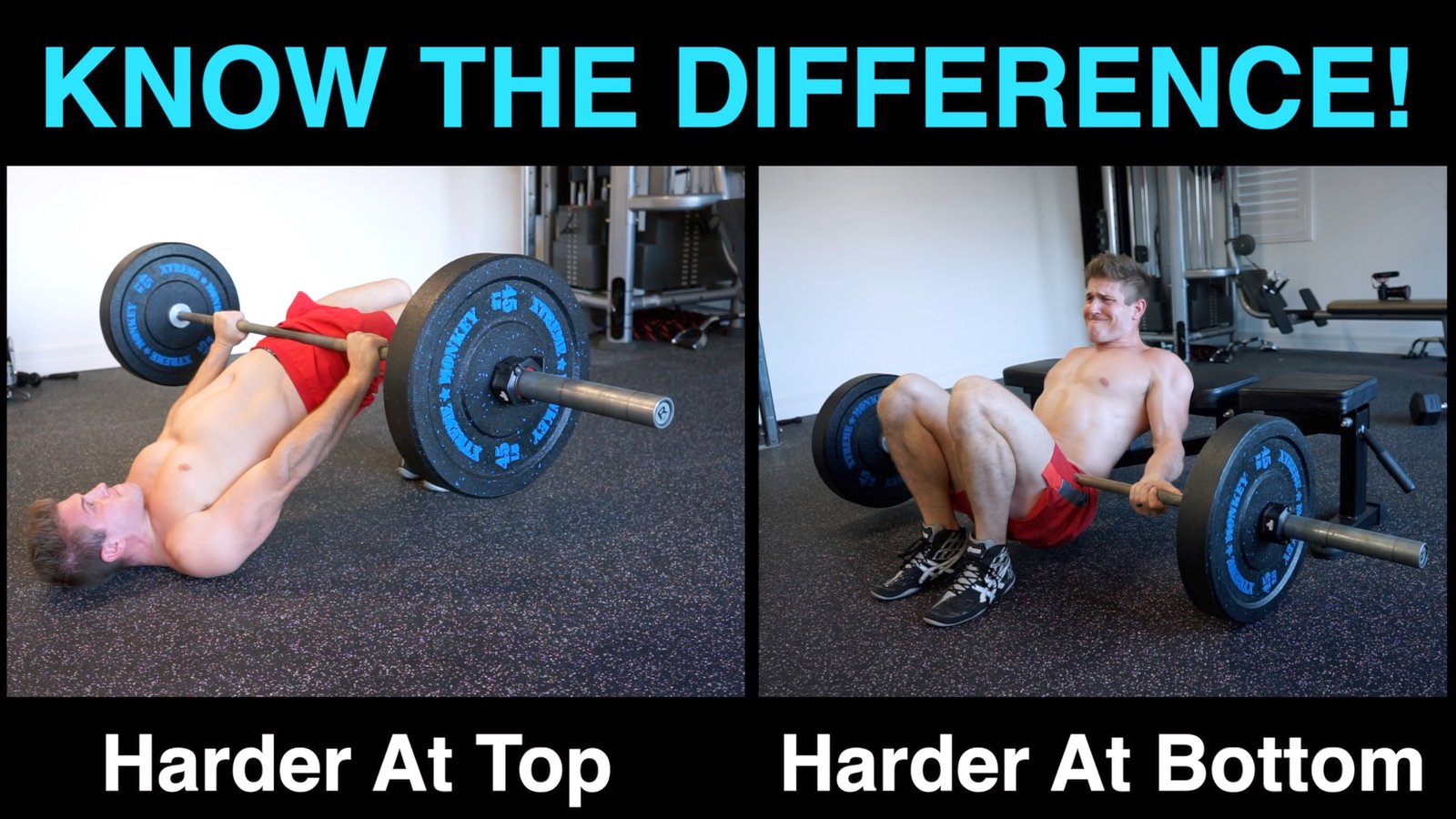
The floor bridge is often treated as a warm-up because bodyweight repetitions become easy for many experienced lifters. That is a loading issue, not proof that the exercise has no value. Lie on your back, bend the knees, plant the feet and place a padded barbell, dumbbell or plate across the hips. Brace the trunk before raising the pelvis and finish with the hips extended but the lower back controlled.
Because the shoulders stay on the ground, the bridge travels through a shorter arc. Make that range honest. Hold the top briefly, lower without dropping the hips and avoid bouncing off the floor to manufacture extra reps. If the hamstrings cramp, try bringing the feet slightly closer and reduce the load while learning the pattern. Keep the knees aligned with the feet.
Progress from bodyweight to a dumbbell or kettlebell, then a barbell when you can position it safely. A single-leg variation can challenge balance and pelvic control, but it may become limited by rotation before the glutes receive a productive stimulus. A stable two-leg bridge with meaningful resistance is often the more measurable option.
For accessory hypertrophy work, use two to four sets of eight to fifteen controlled repetitions. As a warm-up, one or two easier sets of ten to twenty can rehearse hip extension before squats or deadlifts. Do not turn the warm-up into a fatigue test if heavy compound lifts are coming next.
When you can reach the top of the target rep range on every set with clean form and several reps still available, add resistance. If a load jump forces you to shorten the range, keep the previous weight and improve the execution. Consistent progress beats chasing a number on the bar at any cost.
Equipment Worth Exploring
Explore equipment, accessories and gear from our carefully selected range.
VOLTRA
Compact digital cable trainer with smooth, adjustable resistance.

Go-Tone Pro
Portable digital cable trainer with up to 66 lb (30 kg) of adjustable resistance.

Squat Harness
Wearable harness for hands-free cable squats, sled work, and lower-body training.

Belt Squat Collar
Heavy-duty collar adapter for compatible belt-squat and landmine bar setups.


GymPin D Cuffs
Adjustable wrist cuffs with textured grips for supported cable-machine exercises.


Equipment and loading options for a small home gym
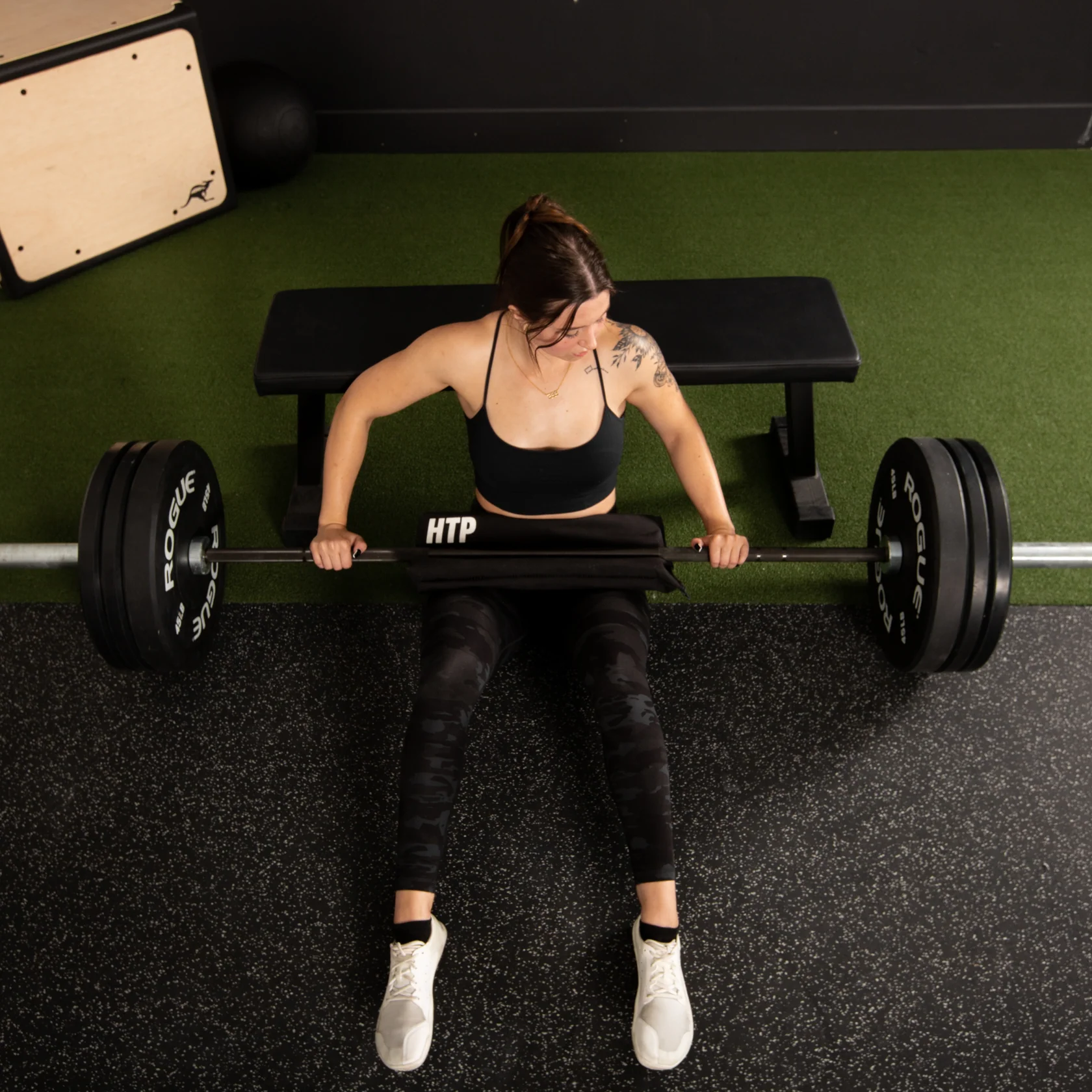
You do not need a dedicated glute-drive machine to train hip extension effectively. A sturdy bench, a barbell, plates and a well-fitted hip pad are enough for most lifters. Prioritize bench stability over appearance: a bench that shifts during the drive is not suitable for heavy thrusts. Adjustable benches can work if their mechanisms lock firmly and the support surface suits your height.
For floor bridges, a single dumbbell or kettlebell may provide plenty of resistance before you need a barbell. If small plates leave insufficient clearance to roll the bar over your legs, use a safer loading approach instead of forcing the bar into position. Always keep the load secure across the pelvis rather than balancing it precariously.
Cable machines and compact digital resistance units can offer alternatives when floor space is limited. However, cable angle, anchoring and the direction of resistance change the feel of the exercise. Test the movement at light resistance before loading it heavily. A cable hip extension is not automatically identical to a barbell hip thrust simply because both use the glutes.
Commercial glute-drive machines can simplify setup and allow heavy training without balancing a barbell, but their fixed geometry does not suit everyone. A good machine permits a comfortable hip path, stable foot position and progressive loading. A bad fit is not improved by adding more plates.
For a compact home gym, the most versatile combination is often an adjustable bench, a few useful free weights and a floor mat. The same equipment supports rows, presses, split squats, Romanian deadlifts and many other exercises. Buy equipment that earns its space across your whole program rather than purchasing a single-purpose machine solely for one movement.
Powerlifting Shirts & Lifting Gear
Powerlifting shirts and gym gear for squat, bench and deadlift lifters who live for heavy numbers.

Squat Bench Deads Shirt – Gains & Meme Top T-Shirt
Bring “Squat Bench Deads” humor to your next gym day.

8 Plates Squat Club : Essential Meme & T-Shirt
Make gym days more fun with “8 Plates Squat Club” style.

Quadzilla Massive Quads Sweater Leg Day Squatting T-Shirt
Keep things casual with a little “Quadzilla” attitude.

The Walking Deadlift | Zombie Workout For Leg Day & Pow Hoodie
Make your off-duty look more fun with “The Walking Deadlift”.

Deadlift Snake Skull – Hardcore Powerlifting Muscle Shi Tank Top
Bring “Deadlift Snake Skull” humor to your next lifting session.

PR or ER – Horror Powerlifting Gym Decal for Deadlift F Sticker
Give your everyday gear a playful “PR or ER” twist.

Heavy Metal Skeleton Squat for Powerlifting, Bodybuildi Tank Top
Bring “Heavy Metal Skeleton Squat” humor to your next lifting session.


Powerlift Deadlifts Tee
Show some metalhead attitude with a playful “Powerlift Deadlifts” tee.

I Can’t Get No Squat-isfaction Rolling Stones Leg Day — T-Shirt
For laid-back days and rock-and-lifting humor: “I Can’t Get No Squat-isfaction Rolling”.
A six-week plan with two glute-focused sessions
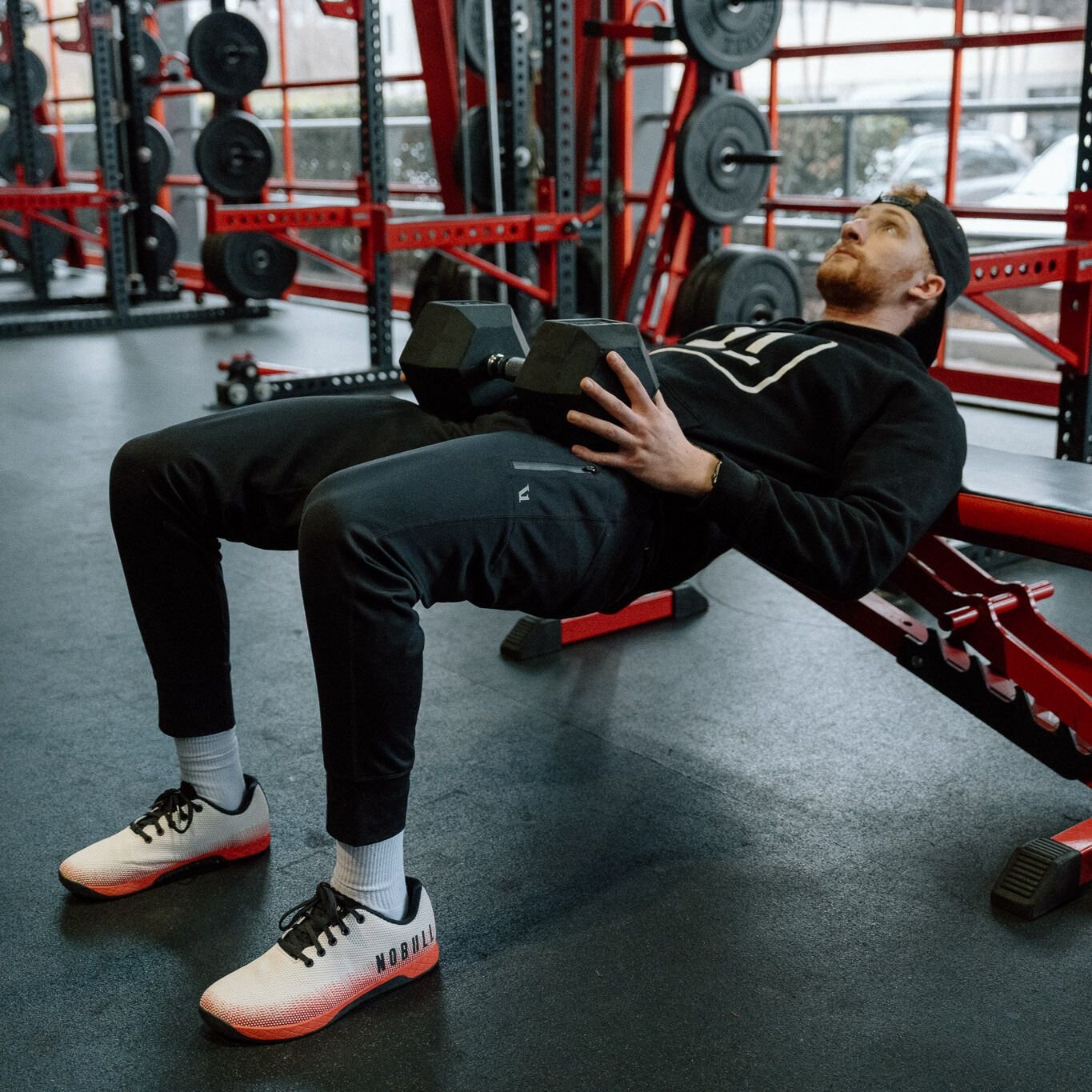
Train hip extension twice weekly with at least two days between sessions. Day A emphasizes a heavier bench-supported thrust; Day B uses the floor bridge as a controlled accessory. This is a practical arrangement, not a claim that both movements must be combined to grow. If you only have one available, train it consistently and progress it.
| Weeks | Day A: hip thrust | Day B: glute bridge | Priority |
|---|---|---|---|
| 1-2 | 3 x 8-10 | 3 x 12-15 | Stable form and full range |
| 3-4 | 4 x 6-8 | 3 x 10-12 | Gradual load increases |
| 5 | 4 x 6-8 | 4 x 8-12 | Challenging clean sets |
| 6 | 2 x 8-10 | 2 x 12-15 | Lower fatigue and review |
On Day A, follow hip thrusts with three sets of Romanian deadlifts for six to ten reps and two or three sets of a squat variation. On Day B, start with the bridge, then perform three sets of split squats and two sets of hamstring curls or hip-abduction work. Keep the rest of your lower-body training balanced. Glute emphasis should not become an excuse to neglect quads, hamstrings or calves.
Begin with about two or three reps in reserve. When every set reaches the top of its rep range with the same technique, increase resistance by the smallest practical increment. Rest two to three minutes between heavy thrust sets and around one to two minutes on moderate bridge sets. Keep your foot position and range consistent so that progress can be compared fairly.
Log load, repetitions, perceived effort and whether the top position remained controlled. A heavier set with half the range is not automatically an improvement. If you experience sharp hip, back or pelvic pain, stop and adjust the setup; persistent symptoms deserve professional assessment.
After six weeks, judge the program by repeatable reps, improved loads at the same range and how the work fits around squats and hinges. The ten-lifter biomechanics test helps explain why the exercises feel different. Your own consistent training log tells you whether your chosen progression is working.