Advertising disclosure: This page includes affiliate product links that may earn us a commission, as well as products from our own store.
A cable reverse fly looks simple: take two handles, open the arms, repeat. Yet the same weight can feel like a controlled rear-delt exercise one minute and a shrugging, twisting struggle the next. The difference is usually not a secret grip or a special machine. It is the relationship between pulley height, body position, the working elbow and how far you try to pull.
Rear delts deserve specific work because rows and pulldowns do not necessarily challenge them through the same movement. The cable version gives you a useful way to practice moving the upper arms out to the sides while keeping the load modest. It is not an obligatory exercise, and no single variation automatically guarantees bigger shoulders. The goal is to make the stimulus repeatable enough to train, measure and progress.
1. Match pulley height to the arm path you actually want
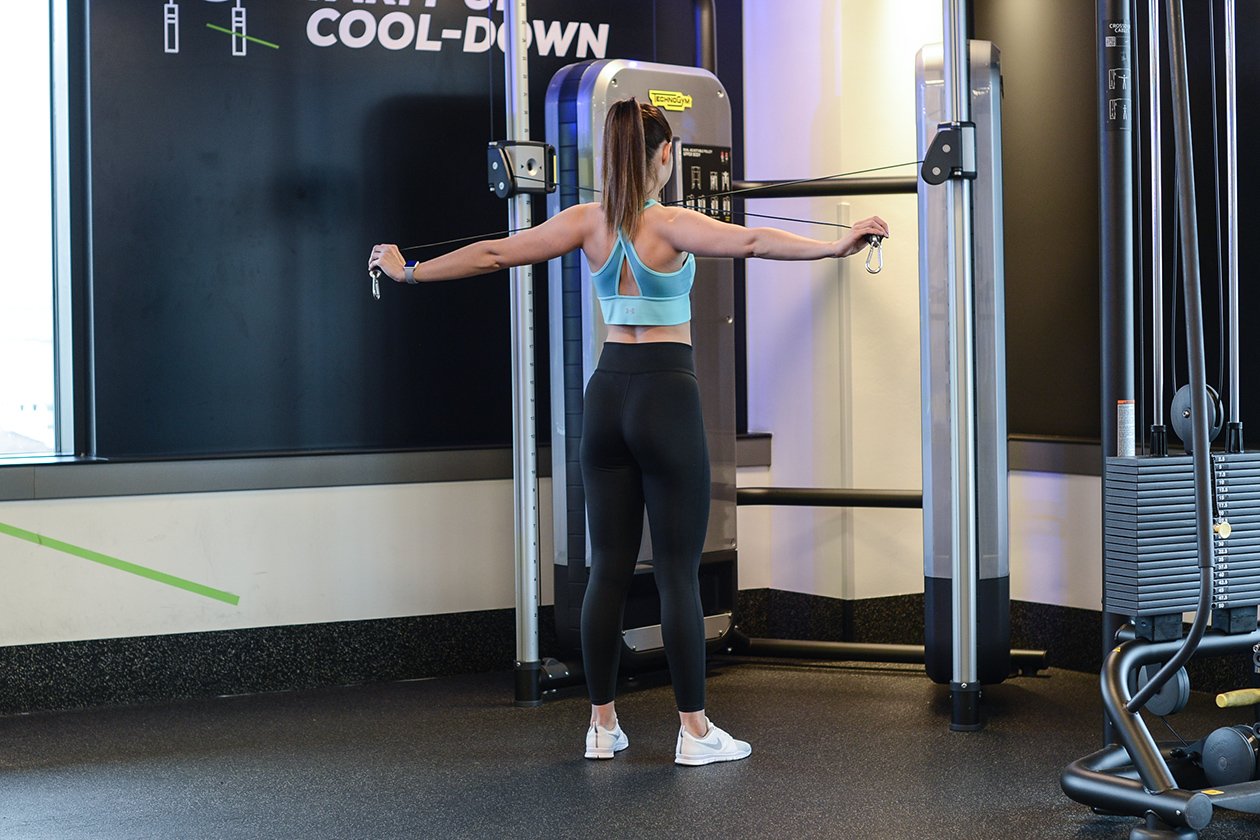
Start at a dual adjustable cable station. Set both pulleys at roughly shoulder height, or just below it, with a single D-handle attached to each side. With the machine unloaded, check that the handles, carabiners, cables and selector pins are secure. Avoid trying to make an attachment fit a connection for which it was not designed. If the machine provides only one adjustable outlet, the single-arm alternative later in this guide is a legitimate choice rather than a compromise you need to conceal.
Facing the machine, take the left-side handle in your right hand and the right-side handle in your left. The cables cross in front of the body. Move back just enough to create a small amount of starting resistance without lifting the stacks so far that you cannot return them deliberately. Plant the feet comfortably, bend the knees slightly and brace your abdomen. The shoulders can move naturally, but your torso should not rock backward to rescue each repetition.
Shoulder-height pulleys are a sensible reference, not an anatomical law. If the cable rubs your forearm, catches a handle or pulls your hands toward your face, adjust the pulley or your standing position by one notch and test with very light resistance. Make a note of the height you choose. Switching between a low cable, forehead-height cable and midline pulley changes the line of pull, so do not treat these as interchangeable sets just because the weight-stack number is the same.
2. Open the arms without turning the fly into a row
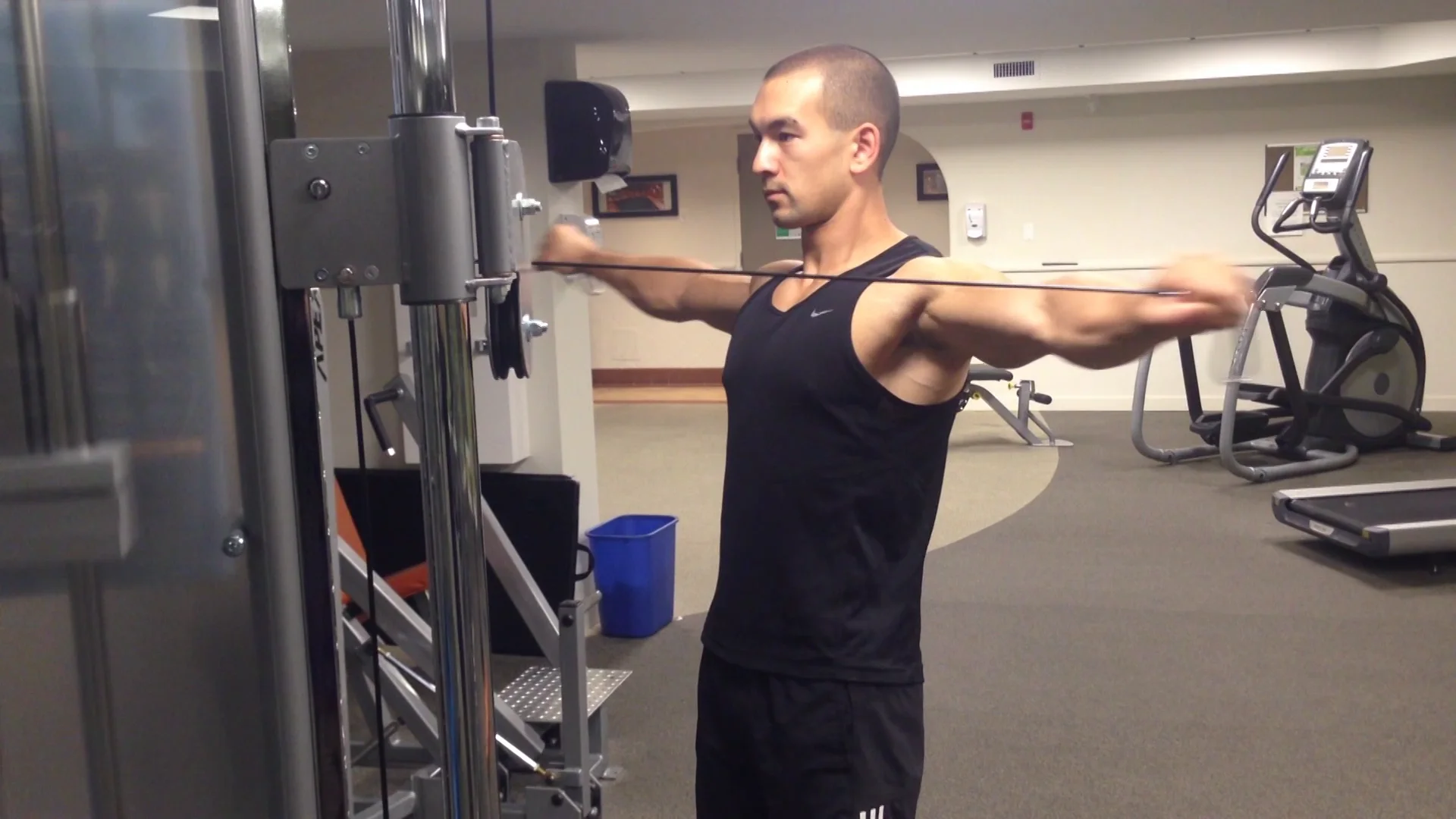
With the handles in front of the chest, create a small, comfortable bend in both elbows. Keep that bend approximately the same throughout the working repetition. From there, open the upper arms outward in a broad arc until they are approximately in line with the torso. Think about separating the elbows rather than flinging the wrists behind your body. The hands follow the motion; they do not need to travel as far behind you as possible.
Pause briefly at an honest end position, then allow the cables to draw the arms forward over roughly two controlled seconds. You should still be able to stop or reverse the movement without losing the standing position. A deliberate return is more valuable than a theatrical squeeze followed by the handles flying back toward the weight stacks. Avoid locking the elbows aggressively and avoid rolling the shoulders forward just to add a few more centimetres of travel.
Three errors reveal that the selected resistance is probably too high: the elbows bend progressively more so the motion resembles a row; the upper traps lift the shoulders toward the ears; or the torso twists and leans backward to get the handles moving. Lower the load and repeat. A slightly shorter, controlled arc is useful. A painful pinch in the shoulder is not a signal to force more range; reduce the range or use a better-tolerated variation.

Equipment Worth Exploring
Explore equipment, accessories and gear from our carefully selected range.

GymPin D Cuffs
Adjustable wrist cuffs with textured grips for supported cable-machine exercises.


GymPin Ergo Handles
Pair of ergonomic cable handles shaped for comfortable triceps and pulling exercises.
VOLTRA
Compact digital cable trainer with smooth, adjustable resistance.

Go-Tone Pro
Portable digital cable trainer with up to 66 lb (30 kg) of adjustable resistance.

VForce Wall Trainer
Space-saving wall-mounted functional trainer with pivoting cable arms and variable resistance ratios.

VForce 2IN1
Half rack and pivot-arm functional trainer with switchable 1:1 and 2:1 pulley ratios.

Pec Fly/Rear Delt PEC-650
Combination machine with adjustable movement limits for chest fly and rear-delt exercises.

VForce Lat Tower
Wall-mounted cable tower with pivot arms and adjustable 1:1 or 2:1 pulley ratios.
3. Choose a stance that makes the rear delts, not momentum, do the work
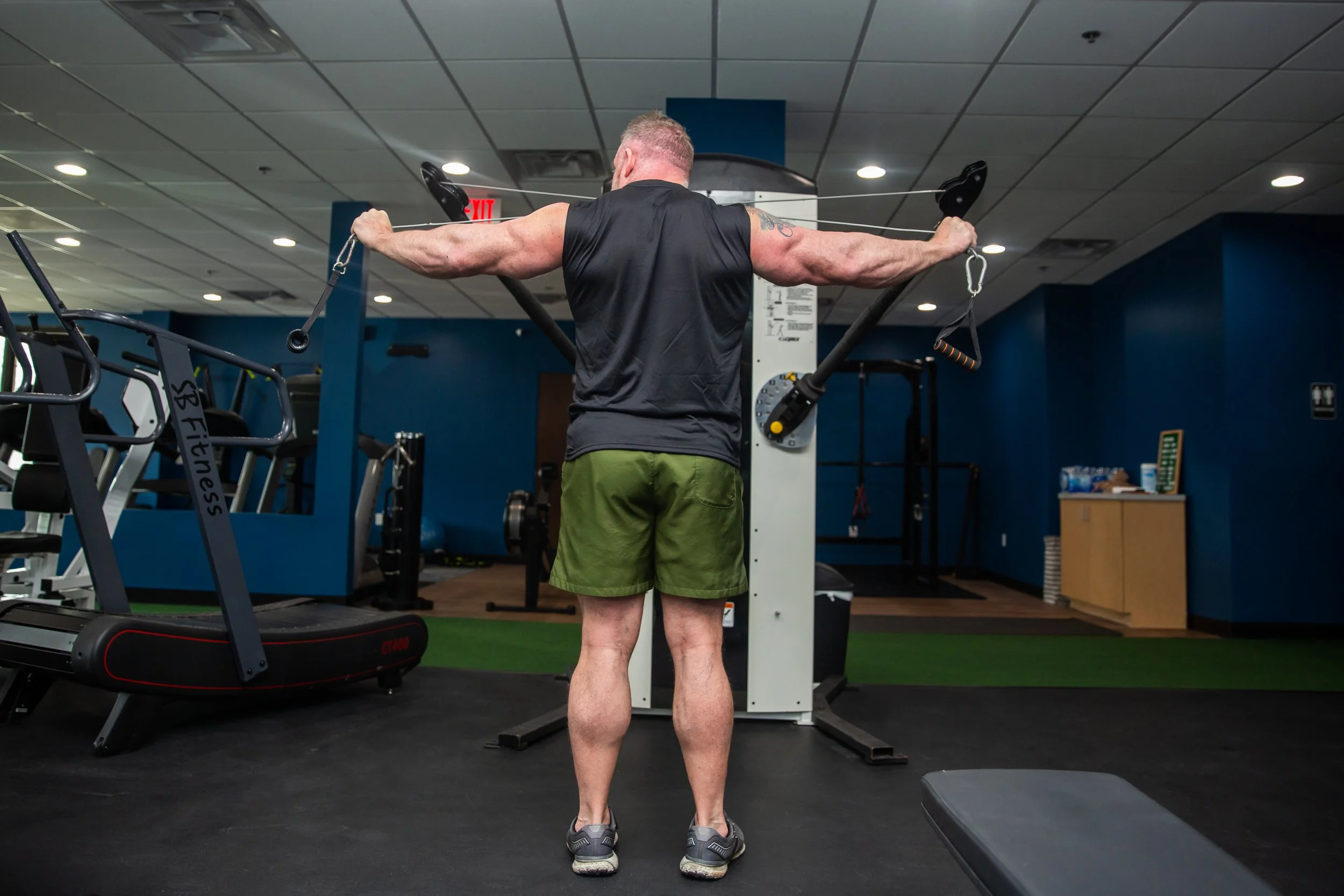
A hip-width or lightly staggered stance both work. Choose the one that lets you move the arms without shifting your weight from heel to toe. Keep ribs stacked over the pelvis and the neck neutral. If you have to throw your head back or arch the low back to finish a rep, reset your position before starting the next one. A bench or support can sometimes make the exercise easier to standardize, but first confirm that the equipment and cable path actually permit the movement.
The pull should be challenging because the shoulder is moving against resistance, not because your body is fighting to remain upright. Cable tension is present along the cable when the stack is engaged, but resistance at the shoulder is not mathematically identical at every angle: the cable’s direction and the distance from its line of action to the joint change through the arc. Claims that cables provide perfectly constant muscular tension throughout the entire movement oversimplify that geometry.
Set your start location by function rather than an exact number of steps. Move close enough that the arms can reach forward without discomfort and far enough that the weights remain selected and the cables do not hit the station. Do a light test set of six repetitions and watch whether your elbows stay level. On a unilateral version, a small torso turn can be tempting; resisting that turn with the trunk is part of keeping the shoulder movement clean, but the point is not to turn a rear-delt exercise into a maximal anti-rotation test.
4. Know what the rear delts share with your upper back
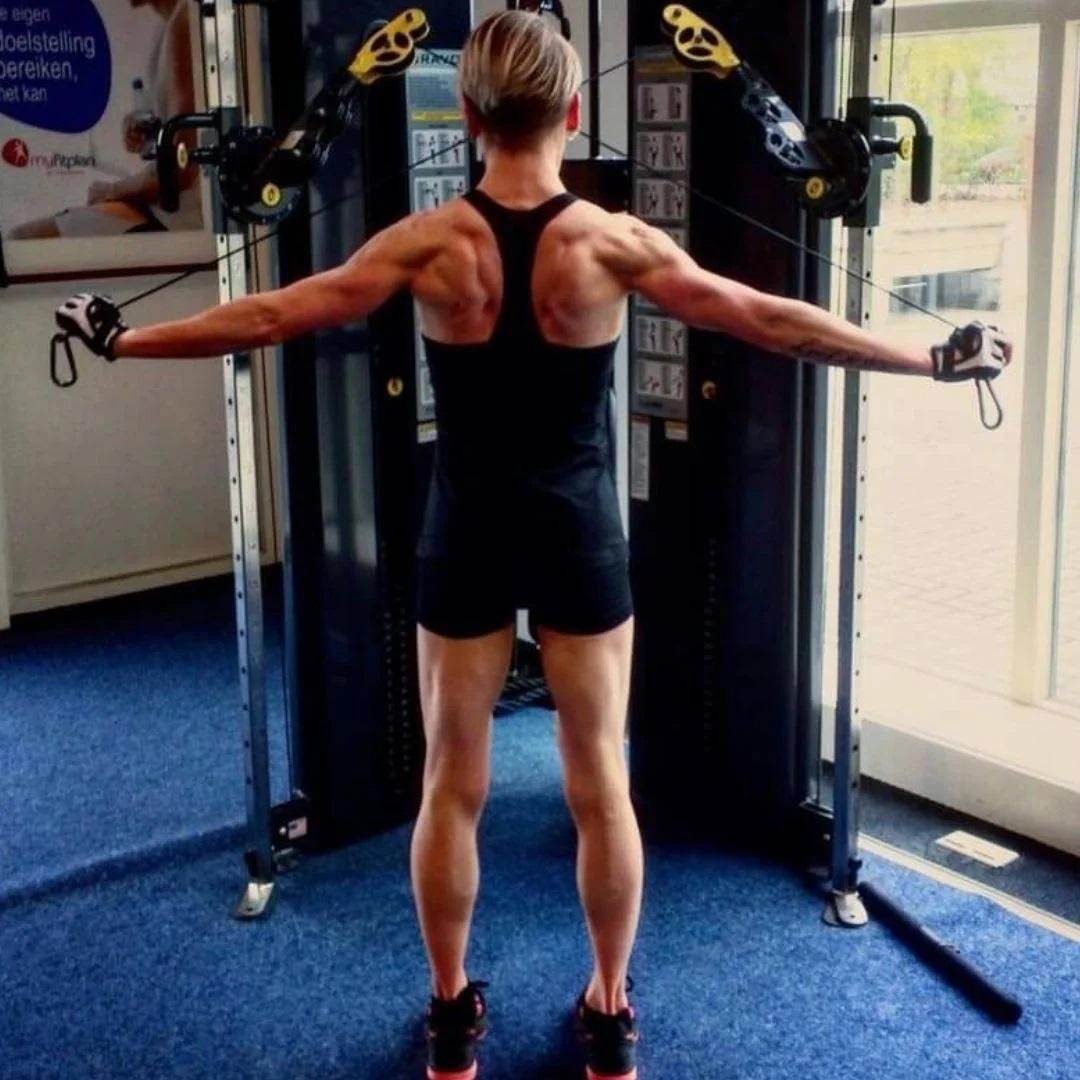
The posterior deltoid helps pull the upper arm away from its position in front of the body. During a reverse fly, the middle trapezius and rhomboids also contribute to scapular movement and control. Small shoulder stabilizers help manage the joint while the arm travels. You cannot completely remove those other muscles by picking a special thumb angle, and you should not try to freeze the shoulder blades in place. Allow coordinated motion rather than excessive shrugging or an exaggerated pinch on every rep.
Grip choices are often marketed as though one orientation isolates a single muscle. Acute muscle-activation measurements have found differences between hand orientations during reverse-fly-machine tests, including greater activity of some posterior-shoulder muscles with a neutral rather than pronated grip. That is interesting but limited: one machine experiment does not establish that a cable-handle variation will build more muscle months later. The equipment, movement path and long-term adaptation are not the same thing.
Use the handle orientation that lets the wrist remain comfortable and the elbow track consistently. You can use individual handles, a supported cuff system that is explicitly compatible with your cable station, or an appropriate single-arm setup. Never bypass a machine’s safety connector or grip a damaged cable end as a shortcut. If a neutral grip feels better, keep it. If a different orientation lets you open the arms comfortably, it is an acceptable experiment as long as the load, height and range are tracked.
5. Compare the single-arm fly with machines, dumbbells and face pulls
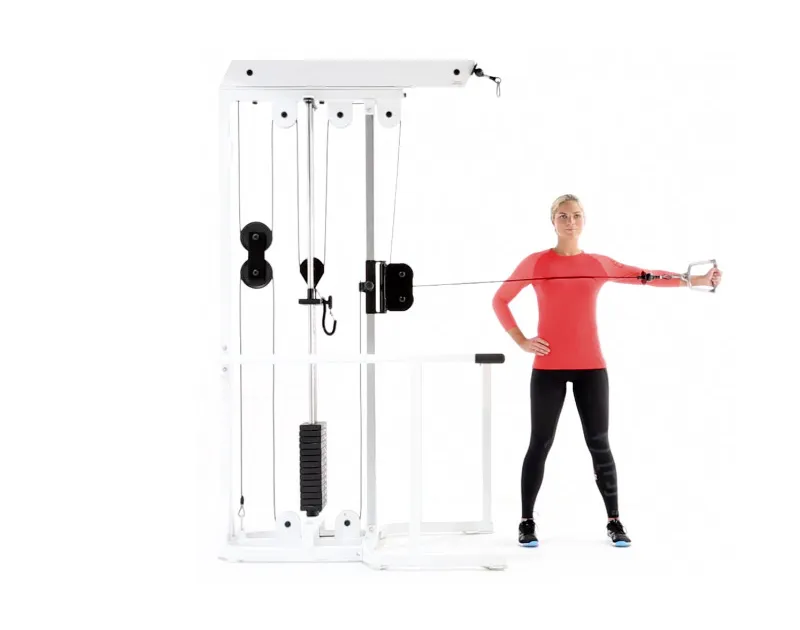
A one-arm cable reverse fly is practical when the gym has one adjustable cable or when you want to watch how each shoulder moves. Set the outlet around shoulder height, stand side-on and take the handle with the far hand. Open that arm outward in a broad arc without twisting the chest to follow it. Finish all sets on one side before switching if that makes the adjustment easier, but use the same setup on both sides rather than giving the stronger shoulder extra reach or a higher pin.
The reverse pec deck offers a supported, more constrained path. That is valuable when standing balance or cable positioning is the main limitation, but the machine’s seat, handle geometry and range stops still need adjustment. Dumbbell reverse flys require different positioning relative to gravity and may demand a bent-over or chest-supported stance. A face pull adds an elbow-bending and frequently an external-rotation component; it is not simply a heavier reverse fly under another name.
Choose based on what you can load and repeat rather than arguing that one tool wins universally. If a cable station only allows very large weight increments, a dumbbell, machine or slower controlled setup may permit more sensible progression. If you already do heavy rows and vertical pulls, you may need relatively few direct rear-delt sets. More isolation volume is not automatically better when the shoulder is already fatigued from pressing, climbing or other upper-body work.

Bodybuilding Shirts & Workout Gear
Bodybuilding shirts, tanks and gym gear for lifters chasing muscle, size, symmetry and the pump.

Doctor Delts Gym Villain Funny Gym Hoodie
Show off your superhero humor in a laid-back “Doctor Delts Gym Villain” hoodie.

Back Sabbath Back Day Funny Gym Hoodie
Bring “Back Sabbath Back Day” gym humor to lazy days and post-workout plans.


Shirt Pull Day – Back & Biceps Meme Top T-Shirt
Heavy lifts, good laughs, and a little “Pull Day Graphic” energy.

Lat Man Big Back – With Huge Lats – Vest Back Day Tank Top
Your gym-day look, with a playful “Lat Man Big Back” twist.

Gym Dost Thou Even Pull Medieval Knight Back Day Crewne T-Shirt
Show some gym-day personality with “Dost Thou Even Pull Medieval Knight Back”.

Strong Back Bodybuilder Tee
Show some lifting attitude with a playful “Strong Back Bodybuilder” tee.


Nice Traps Big Back Tee
Heavy lifts, good laughs, and a little “Nice Traps Big Back” energy.

Hardcore Gains Gym | Funny No Pain No Gain Muscle Shirt Tank Top
Add some lifting attitude to training with “Hardcore Gains”.
6. Run a six-week progression and track the same quality standard
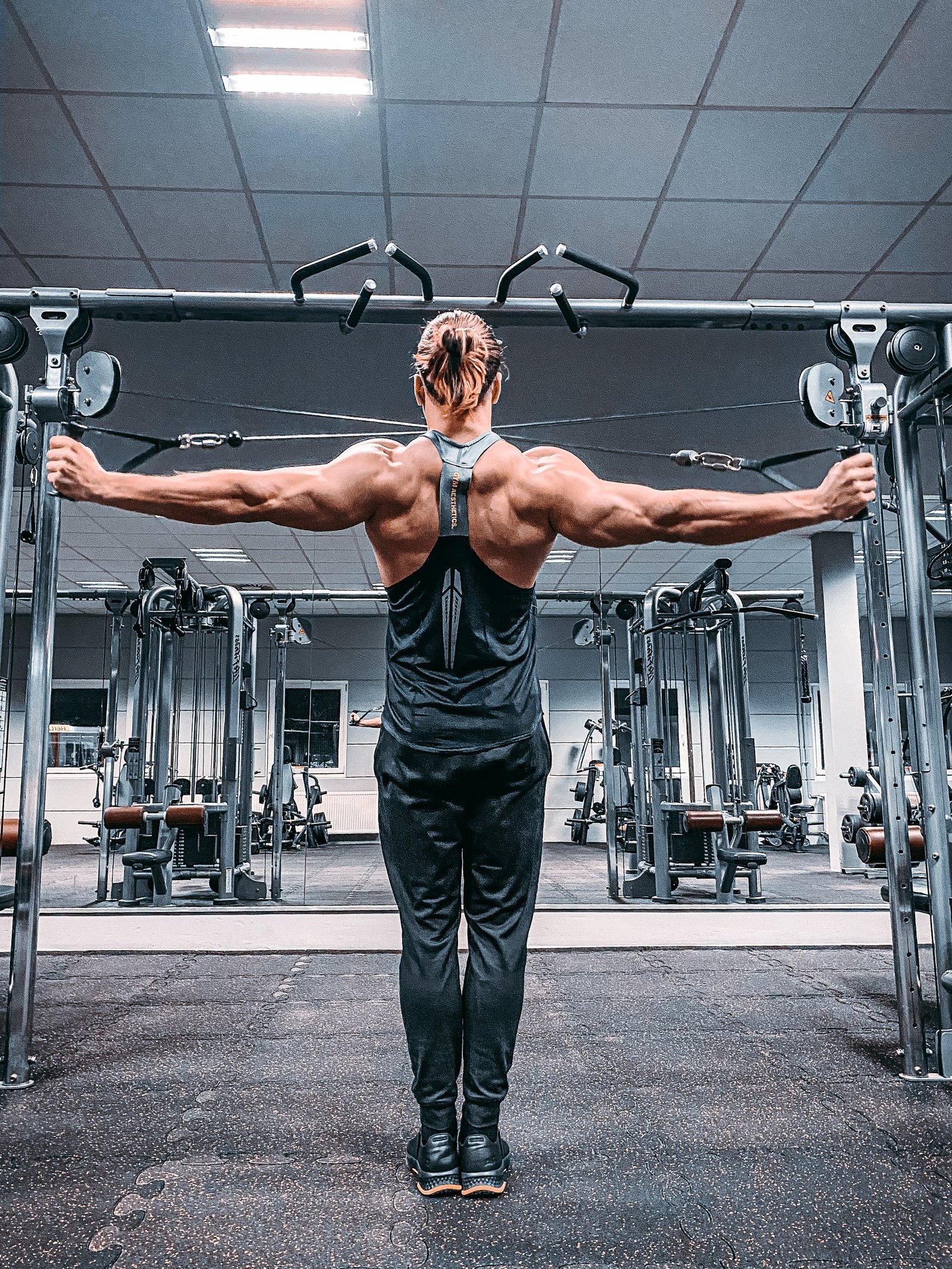
Train reverse cable flys once or twice weekly after larger compound movements, or earlier if rear-delt training is a particular priority and you can still control the exercise. Begin with two working sets of 12–15 clean repetitions per session. Take roughly 60–120 seconds between sets, extending rest when shortness of breath or upper-back fatigue prevents you from keeping the same line of pull. Select a weight that leaves two or three good repetitions in reserve; there is no prize for turning the final rep into a standing cable row.
Weeks 1–2: Establish your pulley height, stance and elbow path. Use two sets in the 12–15 range, ending before any obvious shrug or swing. Weeks 3–4: If both sets reliably reach 15 with the same controlled return and no discomfort, add the smallest practical load increment. If that jump is large, return to 10–12 clean reps at the new setting rather than cheating the final range. Weeks 5–6: Maintain the improved load and technique, or add a third set if recovery and the rest of your program justify the extra work. There is no requirement to raise both volume and load at once.
Write down the station, pulley notch, load per side, number of working sets, repetitions and whether you were standing or slightly hinged. Cable stations can have different mechanical ratios, so a number on one stack is not always directly comparable with another. For the one-arm version, log which shoulder you trained first and match the weaker side’s clean repetition count rather than forcing identical weights at the expense of form. If a set creates joint pain rather than ordinary muscular effort, stop and choose an alternative that is comfortable.
The practical verdict is modest: a reverse cable fly is a reliable rear-shoulder accessory when the pulleys, standing position and controlled upper-arm movement agree. Make those conditions repeatable, let the exercise support your larger pulling and pressing program, and measure progress by good repetitions rather than how dramatically the cables move.