Advertising disclosure: This page includes affiliate product links that may earn us a commission, as well as products from our own store.
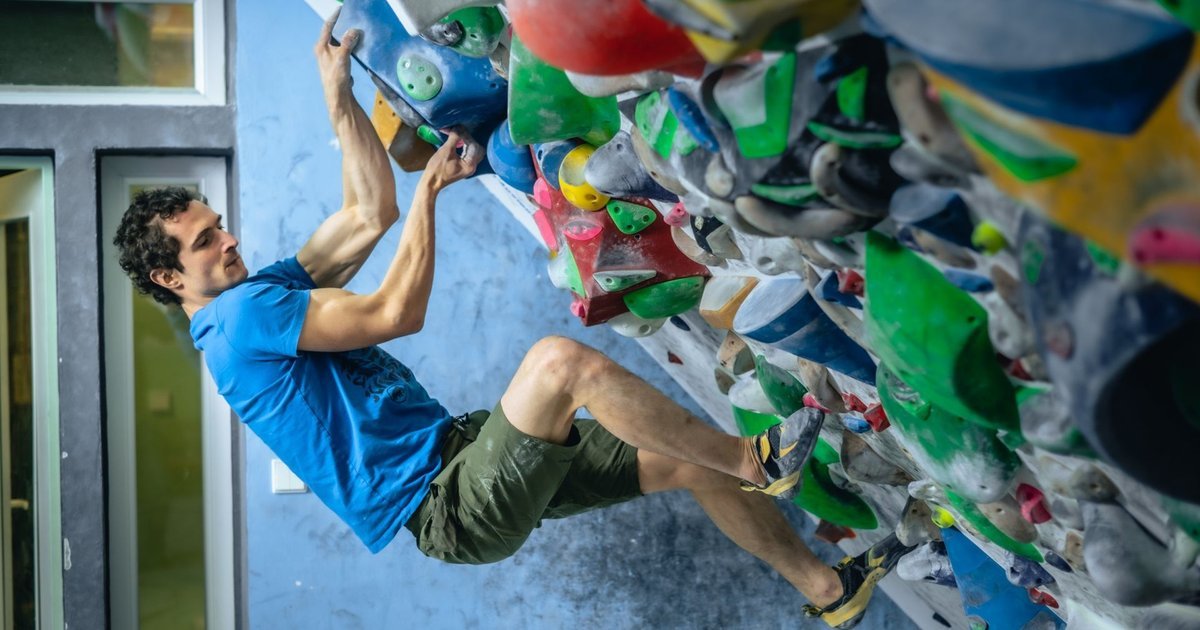
Adam Ondra makes a steep wall look like a movement puzzle rather than an endless pull-up. For lifters trying climbing, that is a useful change of perspective. Strong arms help, but they cannot choose your next foothold, move your hips or decide when another exhausted attempt has stopped teaching you anything.
His documented training history offers a starting point for those questions. In February 2015, Ondra described a long foundation of climbing before advanced supplementary work, followed by more structured preparation with Patxi Usobiaga. This is historical context, not a description of his current programme. The practical examples below are editorial adaptations for recreational training, not an authenticated Ondra workout or a shortcut to his level.
Strength is useful only when you can express it on the wall
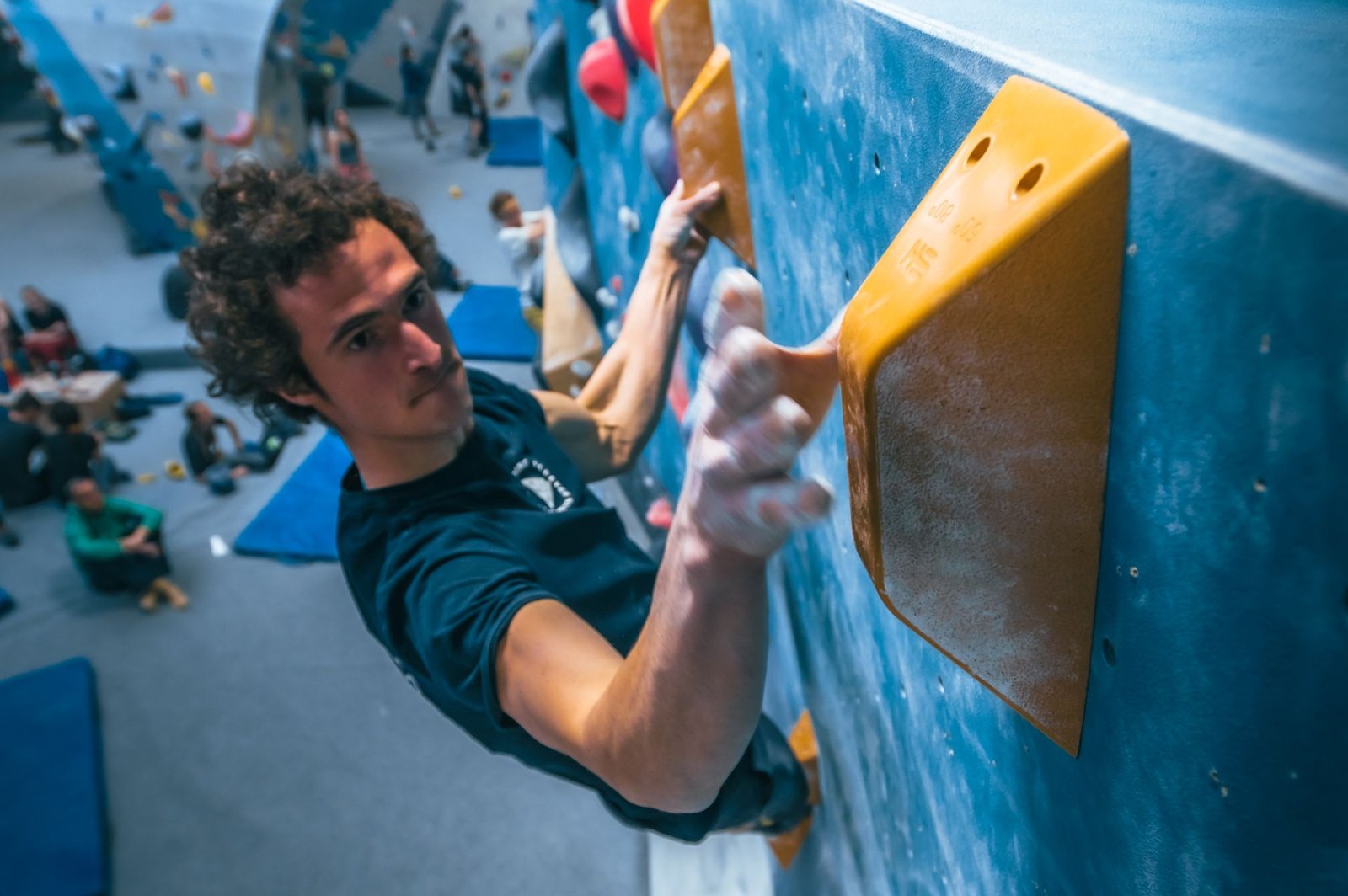
A familiar gym achievement can be misleading in an unfamiliar sport. Someone who performs strong weighted pull-ups may still struggle with an easy climb because the route asks for balance, foot pressure and a useful body position. The mistake is assuming that a failed move automatically means the pulling muscles need more work.
Ondra’s early development was heavily based on climbing itself. In his 2015 account, he described beginning campus-board work around 16 or 17 after years of movement practice. The sequence matters more than the precise age: a specialist strength tool came after substantial experience of the sport it was supposed to support.
For a lifter, the equivalent question is simple: what actually ended the attempt? Perhaps the fingers opened on a small edge. Perhaps a foot slipped, the body swung away, or the next hold was approached from the wrong direction. Those observations lead to different decisions. Only one of them necessarily suggests that more force at the hand is the immediate answer.
Try keeping one short note after a challenging problem: the move where it ended and the most plausible reason. Ask an instructor or experienced partner to watch before accepting your first explanation. A single attempt cannot diagnose a physical weakness, and a strong-looking person does not have to be embarrassed about learning basic movement.
This approach also protects the value of strength work. Rows, presses and lower-body exercises can remain part of a broader programme. They become useful supporting choices when they fit the training week and address an identifiable need, rather than serving as punishment for failing a climb.
Foot placement can change the demand on your hands
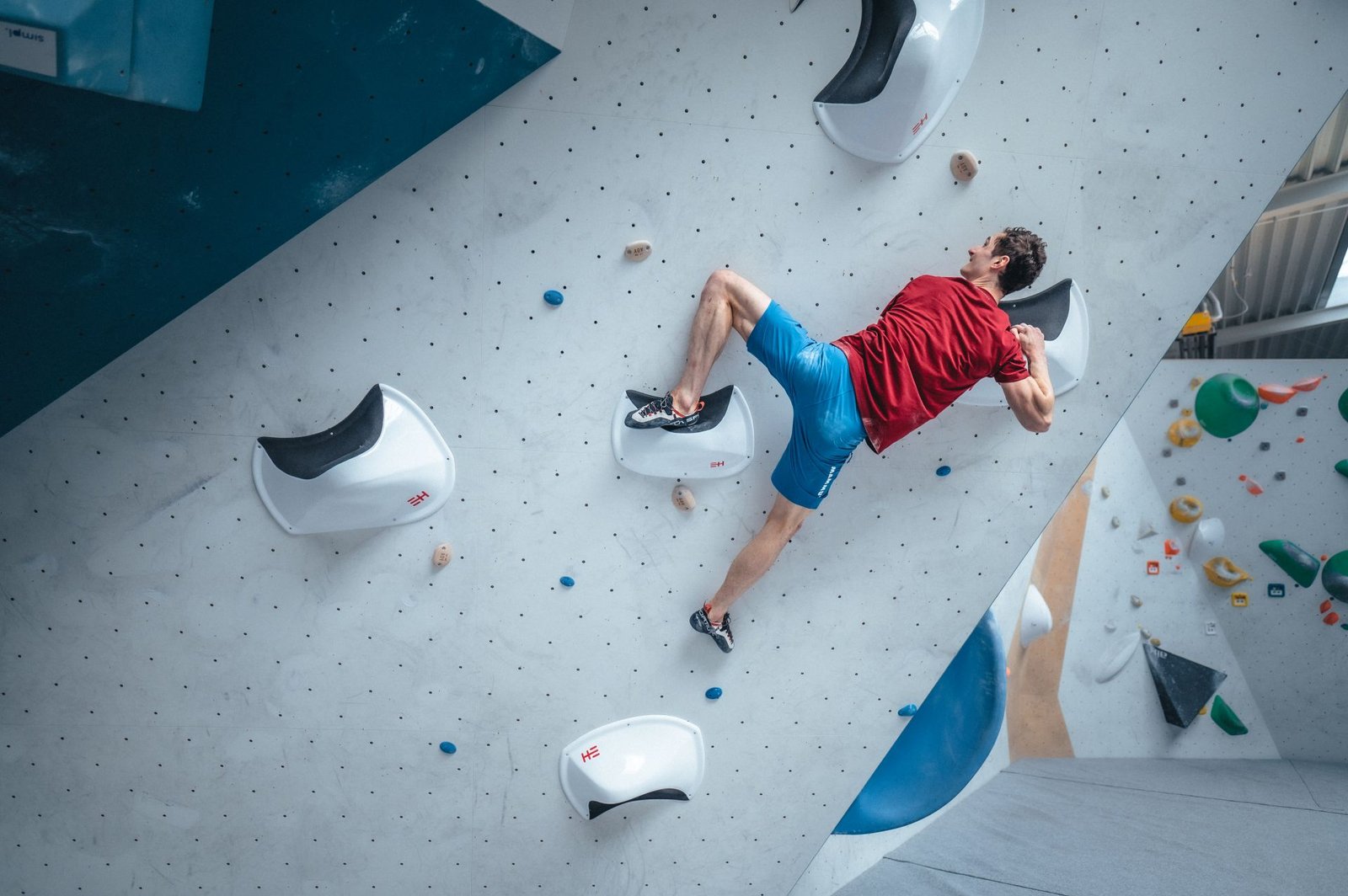
Climbing is not simply pulling the body upward while the feet follow. The chosen foothold and the way pressure is applied help determine where the body can move next. A foot placed casually on a large indoor hold may work on an easy route, yet hide a habit that becomes costly when the foothold is smaller or the wall steeper.
There is no single hip position that solves every climb. Wall angle, hold direction, limb length and the intended next move all matter. Keeping the hips close can be helpful in one position; another move may require rotation or deliberate distance. Treat a technique cue as something to test in context, rather than a rule to force onto every problem.
One manageable practice task is to use a familiar, easy section of wall and pay attention to the exact spot where each shoe lands. Watch the placement until it is engaged, then continue. Choose a setting and descent permitted by the facility, with clear space below. The purpose is attention and repeatability, not making a normal climb artificially dangerous.
On a second attempt, compare where the feet needed adjusting. Did a rushed step create an extra hand movement? Did a change in body position make the next reach easier? These are useful questions even when the grade stays the same. They give practice a result that is more informative than simply counting how many times you reached the top.
Do not deliberately eliminate footholds or add weight to make the lesson harder. New climbers already have enough variables. A comfortable difficulty and qualified instruction leave more attention available for learning how the movement works.
Decide whether the session is practice, power or endurance
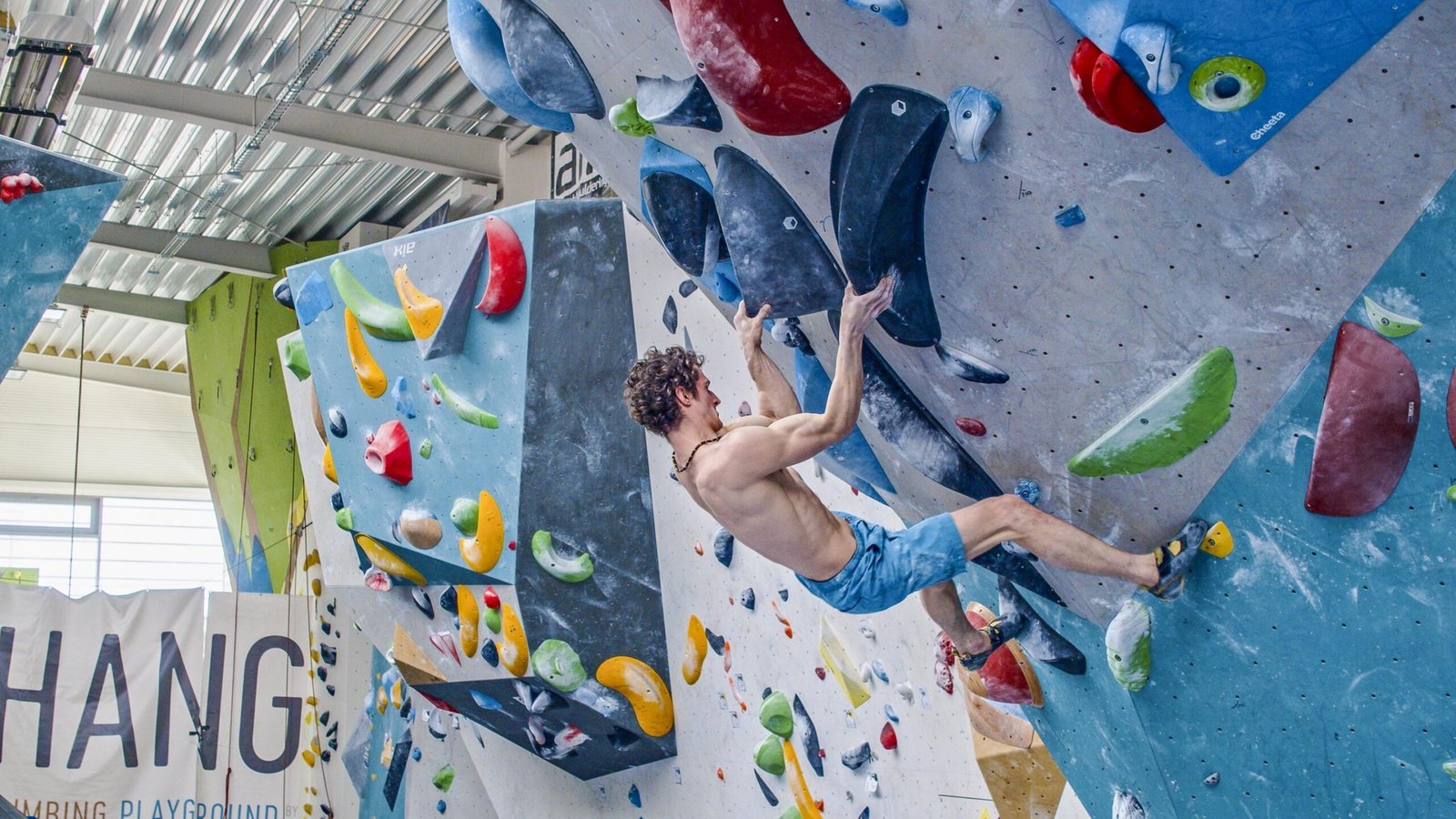
In the historical account, Ondra described training phases with different emphases and periods of reduced work. The important distinction is between doing demanding training and expecting to feel ready to perform at your best every day. Those are not always the same task.
For recreational climbing, begin with a more modest version of that distinction. A practice session can prioritize movements you can repeat thoughtfully. A power-focused session may involve harder individual problems with enough recovery to make each attempt meaningful. An endurance-focused session asks a different question about sustaining work. Combining all three without limits can leave you tired without a clear record of what improved.
Write the session’s main purpose before starting. If the goal is movement quality, stop judging success solely by the hardest grade attempted. If the goal is a small number of difficult moves, do not turn the rest between attempts into a contest to perform the most pull-ups. The extra exercise can consume capacity needed for the main task.
This is especially relevant when climbing shares a week with lifting. Count demanding pulling, grip work and climbing together when thinking about fatigue. Different workout names do not guarantee that the hands and elbow flexors experience independent workloads. A short accessory list is often easier to interpret than adding several new grip tools at once.
General equipment can support controlled rows, bodyweight exercises, basic strength work and comfortable preparation. The products below are options for those separate tasks, not climbing safety equipment, replicas of Ondra’s setup or items he is being represented as endorsing. They do not replace climbing instruction or make an advanced finger-training method appropriate for a beginner.

Equipment Worth Exploring
Explore equipment, accessories and gear from our carefully selected range.


Power Tower
Freestanding pull-up and dip station with adjustable handles for bodyweight training.



Advanced finger training is not a beginner badge
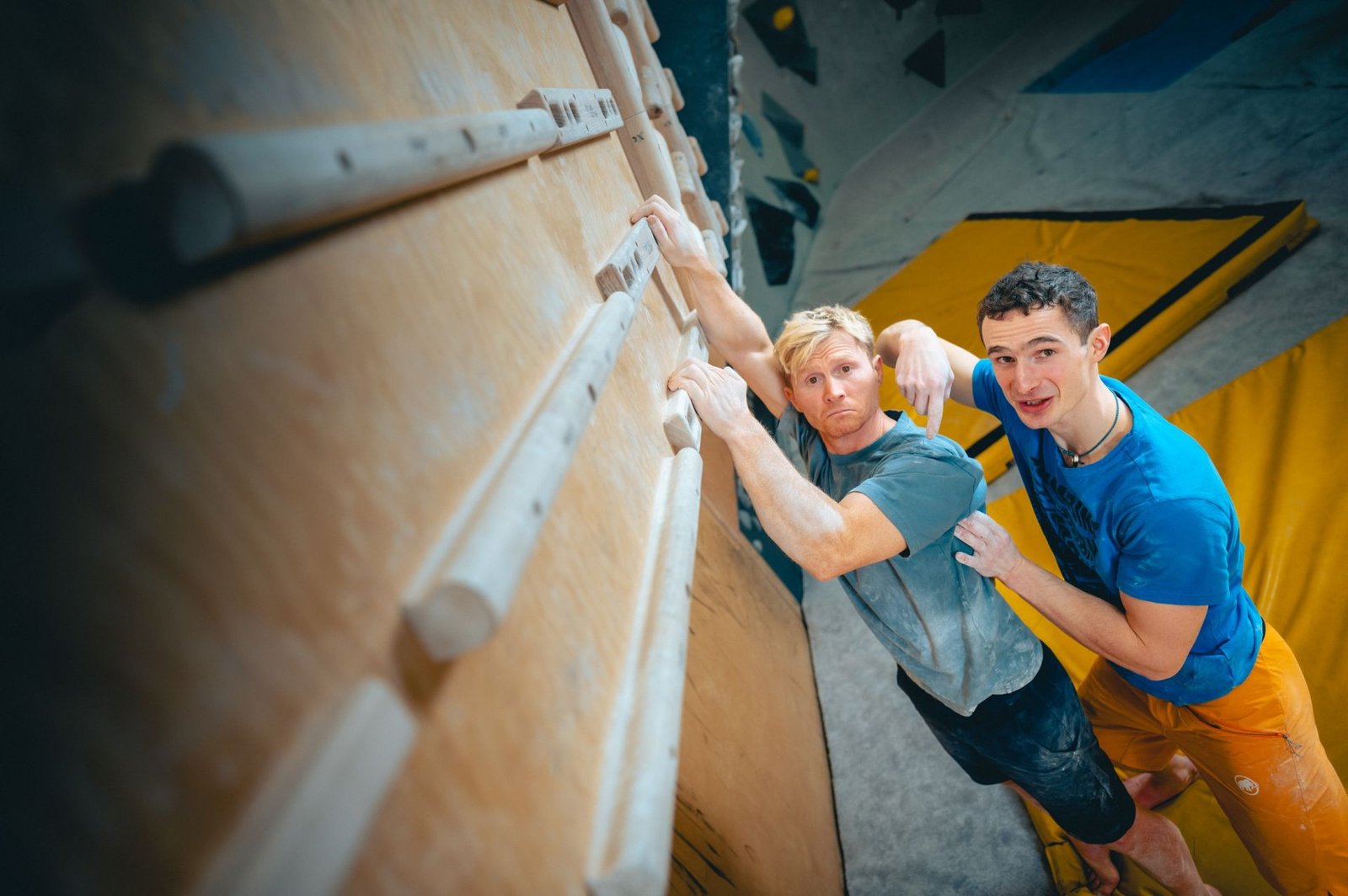
A campus board is visually compelling: wooden rungs, powerful movements and very little room to disguise a weakness. That spectacle makes it easy to mistake an advanced tool for a required entry point. Being able to lift your bodyweight in the gym does not establish readiness for demanding movements on small climbing holds.
Ondra explicitly distinguished his elite workload from what an average climber could tolerate in that 2015 discussion. His experience should therefore not be converted into permission to repeat frequent campus-board sessions. An athlete describing what he did is not the same as a general recommendation about what you should do.
The same caution applies to weighted climbing. Extra load changes the task and adds demands; it is not merely a more efficient version of normal practice. If you are still making progress by learning positions and climbing regularly, there is no need to copy a specialist’s overload method simply because the photograph looks impressive.
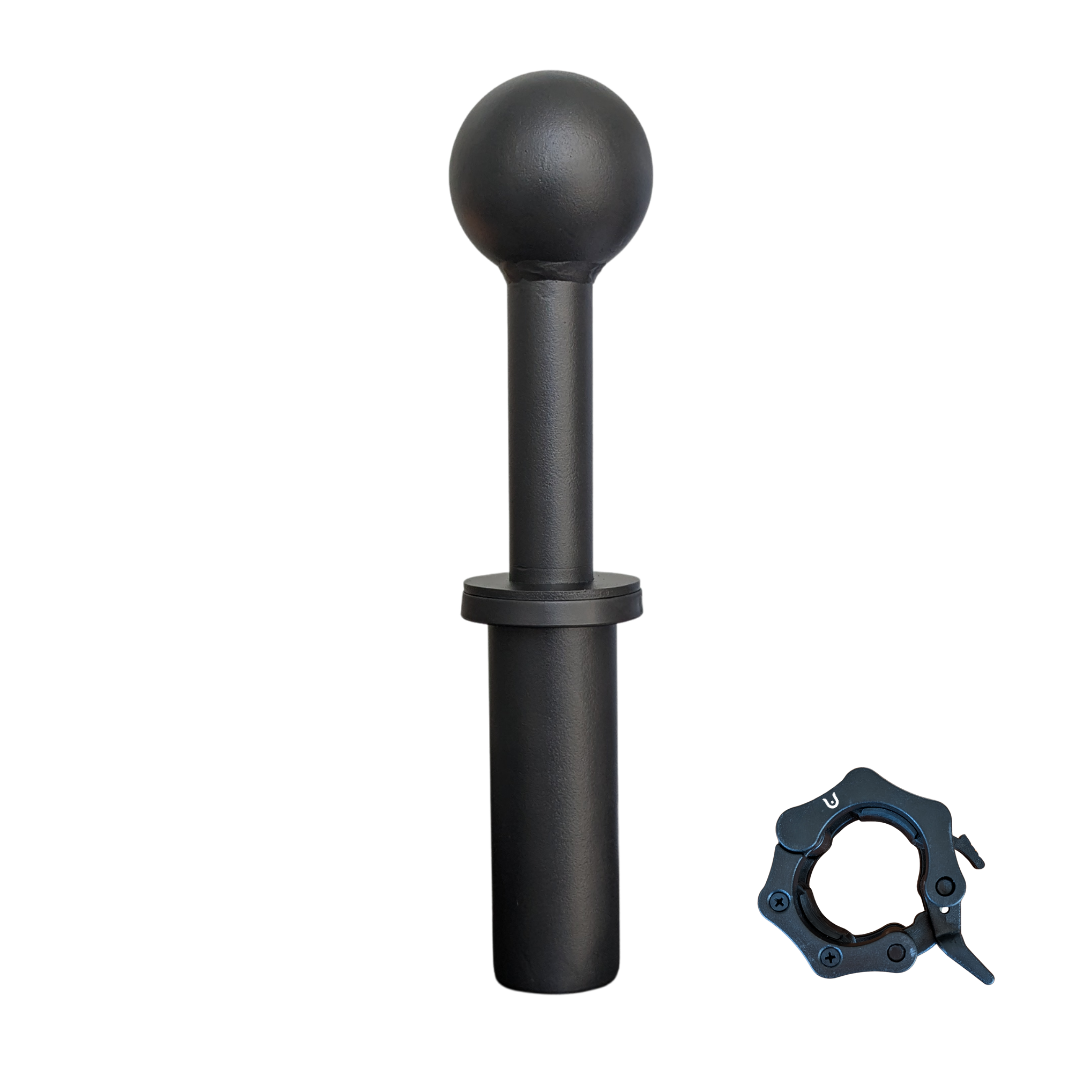
For an ordinary lifter, keep the distinction between general grip training and climbing-specific finger loading visible. A thick handle, rings and a small edge are different interfaces. Progress in one does not prove equal ability in the others. If specialized finger work is warranted, seek a qualified climbing coach who can consider your experience and existing workload.
Discomfort that changes the way you move is a reason to stop and reassess, rather than an invitation to prove commitment. Persistent pain deserves appropriate assessment. No training accessory or exercise sequence guarantees protection from injury, and this article is not a finger rehabilitation plan.
Build a week you can evaluate, not an imitation of an elite schedule
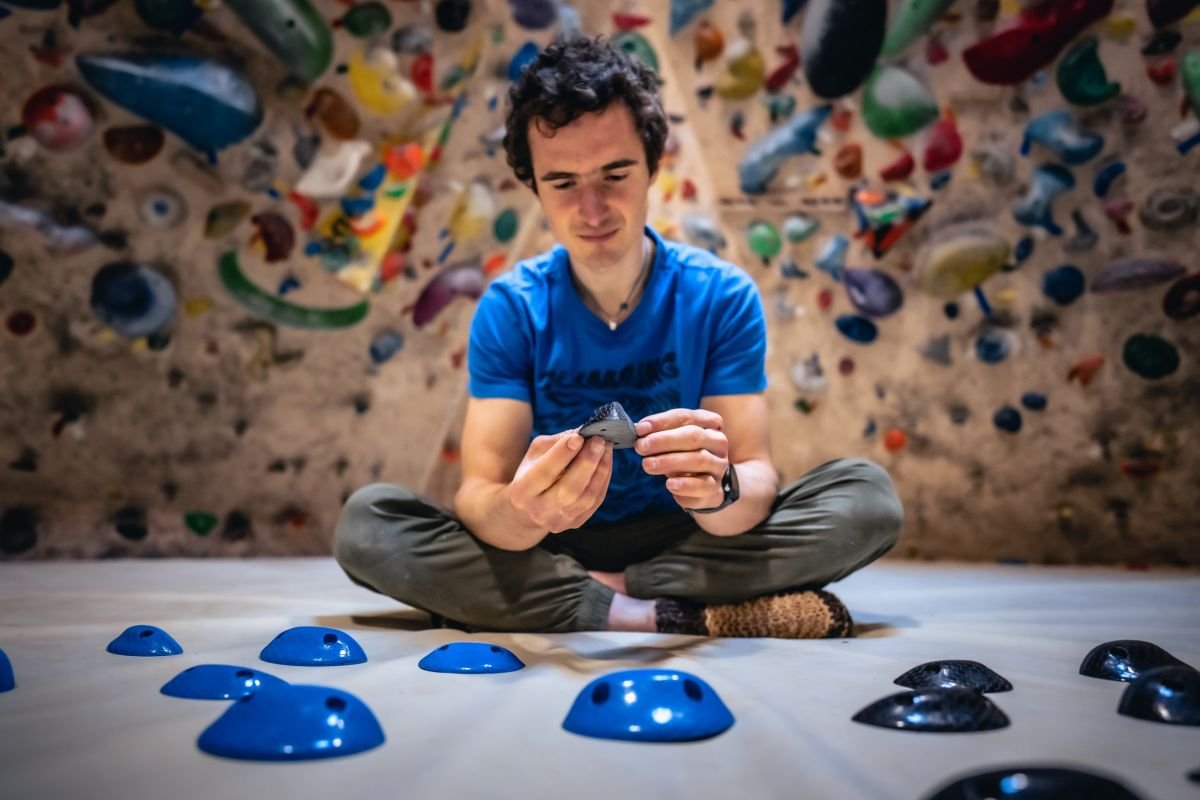
A useful first experiment is administrative: write down the climbing and lifting you already do. Include the hard pulling, direct grip work and sessions that regularly leave you tired. Before adding anything, decide which activity matters most during the coming few weeks. That decision gives you a way to judge the cost of extra work.
Imagine a lifter whose main goal is learning to climb, with two opportunities to visit a wall. One visit could emphasize comfortable movement practice and the other a small selection of more demanding problems, with instruction and facility rules guiding both. Supporting strength work could stay modest. This is an example of assigning purposes, not a universal two-day prescription or Ondra’s schedule.
Keep a brief record of the problems attempted, the movement that limited progress and whether you felt recovered enough to practise well. Record a change in wall, route or conditions rather than treating all grades as identical tests. When a problem is reset, an apparent jump in performance may reflect a different task.
Review several sessions before adding another training method. If familiar movements are becoming more controlled, there may be no reason to change everything. If every visit begins with tired hands, first examine the work already in the week. More motivation and more volume are different solutions, and neither should be assumed to answer every plateau.

Calisthenics Shirts & Street Workout Gear
Calisthenics and bodyweight-training gear for pull-ups, dips, handstands and street-workout athletes.

Calisthenics Hanging Out Hoodie
Make your off-duty look more fun with “Calisthenics Hanging Out”.


Always Pull Yourself Up Crewneck Calisthenics Pullover T-Shirt
Bring “Always Pull Yourself Up” humor to your everyday gym style.

Calisthenics Evolution Crewneck
For laid-back days and lifting humor: “Calisthenics Evolution”.

Pullups Heartbeat Sticker
Stick a little “Calisthenics Pullups Heartbeat” humor on your favorite gear.

Be Stronger Than Your Excuses Funny Gym
Bring “Be Stronger Than Your Excuses” humor to your everyday gym style.

Calisthenics Muscle Shirt Athletic Vest for Bodyweight Tank Top
Your gym-day look, with a playful “Calisthenics” twist.

Human Flag Calisthenics Hooded Workout Gymbro Pullover Hoodie
Make your off-duty look more fun with “Human Flag”.

Turn Off Gravity Funny Calisthenics Gym Decal for Water Sticker
Give your everyday gear a playful “Turn Off Gravity Funny Calisthenics” twist.

Big Dip Energy Decal for Water Bottles Laptops Dip Love Sticker
Give your everyday gear a playful “Big Dip Energy” twist.
Calisthenics and climbing share an interest in controlling bodyweight, but they remain distinct skills. Enjoy the connection without turning it into a promise that a human flag, a bigger pull-up or a new training tool will automatically raise your climbing grade. Keep the specific goal visible.
Ondra’s history is interesting because the spectacular work sits inside a much larger learning process. The accessible lesson is to notice what a task demands, practise it deliberately and leave enough capacity to return. You do not need an elite calendar to make the next session more useful than the last.