Advertising disclosure: This page includes affiliate product links that may earn us a commission, as well as products from our own store.
When progress slows, adding more sets can feel like the obvious answer. But even if extra weekly work is useful, there is a second question: how often should you add it? A November 17, 2026 experiment put two common rhythms against one another. Both improved leg-press strength and quadriceps size measures, and the researchers did not detect a clear difference between adding sets every two weeks or every four.
That does not make volume meaningless, or prove the schedules are interchangeable for every lifter. It invites a more disciplined approach: distinguish the amount of training you can recover from, the rate of increase, and the performance you actually measure. Here is what happened and how to use it without turning every hard session into an argument for more work.
What the two-versus-four-week trial actually changed
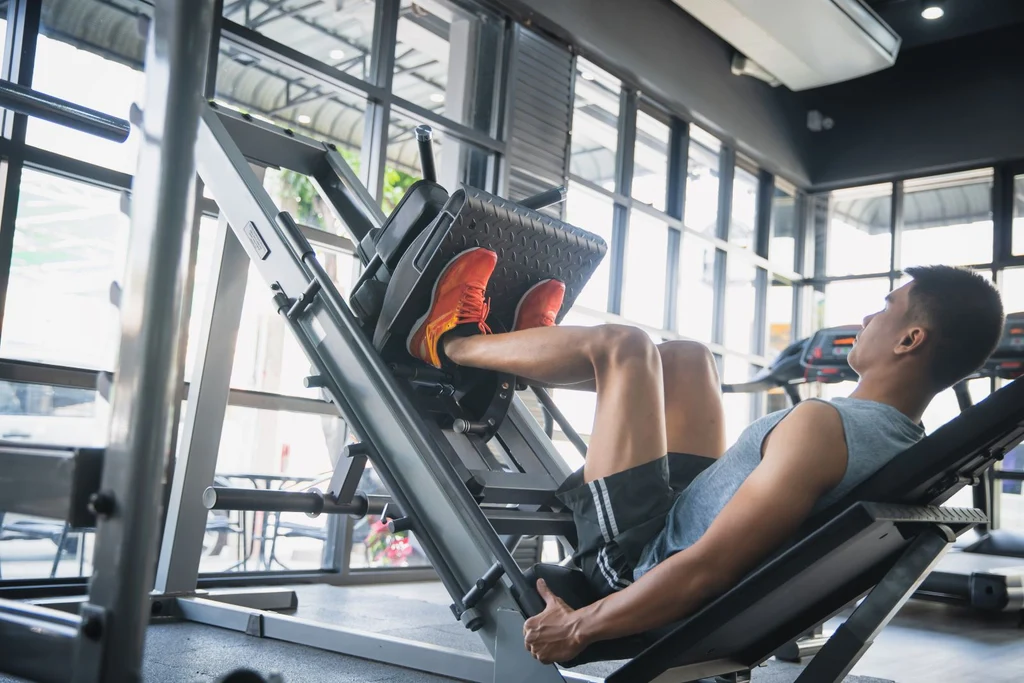
The experiment followed 21 recreationally trained women for twelve weeks. Their average age was approximately 23 years, with about 1.1 years of lifting experience. Researchers used a within-person design: each participant’s legs were assigned to different progression schedules. One leg received two additional weekly quadriceps sets every two weeks; the other received two additional weekly sets every four weeks. Previous training volume was considered when choosing the starting amount of work.
That distinction matters because the study did not compare training with no progression against training with progression. Both legs had progressing programs. The variable of interest was the frequency of added sets. Nor was this a comparison of heavy triples against light sets to failure: its question was narrower than the many other decisions buried in a strength program.
If a hypothetical lifter started at twelve hard quadriceps sets a week, an illustrative two-week progression would eventually add sets faster than a four-week progression. But the actual starting set numbers and individual training histories should not be guessed from that illustration. The experiment dealt with relatively high training volumes, and the publicly available abstract does not provide every session’s exercise selection, proximity to failure or individual recovery response. Treat any example schedule below as a coaching framework, not a reconstruction of each participant’s workout.
Splitting the comparison between legs helps control for diet, sleep and genetic background. It does not eliminate all uncertainty: people can favor one leg, the arms and trunk share effort during leg pressing, and changing the workload of individual limbs is not necessarily the same as adjusting a complete bodybuilder’s program.

Equipment Worth Exploring
Explore equipment, accessories and gear from our carefully selected range.

Compact Leg Press CLP-700
Compact reverse-style leg press with a moving seat carriage and an adjustable footplate.

Leg Press/Hack Squat BPR-790
Convertible 45-degree leg press and hack squat machine with a broad footplate and band pegs.

Leg Extension/Curl BCO-780
Leg extension and lying leg curl combo with plate loading, band pegs and a cable-loading option.

Seated Leg Combo BCO-680
Adjustable seated leg extension and leg curl machine with band pegs for added resistance.


Studio V-Squat
Plate-loaded V-squat machine for supported lower-body strength training.

HUSLA Leg Extension Pad
Pad attachment designed to increase usable range of motion on compatible leg-extension machines.

GymPin Squat Wedges
Non-slip 15-degree squat wedges help elevate the heels for deeper quad-focused squats.

Multi Pull Smith Rack MPHR-780
All-in-one rack with a Smith machine, functional trainer, lat pulldown and low row.

Squat Harness
Wearable harness for hands-free cable squats, sled work, and lower-body training.
Leg-press strength improved without a detected schedule winner
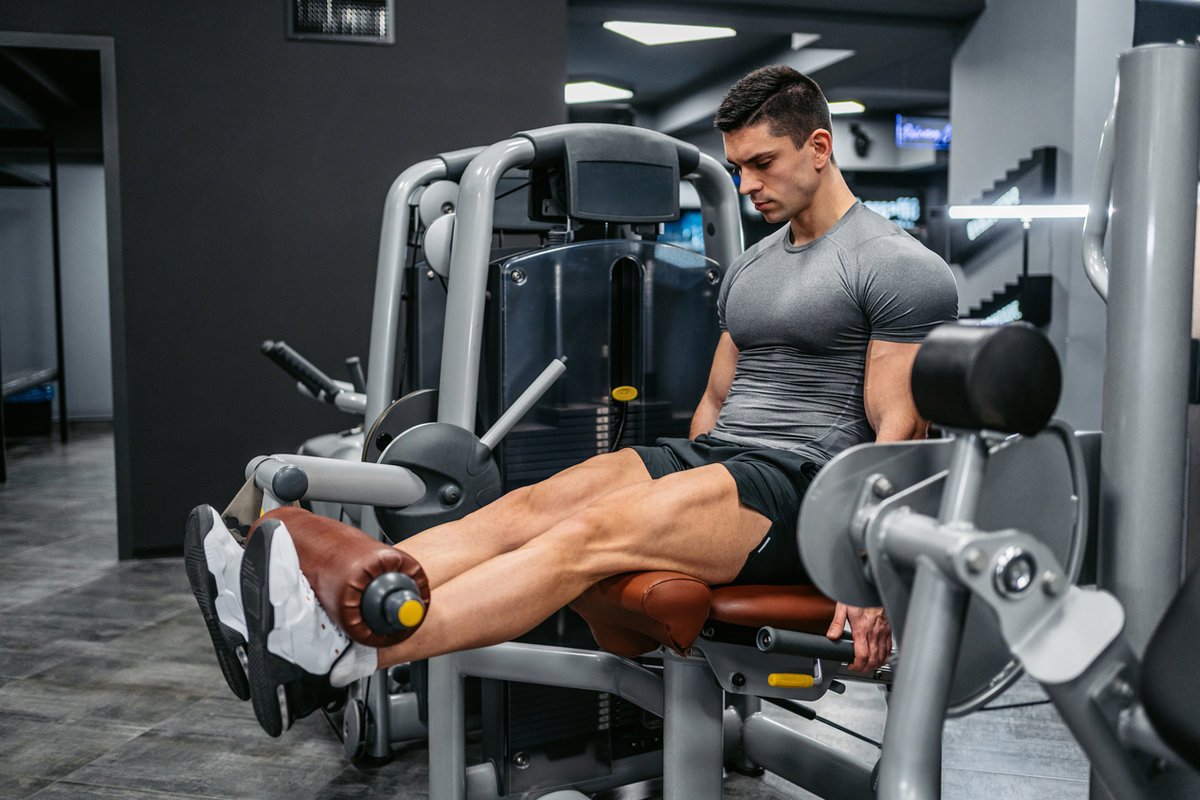
The study assessed one-repetition-maximum strength on a forty-five-degree leg press before and after twelve weeks. Strength increased over time across the conditions. The comparison between adding quadriceps sets every two versus every four weeks did not reach a detectable difference (reported p = 0.317). That is useful for someone anxious that every training block must escalate workload as quickly as possible.
It is also easy to oversell. A non-significant difference does not establish that two schedules are exactly equivalent, or that the faster schedule offers zero benefit to anyone. This was a relatively small sample, and the test was one movement rather than a universal measurement of leg strength. Reporting a result as “no detectable difference in this experiment” is more accurate than declaring that volume progression timing never matters.
A leg-press maximum can improve through several routes: greater contractile capacity, stronger familiarity with the test, better bracing and more consistent depth or setup. Those possibilities do not invalidate strength progress, but they mean the number is specific to the test. A forty-five-degree sled’s plate total cannot be equated directly with barbell squat kilograms, especially across machines with different friction or sled weight.
For your own records, keep seat position, foot placement, range of motion, tempo standards and the machine consistent wherever possible. If you switch machines, begin a new comparison rather than forcing an apparent personal record into the old chart. When your main goal is squatting, keep a separate squat progression rather than assuming a bigger leg-press one-rep maximum proves an equally large squat gain.

Bodybuilding Shirts & Workout Gear
Bodybuilding shirts, tanks and gym gear for lifters chasing muscle, size, symmetry and the pump.

Quadzilla Massive Quads Sweater Leg Day Squatting T-Shirt
Keep things casual with a little “Quadzilla” attitude.

Swolebob Squatpants Gym | Funny SpongeBob Meme Workout T-Shirt
Add a playful “Swolebob Squatpants” touch to your casual rotation.

Funny Squat Game Gym | Squid Game Parody Muscle Shirt F Tank Top
Your gym-day look, with a playful “Squat Game” twist.

Leg Day No Thanks – Skip Legday Meme , Squats & T-Shirt
Heavy lifts, good laughs, and a little “Leg Day No Thanks” energy.

I Love Squats | Valentine's Leg Day Decal & Bodybuildin Sticker
Put “I Love Squats” gym humor on your laptop, bottle, or gym gear.

Heavy Squatter Harry Potter Squat Lovers Leg Day Hoodie
Show off your leg-day humor in a laid-back “Heavy Squatter” hoodie.

Santa Quads Is Coming To Town | Fitmas Leg Day Workout T-Shirt
Keep things casual with a little “Santa Quads Is Coming To Town” attitude.

Legday of Legends Gym | Funny League of Legends Meme Wo Sticker
Give your everyday gear a playful “Legday of Legends” twist.

Squats Booty Builder Barbie Meme Sweater Leg Day & T-Shirt
Show some gym-day personality with “Squats Booty Builder”.

Booty Building Mode Girl Sweater Squats & Leg Day T-Shirt
For laid-back days and gym-girl humor: “Booty Building Mode Gym Girl”.
Muscle thickness improved, but the measurement has limits
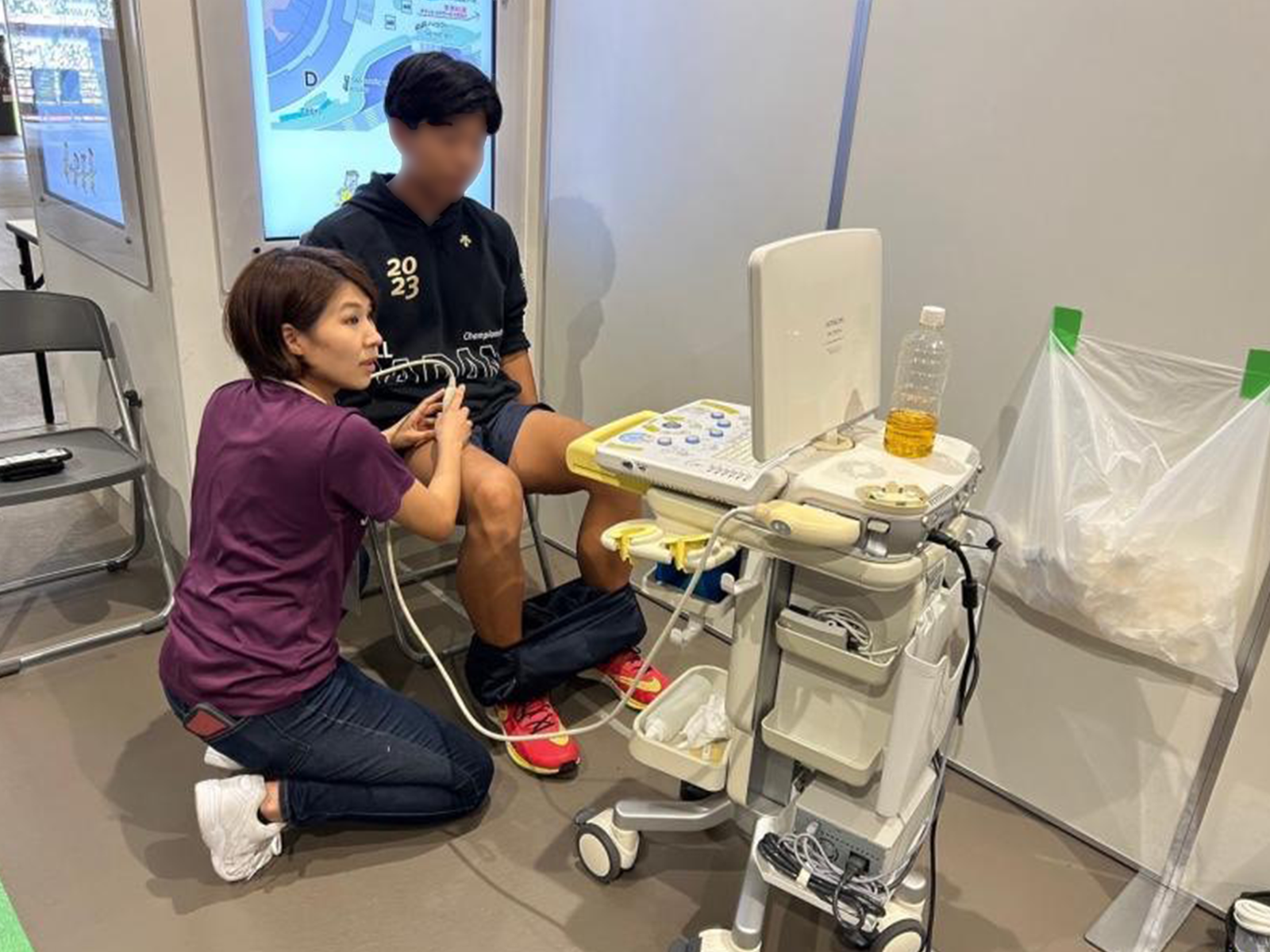
Muscle growth was assessed by summing thickness measurements from proximal, middle and distal sites on the lateral thigh. The summed measure increased with time, while the between-schedule difference was not detectable (reported p = 0.616). The finding supports a narrow interpretation: within this study’s higher-volume setup, accelerating added sets did not demonstrate superior measured lateral-thigh thickness after twelve weeks.
Ultrasound muscle thickness is not a scan of total quadriceps volume. Regional measurements can be informative while missing changes elsewhere in the muscle or differences between individual quadriceps heads. Hydration, exercise timing, positioning, operator technique and measurement consistency can also influence an individual reading. The study did not measure your visual definition, lower-body symmetry or long-term response to a six-month specialization block.
Suppose your thigh circumference appears unchanged during a calorie deficit while your leg-press repetitions improve. That is not necessarily a contradiction: body-fat changes, glycogen and the conditions of measurement can shift appearance independently of strength. Likewise, an isolated size estimate that rises does not justify claiming every leg muscle grew equally. Track outcomes with the precision they deserve.
The practical lesson is to avoid chasing a single measurement. Compare training performance with repeatable photographs, consistent bodyweight context and any circumference or professional body-composition assessments you choose to use. The experiment cannot establish a perfect weekly set count for each person; it only tested how often sets were added under its specific conditions.
More sets should earn their place in the program
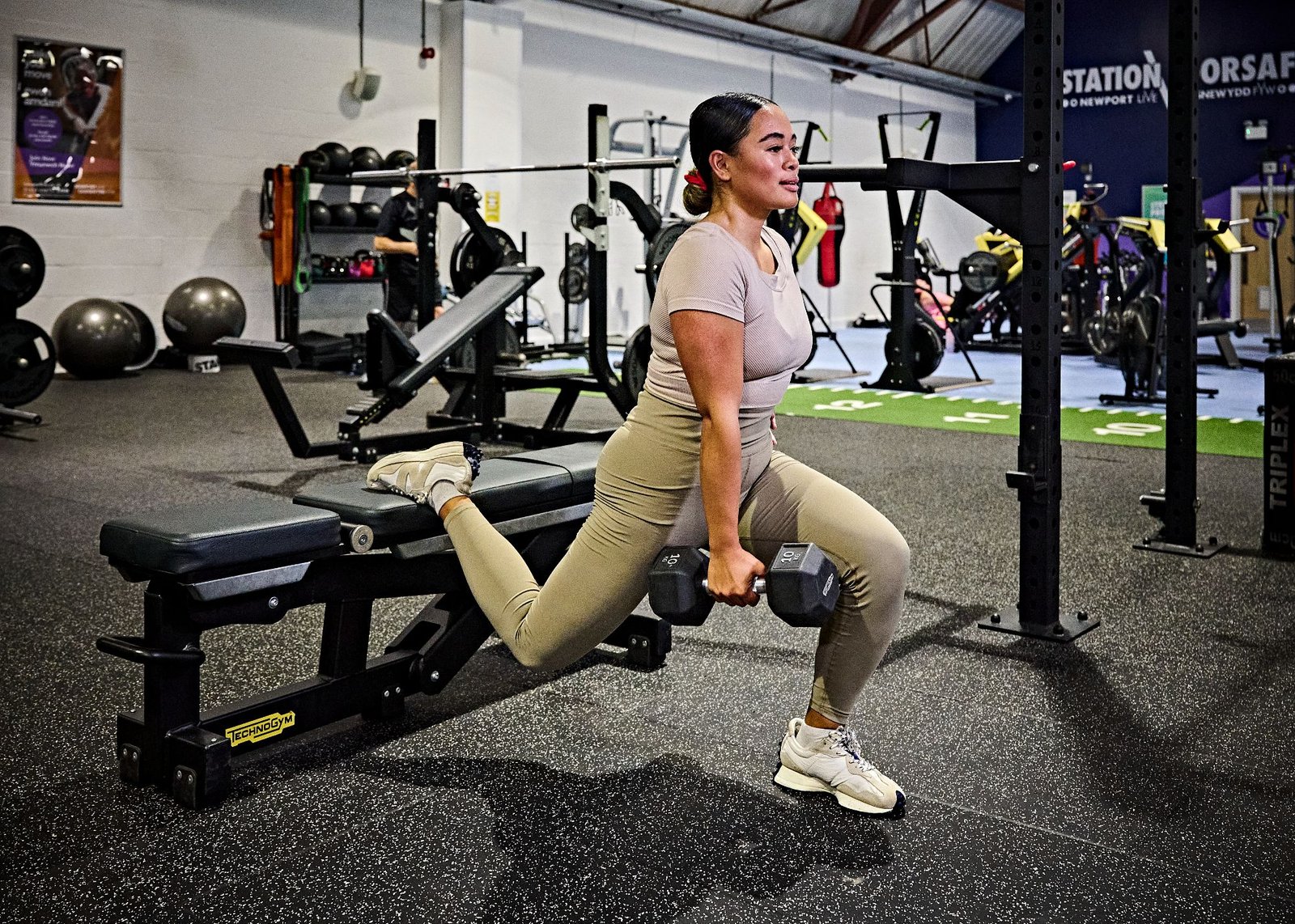
There is a difference between progressive overload and automatic volume inflation. You can make progress by increasing load, adding a clean repetition, improving control at the same load or expanding a tolerable range of motion. Extra sets are legitimate tools, especially when a well-recovered lifter has stopped improving, but they are not the universal first adjustment. Each additional set has an opportunity cost in recovery, training time and attention.
Consider a lifter who already squats hard twice weekly, uses a leg press afterward and adds leg extensions. Before adding another two sets, inspect the last four weeks. Were completed sets consistent? Did reps rise at a similar effort? Was intended depth maintained? Did training load get heavier while the athlete stayed near the planned repetition range? If the existing plan was progressing, preserving it may be the higher-value choice.
If progress really stalls, change one variable at a time. One extra set to a target movement on two days is easier to evaluate than simultaneously adding new exercises, shortening rests and increasing intensity. Keep some recovery margin: if knee irritation, persistent performance losses or inability to finish subsequent sessions appear, accumulating additional sets may be solving the wrong problem.
Bodybuilders can use this distinction for specialization blocks. During quad emphasis, posterior-chain training and overall fatigue still exist. A fast set ramp that sounds modest on paper may pile onto hard squat variations, cycling intervals or sports practice. For many recreational lifters, a few productive sets that can be repeated week after week will outperform a spreadsheet that grows automatically while execution deteriorates.
Equipment Worth Exploring
Explore equipment, accessories and gear from our carefully selected range.


Competition Plates
Competition-style bumper plates for Olympic lifts and loaded strength training.


Multi Bench MBX-650 2.0
Adjustable multi-bench with roller adjustment, 15 backrest positions and accessory mounts.

VForce 2IN1
Half rack and pivot-arm functional trainer with switchable 1:1 and 2:1 pulley ratios.

Rubber Hex Dumbbells
Rubber-coated hex dumbbell pairs with a stable shape for home and commercial strength training.


Grip Plates
Rubber-coated weight plates with handholds for loading barbells and machines.
A twelve-week quad progression you can audit
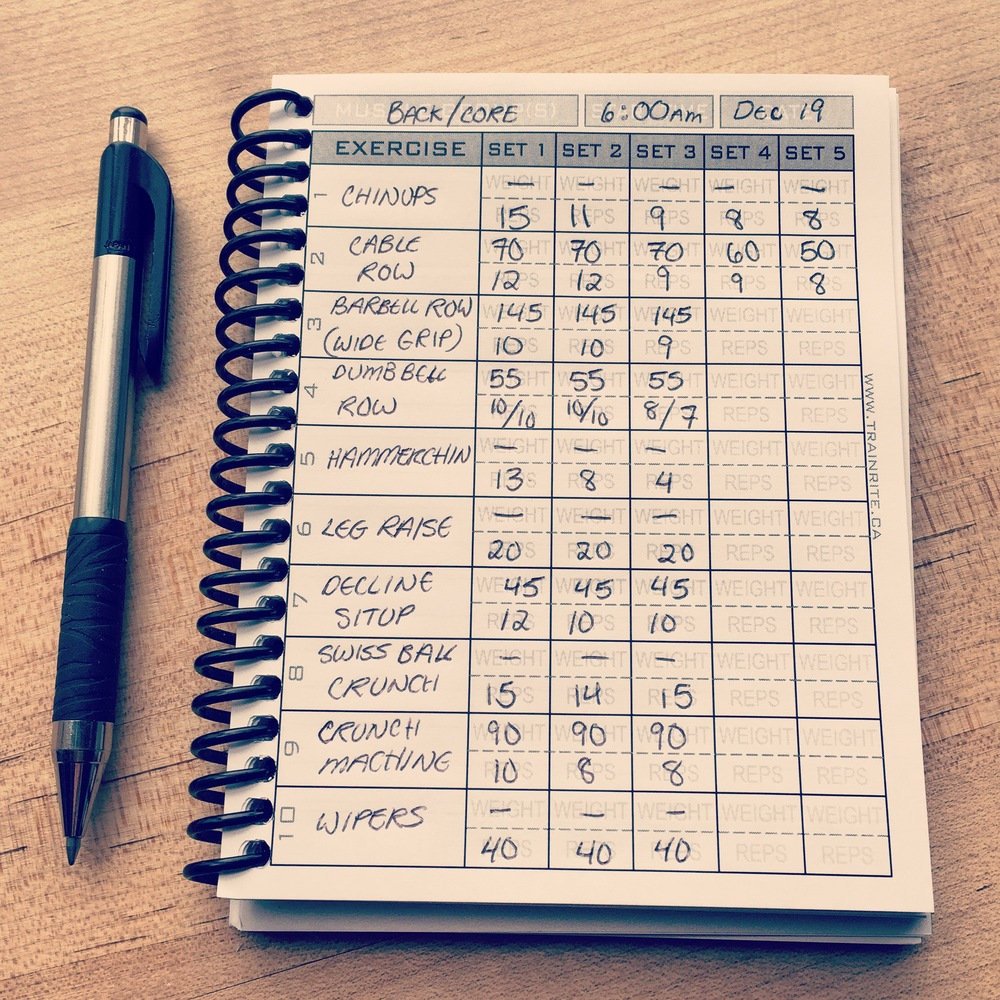
Start with a two-week baseline rather than inventing a magic volume. Record actual hard sets for quadriceps across squat, leg press, split squat and extension variations. A set with meaningful quadriceps demand counts toward your working estimate even if the exercise also uses glutes and adductors; do not pretend every compound set is anatomically identical to an isolation set. Keep that rough counting convention consistent rather than arguing over fractional-set precision.
Weeks one to four: hold your existing recoverable volume steady, rehearse the chosen movements and log load, repetitions, approximate effort and a simple next-day recovery note. If a set clearly improves, resist the temptation to reward it with more volume. If performance and technique remain flat despite consistent attendance and sufficient recovery, consider adding a small number of hard sets rather than replacing the whole program.
Weeks five to eight: if extra volume is justified, try increasing two weekly quad sets at the beginning of a four-week block, then leave the target stable long enough to observe a trend. Keep the change close to the exercise that needs work. If the extra work reduces quality in the rest of your week, reverse it instead of interpreting fatigue as proof you need to try harder.
Weeks nine to twelve: compare matched working sets on the same equipment, recovery, time demands and any repeatable physique measures. This is an example of conservative tracking, not a claim that the study prescribed these exact weeks or found a universally optimal schedule. The most defensible conclusion is modest: adding sets every four weeks was not detectably inferior to adding them every two in this twelve-week, twenty-one-woman test. Progress when there is a measurable reason, not simply because a calendar reminder says workload must rise.
One more rule makes the experiment useful: calculate your progression from the sets you can complete, not the sets you penciled in. A missed session is not an invitation to cram double the work into the next one. If quad loading becomes erratic, return to a stable baseline and restore repeatability before attempting another increase. Track any discomfort separately from normal muscle fatigue.
Bodybuilding Shirts & Workout Gear
Bodybuilding shirts, tanks and gym gear for lifters chasing muscle, size, symmetry and the pump.

Leg Day Thou Shalt Not Skip Leg Day Medieval Knight Gym T-Shirt
Make gym days more fun with “Leg Day” style.

Funny Squat Inspector Gym | Edgy Workout Sweater For Le T-Shirt
Bring “Squat Inspector” humor to your everyday gym style.

Legendary Leg Day – Squat Meme Hooded Pullover Hoodie
Keep it laid-back with a little “Legendary Leg Day” attitude.

Anti Leg Day Leg Day Club Decal Water Bottles & Sticker
Give your everyday gear a playful “Anti Leg Day Leg Day Club” twist.


Squats Leg Day Heavy Weights Meme – Essential Top T-Shirt
Bring “Squats Leg Day Heavy Weights” humor to your next gym day.

Legday Gains Squats & Deadlifts , Top & Bros T-Shirt
Bring “Legday Gains” humor to your next gym day.

Negative Leg Day Review Leg Day Sucks Meme Squats, T-Shirt
Show some leg-day attitude with a playful “Negative Leg Day Review” tee.

Motivation – Squats & Booty Builder Leg Day – Strong T-Shirt
Bring “Gym Motivation” humor to your next gym day.

Heavy Metal Skeleton Squat for Powerlifting, Bodybuildi T-Shirt
Show some gym-day personality with “Heavy Metal Skeleton Squat”.