Advertising disclosure: This page includes affiliate product links that may earn us a commission, as well as products from our own store.
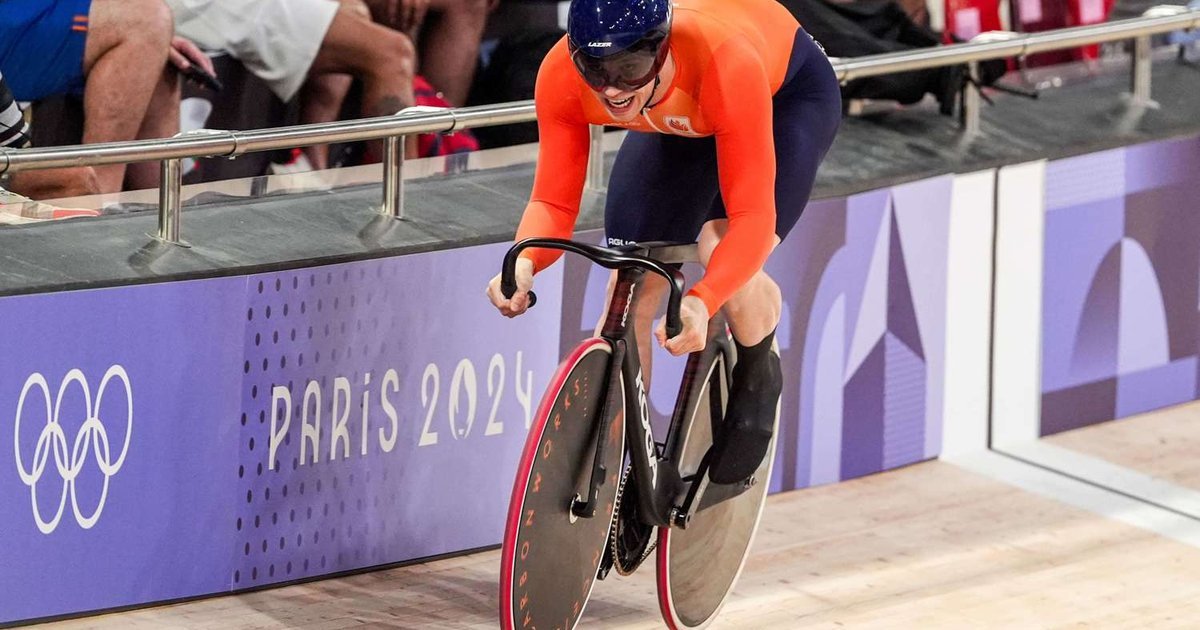
Harrie Lavreysen won three gold medals at Paris 2024 in the team sprint, individual sprint and keirin. The Dutch track cyclist did not get there by treating every day as leg day. He had to produce extraordinary force on the pedals, accelerate a fixed-gear bicycle and repeat demanding efforts while managing fatigue. His preparation included regular weight training, but the purpose of those sessions was to improve the work he could do on the bike.
That distinction matters for anyone who lifts and rides. Stronger legs can give you a bigger reserve of force, but a bigger squat does not automatically translate into a faster sprint. The useful question is how to develop strength without making your cycling sessions worse. Lavreysen’s approach provides a good starting point.
Why track sprinters need strength beyond the bike
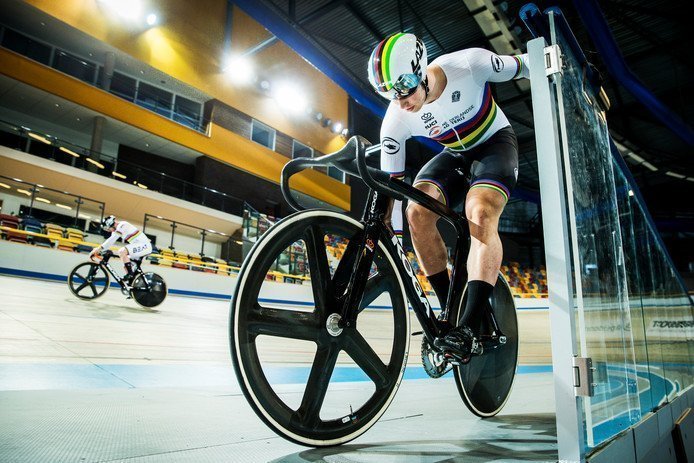
A track sprint rewards the ability to turn a large gear from low speed and then continue producing power as cadence increases. The first few pedal strokes feel completely different from riding at cruising speed. You have relatively little momentum and the resistance at the pedals is considerable. Strength training helps build the capacity to produce force in these circumstances, but the bike is where that capacity becomes a specific cycling skill.
In July 2024 before Paris, Lavreysen described doing weight training twice a week, gradually raising the weights and concentrating on cycling performance rather than bodybuilding. He also discussed the difficulty of recovering from particularly hard sessions. These details show that the gym is part of a larger training plan, not a separate competition.
His results demonstrate the demands of the sport, not proof that any single exercise caused them. A 2025 synthesis of 17 studies involving 262 endurance cyclists found that heavy strength training could improve cycling efficiency, anaerobic power and performance, although the certainty of the evidence was low. It did not find a clear improvement in maximal oxygen uptake. The participants were endurance cyclists rather than elite track sprinters, so the findings should not be mistaken for a direct analysis of Lavreysen’s programme.
For recreational riders, develop enough force to make hard accelerations manageable while continuing to practise accelerations themselves. An indoor cycle with adjustable resistance can help you practise controlled starts, but a spinning bike or air bike does not reproduce the mechanics of a fixed-gear velodrome bicycle. If you only have a general exercise bike, treat it as a conditioning tool and track your progress under repeatable conditions rather than comparing your wattage with an elite rider’s.
Build force with the squat
In October 2026, a retrospective account of Lavreysen’s training described heavy, low-repetition work and movements including squats, leg presses and Bulgarian split squats. Those exercises form a useful framework because they cover bilateral loading, supported knee and hip extension and single-leg strength. They should not be understood as a complete reconstruction of his current training programme.
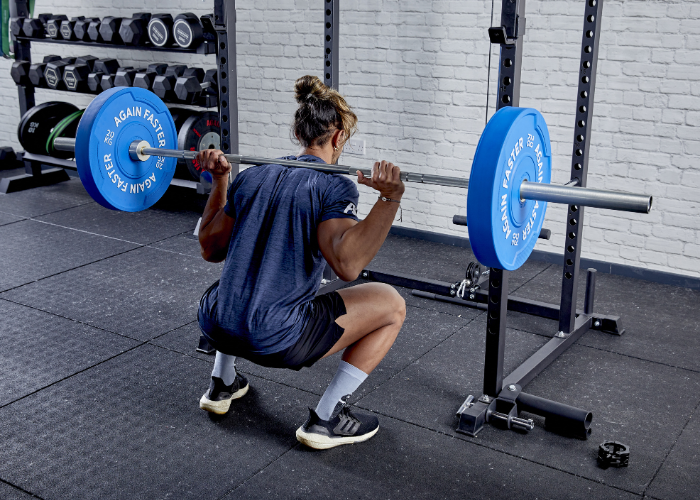
The squat is a sensible starting movement because it lets you load the hip and knee extensors together. A barbell back squat also demands trunk control, balance and a repeatable setup. The objective is not to copy the exact depth, stance or bar position of an elite rider, but to find a range of motion you can control consistently under load.
Start with two or three warm-up sets, increasing the weight while keeping repetitions low enough to avoid fatigue. For a rider already comfortable with the exercise, three working sets of four to six repetitions at about two repetitions in reserve can be a useful starting point. Rest for two to four minutes between working sets. A beginner should use lighter loads and spend more time practising the movement before attempting heavy sets.
Do not force a squat to become explosive by sacrificing control. Descend at a comfortable speed, keep your balance over the foot and intend to stand up decisively. The bar may move slowly when it is heavy, even if your effort is high. Stop a set when your technique changes appreciably or the repetitions become a grind. A cyclist who needs to ride well tomorrow has little to gain from turning every set into a maximum-effort test.
A rack with correctly positioned safety arms and secure plates makes this exercise easier to perform independently. If barbell squats are uncomfortable, a suitable machine or a goblet squat can still develop the relevant muscles while you build experience.
Use the leg press without chasing a number
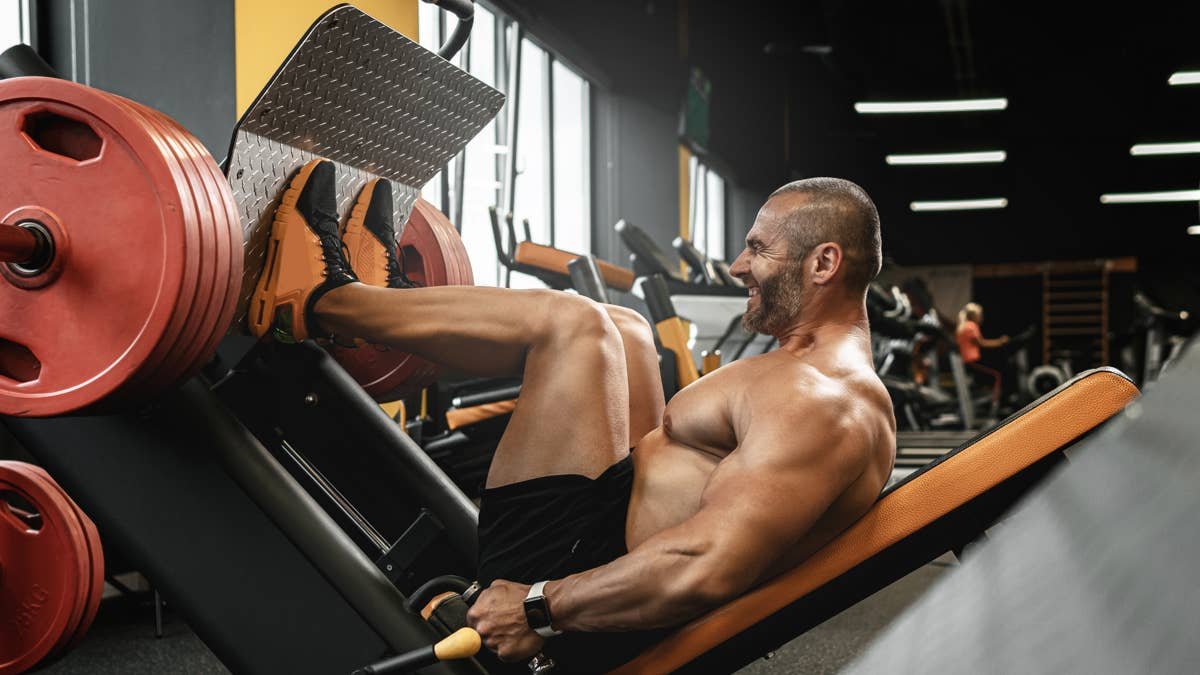
The leg press offers a different trade-off. With the torso supported, you can focus on producing force through the legs rather than balancing a barbell. That makes it useful after squats, when you want additional work without requiring another technically demanding lift. It also offers an alternative for athletes who find their lower back becomes the limiting factor in a squat.
Numbers on a leg press are not comparable across machines. Sled angle, friction, counterweights, the lever arrangement and the mass of the unloaded sled can all affect the force required. Even two riders who load the same plates onto different machines may be performing substantially different work. Track your own machine, seat settings, range of motion and repetitions rather than treating a reported elite athlete’s load as a target.
For an accessory exercise, try two sets of six to ten repetitions. Choose a weight that lets you lower the platform without your pelvis rolling away from the pad. Keep the feet firmly in contact with the platform and avoid bouncing out of the bottom position. Extend the legs under control rather than slamming into the end of the machine’s travel.
If heavy squats are already providing enough stimulus, the leg press does not need to be another maximal-strength exercise. It can simply add manageable work for the quadriceps and glutes. Conversely, if you cannot squat comfortably, a leg press may serve as your primary bilateral lower-body movement. The exercise hierarchy should reflect your equipment, experience and recovery, not someone else’s preferences.

Equipment Worth Exploring
Explore equipment, accessories and gear from our carefully selected range.


Leg Press/Hack Squat BPR-790
Convertible 45-degree leg press and hack squat machine with a broad footplate and band pegs.

Compact Leg Press CLP-700
Compact reverse-style leg press with a moving seat carriage and an adjustable footplate.

Rubber Hex Dumbbells
Rubber-coated hex dumbbell pairs with a stable shape for home and commercial strength training.



Train each leg with split squats
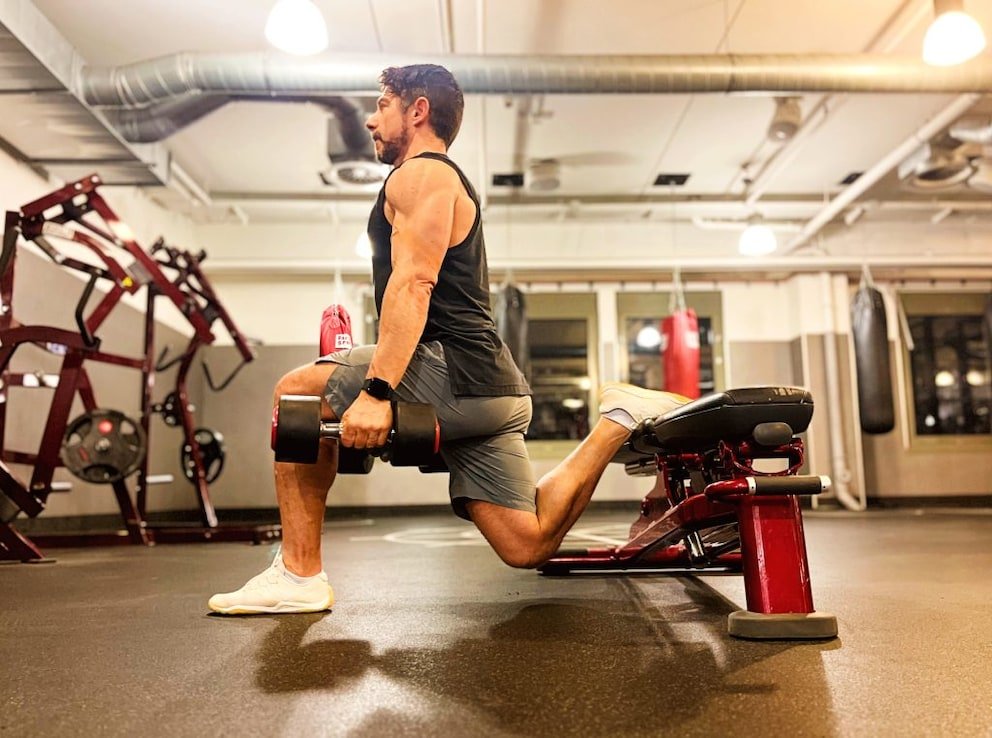
Pedalling is an alternating action, but that does not mean that every gym exercise must mimic a pedal stroke. Bulgarian split squats provide an opportunity to load one leg at a time while the rear foot helps with balance. They are useful for developing unilateral strength and identifying differences in control that may go unnoticed in bilateral exercises.
Use a stable bench or low support and position your front foot far enough forward to descend comfortably. Begin with body weight. As your balance improves, hold a dumbbell in each hand or a single dumbbell at your chest. The rear leg should provide support rather than doing most of the lifting. Lower until you reach a comfortable depth without losing control of the front foot or pelvis, then drive back up.
Two sets of six to eight repetitions on each side are enough to start. You do not have to create a large difference between sides to justify unilateral training. If one side is less stable, start there and match the repetitions with the other side. A persistent or painful asymmetry deserves assessment rather than a heavier dumbbell.
Split squats can produce considerable soreness when you introduce them, especially if you use a deep range of motion. Start conservatively, particularly before a race or a demanding cycling session. Increasing the load, repetitions and range simultaneously makes it difficult to know what you can recover from. Progress one variable at a time. If your balance rather than leg strength limits the movement, use a light hand support until you can load the front leg more consistently.

Leg Day Shirts & Workout Gear
Leg-day gym shirts and workout gear for lifters who never skip squats, lunges and lower-body punishment.

4 Plates Squat Club Meme & Ultimate T-Shirt
Show some leg-day attitude with a playful “4 Plates Squat Club” tee.


Never Skip Leg Day Gym | LEGO Workout Decal for Water B Sticker
Stick a little “Never Skip Leg Day” humor on your favorite gear.

Swolebob Squatpants | SpongeBob Leg Day Meme Workout Sw T-Shirt
Show some gym-day personality with “Swolebob Squatpants”.

Heavy Squatter Gym Wizards | Funny Harry Potter Workout Hoodie
Make your off-duty look more fun with “Heavy Squatter Gym Wizards”.

Squat Game Gym | Funny Squid Game Parody Workout Decal Sticker
Bring “Squat Game” attitude to your water bottle or laptop.

Legendary Leg Day – Squat Meme Vest Muscle Shirt For At Tank Top
Add some leg-day attitude to training with “Legendary Leg Day”.

I Love Squats | Leg Day Pink Heart Plate Graphic T-Shirt
Show some leg-day attitude with a playful “I Love Squats” tee.

Coffee Shots & Heavy Squats for Caffeine Addicts and Sq Hoodie
Keep it laid-back with a little “Coffee Shots & Heavy Squats” attitude.

Squat You Must Star Wars Leg Day Meme Sweater T-Shirt
Show some gym-day personality with “Squat You Must”.
Put the gym and the track into the same week
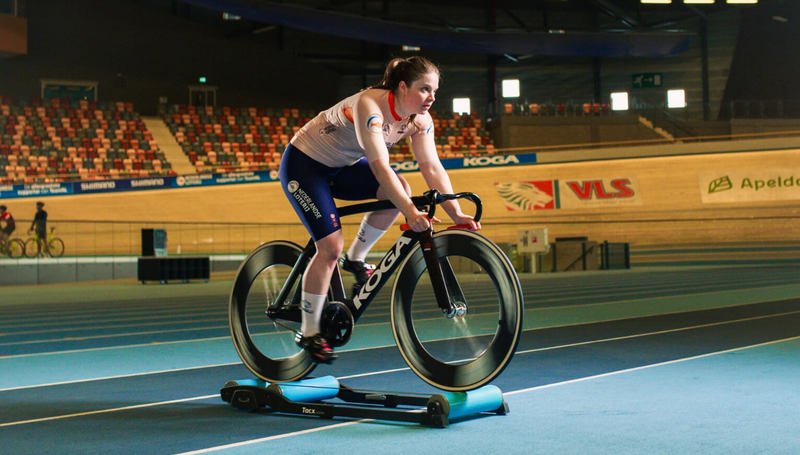
Lavreysen’s reported gym schedule highlights the importance of allocating recovery. The October 2026 account described a period with two gym days and three track days. That is an example of how the work can be divided, not a prescription for everyone. A rider who works full-time, sleeps less or has limited lifting experience may need substantially less training.
For an experienced recreational cyclist, a sample week could place squats and split squats on Monday, short cycling accelerations on Wednesday and leg presses plus lighter strength work on Friday. A comfortable endurance ride on Sunday completes the week. Leave the other days for rest or easy movement. If your most important ride is on Saturday, shift the Friday lifting session earlier or reduce its volume. The schedule should protect the session you most want to improve.
In the first week, perform two working sets per exercise with three repetitions in reserve. In the second week, add a set to the main lift if you are recovering well. In week three, raise the weight slightly while keeping the same repetition target. In week four, reduce the number of sets and assess whether your cycling feels better. This is an original example of progression, not Lavreysen’s actual four-week training plan.
For short sprint practice, use a full warm-up, short controlled efforts and enough easy pedalling between them to recover. The objective is repeatable quality, not exhaustion. If the quality of accelerations drops sharply after a strength day, reduce the gym volume or give yourself an additional recovery day. Do not perform maximal standing starts on public roads.
Before an important event, reduce fatigue rather than trying to add last-minute fitness. Lavreysen discussed tapering before Paris, illustrating that the strongest performance may come after reducing the amount of demanding work. Keep enough familiar movement to feel prepared, but avoid new exercises, unfamiliar loads and unnecessary soreness. Ultimately, the gym session succeeds when it supports the performance you care about, rather than when it leaves you unable to walk down the stairs.