Advertising disclosure: This page includes affiliate product links that may earn us a commission, as well as products from our own store.
Cutting calories while keeping your muscle is already a balancing act. Add the belief that more gym sets must always protect more muscle, and an ordinary fat-loss phase can turn into five punishing sessions a week. The surprising thing is that adding a huge amount of work does not necessarily change the body-composition result, even when it changes how strong you become at particular exercises.
A randomized four-week experiment followed 16 resistance-trained adults through a severe calorie restriction, with unusually high protein intake and either 12 or 30 weekly sets per muscle group. Both conditions produced substantial fat loss. The higher-volume group did better on specific five-repetition strength tests, yet it did not preserve more measured fat-free mass. Understanding that split result is more useful than declaring high-volume training either essential or pointless.
Sixteen trained lifters, 40% fewer calories and two set targets
The volunteers were not complete newcomers to weights. All 16 were resistance-trained individuals assigned to one of two routines during a four-week intervention. The researchers prescribed a 40% calorie restriction and approximately 2.3 grams of protein per kilogram of body mass each day. That is a much sharper short-term cut than many recreational lifters would sensibly choose. It was designed to examine training volume during a demanding nutritional constraint, not to provide a default summer-diet prescription.
Both groups trained on five days per week. The lower-volume program targeted 12 sets per muscle group per week, while the higher-volume program targeted 30 sets. This is not a trivial adjustment from three sets to four. It is a two-and-a-half-fold difference in weekly set count. Because recovery resources may become tighter as energy intake falls, the comparison asks whether paying that larger time-and-fatigue cost translates into better retention of lean tissue.
Researchers collected diet and training records, evaluated body composition with dual-energy X-ray absorptiometry, and tested five-repetition maximum performance. They also used measurements such as energy expenditure and nitrogen balance to examine the dietary intervention more carefully. Importantly, a five-repetition maximum is a performance outcome; it measures the load handled for a short heavy set, not the size of a muscle directly.
Think of this as a controlled comparison inside a specific, aggressive scenario. The study did not randomize people to moderate versus severe deficits, or to different daily protein intakes. Every participant was dieting hard and eating the same relatively high protein target. What differed was the prescribed training volume. That is the foundation for interpreting the results without crediting every observed change to the number of sets.
Big fat loss, but no extra fat-free-mass protection from 30 sets
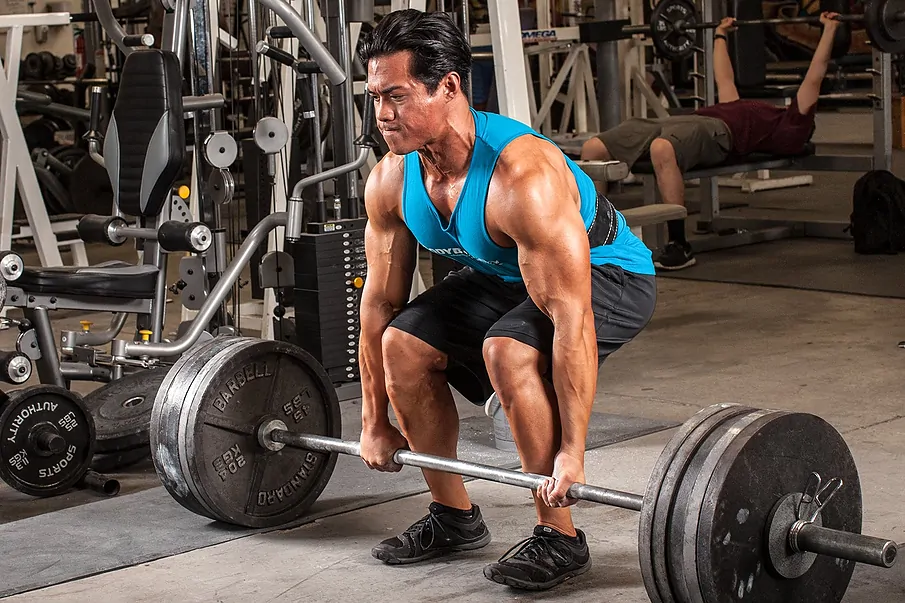
Across the participants, body mass fell by an average of about 4.2 kilograms in four weeks, and fat mass by approximately 3.7 kilograms. Those were significant reductions, but the higher-volume and lower-volume groups did not differ meaningfully in the amount of weight or fat lost. If someone shows you the overall fat-loss figure and says 30 sets caused it, the comparison does not support that conclusion. Both groups were operating under the same severe energy restriction.
The more interesting question is whether the extra sets protected muscle-containing tissue. The investigators did not find a significant intervention or group-by-intervention effect for fat-free mass. In the measures and time frame used, pushing from 12 to 30 sets per muscle group did not yield additional lean-tissue preservation. That makes the result relevant to anyone who fears that lowering volume during a cut will automatically cost them size.
Fat-free mass is not the same thing as a biopsy of contractile muscle. It includes water and other nonfat compartments, and it can move with changes in hydration and glycogen. Even with an established method such as DXA, a short dieting study should not be treated as a perfectly precise census of muscle fibers. A finding of no detected difference also does not prove every possible higher-volume program would perform identically.
Still, the result is a meaningful check against the idea that multiplying sets is free insurance. There were only 16 participants, and the duration was just four weeks, so uncertainty remains. Yet the trial’s direct comparison offers no reason to assume the high-volume option automatically buys more muscle retention when calories are severely restricted and protein is already high. The next finding, on strength, makes the picture more nuanced.
The surprise: five-rep strength rose more with higher volume
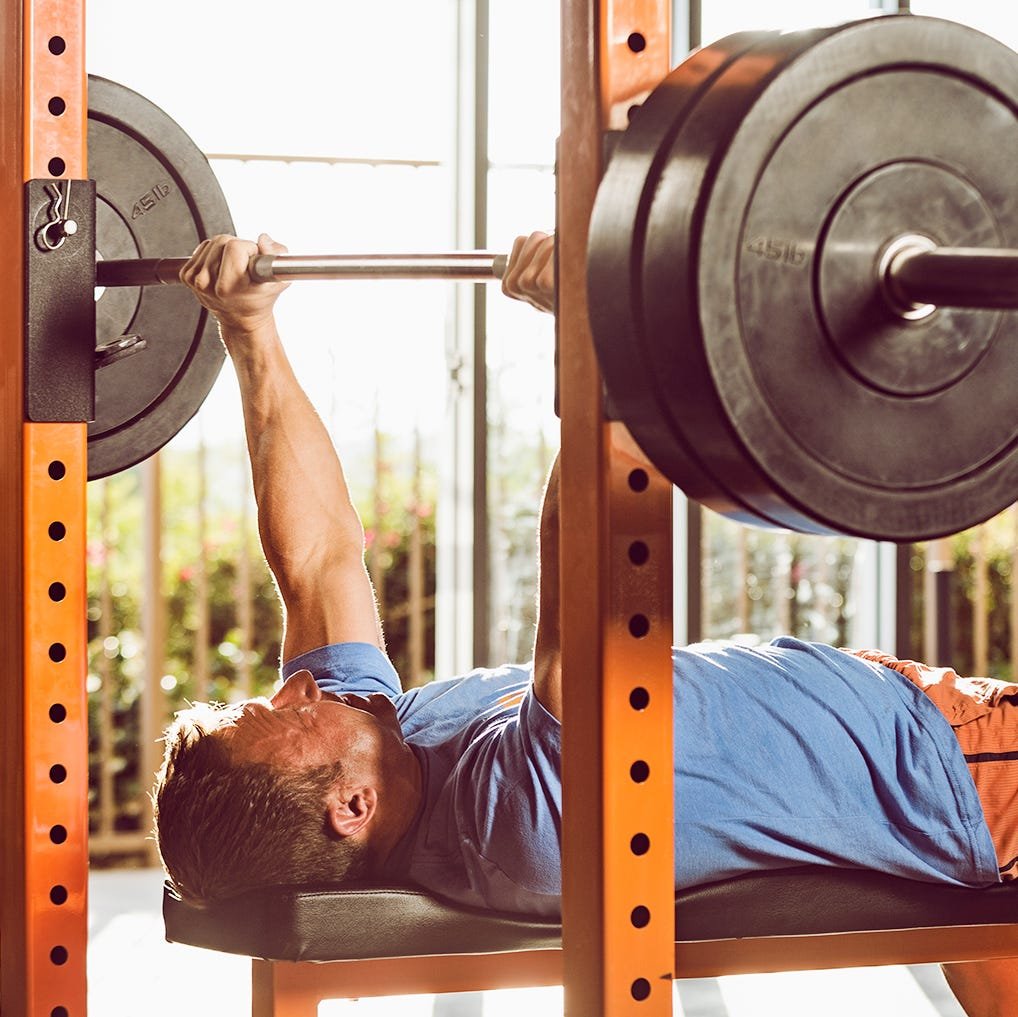
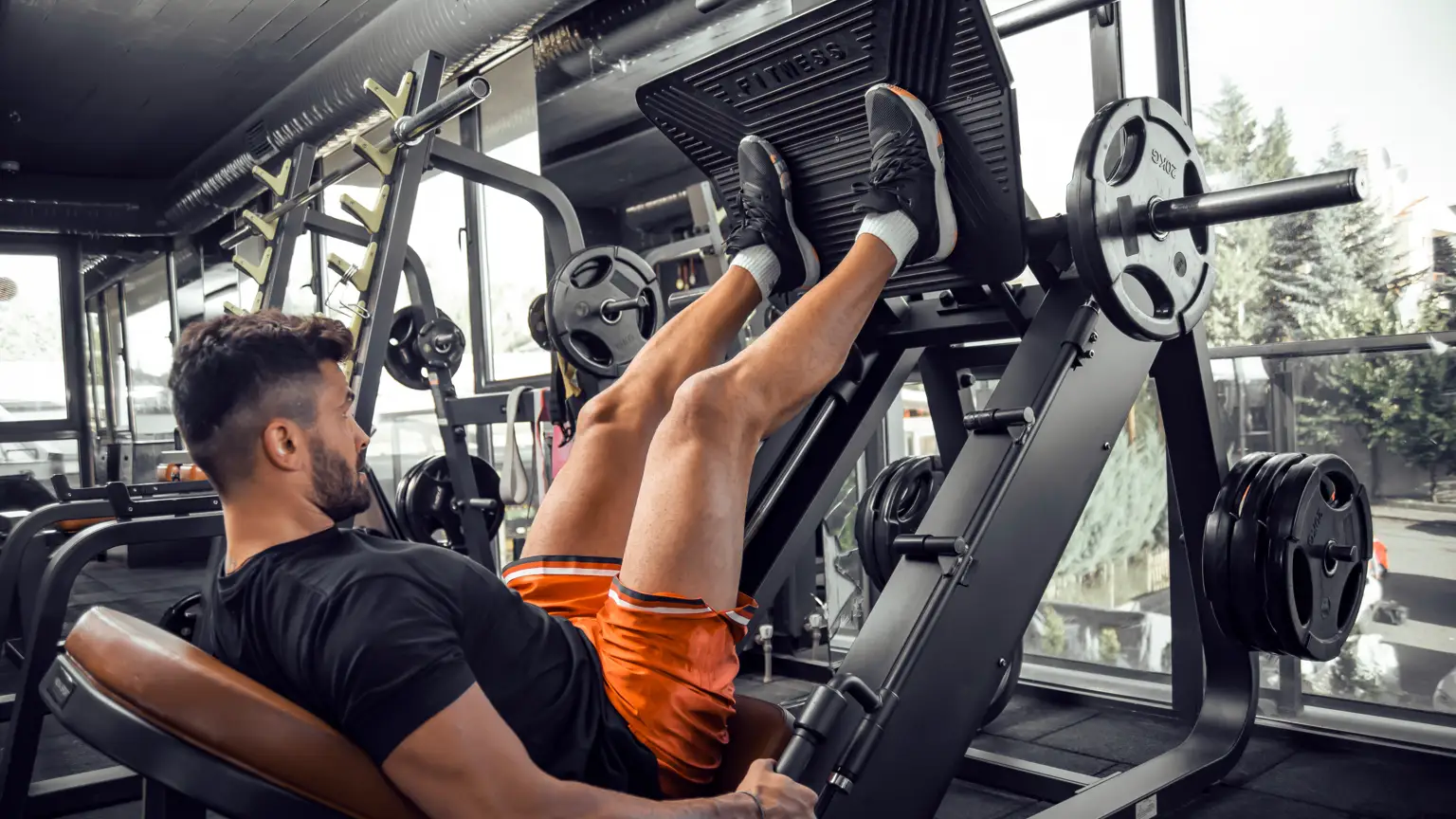
The high-volume group showed greater improvement in five-repetition maximum performance on the chest press and on both the right and left leg-press tests. The differences favored 30 sets, with reported p values of 0.005 for chest press, 0.003 for right leg press and below 0.001 for left leg press. Those results matter because the body-composition comparison did not show a corresponding advantage in fat-free mass retention.
Strength is more than a measurement of tissue size. It also involves practice, movement coordination, familiarity with loading, confidence and the ability to express force in a specific exercise. A four-week strength change can reflect several of those influences. The experiment did not establish which mechanism drove the advantage, so the correct wording is that the higher training-volume prescription improved the tested performance more, not that it proved new muscle was built faster.
That distinction is practical. Someone preparing for a heavy press or leg-press performance goal might value a higher practice dose, provided recovery remains adequate. Someone primarily concerned with maintaining their physique during a short fat-loss phase might judge the same additional volume less worthwhile. Two lifters can look at the identical trial and make different programming choices because their outcomes of interest are different.
Do not generalize these findings to a new personal record in the squat, marathon performance or every exercise in the gym. The measured outcomes were specific five-repetition tests, and the program was short. Technique changes or greater practice on closely related exercises could have contributed. The headline should be precise: more sets helped these strength tests, but did not show extra preservation of measured lean mass.

Equipment Worth Exploring
Explore equipment, accessories and gear from our carefully selected range.

Studio V-Squat
Plate-loaded V-squat machine for supported lower-body strength training.

Open Hex Bar
Open-frame trap bar with multiple handles for deadlifts, carries, and lower-body training.


Rubber Hex Dumbbells
Rubber-coated hex dumbbell pairs with a stable shape for home and commercial strength training.

FID Bench MAX
Adjustable bench offering flat, incline, and decline positions + adjustable headrest.


Competition Plates
Competition-style bumper plates for Olympic lifts and loaded strength training.


VForce 3IN1 Max
Six-post all-in-one rack with Smith machine, functional trainer, and variable-force cables.

Why more sets were not guaranteed to save more muscle
Outside a calorie deficit, increasing hard training volume can often support larger hypertrophy gains, up to the point where extra work becomes harder to recover from. That relationship is one reason people instinctively add sets when a training block stalls. But a fat-loss phase changes the context: energy intake is reduced, some sessions feel more demanding, and sleep or daily activity can become difficult to manage. An effective growth strategy during a well-fueled phase may not be the lowest-risk strategy for an aggressive cut.
Training volume also has a quality component. Thirty nominal sets are not necessarily thirty productive sets if load, range of motion, attention and effort deteriorate across the week. A lower-volume approach with consistent, appropriately challenging work might provide enough stimulus to maintain performance in a muscle group without accumulating the same fatigue. That is an interpretation of programming principles, rather than a separate mechanism directly proven by this experiment.
The trial did not measure each participant’s individual recovery capacity or determine a universal sweet spot in sets. Nor did it compare 12 and 30 sets against an intermediate target such as 16 or 20. It therefore cannot show that 12 is the optimal weekly number, that 30 is excessive for everyone, or that a person should suddenly slash their routine. It shows what happened at these two endpoints under a defined four-week dietary challenge.
Another important detail is time. Four weeks may capture early practice effects more readily than slower architectural changes in muscle. Someone on a longer, less aggressive cut could respond differently. The safest lesson is to choose the least burdensome volume that keeps your important lifts and movement quality stable, and to increase it for a clear reason rather than because higher numbers feel more disciplined.

Bodybuilding Shirts & Workout Gear
Bodybuilding shirts, tanks and gym gear for lifters chasing muscle, size, symmetry and the pump.


Bulking Season Donut Dumbbell Donuts Barbell Bulk T-Shirt
Heavy lifts, good laughs, and a little “Bulking Season Donut Dumbbell Donuts” energy.

Pizza Dumbbell Barbell Bulk Diet Sticker
Stick a little “Pizza Dumbbell Barbell” humor on your favorite gear.

I'm Just Here Because I Like To Eat , Bros & Meme T-Shirt
Heavy lifts, good laughs, and a little “I'm Just Here Because I Like To Eat” energy.

I'm A Rice-ist – Bro Rice Lovers, Lifting, & Gains – T-Shirt
Make gym days more fun with “I'm A Rice-ist” style.


Swole Donut Eating A Pizza Meme T-Shirt
Make gym days more fun with “Swole Donut Eating A Pizza” style.

Check Out My Six Pack Tacos – Taco Jumper Pullover T-Shirt
Keep things casual with a little “Check Out My Six Pack Tacos” attitude.

Go Pig Or Go Home | Bodybuilder Pig & Workout T-Shirt
Bring “Go Pig Or Go Home” humor to your next gym day.

Pizza and Weights Retro Cartoon Graphic and Pizza Lover T-Shirt
Make gym days more fun with “Pizza and Weights Retro Cartoon Graphic” style.
The protein target and severe deficit change how to read the trial

Both groups were assigned roughly 2.3 grams of protein per kilogram of body mass every day. For a person weighing 80 kilograms, that target corresponds to about 184 grams daily. That arithmetic is an illustration of the protocol, not a personalized requirement. Protein intake is one of several ways athletes try to preserve lean mass while dieting, but eating extra protein does not turn a large energy deficit into a recovery-neutral state.
The 40% energy reduction is equally important. Someone who usually maintains weight around 2,600 calories would be targeting roughly 1,560 calories at a 40% reduction, before accounting for individual variation and changes in expenditure. That is a steep restriction, especially alongside five weekly lifting sessions. For many active people, more moderate weight loss with sufficient food may be more sustainable and compatible with training quality.
Because both groups followed a high-protein strategy, this experiment cannot isolate the effect of protein itself. There was no low-protein comparison or no-training group. It also cannot settle how much body fat an individual should lose each week, whether fasting helps, or whether a female and a male athlete at different body-fat levels would benefit equally. The study’s strengths lie in comparing volume while other major conditions were held relatively consistent.
Other research on dieting and resistance training generally supports keeping protein adequate, continuing purposeful lifting and avoiding unnecessarily rapid weight loss when muscle retention matters. But that broader evidence includes different populations, deficit sizes and intervention lengths. Do not blend their figures into an invented promise of muscle retention. Use the 16-person result as one piece of a larger programming decision, not a command to adopt an aggressive deficit.
A cutting-session template that respects recovery
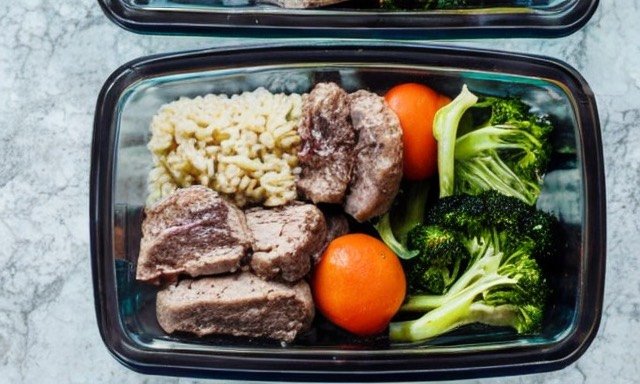
First, decide what you are trying to preserve. If your main goal is keeping strength and size while reducing body fat, select a small number of priority exercises you can repeat reliably. Include a squat or leg-press pattern, a hip hinge, a horizontal or vertical press, a row or pull, and a limited amount of accessory work. Keep technique standards clear. A program that survives the whole diet is more useful than a heroic first week that leaves you sore and depleted.
Instead of automatically chasing 30 weekly sets per muscle, start by auditing the work you already do. Count challenging working sets, not warm-ups, and remember that some compound movements contribute to several muscle groups. For many recreational lifters, a moderate number of well-executed sets across two or more weekly exposures is a reasonable starting framework. Your training history and present capacity matter more than copying either study arm.
Maintain enough load to make the key sets meaningful, while avoiding needless failure repetitions when recovery is poor. Leaving one to three clean repetitions in reserve on most demanding sets can provide room to manage fatigue, with harder efforts chosen deliberately. If strength slips, first inspect calorie intake, sleep, exercise selection, rest periods and technique before adding five extra movements. Extra work is only useful if you can perform and recover from it.
A four-day upper/lower split can be easy to monitor: two upper-body sessions and two lower-body sessions, each anchored by one or two primary lifts and a few accessories. A three-day full-body routine can work just as well when life is busy. Neither schedule was directly tested here; they are examples of how to preserve consistent practice without turning training into an exercise-count competition. Adjust set counts according to performance and fatigue rather than treating them as a fixed identity.
Fueling still matters. Make protein-rich foods available across the day, include carbohydrate around demanding sessions when it helps you train, and keep fluid intake steady. If you are constantly lightheaded, unusually weak, or unable to recover, do not solve that with a bigger training spreadsheet. Reassess the deficit and seek appropriate professional advice where needed, particularly if you have medical conditions or a history of problematic dieting.
Equipment Worth Exploring
Explore equipment, accessories and gear from our carefully selected range.
VOLTRA
Compact digital cable trainer with smooth, adjustable resistance.

VForce Wall Trainer
Space-saving wall-mounted functional trainer with pivoting cable arms and variable resistance ratios.


Grip Plates
Rubber-coated weight plates with handholds for loading barbells and machines.


MiniPin Black Edition
Compact powder-coated weight-stack loading pin for adding Olympic plates in tight spaces.

Leather Lifting Straps
Padded leather straps support grip during heavy rows, deadlifts and pulling exercises.

HUSLA Leg Extension Pad
Pad attachment designed to increase usable range of motion on compatible leg-extension machines.

VForce Lat Tower
Wall-mounted cable tower with pivot arms and adjustable 1:1 or 2:1 pulley ratios.
How to judge your next four weeks without guessing
Use a short log to separate actual changes from the stress of a difficult diet. Record your weekly average body weight, approximate daily protein, the sets and loads for a handful of priority lifts, and whether you are sleeping and recovering adequately. The average matters more than a single morning scale number, which can shift with water, sodium and stored carbohydrate. Look for trends that are consistent enough to inform a decision.
Pick one chest press and one lower-body movement as your performance anchors, because those were directly relevant outcomes in the trial. Standardize the exercise setup and range of motion, and compare loads at similar repetition quality and effort. If the same weight feels heavier one week, check whether the difference reflects a true trend, a poor night, a rushed warm-up or a change in exercise technique.
Use waist measurements, progress photos under consistent conditions and other practical markers to complement the scale. None is perfect in isolation. A drop in body weight alongside stable lifting quality can be encouraging even if day-to-day appearance fluctuates. Conversely, sharply falling performance, persistent soreness or escalating fatigue are signals to reconsider the pace of weight loss or the amount of work rather than piling on additional sets.
At the end of four weeks, ask three questions: did the fat-loss goal move forward, did the most important lifts hold up, and was the program sustainable? If the answers are mostly yes, there is no need to overhaul everything. If the lifts fell badly while fatigue rose, consider improving recovery or reducing the deficit before blaming the program’s numerical set target. The original experiment was short and small, so your training log is feedback, not a personal randomized trial.
The central takeaway is simple but easily missed. In 16 resistance-trained participants dieting aggressively with high protein, 30 sets per muscle group improved specific five-rep strength outcomes more than 12 sets, yet did not show better fat-free-mass retention. More work is a tool, not an automatic muscle-preservation guarantee. Keep enough training to give your body a reason to remain strong, then make recovery and consistency part of the plan.
Funny Gym Shirts & Workout Gear
Funny gym shirts, tanks, hoodies and workout gear for lifters who like training hard.


Pizza I Love T-Shirt
Show some pizza-loving attitude with a playful “Pizza I Love Pizza” tee.

Shirt – Donut Mugshot & Gymbros – Bad Carbs Meme T-Shirt
Show some donut-loving attitude with a playful “Donut Mugshot” tee.

Shirt – I'M Into Fit'Ness Pizza In My Mouth – Meme T-Shirt
Show some pizza-loving attitude with a playful “I'm Into Fitness Fit'ness Pizza in My Mouth” tee.

: I Love Pizza & Lifting Top Valentine'S Day Meme T-Shirt
Heavy lifts, good laughs, and a little “: I Love Pizza & Lifting” energy.

Shirt – Brotein Bar – Meme & Gains – & Gymbros Top T-Shirt
Bring “Brotein Bar” humor to your next gym day.

Eat More Whole Foods Donuts – Junk Food Meme Jumper Pul T-Shirt
For laid-back days and donut-loving humor: “Eat More Whole Foods Donuts”.

Microdosing Pizza Shirt | Psychedelic Fast Food Graphic T-Shirt
Rep “Microdosing Pizza” humor in and out of the gym.

Funny Sushi Gains Gym | Foodie Bodybuilding Hooded Pull Hoodie
Stay casual and show some lifting attitude with “Sushi Gains”.

Weights Breakfast Pancake Weights Lifting Meme Sticker
Put “Weights For Breakfast Pancake Weights” gym humor on your laptop, bottle, or gym gear.