Advertising disclosure: This page includes affiliate product links that may earn us a commission, as well as products from our own store.
A farmer's carry is easy to describe: pick up a weight in each hand and walk. Training it well takes a clearer standard. The pickup, grip, walking path and controlled finish all belong to the set. If one breaks down, covering another few metres does not necessarily represent better work. Use the carry to practice supporting a load while moving, then progress the version you can repeat rather than chasing the heaviest pair in the gym.
Make the pickup and set-down part of the exercise
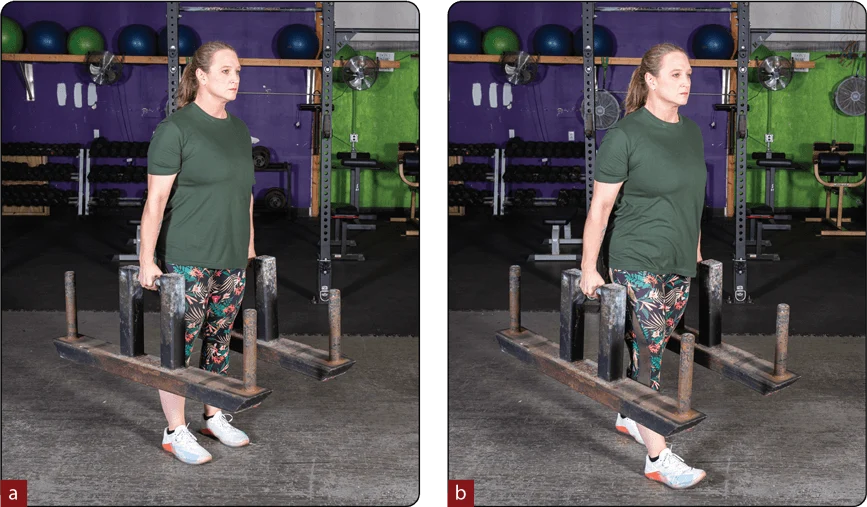
Start with two manageable weights and a clear place to finish. Stand between them, establish a secure grip and prepare to lift before taking the first step. With long farmer handles, check that both implements have enough clearance to rise without striking your legs. With dumbbells, position the heads so that you can stand without dragging them around your shoes.
Use a controlled pickup that you can perform comfortably. Keep your trunk organized as your legs and hips bring you upright, then settle before walking. A rushed pull followed immediately by a stumbling first step makes the carry harder to assess. You are trying to move a supported load, not rescue an unstable start.
The final metres deserve the same attention. Leave enough room to slow down, stop and lower the weights with control. Momentum does not disappear when you reach a floor marker. Finishing directly against a wall or crowded equipment rack removes the space you need to put the load down deliberately.
A practical rehearsal is to complete the pickup, stand briefly, walk a short straight route and set down smoothly. Repeat with the same manageable load until every phase feels predictable. This is an introductory practice example, not a tested performance standard or a requirement to pause during every future carry.
Keep fingers and feet clear of the implements when lowering them. Check adjustable weights and plate-loaded handles according to their instructions before starting. A collar, pin or locking mechanism that is adequate for storage still needs to be secured correctly for the movement you intend to perform.
Choose a walking lane before choosing a heavier load
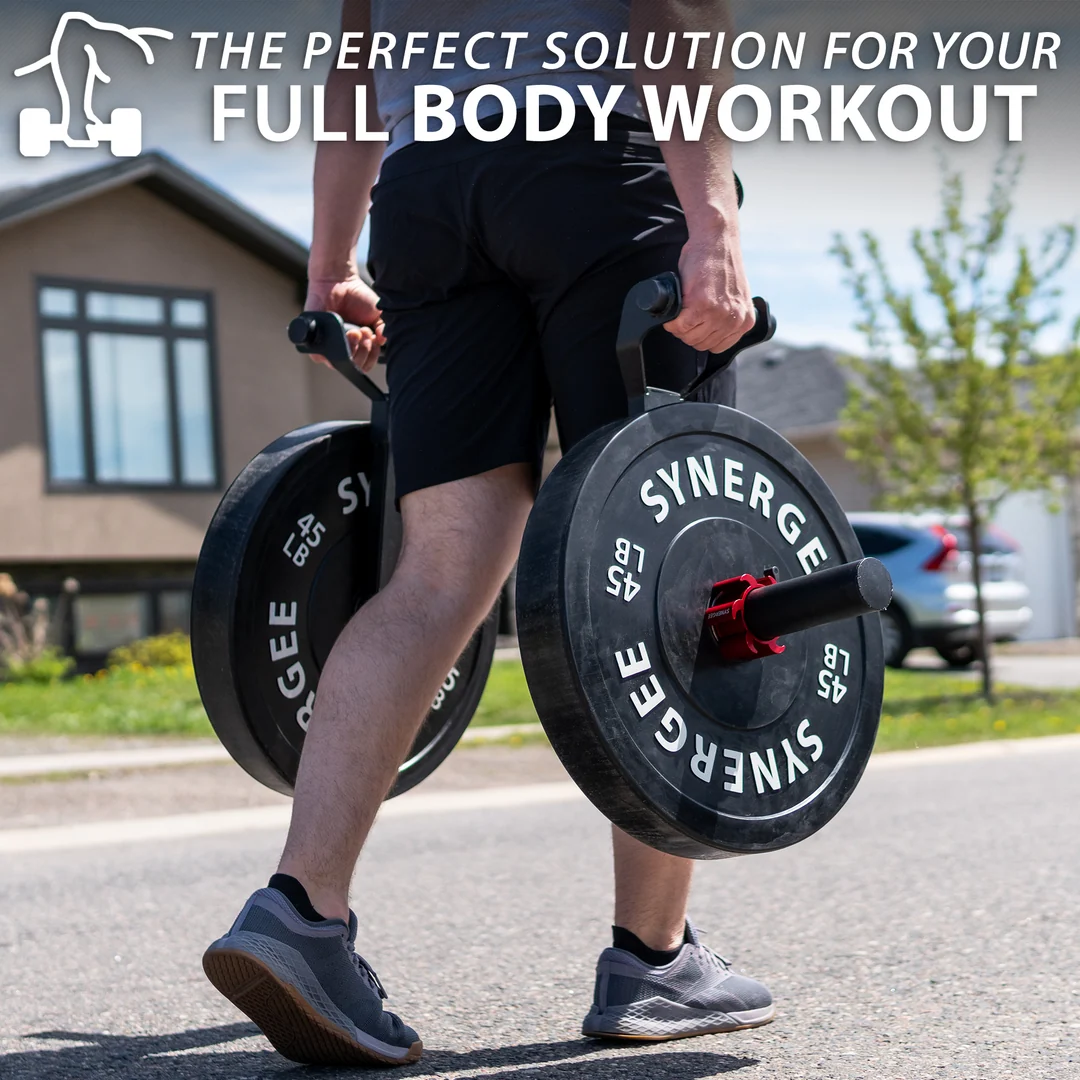
Loaded walking adds movement to a static hold. The useful challenge is maintaining a strong, repeatable position while your feet change support. Begin at a controlled walking pace, with enough room beside the weights and overhead. Your route should be clear of loose plates, bottles, bags and people likely to step into the lane.
Take steps that let you control the implements without excessive swinging or collisions with your legs. There is no need to exaggerate a march or force an unusually long stride. If the weights are pulling you into hurried steps, reduce the demand and recover a pace you can manage.
Decide how you will handle the end of the lane. A straight carry and a shuttle carry are different tasks because a shuttle includes deceleration and turning. For early practice, stopping and setting down before resetting can be simpler than pivoting under load. Do not treat a fast, unstable turn as a progression.
Keep the route consistent when comparing sessions. Ten metres on a flat rubber floor is not directly interchangeable with ten metres on uneven ground or a crowded path. A longer implement also needs a wider turning area. Record the route and turns alongside the load rather than keeping only the largest number.
Watch the later part of each set. A carry may begin neatly and finish with shortened control, swaying or repeated grip adjustments. End the set while you still have a deliberate stopping and lowering strategy. Distance earned after that point can disguise the very limitation you are trying to train.
Match the implement and grip to the goal
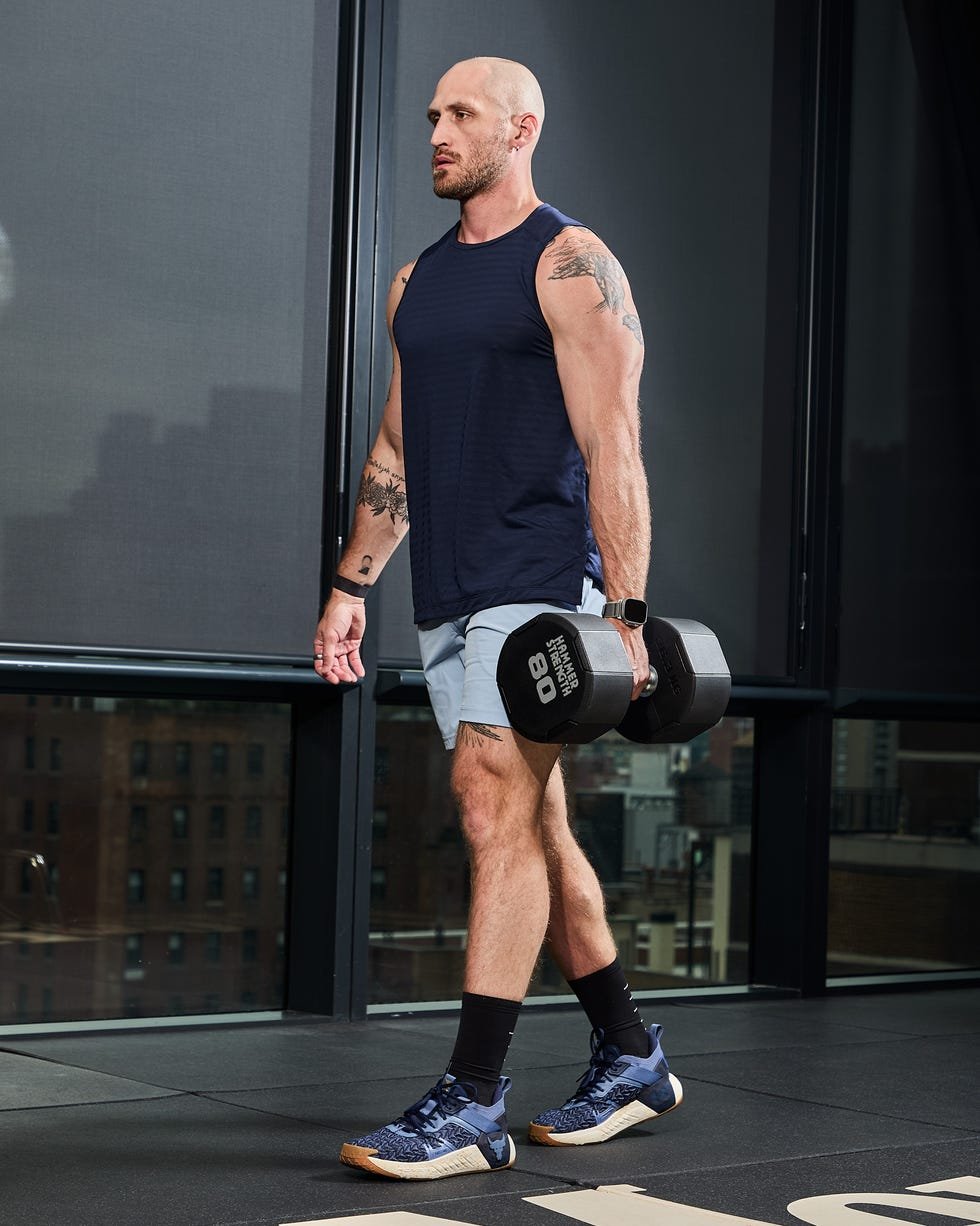
Dumbbells, kettlebells and dedicated farmer handles all allow loaded walking, but they are not identical tests. Handle diameter, surface texture, balance and the distance between the load and your hand change the experience. Keep the implement consistent before interpreting a heavier carry as a clean improvement.
For grip-focused work, the hand's ability to maintain the hold is part of the task. If you use an aid that reduces that demand, note it and judge the set accordingly. A carry aimed at supporting a larger overall load may have a different purpose from a carry intended to challenge the hands first.
Thicker grips are a separate variation rather than a free upgrade. They can make a lighter implement difficult to hold, which changes what limits the set. Begin conservatively when changing diameter, and check that any added grip sleeve fits securely. Do not compare the result directly with a conventional handle.
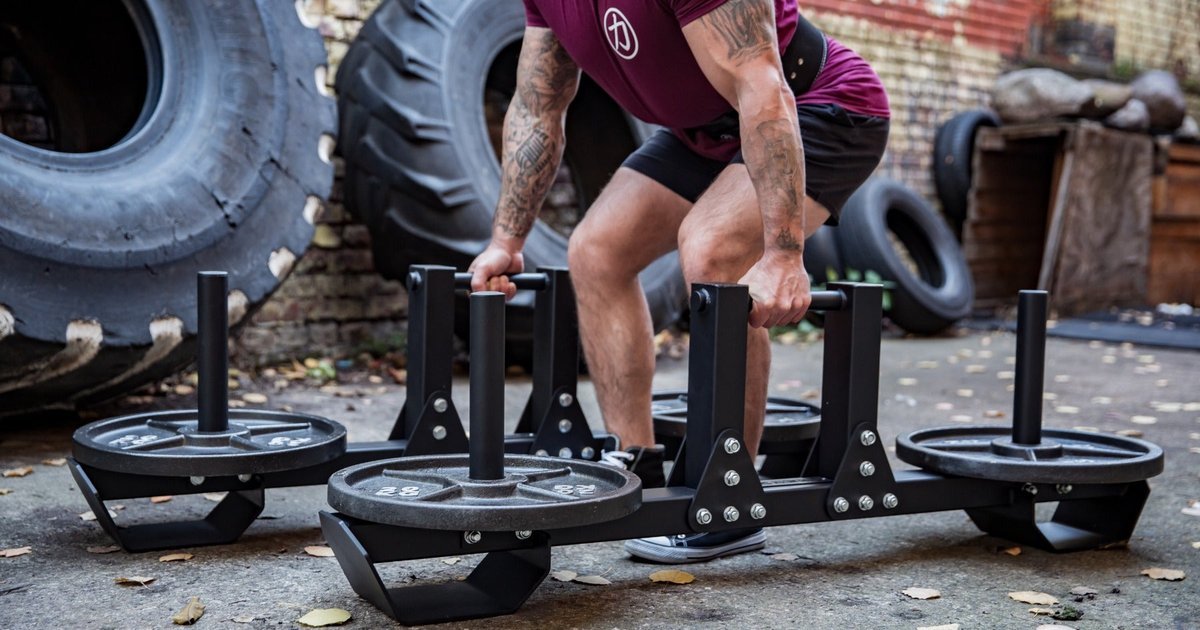
Plate-loaded equipment introduces additional setup choices. Check sleeve compatibility, permitted loading and collar requirements for the actual product. Plate diameter affects ground clearance and pickup height. A grip plate carried by its opening is another distinct hold; it should not be treated as the same exercise as a handle-supported carry.
Choose equipment you can use as instructed, without improvised connections. Adjustable dumbbells and kettlebells need their locks engaged, while their shape must leave room for your stride. The best practical choice is often the available implement that provides reliable loading, a secure hold and enough clearance for controlled movement.
None of this makes the carry a replacement for every pull or leg exercise. A deadlift practices lifting a load, while a carry adds supported walking. They may complement one another, but a longer walk does not demonstrate that your deadlift or every measure of strength improved.

Equipment Worth Exploring
Explore equipment, accessories and gear from our carefully selected range.

Rubber Hex Dumbbells
Rubber-coated hex dumbbell pairs with a stable shape for home and commercial strength training.


Cast Iron Kettlebells
Textured cast-iron kettlebells for swings, squats, carries, and full-body training.


Grip Plates
Rubber-coated weight plates with handholds for loading barbells and machines.


Use suitcase carries as a different challenge
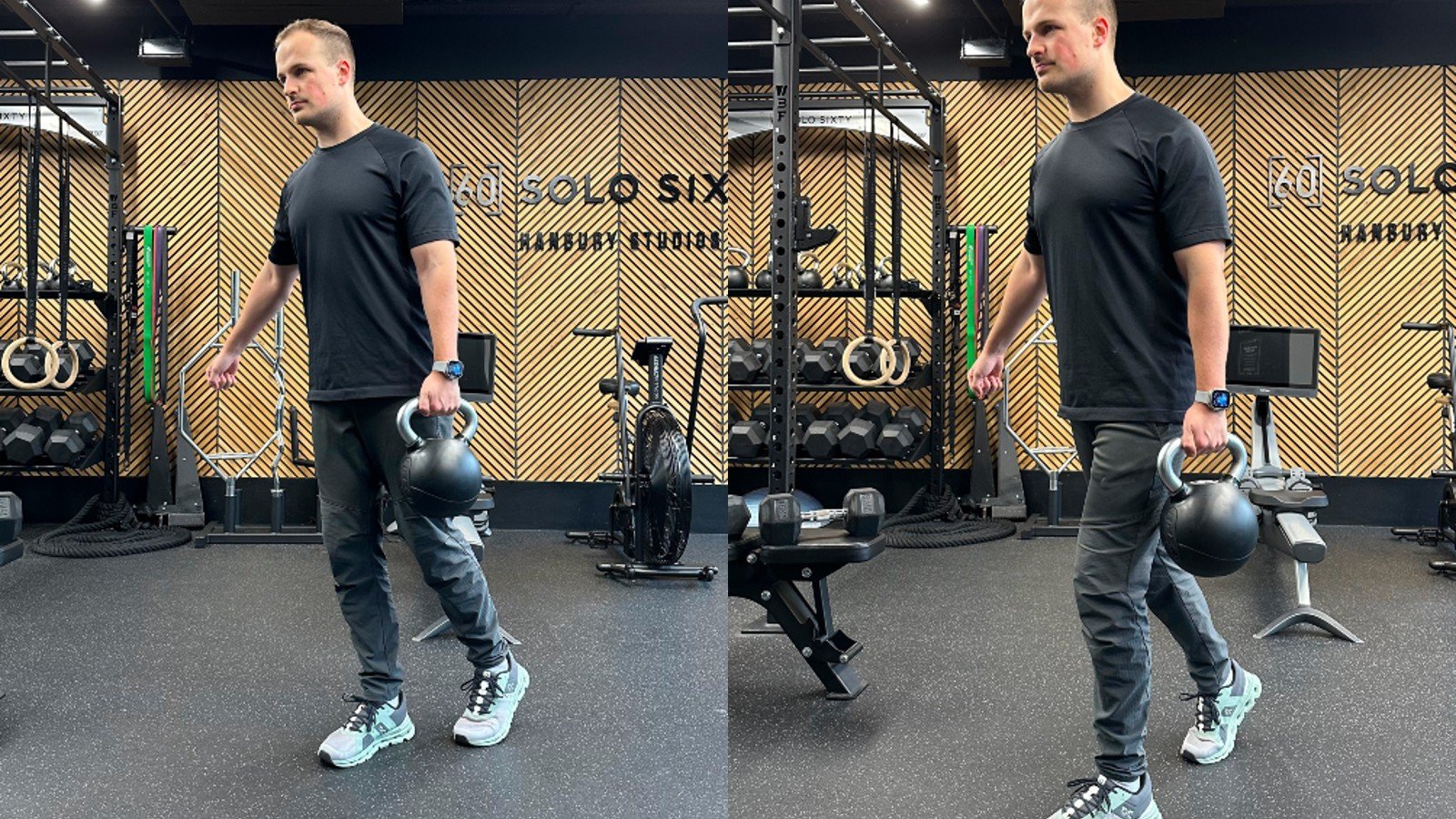
A suitcase carry uses a load on one side instead of equal loads in both hands. That changes the balance problem: you must resist being pulled sideways while continuing to walk. It is a useful variation when that is the task you want to practice, not simply a shortcut to claiming twice the difficulty.
Begin with a load that allows an upright, controlled walk. Avoid deliberately leaning away from the weight to create a dramatic visual correction. If your position changes substantially from step to step, reduce the load or shorten the route. The objective is a repeatable movement, not holding any position long enough to reach the marker.
Train each side and record it separately. Use comparable routes, loads and set conditions, while noting differences you observe without inventing a diagnosis. One awkward session can reflect familiarity, fatigue or setup. Persistent difficulty or pain deserves appropriate individual assessment rather than an online claim about a weak muscle.
A one-handed carry should have its own progression record. Do not assume that half of your two-handed load will produce an equivalent task. Load position changes the demands, so the first session is about establishing a suitable starting point rather than matching a percentage.
Overhead and front-rack carries introduce further changes in shoulder position and balance. They are options for a different purpose, not mandatory next levels. You can build a useful routine around conventional farmer and suitcase carries without collecting increasingly complicated variations.
Progress one variable and preserve the standard
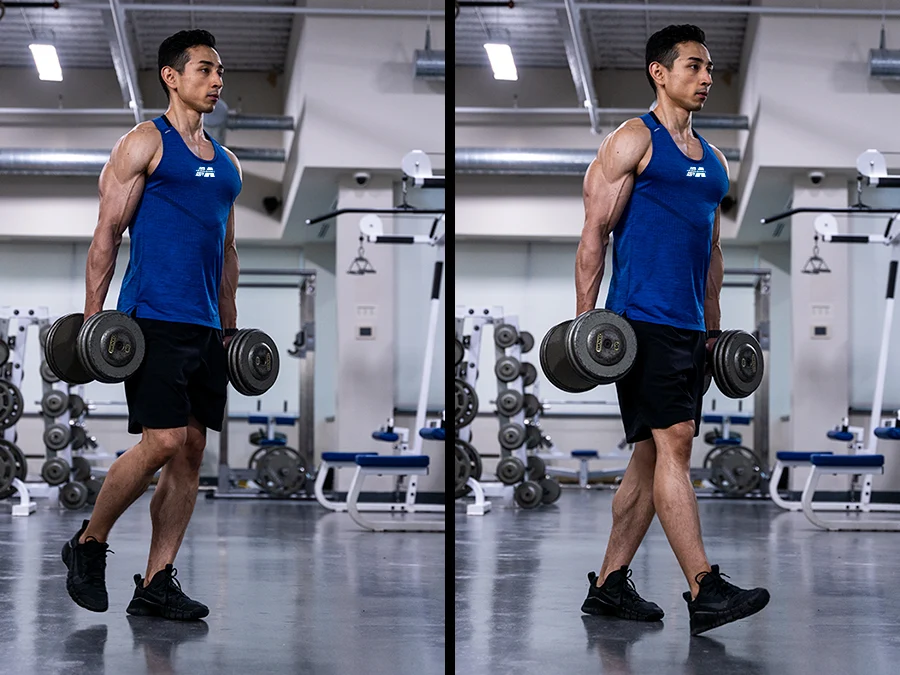
Pick one clear priority: holding a heavier load, maintaining a longer controlled carry, or completing repeated work with a consistent recovery period. These goals overlap, but changing all three at once makes progress difficult to interpret. Write down the implement, load per hand, route, turns and rest period before the first working set.
As a conservative practice example, try two or three short carries on a clear straight lane after your main lifting. Choose a load that leaves you able to stop and lower it confidently. Rest enough to repeat the same movement standard. This is an adjustable starting example, not an optimal prescription established by a trial.
At the next session, repeat the setup before making it harder. If each carry remains controlled, increase either load or distance modestly while keeping the other details stable. If the new load causes swinging or a rushed finish, return to the previous version. A smaller increase done cleanly provides more useful feedback.
For conditioning, repeated carries can sit near the end of a session. For a grip priority, consider whether earlier pulling has already exhausted your hands. Either choice can be reasonable, but record the exercise order so that you do not compare a fresh attempt with one performed after a demanding back workout.
Review how the carry affects the rest of your program. Hands and forearms that are still exhausted during your next planned pulling session may signal that the added work is poorly placed or excessive for your current schedule. Adjust the dose rather than assuming every difficult finisher improves the overall plan.
Consistency and progressive overload matter more than an elaborate variation list. Keep the same basic task long enough to learn from it, and use your log to identify the next manageable change. A successful farmer's carry finishes with the same intention it began with: secure grip, controlled movement and a deliberate set-down.

Funny Gym Shirts & Workout Gear
Funny gym shirts, tanks, hoodies and workout gear for lifters who like training hard.

Grip Strength Fanatic Meme Hoodie
Show off your lifting humor in a laid-back “Grip Strength Fanatic” hoodie.

Dia De Los Muertos Kettlebell – Day of the Dead Workout Sticker
Bring “Dia De Los Muertos Kettlebell” attitude to your water bottle or laptop.

Heavy Metal Gym – Funny Kettlebell Rock Music Vest Musc Tank Top
Add some metalhead attitude to training with “Heavy Metal”.

Kettlebell Heart X-Ray – Valentine's Workout Meme Decal Sticker
Stick a little “Kettlebell Heart X-Ray” humor on your favorite gear.

Consistency King Tee
Make gym days more fun with “Consistency King Stoic Greek God Marble” style.

Earth Kettlebell Meme Shirt – Lifting The Earth T-Shirt
Show some lifting attitude with a playful “Earth Kettlebell” tee.

Deadlift Molten Skull Graphic , Hardcore Bodybuilding T Tank Top
Add some deadlift attitude to training with “Deadlift”.

Pineapple Kettlebell – Gym Meme Pullover Jumper T-Shirt
Bring “Pineapple Kettlebell” humor to your everyday gym style.

Pancake Kettlebell – Breakfast Gains Meme Vest Muscle S Tank Top
Bring “Pancake Kettlebell” humor to your next lifting session.

Gym Sworn to the Iron Oath Medieval Knight Crewneck for T-Shirt
Show some gym-day personality with “Sworn to the Iron Oath Medieval Knight”.