Advertising disclosure: This page includes affiliate product links that may earn us a commission, as well as products from our own store.
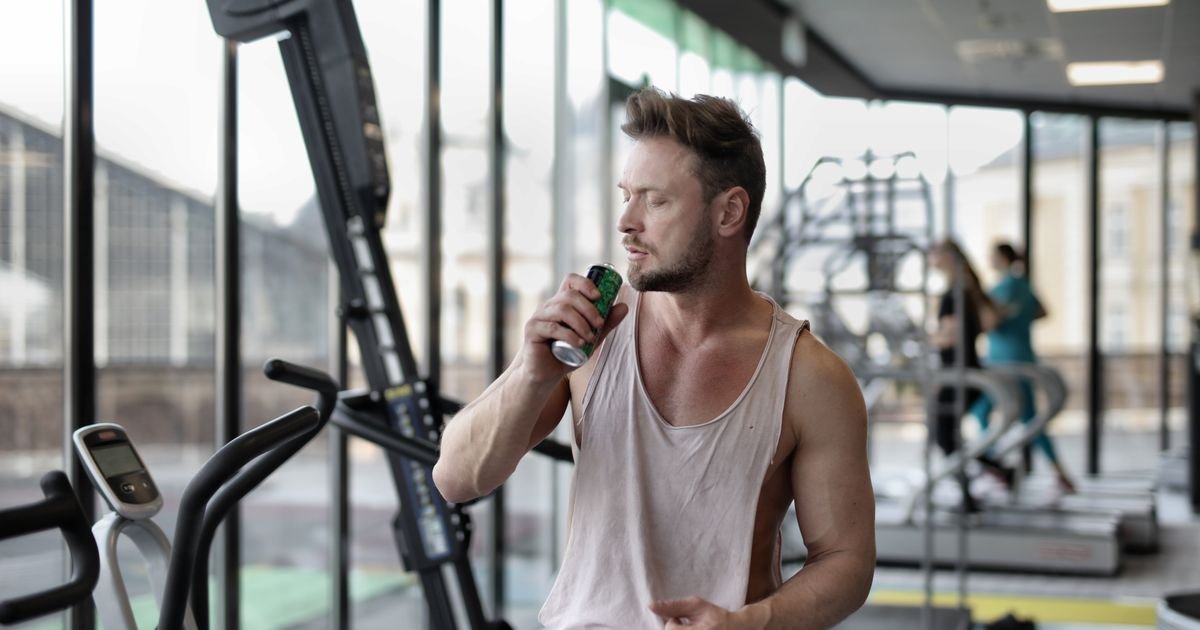
Caffeine is a fixture of lifting culture. Coffee before a session, an energy drink on the way to the gym, or a scoop of pre-workout can feel like part of the warm-up. But a stimulant that makes you more alert does not necessarily make every muscle contraction stronger. An October 2026 experiment offers a useful reality check: neither of two tested caffeine doses significantly improved knee-extension strength or fatigue resistance in the men studied.
That is not proof that caffeine never works. It is a reminder to distinguish an average effect across many studies from a guaranteed advantage in a particular test, and to weigh any possible extra repetition against the cost of disrupted sleep, anxiety or excessive dosing.
What the October 2026 caffeine trial actually tested
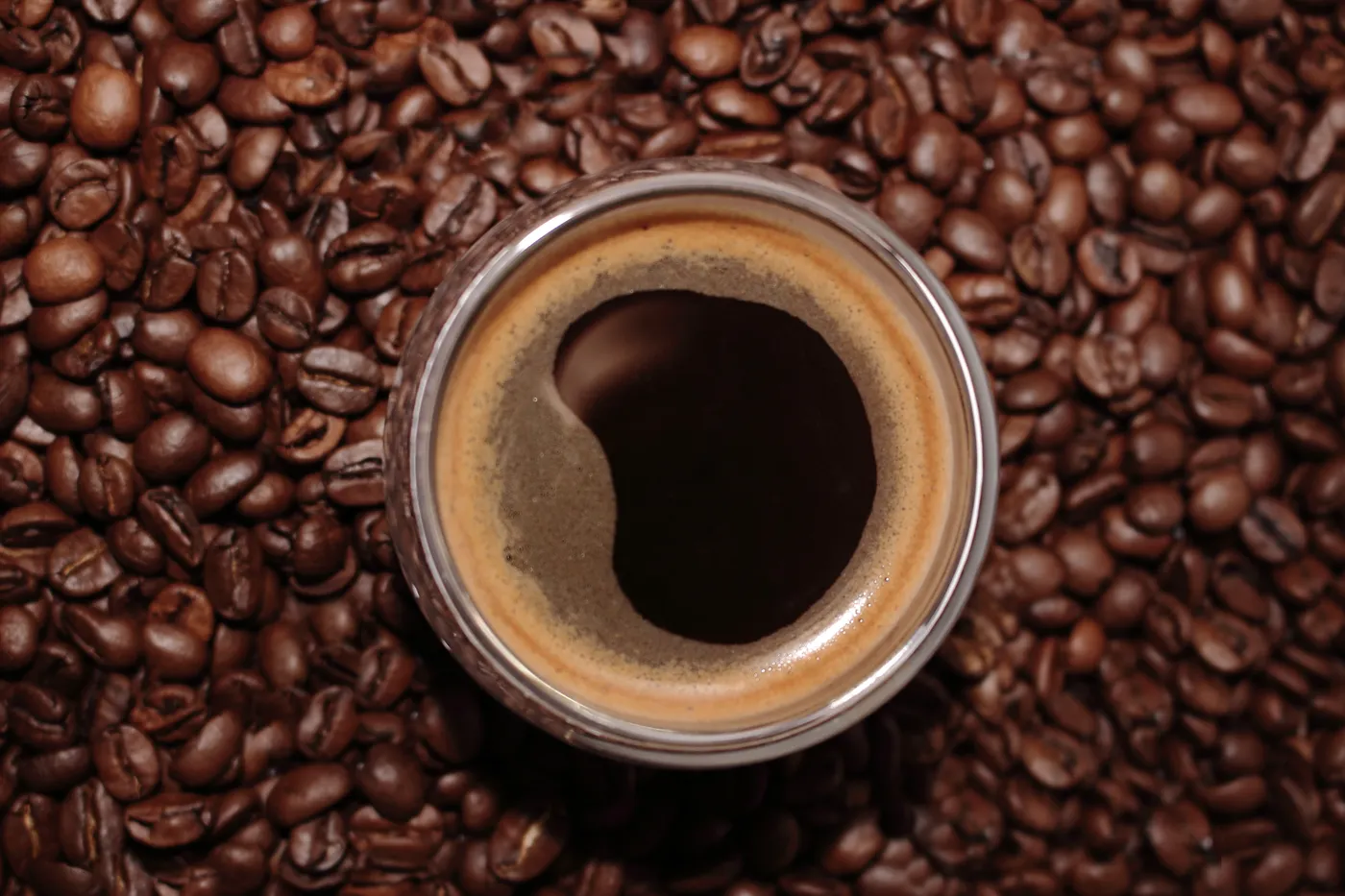
Researchers recruited thirty young adult men, fifteen with lower-body resistance-training experience and fifteen without it. Their average age was about twenty-two. The participants attended four visits: one for familiarization and body-composition assessment, then three testing visits in a randomized order. Before each test they received a drink containing either placebo, four milligrams of caffeine per kilogram of body mass, or eight milligrams per kilogram. Testing began about sixty minutes after ingestion.
The strength assessment was deliberately narrow. Participants performed nine maximal isokinetic knee extensions: three efforts at each of three angular velocities, sixty, one hundred eighty and three hundred degrees per second. An isokinetic device controls movement speed while measuring the torque generated. That is not the same as a heavy barbell squat or a normal set of leg extensions where the weight and speed vary.
After the strength tests, participants performed fifty maximal knee-extension contractions to assess fatigue. The researchers also recorded electrical and mechanical signals from the quadriceps. This combination allowed them to examine force, fatigue and neuromuscular measurements in one controlled protocol, rather than asking whether the athletes merely felt more energized. The experiment tested acute responses to caffeine, not long-term changes in muscle size or strength from weeks of training.
Neither dose produced a significant strength or fatigue advantage
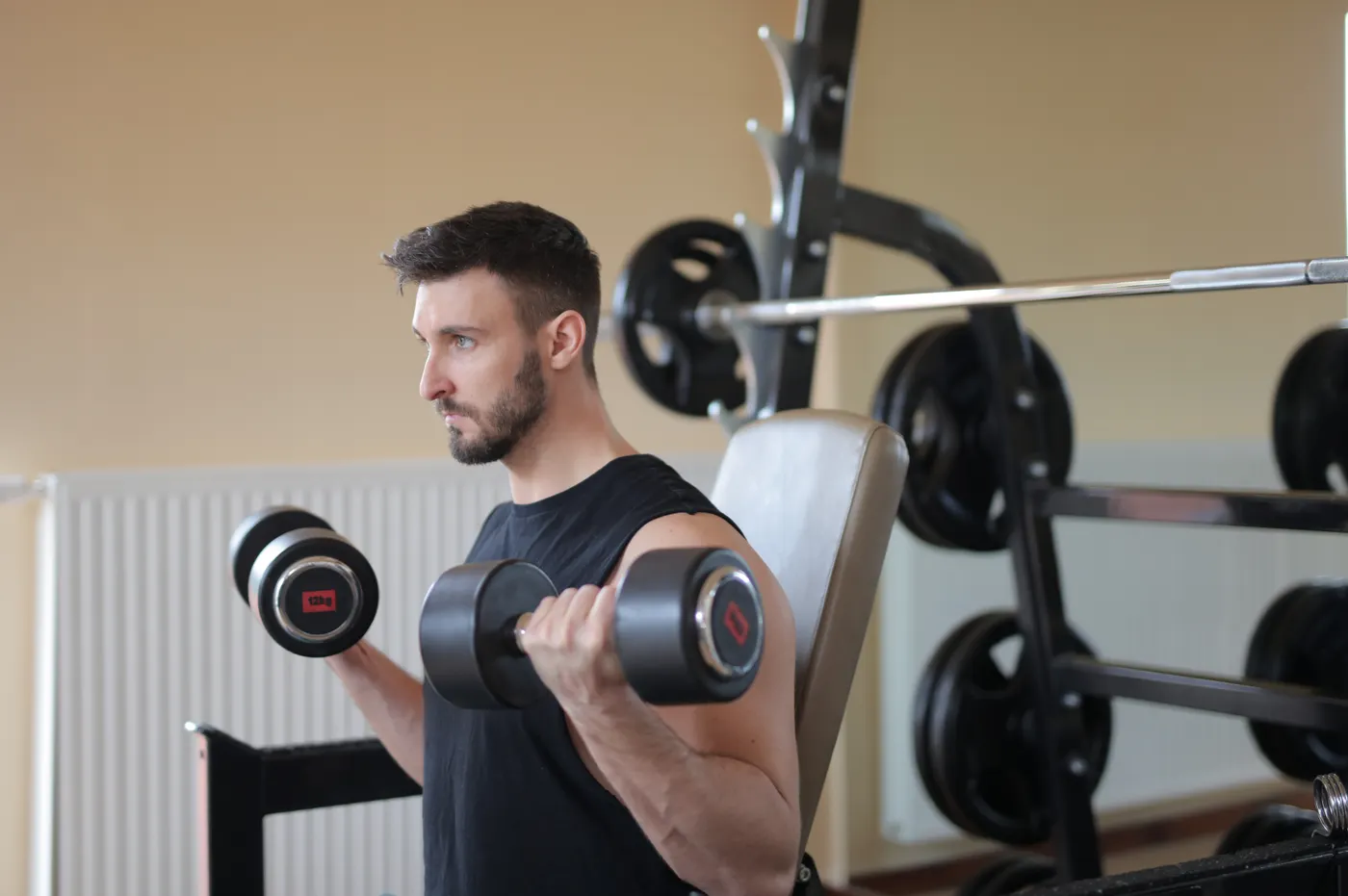
The central result was a null finding. Neither four nor eight milligrams per kilogram produced a statistically significant improvement over placebo in peak knee-extension torque, torque decline across the fatigue test, or the recorded neuromuscular measures. The researchers also found no meaningful difference in caffeine response between their trained and untrained groups under these test conditions.
This matters because eight milligrams per kilogram is not a small exposure. For an eighty-kilogram adult it corresponds to 640 milligrams, while the four-milligram condition corresponds to 320 milligrams. Those are arithmetic illustrations of the study doses, not suggested amounts to take. The larger dose failed to rescue performance in the particular tests used.
A null result does not demonstrate that the true effect is exactly zero. With thirty participants, the experiment may have limited ability to detect small benefits or differences among individuals. It also cannot establish what would happen in a long workout, a sprint, a set of barbell squats, or a competition with different pacing and motivation. The study was conducted in men, so it does not directly settle responses in women or older adults.
What it does show is valuable: in a controlled comparison, more caffeine was not automatically better. The sensible interpretation is specific, not sweeping. Under this protocol, both doses failed to produce a detectable advantage in the selected knee-extension outcomes. That is enough to challenge the idea that a larger scoop always guarantees a stronger set.

Equipment Worth Exploring
Explore equipment, accessories and gear from our carefully selected range.


FID Bench MAX
Adjustable bench offering flat, incline, and decline positions + adjustable headrest.
VOLTRA
Compact digital cable trainer with smooth, adjustable resistance.

Go-Tone Pro
Portable digital cable trainer with up to 66 lb (30 kg) of adjustable resistance.


Power Tower
Freestanding pull-up and dip station with adjustable handles for bodyweight training.


Why other caffeine studies still report performance benefits
Exercise research is not a referendum decided by a single trial. A broad sports-nutrition position statement reviewed evidence that caffeine can improve muscular endurance, movement velocity, strength, sprinting and other outcomes in many, though not all, studies. It also noted that endurance exercise has shown some of the most consistent benefits. A typical studied range has been three to six milligrams per kilogram, but that range is not an instruction to self-dose.
For example, a 2026 randomized, triple-blind crossover study tested ninety-four resistance-trained adults, evenly divided between men and women. A three-milligram-per-kilogram dose improved several measures of bench-press and squat movement velocity and endurance compared with placebo. Investigators also examined CYP1A2 genotype, a marker linked to caffeine metabolism. Most genotype interactions were limited, which makes the results more nuanced than a simple genetic rule for who should drink coffee.
Why could that trial find benefits when the October knee-extension study did not? The participants, exercise tasks, loads, outcome measures, caffeine doses and statistical precision differed. A barbell movement tested across several loads is not interchangeable with maximal contractions on an isokinetic machine. Familiarity, motivation, training background and the size of the measured effect can all matter.
It is also possible for a supplement to help average movement velocity without changing the maximal torque reached in a specific test. Those are different performance variables. A lifter should therefore ask which outcome the study measured before translating a headline into an expectation for a home workout. The evidence supports the possibility of a modest benefit, not a universal guarantee.

Funny Gym Shirts & Workout Gear
Funny gym shirts, tanks, hoodies and workout gear for lifters who like training hard.

Caffeine & Weights Tee
Show some powerlifting attitude with a playful “Caffeine & Weights” tee.

Coffee Shots & Heavy Squats for Caffeine Lovers, Liftin T-Shirt
Show some leg-day attitude with a playful “Coffee Shots & Heavy Squats” tee.

Pre-Workout Gym Cosmic Graphic , Caffeine Workout Hoodie
Show off your powerlifting humor in a laid-back “Pre-Workout” hoodie.

Caffeine Gym Cosmic Crewneck , Coffee Preworkout T-Shirt
Show some gym-day personality with “Caffeine”.
Coffee and Weights Retro Cartoon Graphic for Coffee-Lov T-Shirt
A t-shirt featuring the Coffee and Weights Retro Cartoon Graphic for Coffee-Loving Lifters artwork, bringing lifting-inspired humor and distinctive gym graphics to your everyday gear.

Caffeine Skull Hardcore Coffee Gym Vest Workout Energy Tank Top
Bring “Caffeine Skull” humor to your next lifting session.

Shirt: This Is Your Body On Caffeine – Meme Top T-Shirt
Make gym days more fun with “: This Is Your Body On Caffeine” style.

Squatbucks & Coffee Meme Leg Day, & Gains Top T-Shirt
Show some leg-day attitude with a playful “Squatbucks Gym & Coffee” tee.

Preworkout – Heavy Metal Gym Decal for Hardcore Lifters Sticker
Give your everyday gear a playful “Preworkout” twist.

Swole Siren Starbucks Coffee And Gains Meme T-Shirt
Make gym days more fun with “Swole Siren Starbucks Coffee and Gains” style.
Does drinking coffee every day cancel the effect?
A familiar explanation for inconsistent caffeine results is tolerance. If you drink coffee every day, perhaps your body adapts and a pre-workout dose no longer makes a difference. That idea is plausible, but the evidence does not support turning it into an all-or-nothing rule.
A separate 2026 randomized crossover experiment recruited twenty-one male college baseball players. Each athlete completed tests after caffeine at three milligrams per kilogram and after placebo, separated by seventy-two hours. The tests included vertical jump, trap-bar deadlift one-repetition maximum, bench-press one-repetition maximum and pull-ups to failure. Researchers classified participants as habitual or nonhabitual caffeine users using a sample mean split based on intake questionnaires.
In that sample, caffeine did not significantly improve the performance outcomes, and the investigators found no interaction showing that habitual users responded differently from nonhabitual users. That is not evidence that tolerance is irrelevant everywhere. Both groups lacked a significant benefit, the sample was small, and the classification did not create a controlled long-term caffeine-exposure experiment.
It does mean that the common claim, ‘I have stopped getting stronger from caffeine because I drink coffee every morning,’ is not something a single workout can establish. Sleep, food intake, expectations, exercise selection, training fatigue and test reliability can change a session. If your pre-workout feels weaker than it once did, that subjective sensation is not a direct measurement of bar speed or maximal strength. Avoid treating a feeling of stimulation as proof of a useful training effect.
Why doubling the dose is the wrong lesson
The most important practical finding may be what the high-dose condition did not accomplish. Eight milligrams per kilogram failed to produce a detectable performance improvement in the knee-extension trial. Taking still more would not be a defensible response. Research reviews have linked very high doses to more side effects without showing that they are necessary for exercise benefits.
The United States Food and Drug Administration cites 400 milligrams of caffeine per day as an amount not generally associated with negative effects for most adults. This is general population guidance, not a universal safe dose for every person, and not a recommended pre-workout target. Sensitivity varies with medications, medical conditions, pregnancy, sleep habits and individual response. Some people experience palpitations, anxiety, gastrointestinal discomfort or insomnia at much lower amounts.
Caffeine is easy to stack without noticing. A large coffee, an energy drink and a powdered pre-workout may all contribute to the same daily total. Product labels can differ substantially in serving size and caffeine content. Concentrated powders introduce additional dosing risks. If a product also contains other stimulants, its effects cannot be inferred from caffeine alone.
Sleep is a training variable, not a disposable luxury. A late dose that slightly improves how energized you feel during a workout may interfere with the recovery needed for the next session. Someone with heart symptoms, uncontrolled blood pressure, a relevant medication or marked anxiety should seek individualized medical advice rather than experimenting with large stimulant doses.
For most recreational lifters, the safest useful question is not ‘How high can I push the dose?’ It is ‘Does my current routine deliver better training quality without disrupting sleep or causing side effects?’ A session can be productive without caffeine, and no one needs to reproduce the study’s high-dose protocol to apply its lesson.
Equipment Worth Exploring
Explore equipment, accessories and gear from our carefully selected range.




A four-week, caffeine-aware strength experiment
You can test whether your usual caffeine routine is actually helping without attempting a laboratory trial or escalating the dose. Keep your training program stable for four weeks. Choose two repeatable exercises, such as a squat or leg press pattern and a press or row, and record the load, repetitions, rest periods, perceived effort and time of day. Do not test maximal lifts merely to assess a stimulant.
During week one, establish a baseline using your normal routine and a consistent warm-up. Complete two or three nonconsecutive sessions with a manageable amount of work. For example, perform three working sets of six to ten controlled repetitions for the two tracked movements, stopping with roughly two repetitions in reserve. Record sleep duration, meal timing and any caffeinated drinks or supplements. Do not change the exercise order between sessions.
In week two, repeat the same exercises and try to make the sessions as comparable as ordinary life allows. If you already consume caffeine, do not suddenly increase it. Note whether the perceived boost corresponds with an actual change in repetitions, load or movement quality. A single better set can reflect normal variation, so avoid declaring victory from one workout.
During week three, focus on consistency rather than stimulation. Keep the loads similar, use the same rest intervals and watch for trends in performance and recovery. If you are considering reducing caffeine, account for the possibility of withdrawal headaches or fatigue, and avoid abrupt changes if they would interfere with daily functioning. People with health concerns should seek appropriate advice before changing their intake.
In week four, compare averages and patterns rather than the best session. Did your working weights rise? Were repetitions more consistent? Did you sleep well enough to recover? Were you less anxious, more comfortable and ready to train again? The goal is not to prove caffeine effective or ineffective for everyone. It is to stop mistaking the sensation of being wired for a measurable improvement in training quality.
Powerlifting Shirts & Lifting Gear
Powerlifting shirts and gym gear for squat, bench and deadlift lifters who live for heavy numbers.


Bench Press and Chill Funny Gym T
Make gym days more fun with “Bench Press and Chill” style.

Ultimate Bench Press Tee
Heavy lifts, good laughs, and a little “Ultimate Bench Press” energy.

I Love Bench Press Gym | Funny Heart Plate Muscle Shirt Tank Top
Add some lifting attitude to training with “I Love Bench Press”.

Praise The Deadlift Holy Lifting Meme Fans T-Shirt
For laid-back days and deadlift humor: “Praise The Deadlift”.

Nice Try Gravity Astronaut Deadlift – , Gymbros & T-Shirt
Rep “Nice Try Gravity Astronaut Deadlift” humor in and out of the gym.

Bending Bars Meme – Barbell Squat Bench Deadlift, & T-Shirt
Heavy lifts, good laughs, and a little “Bending Bars Gym Meme” energy.

Crazy Preworkout Energy Skull & Flames Meme Top T-Shirt
Heavy lifts, good laughs, and a little “Crazy Preworkout Energy Graphic” energy.


Heavy Metal Deadlift – Skeleton Gym Vest for Powerlifti Tank Top
Your gym-day look, with a playful “Heavy Metal Deadlift” twist.
What lifters should track instead of chasing a buzz
A useful home-gym log can be simple. Record one repeatable strength outcome, such as the weight used for eight controlled reps, and one endurance outcome, such as how many clean repetitions you complete at a fixed submaximal load. Add a short note about technique, rest time and perceived effort. If you own a velocity-tracking device, bar speed can add information, but it is not required.
Compare like with like. A set performed after six hours of sleep and a skipped meal is not directly comparable with a rested session after adequate food. Likewise, a heavy triple and a long set of leg extensions answer different questions. The October trial measured isokinetic knee-extension torque and fatigue; it did not test whether caffeine would improve your next month of squats or your ability to build muscle.
Progressive training, adequate food, enough recovery and a sustainable schedule remain more important than whether a supplement produces a noticeable jolt. If you enjoy a normal coffee and tolerate it well, there is no reason to treat this study as a command to quit. If caffeine worsens sleep or makes you uncomfortable, the possibility of a small average performance benefit does not oblige you to use it.
The useful takeaway from the 2026 evidence is that caffeine’s effects are conditional. Some controlled trials find improvements; others do not. More is not necessarily better, and feeling alert is not the same as lifting more. Judge your routine by consistent training outcomes and recovery, not the intensity of a pre-workout buzz.