Advertising disclosure: This page includes affiliate product links that may earn us a commission, as well as products from our own store.
A strongman sandbag presents a different buying question from a pair of dumbbells. You choose a shell, supply the filling and then work with an object whose dimensions affect how you can hold it. The number on the product option is useful, but it is only the beginning of the decision.
Rogue’s standard Strongman Sandbag is a cylindrical bag intended for lifting and carrying. This guide examines its capacity labels, filling method, closures and practical fit in a training area. It is based on specifications and general training principles, not an MMP hands-on durability test. Before ordering, decide what you want to do with the bag and where every repetition will finish.
Choose the shell around both weight and dimensions
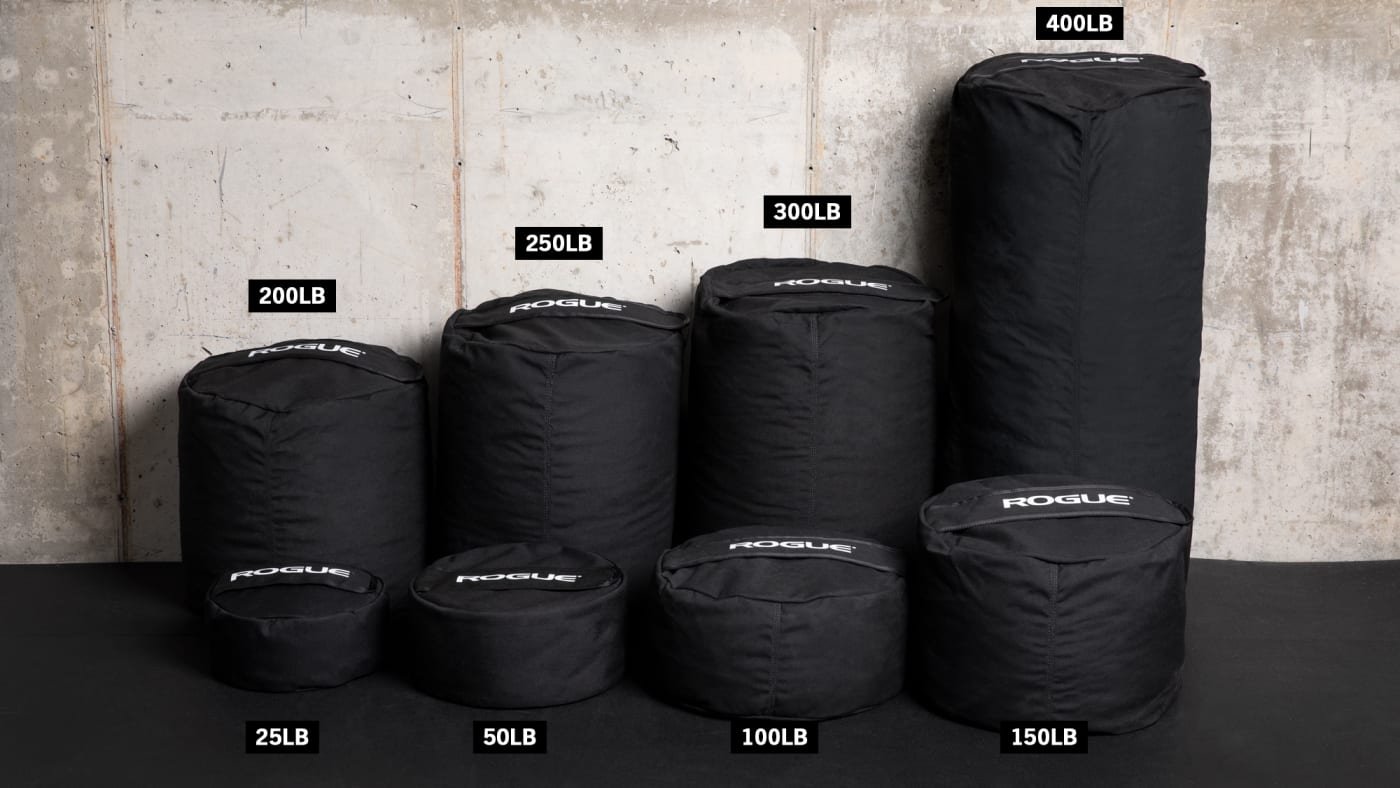
The standard Rogue range has eight nominal capacities: 25, 50, 100, 150, 200, 250, 300 and 400lb. The 100lb-and-larger bags share a 16-inch diameter, while their heights increase with capacity. The 25lb and 50lb models have smaller diameters. These are separate sizes, not one small shell that expands through the entire range.
That matters because your arms must manage the object as well as its mass. A taller bag can sit differently against your torso, and a smaller one may be easier to position even when the absolute load feels familiar. Do not choose a large shell solely because a barbell deadlift number makes its capacity sound manageable. A bag offers a different shape and grip arrangement.
Start with the movement you want to practice. A controlled pickup, a front carry and a shoulder placement are distinct tasks. Consider whether you can get your hands around the bag, bring it into a secure position and put it down without improvising. If you are new to this equipment, coaching and a manageable first load are more useful than buying around an advanced athlete’s demonstration.
Also distinguish this standard cylinder from Rogue’s other bag shapes. A product family name does not make every version identical. Compare the actual listing, dimensions and intended handling before choosing. Two bags with similar weight labels can create different experiences because one is narrow, another is broad, or their holding arrangements differ.
The filling changes the weight you actually get
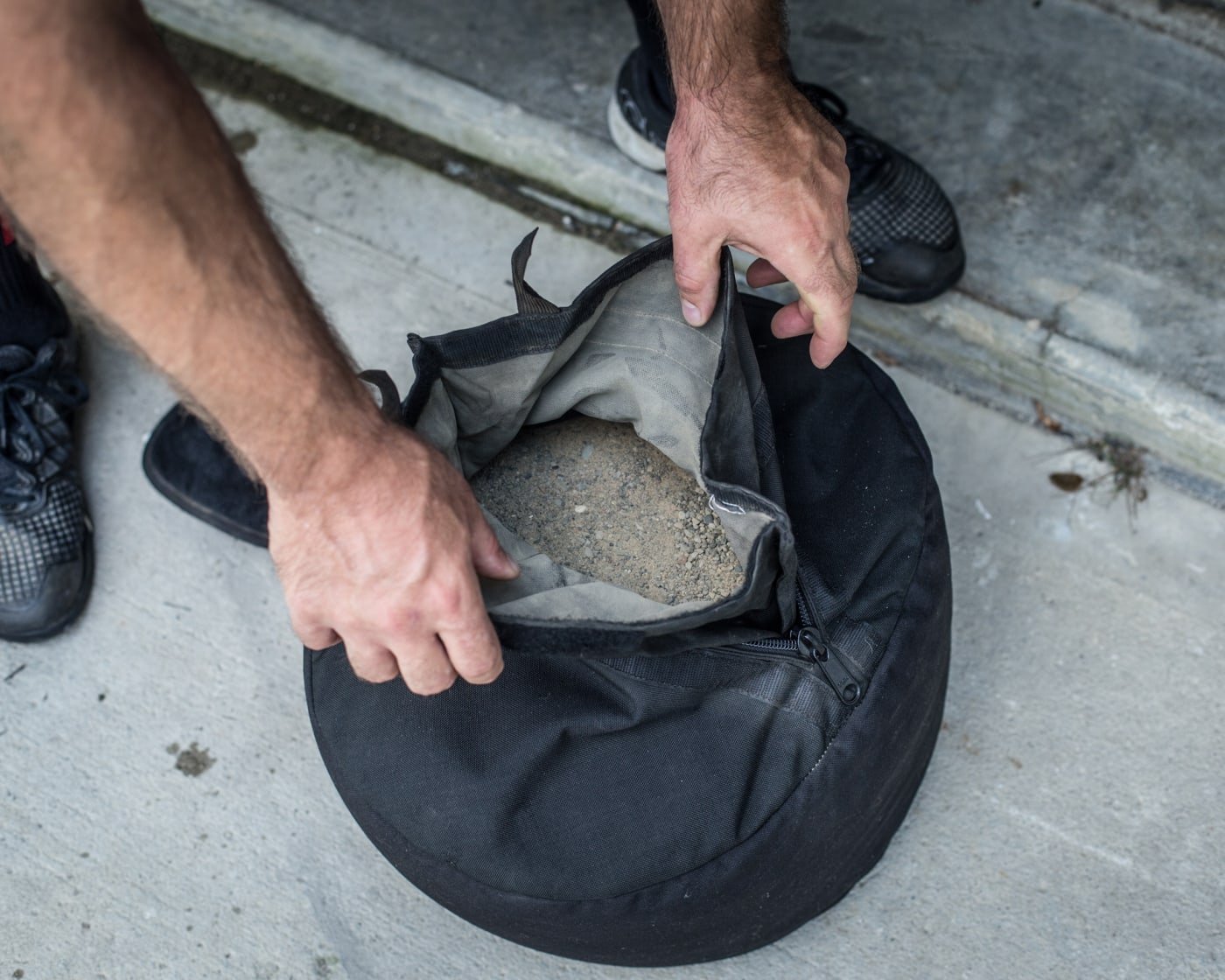
Filler is not included. Rogue bases the listed capacities on dry play sand, and the achievable weight varies with the filling material’s density. Its table gives a 100lb shell a 100lb dry-sand reference but a 40lb crumb-rubber reference. That is a material comparison, not a promise that every filled bag will weigh its option label exactly.
The practical response is to measure your own finished bag. Record the filling used and the measured total rather than entering the shell’s name into your log as though it were a calibrated plate. If you add or remove filling later, update the number. This makes a longer carry or an easier pickup interpretable instead of leaving you uncertain whether the equipment changed.
Have the filling and a suitable workspace ready before delivery. Think about keeping loose material contained during filling, closing the bag properly and returning unused material to storage. The bag is portable when emptied, but a heavy filled object still needs a practical transport plan. Buying a compact shell does not remove the work of moving its contents.
Avoid treating unfamiliar dense materials as a shortcut to a heavier implement. The shell still has an intended use, and changing the filling can change the handling as well as the measured weight. Follow the manufacturer’s instructions rather than assuming that anything which fits inside creates an appropriate training setup. Capacity planning should reduce surprises, not encourage a loading experiment.
Understand the closure before the first workout
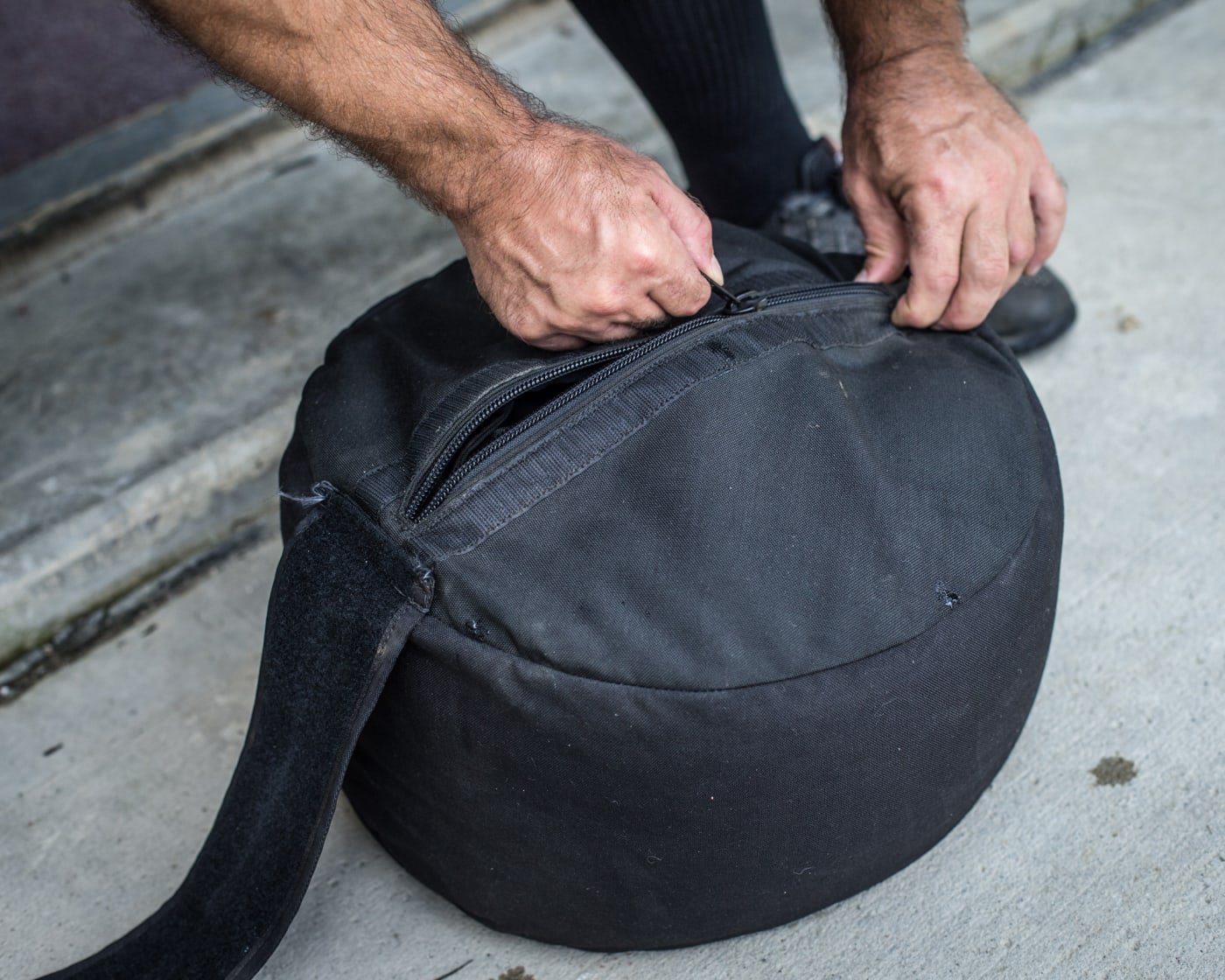
The standard bag uses 1000D Cordura, reinforced seams, an internal filler bag, a zipper and a hook-and-loop closure. The zipper protection flap is not a lifting handle. Pulling a loaded bag by that flap can damage the stitching. Its position on top should not be mistaken for a designed grip.
Learn the filling and closing sequence before you are tired or hurrying between sets. A useful inspection is deliberate: check that the filler is contained, the closure is properly secured and the exterior has no obvious damage. Material strength is one part of a product specification; it is not evidence that a particular bag can tolerate any movement indefinitely.
Keep your inspection routine short enough that you will actually use it. Look for changes after a session, especially around the opening and areas repeatedly contacting the floor. If something no longer closes properly, investigate before another loaded attempt. Repeating the same check makes a developing issue easier to notice than relying on a general impression that the bag still feels solid.
Careful handling also protects the rest of the room. Choose where to fill and store the bag so that loose material does not spread into a lifting area. Keep the closure accessible for inspection rather than burying it under other equipment. A durable shell remains a piece of equipment you maintain, not a reason to ignore its condition.
A strongman bag is not a slam ball
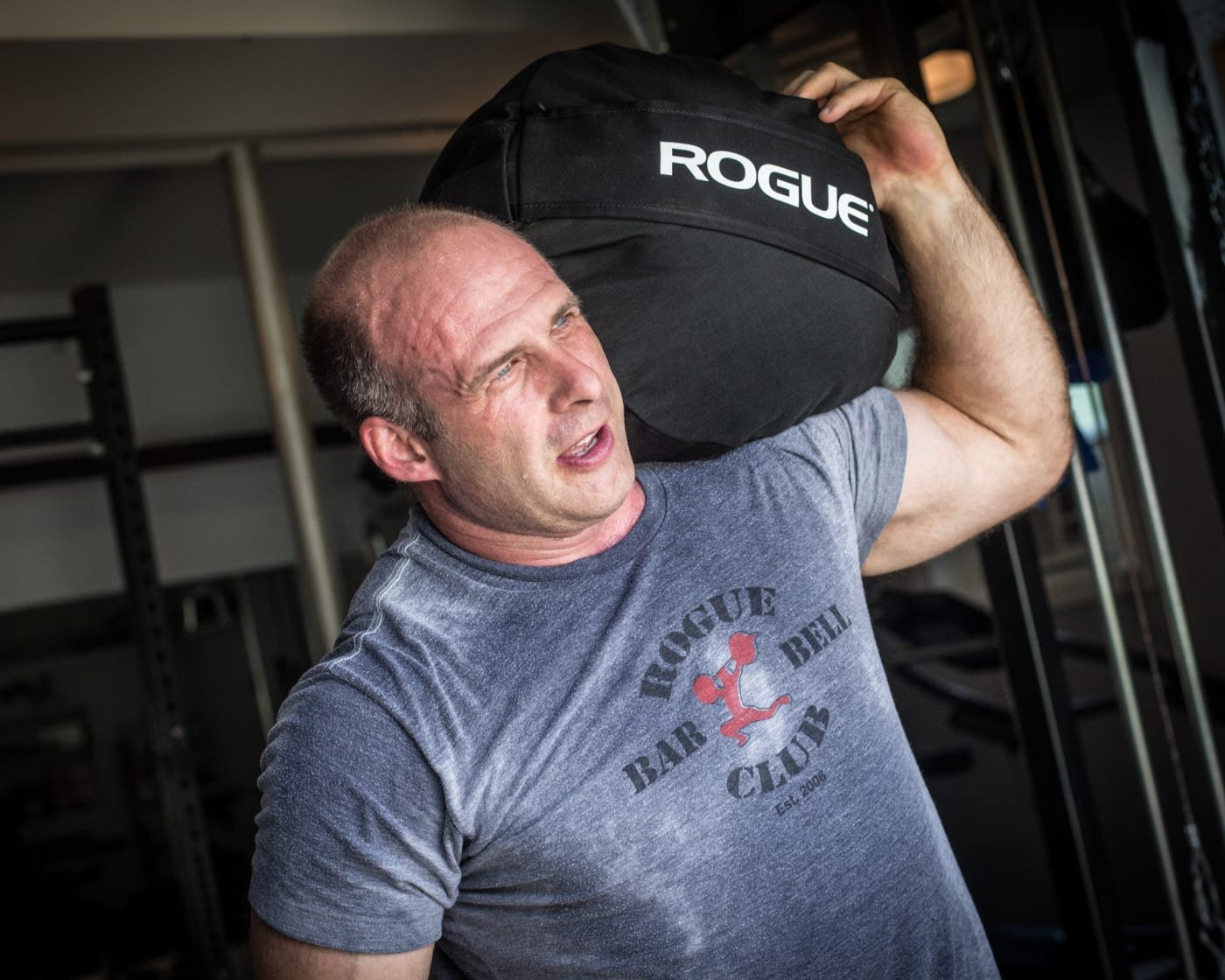
Rogue explicitly says these bags are not designed for slams and recommends rubber or another nonabrasive surface. A loaded carry, a controlled return and a forceful throw into the floor should therefore not be treated as interchangeable uses. Choose the implement around the movement rather than asking one product to cover every conditioning drill.
For shoulder work, the hard part includes getting the bag into position and returning it safely. Do not decide the load by the brief moment it sits on the shoulder. Our sandbag-to-shoulder setup guide explains the lap, drive and catch as parts of one movement. Practice belongs within a controlled progression, not a hurried attempt to copy the heaviest clip you have seen.
Different carrying positions also change the task. Holding an object in front of the chest differs from supporting it across a shoulder or carrying two weights at the sides. Our comparison of three sandbag holding positions uses a different bag design, so it is a movement comparison rather than a claim that all its handles and grips exist on this cylinder.
When you evaluate a workout idea, identify the intended hold, the walking route and the return before adding fatigue. A short straight path can be easier to manage than a cramped route full of turns. Leave room around the bag and your feet, and make putting it down part of the plan. If you cannot control the setup, reducing the load is more useful than extending the distance.
Build a training station you can use repeatedly
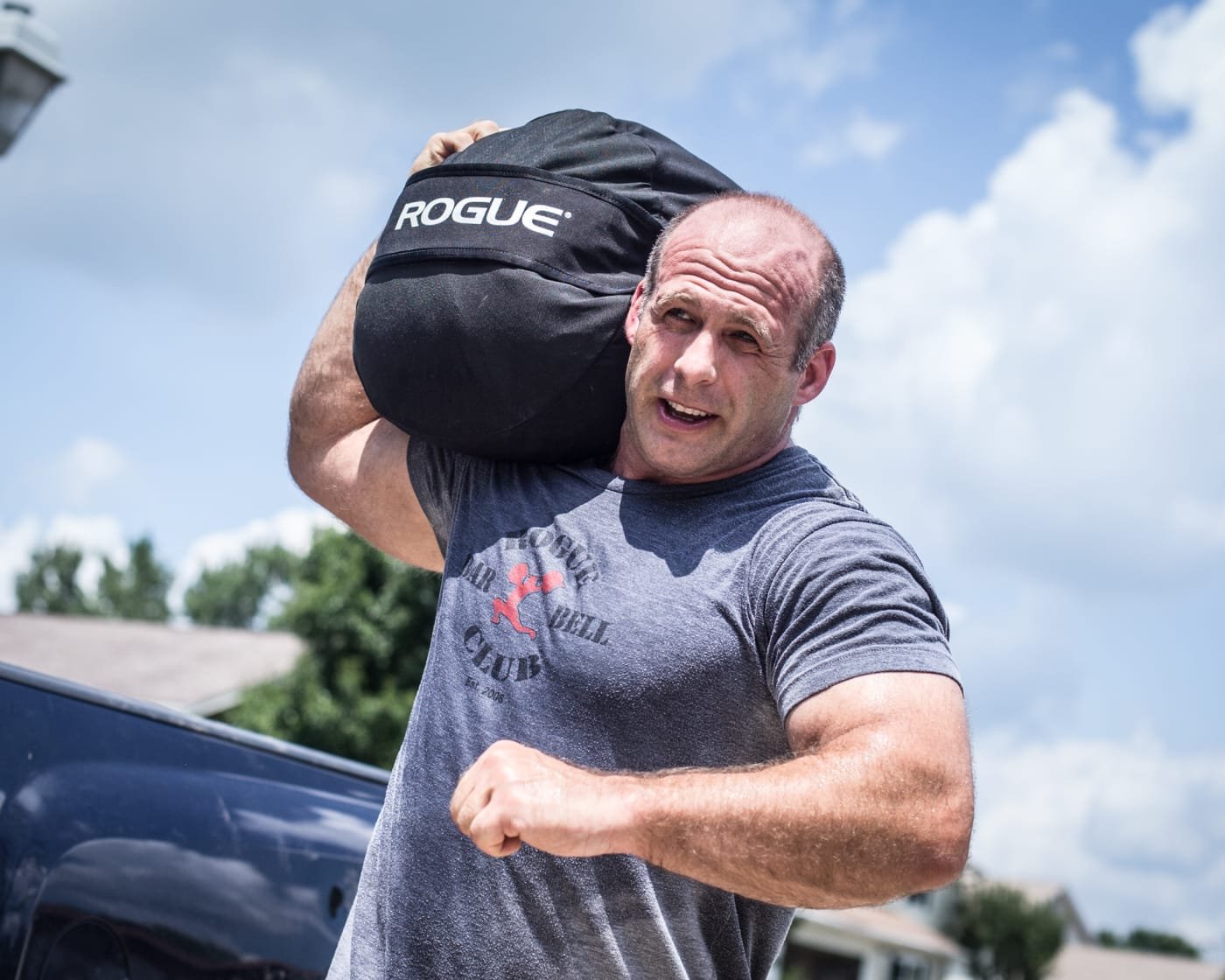
In a garage, basement or spare-room gym, storage and working space are different measurements. A bag may occupy a modest patch of floor while its carry route needs much more room. Measure the route, doorways and turning area, then decide where the bag will wait between sets. Outdoors, check the surface rather than assuming every open space is appropriate for the fabric.
Start by fitting the equipment into your existing training. Choose one repeatable task and keep the important conditions consistent. You might compare the same manageable carry route with the same hold across sessions, recording the measured bag weight and how securely you completed the work. This is a way to organize practice, not a prescribed strongman program or a claim that a particular carry builds every quality at once.

Home Gym Shirts & Garage Gym Gear
Home, garage and basement gym shirts and workout gear for lifters who built their own place to train.

Garage Gym Hero Hooded Pullover for Home Gym Lifters Wo Hoodie
Keep it laid-back with a little “Garage Gym Hero” attitude.

Home Gym Nerd Crewneck Pullover Sweater for Home Gym Li T-Shirt
Bring “Home Gym Nerd” humor to your everyday gym style.

Home Is Where The Gym Is Funny Home Gym Garage Basement Tank Top
Show some personality between sets with “Home Is Where The Gym Is Funny Home”.

Anti Gym Garage Gym Club Decal for Garage Gym Equipment Sticker
Give your everyday gear a playful “Anti Gym Garage Gym Club” twist.

Anti Home Club – Meme , Gymbros & Home Gains Top T-Shirt
Make gym days more fun with “Anti Gym Home Gym Club” style.

Funny Garage Gym Hooded Pullover for Home Gym Owners Li Hoodie
Stay casual and show some lifting attitude with “Garage”.

Basement Gym Club Crewneck Pullover Sweater Basement Gy T-Shirt
For laid-back days and lifting humor: “Basement Gym Club”.

Anti Social Home Gym Club Muscle Shirt Athletic Vest fo Tank Top
Train hard, laugh a little, and rep “Anti Social Home Gym Club”.

Home – Home Built Not Bought , Gymbros & Garage Gains T-Shirt
Rep “Funny Home Gym” humor in and out of the gym.

Home Hero – Garage & Basement – Meme Shirt T-Shirt
Make gym days more fun with “Home Gym Hero” style.
Consider alternatives when a different task is the real priority. Dumbbells, kettlebells and a suitable trap bar provide handles for carrying; a sled changes the task to pushing or dragging. A weighted vest distributes load differently again. None recreates a front-held sandbag, and none should be described as a direct replacement for every movement. Compare the task you need with the equipment and floor space available.

Equipment Worth Exploring
Explore equipment, accessories and gear from our carefully selected range.

Rubber Hex Dumbbells
Rubber-coated hex dumbbell pairs with a stable shape for home and commercial strength training.


Cast Iron Kettlebells
Textured cast-iron kettlebells for swings, squats, carries, and full-body training.


Pro Sled System
Heavy-duty push-pull training sled for loaded conditioning, speed, and strength work.
For general strength training, a useful routine is one you can maintain and adapt to your ability. Adding an awkward object does not automatically make an existing program better. Give the bag a specific job, allow enough recovery and judge whether it helps you practice that job consistently. Keep your main lifting priorities clear instead of turning every session into an exhausting test.
The strongest buying decision is a complete plan: the right shell, an appropriate filling, a measured load, a secure closure and a sensible place to train. With those choices made, the bag becomes an understandable tool. Without them, even an impressive capacity label leaves the important questions unanswered.