Advertising disclosure: This page includes affiliate product links that may earn us a commission, as well as products from our own store.
The Rogue Anvil Grip turns an old strongman idea into a plate-loadable tool: pick up a weight while holding a tapered steel cone. The interesting part is not how many plates fit on the pin. It is whether your hand can keep the cone from slipping while you stand up and lower the load under control. Before treating it as a grip-strength score, understand the shape, the complete load and the conditions that make two attempts comparable.
A small implement with an unusually demanding shape
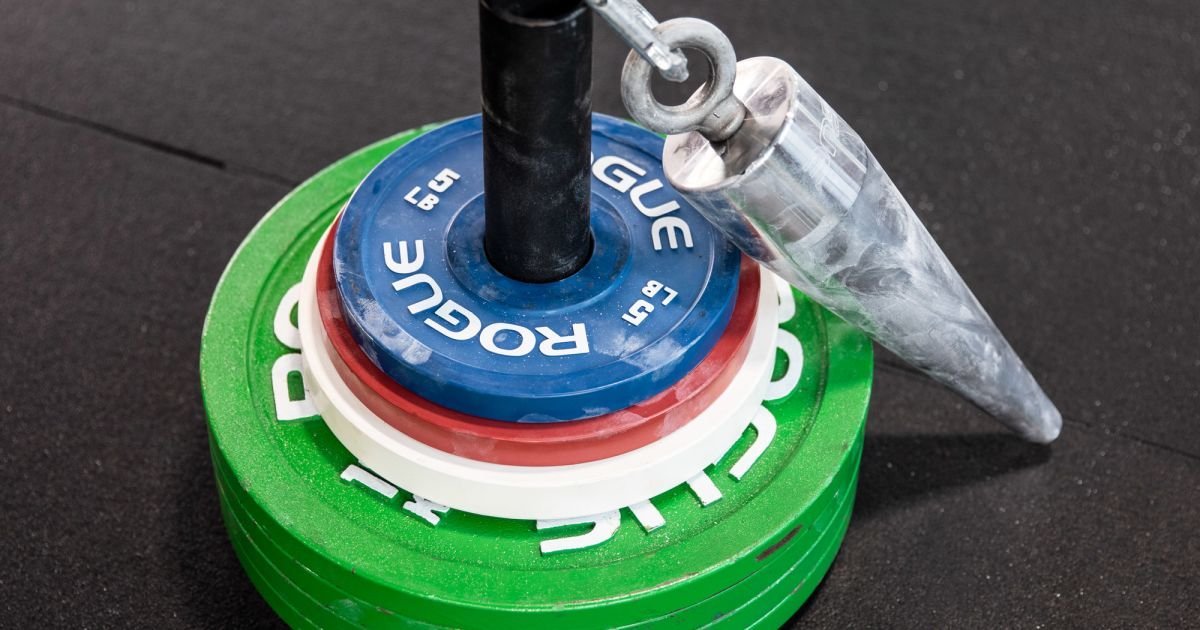
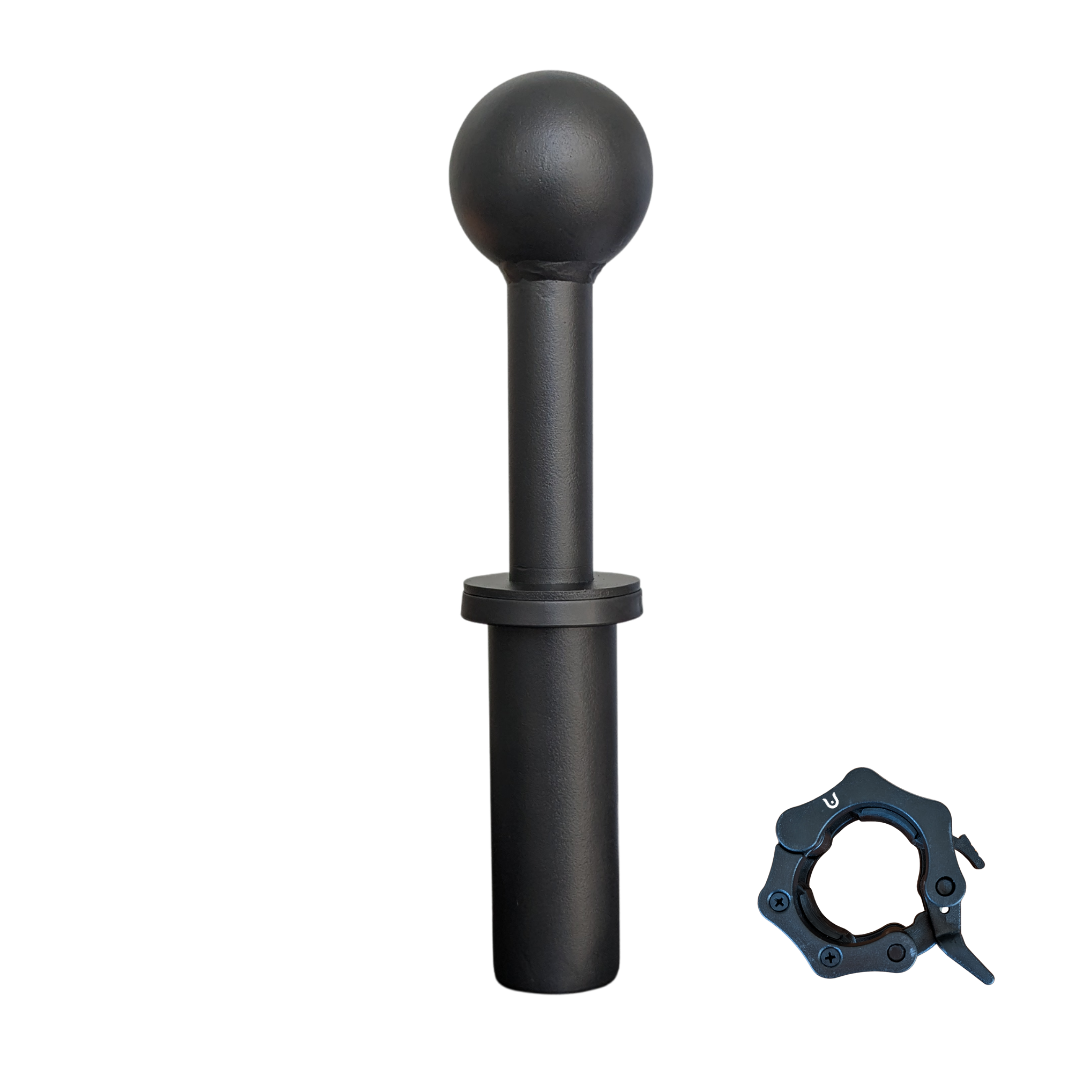
The Anvil Grip is machined steel, with a cone measuring 11 inches long before the eye bolt. Its diameter narrows from 3 inches at the base to 0.75 inches at the tip. The complete implement weighs 12.33 pounds unloaded. It connects to a separate loading pin through suitable hardware, allowing plates to supply additional resistance.
Those dimensions explain its appeal better than a claim that it builds an enormous grip. The hand has to find a purchase on a changing diameter. There is no ordinary dumbbell handle with the same thickness all the way along it. A small difference in where your palm and fingers settle changes the contact you have with the cone.
The shape pays tribute to lifting a blacksmith’s anvil by its horn, but a training cone is not a complete anvil. It offers a more convenient way to change load and repeat a setup. That convenience is valuable if you enjoy specialist grip challenges; it does not establish that every horn-shaped implement produces equivalent results.
Think of the purchase as buying a specific test. If you like practising a one-hand lift with a difficult contact surface, the purpose is clear. If you simply need to hold your existing dumbbells longer, a new implement may add complexity before it solves the actual limitation.
Before loading anything, confirm the pin, connector and plates are suitable for the setup. Check clearances and the condition of each connection. The photographs show real equipment arrangements, not a guarantee that a different pin, clip or plate stack will fit the same way.
Your hand position is part of the difficulty
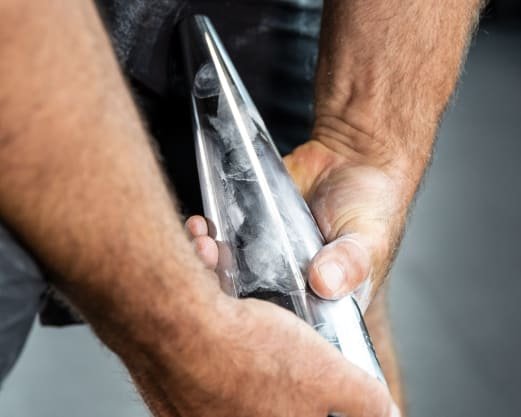
A spring gripper closes against resistance. A plate pinch challenges contact between fingers and thumb. A heavy carry asks you to keep holding a load while moving. The Anvil Grip adds its own tapered surface, so success should not be translated into an equivalent gripper rating, deadlift or hand-dynamometer score.
Our guide to crushing, pinching and supporting grip explains why these tasks deserve separate practice and separate records. Strong hands are useful, but the implement still determines what you are asking them to do.
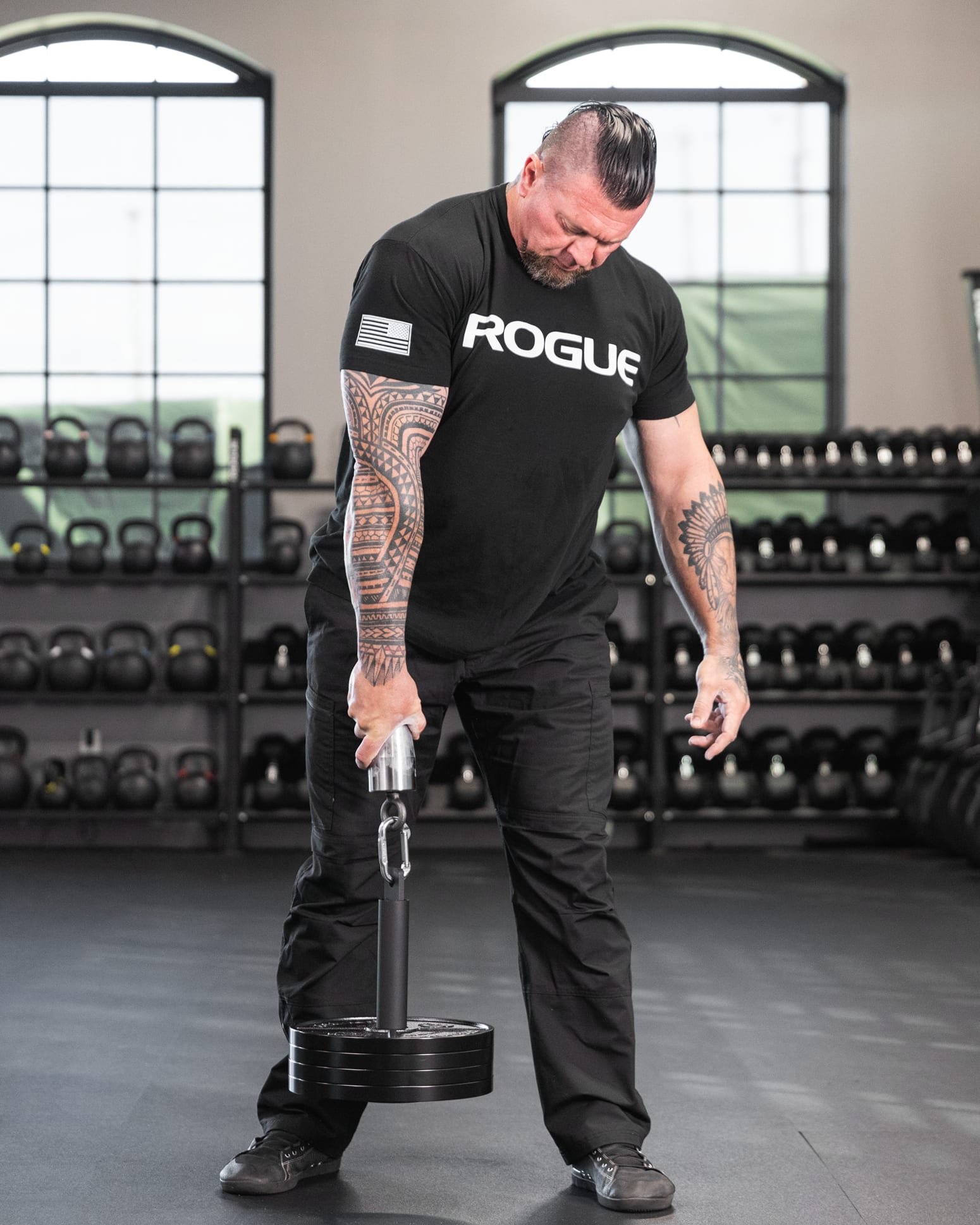
For a personal comparison, decide how you will place the hand before the first attempt. Photograph that position and use it again next session. Note the chosen finish and whether the gripping surface is clean, dry or chalked. If your hand shifts substantially before the weight leaves the floor, record that change instead of treating the attempt as an exact repeat.
Do not confuse experimenting with cheating. Exploring a comfortable position is part of learning a new tool. The problem arises when you compare two different arrangements as though only your strength changed. Keep exploratory attempts separate from the lifts used to judge progress.
The close-up photograph also illustrates a limit of pictures: it can show hand placement, but cannot establish the athlete’s total load or the outcome of the complete attempt. Use images to understand the setup, then define your own repeatable movement standard.
Count the whole suspended load and define a successful lift
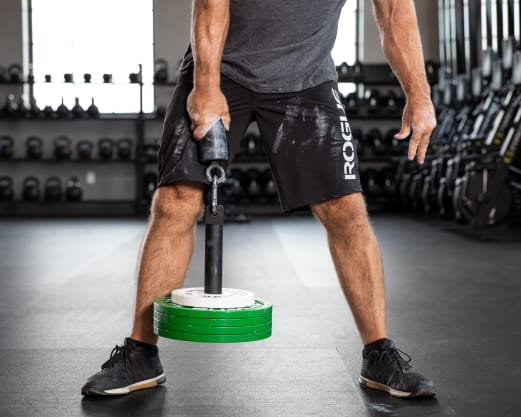
A stack marked 20 kilograms is not necessarily a 20-kilogram lift. The cone, loading pin and connector also leave the floor. For a meaningful total, weigh the complete assembly or establish each component’s mass. Keep kilograms and pounds separate in the log rather than adding the numbers printed on unlike plates.
Here is a hypothetical example, not a measured Rogue setup: 20 kilograms of plates plus 7 kilograms of hardware is a 27-kilogram suspended load. Adding another kilogram of plates changes the total to 28 kilograms. Calling those attempts 20 and 21 kilograms conceals a sizeable part of what the hand actually supported.
The movement standard matters too. An archived Rogue Anvil Grip Lift challenge required the hand to contact the tapered portion, an upright finish with hips and knees extended, a momentary hold and control back to the ground. Treat that as an example of a defined test, not an announcement that the old qualification window is open today.
That same principle appears in our Rolling Thunder guide to rotation, load and lift rules: changing the implement or conditions changes the comparison. A personal lift does not become an official record merely because it resembles a competition movement.
For your own log, distinguish a clean lift, a brief break from the floor and an unsuccessful attempt. Keep the intended finish visible if filming. Write down which hand lifted, the total load and any changes to equipment. Those details make a modest improvement more useful than an impressive number without context.
Try a small practice block before chasing a maximum
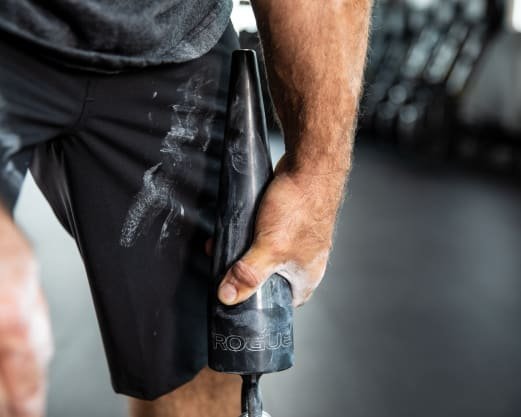
The following is an original MMP example for an experienced lifter learning a new grip implement. It is not a tested Anvil Grip programme, an official competition prescription or a promise of a particular result. Begin only with a load you can lift and lower comfortably, and include the unloaded hardware when deciding how light that really is.
After your normal warm-up, practise with the lightest suitable arrangement. Use a clear, stable lifting area and keep feet away from the suspended plates. Make sure the load can return to the floor without striking your body. Do not try to catch falling plates or equipment with the free hand.
For the first session, try three easy, separate lifts per hand, alternating sides and resting about a minute between attempts. Stand smoothly, pause briefly and lower under control. Finish while the same setup still feels repeatable. The aim is to learn the contact and return, not to discover how many failed attempts your fingers tolerate.
At the next suitable session, repeat the arrangement before adding load. If all attempts remain controlled and the hands have recovered, consider the smallest practical increase. Change one thing at a time. More weight, longer holds and extra attempts are different progressions, and combining them immediately makes the response harder to interpret.
Keep this work away from a high-priority pulling session if it leaves your grip tired. Stop for pain, skin damage or deteriorating control. If it repeatedly compromises the training you care about most, reduce or remove it. Specialist grip work earns its place by fitting the programme, not by exhausting your hands whenever the tool is nearby.
Choose the tool that matches the job
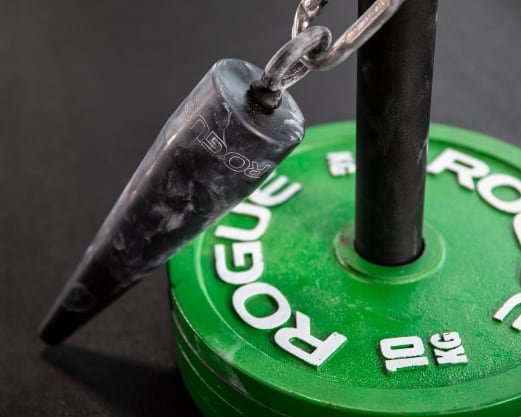
The Anvil Grip makes sense when the cone lift itself interests you. It is less compelling as a compulsory purchase for everyone who lifts. Before buying, ask whether the goal is a stronger tapered-implement lift, longer carries, better control of pulling handles or general forearm training. These goals overlap without becoming interchangeable.
For carrying practice, existing dumbbells or kettlebells may already provide a useful starting point. Thick grips change the diameter of a familiar handle. A dedicated forearm trainer introduces another task again. None should be described as reproducing the Anvil Grip simply because all of them involve the hands.
The equipment choices below are alternatives for those broader grip and carrying goals. They are not presented as Rogue-compatible attachments or as equipment used by the photographed athletes. Confirm the exact specifications before combining products, particularly when matching plates and connectors.

Equipment Worth Exploring
Explore equipment, accessories and gear from our carefully selected range.


Rubber Hex Dumbbells
Rubber-coated hex dumbbell pairs with a stable shape for home and commercial strength training.


Cast Iron Kettlebells
Textured cast-iron kettlebells for swings, squats, carries, and full-body training.


Angles 90 Grips
Flexible grip attachments that allow natural wrist movement during pulling exercises.
Rogue lists bare steel and black oxide finishes. Keep the actual gripping surface’s condition in your training notes; a finish name alone does not make two lifts comparable. Follow the product’s care instructions and avoid leaving slippery maintenance residue on a surface you intend to lift.
The useful attraction of the Anvil Grip is its specificity. You can enjoy an unusual strongman-style challenge without claiming it measures every kind of hand strength. Start with an honest total, repeat the same conditions and keep enough recovery for the rest of your lifting. That gives each new personal best a clear meaning.

Funny Gym Shirts & Workout Gear
Funny gym shirts, tanks, hoodies and workout gear for lifters who like training hard.

Grip Day Legend Essential Gymbro & T-Shirt
Rep “Grip Day Legend” humor in and out of the gym.

Get A Grip Grip Training Decal & Gymbros Sticker
Give your everyday gear a playful “Get a Grip” twist.

Slip Not Grip Training – Heavy Metal Workout Hooded Pul Hoodie
Make your off-duty look more fun with “Slip Not Grip Training”.

Pumpeye Forearm Gains Grip Training Popeye Meme Vest Tank Top
Add some lifting attitude to training with “Pumpeye”.

Huh Huh Let'S Train Grip Beavis And Butt-Head T-Shirt
Make gym days more fun with “Huh Huh Let's Train Grip” style.

Enter Strongman Crewneck Pullover Sweater Metal Music S T-Shirt
Show some gym-day personality with “Enter Strongman”.


I Love Deadlifts Funny Gym T
Show some deadlift attitude with a playful “I Love Deadlifts” tee.


Strongman Metallica Heavy Metal – Meme Shirt & Gains T-Shirt
Rep “Strongman Metallica Heavy Metal Graphic” humor in and out of the gym.