Advertising disclosure: This page includes affiliate product links that may earn us a commission, as well as products from our own store.
What a 54:41 finish actually means

Stephen Pelkofer won the men’s Pro division at HYROX Dallas on November 20, 2026, in 54 minutes and 41 seconds. Jack Driscoll finished second in 55:15 and Ryan Callahan third in 55:46. In a race decided by less than a minute, a single badly paced station or a long walk between work areas can make a meaningful difference. Pelkofer had also recorded a 54:44 result in Hamburg in October, so Dallas was another demonstration of his ability to race close to the same demanding time rather than an isolated performance.
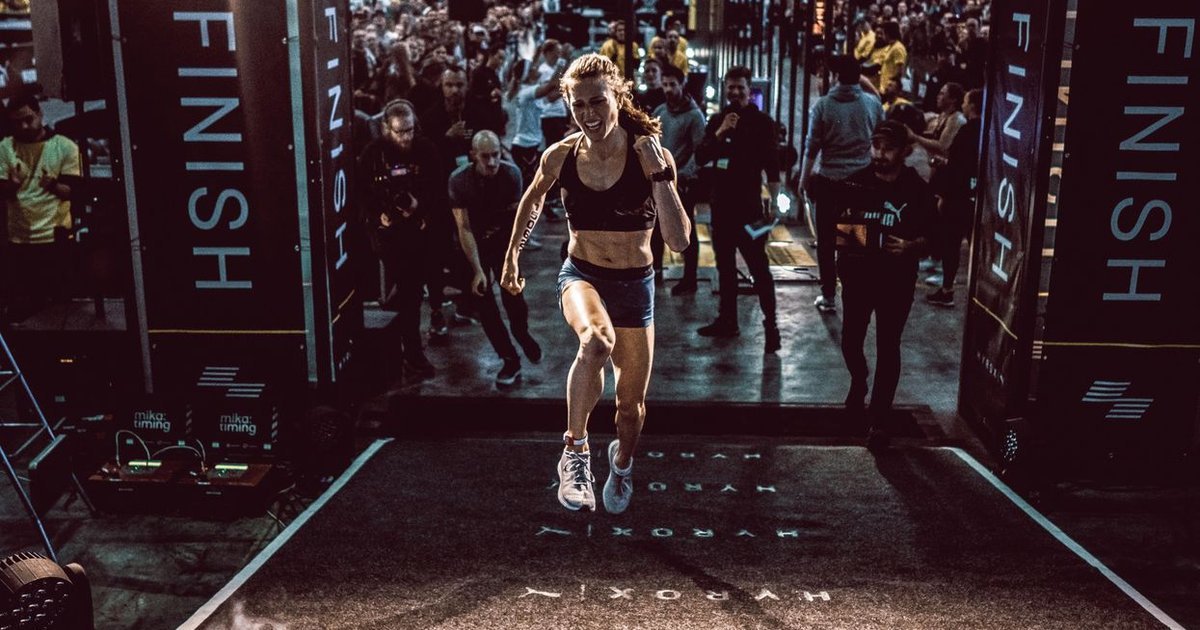
HYROX is not a continuous eight-kilometre running race. It alternates eight one-kilometre runs with eight functional fitness stations, beginning with skiing and finishing with wall balls. A competitor must produce useful work on a machine, move external loads, perform bodyweight movements and then return to running without a conventional recovery period. The clock continues through the transition area, too.
The Dallas split data lists approximately 27:15 of running, 23:54 at the stations and 3:38 in transitions. These figures total 54:47, six seconds more than the reported finish, so they should be treated as approximate components rather than an exact accounting of the official time. Even with that small discrepancy, the broad distribution is informative: about half the race was spent running, just under half performing station work, and several minutes moving between the two. None of those categories can be ignored.
For recreational athletes, this is a useful framework for diagnosis. Record how long you spend running, how long you spend on stations and how much time you lose getting organized. A strong squat or a fast isolated five-kilometre run tells only part of the story. The question is what you can repeatedly deliver when both abilities are required together.
Run at a pace you can reproduce eight times

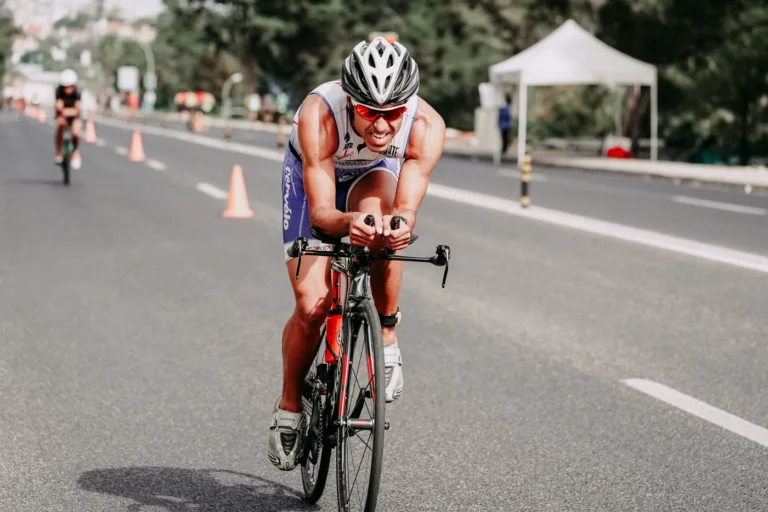
Pelkofer’s approximate running total implies an average of around 3:24 per kilometre across the eight runs. That is an elite-level benchmark under the conditions of this event, not a recommended training pace for someone entering their first race. The useful lesson is repeatability. You need an effort that still leaves enough physical and mental capacity to complete the next station and then resume running effectively.
A common mistake is to set your opening pace from a fresh road-race personal best. In HYROX, your later kilometres are affected by the accumulated work of skiing, sled pushing, pulling, jumping and carrying. A fast first kilometre only helps if the time gained exceeds the time subsequently lost. For example, gaining ten seconds early but giving back twenty seconds on each of the next three runs is a poor exchange.
Try establishing a baseline with four repetitions of 800 metres at a sustainable hard effort, separated by two minutes of easy jogging or walking. Keep the repetitions within a narrow time range rather than trying to win the first one. On a separate day, replace part of the recovery with a short functional task, such as a controlled row or a light carry. Compare the next running split with the fresh interval baseline. This makes the effect of station fatigue visible.
Easy running has a different purpose. It helps build the volume you can tolerate without adding another maximal session. For a strength-trained athlete who has recently increased running, gradual progression is especially important because the cardiovascular system may feel ready before the calves, feet and tendons have adapted. A steady weekly run and one structured interval workout are often a more sensible starting point than repeatedly testing your full race pace.
Make the sled a strength-endurance task
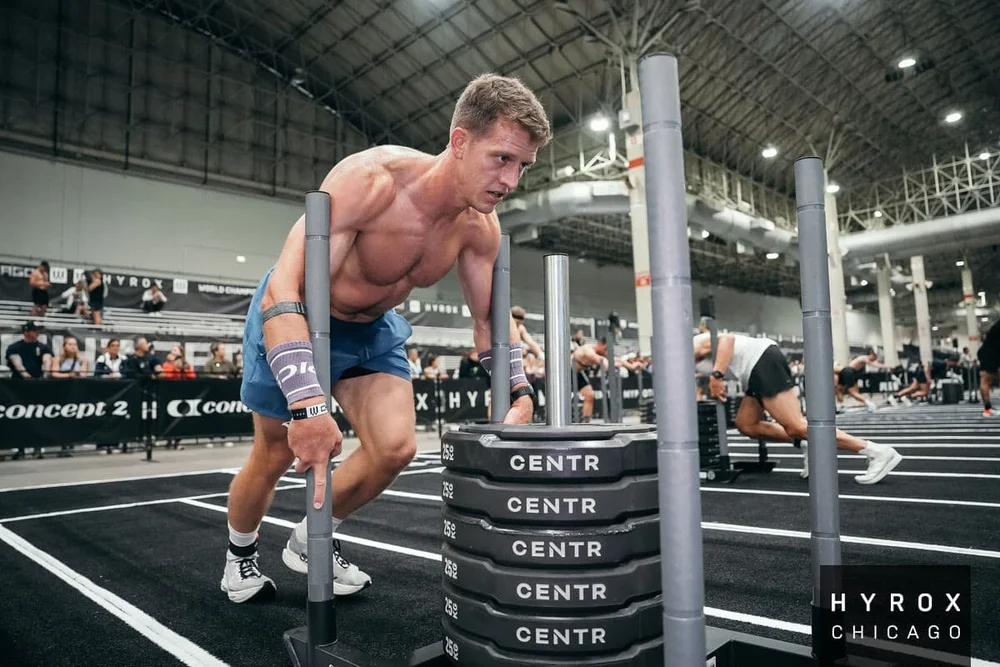
The heavy sled push and pull are distinctive parts of the Pro race. They reward more than maximal strength. The athlete has to apply force continuously while maintaining body position, breathing and enough traction to move the implement. The resistance felt at the handles or rope depends not only on the plates but also on the surface and the sled itself. That is why the same nominal load can feel substantially different at two facilities.
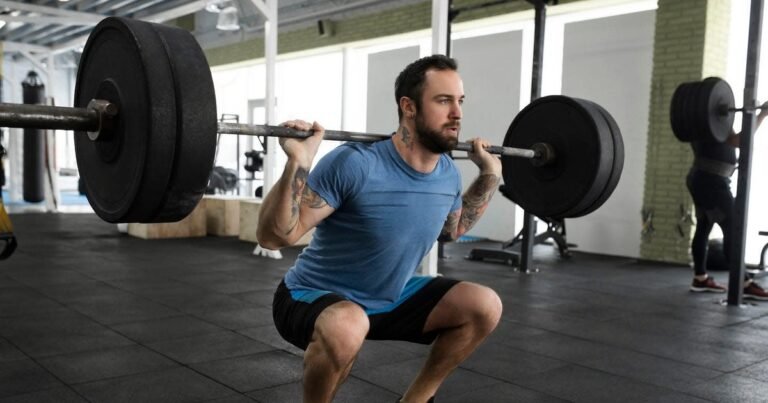
In training, separate maximal force development from race execution. Squats, split squats and hinges can build a larger strength reserve. Short, challenging sled intervals can then teach you to apply that strength in a position that resembles the competition. Longer moderate sled efforts are useful when the goal is to keep moving without repeated maximal exertion. None of these approaches requires turning every workout into an exhausting circuit.
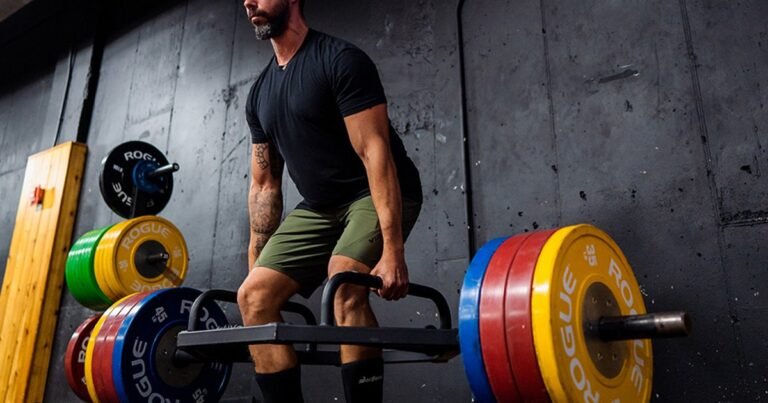
For a practical session, choose a load you can move for four lengths of ten to fifteen metres with consistent technique. Rest sufficiently between lengths on the first attempt. Next week keep the load and distance constant while slightly shortening the rest, provided movement quality remains stable. If the sled stops repeatedly or your posture deteriorates, reduce the load rather than adding weight simply because the session feels difficult.
The ski ergometer and rower create a different challenge: producing sustained power without using up the muscles needed for the next run. Practice a controlled opening rather than attacking the first few strokes. Wall ball work likewise benefits from repeatable sets and planned breaks. For home or commercial gym preparation, the equipment should serve the training purpose; wheeled resistance sleds, friction sleds and different cardio machines are not interchangeable measures of competition load.

Equipment Worth Exploring
Explore equipment, accessories and gear from our carefully selected range.

Competition Wall Ball
Competition-style weighted wall ball for HYROX, wall-ball shots, and functional conditioning.


Pro Sled System
Heavy-duty push-pull training sled for loaded conditioning, speed, and strength work.


Cast Iron Kettlebells
Textured cast-iron kettlebells for swings, squats, carries, and full-body training.


Rubber Hex Dumbbells
Rubber-coated hex dumbbell pairs with a stable shape for home and commercial strength training.

Burpees and transitions: reduce wasted work
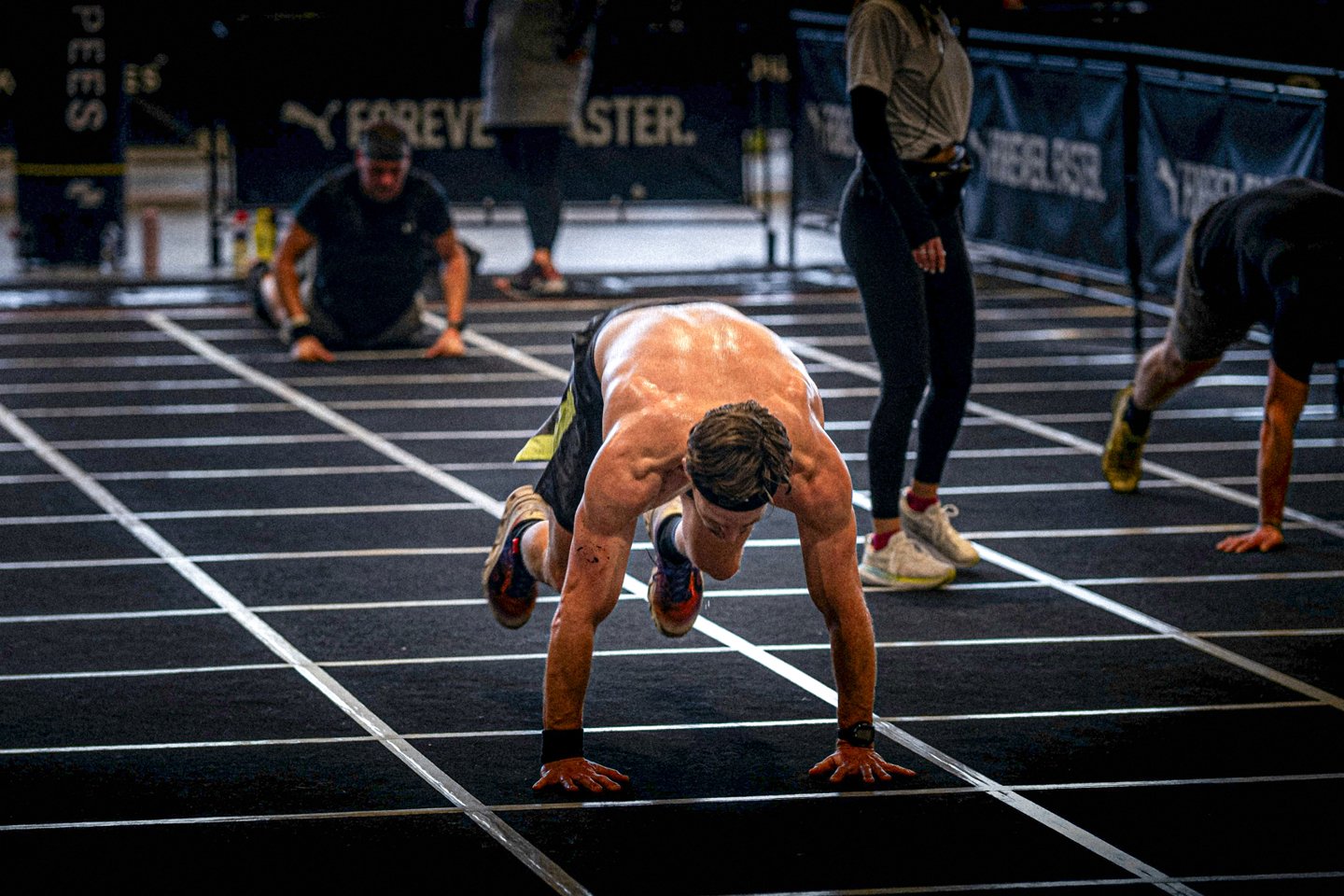
Burpee broad jumps combine a repeated floor movement with forward travel. Excessively long jumps can become expensive when you have to land, regain balance and immediately lower yourself again. A repeatable rhythm, controlled landing and efficient return to the floor may be more productive than attempting the longest possible jump every time. Practice the movement under the applicable event standards rather than adopting shortcuts that could result in no-reps.
Build technique before density. A beginner might use four short sets of technically sound repetitions with plenty of recovery. Once those sets are consistent, record the distance covered and the time required. Progress by adding a little distance or decreasing the recovery, not both at once. Strong athletes who are unfamiliar with repeated jumping should be particularly cautious about ramping up landing volume.
The transitions deserve practice as well. The Dallas split breakdown suggests several minutes of race time were spent outside the runs and stations. You cannot remove all of this time, because the venue layout and required route are part of the competition. You can, however, reduce unnecessary hesitation: know the station order, approach the correct lane, set up promptly and resume running without an unplanned extended pause.
In a training simulation, mark a short transition route and time it separately. Resist the temptation to sprint between implements if doing so compromises the next task. The objective is a smooth change of activity, not another all-out interval. This distinction is especially helpful for athletes who are naturally aggressive starters: a few controlled seconds can prevent a much larger loss of time later in the workout.
Build a week around the demands, not the winning time
Pelkofer’s result gives us a picture of race demands, but it does not reveal his complete current training programme. The following is an editorial example for an intermediate lifter beginning hybrid preparation, not a reproduction of his personal routine. Adapt the distances, weights and weekly volume to your training history and recovery.
Monday: lower-body strength, with three or four sets of a squat pattern, two or three sets of a hinge and a moderate carry finisher. Keep some repetitions in reserve. Tuesday: easy running for 25–40 minutes at a conversational effort. Wednesday: rest or upper-body strength with moderate pulling and pushing volume. Thursday: four controlled running intervals followed by a short ski or row effort; keep the intervals repeatable. Friday: rest or easy mobility. Saturday: a modest mixed session combining running, sled work, farmer’s carries and wall balls. Sunday: rest or an easy walk.
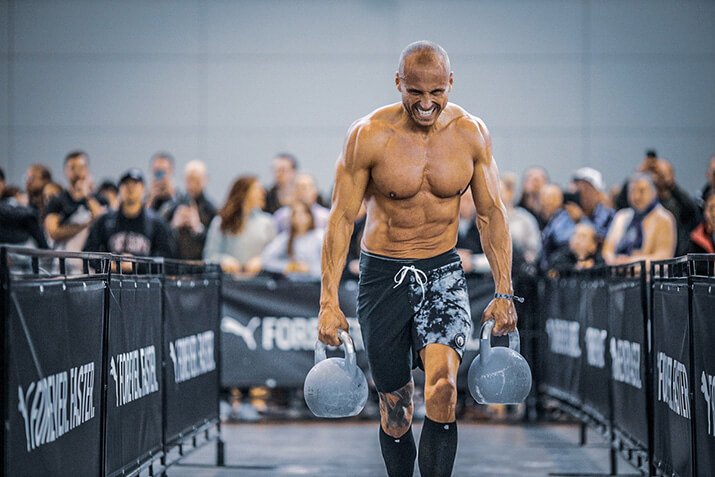
For the farmer’s carry, use two suitable implements and practice maintaining an upright position while breathing under load. If grip repeatedly fails before the intended distance, shorten the set or decrease the weight. The aim is to make your carry distance more dependable rather than to set a new maximum every session. For wall balls, select a manageable set size and rehearse the same target and squat standard across the session.
Over four weeks, change one main variable at a time. In week one record the baseline. In week two add a little easy running or one short station repetition. In week three keep that volume stable and focus on consistent running splits after station work. In week four reduce the overall workload and retest a short repeatable segment. If persistent pain, unusual fatigue or worsening performance appears, back off rather than forcing the planned progression.
Ultimately, the lesson of a 54:41 race is not that every athlete should train at a 3:24 kilometre pace. It is that running ability, station execution and transitions must be developed as parts of the same performance. Measure them separately, train them intelligently, then bring them together gradually. The result is a programme built around your own limitations instead of someone else’s finish time.

Functional Fitness Shirts & Workout Gear
Functional-fitness shirts, tanks and workout gear for athletes who train strength, conditioning and everything in between.


Anti HYROX HYROX Club Meme Shirt Gymbro T-Shirt
Make gym days more fun with “Anti HYROX HYROX Club” style.

Hybrid Athlete – Strength & Endurance Crewneck for Func T-Shirt
For laid-back days and lifting humor: “Hybrid Athlete”.


Hybrid Athlete – HYROX Workout Checklist Gym Decal for Sticker
Give your everyday gear a playful “Hybrid Athlete” twist.

Burpees Bad Breaking Bad Shirt – Meme & Cardio Haters T-Shirt
Show some cardio attitude with a playful “Burpees Bad Breaking Bad” tee.

Rowing – Dost Thou Even Row Medieval Knight Pullover fo Hoodie
Show off your medieval humor in a laid-back “Rowing” hoodie.

Kettlebell Heartbeat Muscle Shirt Athletic Vest Workout Tank Top
Add some lifting attitude to training with “Kettlebell Heartbeat”.

Happy Kettlebell Emoji Smiley Kettlebell Fitness Decal Sticker
Give your everyday gear a playful “Happy Kettlebell Emoji” twist.

For Whom the Bell Curls Tee
Show some metalhead attitude with a playful “For Whom The Bell Curls Kettlebell” tee.