Advertising disclosure: This page includes affiliate product links that may earn us a commission, as well as products from our own store.
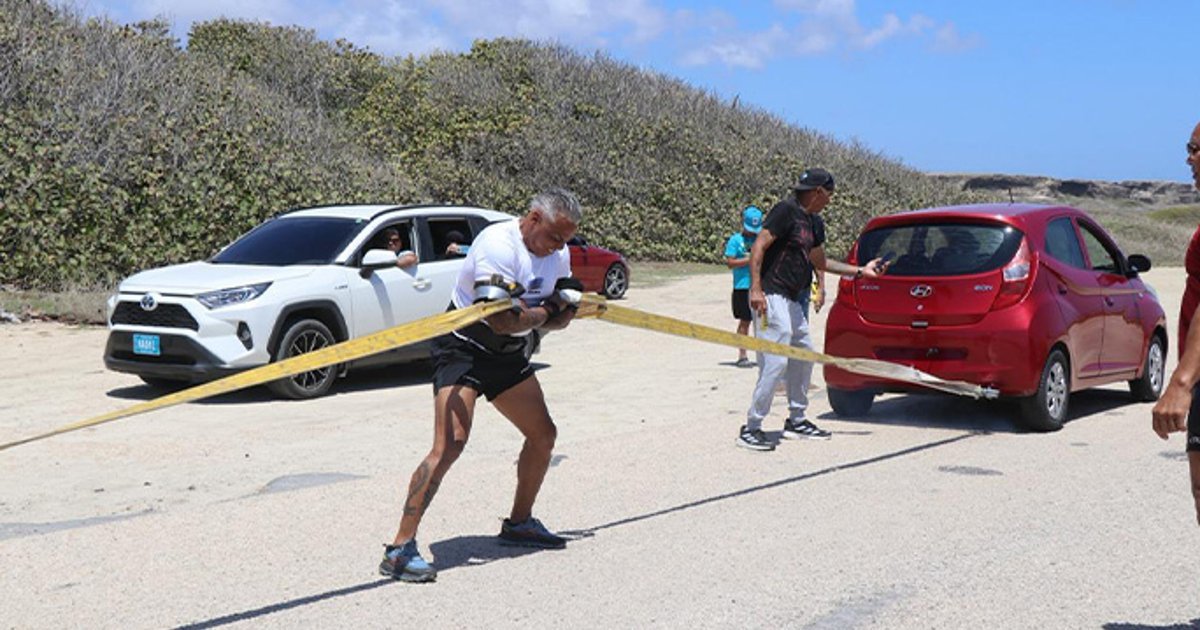
Thirteen seconds. That was enough for Aruban strongman Egmond Molina to establish a record for holding two cars in place as their drivers tried to pull away in opposite directions. His attempt took place on 22 March 2026 in Grapefield, San Nicolaas; the achievement was publicly profiled on 8 September. The footage and photographs look like an impossible tug-of-war, but the impressive part is more specific than simply being able to lift a huge weight.
The feat asks a human body to resist two changing horizontal pulls while maintaining footing, body position and a secure connection to the straps. Understanding that difference makes Molina’s preparation more interesting and keeps the lessons useful for lifters who will never, and should never, attempt a motor-vehicle stunt.
What Molina actually held back for 13 seconds
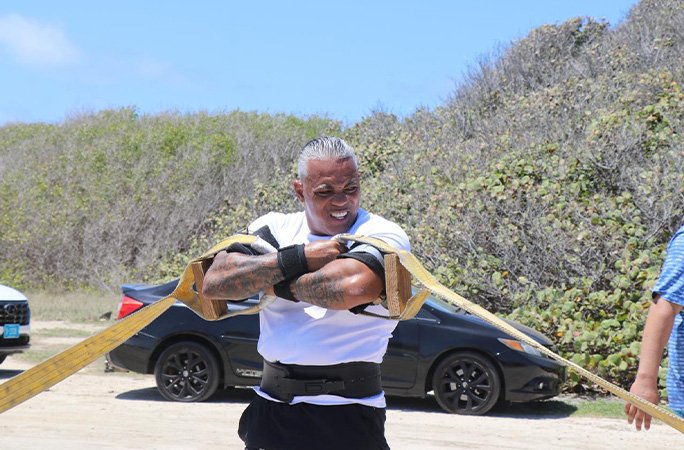
Molina positioned himself between two compact cars on a rough road, with heavy straps running from the vehicles across his arms. In the clearest action photograph, his feet are staggered, knees bent and upper body pitched forward. He is not standing upright with a bar in his hands. The arrangement makes traction, balance and the direction of the pull central to the test.
The record is for the time spent restraining the two cars, rather than the combined mass of the cars or the heaviest object lifted off the floor. The recorded duration is 13 seconds. The attempt was conducted in Aruba on 22 March 2026, not in November; it has resurfaced in fitness discussions because the setup looks unlike familiar strongman events.
Molina described roughly five inches of movement available within the arrangement before the pulls had to be contained. He also emphasized the road texture: better grip beneath the shoes changes how much pulling force can be resisted before a person slides. Those details matter because the strongest athlete can still lose a contest against a slippery surface, an unstable stance or a sudden change in force direction.
There is no responsible way to turn this into a two-person gym challenge with cars, motorcycles or improvised chains. Vehicle acceleration, strap failure and unpredictable movement introduce hazards far beyond an ordinary heavy lifting session. The meaningful question is what his stationary position reveals about force control.
Why a claimed 420kg pull is not a 420kg lift
One headline number surrounding the attempt is approximately 420kg of pulling force on each side. That figure comes from Molina’s description of the stunt. It should not be read as an independently measured gym lift, a two-sided 840kg deadlift, or the mass of a weight raised through a known distance.
Horizontal force in a car-restraint setup depends on wheel traction, engine torque, gearing, throttle input, road conditions, strap angles and any slack or elastic movement. The total mass of a vehicle is not the same thing as the horizontal force its wheels apply at a particular moment. Without calibrated force sensors and a controlled protocol, the number cannot be converted into a meaningful one-rep-max comparison.
The photographs show opposing pulls passing through a body that must stay balanced. If both sides produced identical forces in exactly opposite directions, the net horizontal force on the athlete could be small even while the loads on his arms and torso were enormous. If one side surged earlier, however, that brief imbalance could pull him off position. The body still has to tolerate local stresses and stop unwanted movement.
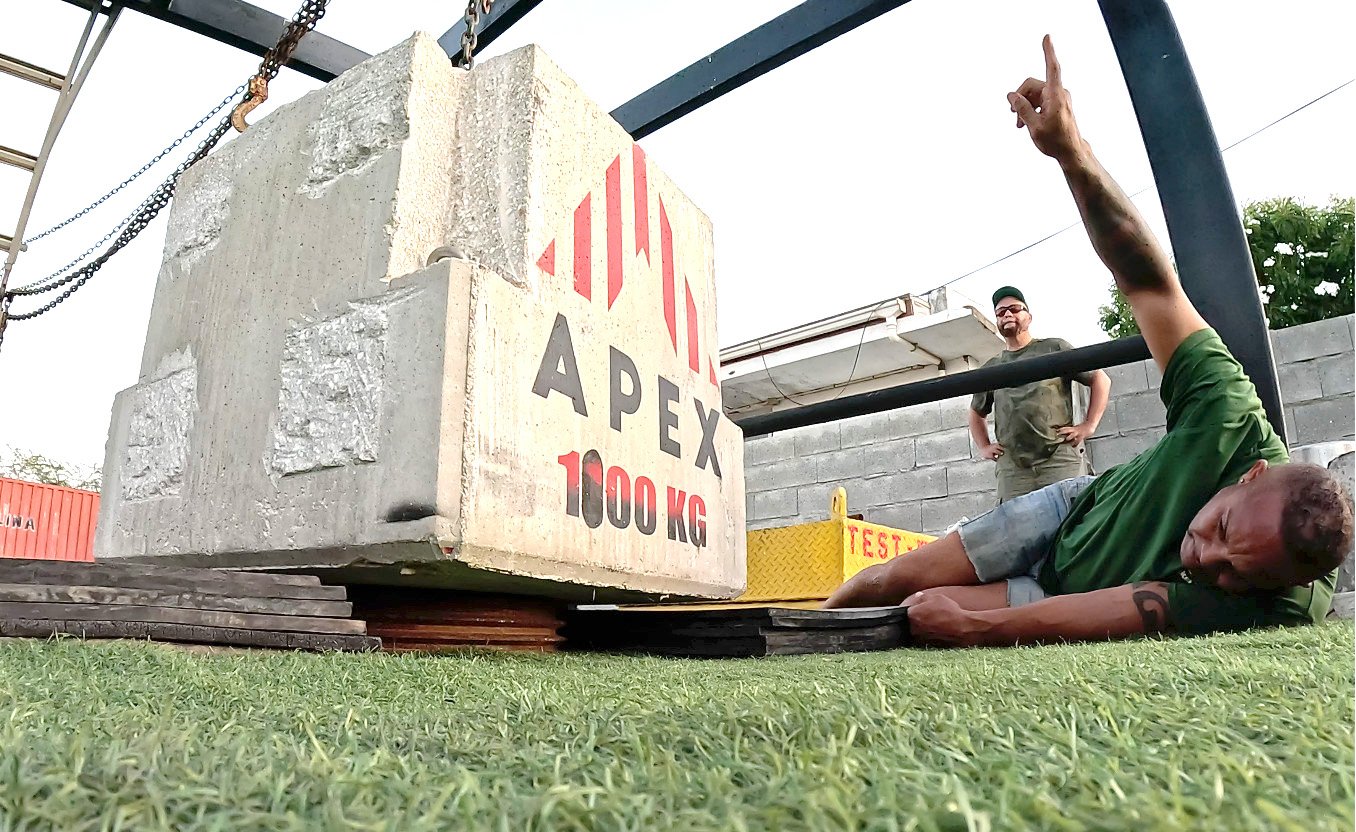
Compare this with a previous Molina feat involving a concrete block suspended for a hip lift. That object has a stated mass; the task involves lifting against gravity through a limited movement. The car-restraint challenge is primarily resisting movement under competing traction forces. Both are extraordinary, but putting their numbers side by side without describing the mechanics hides the real difficulty.

Equipment Worth Exploring
Explore equipment, accessories and gear from our carefully selected range.


Open Hex Bar
Open-frame trap bar with multiple handles for deadlifts, carries, and lower-body training.


Rubber Hex Dumbbells
Rubber-coated hex dumbbell pairs with a stable shape for home and commercial strength training.


Cast Iron Kettlebells
Textured cast-iron kettlebells for swings, squats, carries, and full-body training.


Seven years of preparation, not a sudden feat of grip
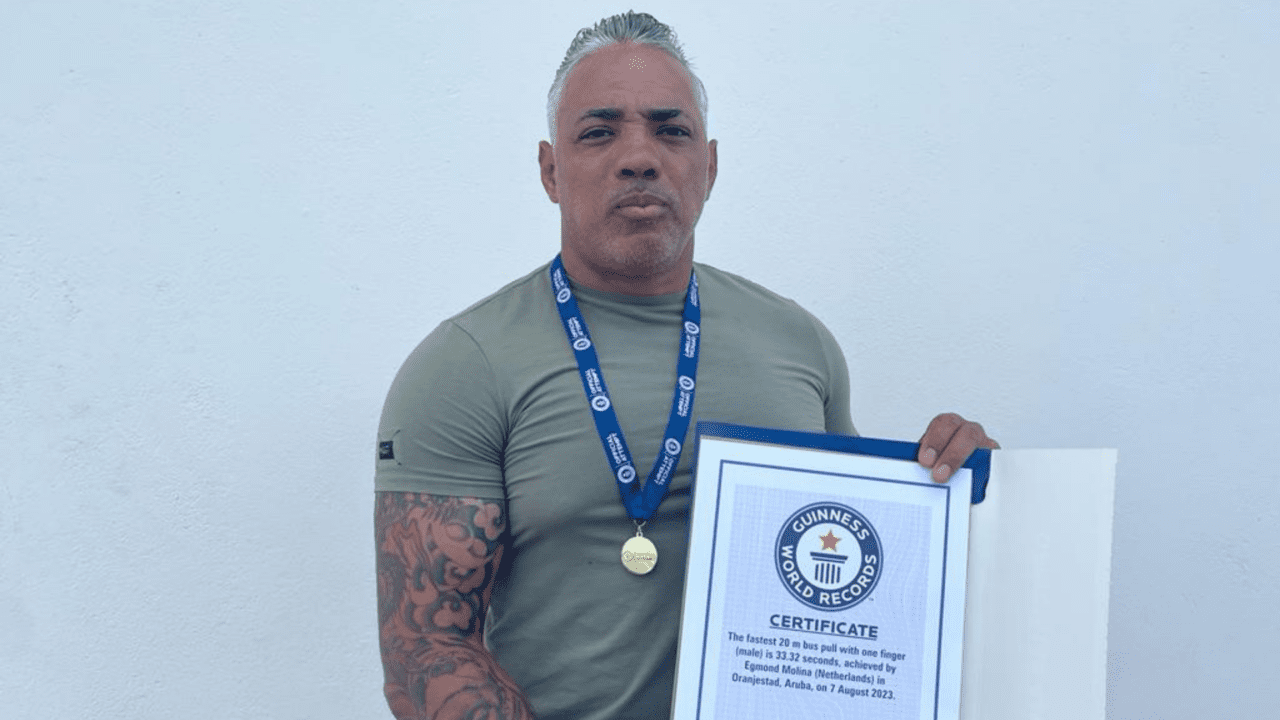
Molina has described a seven-year progression leading to the two-car attempt. The path reportedly began with motorcycles and grew into more demanding, more complicated arrangements before the compact cars. That is his account of specialist preparation, not a training plan others should copy. Increasing motorized resistance over years does not make an improvised version of this stunt safe.
His wider record history helps explain why the project was never merely about squeezing a handle. He has pulled a tram over 20 metres using his teeth, moved a tram using one finger, and pulled a large bus by the neck. These are different tests with different connection points, traction conditions and movement patterns. A world record in one does not automatically predict performance in another.
Long specialization may have helped him learn to set his stance, anticipate the way straps load, coordinate tension from the ground through the trunk and stay composed during an unfamiliar test. Those are reasonable explanations of the task, not independently measured adaptations in Molina’s muscles, tendons or nervous system. We do not have laboratory testing showing exactly what percentage of the result came from each factor.
For the average lifter, the transferable principle is specificity with patience. If a goal is a stronger carry, practise carries in repeatable conditions. If it is a better heavy hold, train static holds with stable equipment that you can safely release. Keep your main lifts in the program; an entertaining stunt is not a substitute for progressive strength work.
What isometric strength and loaded carries really develop
Isometric exercise creates muscular force while the relevant joint positions remain largely still. Holding a bar at a fixed height, resisting cable rotation and standing with a loaded implement all include static control. A car restraint has strong isometric elements, but the direction and size of the external force can change, so it is not identical to a standardized laboratory hold.
A 2025 synthesis of 32 resistance-training studies with 621 participants found that structured isometric training improved measured isometric strength compared with dynamic training and non-exercising controls. The comparison did not show a statistically clear isokinetic-strength advantage. That is support for training at demanding positions, not evidence that a hold predicts how someone will handle speeding vehicles or that isometrics outperform every other lifting method.
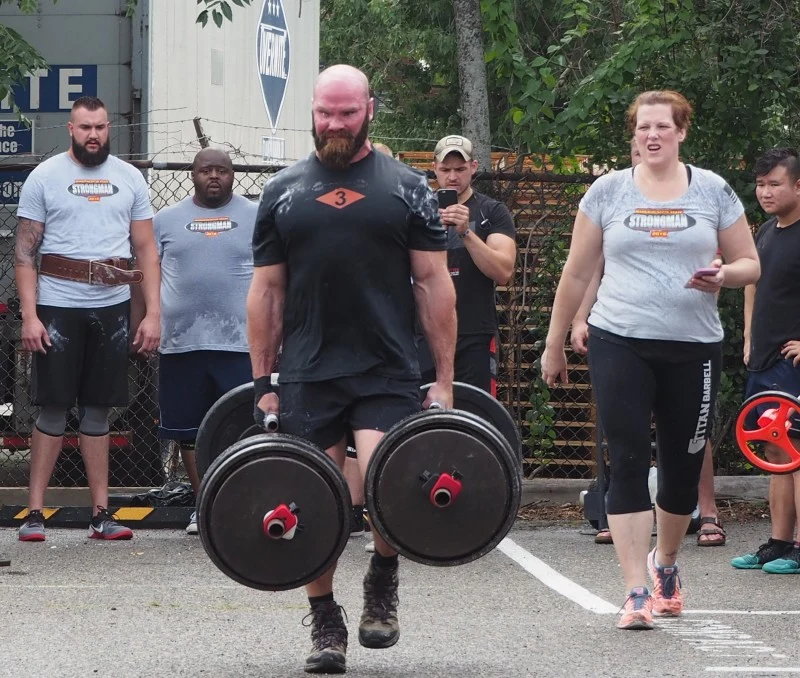
Loaded carries add a practical challenge: you must control the hips and trunk while stepping. A bilateral farmer’s carry puts loads at both sides; a suitcase carry uses one side and increases the demand to resist leaning. Coaches use these variations to practise posture, grip endurance and whole-body load management. Start with a stable path, a manageable implement and enough room to set the load down.
A straightforward progression is to log a short set of farmer’s carries with the same implements and route, then increase distance or load modestly only after posture stays controlled. Pair that with a few brief, submaximal dead-hangs or static dumbbell holds if your hands are a limiting factor. Our deadlift grip guide explains when direct grip work and lifting straps serve different purposes, while the isometric training breakdown explains why position and muscle length also matter.
Keep breathing rather than turning every hold into a maximal breath-holding contest. People with cardiovascular issues, uncontrolled high blood pressure or relevant injuries need individualized exercise guidance before heavy sustained bracing. These are ordinary training exercises, not a route to qualifying for Molina’s stunt.

Funny Gym Shirts & Workout Gear
Funny gym shirts, tanks, hoodies and workout gear for lifters who like training hard.

Grip Training Essential Gymbro Jumper & T-Shirt
For laid-back days and lifting humor: “Grip Training Essential”.

Grip Day Legend Essential Gymbro & T-Shirt
Rep “Grip Day Legend” humor in and out of the gym.

Grip Strength Fanatic Meme Hoodie
Show off your lifting humor in a laid-back “Grip Strength Fanatic” hoodie.


Grip Day Legacy Gymbro & Decal Sticker
Give your everyday gear a playful “Grip Day Legacy” twist.


The Original Atlas Stone Shirt – Greek Mythology T-Shirt
Heavy lifts, good laughs, and a little “The Original Atlas Stone” energy.

Old School Weight Strongman – Meme Shirt & Top T-Shirt
Show some powerlifting attitude with a playful “Old School Weight Lifter Strongman Graphic” tee.

Bending Bars Meme – Barbell Squat Bench Deadlift, & T-Shirt
Heavy lifts, good laughs, and a little “Bending Bars Gym Meme” energy.

Heavy Enough Tee
Bring “If You're Not Scared It's Not Heavy Enough” humor to your next gym day.
The real lesson: respect the event before admiring the number
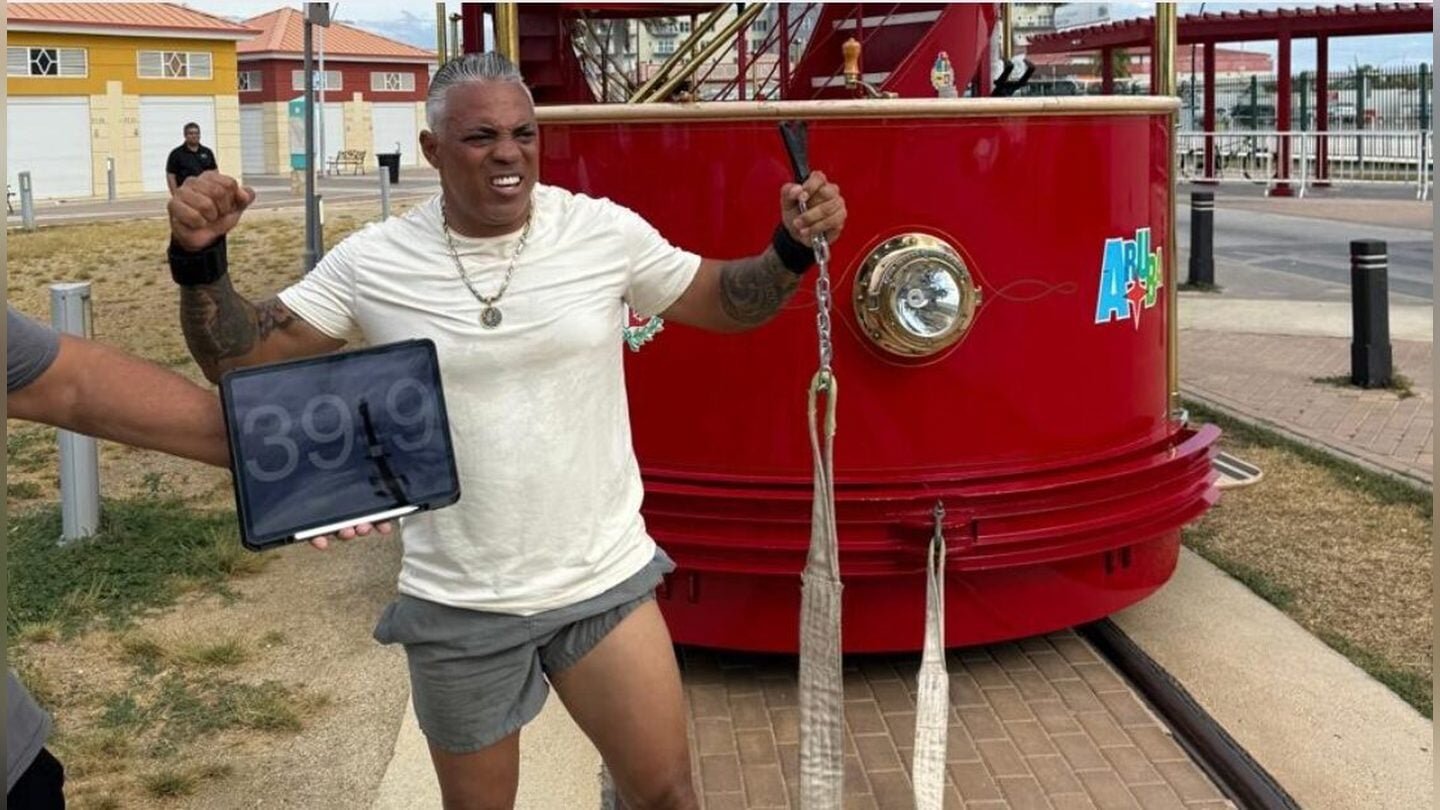
Molina’s restraint belongs in the same conversation as classic strongman feats because unusual implements reveal strengths that the usual squat-bench-deadlift total cannot fully describe. But every event needs its own unit of measurement. Thirteen seconds between two accelerating cars, a 20-metre tram pull and a maximal barbell lift tell three different stories. Neither vehicle mass nor a short video tells you the exact force his muscles produced.
Consider the Dinnie Stones: unequal stones, awkward rings and their pickup heights make the feat more than one impressive number on a scale. Our Dinnie Stones guide applies the same principle to a far more familiar strongman comparison: load distribution and equipment geometry change the task.
The sensible training takeaway is not to become a human anchor. Choose a measurable challenge that fits your experience: controlled farmer’s carries, heavy but releasable holds, sled pushes on an appropriate surface or progressive barbell pulls. Repeat similar conditions, record results honestly and leave space for recovery. Keep a clear difference between what a verified record establishes, what the athlete says about the effort and what exercise research actually supports.
Bottom line: Egmond Molina’s 13-second performance was an extraordinary display of event-specific strength and composure. The seven-year preparation story is compelling, but the cars, straps and claimed force are not a home workout recipe. Train the underlying qualities with safer equipment and let the unusual record remain an unusual record.
Equipment Worth Exploring
Explore equipment, accessories and gear from our carefully selected range.


Pro Sled System
Heavy-duty push-pull training sled for loaded conditioning, speed, and strength work.


Leather Lifting Straps
Padded leather straps support grip during heavy rows, deadlifts and pulling exercises.

Leather Wrist Grips
Padded leather lifting grips help support the hands and wrists on heavy pulling exercises.