Advertising disclosure: This page includes affiliate product links that may earn us a commission, as well as products from our own store.
A clever cable attachment can change how a set feels without changing the basic exercise. Fringe Sport’s Tricep Board replaces the familiar cylindrical pushdown handle with a shallow, curved steel blade. Rather than wrapping your fingers around a rope or bar, you can press through the surface of your palms. The turned-up edges provide a second hand position. It is an unusual piece of gym hardware, not a new method of elbow extension.
At a listed $59, the sensible buying question is whether that contact surface helps your own hands, wrists and elbows feel comfortable during challenging, repeatable triceps work. The manufacturer promises much more, including greater activation and the removal of joint stress. It is important to separate an interesting design and published specifications from those much harder-to-prove physiological claims.
What the $59 Tricep Board actually is
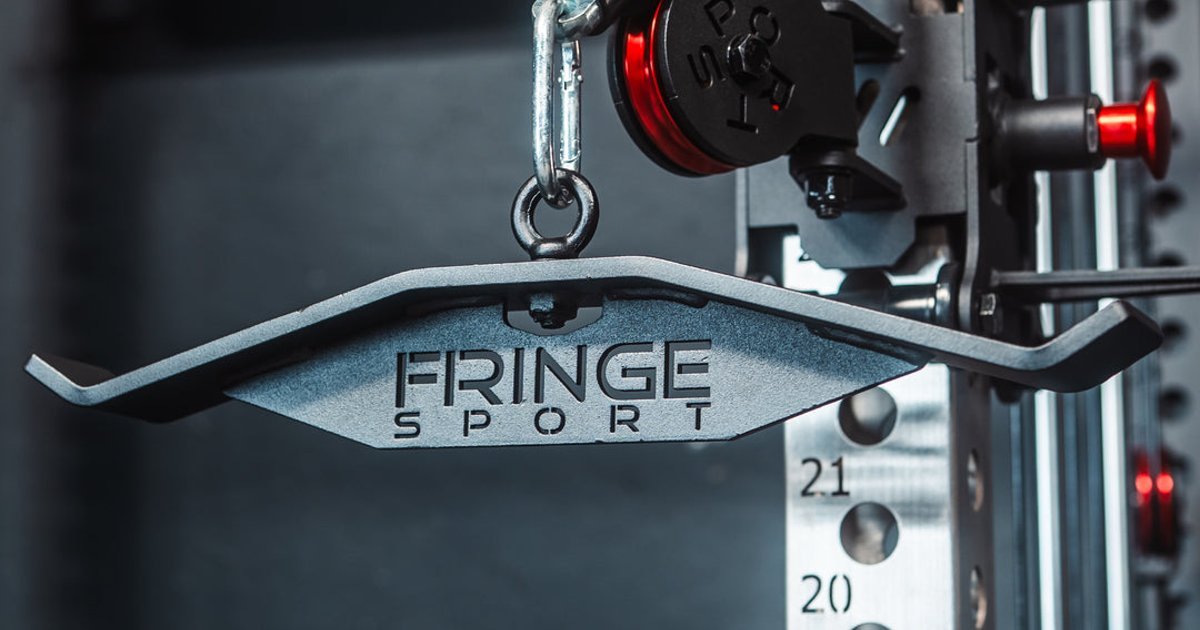
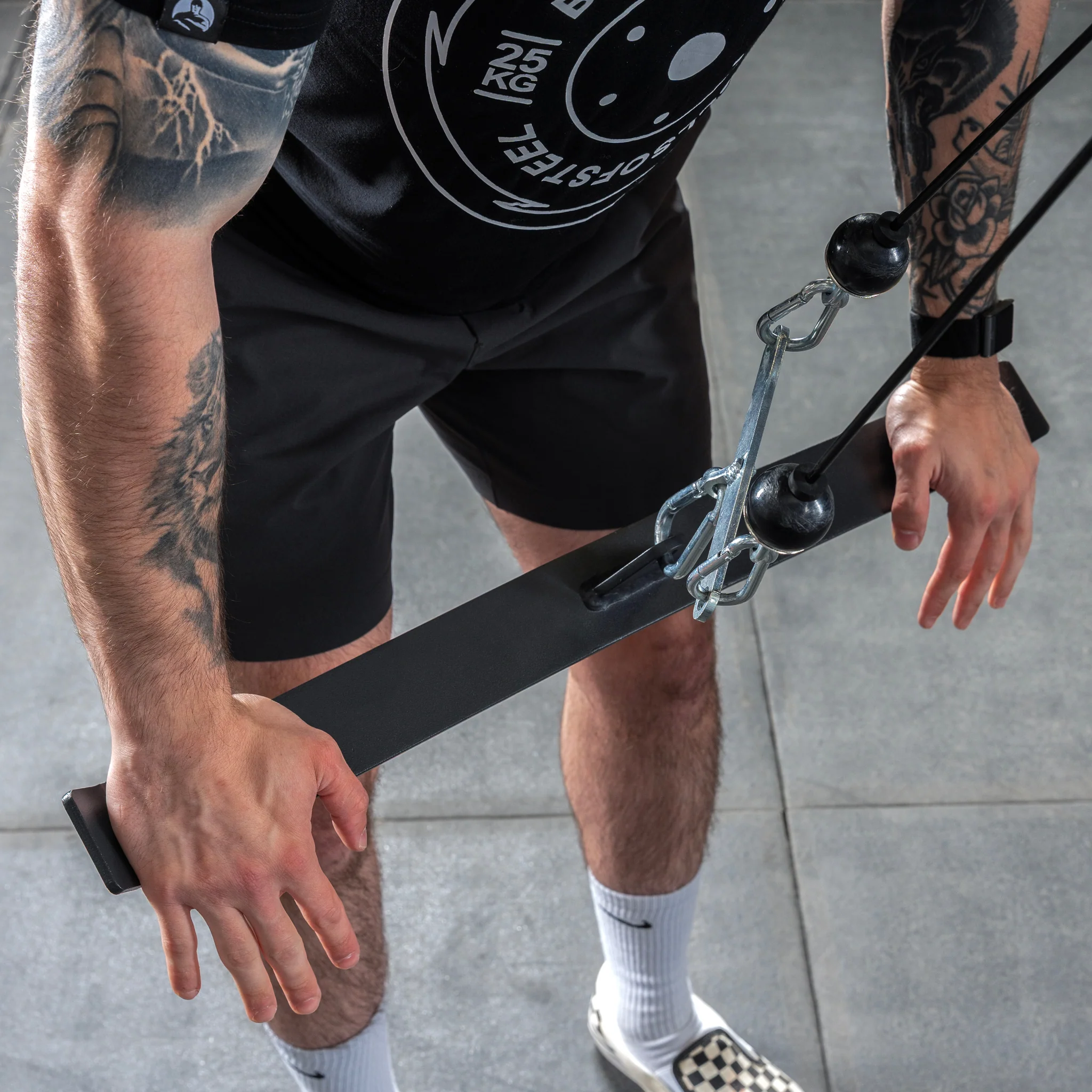
The Tricep Board is one cable attachment, not a complete training system. The maker lists dimensions of 17 inches long, 2.5 inches wide and 2 inches high, a weight of 3.5 pounds, and a 15-degree downward blade angle. A matte black powder-coated finish covers the steel. Its advertised working capacity is 400 kilograms, or 880 pounds, with a lifetime manufacturing-defects warranty. These numbers are manufacturer specifications, not results from independent strength or fatigue testing.
A central connection eye clips into a standard cable carabiner. One easily missed detail: the carabiner is not included. A buyer needs the correct clip, sufficient travel at the cable station and a secure connection that does not bind under load. The high capacity of one handle does not mean the pulley, cable, clip or supporting rack is rated for that resistance. The weakest part of an assembly determines what it can safely tolerate.
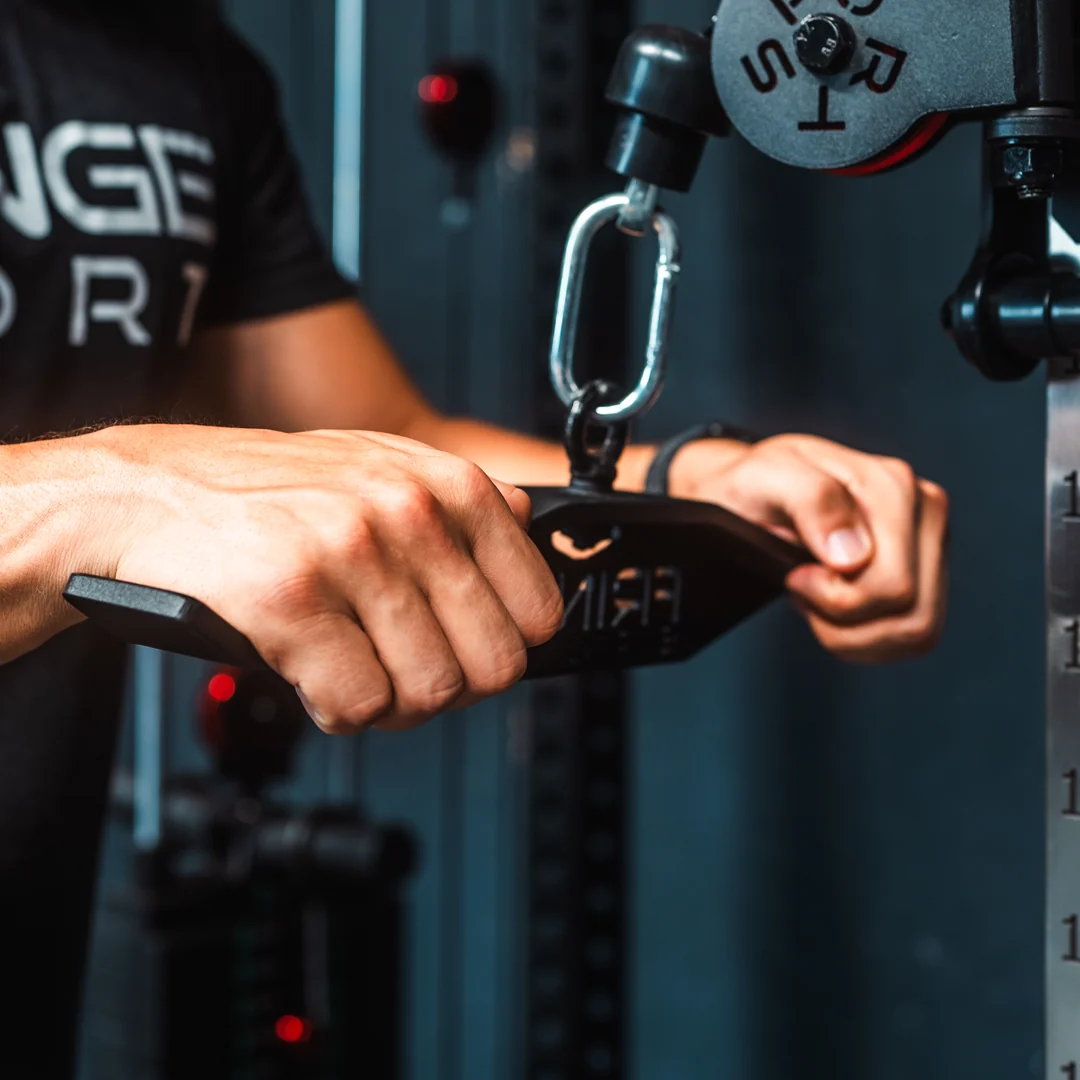
The design changes how you apply hand pressure. With a rope, you squeeze the ends and may rotate or spread your hands as the elbows extend. With a normal straight bar, you wrap the fingers around a fixed grip. With the blade, you have an open-palm press and a broad contact surface. That can matter if gripping a narrow cylinder makes the set uncomfortable or distracts you from the intended movement. But a wider surface can also produce pressure in a new place on the hand.
This is not a handle with countless adjustment settings. Its width, curvature and connection are essentially fixed; you must adapt your grip placement and stance around them. If your hand size, wrist angle or pulley position clashes with its geometry, the fact that the bar looks clever will not make it comfortable. Check the actual Fringe Sport product specifications before buying because prices, availability and regional shipping charges may change.
Comfort is plausible; zero joint stress is not established
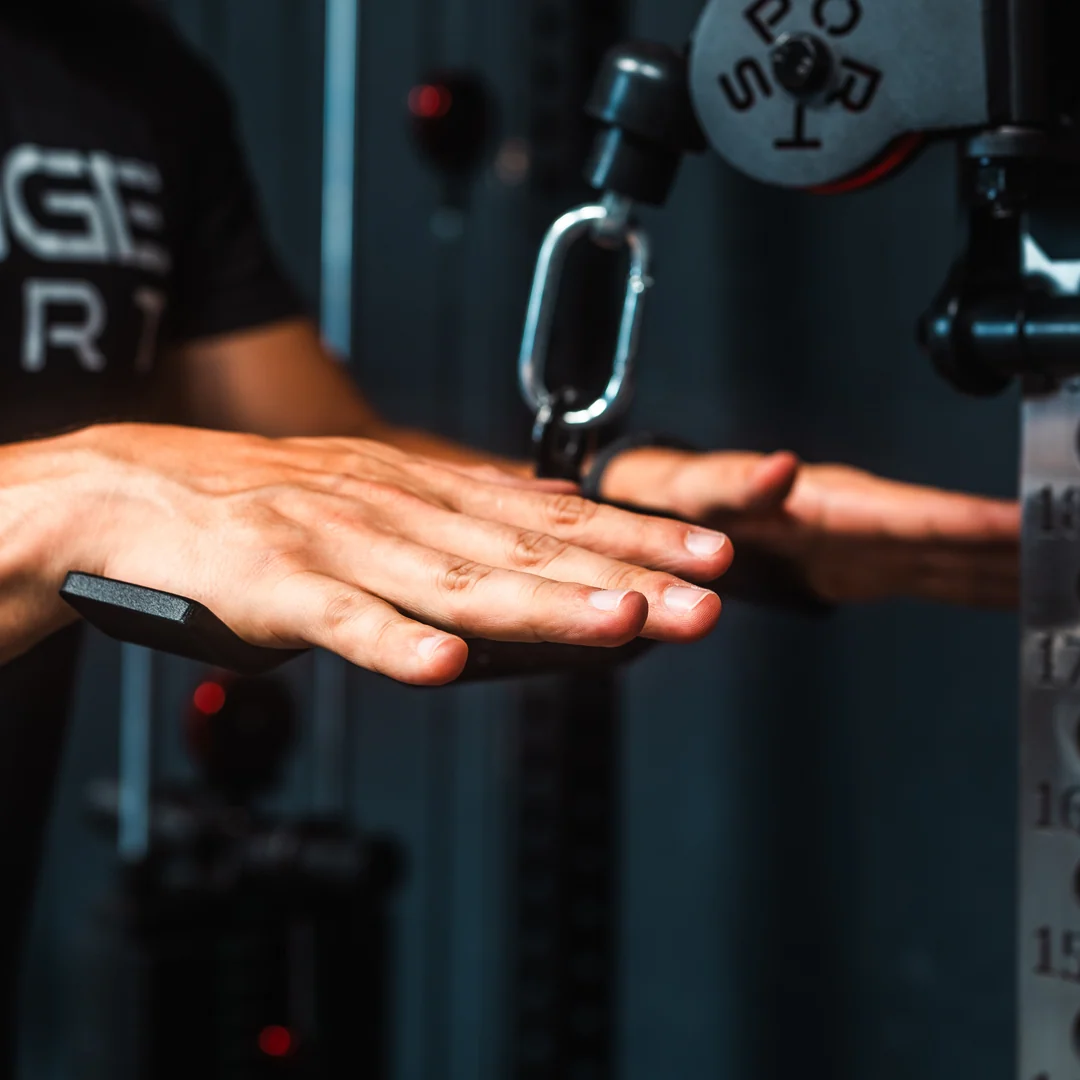
A flat contact surface may feel more natural to some people. That does not establish that a straight bar harms every wrist, that this product prevents injury or that it forces more muscle growth. Those are separate questions. Joint loading depends on total resistance, elbow and shoulder position, tissue tolerance, training volume, the cable’s direction and how the user controls the repetition. An attachment cannot remove every force from the wrist or elbow while those joints still transmit the resistance.
Similarly, a temporary sensation of the triceps working hard is not a long-term hypertrophy result. A better pump may reflect the novelty of the grip, a slower tempo or using a slightly different elbow path. Even laboratory electrical-activity measurements do not automatically predict muscle gained after months of training. There is no evidence here that the Fringe blade beats a familiar rope for every lifter.
Shoulder position illustrates the difference between a useful training variable and marketing certainty. In a twelve-week within-person experiment involving 21 young adults, an overhead cable extension produced greater average triceps growth than an extension performed with the arm down by the side. The test compared arm positions, not this attachment or any specific brand of handle. It cannot justify claims that a blade makes every triceps exercise superior. It does support using comfortable variations that load the muscle in meaningfully different positions.
The correct first diagnostic question is why the existing handle feels awkward. Do your wrists bend excessively only in the final repetitions when the load is too heavy? Does a short rope force your elbows forward? Are you standing too close to the pulley, creating a cramped path? Those problems may be solved through technique or a different attachment already in the gym. A rope-pushdown setup and grip guide can help isolate those variables before shopping.

Equipment Worth Exploring
Explore equipment, accessories and gear from our carefully selected range.
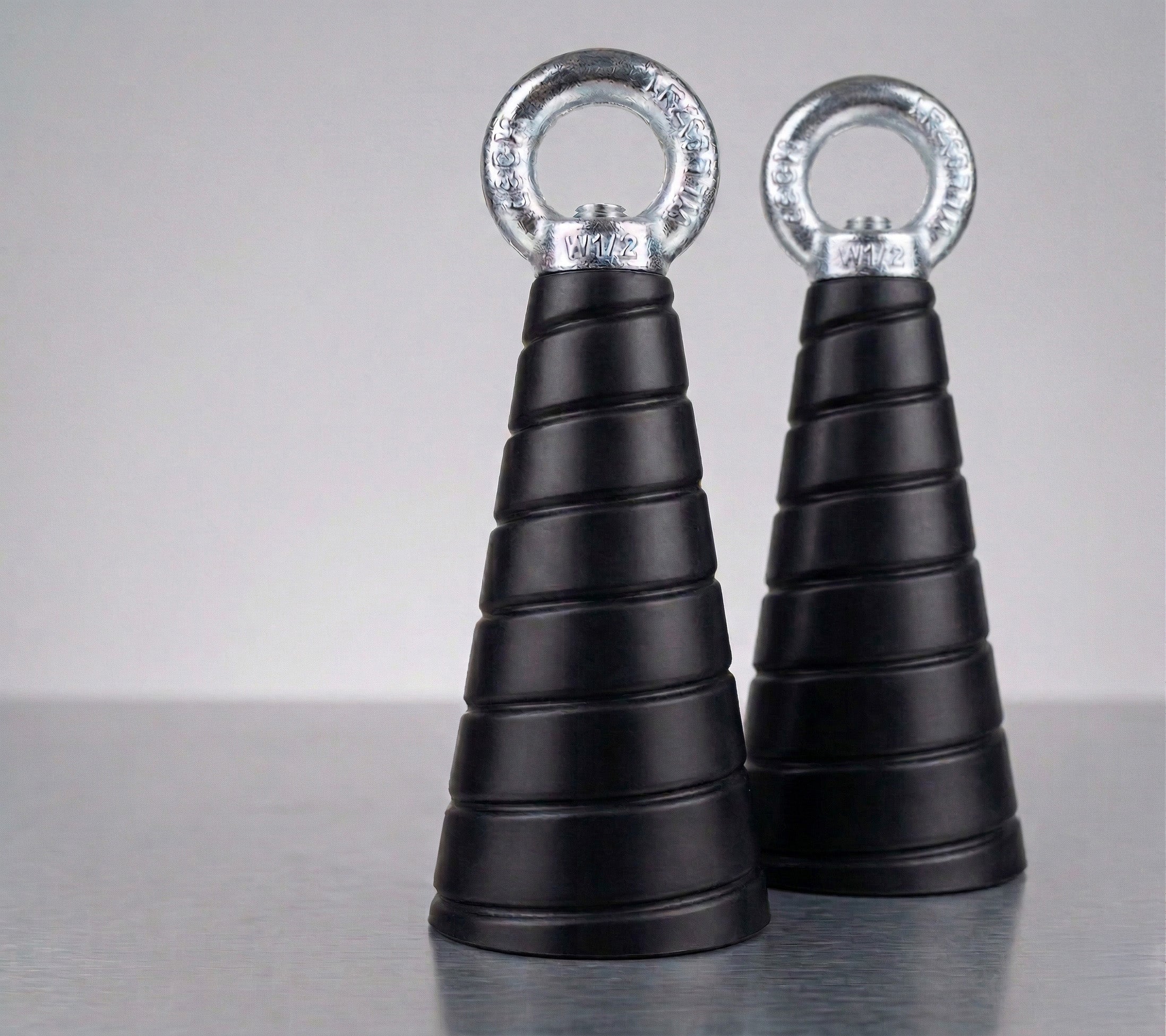
Tapered Tricep Cone
Tapered rubber cable grip for triceps extensions, face pulls and hammer curls.
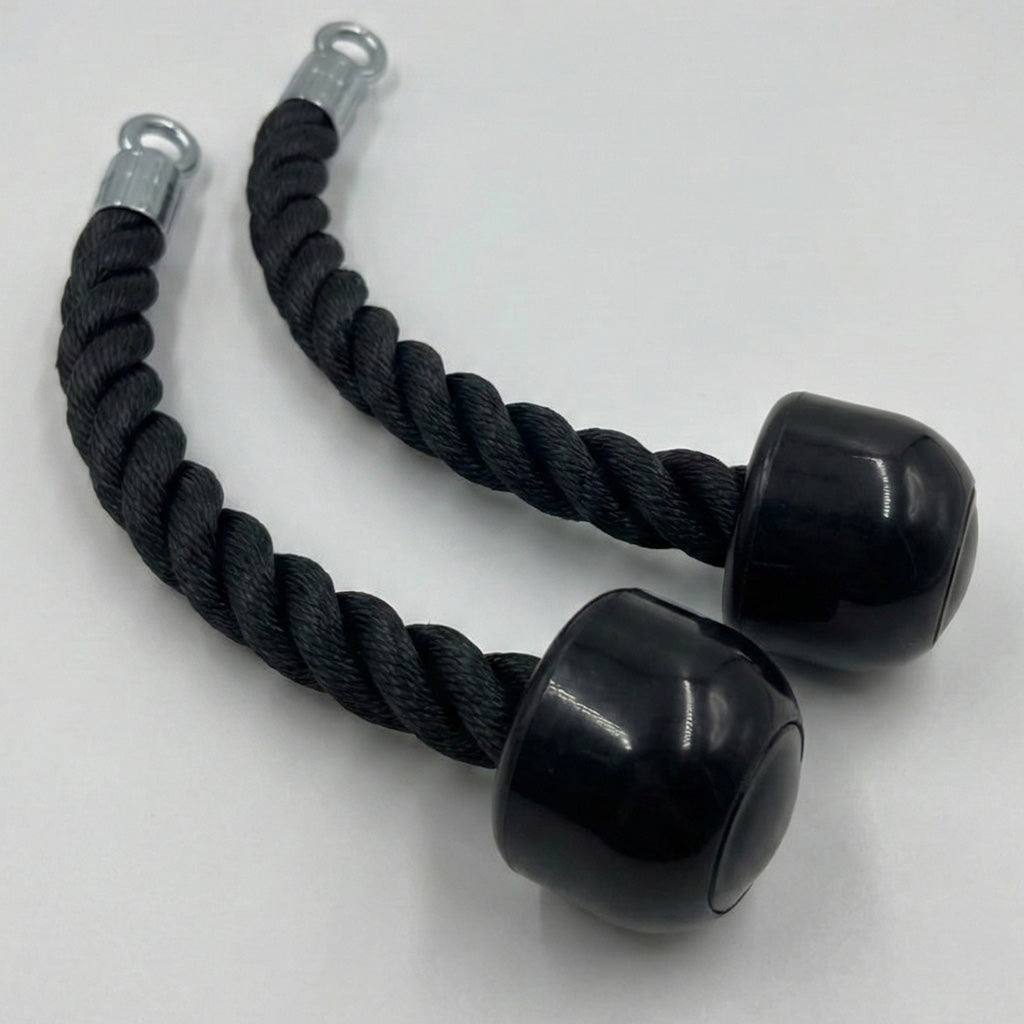
Individual Tricep Ropes
Pair of individual cable ropes for triceps pressdowns and cable hammer curls.

Multi-Length Tricep Strap
Adjustable-length cable strap for triceps, biceps and upper-body cable exercises.

Long Tricep ERGO Ropes
Extended triceps ropes with ergonomic grips for cable pressdowns and overhead extensions.
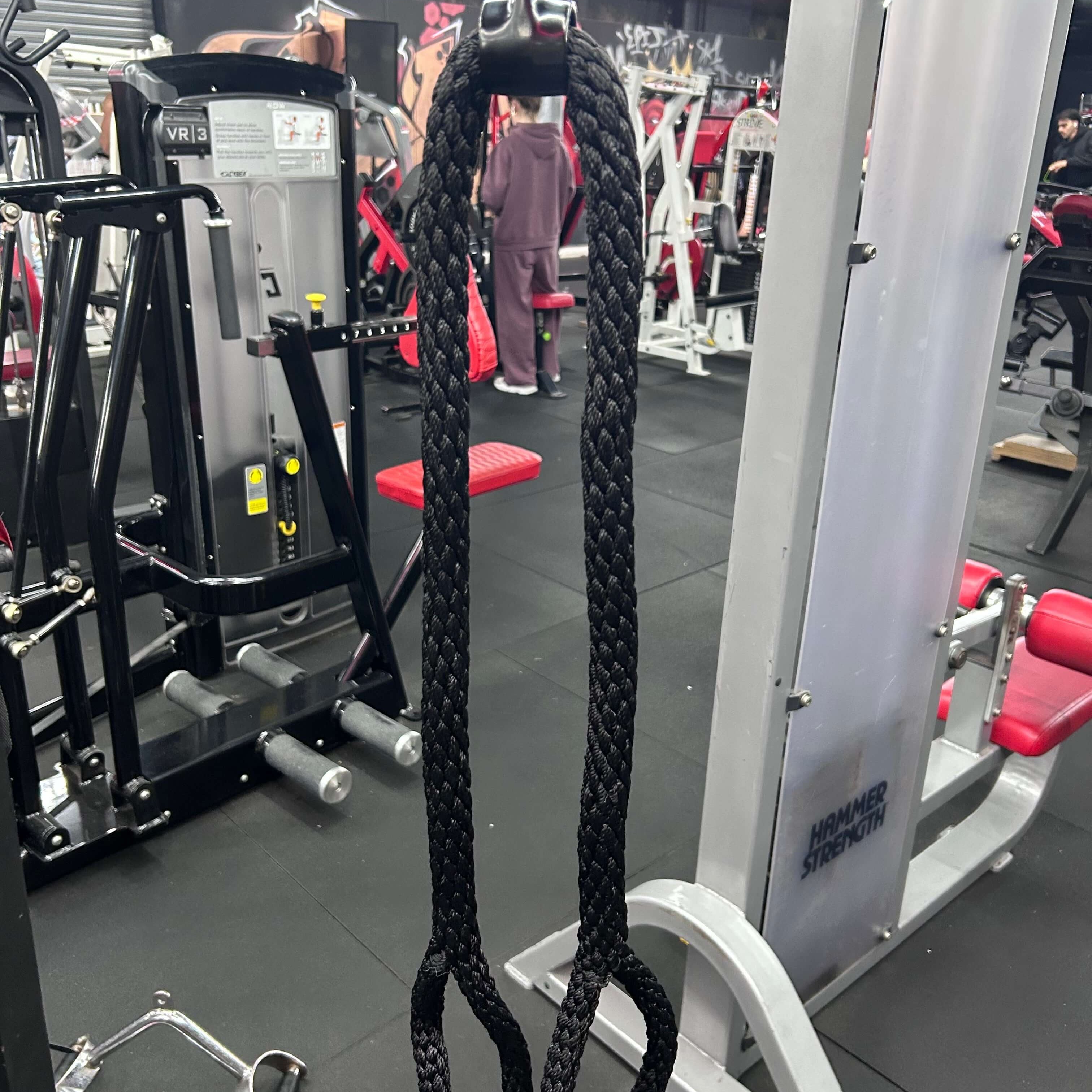
Super Long Tricep Rope
Extra-long looped cable rope for triceps pressdowns and overhead extensions.

GymPin Ergo Handles
Pair of ergonomic cable handles shaped for comfortable triceps and pulling exercises.

W Grip
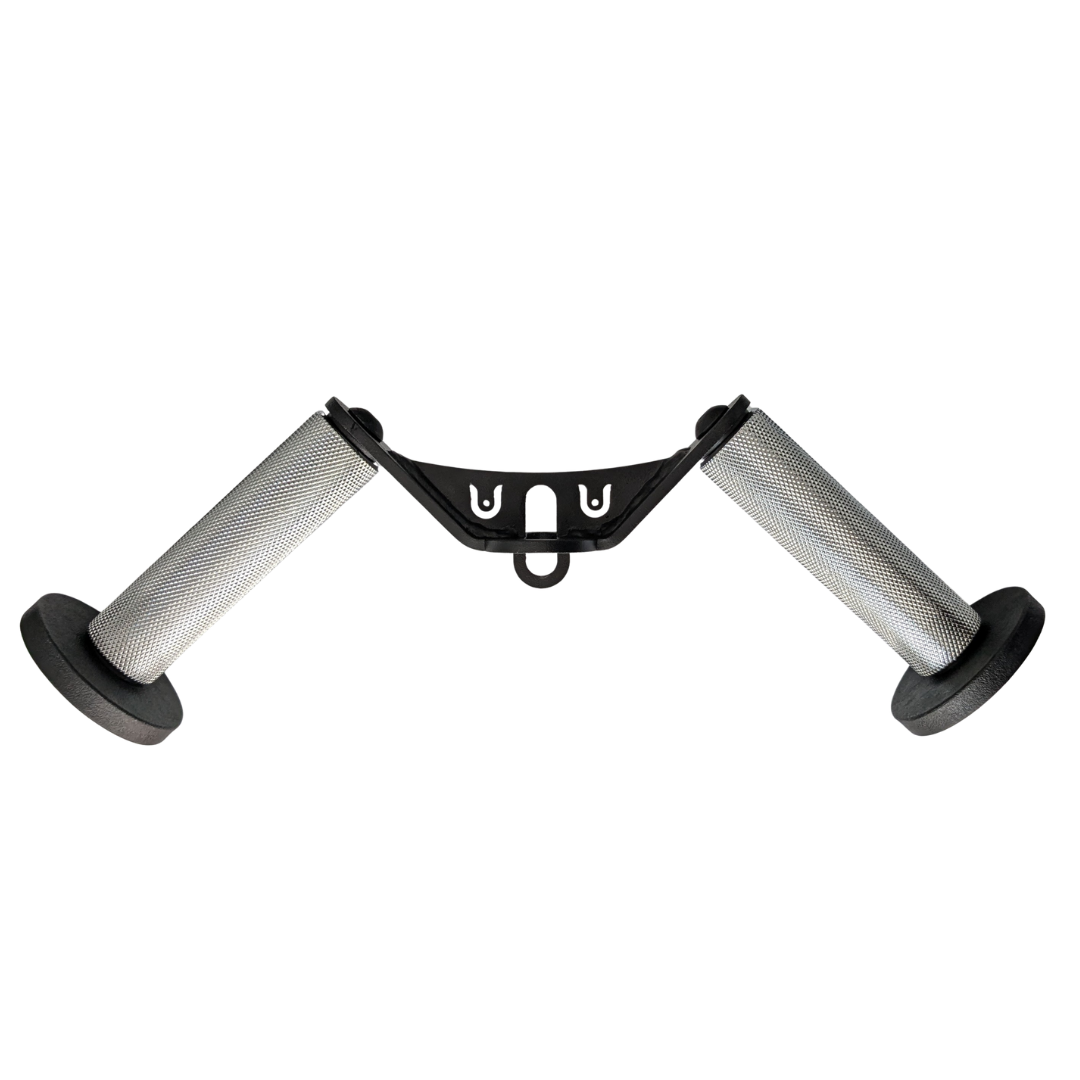
Angled cable grip for comfortable rows, pushdowns, and curls.
Horizon Grip
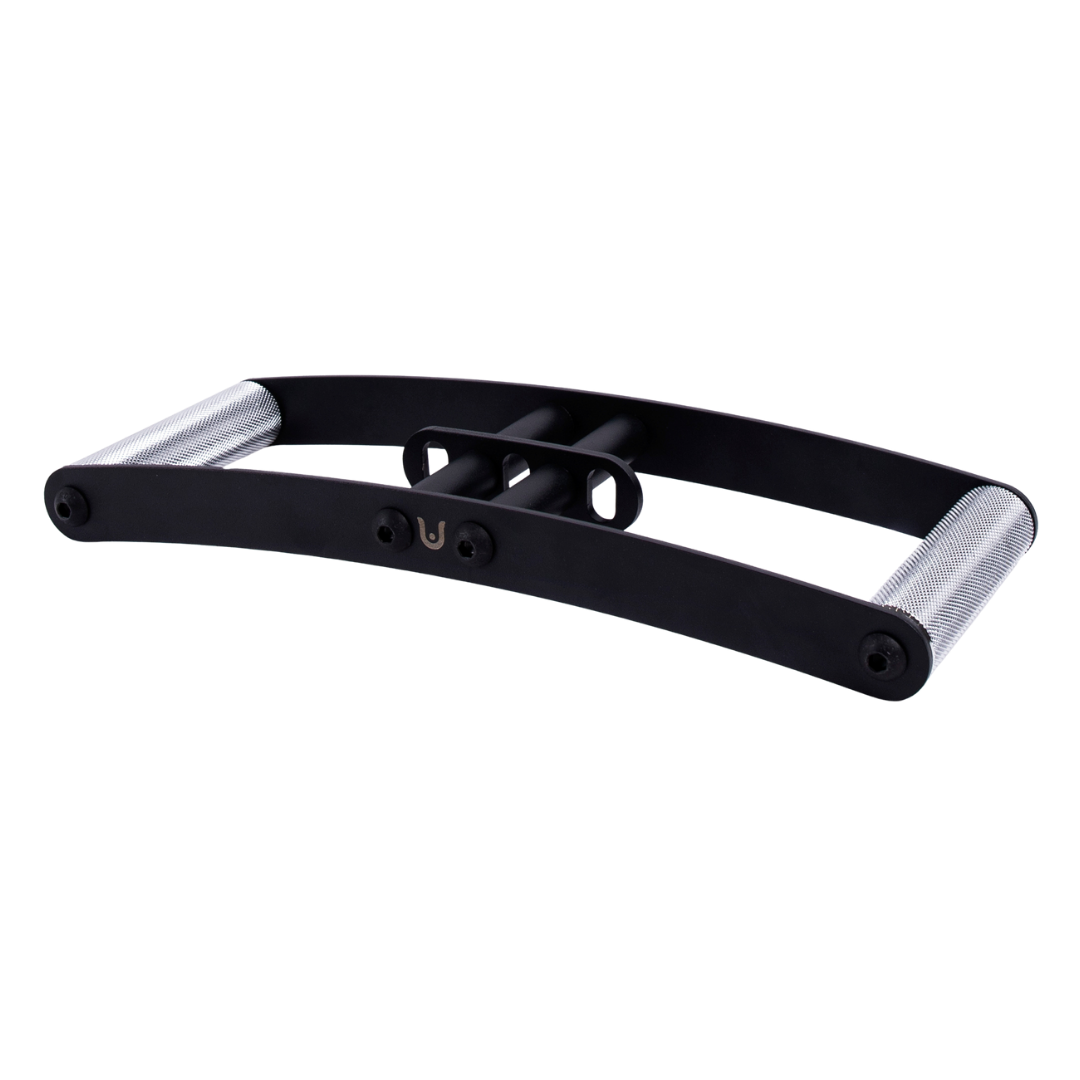
Ergonomic V-style cable grip for rows and back training.
Check pulley height, clearance and the connection first
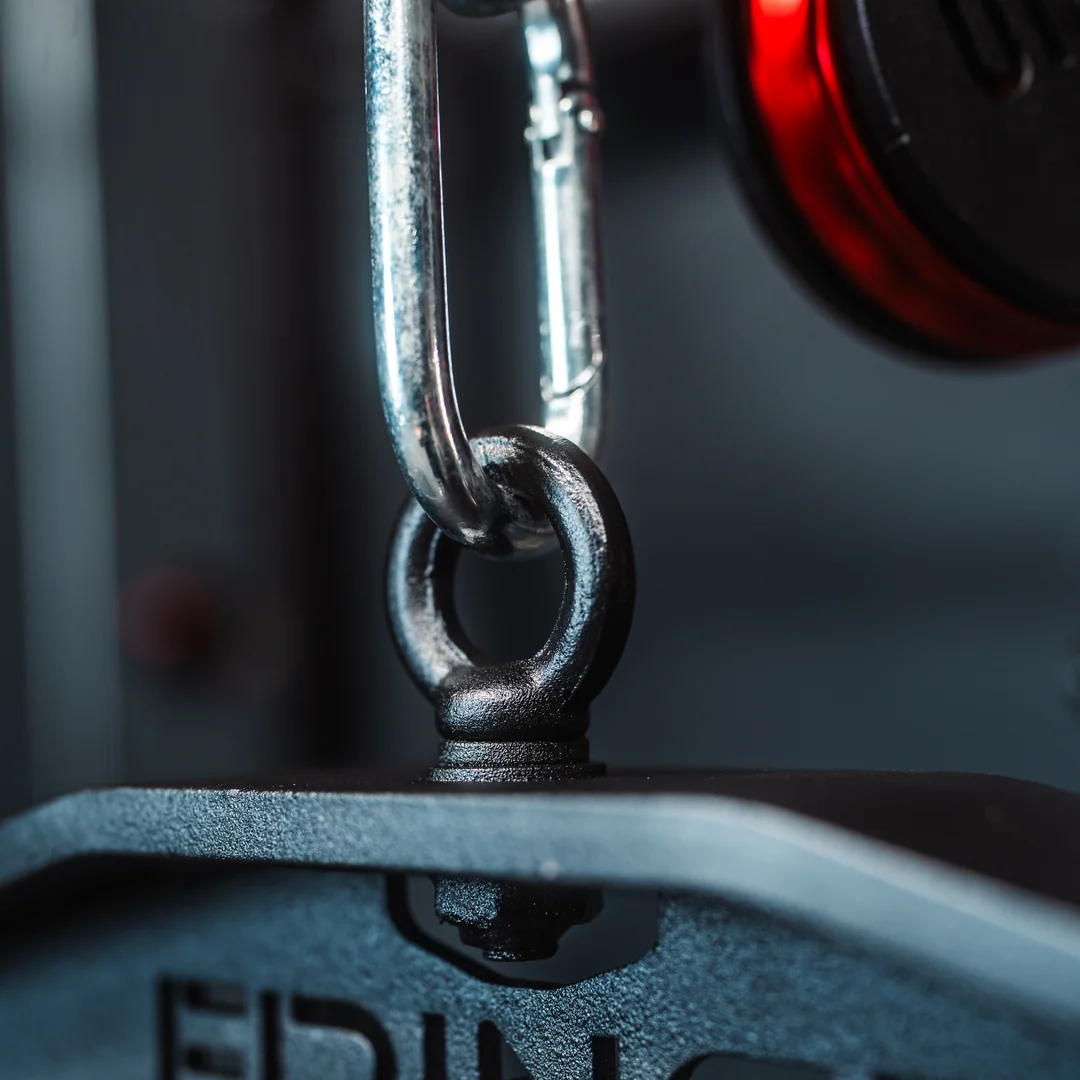
Start with the actual cable path, not the stack number. Clip the board into a properly rated, fully closed carabiner and confirm that the connector moves freely through the central eye. Before loading, move the attachment slowly from the top to the bottom of the planned repetition. It should not scrape the pulley housing or lever the clip sideways. On a compact trainer, the added length of the carabiner and board can consume meaningful travel.
For standing pushdowns, a high pulley usually lets you begin with enough elbow flexion to perform a full controlled repetition. Keep your stance stable, elbows relatively quiet and torso steady. The blade should not force you to reach awkwardly forward or lift your shoulders. Press smoothly until the elbows approach extension, then return under control. Do not throw your bodyweight onto the handle or snap the elbows into lockout to move a larger indicated load.
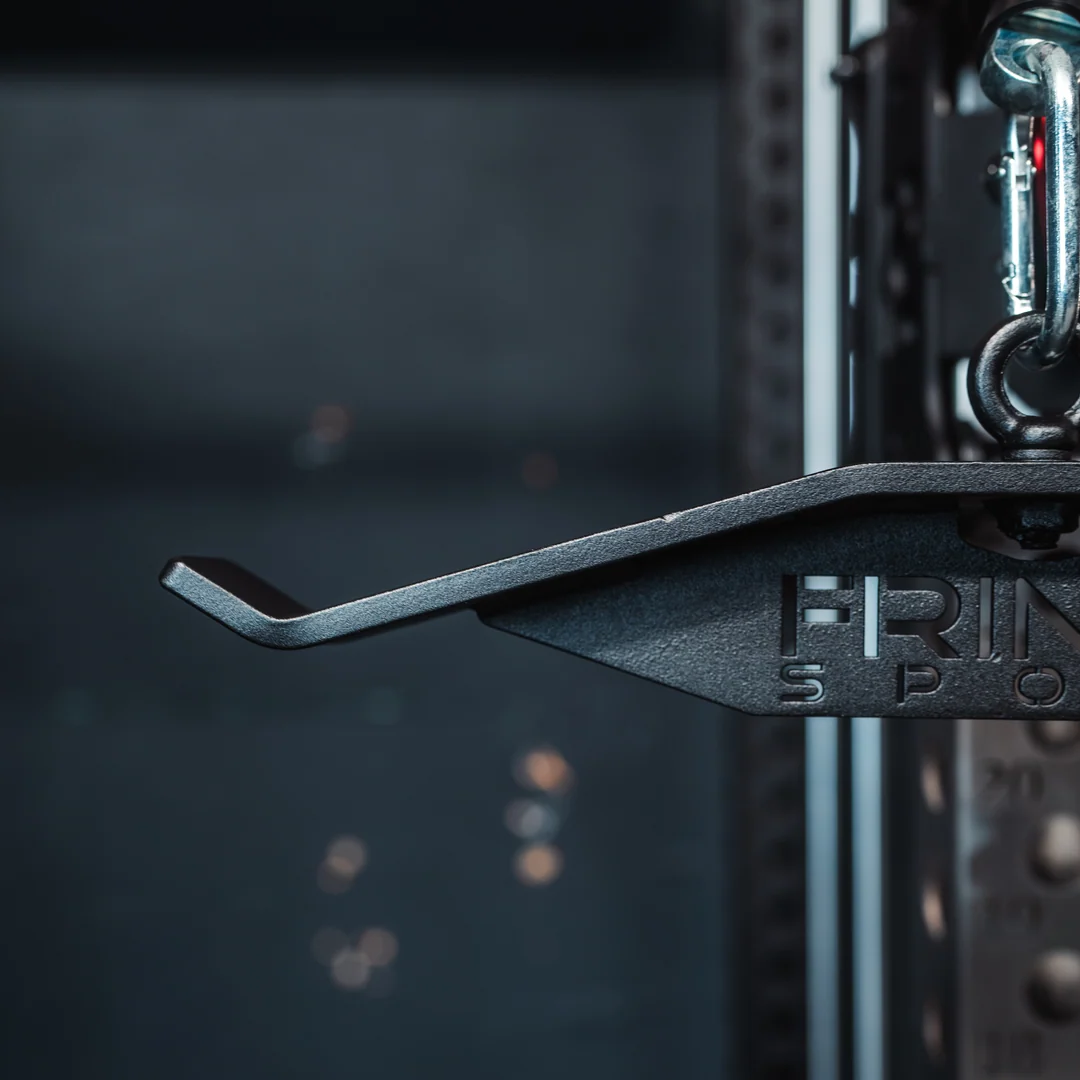
Look at the contact between your palm and the board. The raised lips are easy to see in the photographs, but which part of the hand actually carries pressure will depend on where you place the fingers. A broad contact patch is helpful only if it remains secure and tolerable. Start light enough that a sudden slip would not cause a dangerous movement. Do not turn an open-hand press into a maximal-strength stunt.
Fringe also advertises overhead extensions and pullovers. Those movements change the direction of pull and the demands on your shoulders; they are not simply pushdowns performed somewhere else. Overhead extensions may require a lower pulley, a forward stance and clearance for the blade around your head. Pullovers are substantially more shoulder-driven. Try each position with a deliberately light load before assuming a single blade will replace every accessory. If the cable hits the body or the shoulder range feels forced, abandon that variation.
Finally, record the pulley ratio when testing any attachment. A one-to-one lat tower and a two-to-one functional trainer can deliver different forces at the hands even when the selected stack weight looks identical. For meaningful comparison, stay on the same machine.
Where a flat blade fits among ropes and handles
A rope allows both hands to separate and rotate independently, which many lifters find comfortable near the end of a pushdown. A straight bar fixes the spacing but can make a consistent set easy to reproduce. A curved or angled bar changes wrist position; single handles permit individual arm work and sometimes reveal side-to-side differences. The Tricep Board adds a palm-press contact surface. These options solve slightly different problems, and there is no single ranking that works for everyone.
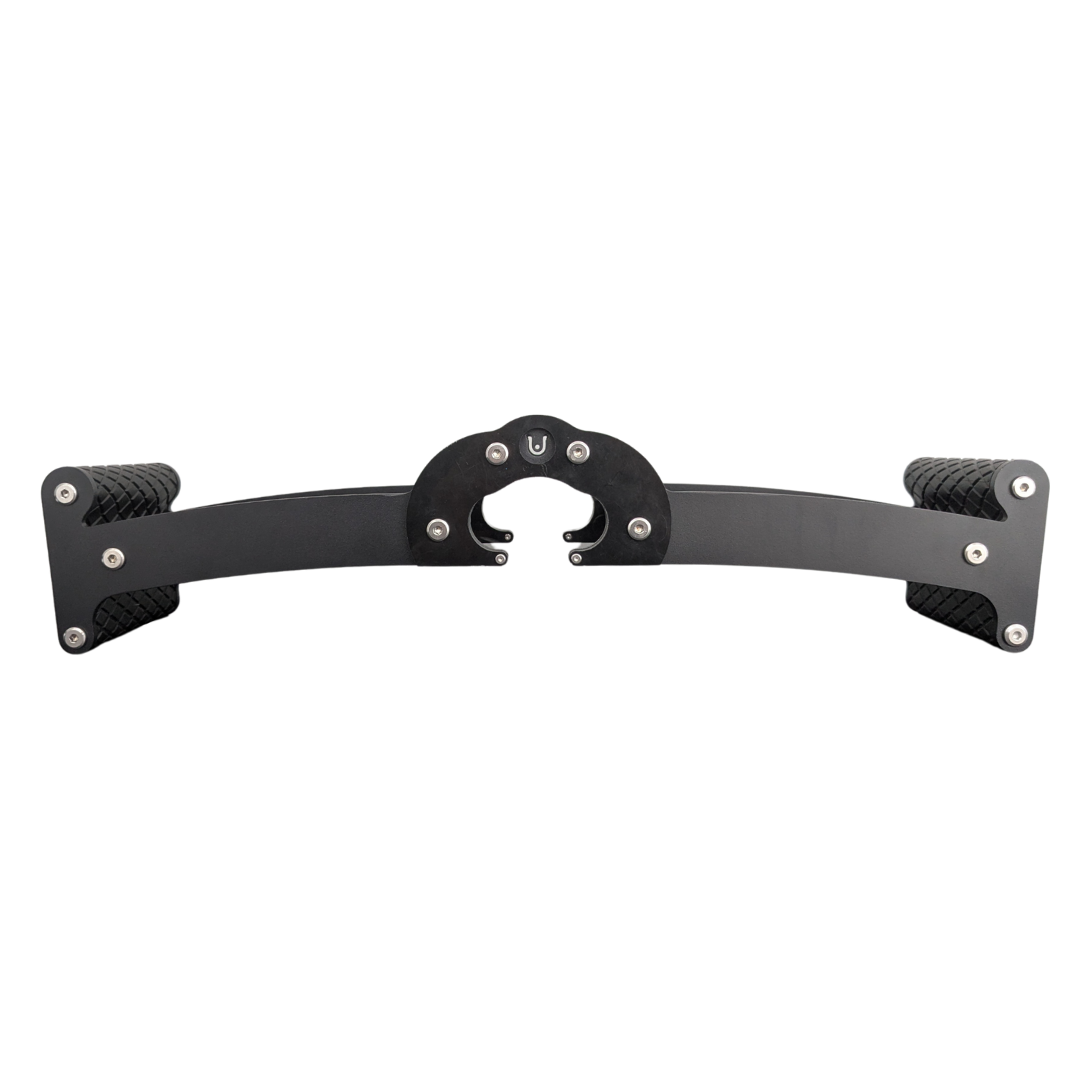
The palm-press idea is not unique to Fringe. Bells of Steel sells a separate Flat-Iron Tricep Press Cable Attachment with approximately 17-inch and 26-inch variants. The longer version offers a wider surface for certain cable movements. It is not the same implement as the Fringe board; the photograph in this section shows the competing Bells of Steel product for comparison. Differences in construction, grip curvature, length, delivery region and warranty are relevant to a purchase. A low sale price in Canadian dollars is not automatically a cheaper local purchase for a buyer elsewhere.
If you already own a rope and a pair of single handles, ask what exactly is missing. If the rope is comfortable and your triceps sessions are progressing, there is no urgent reason to replace it. If a rigid bar forces an uncomfortable angle, a rope or free handle may address the issue without another speciality purchase. If squeezing all existing implements becomes the limiting factor, an open-palm surface is worth considering.
Merchandise descriptions regularly use words such as isolation, activation and comfort as if they refer to the same thing. They do not. Isolation is never absolute: upper-arm positioning, balance, shoulders and other tissues still contribute. Activation is a short-term physiological signal. Comfort is an individual experience. Growth depends on sufficiently challenging training over time. A purchase should be judged primarily by the fit and extra practical options you can actually use.
Equipment Worth Exploring
Explore equipment, accessories and gear from our carefully selected range.

44in Dual Hook Bar
44-inch aluminum dual-hook straight bar for cable rows, pulldowns, and curls.

Dual Hook EZ Curl Bar
Angled aluminum dual-hook cable bar for biceps curls and pulldown variations.

GymPin D Handle Bar
Multi-use steel D-handle bar for cable rows, pulldowns and other cable exercises.
Back Bar
Multi-grip cable and landmine bar with a built-in deadlift jack.

Lat Pulldown Set
Multi-grip cable attachment set for pulldowns, rows, and varied upper-body training.

VForce Lat Tower
Wall-mounted cable tower with pivot arms and adjustable 1:1 or 2:1 pulley ratios.
VOLTRA
Compact digital cable trainer with smooth, adjustable resistance.
A four-week test before calling any attachment better
Treat the first month as a fair comparison rather than a test of whether the purchase was exciting. Use the same cable station throughout and keep your main pressing exercises stable. In weeks one and two, train pushdowns twice weekly on nonconsecutive days. In one session use a familiar rope or bar; in the other use the flat board. Start with two or three sets of ten to fifteen controlled repetitions, leaving roughly two or three good reps in reserve. Do not pretend that equal stack numbers automatically mean identical effort if the new grip changes your stability.
In weeks three and four, keep the attachment assignment, pulley height and rest periods consistent. Try to add a clean repetition before increasing the selected resistance. If the board allows the same range with less hand discomfort, that is a useful personal finding. If the advantage disappears once you slow down or match the effort honestly, do not manufacture a victory from the first workout’s pump.
Write down the attachment used, repetitions, load, perceived effort and any wrist, palm or elbow discomfort. A specific observation such as “the curved edge pressed into my palm on rep twelve” is more informative than “great activation.” Film one working set from the side to see whether the shoulder and torso are doing more of the work on one implement. If you feel sharp pain, stop and reassess the exercise rather than pushing through to complete the experiment.
Do not layer every optional triceps set on top of a demanding chest or shoulder program. If you already train bench press, dips, close-grip pressing and overhead work, two direct isolation sessions may be plenty. Include an overhead extension separately if it suits your joints and your available equipment, since it presents a different shoulder position; the board is not required for that variation.
The decision at the end of four weeks can be simple. Keep the blade if it offers repeatably comfortable hand contact, sufficient range, predictable cable travel and measurable progression. Return to the rope or another handle if the blade slips, creates pressure or simply adds complexity. Verdict: this is a distinctive $59 cable attachment with checkable specifications and an interesting grip option, not proven protection from joint injury or a shortcut to bigger triceps.

Bodybuilding Shirts & Workout Gear
Bodybuilding shirts, tanks and gym gear for lifters chasing muscle, size, symmetry and the pump.


Every Day Is Arm Day
Make gym days more fun with “Every Day is Arm Day Octopus Gym Meme” style.


Micro Biceps Club President Gym | Funny Workout Sweater T-Shirt
Keep things casual with a little “Micro Biceps Club President” attitude.


I Love Bench Press Gym | Funny Bench Press Meme Crewnec T-Shirt
For laid-back days and gym-girl humor: “I Love Bench Press”.

Gym Sir Swole of Benchalot Medieval Knight Bench Press Hoodie
Show off your medieval humor in a laid-back “Sir Swole of Benchalot Medieval Knight” hoodie.

Big Biceps Theory Decal Water Bottles & Gear Meme Sticker
Bring “Big Biceps Theory” attitude to your water bottle or laptop.