Advertising disclosure: This page includes affiliate product links that may earn us a commission, as well as products from our own store.
A straight pull-up bar can be useful while offering a hand position you do not particularly enjoy. The original Kensui Swissies address that narrow problem: two separate hooked handles give you a neutral grip on a suitable bar, without replacing the entire station. Their usefulness depends on the bar they meet, the space beneath it and the exercises you actually repeat. This is a setup and buying guide for the original V1 model, rather than a claim of hands-on testing or a review of the newer MAX handles.
Check the bar before choosing the handles
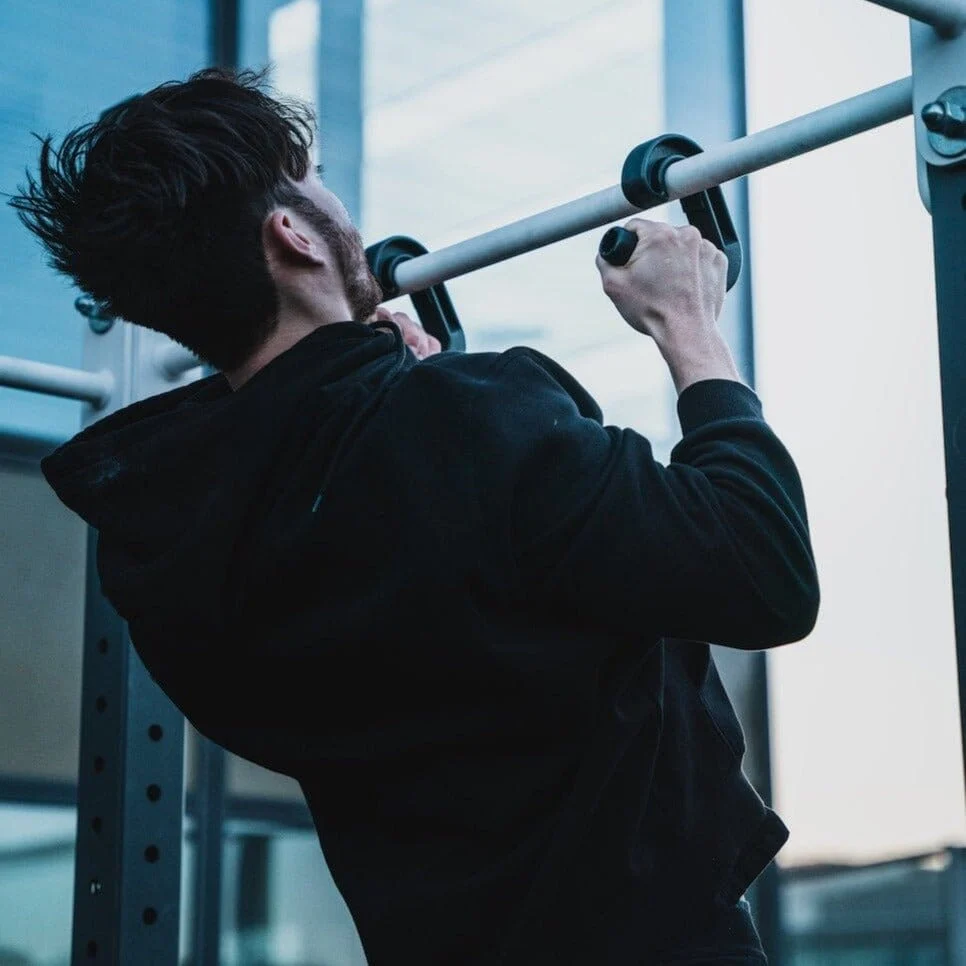
The original Swissies have a stated maximum bar diameter of 34 mm and a 32 mm handgrip. Those measurements describe different parts of the product. Measure the supporting bar where each hook will sit; do not confuse a comfortable handle diameter with permission to fit the hook over a thicker bar. Padding, sleeves and unusual profiles can change the contact surface even when the underlying steel looks familiar.
Diameter is the first check, rather than the whole answer. Look for enough straight, unobstructed space to seat both hooks properly. Rack brackets, welds and angled joins can interrupt the positions you hoped to use. If the hook sits awkwardly on an edge, selecting a different width does not resolve the underlying fit problem. Follow the equipment instructions and establish proper seating before taking your feet off the floor.
Next, check the supporting station. An accessory does not increase the capacity of a doorway bar, rack crossmember or mounting hardware. Its advertised test load is not a rating for your complete installation. Inspect the bar and its fixings, and retain access to a stable step so mounting and dismounting do not require an uncontrolled jump.
Finally, stand under the installed handles and check the space around your head, hands and feet. The useful measurement is where your body can move through the repetition. A setup that fits the bar can still be inconvenient beneath a low ceiling or beside a wall. Resolve those clearances before planning harder sets.
Set grip width around controlled repetitions
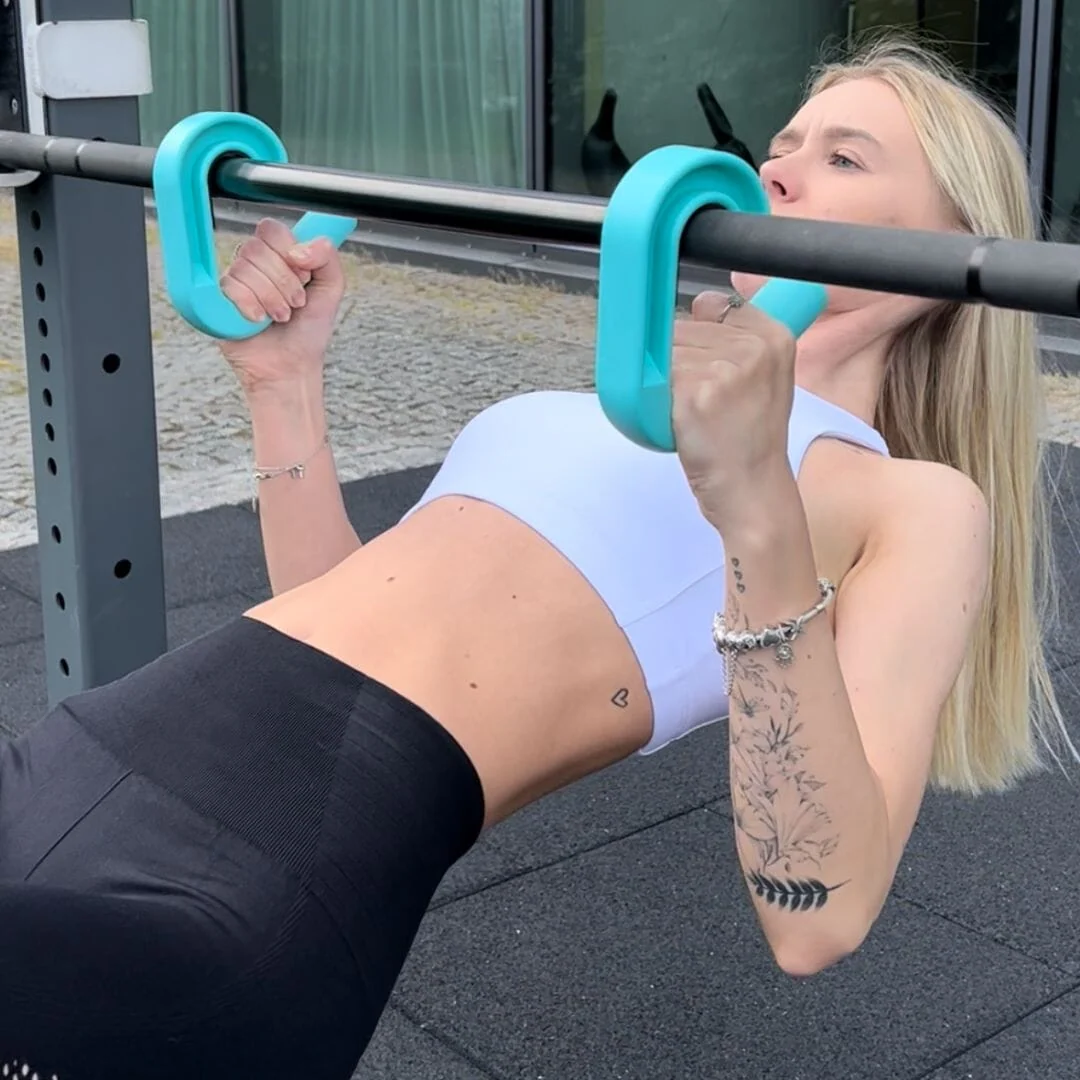
Independent handles let you choose spacing along a suitable bar. Start with a position that allows a controlled pull and descent, then adjust in small steps between sets. Measure between the grips and record that distance if you want a repeatable setup. Eyeballing two separate handles can produce a different position every session, particularly on an unmarked bar.
For pull-ups, hold both grips firmly, organize your trunk and pull without turning the repetition into a swing. Lower under control. The handles change the interface between your hands and the bar; they do not make an uncontrolled repetition equivalent to a strict one. Choose an assistance method or easier variation when you cannot yet manage the movement you intended.
An inverted row provides another way to explore a workable hand position while keeping your feet supported. Set the supporting bar securely, then choose a body angle you can control. Change either the angle or the grip spacing when comparing sets, rather than changing everything together. That makes it easier to tell which adjustment actually improved the movement.
There is no need to treat the widest possible setting as the best one. Compare repeatable range, control and your ability to keep the intended position. Stop a setup that produces pain rather than assuming neutral handles guarantee comfort. For a useful training log, note grip spacing, assistance or foot position, repetitions and how the set felt.
Treat barbell rows as a separate setup
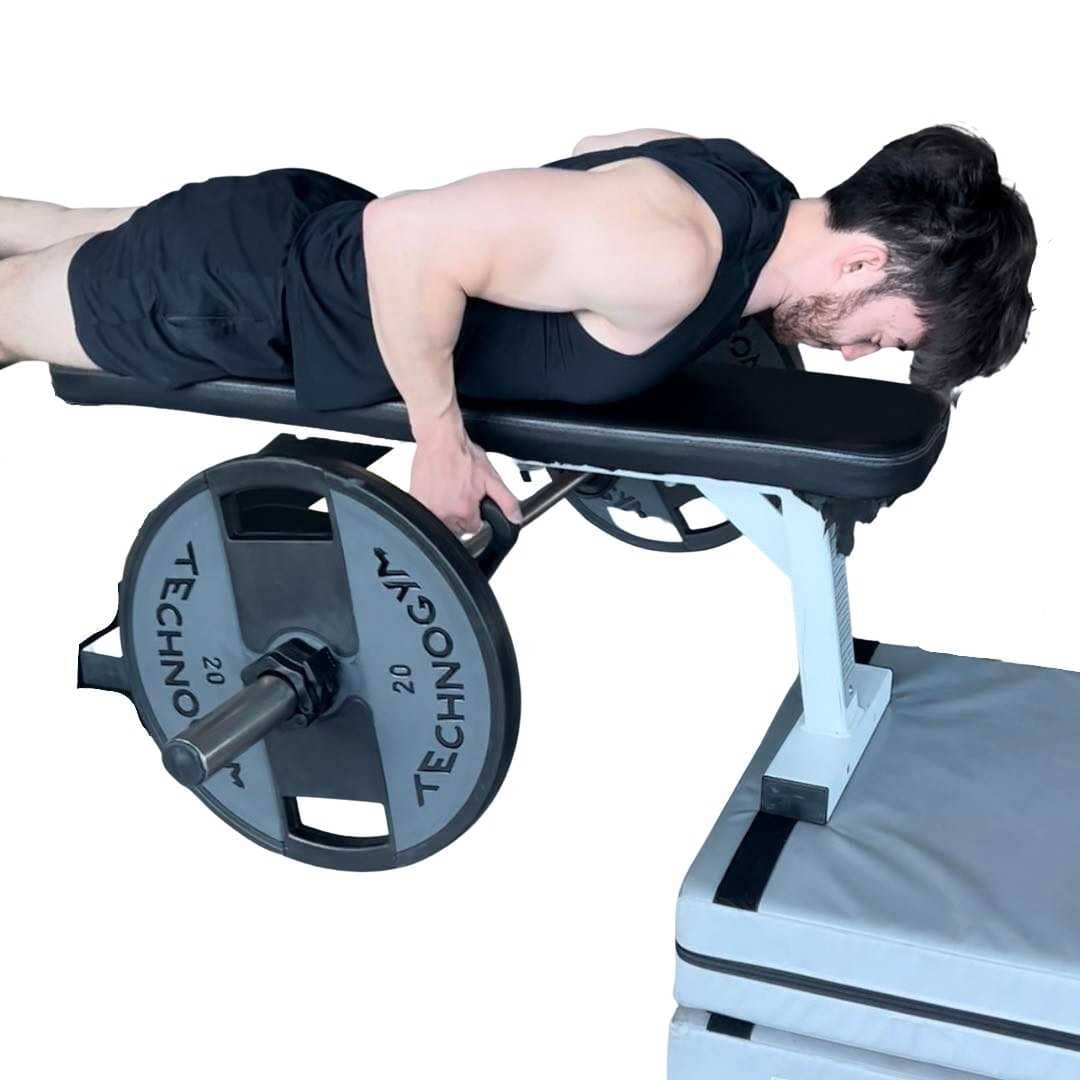
The original handles also appear in barbell rowing setups, including chest-supported seal rows. Here the bar moves with the load, so the relationship between the hook, bar and hand needs its own check. Do not assume a successful pull-up installation automatically tells you how to arrange the same handles beneath a loaded barbell. Follow the relevant setup instructions for the exercise.
Use an unloaded bar to establish where the hands travel and what the bar can contact. With a supported row, check the bench underside, its frame and the room beneath it. Moving the hand position changes where you can hold the load; it does not remove a physical obstruction. If the bar hits the bench before your intended finish, address that collision instead of forcing the repetition.
A suitable bench and stable support matter more than copying a dramatic elevated setup from a photograph. Do not improvise a stack simply to recreate the image. An adjustable bench can be useful elsewhere in your home gym without being suitable for a particular seal-row arrangement. Check its intended use and the whole support system before loading.
For your equipment shortlist, distinguish handles from the rest of the station. A bench, plates and a suitable bar are separate decisions. If supported rowing is your main goal, compare the complete working arrangement with your current row variation. The purchase earns its place when setup time, clearance and repeatable execution work together, rather than when it merely adds another grip to the shelf.
Use bands without confusing V1 and V2 connections
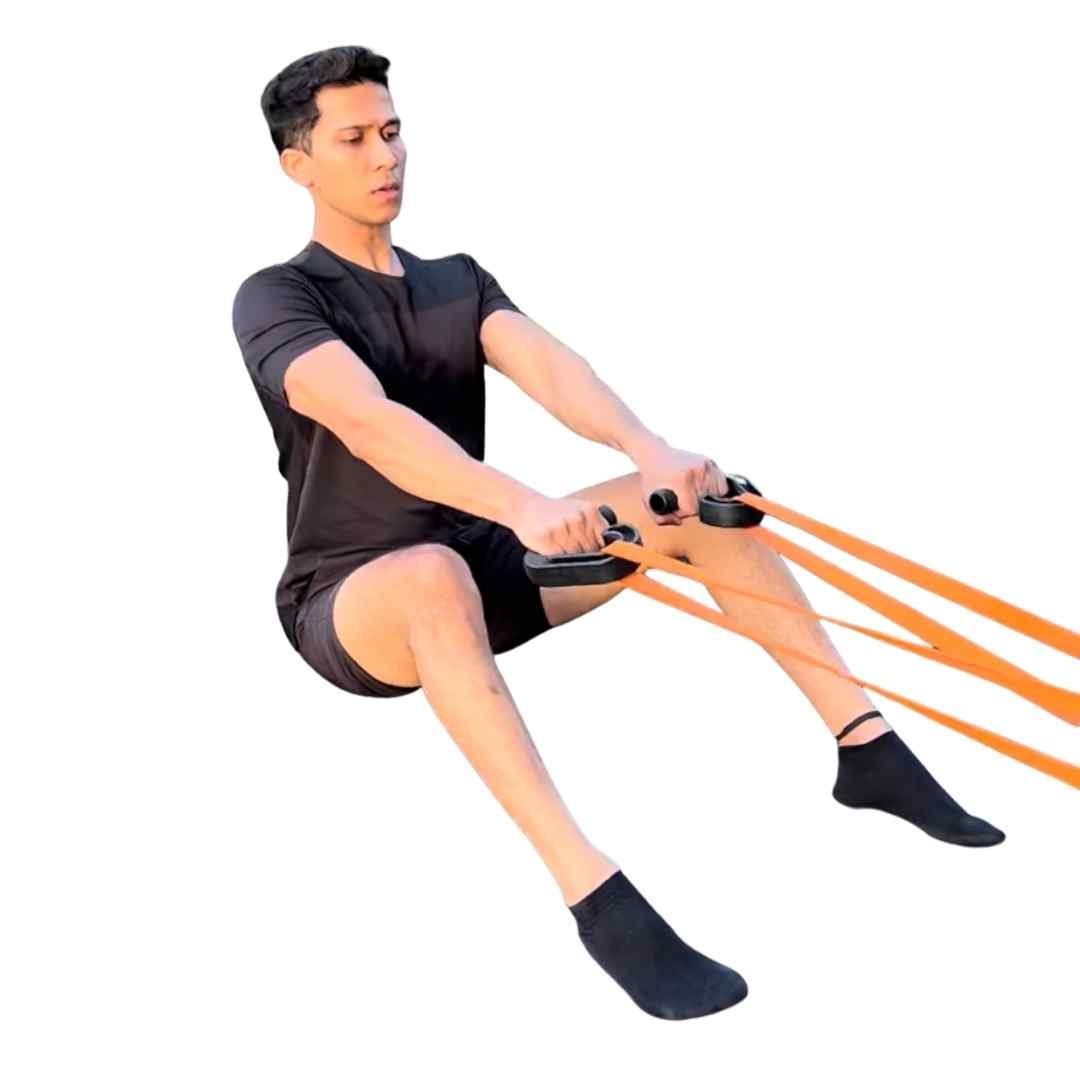
Band work is another use shown for the original Swissies. A seated band row can make the connection easy to inspect: establish the intended attachment, inspect the band and anchor, and use a manageable resistance. Keep the band path clear and avoid routing it across an abrasive edge. The fact that a band stretches around something is not proof that the arrangement is suitable.
Compare band sessions using a repeatable starting distance and band choice. A different distance from the anchor changes the exercise, even if you keep the same handles. Record the setup alongside repetitions so an apparently stronger session is not simply a shorter starting stretch. For a small home training area, mark a repeatable position only where doing so is appropriate for the surface.
Model identity matters especially at a cable station. Original V1 handles do not have the integrated cable eyelet found on V2. V2 also changes the hook and supports optional Angle Modifiers; MAX versions add a different palm-support profile. Do not buy the original expecting a later model's connection or assume an accessory is included because it appears in a family photograph.
A catalog card for Swissies MAX therefore represents an alternative to compare, not the original product described here. Match the exact model, package contents and intended connection before ordering. If direct cable attachment is central to your routine, investigate the model designed for that connection instead of building your decision around the V1 name alone.

Equipment Worth Exploring
Explore equipment, accessories and gear from our carefully selected range.


Angles 90 Grips
Flexible grip attachments that allow natural wrist movement during pulling exercises.


GymPin D Handle Bar
Multi-use steel D-handle bar for cable rows, pulldowns and other cable exercises.
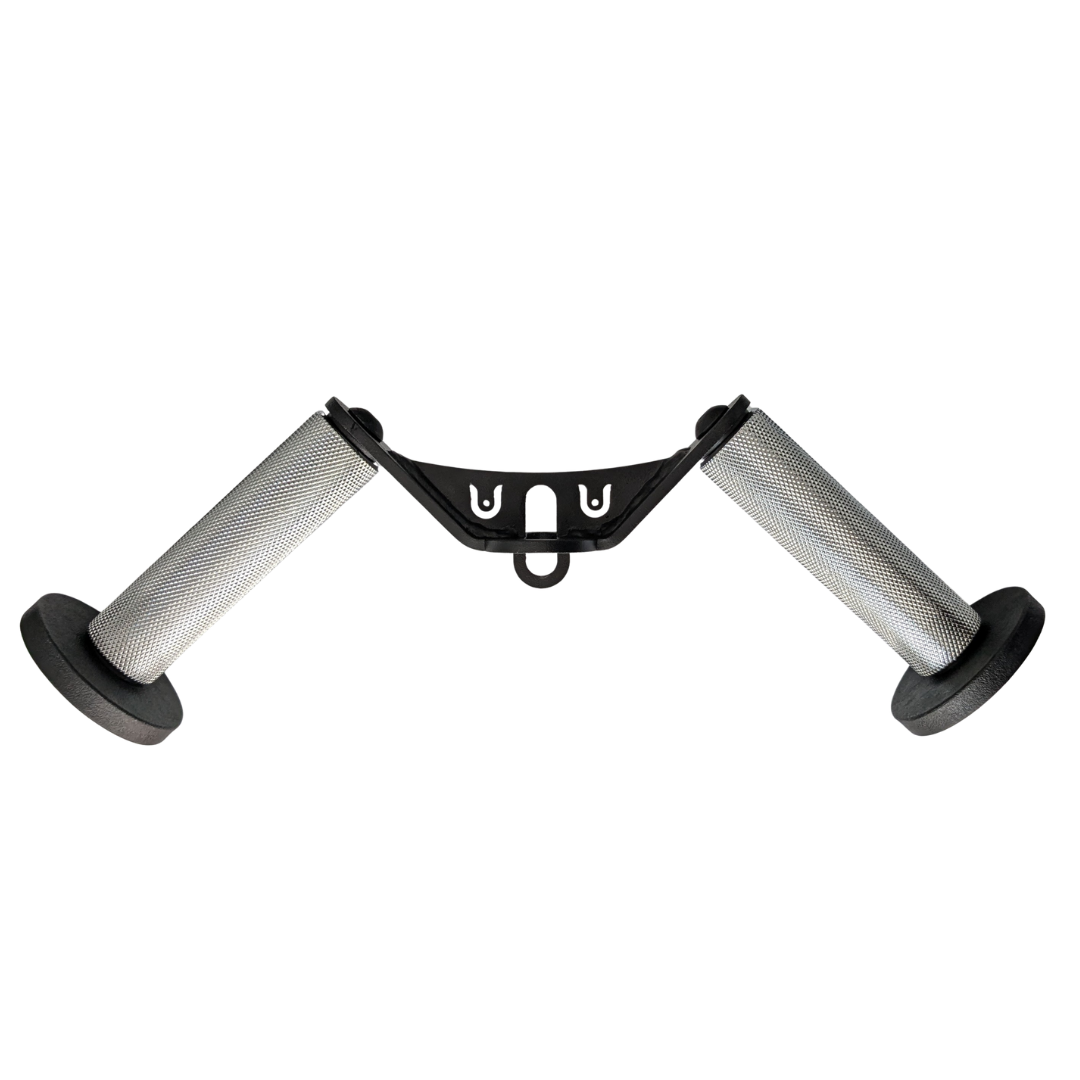
W Grip
Angled cable grip for comfortable rows, pushdowns, and curls.
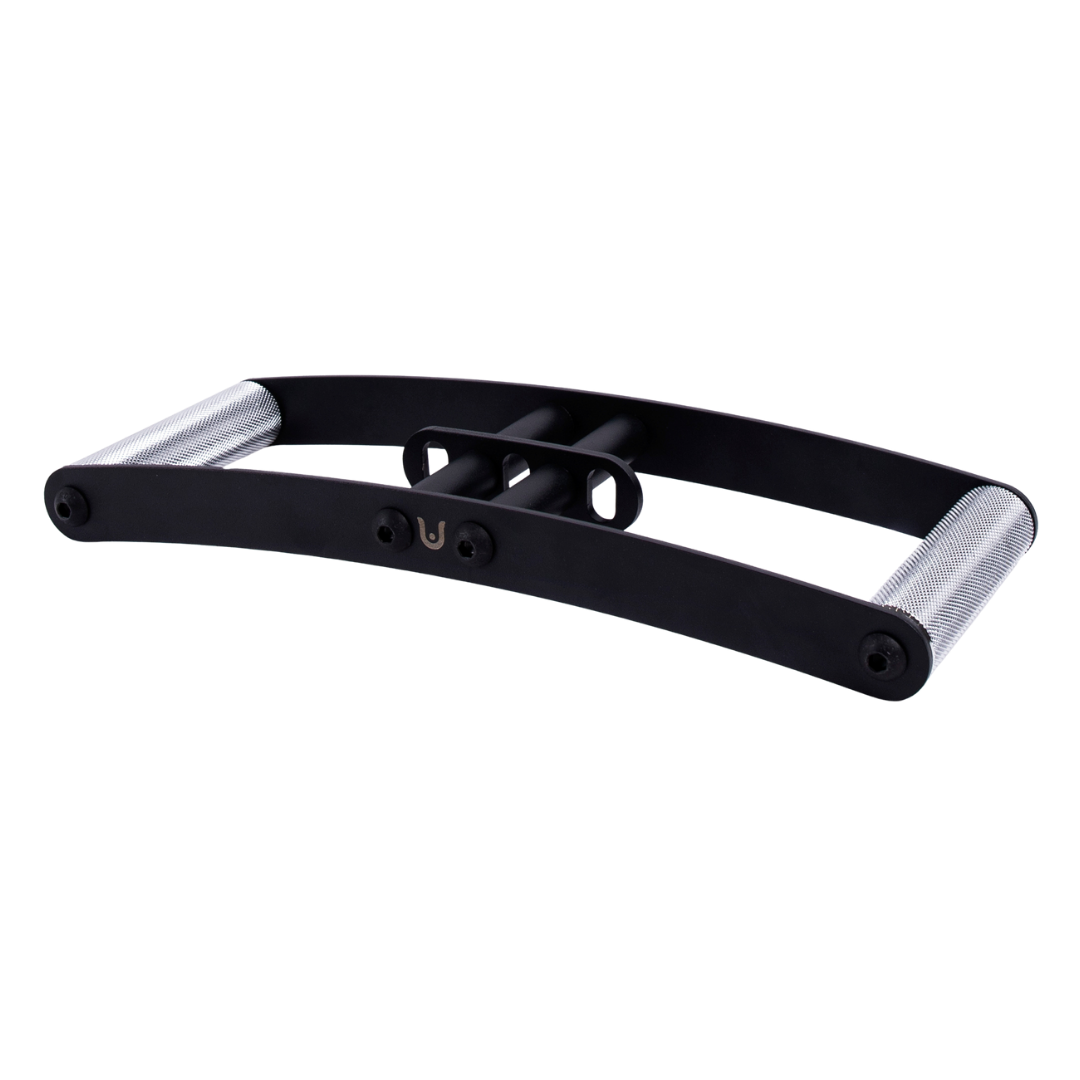
Horizon Grip
Ergonomic V-style cable grip for rows and back training.
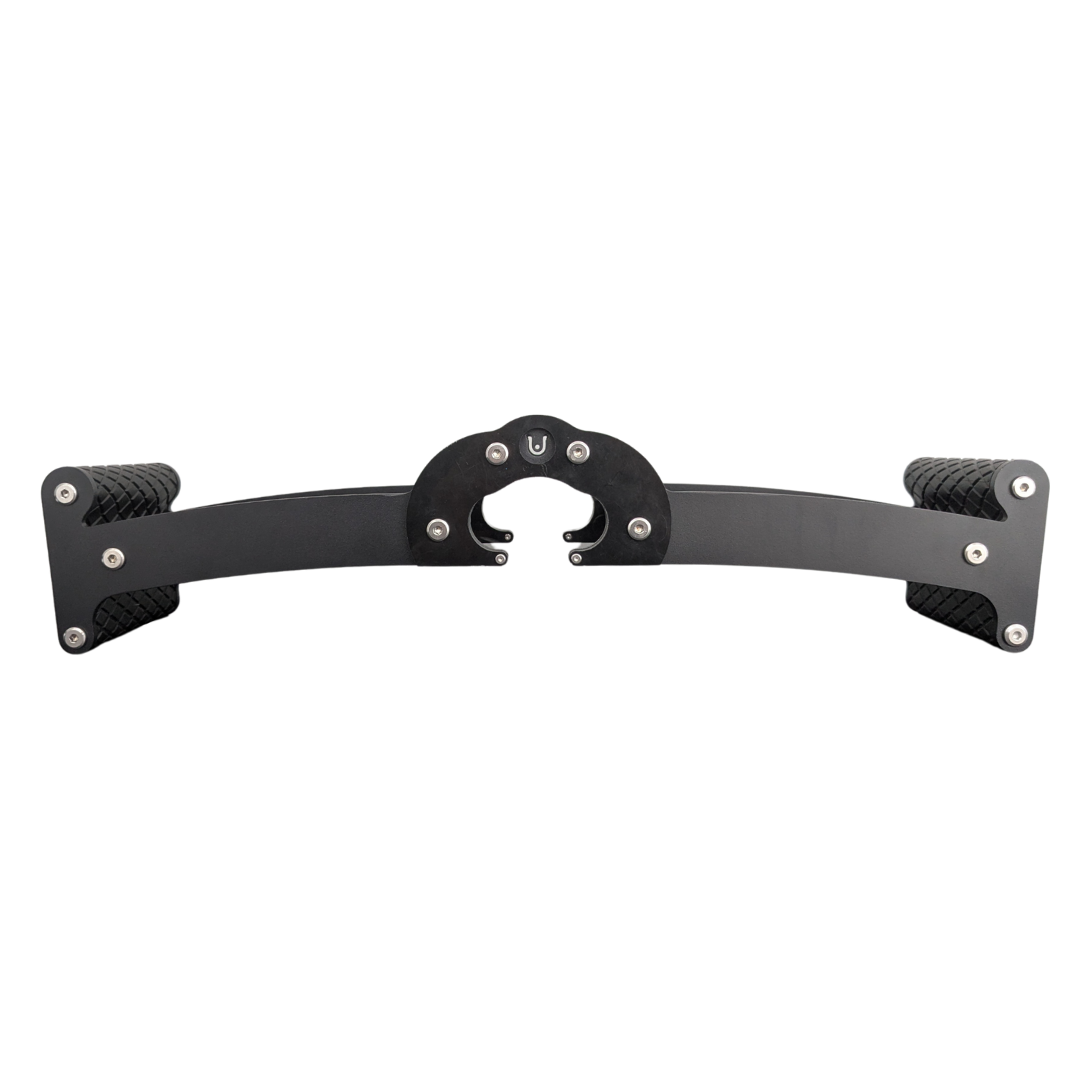
Back Bar
Multi-grip cable and landmine bar with a built-in deadlift jack.

48in Aluminum Lat Bar
48-inch aluminum lat pulldown bar with knurled grip and rotating center swivel.

44in Dual Hook Bar
44-inch aluminum dual-hook straight bar for cable rows, pulldowns, and curls.

Dual Hook EZ Curl Bar
Angled aluminum dual-hook cable bar for biceps curls and pulldown variations.
Compare complete pulling options before buying
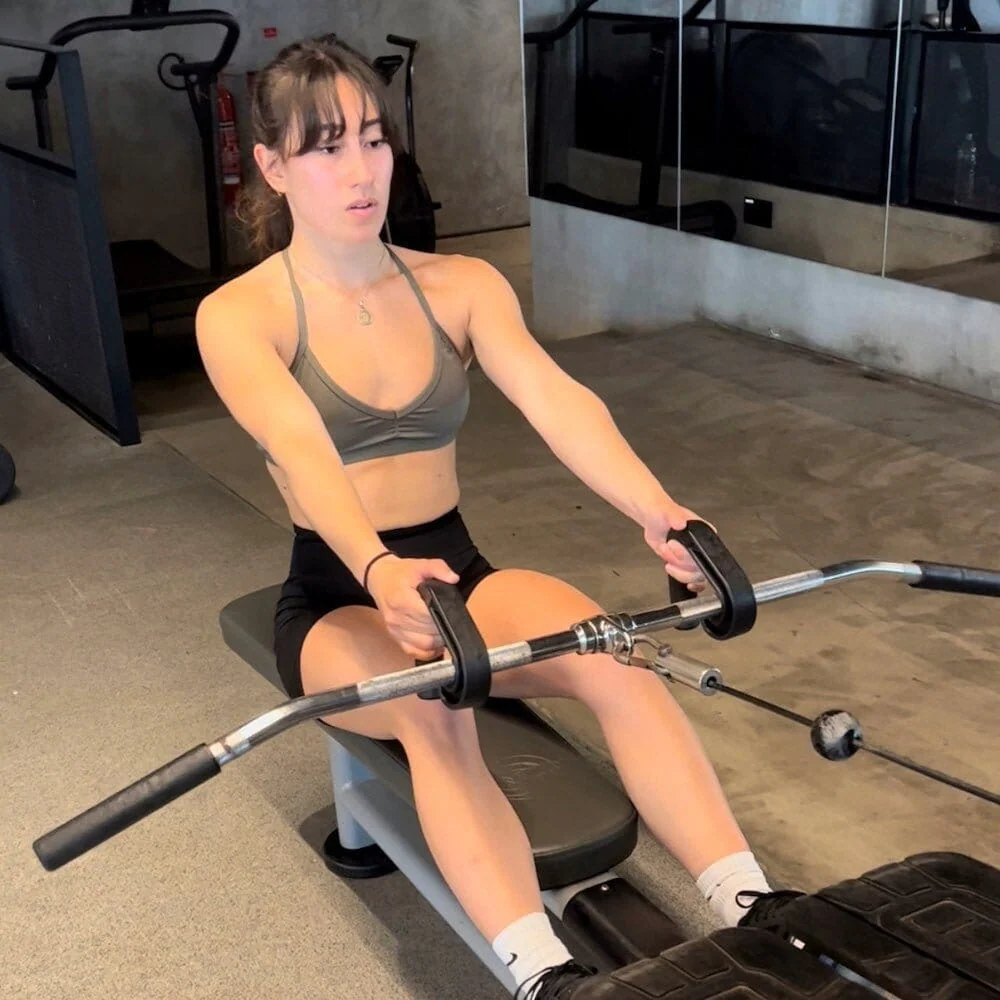
The original product gallery shows cable rows with the handles hooked around a separate metal bar. That carrier is part of the arrangement. It is different from clipping a carabiner into a built-in eyelet. Evaluate the carrier, cable connection, hook seating and available travel together; a photograph of one combination does not establish compatibility with every lat bar in your gym.
If you want a simpler cable routine, compare a dedicated handle or bar with the complete Swissies arrangement. The GymPin D Handle Bar, W Grip, Horizon Grip, Back Bar and straight or curved lat-bar options represent different interfaces to investigate. They are alternatives, not a list of parts confirmed to fit together. Check the exact attachment and exercise before combining products.
For bodyweight training, rings and strap-mounted grips offer a different experience from hooks seated directly on a rigid bar. DUO-Rings and Angles90 grips belong in that comparison when freedom of hand movement matters. Suspended equipment also changes stability and operating space. Decide whether you want that behavior rather than treating every independent handle as interchangeable.
A weighted vest such as EZ-VEST MAX concerns a later loading decision, once your base exercise and station are suitable. It does not solve fit or control. Keep the buying test practical: identify your main pull-up or row, measure the actual support, verify the model and list the extra components required. For a calisthenics-focused home gym, a pair of handles is worthwhile when it makes a specific session easier to repeat.

Calisthenics Shirts & Street Workout Gear
Calisthenics and bodyweight-training gear for pull-ups, dips, handstands and street-workout athletes.

Pull Up or Shut Up Hooded Pullover for Calisthenics Pul Hoodie
Keep it laid-back with a little “Pull Up or Shut Up” attitude.

Pull Up Or Shut Up Decal for Water Bottles Laptops Cali Sticker
Stick a little “Pull Up Or Shut Up” humor on your favorite gear.

Always Pull Yourself Up Funny Gym T
Heavy lifts, good laughs, and a little “Always Pull Yourself Up” energy.

Calisthenics Heartbeat Decal Human Flag Fitness Gymbros Sticker
Give your everyday gear a playful “Calisthenics Heartbeat” twist.

Calisthenics Heartbeat Tank
Add some lifting attitude to training with “Calisthenics Heartbeat”.

Pullups Heartbeat Tank
Train hard, laugh a little, and rep “Calisthenics Pullups Heartbeat”.

Calisthenics – Meme & Lovers – Top & Gains T-Shirt
Heavy lifts, good laughs, and a little “Calisthenics” energy.

Calisthenics Evolution Crewneck
For laid-back days and lifting humor: “Calisthenics Evolution”.

Funny Calisthenics Gym Muscle Shirt Athletic Vest for B Tank Top
Your gym-day look, with a playful “Calisthenics” twist.

Funny Calisthenics Gym Muscle Shirt Athletic Vest for B Tank Top
Train hard, laugh a little, and rep “Calisthenics”.