Advertising disclosure: This page includes affiliate product links that may earn us a commission, as well as products from our own store.
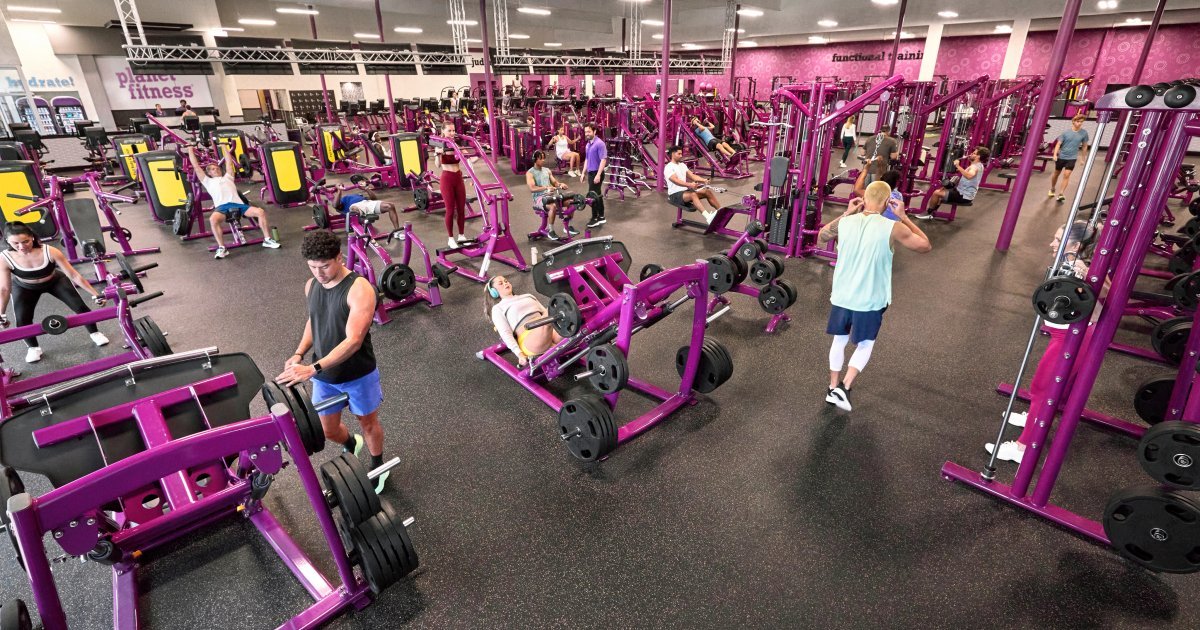
Planet Fitness crossed roughly 21.5 million members and counted 2,962 locations at the end of September 2026. That is an enormous fitness audience, but an investor headline does not tell you whether the equipment at your nearest club can handle your next training cycle.
The November 5 third-quarter results offer a useful window into the business of affordable gyms, how gym floors are changing, and what a lifter should actually check before committing to a membership.
21.5 million members, 2,962 clubs: what the headline counts
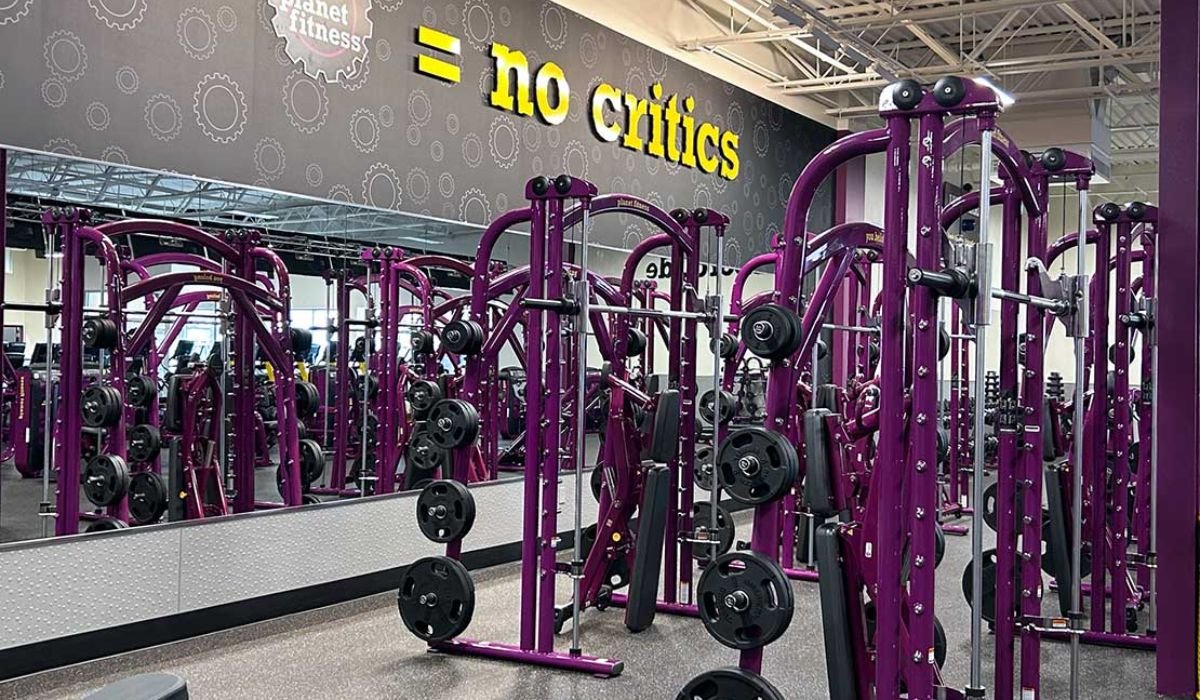
At September 30, 2026, Planet Fitness reported approximately 21.5 million members across 2,962 clubs. It opened 33 clubs during the quarter: 25 owned by franchisees and eight owned by the company. Roughly nine out of ten Planet Fitness clubs are independently owned and operated through its franchise model, which matters when you compare individual branches rather than treating the chain as one identical training floor.
More locations improve the odds of having a usable club near home or work, but total membership is not an attendance count. The same person can pay dues and visit rarely, train several times weekly, or prefer cardio over resistance work. You cannot calculate how busy a particular branch feels from a corporate membership total. Peak-time occupancy, maintenance, and the number of popular stations can differ substantially.
The broader American market is also growing. About 81 million people belonged to a fitness facility in 2025, and free-weight use was among the fastest-growing equipment activities in industry research. That trend helps explain why accessible chains are paying attention to strength training, but it does not prove that every new enrollee wants heavy barbell lifting. The best way to judge a facility is still to walk its floor at your normal training hour.
The $360 million quarter is not the same as $1.3 billion in gym sales
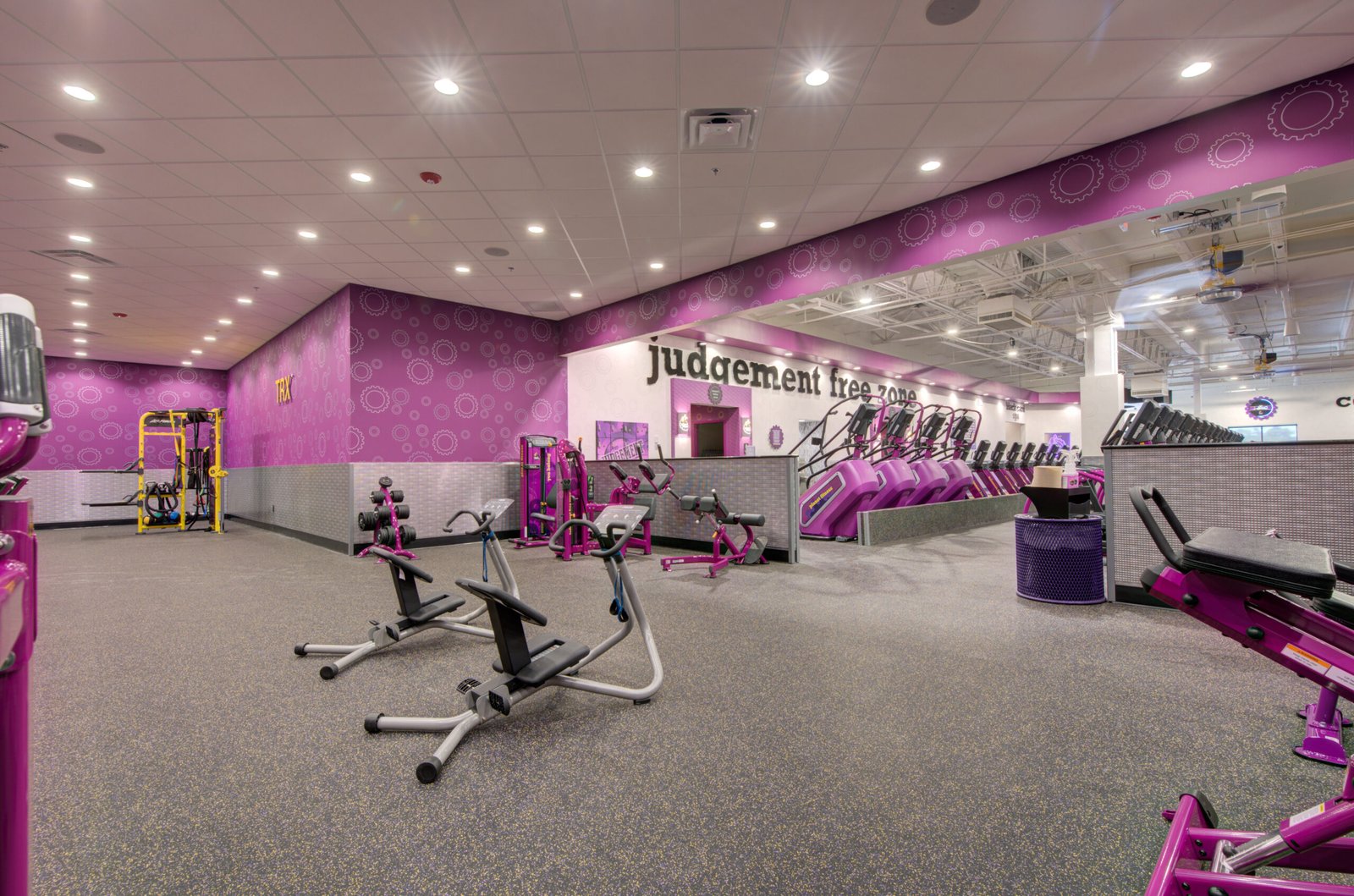
Planet Fitness generated approximately $360 million in third-quarter company revenue, up 9% from the same quarter in 2025. Separately, system-wide sales across company and independently operated franchise clubs reached about $1.3 billion. Those figures measure different things. Adding them together, dividing either by members, or calling both direct revenue to Planet Fitness would give a misleading picture of the economics.
System-wide same-club sales rose 1.5%, a relatively modest increase compared with the nine-percent company revenue headline. Same-club growth compares established locations on a consistent basis; newly opened clubs can contribute to growth without counting the same way. The equipment business, meanwhile, increased revenue 11.1% to approximately $87.6 million, with replacement equipment purchases by existing franchisees providing an important part of that rise.
For lifters, this creates an interesting tension. Chains need new members and profitable franchises, but a member experiences value through available machines, functioning cables, clean changing rooms, and a reasonable wait to train. Equipment revenue suggests money is flowing through refresh and replacement cycles; it does not establish that the particular leg press you want is coming to your branch. Corporate growth is worth watching, but your own repeatable training session remains the better scorecard.

Equipment Worth Exploring
Explore equipment, accessories and gear from our carefully selected range.

VForce Wall Trainer
Space-saving wall-mounted functional trainer with pivoting cable arms and variable resistance ratios.

Multi Pull Smith Rack MPHR-780
All-in-one rack with a Smith machine, functional trainer, lat pulldown and low row.


Rubber Hex Dumbbells
Rubber-coated hex dumbbell pairs with a stable shape for home and commercial strength training.


VForce Lat Tower
Wall-mounted cable tower with pivot arms and adjustable 1:1 or 2:1 pulley ratios.


Linear Row LRX-750
Dual-sided rowing machine for supported rows, bent-over rows and varied pulling movements.

Pec Fly/Rear Delt PEC-650
Combination machine with adjustable movement limits for chest fly and rear-delt exercises.
Is a low-cost commercial gym enough for serious strength training?
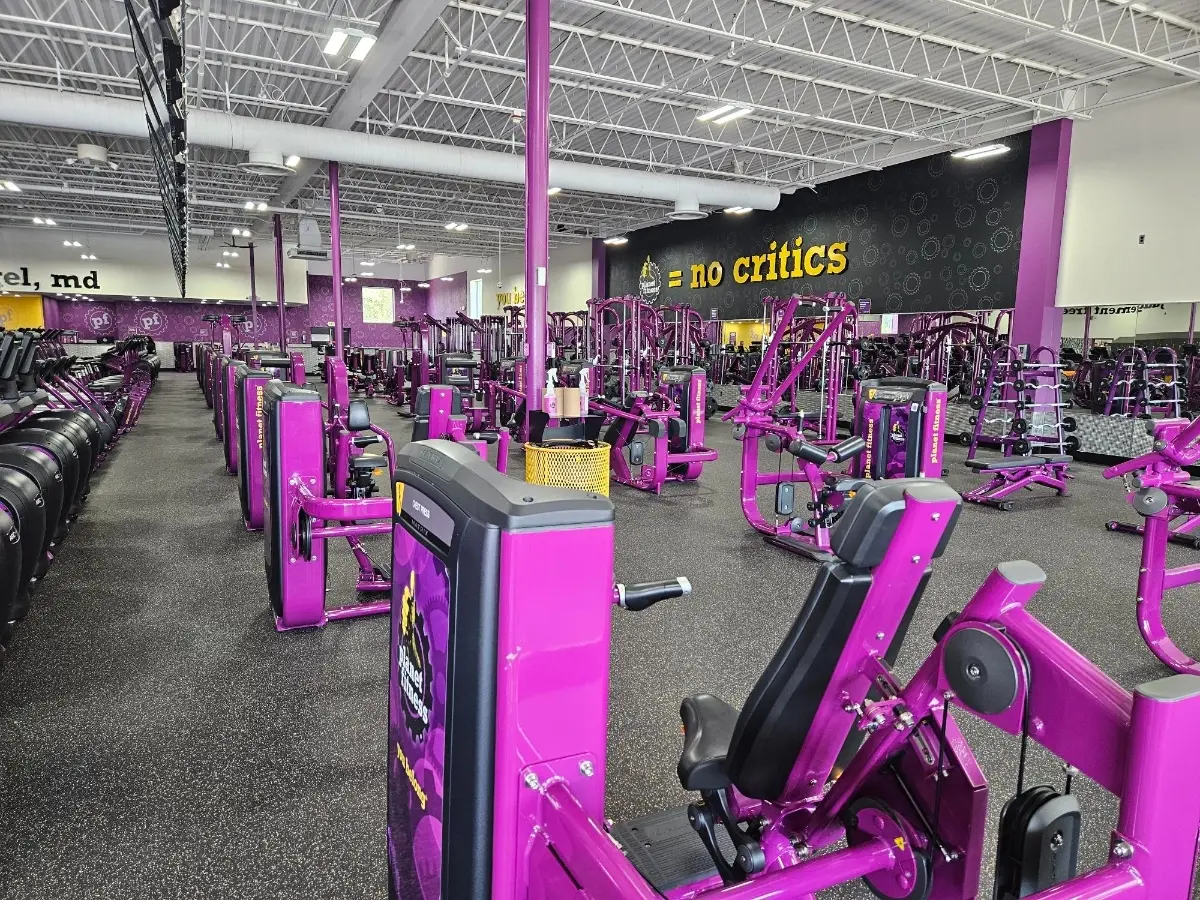
Different Planet Fitness locations show substantial dumbbell areas, selectorized machines, cable stations, benches, and Smith machines. That can be more than enough for productive hypertrophy training. A beginner can progress on leg presses, machine chest presses, lat pulldowns, rows, and loaded dumbbell movements while learning consistent movement patterns. An experienced lifter may likewise build a demanding workout from these stations with suitable loading and progression.
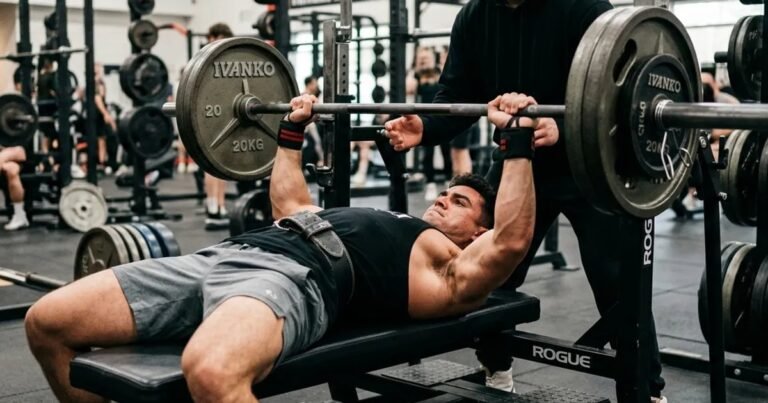
The crucial question is not whether a gym has an intimidating reputation or a fashionable label. It is whether its actual equipment supports the movements you need. Someone whose main goal is a tested barbell squat, competition bench, or deadlift needs to inspect that branch’s barbell and rack setup rather than assume the necessary equipment is present. A Smith-machine squat can be a useful squat variation without being interchangeable with a free-barbell competition lift.
Three checks beat arguing online: inspect the heaviest dumbbells you would need soon; examine the available pulling, pressing, and lower-body stations; and visit at the hour you would normally train. Note whether cables adjust smoothly, whether benches are stable, and how many sets are interrupted by queues. A less glamorous gym with reliable access can outperform a premium facility where every preferred rack is occupied.
Portugal’s Be-Fit deal shows expansion beyond the familiar purple gym
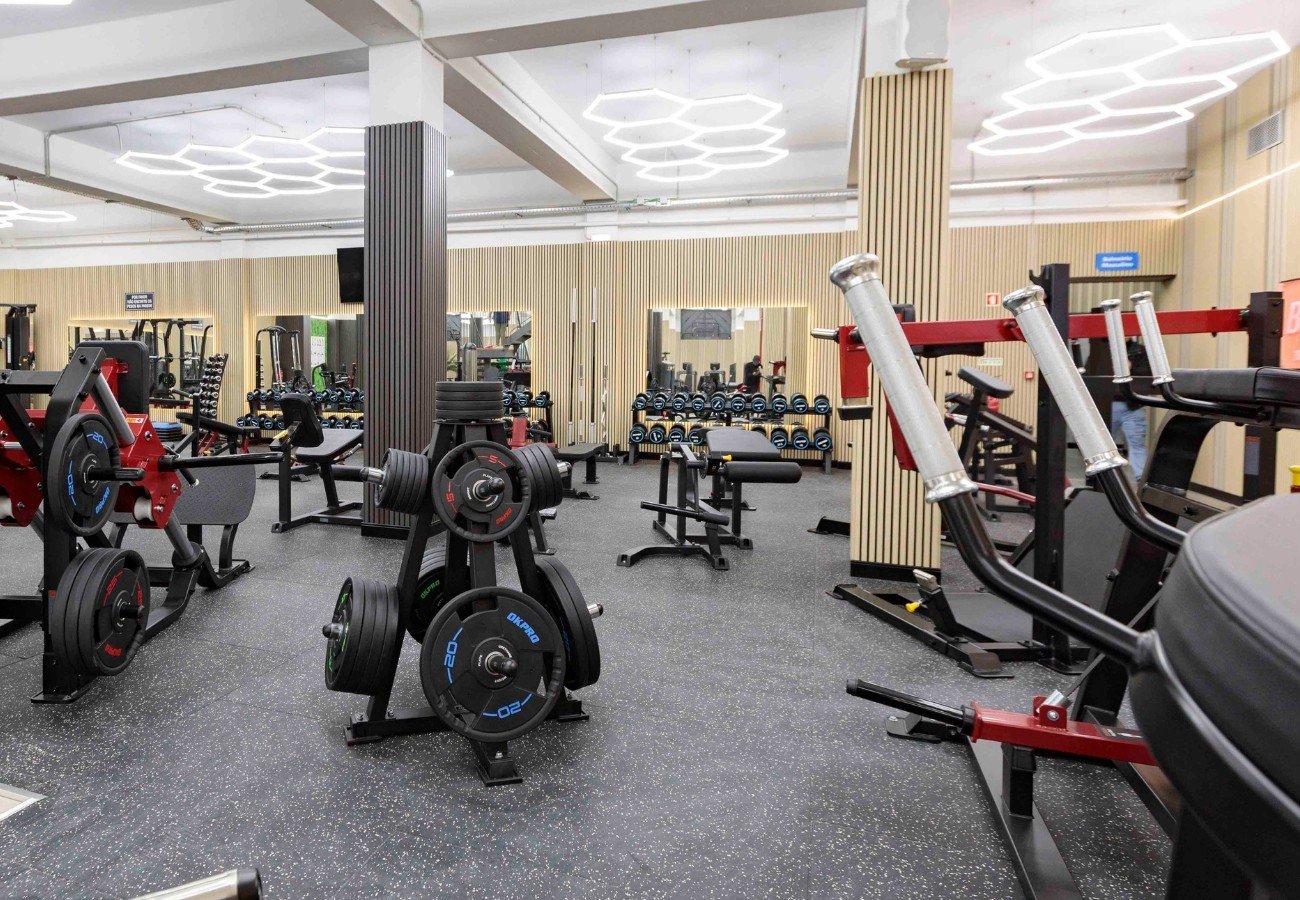
On October 30, 2026, after the third quarter had ended, Planet Fitness acquired Portugal’s Be-Fit chain. The deal added a platform of 25 clubs and roughly 80,000 existing members, with a purchase price of about €102.5 million including possible contingent consideration. These are not 25 ordinary new U.S. franchise openings, and the acquisition should not be retroactively folded into the September 30 club count.
The company’s plan is to operate those clubs and work toward gradual integration and potential rebranding. An existing Be-Fit member therefore should not assume an overnight change in access, equipment, contract terms, or signage. Those details depend on the actual local operator and the timing of any transition. What is clear is that the purchase extends Planet Fitness’s footprint into Portugal alongside its existing Spanish operations.
For the wider fitness market, buying established clubs is a very different expansion route from building empty rooms and searching for first members. Existing locations, staff, and users can give a buyer a running start, but the transition still carries execution risk. A serious gym-goer should watch what happens to machine availability, opening hours, and membership options on the ground, rather than treating a takeover announcement as a guarantee of improvement.
Equipment Worth Exploring
Explore equipment, accessories and gear from our carefully selected range.
VOLTRA
Compact digital cable trainer with smooth, adjustable resistance.

Go-Tone Pro
Portable digital cable trainer with up to 66 lb (30 kg) of adjustable resistance.


VForce 2IN1
Half rack and pivot-arm functional trainer with switchable 1:1 and 2:1 pulley ratios.

Compact Leg Press CLP-700
Compact reverse-style leg press with a moving seat carriage and an adjustable footplate.


T-Bar Row Attachment
Welded barbell attachment that connects a D-handle bar for landmine and T-bar rows.
What makes a gym membership valuable once the novelty wears off?
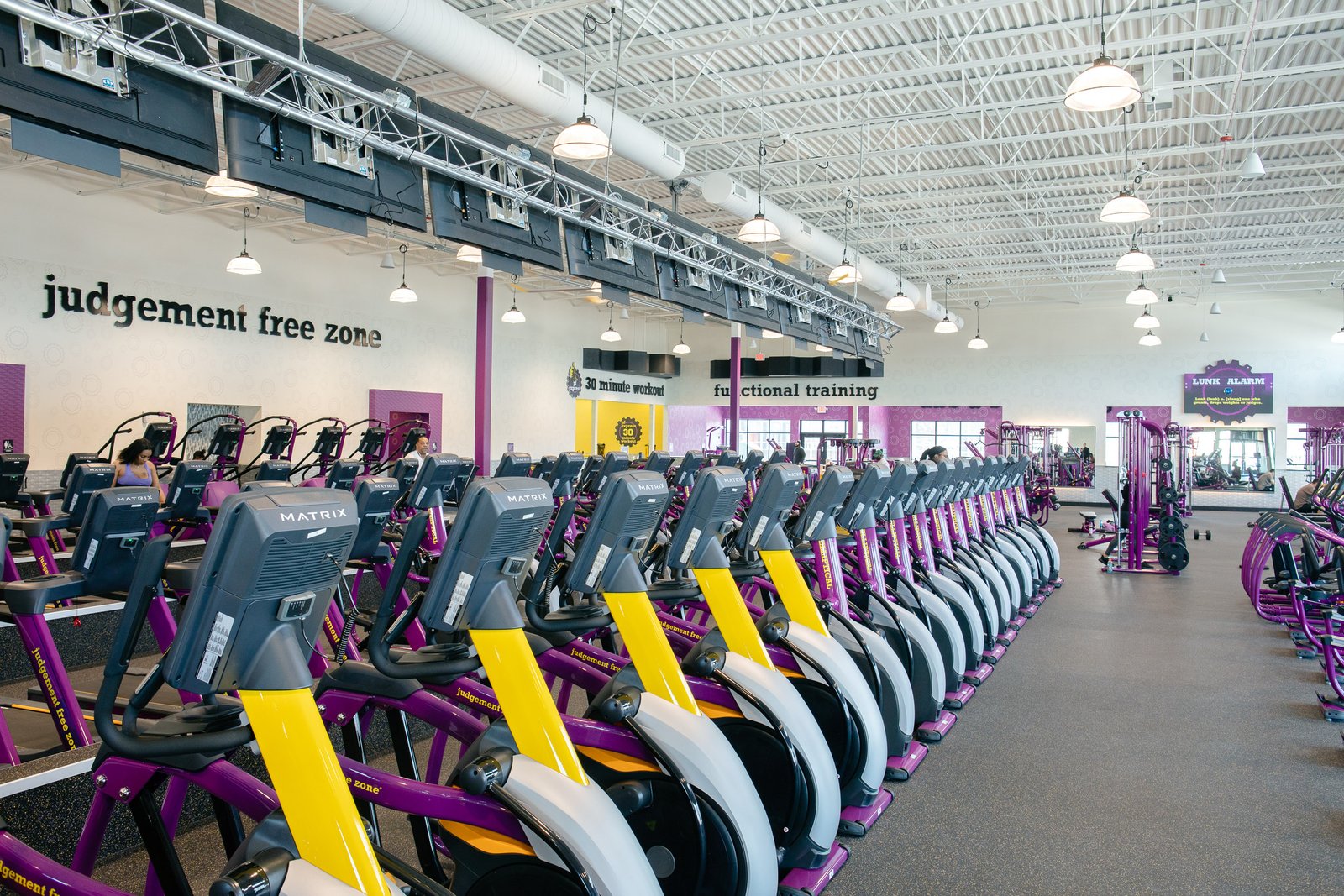
A membership only becomes good value when you can use it often enough for your goals. The cheapest advertised monthly rate may not be the cheapest realistic plan after enrollment charges, annual fees, optional upgrades, cancellation terms, transport, and time spent waiting. Compare the exact agreement and current club prices before joining; national promotional slogans are not a substitute for local terms.
Commute is an underrated training variable. A gym five minutes away that lets you finish three quality sessions every week may be more useful than a larger facility thirty minutes farther out. You also need a backup plan for busy days: substitute a dumbbell press for a congested machine, pair exercises that use the same bench, or train at another permitted hour. Consistency improves when friction is low.
Home training changes that calculation rather than automatically winning it. A compact adjustable dumbbell set, bench, and resistance system can remove commuting and scheduling constraints, yet it has an equipment cost, requires space, and may not reproduce a full commercial machine selection. Choose according to your actual movements, budget, and weekly routine, not an abstract battle between commercial and home gyms. If possible, trial a commercial club at peak time before buying a long commitment.
A realistic three-day strength plan for a machine-rich gym
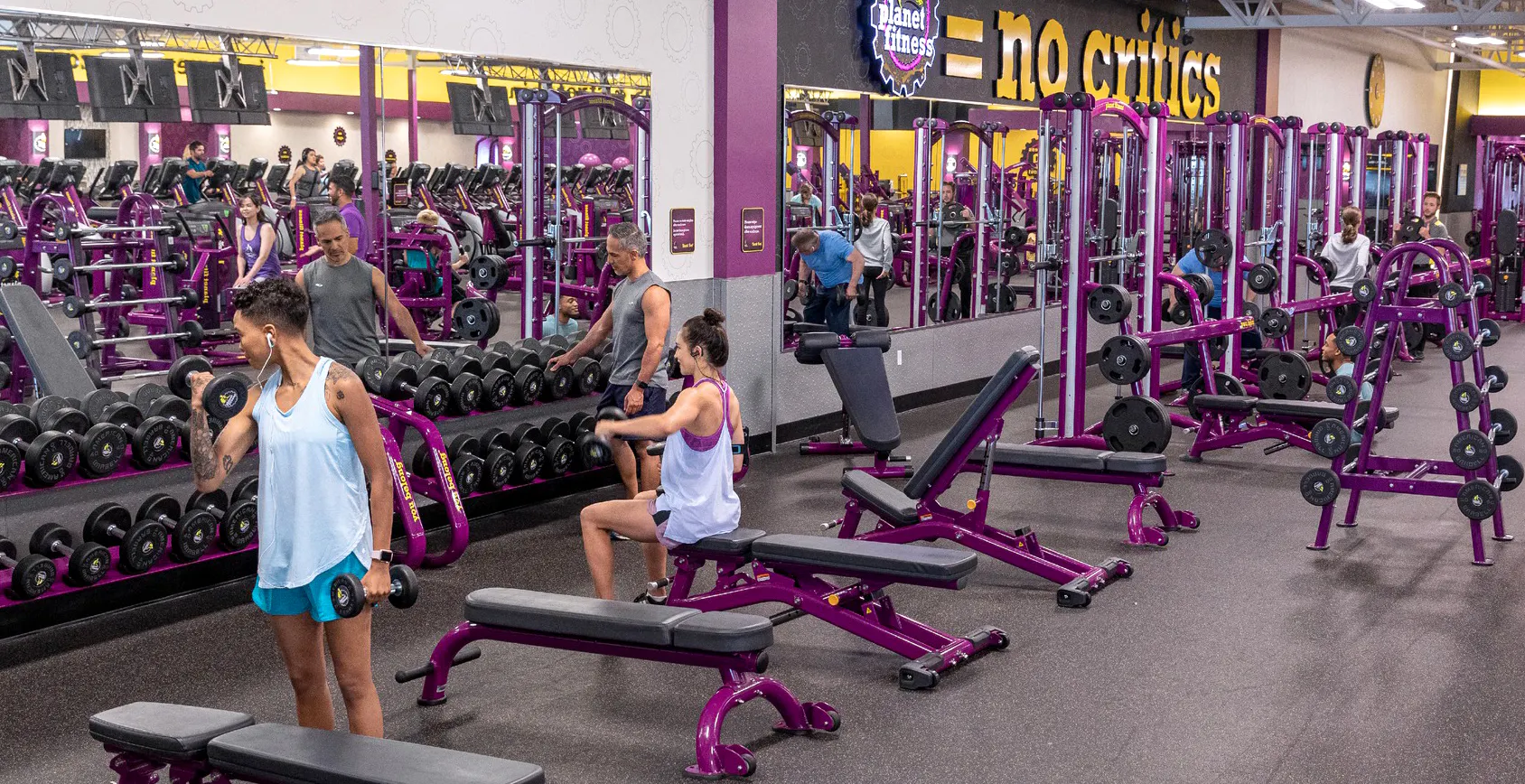
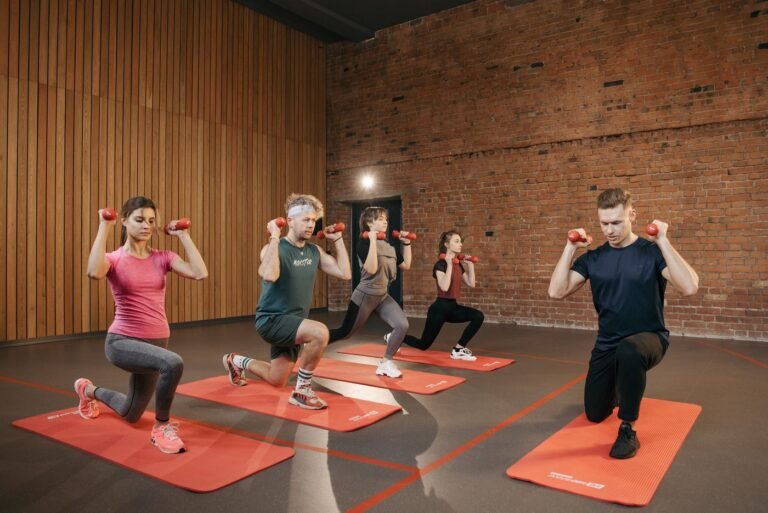
A simple full-body approach lets newer and intermediate lifters use the strengths of a commercial training floor without chasing every available station. On day one, pair a leg press or squat variation with a chest press, a row, and a calf or core exercise. On day two, prioritize a hip hinge such as a dumbbell Romanian deadlift, a pulldown, a shoulder press, and a hamstring curl. On day three, rotate a lunge or split squat, an incline dumbbell press, another pulling pattern, and a small amount of arm work.
Start most primary movements with two or three challenging sets and choose a rep range you can control, such as six to twelve for presses and leg movements or eight to fifteen on many machines. Keep roughly one to three good repetitions in reserve early in the program. Add reps while maintaining technique, then add resistance when the top of your range becomes repeatable. Individual recovery and experience should determine how quickly volume rises.
If your preferred machine is occupied, preserve the movement pattern rather than insist on one brand of equipment. A chest press can often become a dumbbell press; a cable row can become a chest-supported row; a leg press can become a split squat if loading and balance permit. Track the actual exercises and performance, then ask whether the facility helps you repeat that work. Twenty-one million other members cannot answer that final question for you.

Funny Gym Shirts & Workout Gear
Funny gym shirts, tanks, hoodies and workout gear for lifters who like training hard.

Gym Makes Me Happy Decal for Water Bottles Laptops Work Sticker
A fun “Gym Makes Me Happy” touch for bottles, laptops, and lockers.

One of Us One of Us Gym Cult Member Meme Bodybuilding P Tank Top
Bring “One of Us One of Us Gym Cult Member” humor to your next lifting session.

Liftionaire Money Barbell Meme Workout Shirt Bodybuildi T-Shirt
Show some powerlifting attitude with a playful “Liftionaire” tee.

I Love Iron Iron Man Bodybuilding Strength Humor T-Shirt
For laid-back days and lifting humor: “I Love Iron”.

LiftIn Social Network Gym Parody , Gym Rats and Fitness Hoodie
Keep it laid-back with a little “LiftIn” attitude.

Funny Gymrats – Gym Rat Meme Vest Muscle Shirt For Fitn Tank Top
Show some personality between sets with “Gymrats”.

Caffeine Skull Coffee Gym Decal Hardcore Workout Energy Sticker
Give your everyday gear a playful “Caffeine Skull” twist.

Flaming 45LB Weight Plate Fire Barbell Lifting Apparel Tank Top
Add some powerlifting attitude to training with “Flaming 45LB Weight Plate”.

5 AM Squad Morning Meme Decal Sticker
Put “5 AM Squad” gym humor on your laptop, bottle, or gym gear.

5 AM Squad Morning Bro Meme & T-Shirt
Heavy lifts, good laughs, and a little “5 AM Squad” energy.