Why loaded walking feels different from ordinary cardio
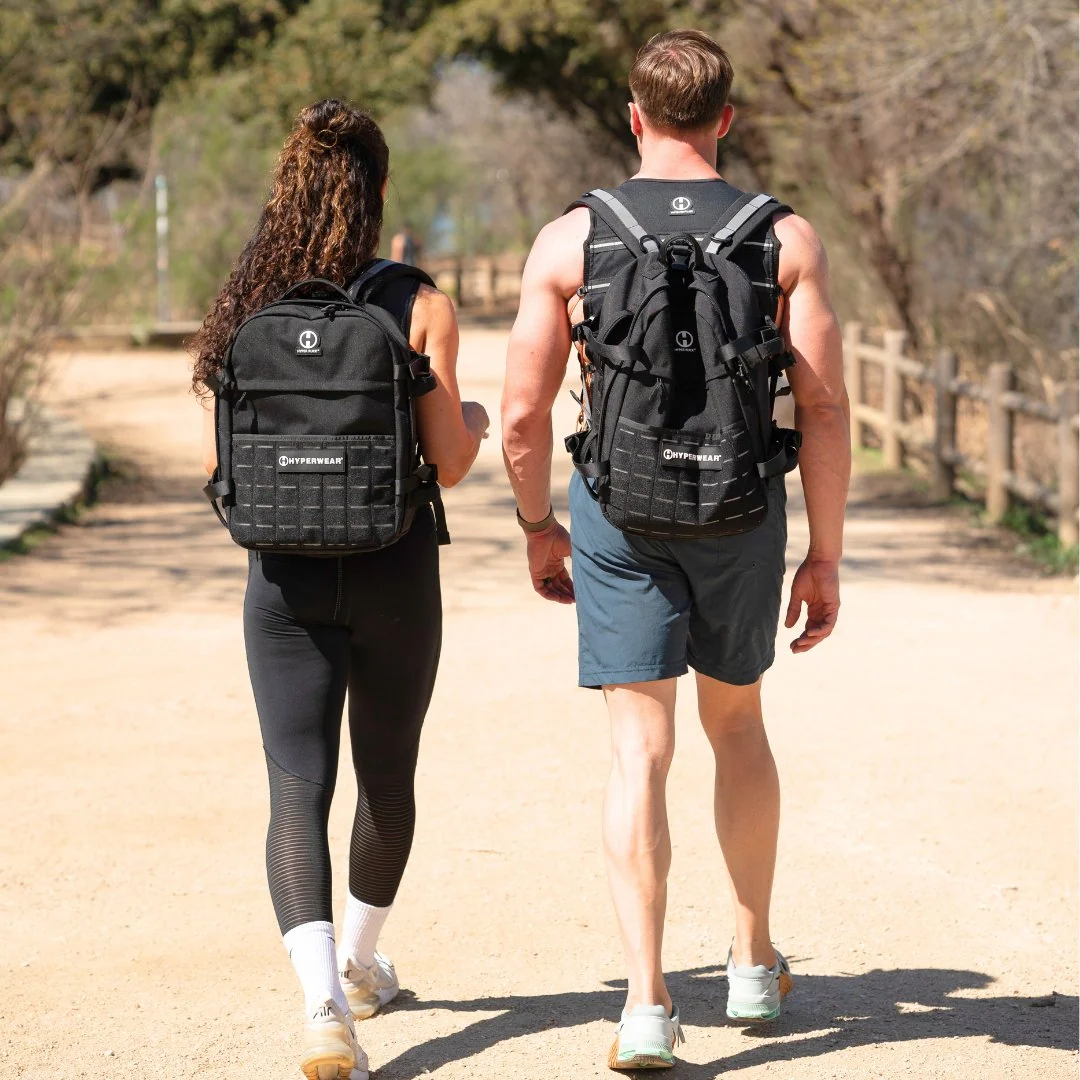
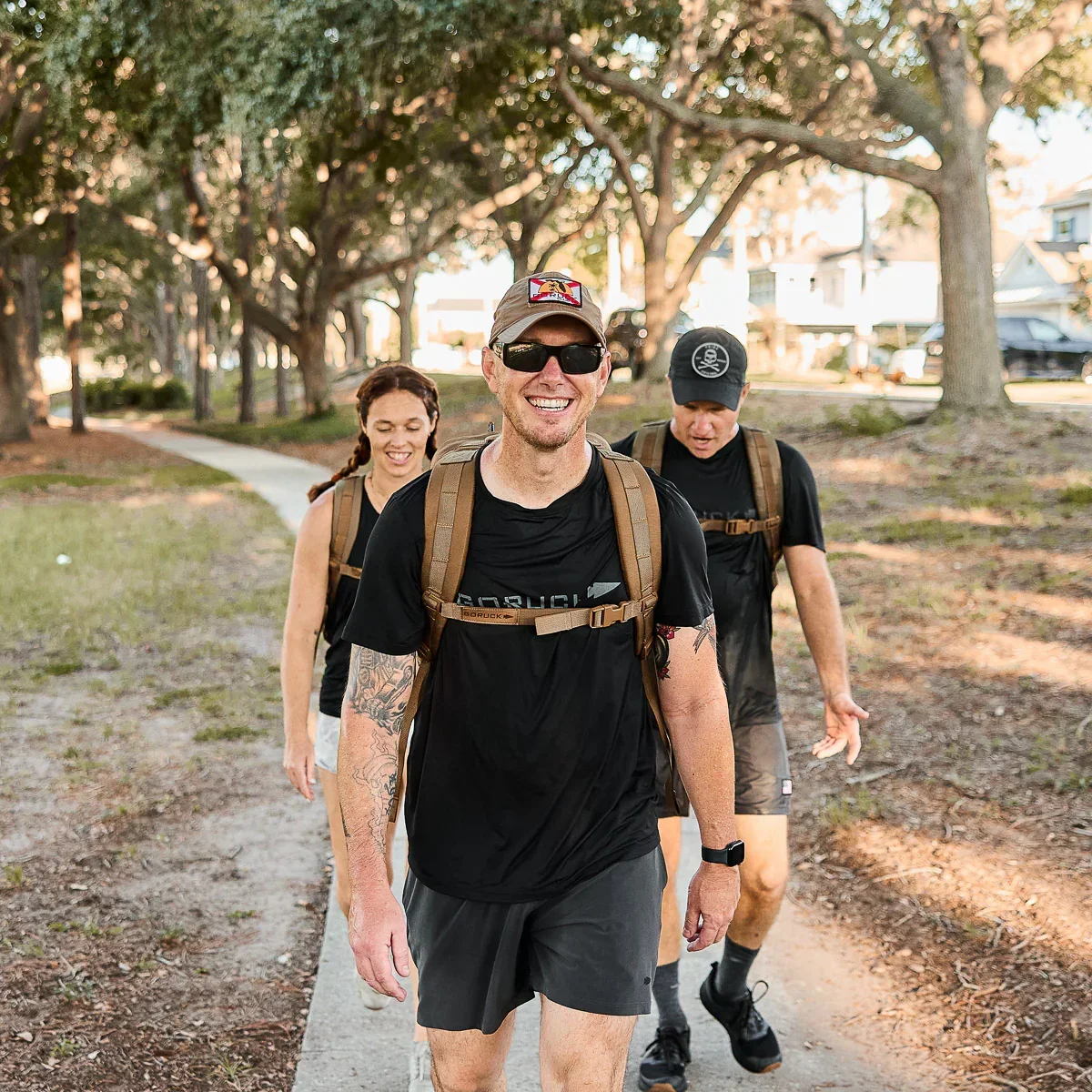
Rucking is walking with weight in a backpack. Weighted-vest walking places extra mass around your torso instead. Both can turn a familiar walk into a more demanding conditioning session, which appeals to lifters who would rather spend time outdoors than stare at a treadmill. Neither requires running, complicated intervals or a special machine to get started.
The extra load increases the work of moving your body and the equipment you carry. In a 2024 laboratory investigation, twenty physically active adults walked at multiple speeds with a range of weighted-vest loads. The resulting metabolic model was checked against twelve other datasets containing 264 participants. That supports the basic idea that load and pace affect energy demand, but it does not justify a universal claim that adding ten percent body weight burns exactly ten percent more calories.
Loaded walking also challenges the calves, quads, glutes and trunk through repeated steps. Feeling those muscles work is not proof that rucking produces the same hypertrophy as progressively heavier squats or deadlifts. Treat it mainly as conditioning, outdoor activity and work-capacity practice. Keep dedicated resistance training if your priority is maximal strength or muscle size.
Consistency matters more than carrying the heaviest pack. An unloaded brisk walk you repeat three times a week can be more useful than one punishing ruck that leaves your feet sore for days. Start with a dose that leaves room for your next workout.
Set up a stable pack and choose a sensible starting weight
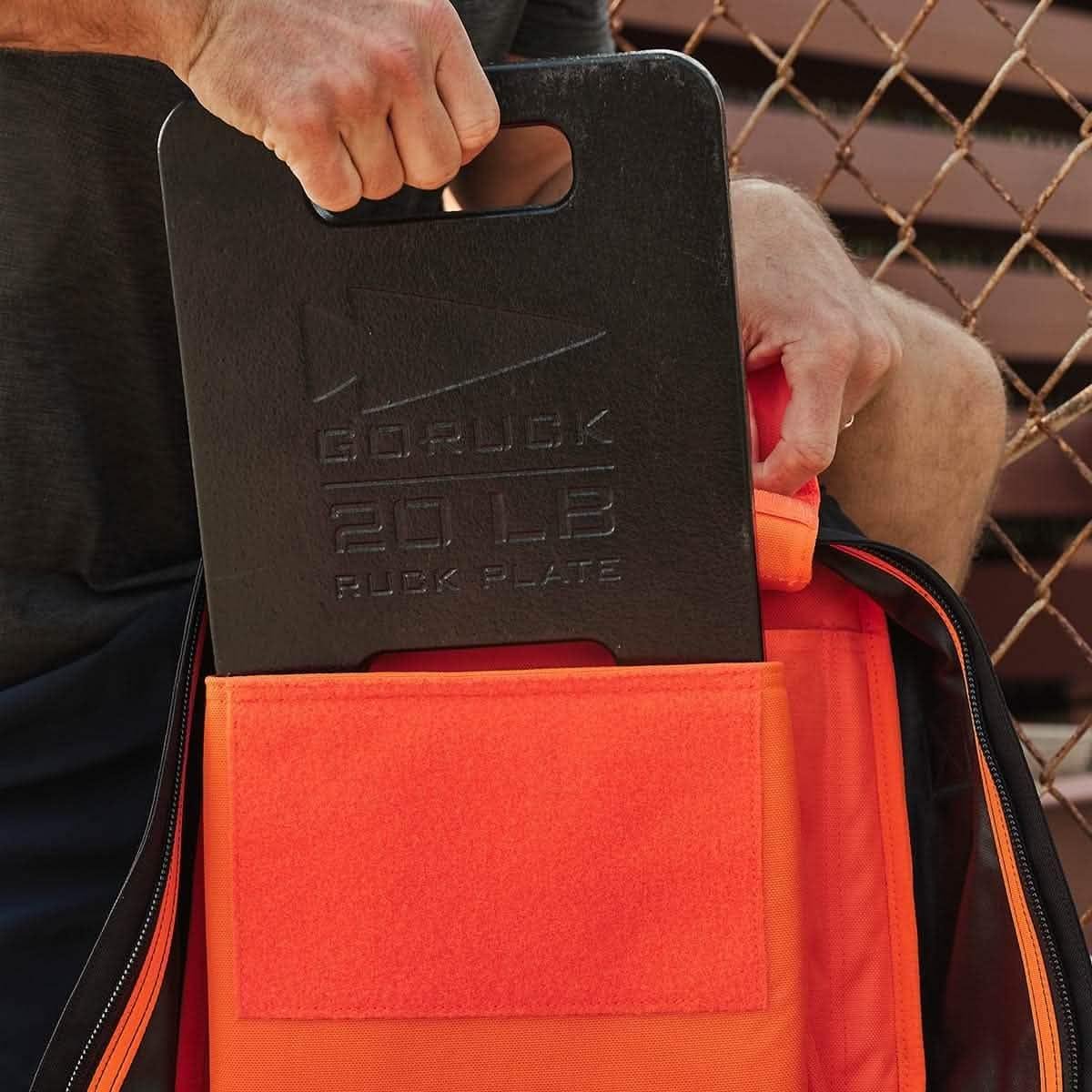
A sturdy everyday backpack can work for an introductory ruck. You do not need an expensive purpose-built rucksack before finding out whether you enjoy the activity. The load must be secured so it cannot swing, hard objects must not press into your back, and straps should keep the bag stable without squeezing your shoulders or chest.
For a new participant, five to ten pounds is a reasonable conservative experiment. Someone already comfortable with regular brisk walking might start closer to ten to twenty pounds. These are examples rather than a universal body-weight formula. Age, previous injuries, walking history, footwear, body size and terrain all change what is appropriate. If five pounds already alters your gait, remove weight rather than trying to meet a target.
Pack plates, sandbags or wrapped household items high and close to your back. Use a towel or spacer to prevent movement. Make sure the pack is strong enough for the load and check that metal objects cannot wear through the fabric. A dedicated raised plate pocket is convenient for heavier rucks, but the important feature is stability, not a particular logo.
Walk twenty minutes on flat ground at a conversational pace. Note the distance, effort, shoulder pressure and foot comfort. The next morning matters too: a session that felt easy at minute ten may still reveal a blister or irritated heel later. Increase duration before load, and do not change pack, shoes, weight and terrain simultaneously.

Equipment Worth Exploring
Explore equipment, accessories and gear from our carefully selected range.


VOLTRA
Compact digital cable trainer with smooth, adjustable resistance.

Go-Tone Pro
Portable digital cable trainer with up to 66 lb (30 kg) of adjustable resistance.

Squat Harness
Wearable harness for hands-free cable squats, sled work, and lower-body training.

Backpack or weighted vest: where the load sits matters
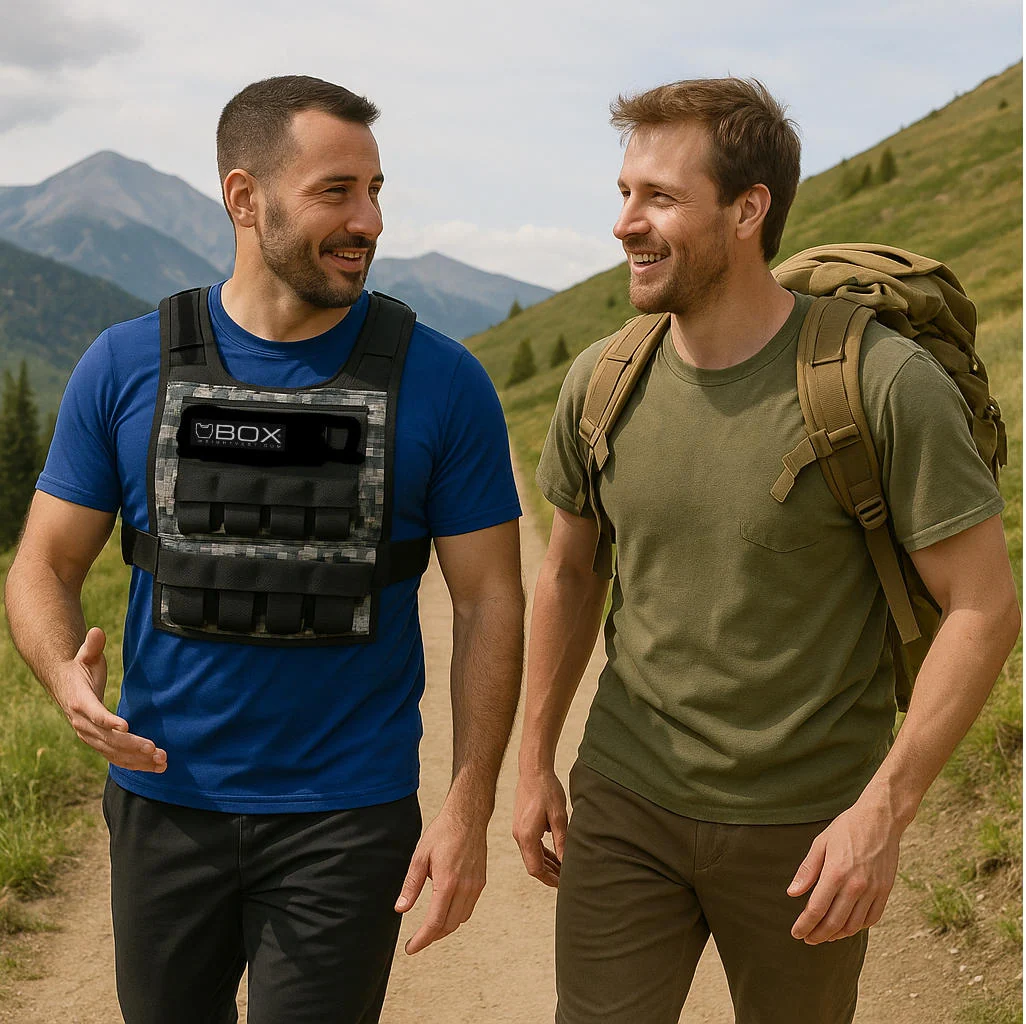
A backpack carries most of its mass behind you. Depending on fit, it may encourage a little forward lean to balance the weight, especially uphill. A fitted weighted vest distributes mass more evenly around the torso. The difference can affect comfort, heat, breathing, shoulder pressure and how naturally your arms swing. Neither tool is automatically better for every route or every body.
In a controlled experiment with twenty adults, a standard weighted vest raised physiological demand during running and walking on a steep incline, while some flat walking conditions showed little difference at the tested speeds. Measured stride variables remained broadly similar during the short protocol. This does not prove that heavy loaded running is injury-free or that the same results apply to all vest designs.
Vest panels can feel hot or tight across the chest; loose ones can bounce. Backpack straps can irritate the traps, and poorly secured weight may pull the torso backward. Test each option for ten or fifteen minutes before using it for a long outing. You should be able to breathe comfortably and walk without constantly adjusting the equipment.
Choose a backpack if you enjoy outdoor rucking, hiking or events that require a pack. Consider a fitted vest for shorter walks or gym circuits if its design suits you. Do not assume a forty-pound vest feels identical to a forty-pound backpack merely because the scale shows the same mass.

Cardio Shirts & Workout Gear
Cardio and conditioning gym gear for runners, endurance athletes and anyone who earns the sweat.

Hybrid Athlete – HYROX Training Crewneck for Strength & T-Shirt
Show some gym-day personality with “Hybrid Athlete”.

Cardio Heartbeat Hoodie
Show off your cardio humor in a laid-back “Cardio Heartbeat” hoodie.

Anti Hiking Hiking Hiking Club Shirt – & Meme Top T-Shirt
Heavy lifts, good laughs, and a little “Anti Hiking Hiking Hiking Club” energy.

Anti Walking Walking Club Shirt Gymbro Meme Lifting T-Shirt
Bring “Anti Walking Walking Club” humor to your next gym day.

Hybrid Athlete – Iron Man Medieval Triathlon Gym Decal Sticker
Give your everyday gear a playful “Hybrid Athlete” twist.

Shirt – Cardio Is Hardio – & Gymbros T-Shirt
Show some cardio attitude with a playful “Cardio is Hardio” tee.

with Shark Meme – Motivation Finds You Workout Pullover T-Shirt
Show some gym-day personality with “with Shark Meme”.

Running Dost Thou Even Trot Medieval Treadmill Crewneck T-Shirt
Show some gym-day personality with “Running”.

Exercise Your Demons | Cardio Workout From Hell Graphic T-Shirt
Show some cardio attitude with a playful “Exercise Your Demons” tee.

Gym Dost Thou Even Pedal Medieval Air Bike Humor for Cr Tank Top
Bring “Dost Thou Even Pedal Medieval Air Bike” humor to your next lifting session.
Pace, hills and duration change the training dose
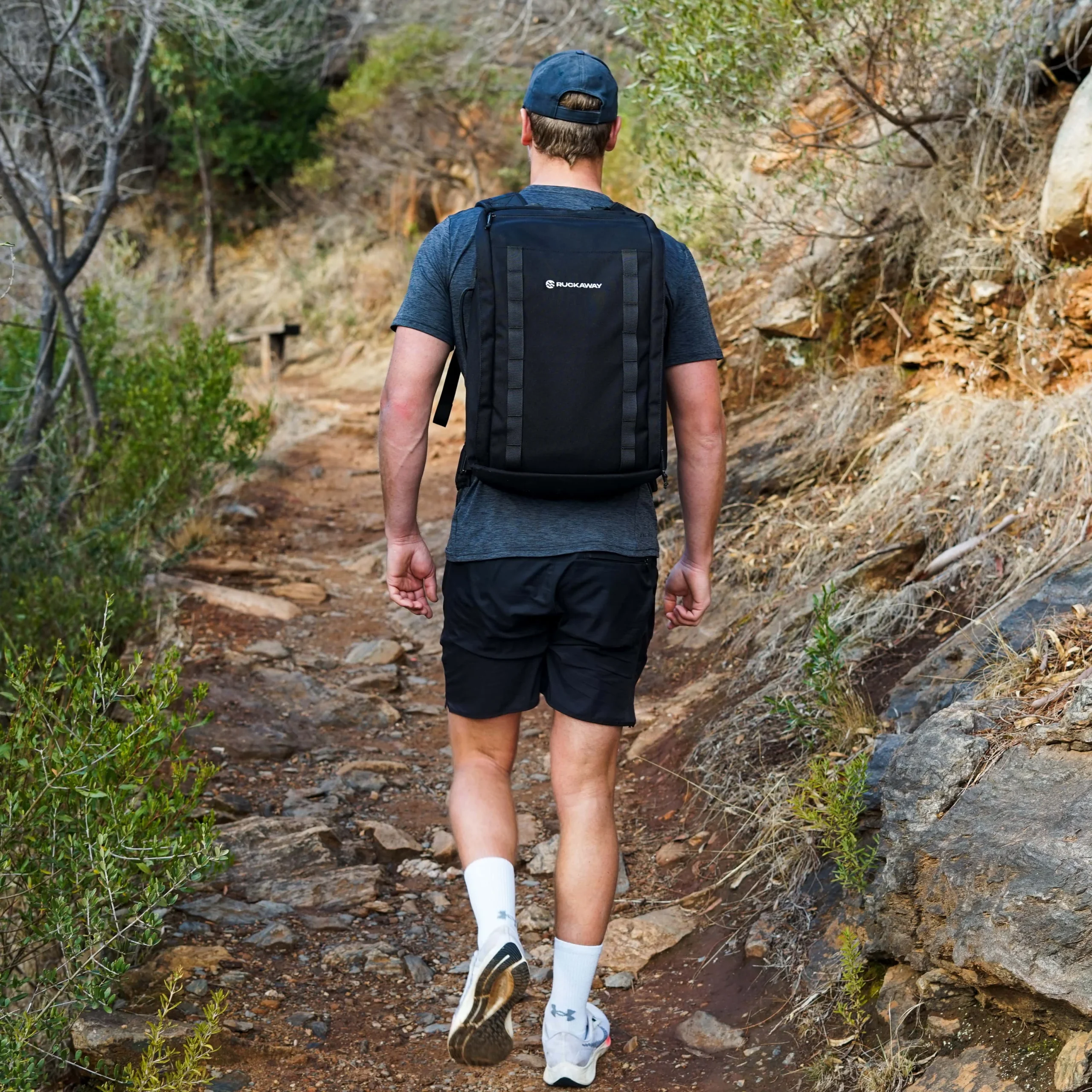
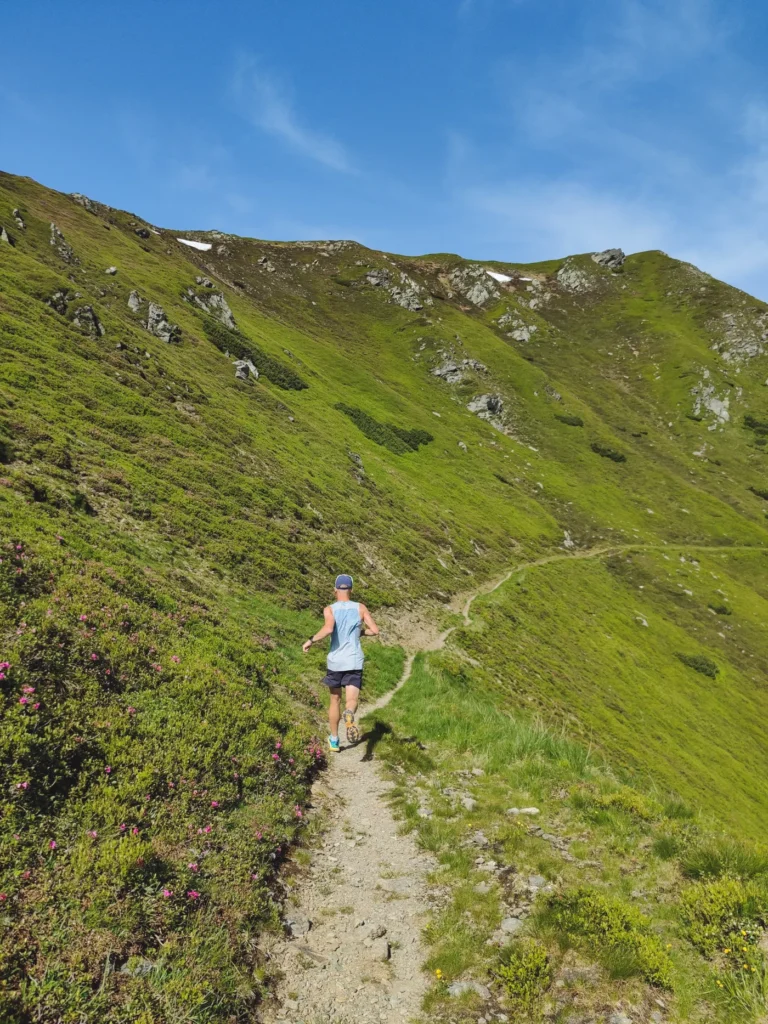
Added weight is only one variable. Walking speed, incline, surface, heat and duration all influence the session. A quick walk with ten pounds may demand more from your cardiovascular system than a slow stroll with twenty. Hills increase the work of climbing; descents add repeated braking by the quads and calves. Uneven trails demand balance and attention that a smooth treadmill does not.
In one laboratory experiment, eleven men without load-carriage experience walked on a treadmill for two hours at 5.5 km/h while carrying a twenty-two-kilogram patrol-style load. Heart rate and oxygen consumption rose across the trial even though most measured walking-pattern variables remained relatively stable. Fatigue can accumulate before your form looks obviously different. That heavy two-hour protocol is not a beginner workout recommendation.
Use the talk test and a one-to-ten effort scale. Early rucks should generally feel around four to six out of ten: breathing faster, yet still able to speak in sentences. Keep the first few outings on level ground. When they become comfortable, add a gentle hill or a few minutes, not every difficulty variable at once.
Watch-based calorie estimates are approximations, particularly with a backpack that a device cannot measure directly. For progress, compare pace and perceived effort on the same route with the same load. A lower effort at a familiar pace is more meaningful than a suspiciously precise calorie number.
Walk naturally, protect your feet and respect warning signs
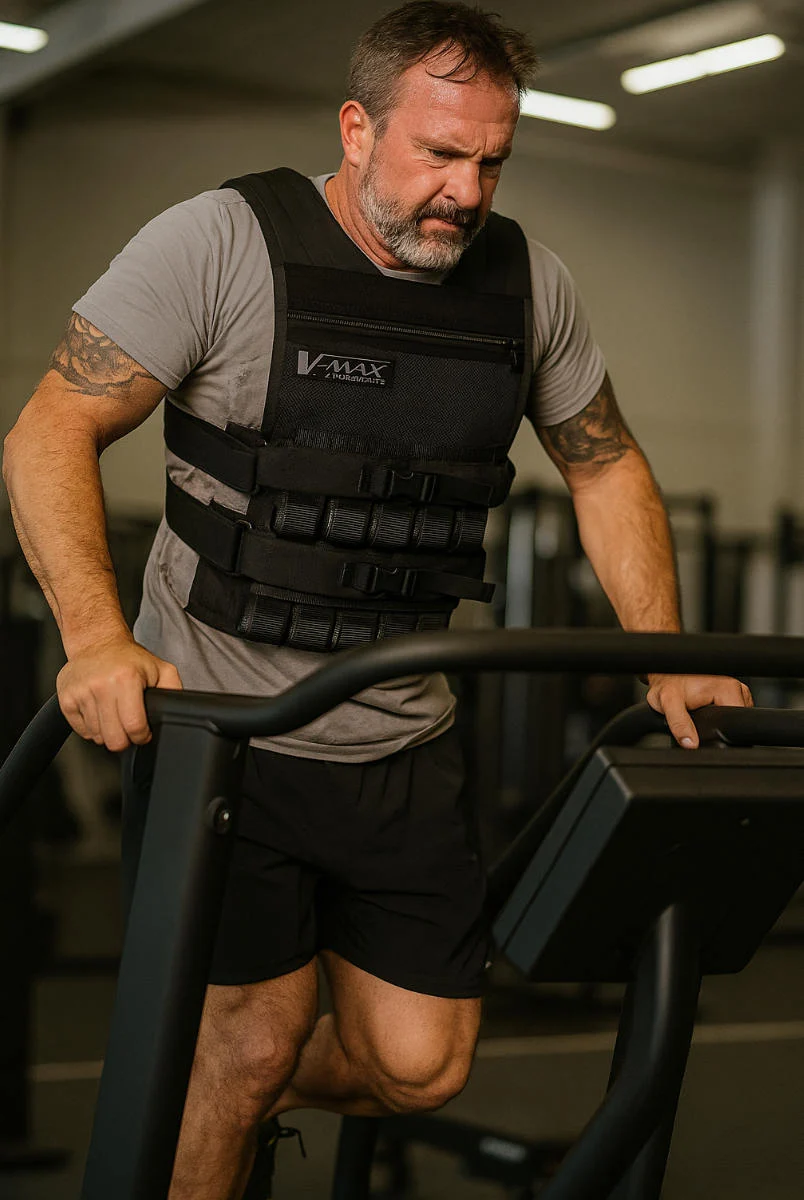
Look ahead, keep your torso comfortably tall and let your arms swing. Avoid deliberately overstriding or shuffling because you feel the pack. A slight forward inclination on a climb is normal, but a deep sustained bend at the waist suggests the load, fit or route needs adjusting. Tight straps should stabilize the pack, not cause tingling in your arms.
Choose footwear for the surface. Comfortable walking or running shoes can work on pavement; rocky or wet trails may call for more grip and protection. Leave enough toe room for swelling, use socks that manage moisture, and check hot spots early. Starting a new heavy pack and unfamiliar boots on the same long walk makes it difficult to know what caused discomfort.
Loaded walking increases repeated forces through the feet. A 2022 short treadmill study with about nine kilograms of extra gear measured changes in some foot-force and gait-timing variables. These results do not predict injury in an individual, but they reinforce why gradual progression makes sense. Stop or reduce the load if pain becomes sharper, changes your gait or persists after unloading.
Track the following morning. Mild muscle fatigue may be normal; new heel pain, knee swelling, blisters, numbness or back symptoms deserve attention. People with cardiovascular conditions, significant balance problems or recent injuries should obtain individualized advice before adding load. Heat and dehydration can make a manageable workout unsafe, so plan water and route length accordingly.
Equipment Worth Exploring
Explore equipment, accessories and gear from our carefully selected range.


FID Bench MAX
Adjustable bench offering flat, incline, and decline positions + adjustable headrest.


Belt Squat Collar
Heavy-duty collar adapter for compatible belt-squat and landmine bar setups.


Power Tower
Freestanding pull-up and dip station with adjustable handles for bodyweight training.
Make rucking complement squats, deadlifts and hybrid training
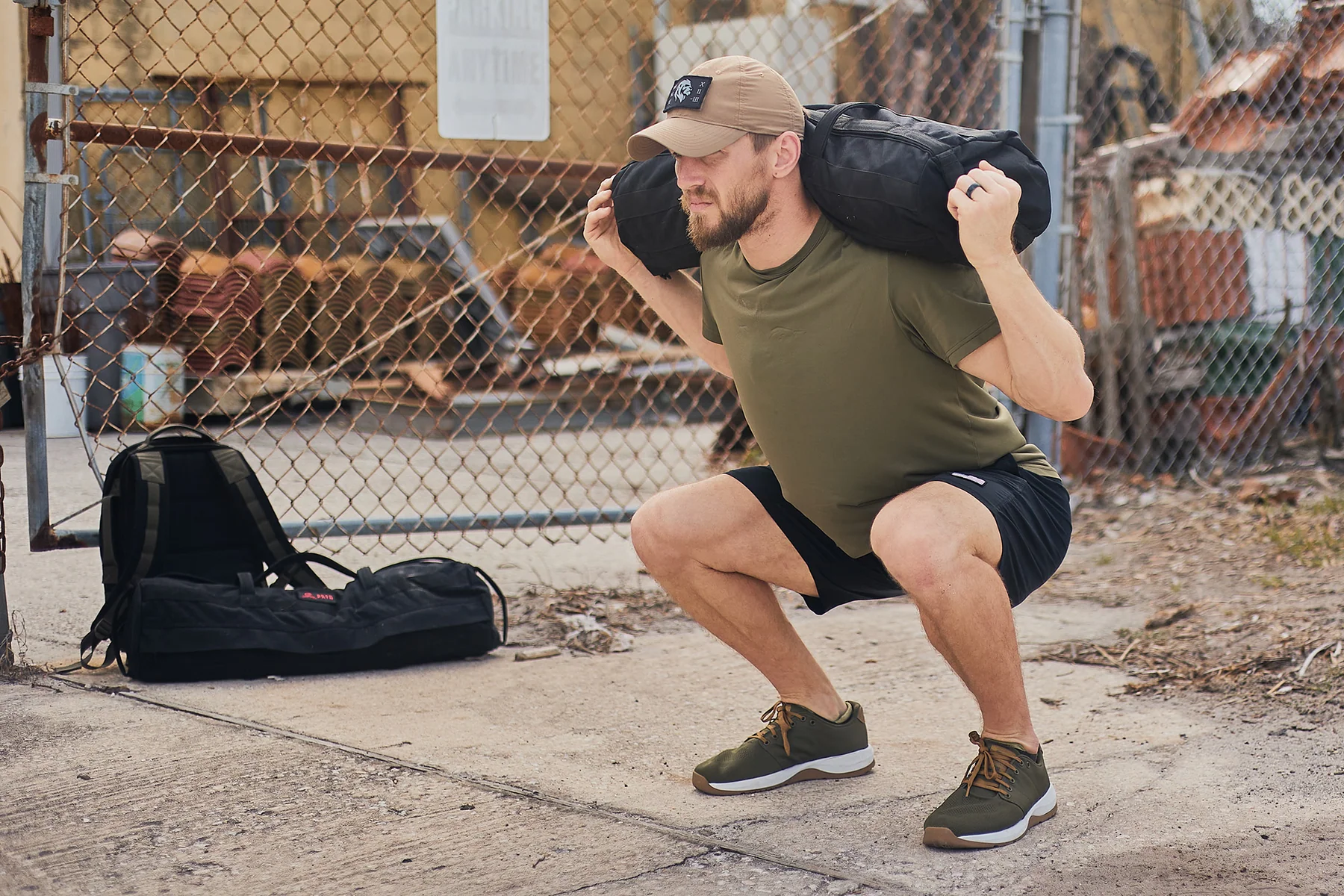
For bodybuilders and powerlifters, the question is whether loaded walking improves conditioning without stealing recovery from the sessions that drive muscle and strength. A heavy downhill ruck before high-volume squats may leave your quads and calves unexpectedly fatigued. A short easy ruck after an upper-body session is less likely to compete with your hardest lower-body training.
Keep lifting organized around a squat or lunge, a hip hinge, a push, a pull and trunk work. Trap-bar deadlifts, split squats, calf raises and loaded carries can build general strength useful for handling external loads. But a strong deadlift does not automatically mean your feet are prepared for thousands of weighted steps, and no single accessory lift guarantees a faster ruck time.
One sensible four-day lifting week might include a twenty-five-minute easy ruck after an upper-body day and a thirty-five-minute walk on a separate day. Avoid placing the longest or hilliest outing immediately before your hardest leg session. If you train for HYROX or another hybrid event, rucking can occasionally diversify aerobic work, but it does not replace running, sled stations or other race-specific practice.
Use a simple recovery dashboard: lower-body performance, familiar-route pace, sleep, foot comfort and desire to train. If your lifts regress for two weeks while ruck loads keep climbing, lower the rucking dose. Conditioning should expand what you can recover from, not monopolize your recovery budget.
A six-week rucking progression you can actually repeat
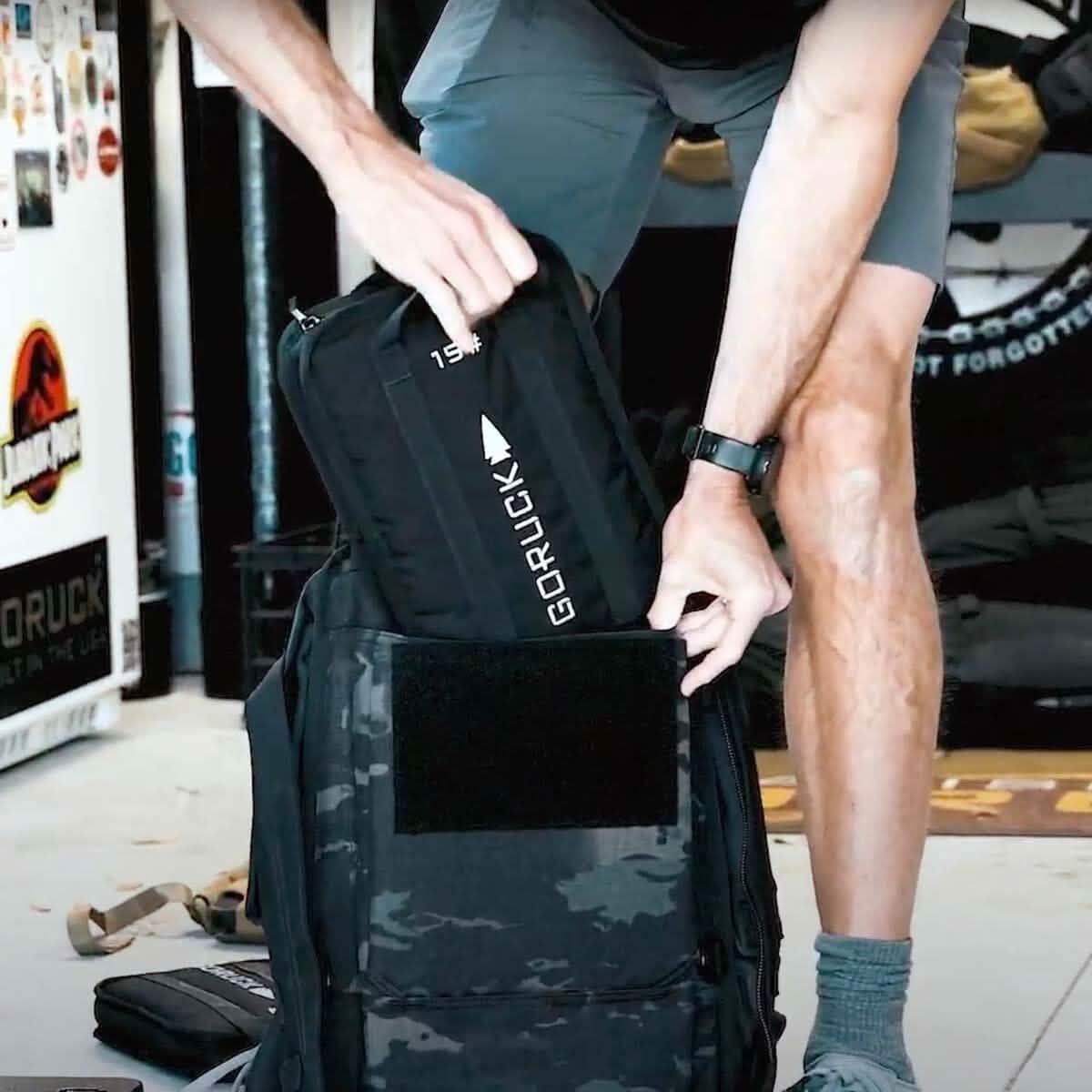
This template is for a healthy adult already comfortable with ordinary thirty-minute walks. It uses two loaded sessions per week alongside strength training. Start with a light, stable pack and a flat route. Repeat a week if pain, blisters or unusual fatigue interfere; this is a practical progression, not a race-preparation guarantee.
- Week 1: Two easy twenty-minute walks with five to ten pounds, or another clearly comfortable load. Practice packing and steady breathing.
- Week 2: Two twenty-five-minute walks at the same weight. Record your route and perceived effort rather than forcing a faster pace.
- Week 3: One thirty-minute flat walk and one twenty-five-minute session with a gentle hill. Keep the load unchanged.
- Week 4: Two thirty-to-thirty-five-minute walks. If all earlier sessions were comfortable, add only a small amount of weight to one outing.
- Week 5: One thirty-minute steady session and one forty-minute easy outing. Slow down on climbs to maintain conversational effort.
- Week 6: Repeat a familiar thirty-to-forty-minute route at the same load. Compare pace, effort and next-day recovery with your earlier sessions.
Even if you can squat heavy, repeated loaded steps create a different kind of exposure for feet and connective tissues. Do not jump to military-style loads because the first short session felt easy. If the pack feels unstable or you cannot walk normally, reduce the load. Good progression is the ability to repeat a session while preserving normal training.
After six weeks, choose one next goal: longer duration, a slightly quicker pace on a familiar route, or a modest load increase. Keep a log of weight, minutes, distance, terrain, effort and next-morning symptoms. The win is not the heaviest backpack in the park; it is a conditioning habit that supports your lifting.
Functional Fitness Shirts & Workout Gear
Functional-fitness shirts, tanks and workout gear for athletes who train strength, conditioning and everything in between.

Hybrid Athlete – Strength & Endurance Gym Pullover for Hoodie
Keep it laid-back with a little “Hybrid Athlete” attitude.


Rowing – Dost Thou Even Row Medieval Knight Crewneck fo T-Shirt
Show some gym-day personality with “Rowing”.


Live Love Lift – Gymbro Meme & Gains – Shirt T-Shirt
Rep “Live Love Lift” humor in and out of the gym.

Gym Equation Kettlebell Makes Me Happy Workout Decal Sticker
A fun “Gym Equation” touch for bottles, laptops, and lockers.


Vive La Resistance Bands – Resistance Bands Warmup Reha Hoodie
Stay casual and show some lifting attitude with “Vive La Resistance Bands”.

Lift Together Grow Stronger Buddies Friendship Workout T-Shirt
Make gym days more fun with “Lift Together Grow Stronger” style.

Meme – You May Delay Time Will Not Next Cult Brand T-Shirt
Heavy lifts, good laughs, and a little “You May Delay Time Will Not” energy.