Advertising disclosure: This page includes affiliate product links that may earn us a commission, as well as products from our own store.
A heavy carry can expose a grip weakness that never appears on a seated machine. A staircase can expose a pacing problem that a strong deadlift does not solve. Put those demands into a job where the next hard effort arrives without a convenient appointment, and firefighter fitness becomes a useful lesson for anyone trying to build strength and conditioning together.
The appealing part is the variety: lifting, carrying, climbing and pulling all have a purpose. The mistake is turning that variety into an exhausting circuit every day. A more useful approach gives each session a clear job and leaves enough capacity to perform again. The examples below are general training ideas, not a department programme, a qualification or instructions for emergency operations.
Start with the demands, then choose the workout
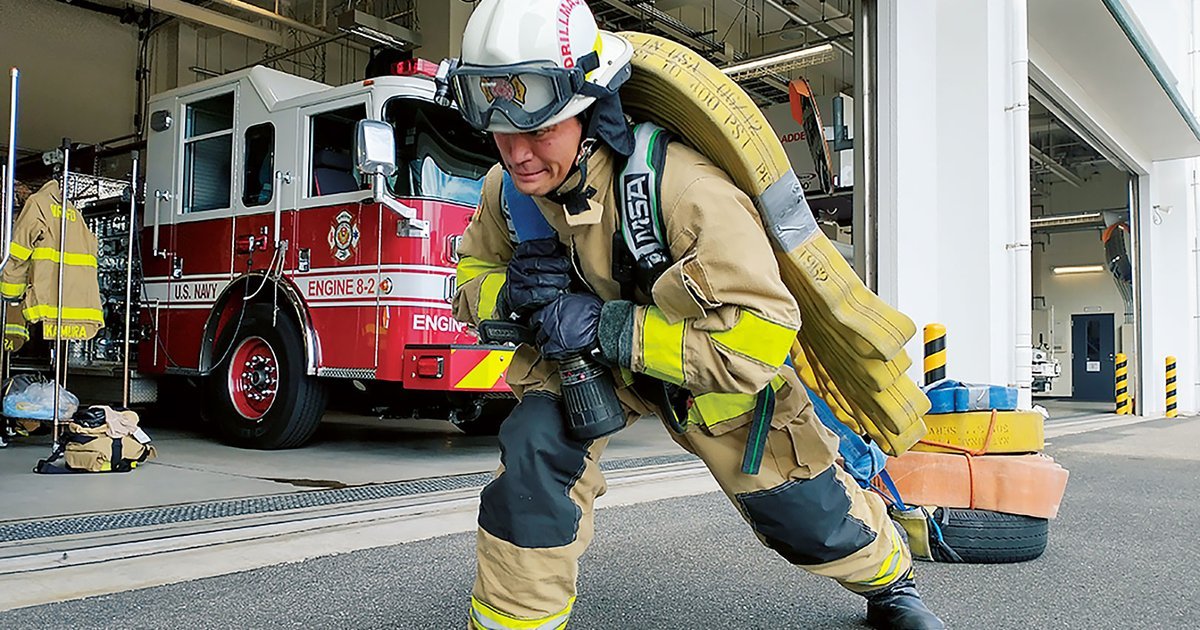
Structural firefighting combines tasks such as stair climbing, moving equipment, pulling hose and dragging loads. These demands draw on strength, muscular endurance and cardiovascular capacity, while protective equipment and the working environment add stress. Fitness preparation also sits alongside technical instruction; getting stronger cannot teach someone how to conduct a rescue.
Even a formal physical test has a defined purpose. The Candidate Physical Ability Test, or CPAT, is a standardized pre-employment assessment. Its pass/fail time is 10 minutes and 20 seconds. That is a specific assessment standard, not a target duration for every firefighter workout or a universal measure of readiness throughout a career. Candidates should use their testing provider’s current preparation guidance.
For a recreational lifter, borrow the planning question rather than the occupational label: what do you want to become better at? If the answer is carrying awkward shopping, hiking uphill or staying useful through a long physical day, write those outcomes down. A bigger bench press may still matter to you, but it should not be the only number on the page.
Make a short inventory before buying anything. You might already have a pair of dumbbells, a safe walking route and access to stairs. Note which movements you can perform confidently and which need coaching. Then choose one limitation to emphasize for the next few weeks. A clear starting point makes progress easier to recognize than a new collection of exercises every session.
Give strength and loaded carries room to improve
For general strength practice, keep the setup familiar enough to repeat. A squat or step-up pattern, a hinge, an upper-body push, a row and a carry offer several different ways to move resistance. You do not need every variation in every session. Choose exercises you can control and give the harder sets enough recovery to preserve technique.
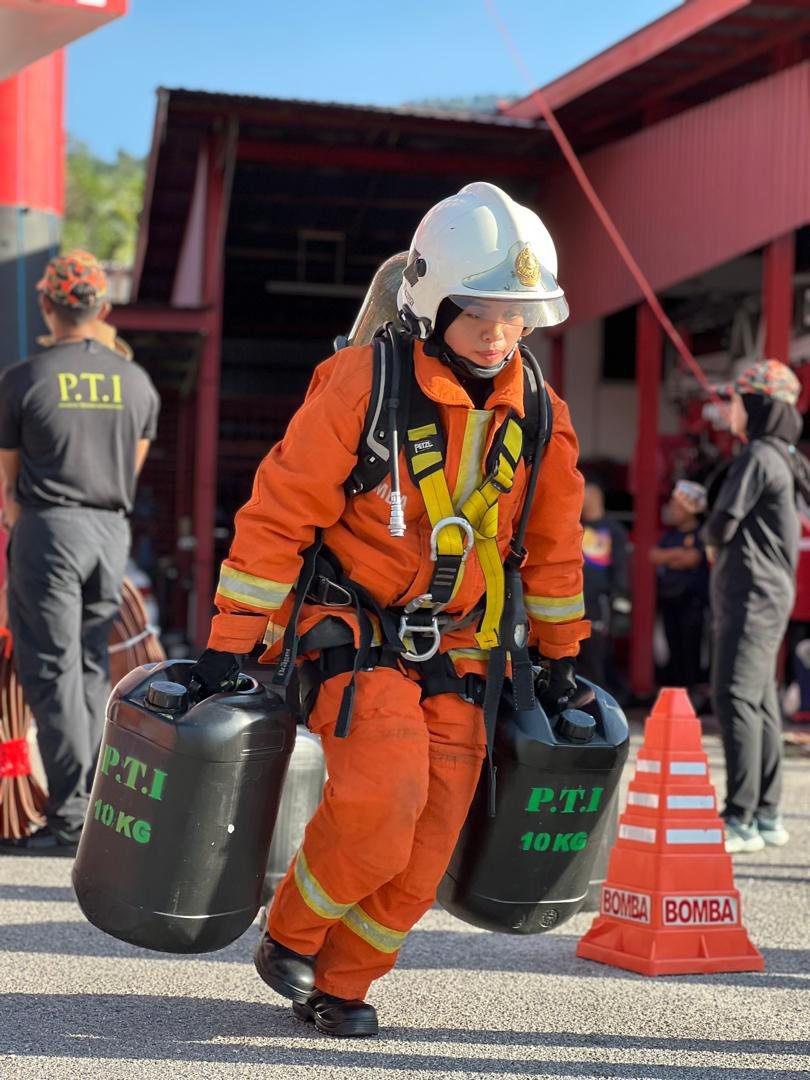
A carry is particularly easy to record badly. “Three tough laps” says little if the route, load and turns keep changing. Mark a clear, level route, record its distance and use the same implement. Note whether grip, breathing or posture ended the set. Those observations help distinguish a loading problem from a pacing problem without pretending that one carry predicts performance in every situation.
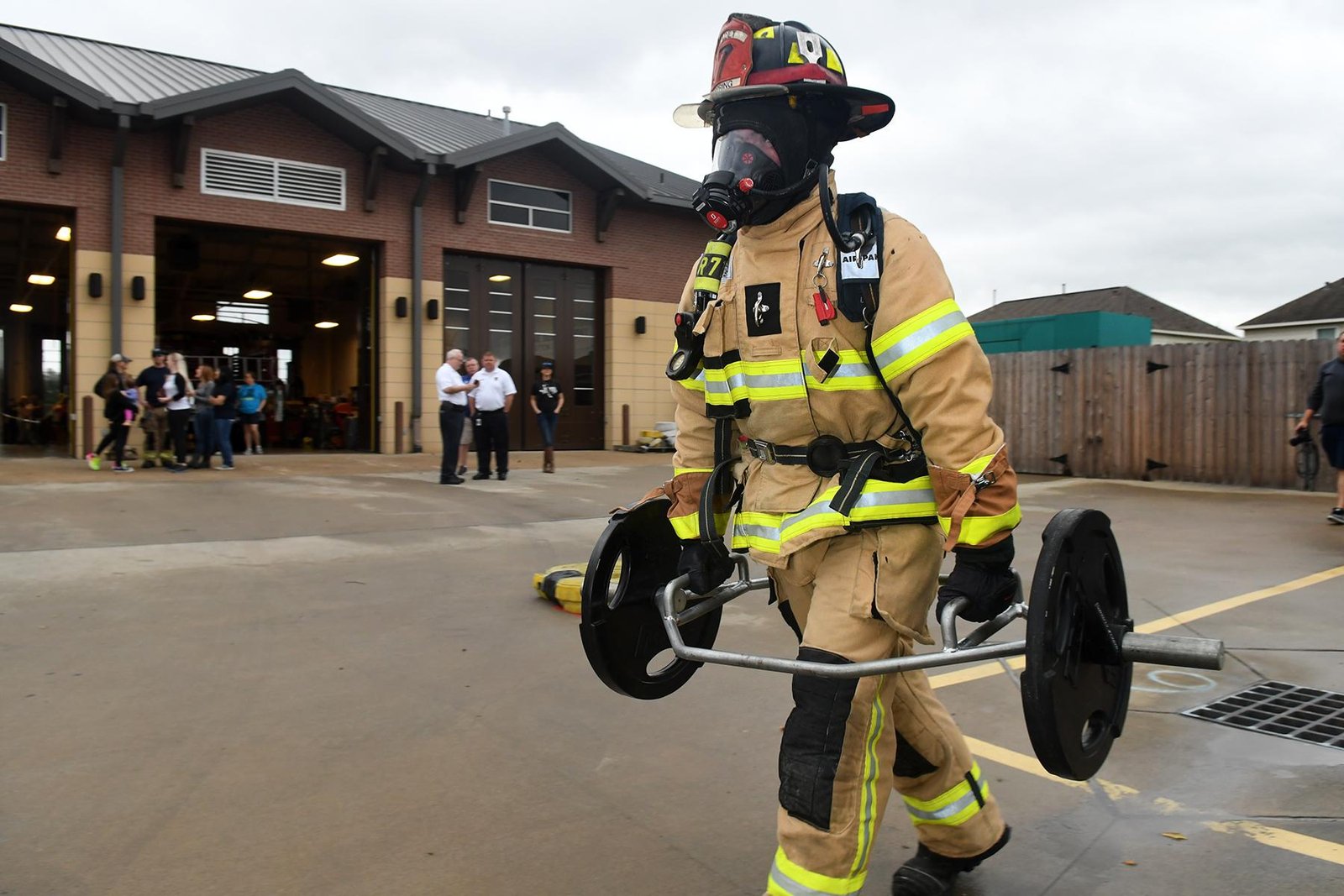
For example, a lifter might practise short farmer carries after their main lifts, setting the weights down before grip starts opening or walking becomes unstable. The following session could repeat the same work with smoother turns. That is a useful improvement even without adding weight. Increase one demand at a time rather than making the load heavier, the route longer and the rest shorter together.
Dumbbells, kettlebells and an appropriate trap bar offer different carrying options. Adjustable equipment needs secure locking and should be used within its manufacturer’s instructions. Plate-loaded handles also require proper collars. A sled can provide a separate pushing or dragging option on a suitable surface. The equipment below supports ordinary gym preparation; none of it is certified here as a substitute for fire-service training equipment.

Equipment Worth Exploring
Explore equipment, accessories and gear from our carefully selected range.


Open Hex Bar
Open-frame trap bar with multiple handles for deadlifts, carries, and lower-body training.

Rubber Hex Dumbbells
Rubber-coated hex dumbbell pairs with a stable shape for home and commercial strength training.

Pro Sled System
Heavy-duty push-pull training sled for loaded conditioning, speed, and strength work.
Use stairs to practise pacing, not a daily survival test
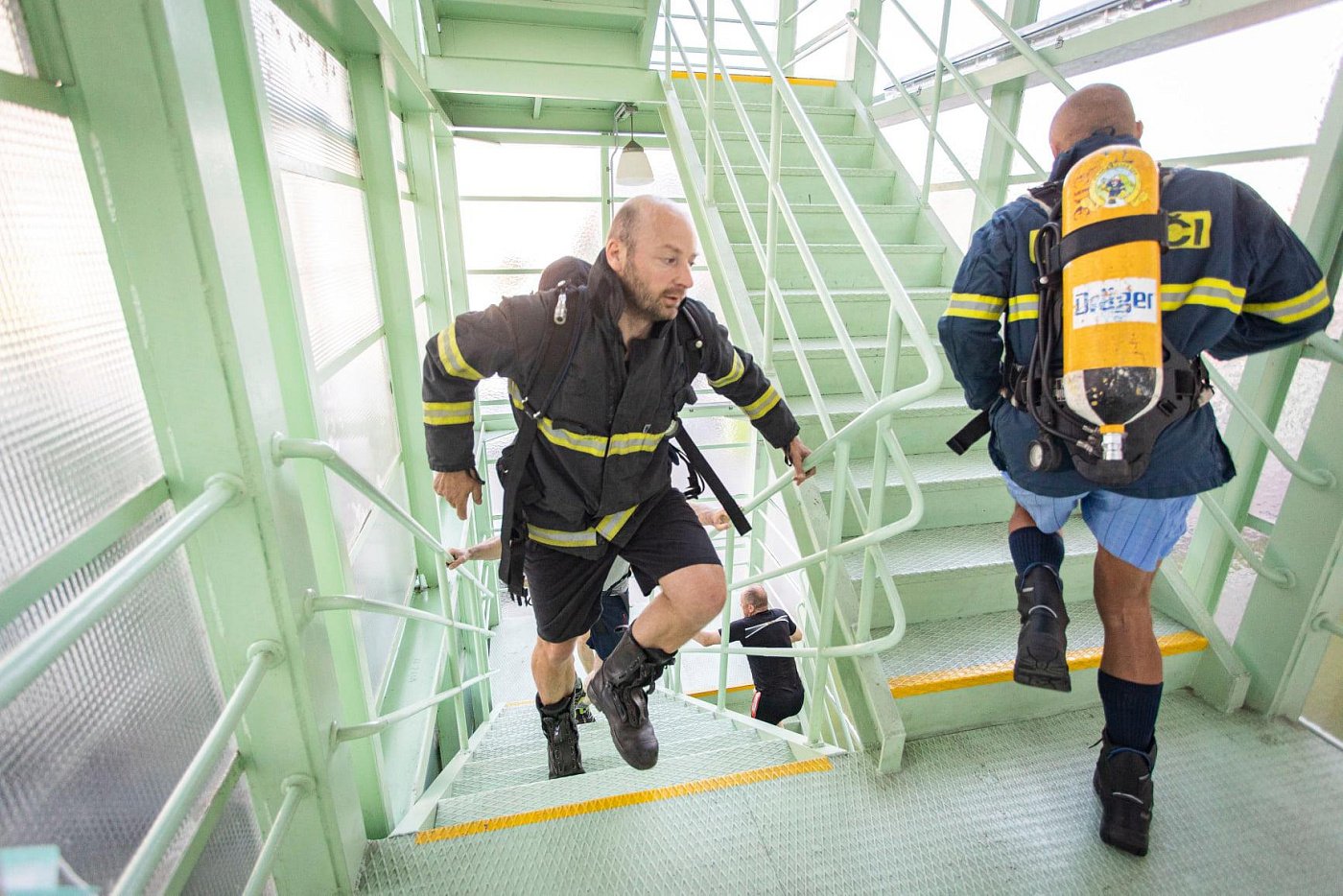
A staircase makes pacing errors obvious: an ambitious first flight can feel very different several flights later. For a general fitness session, begin with an unloaded route that is permitted, well lit and clear of other users. Keep a handrail available, choose manageable steps and treat the descent as part of the session rather than rushing it to improve a time.
Define the session before starting. One option is steady climbing at a pace you can sustain without repeated stops. Another is a small number of controlled climbs separated by enough recovery to repeat the intended effort. These are different sessions. Decide which you are doing instead of beginning steadily, racing halfway through and calling the result an interval workout afterwards.
A simple training log can include flights completed, total time, rest time and how difficult the final climb felt. Compare like with like. A faster result after choosing a shorter staircase, skipping recovery or changing the counting method is not a clean comparison. If your route changes, start a new baseline rather than forcing the new number into the old record.
For the gym reader, an air bike or rowing machine can provide a more controllable conditioning alternative when stairs are unavailable. They do not reproduce climbing, but they can make repeated sessions easier to standardize. Choose the option you can use consistently. Occupational weighted stair practice belongs within the appropriate supervised preparation; copying the protective equipment visible in training photographs is not necessary for a productive recreational workout.
Keep circuits repeatable and match the exercise to the goal
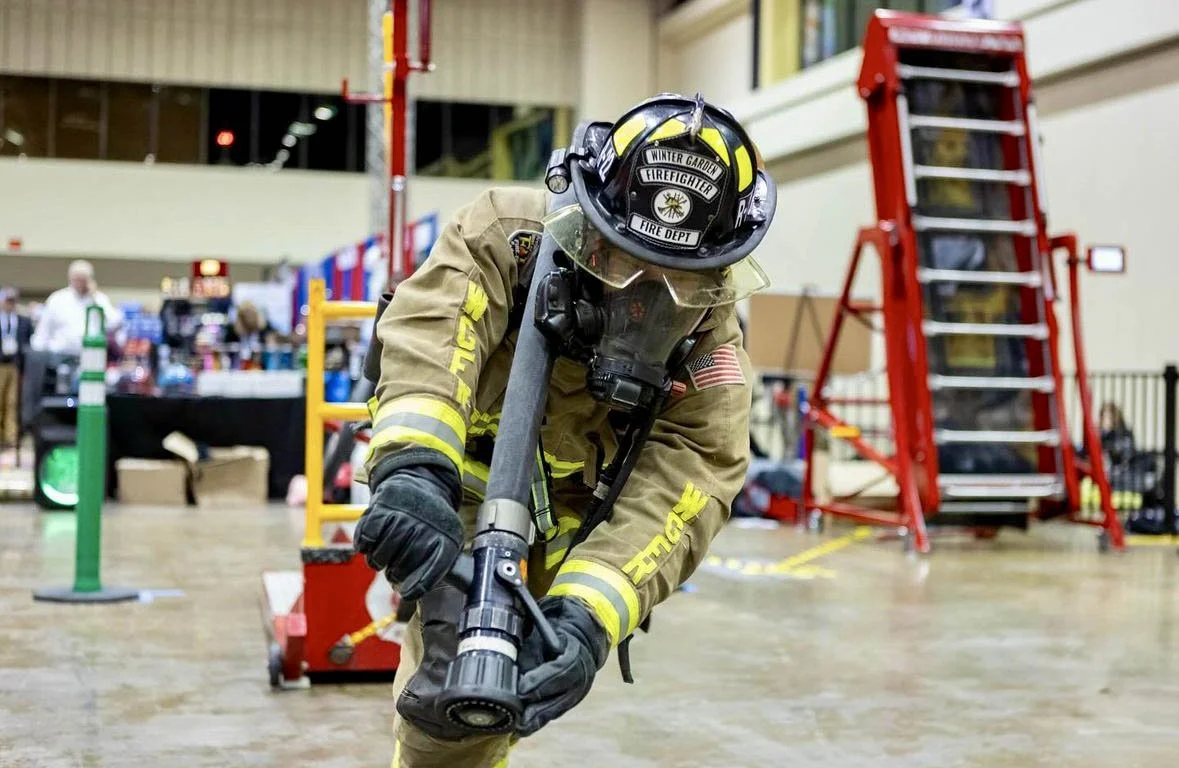
Circuits can combine muscular and cardiovascular work with modest equipment. That convenience does not make every combination equally useful. A session built around controlled repetitions and planned rest is different from a contest to keep moving at any cost. Choose the exercises first, then choose a pace that allows their intended movement quality to survive the later rounds.
For a recreational example, a coach might combine a light kettlebell hinge, a suitable pushing variation and a short machine-cardio bout. A separate session could use carries and a sled. The exact menu depends on experience and facilities. Resistance bands can serve a warm-up role, while battle ropes may provide another conditioning option. Adding all these tools to one workout is optional, not evidence of a better programme.
Keep a useful stop rule: if you cannot repeat the planned movement confidently, reduce the demand or end that exercise. Turning a missed repetition into an improvised movement makes the training log harder to interpret. For group sessions, partners can help count repetitions and watch consistency without turning every round into a race against the strongest person in the room.
Track completed work and the quality of the final round. If you change only one variable next time, you can judge its effect. More work is worthwhile when it serves the goal; an increasingly complicated circuit is not automatically progress. Firefighter preparation research also has limits, including studies in trainees that may not generalize to experienced crews. A gym circuit should not be presented as proven protection against occupational injury or cardiac events.

Functional Fitness Shirts & Workout Gear
Functional-fitness shirts, tanks and workout gear for athletes who train strength, conditioning and everything in between.

Hybrid Athlete – Strength & Endurance Gym Decal for Run Sticker
Put “Hybrid Athlete” gym humor on your laptop, bottle, or gym gear.

Vive Le Resistance Bands – Resistance Bands Warmup Reha Hoodie
Stay casual and show some lifting attitude with “Vive Le Resistance Bands”.

Shirt – Blue Macaroon Kettlebell , Gymbros & Meme T-Shirt
Rep “Blue Macaroon Kettlebell” humor in and out of the gym.

For Whom the Bell Curls Tank
Your gym-day look, with a playful “For Whom The Bell Curls” twist.

Lift Together Grow Stronger for Workout Partners and Li Hoodie
Show off your powerlifting humor in a laid-back “Lift Together Grow Stronger” hoodie.

Dost Thou Even Pedal Tee
Make gym days more fun with “Dost Thou Even Pedal Medieval Air Bike” style.


Pineapple Kettlebell – Kettlebell Meme Decal for Water Sticker
A fun “Pineapple Kettlebell” touch for bottles, laptops, and lockers.


Dia De Los Muertos Kettlebell – Day of the Dead Workout Tank Top
Your gym-day look, with a playful “Dia De Los Muertos Kettlebell” twist.
Plan recovery as carefully as the hard work
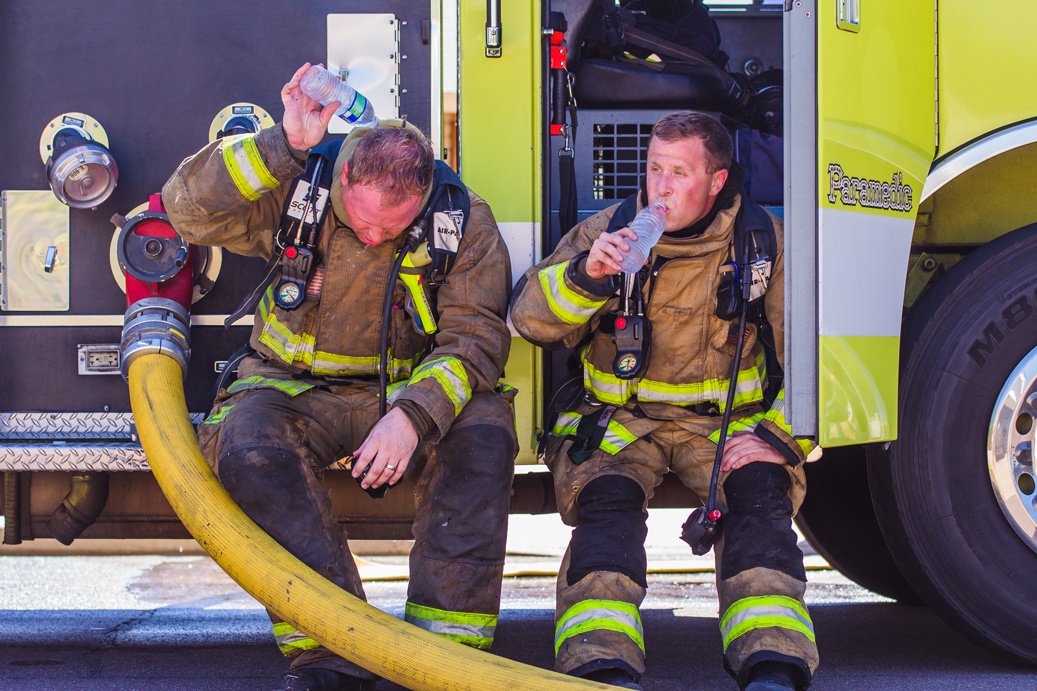
Heat and protective clothing create demands that ordinary gym clothing does not. Cooling opportunities, accessible drinking water, suitable rest breaks and gradual acclimatization matter in hot workplaces. Simply being fit does not remove those considerations. For recreational training, deliberately trapping heat under extra clothing is an unnecessary way to make a session feel more demanding.
Hydration needs also vary with the person, environment and work. A single photograph of someone drinking, a fixed bottle size or a thirst score cannot establish a complete hydration plan. Firefighters should follow their department’s occupational-health procedures. Those with medical conditions or medicines affecting fluid balance need individual guidance rather than a generic internet formula.
Make recovery visible in your own training log. Record whether a demanding session followed poor sleep, an unusually physical workday or a hard previous workout. That context does not invalidate the session; it explains why repeating last week’s numbers may require a different decision today. An easier session can still have a clear purpose, such as comfortable cardio or practising a familiar movement.
Before planning the next hard workout, look at the next day’s responsibilities. Leave room for work, family and the physical tasks you actually need to perform. The useful lesson from firefighter fitness is that capacity must be available when it matters. Build stronger lifts, more controlled carries and repeatable conditioning, then judge the plan by what you can sustain across weeks rather than how exhausted one session leaves you.