Advertising disclosure: This page includes affiliate product links that may earn us a commission, as well as products from our own store.
How much does the weight room add when you already sprint twice a week? One eight-week trial makes that question unusually concrete. It assigned 58 recreationally active adults to sprint-only work or to sprinting paired with heavy squats, moderate-load squats, or bodyweight squat jumps. The heavy and moderate-load groups gained more on several strength and athletic tests. The jump group did not show the same additional benefit. That is useful information, but it is not a verdict that jumps are useless or that every runner needs maximal squats. The details of the participants, doses and outcome measures tell a much more practical story.
The four programs shared the same sprint sessions
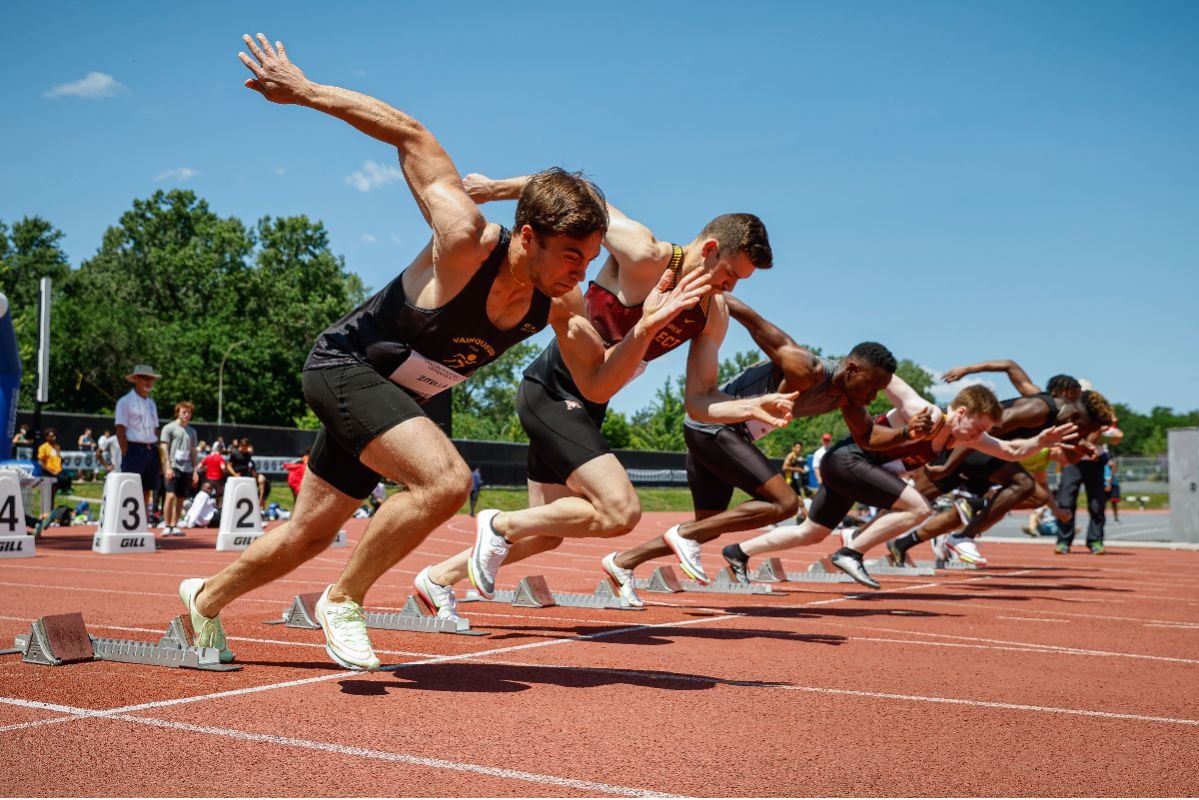
The research team randomized 58 recreationally active men and women who were not strength trained. Over eight weeks, all four groups completed two weekly sprint sessions built around six 25-meter efforts. In other words, the comparison was not between runners and people who only lifted. Everyone practiced accelerating; what changed was the additional lower-body work.
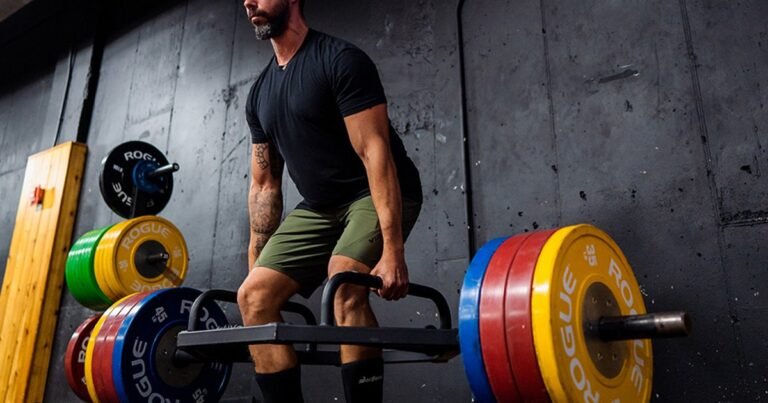
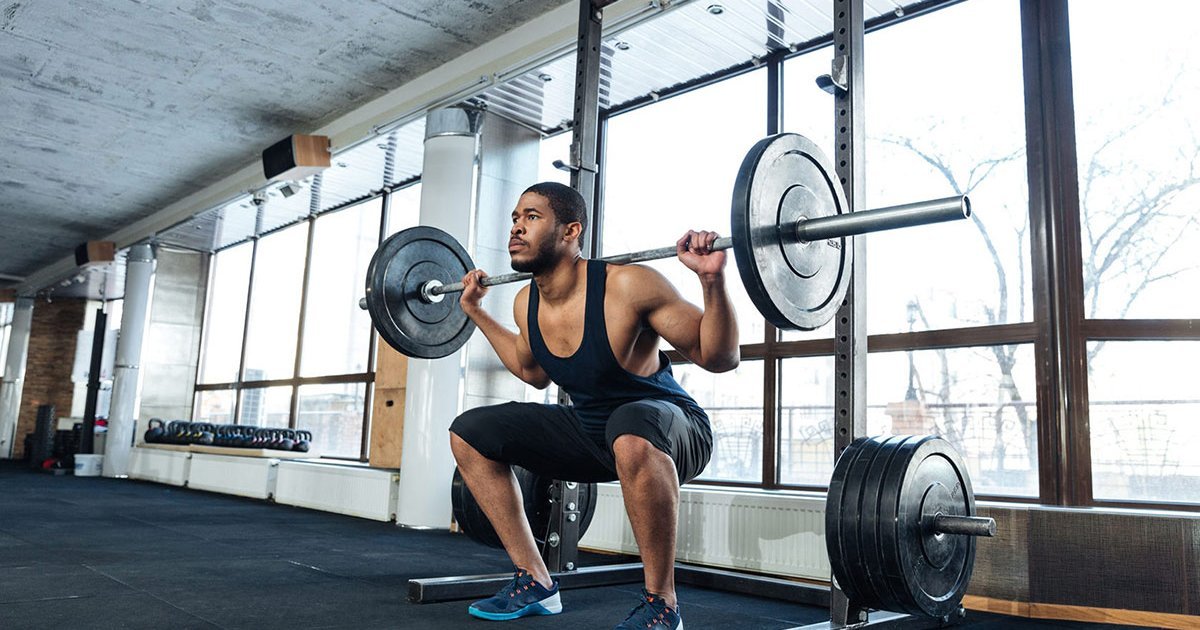
The maximal-strength group performed four sets of four squats with loads at or above 85% of one-repetition maximum. The moderate-load, hypertrophy-style group used three sets of eight to twelve squats at roughly 70–80% of one-repetition maximum. The explosive-strength group completed four sets of six or seven bodyweight squat jumps. The control group sprinted but did not add strength training. The intervention description specified three weekly strength sessions for those assigned to lifting or jumping.
Those are three meaningfully different training stimuli. A heavy set of four asks for high force under a large external load; a set of eight to twelve accumulates more repetitions under a substantial but lighter load; a bodyweight jump prioritizes rapid movement rather than progressively adding iron. Because the prescriptions were not matched for total loading, effort, or movement demands, the result compares these programs, not isolated muscle contractions. The squat-jump group was not a test of every possible plyometric program. Nor does an eight-week finding in beginners establish the best approach for a trained sprinter after five years of coaching.
Heavy and moderate squats moved the strength tests
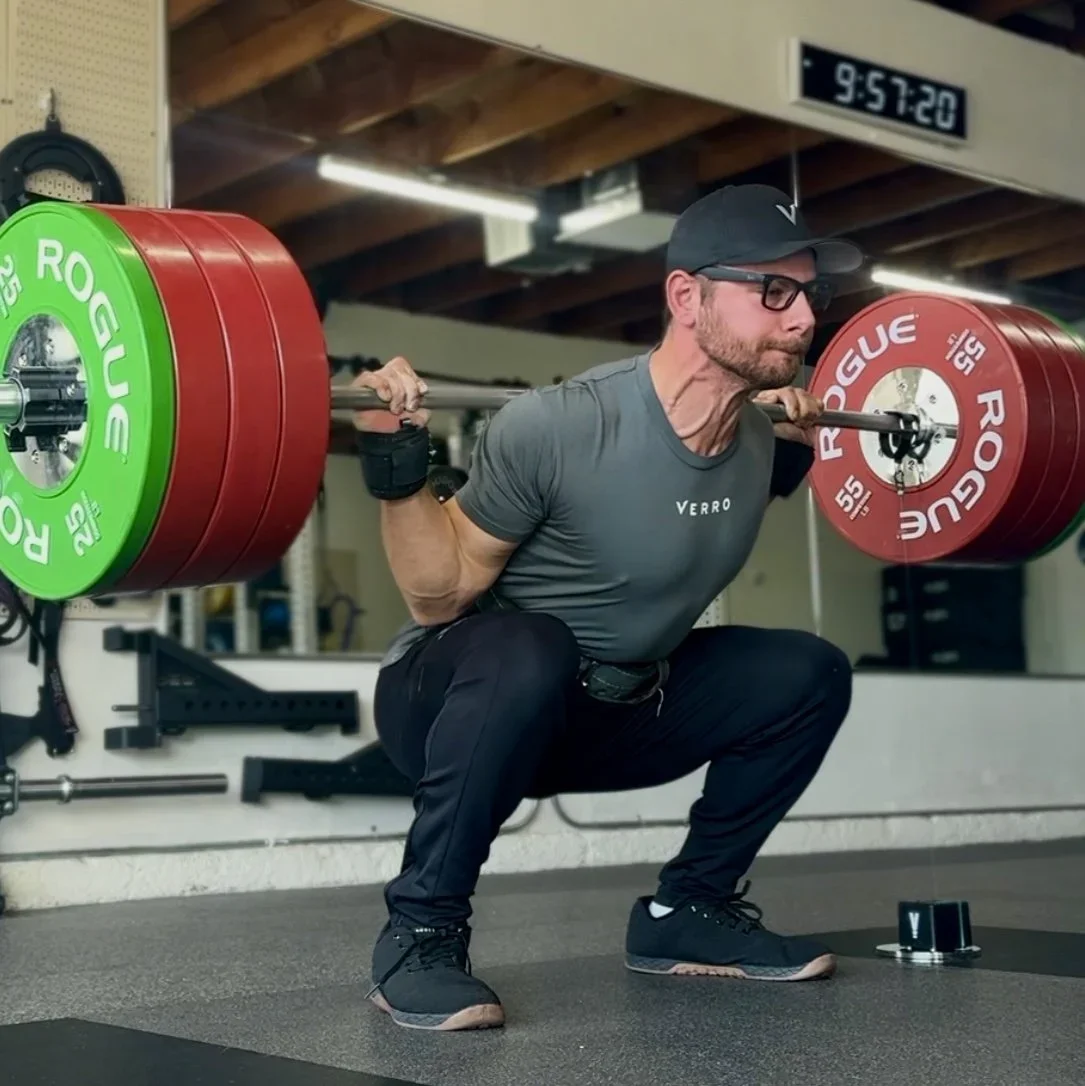
One outcome was maximal voluntary isometric force on a leg-press test. Compared with the relevant comparison groups, the heavy-squat group improved about 14.5%, versus 5.2% in the squat-jump group; the heavy group also outperformed sprint-only control. The moderate-load squat group improved about 10.6% and exceeded control. The percentages describe this experiment’s measured test, not a promise of identical increases in the squat one-rep maximum or muscle size.
The researchers also measured dynamic rate of force development in a squat task, which concerns how rapidly force rises. The heavy and moderate-load groups improved approximately 37.4% and 36.0% respectively relative to the control comparison. Both therefore appear to have changed more than simple endurance or familiarity with the testing schedule. But it would be wrong to turn nearly equal percentages into proof that either approach is superior for every lifter or that those figures represent muscle hypertrophy.
The practical distinction is easier to see in a training log. A heavy four-rep set requires repeatable bracing, adequate rack safeties and substantial rest. A moderate eight-to-twelve-rep set makes room for more local fatigue and technique practice under load. Both can teach a less experienced athlete to produce force through the legs. If your bar speed collapses or the torso shifts unpredictably, adding weight for the sake of copying a published percentage undermines the purpose. Progression needs to preserve the movement you intend to train.

Equipment Worth Exploring
Explore equipment, accessories and gear from our carefully selected range.


Competition Plates
Competition-style bumper plates for Olympic lifts and loaded strength training.


Pro Sled System
Heavy-duty push-pull training sled for loaded conditioning, speed, and strength work.


Leg Press/Hack Squat BPR-790
Convertible 45-degree leg press and hack squat machine with a broad footplate and band pegs.

Foldable Wall Rack
Wall-mounted folding squat rack designed to save floor space between workouts.

GymPin Squat Wedges
Non-slip 15-degree squat wedges help elevate the heels for deeper quad-focused squats.
The sprint advantage was measured in fractions of a second
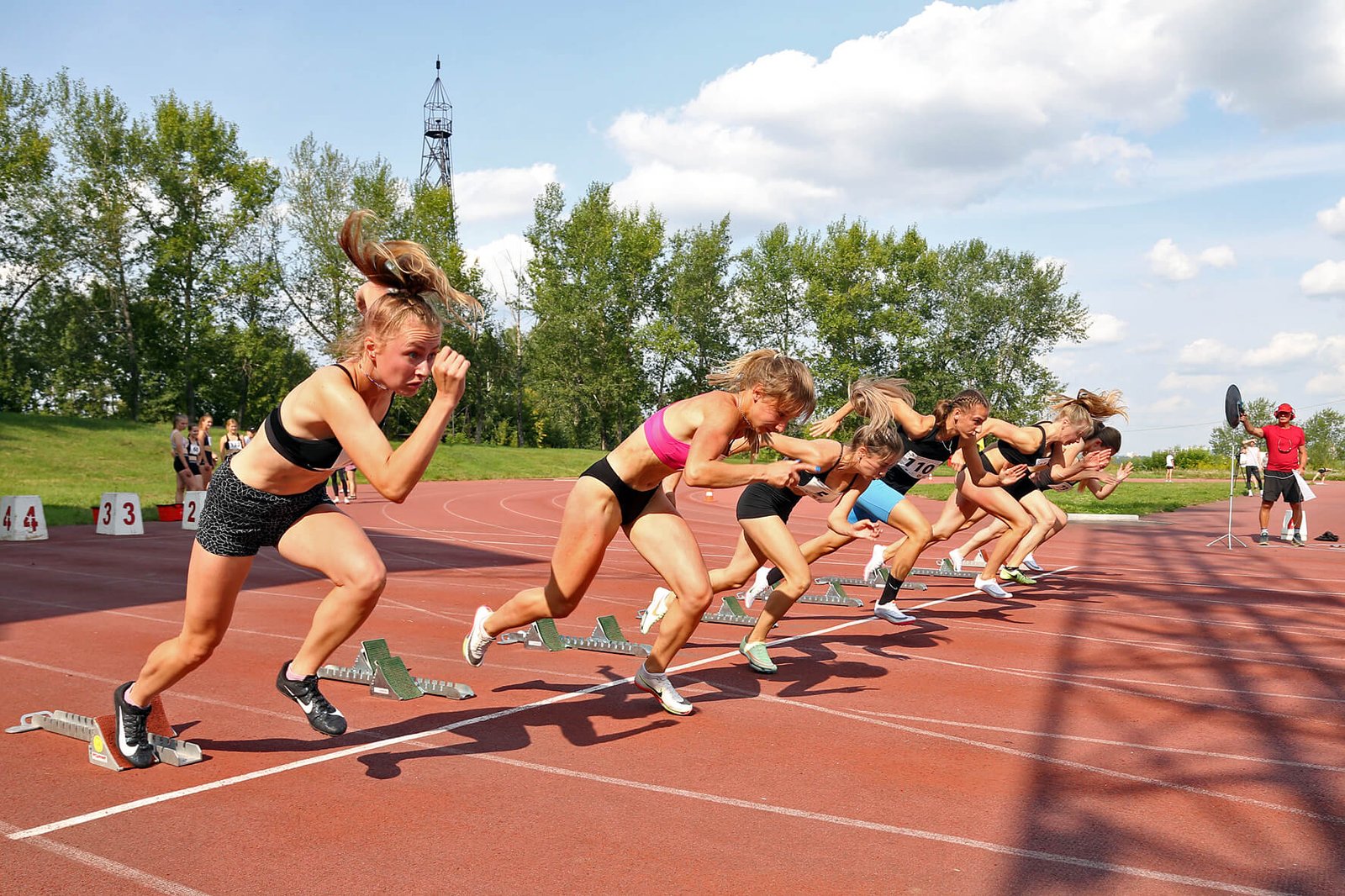
For the 0–25-meter test, sprint times improved more than in control by roughly 0.11 seconds after heavy squats and 0.10 seconds after moderate-load squats. These figures are differences in improvement versus the sprint-only group; they are not the participants’ absolute final times. On a short acceleration test, a tenth of a second can matter. Yet a short test also magnifies the importance of how acceleration, start instructions and timing are standardized.
Why might squats help? Early acceleration demands force applied against the ground at the right time and direction. Improving general force capacity can support that job, while actual sprinting teaches the body to use force at running speeds. The association between gains in maximal isometric force and performance changes in the trial is consistent with that explanation. It does not prove an isolated biological mechanism or tell us which exact muscle caused the change.
Broader work on team-sport sprint training has found that resistance training, plyometrics and sprint-specific approaches can all improve performance, often with overlapping effects. The cleanest interpretation is not “heavy squats replace sprinting.” It is “for these participants, adding substantial squat work to shared sprint practice appeared more productive than sprint practice alone.” This distinction matters if you train in a compact gym: a rack and a barbell may complement outdoor speed sessions, but they cannot reproduce the skill of accelerating along a track.

Powerlifting Shirts & Lifting Gear
Powerlifting shirts and gym gear for squat, bench and deadlift lifters who live for heavy numbers.

The Quadfather Leg Day Meme Top & T-Shirt
Bring “The Quadfather” humor to your next gym day.

8 Plates Squat Club : Essential Meme & T-Shirt
Make gym days more fun with “8 Plates Squat Club” style.

Squatbucks & Coffee Meme Leg Day, & Gains Top T-Shirt
Show some leg-day attitude with a playful “Squatbucks Gym & Coffee” tee.


Leg Day Thou Shalt Not Skip Leg Day Medieval Gym Crewne T-Shirt
Show some gym-day personality with “Leg Day”.


Deadlift Skull Cyberpunk Muscle Shirt for Powerlifting Tank Top
Bring “Deadlift Skull” humor to your next lifting session.

Don'T Fart Squats Decal Water Bottles & Weight Sticker
Give your everyday gear a playful “Don't Fart Squats” twist.

Squats Leg Day Heavy Weights Meme – Essential Top T-Shirt
Bring “Squats Leg Day Heavy Weights” humor to your next gym day.
Why the squat-jump result does not ban explosive work
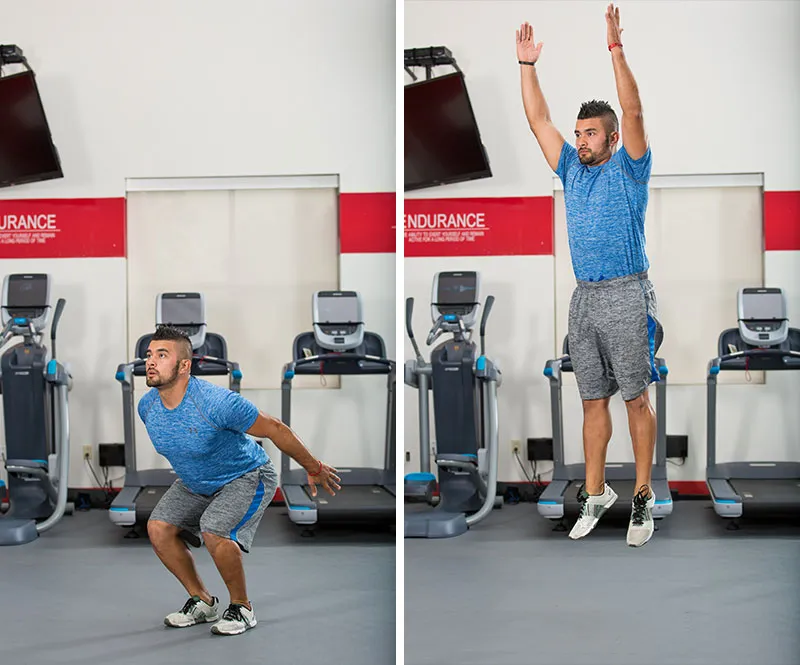
The bodyweight squat-jump group did not show the same additional benefits over sprint-only training on the main measures highlighted by the researchers. That is one of the more intriguing findings because jumps look closer to sprinting than slow heavy lifts do. Appearance, however, is not the same as adaptation: the useful training effect depends on the athlete’s starting abilities, the load, the number of contacts, the recovery and how the task is progressed.
These participants began without a strength-training background. A beginner may gain a great deal from simply developing a stronger force-producing base. Four short sets of bodyweight jumps can also be a relatively limited loading challenge as the weeks progress. The study does not establish that loaded jump squats, extensive plyometrics, hops, bounds or higher-quality technique coaching would all have failed. Nor did it test a deliberate combination of maximal squats and jumps against either alone.
Separate syntheses in team-sport athletes report improvements from squat training, jump training and combinations, with uncertainty and overlapping outcomes. That is a different population and body of evidence from this one exploratory trial. Use squat jumps when you can land quietly, maintain alignment and perform explosive repetitions without a large decline in quality. They can be useful accessories or standalone power work; this experiment simply did not show that this particular jump-only add-on exceeded the benefit of sprint practice on the same tests. A careful coach resists turning one negative between-group result into a universal ban.
Cycling power and running economy told a parallel story
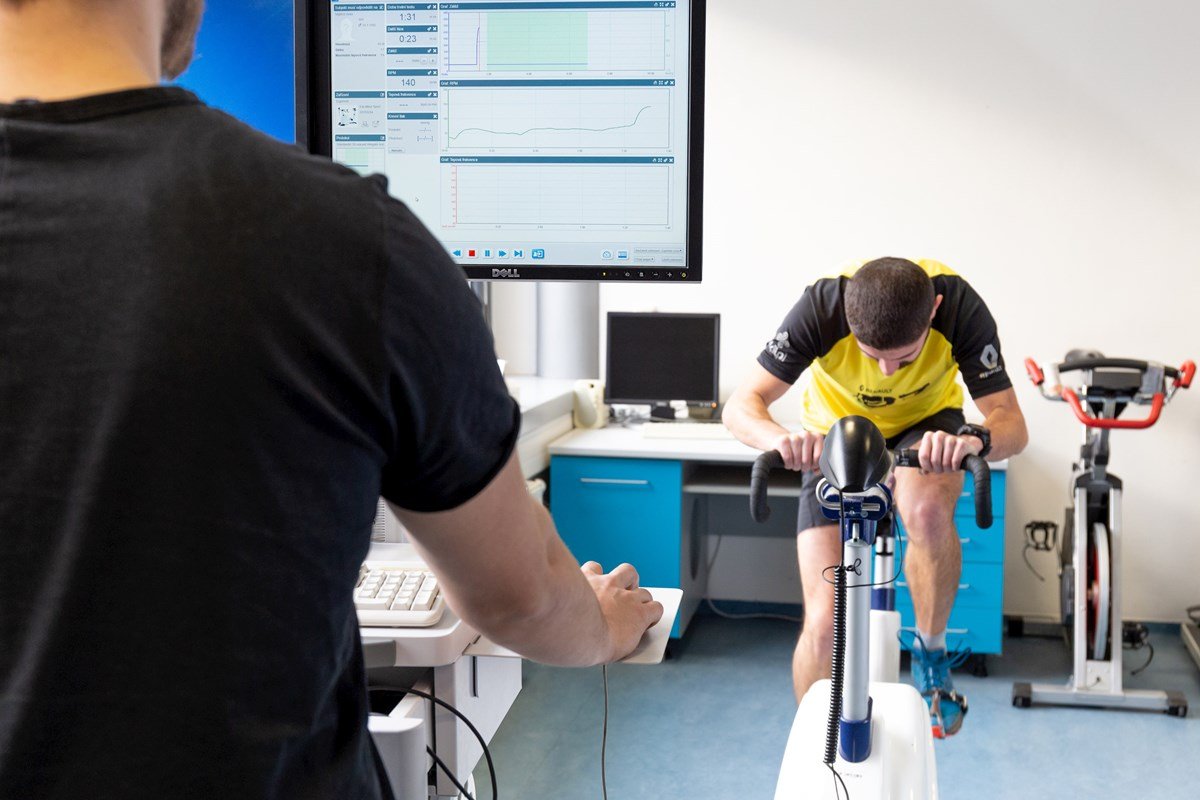
The laboratory tests extended beyond sprint times. On a 30-second Wingate cycling test, average power improved about 6.6% in the heavy-squat group and 6.9% in the moderate-load group, both greater than the sprint-only and squat-jump comparisons. Peak power improved roughly 11.8% and 10.1%, respectively, compared with sprint-only control. Those values refer to power on a cycling ergometer, not a claim that participants increased cycling race speed by the same percentages.
Running economy also improved more with heavy squats, by about 2.5% relative to control. Economy is a different property from all-out acceleration, and a change in an economy-related laboratory measure does not guarantee the same improvement in a 5K race, a football sprint or a running event. The researchers reported several types of physiological performance because strength can transfer in different ways, not because every outcome can be collapsed into one “athleticism score.”
This is why it helps to track both the exercise and the target skill. Record squat load and rep quality, but also record a fixed-distance sprint using comparable shoes, terrain and timing procedures. If conditioning matters, use a separate repeatable test rather than assuming a faster barbell lift is proof of greater aerobic endurance. The result points to useful cross-training possibilities; it does not erase specificity.
Equipment Worth Exploring
Explore equipment, accessories and gear from our carefully selected range.

Multi Pull Smith Rack MPHR-780
All-in-one rack with a Smith machine, functional trainer, lat pulldown and low row.

VForce 3IN1 Max
Six-post all-in-one rack with Smith machine, functional trainer, and variable-force cables.

VForce 2IN1
Half rack and pivot-arm functional trainer with switchable 1:1 and 2:1 pulley ratios.


Open Hex Bar
Open-frame trap bar with multiple handles for deadlifts, carries, and lower-body training.


Compact Leg Press CLP-700
Compact reverse-style leg press with a moving seat carriage and an adjustable footplate.

Slam Ball
Low-bounce weighted slam ball for explosive throws and high-intensity conditioning.
A practical eight-week plan needs a margin for recovery
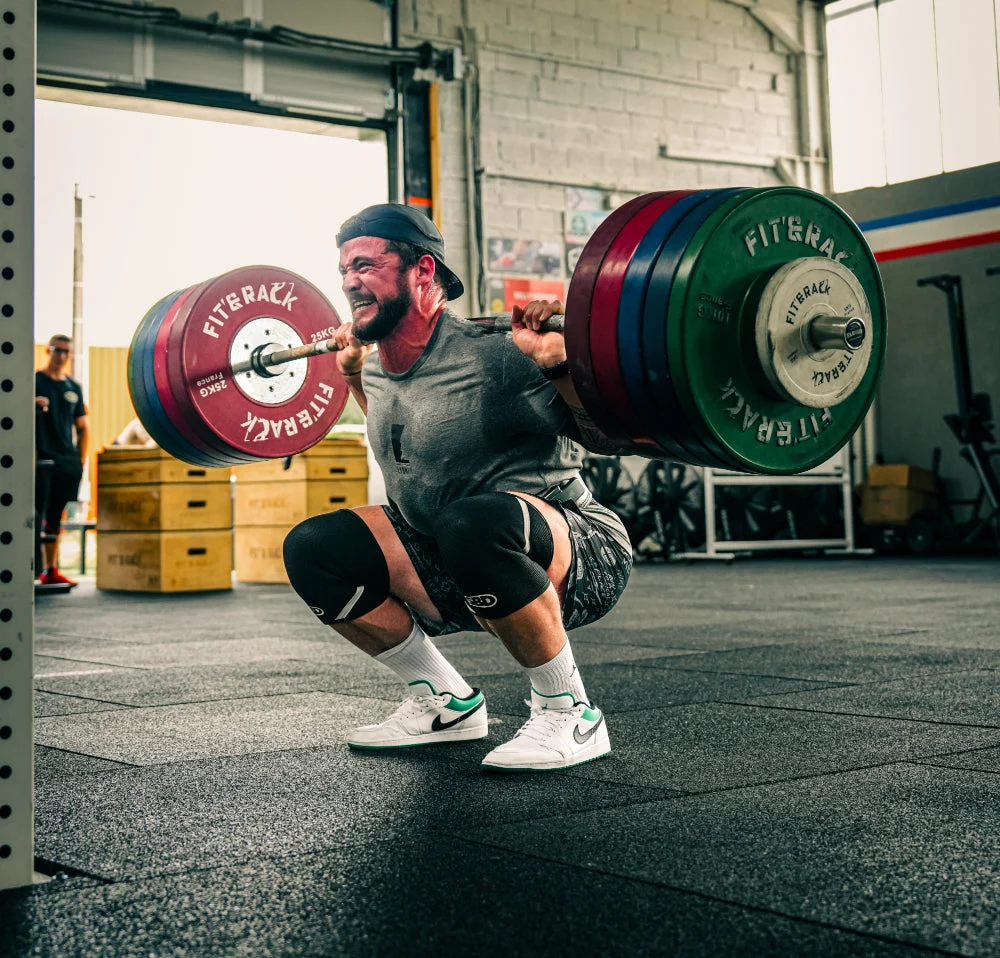
There is no requirement to copy three weekly squat sessions immediately. For a lifter new to sprinting, it is more sensible to establish technique, sensible acceleration volumes and recovery first. One practical starting framework is two carefully warmed-up acceleration sessions each week, plus two squat-focused strength sessions on days that allow recovery. A heavy-oriented session could begin with a few crisp sets of three to five repetitions below technical failure. A second session could use moderate weight for controlled sets of six to ten. Increase the challenge gradually only when your next session still looks like athletic training rather than damage control.
Put a full warm-up ahead of fast sprints: progress from brisk movement and easy running through drills and short build-ups before asking for near-maximal acceleration. Start with fewer runs than the research protocol if 12 hard 25-meter efforts in a week is already a big jump for you. Stop a sprint set when mechanics deteriorate or a hamstring feels wrong. The same logic applies in the gym: choose secure rack safeties, leave usable repetitions in reserve and do not force a squat depth or bar position that you cannot control. A leg press may offer another strength option, but it was a testing exercise in the study, not proof that leg pressing reproduces the squat intervention.
Review progress at weeks four and eight against the measures that matter to you, not just body soreness. If lower-body strength is rising but short sprint performance stalls, inspect fatigue, sprint frequency, and whether your starts are consistent. If sprint work improves but knee or Achilles symptoms accumulate, reduce the dose and seek appropriate assessment. Remember who was studied: 58 recreationally active but non-strength-trained adults in a short exploratory experiment. The authors explicitly cautioned that the between-group analyses, including Fisher’s least significant difference post hoc tests, should be viewed as hypothesis-generating. It is a reason to test a well-structured strength-and-speed pairing, not a reason to declare heavy squats universally superior to jumps for elite athletes.
Funny Gym Shirts & Workout Gear
Funny gym shirts, tanks, hoodies and workout gear for lifters who like training hard.

Hybrid Athlete Strength & Endurance Tank
Add some lifting attitude to training with “Hybrid Athlete”.


Track Panther Crewneck Pullover for Running Workout Fan T-Shirt
Keep things casual with a little “Track Panther” attitude.

Cardio Speed Superhero Gym Funny Treadmill Running Hood Hoodie
Make your off-duty look more fun with “Cardio Speed Superhero”.


Anti Running Club Tee
Heavy lifts, good laughs, and a little “Anti Running Running Club” energy.

Meme Shirt – Two Things I Like Lifting Weights Not T-Shirt
Make gym days more fun with “Two Things I Like Lifting Weights Not” style.

Skip Cardio Exit Cardio Meme Decal Water Bottles & Sticker
Put “Skip Cardio” gym humor on your laptop, bottle, or gym gear.

Triathlon – Iron Man Medieval Knight Muscle Shirt for S Tank Top
Bring “Triathlon” humor to your next lifting session.

Jigsaw'S Cardio Killer Spin Bike Horror T-Shirt
Show some gym-day personality with “Jigsaw's Cardio Killer Workout”.