Advertising disclosure: This page includes affiliate product links that may earn us a commission, as well as products from our own store.
The Westside Scout Hyper asks a practical question before a training one: can a dedicated reverse-hyper machine fit your room and your routine without becoming an obstacle between workouts? Its defining feature is a folding frame rather than a promise of instant back relief. Used correctly, the machine gives you a supported way to move the legs behind the torso against a swinging load. But fit, stability, plate clearance, loading control and storage matter as much as the exercise itself. Here is how to assess the Scout specifically, then make a modest training plan without borrowing elite lifters’ weights.
Know the Scout Hyper’s mechanism before comparing machines
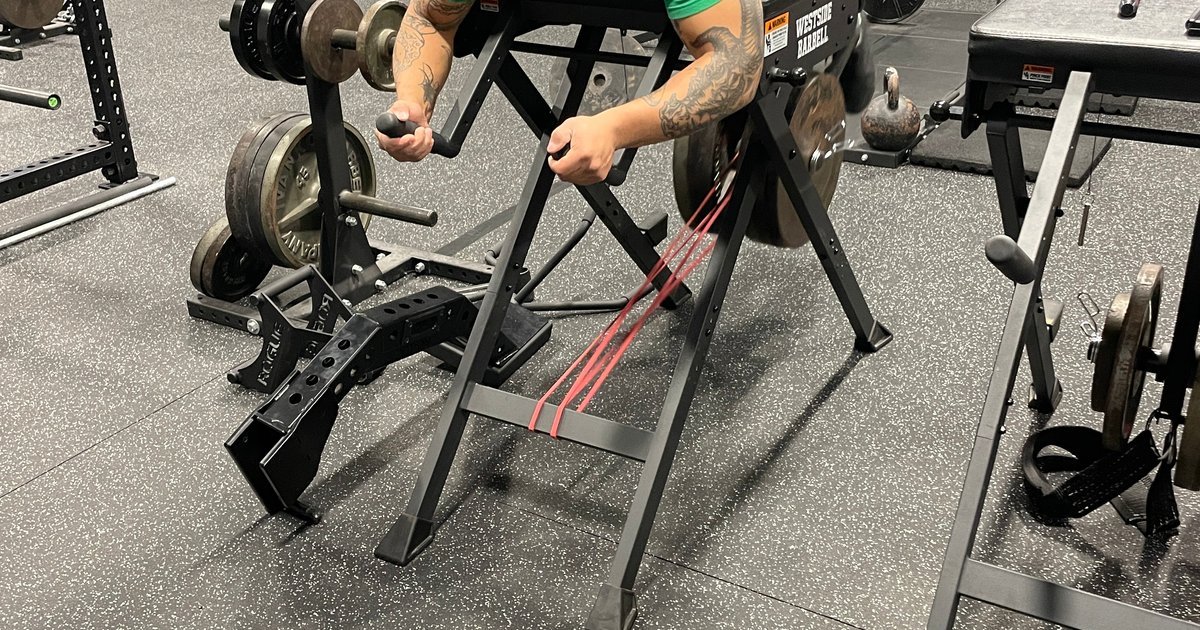
A reverse hyper changes which part of the body moves. On a conventional 45-degree back-extension station, your feet are anchored and your upper body pivots around a supported hip position. On the Scout, your abdomen and hips rest on a high pad while the legs hang off one end, attach to a nylon strap and travel through an arc as a weighted pendulum moves. Both can train hip extension, but matching a plate number between the two would not mean matching the mechanical demand.
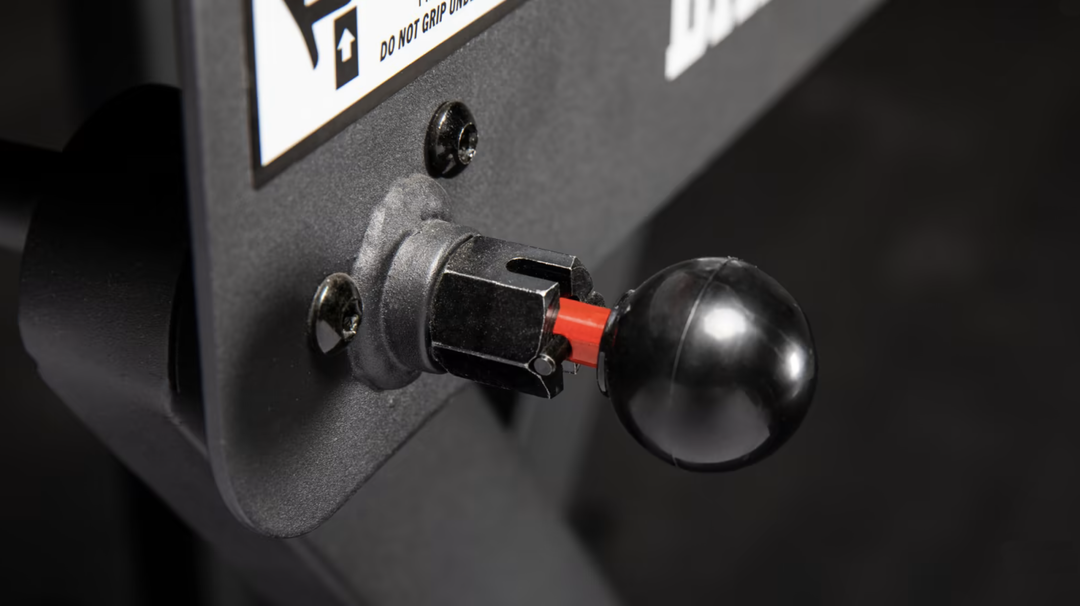
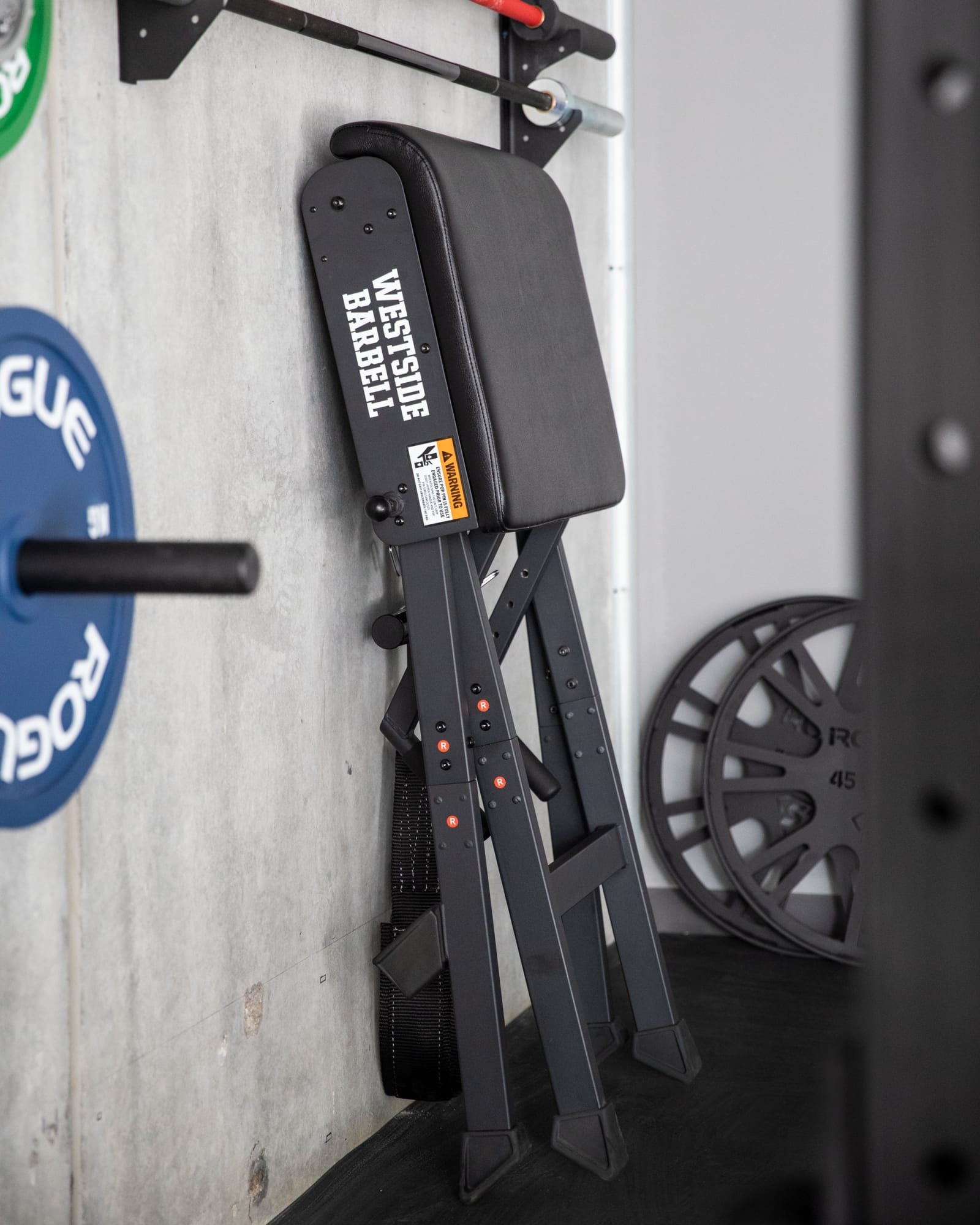
The Scout is a specific folding design from Westside Barbell, sold by Rogue, rather than a full-size reverse-hyper frame with a small footprint. Its four angled support legs lock in their deployed position with pop pins; the front handles and rubberized step are part of the way you mount and hold position. Before treating it as workout equipment, inspect the pin mechanism, bolts, feet and pad. If a leg is not fully locked, loading plates or trying an empty repetition is the wrong first step.
The supplied strap and pair of spring collars should be present when you unpack the machine. The strap supports the lower legs as the pendulum travels; the collars secure plates on the two loading posts. There is no motor and no digital resistance setting. A heavier plate changes the force requirement, but so do the position and speed of the swing. If a picture shows a standard fixed-frame reverse hyper or someone extending the torso off a back-extension bench, it is not an exact demonstration of this model’s setup.
There is a useful distinction between the movement’s reputation and the evidence. Small short-term biomechanics and muscle-activation experiments have reported differences between reverse hypers and conventional extensions, but their measurements are not proof that the Scout treats or prevents a back condition. More muscle activity in a few repetitions does not establish better muscle growth over months. For healthy lifters, treat it as one possible posterior-chain accessory, not as a replacement for medical assessment or a required piece of equipment.

Equipment Worth Exploring
Explore equipment, accessories and gear from our carefully selected range.



45° Hyperextension HPX-650
Angled back-extension trainer with split padding, a ribbed footplate and resistance-band pegs.

Glute Ham Developer GHD-820
Adjustable glute-ham developer with contoured pads and a fold-out knee support.

Leg Extension/Curl BCO-780
Leg extension and lying leg curl combo with plate loading, band pegs and a cable-loading option.

Studio Glute Drive
Plate-loaded hip-thrust machine with supported back pad and adjustable foot platform.


HUSLA Leg Extension Pad
Pad attachment designed to increase usable range of motion on compatible leg-extension machines.

Studio V-Squat
Plate-loaded V-squat machine for supported lower-body strength training.
Measure the open footprint, not just the folded depth
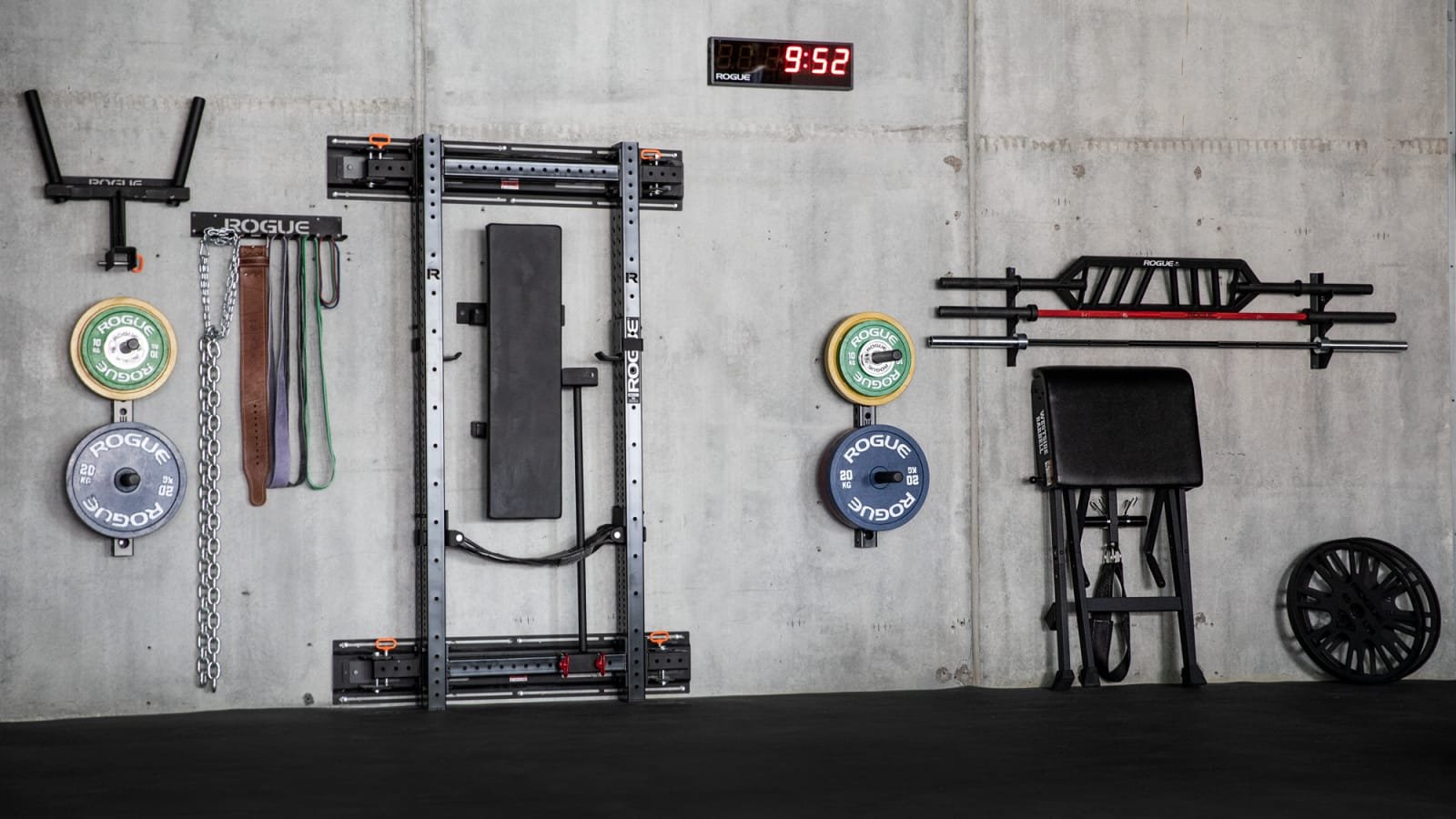
The Scout’s storage pitch is attractive for a compact gym: the manufacturer lists just 13 inches of total depth when folded. That number is not the space it occupies when ready for repetitions. The published unfolded footprint at the feet is approximately 60 by 27.5 inches. Its overall width can reach 32 inches including the pop pins, and the pad top is roughly 46.5 inches high. A separate 38-inch depth figure including the arms describes another dimension of the assembled unit. These numbers refer to different reference points, so do not use the smallest of them to draw your floor plan.
Measure an actual working rectangle. You need space to approach the step, put your weight on the pad, swing the feet without striking another station, and unload plates while still standing comfortably. A rack or wall beside the unit can shrink the usable movement corridor even when the feet technically fit. Tall or long-legged lifters should pay particular attention to their leg path, reach to the handles and how the pad meets the torso; a specification sheet cannot guarantee comfortable proportions for every person.
For storage, the legs fold using the pin system and the frame tilts into a much narrower profile. That does not mean it should simply be left upright in the middle of a room. The product guidance recommends laying it flat, or if it is upright, leaning it safely against a wall and keeping it out of children’s reach. It remains a roughly 94.5-pound machine when unloaded, not a lightweight suitcase. Think about how often you will realistically move it and whether the floor is suitable for repeated folding and placement.
Before purchasing, tape off both the deployed and storage outlines. Walk around them with your normal dumbbells, bench or loading plates in place. If you have to slide a heavy rack every time you want to use the Scout, its folding feature has not actually solved your daily workflow. And if you intend to leave it set up permanently, compare it against larger, non-folding reverse hypers on ergonomics and price rather than valuing compact storage you will never use.

Powerlifting Shirts & Lifting Gear
Powerlifting shirts and gym gear for squat, bench and deadlift lifters who live for heavy numbers.

Legday – Squats & Deadlifts , Meme Top Bros & T-Shirt
Bring “Legday” humor to your next gym day.


Bending Bars Meme – Barbell Squat Bench Deadlift, & T-Shirt
Heavy lifts, good laughs, and a little “Bending Bars Gym Meme” energy.

Heavy Enough Tee
Bring “If You're Not Scared It's Not Heavy Enough” humor to your next gym day.

Deadlift Lovers Grim Reaper Sweater Powerlifters & T-Shirt
Add a playful “Deadlift Lovers Grim Reaper” touch to your casual rotation.

Deadlift Purple Skull Gym Shirt for Powerlifters Heavy T-Shirt
Make gym days more fun with “Deadlift” style.

Deadlift Snake Skull – Hardcore Powerlifting Muscle Shi Tank Top
Bring “Deadlift Snake Skull” humor to your next lifting session.

The Ultimate Deadlifter Jesus Christ – Deadlifts Liftin Sticker
A fun “The Ultimate Deadlifter Jesus Christ” touch for bottles, laptops, and lockers.

Coffee Shots & Heavy Squats for Leg Day, Lifting and Fi Tank Top
Add some leg-day attitude to training with “Coffee Shots & Heavy Squats”.

Heavy Metal Skeleton Squat for Powerlifting, Bodybuildi T-Shirt
Show some gym-day personality with “Heavy Metal Skeleton Squat”.
Check the strap, plates, clearance and personal fit
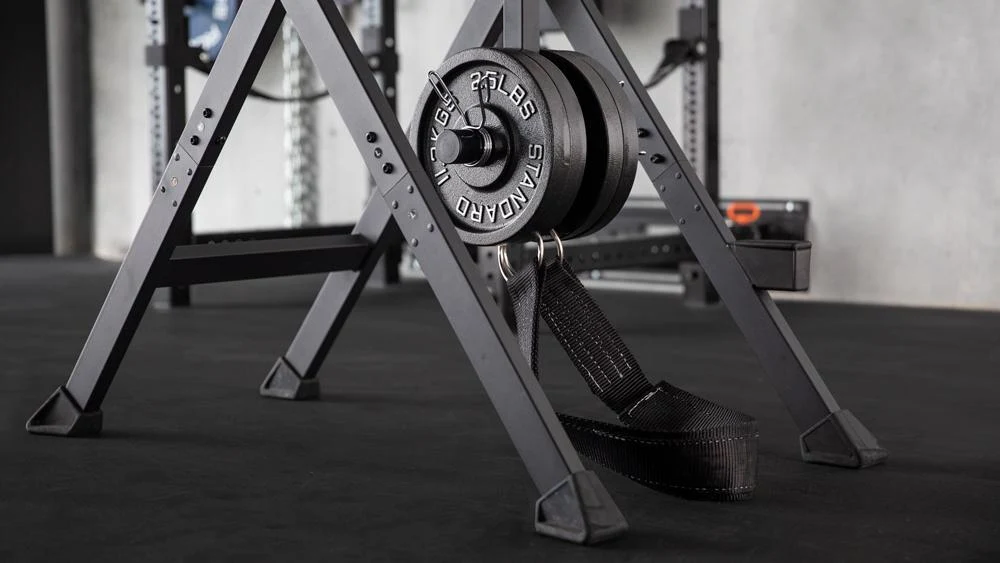
The moving load is not a barbell in your hands; it is carried on two short weight posts near the swinging arm. Each post offers about 5.25 inches of loadable length. That creates a practical distinction between the rated swing-arm capacity and what your particular plates can physically fit. Thick bumpers may exhaust the post sooner than thinner iron or calibrated plates. The maximum published swing-arm loading is 176 pounds, while the separate listed maximum user weight is 300 pounds. These are limits for different parts of the setup, not a target workout prescription.
Use matching plates on the two sides, seat the collars securely, and keep straps free from awkward twisting. A lightly loaded arm with secure collars is more useful than an impressive plate stack that can shift during the swing. Before climbing up, observe whether the plates can clear the supports, floor, nearby objects and your legs throughout the movement. If you have mixed-diameter discs, double-check the path: a small change in effective plate size can turn previously safe clearance into a collision.
The pad is approximately 27.5 inches wide, 21.5 inches deep and two inches thick, with rounded edges. There are six-inch handles, with an optional bolt-on extension kit for those who need a different reach. Fit is individual: a person who can hold a stable torso without crushing the front of the hips is better positioned to repeat controlled reps than someone constantly sliding on the pad. Set the abdomen and pelvis on the support without pushing hard into a painful spot. Keep the hands securely on the handles without tugging yourself forward to force extra leg height.
The nylon hyper strap, step, collars and rubber feet are part of the purchase checklist rather than cosmetic accessories. If buying used, inspect fraying, stretched stitching, damaged pins, loose fasteners and worn feet. Price the replacement parts or handle extension, not only the machine itself. If plates, collars and a safe unloading aisle are already scarce in your gym, acquiring the Scout without those details resolved might create an expensive storage problem.
Equipment Worth Exploring
Explore equipment, accessories and gear from our carefully selected range.


Competition Plates
Competition-style bumper plates for Olympic lifts and loaded strength training.

Grip Plates
Rubber-coated weight plates with handholds for loading barbells and machines.

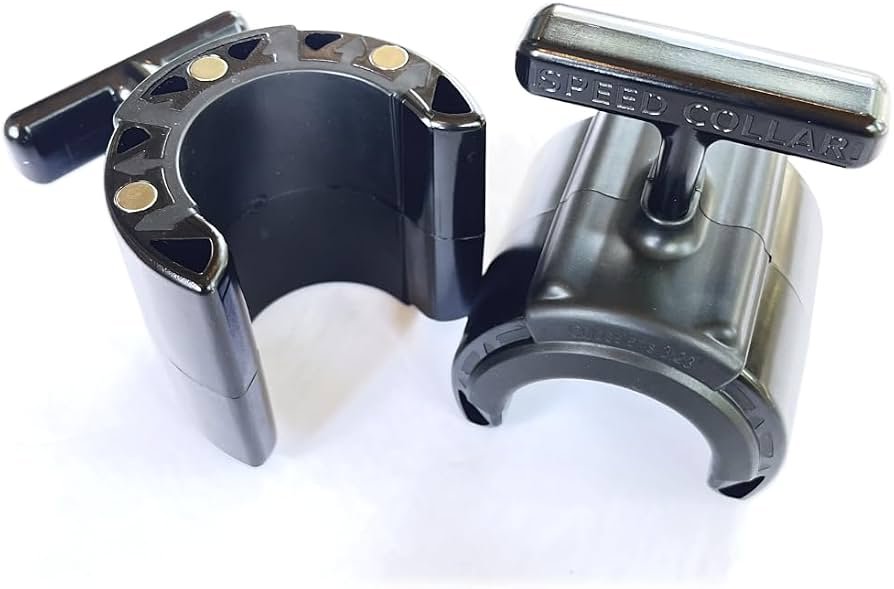
Speed Collar
Quick-release collars designed to secure weight plates on standard two-inch Olympic bars.
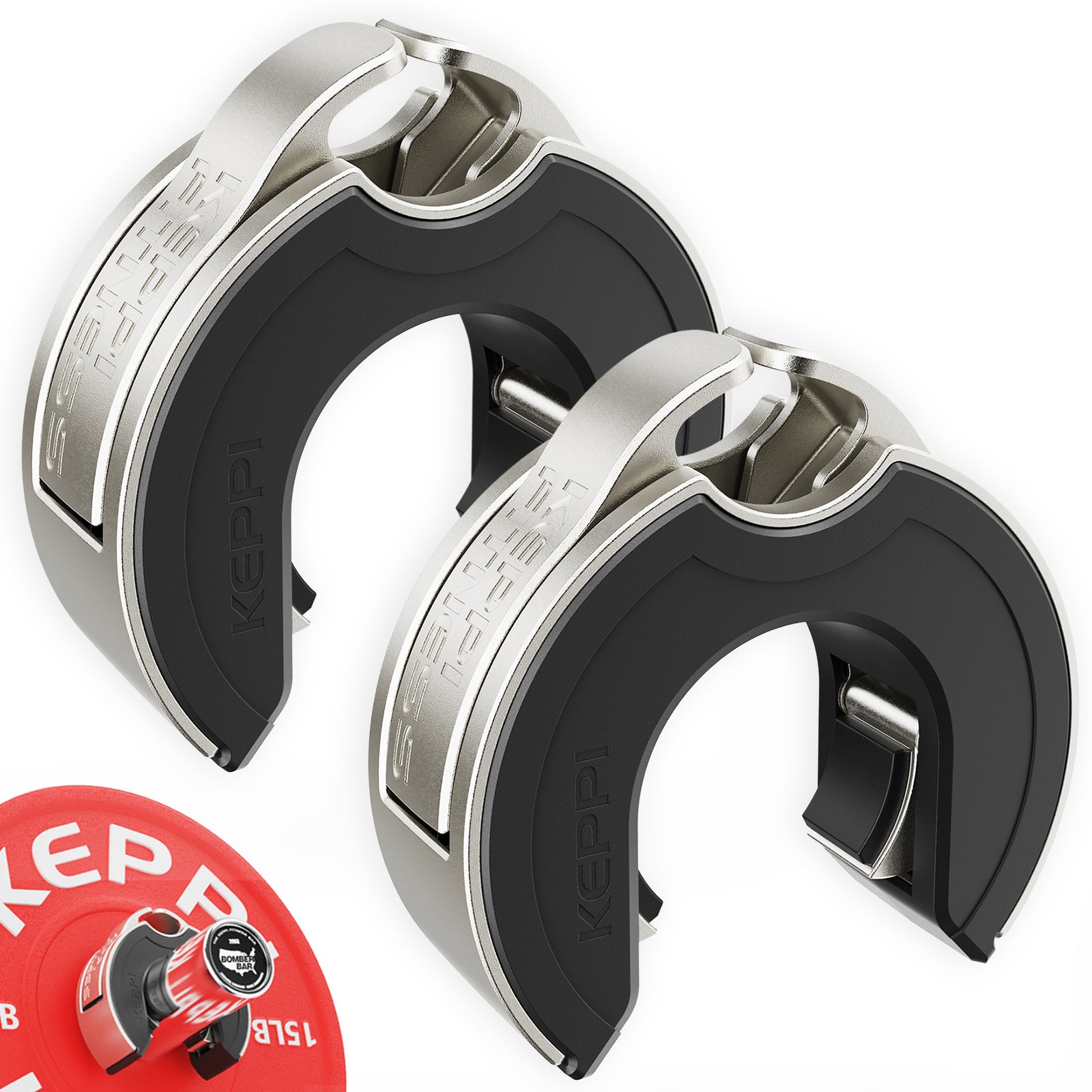
Keppi Open Collars
C-shaped magnetic Olympic barbell collars with a quick-lock mechanism and grippy lining.

Foldable Wall Rack
Wall-mounted folding squat rack designed to save floor space between workouts.
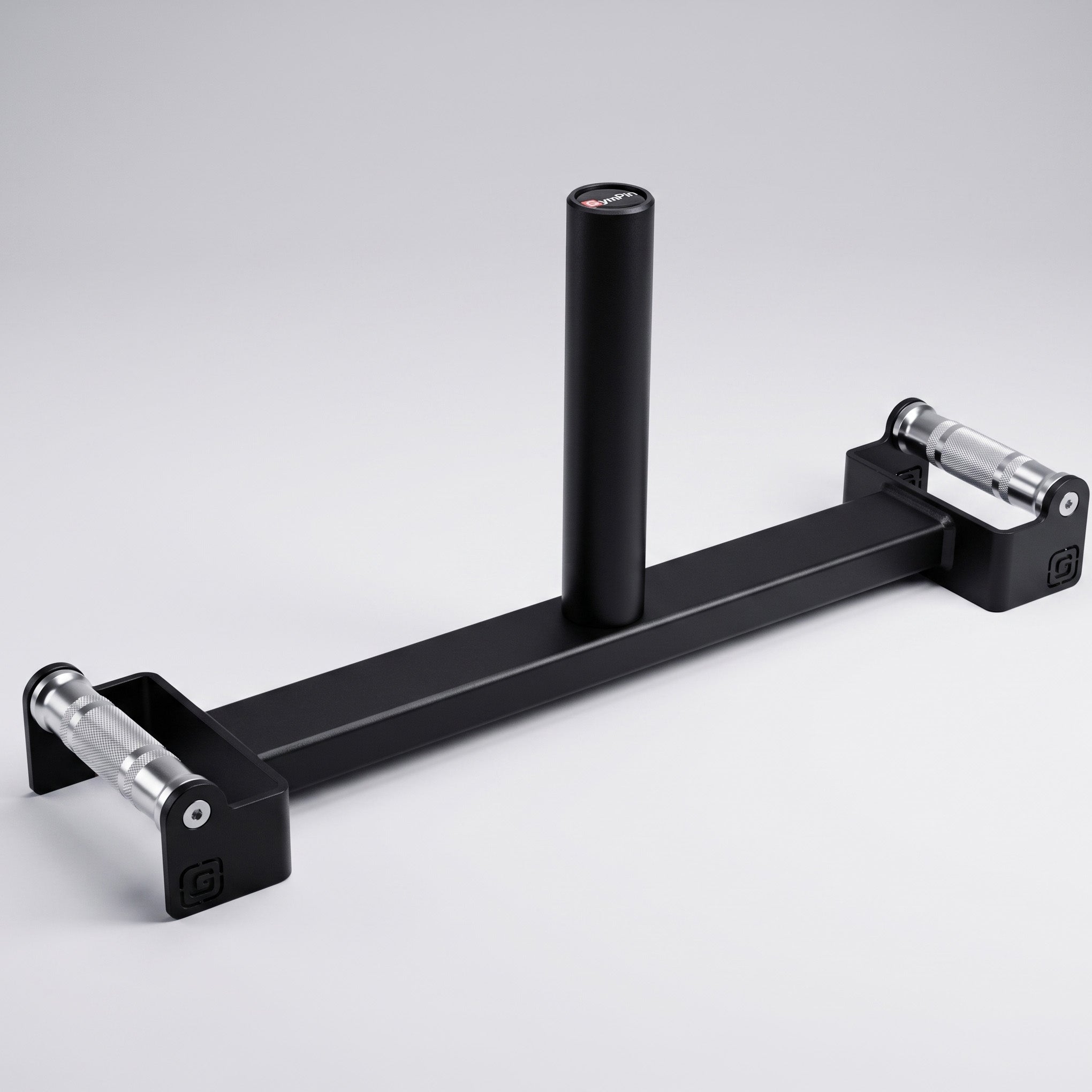
GymPin Hyper Loader
Central Olympic-plate loading attachment for weighted hyperextensions.

Make the first repetitions controlled enough to learn from
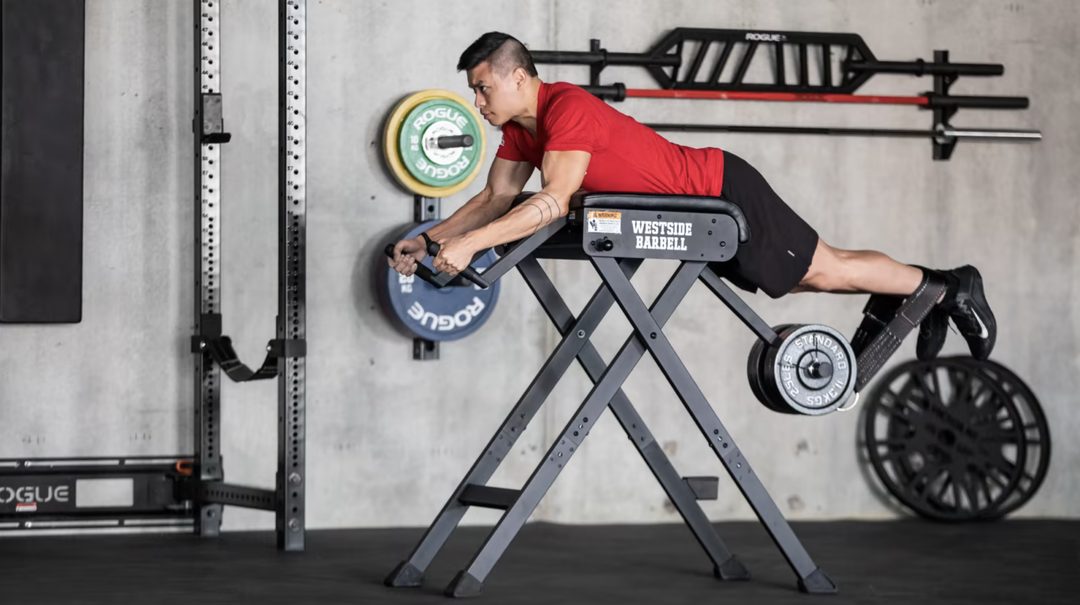
Start with a fully locked and stable machine and a small or unloaded resistance setting that you can control. Use the step deliberately, settle the torso on the pad, place the legs through the strap and hold the handles. The movement is initiated at the hip: extend the legs behind you while the torso remains supported, then allow the legs to descend under control. The goal is a consistent arc rather than an abrupt launch followed by an uncontrolled pendulum.
Do not confuse a visible swing with an instruction to throw the load. Some experienced lifters intentionally use rhythm as part of their system, but a beginner should first learn whether they can stop and restart the arm without being pulled off the pad. Practice a few smooth repetitions, pause, and ask whether you felt the hips doing meaningful work while the pad and handles stayed stable. If the machine rocks, the strap slips or you are kicking to reach an extreme position, simplify the task.
Perhaps the most important repetition is the last one. Do not jump from the machine while the swing arm is still moving. Let the pendulum slow to a complete stop, remove your legs from the strap carefully and dismount using the step. Leave the plates secured until the arm is at rest. Check that children, pets or other gym users cannot wander into the pendulum path. Equipment with a moving weight below the pad deserves the same attention to other people as a loaded barbell does.
Reverse hypers work through hip motion, but they are not automatically comfortable for every back or hip. Stop if you feel sharp pain, neurological symptoms or discomfort that increases with each repetition. You can reduce the load and range, substitute a different posterior-chain exercise, or seek qualified guidance when symptoms persist. This guide is about a training accessory for otherwise healthy adults, not a rehabilitation diagnosis. A useful learning set should leave you able to tell the difference between muscular effort and a position you are forcing.
Program the accessory—and decide whether it earns the floor space
The biggest programming mistake is borrowing a famous lifter’s percentage and treating it as a universal starting load. Training systems that use reverse hypers heavily sometimes prescribe substantial plate weight relative to the squat, but that is context, not a prescription for an unfamiliar user. For the first two weeks, choose a resistance that permits perhaps two sets of eight to twelve controlled repetitions, with enough effort to notice the hip extensors but no pressure to chase failure. An empty-arm trial may be the correct first session. Record the plates, repetitions, pace and whether the frame stayed stable.
In weeks three and four, you could add a third set, modest repetitions or a small plate increment, but not all three at once. Try the movement after squats or deadlifts on one day and compare fatigue with a session where you place it earlier. Some lifters find a light warm-up useful; others prefer it as accessory work after the main sets. What matters is whether it fits your wider training volume and whether a change gives you a repeatable, tolerable result rather than simply a more dramatic swing.
Compare alternatives by the problem you actually need solved. A standard 45-degree back extension lets your torso move against gravity. A Nordic curl biases knee-flexion hamstring strength and does not duplicate the reverse-hyper action. A hip thrust or glute-drive machine emphasizes a different force path, and an RDL is a loaded hip hinge that adds demands on grip, balance and spinal positioning. These can complement each other, but no single machine is automatically essential to a complete posterior-chain program.
For a purchase decision, write down the available floor rectangle, your practical storage position, body fit, the plates and collars you own, the machine’s stated limits, and the total delivered price. Check current terms with the official seller; pricing, stock and regional shipping change. Consider whether you will actually unfold this approximately 95-pound unit several days per week. If it can remain safely accessible, the Scout offers a distinctive hip-extension accessory in a foldable package. If it has to be excavated from storage each time, a smaller accessory you use consistently may be a better investment.
Bottom line: judge the Westside Scout Hyper as both a training movement and a physical object. Lock the frame, make room for the swing, use a manageable load, let the arm stop before dismounting, and only then think about heavier work. The folding engineering is meaningful—but only when the complete use-and-storage routine works for your gym.
Leg Day Shirts & Workout Gear
Leg-day gym shirts and workout gear for lifters who never skip squats, lunges and lower-body punishment.

Never Skip Leg Day Squats & Deadlifts Meme , Top T-Shirt
Show some leg-day attitude with a playful “Never Skip Leg Day” tee.

Leg Day Squats Deadlifts Sweater Meme T-Shirt
Show some gym-day personality with “Leg Day”.

Not Recommended Leg Day 1 Star Review Squats Hoodie
Bring “Not Recommended Leg Day” gym humor to lazy days and post-workout plans.

Squats Leg Day Heavy Weights Meme – Essential Top T-Shirt
Bring “Squats Leg Day Heavy Weights” humor to your next gym day.

My Leg Hurts Leg Day Sweater & Squat Meme Lovers T-Shirt
Keep things casual with a little “My Leg Hurts” attitude.


I Love Squats | Leg Day Pink Heart Plate Decal Meme Sticker
Put “I Love Squats” gym humor on your laptop, bottle, or gym gear.

I Love Deadlifts Muscle | Pink Heart Weight Plate Vest Tank Top
Add some deadlift attitude to training with “I Love Deadlifts”.

Leg Day No Thanks – Skip Legday Meme , Squats & T-Shirt
Heavy lifts, good laughs, and a little “Leg Day No Thanks” energy.

Deadlift Pink Skull Muscle Shirt for Powerlifting Leg D Tank Top
Bring “Deadlift” humor to your next lifting session.