Advertising disclosure: This page includes affiliate product links that may earn us a commission, as well as products from our own store.
A stretching headline can make three different promises sound like one: bigger muscles, stronger legs and better balance. Those goals deserve separate answers. A 2026 couch-stretch experiment offers a useful example of how to read an exercise study without turning it into a replacement training plan. Start with the actual dose, identify what each test measures, then decide whether the result answers the question you care about. A surprising finding can be interesting without earning control of your next leg day.
1. Read the dose before borrowing the exercise
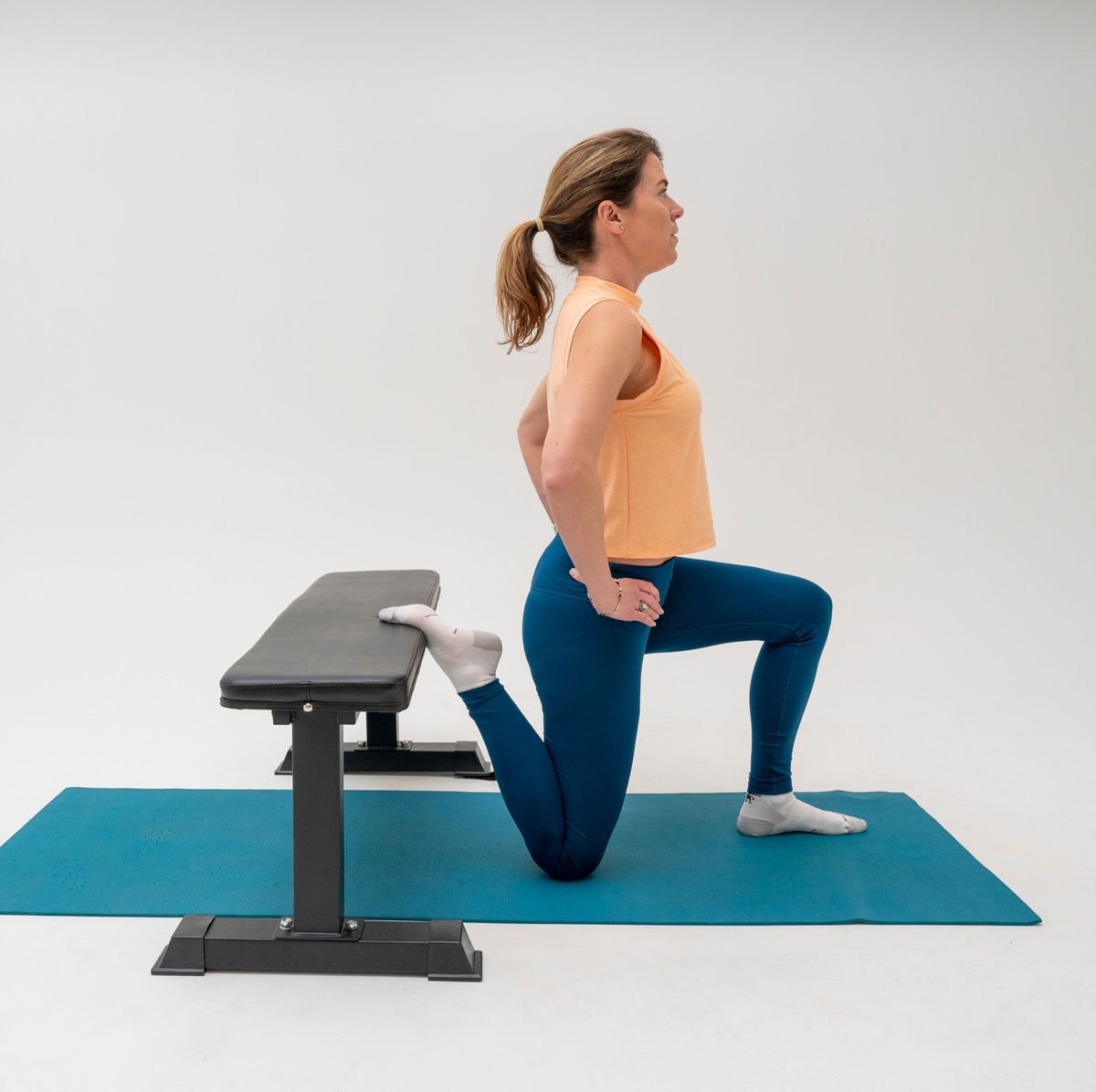
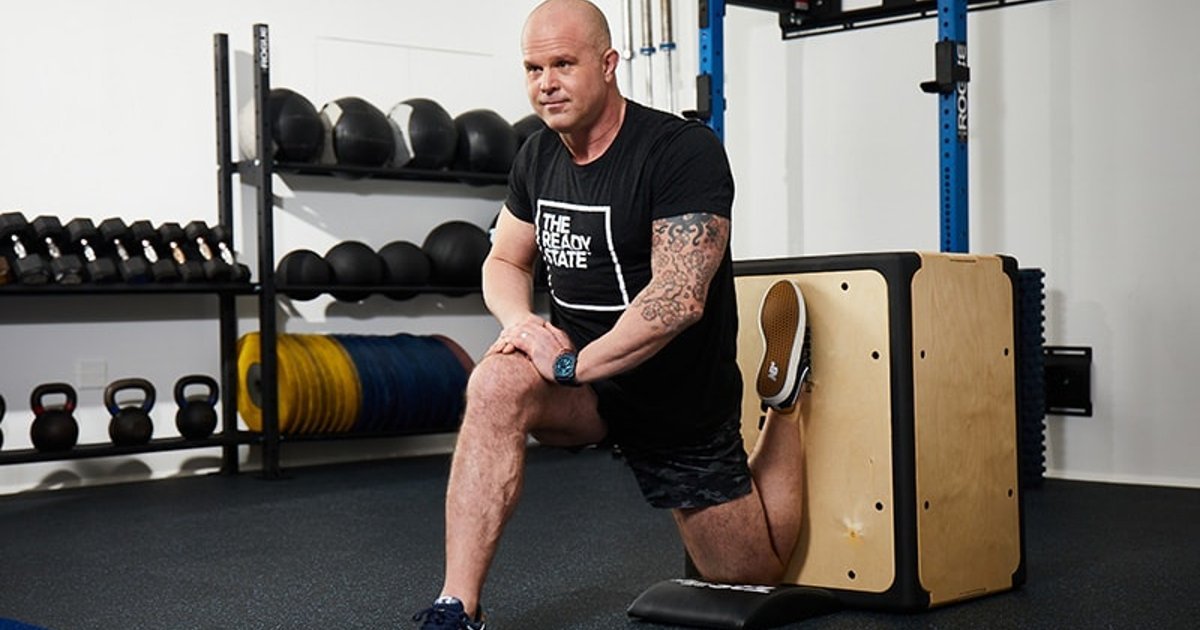
The study analyzed 49 recreationally active adults. Its intervention involved 12 supervised sessions over four to five weeks: three five-minute holds per leg, alternating sides. That adds up to 30 minutes of stretching per session. The prescribed intensity was high, targeting eight out of ten on a scale ending at maximal tolerable stretching pain.
That is a substantial experimental exposure. A brief stretch after a workout shares a position with the intervention, but a shared exercise name does not make the programs equivalent. Think of the difference between practicing a squat with an empty bar and completing a demanding squat program. Describing both as squatting leaves out the dose that gives the comparison meaning.
Before adopting any research-inspired routine, write down frequency, time per side, intensity instructions and supervision. These details reveal what you would actually have to change. They also help expose the cost: a long stretching session competes with lifting, walking, sleep or other activities in a finite week. A result alone cannot decide which trade is worthwhile for you.
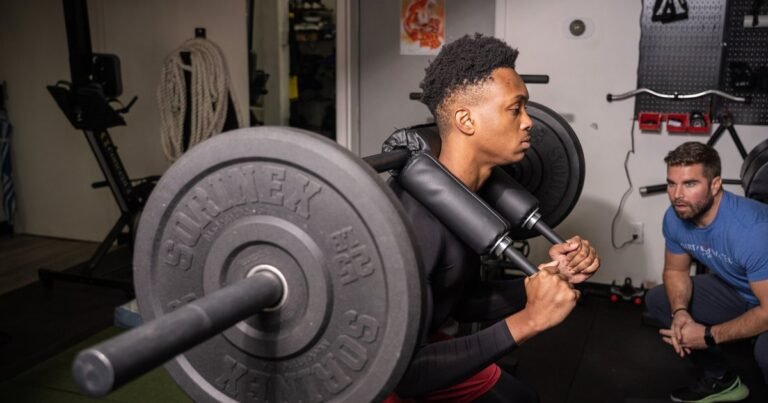
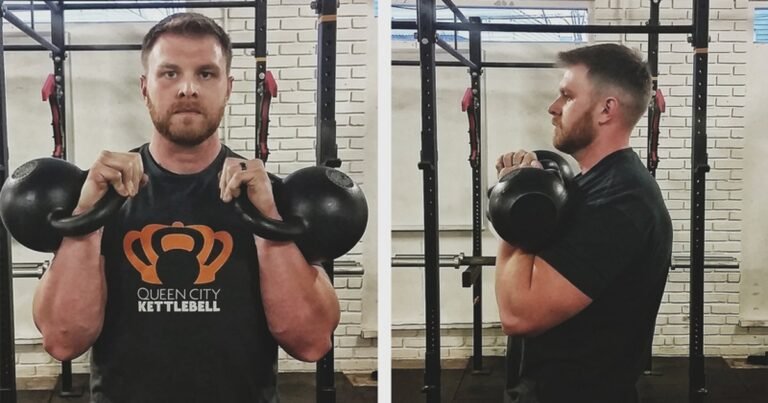
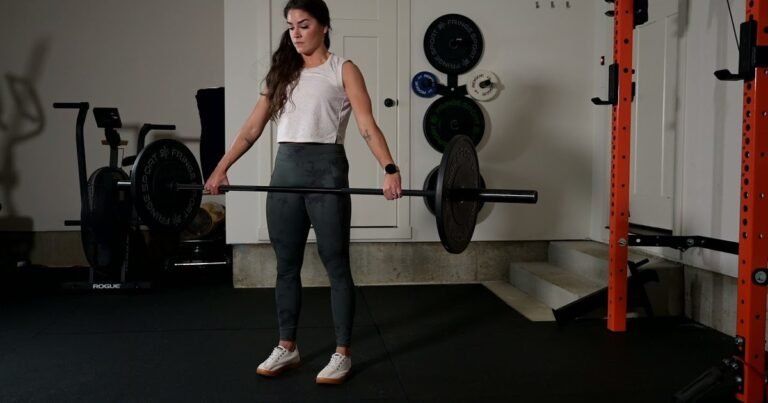
Do not turn the experimental pain target into a home instruction. For ordinary flexibility work, warm up first, move smoothly and aim for tension without pain. A difficult position is not automatically a better position. If discomfort makes you brace, twist or lose control, forcing a more extreme shape does not create a clearer training goal. The photos illustrate related movements and assessments; they do not depict this trial's participants.
2. Keep a local muscle measurement local
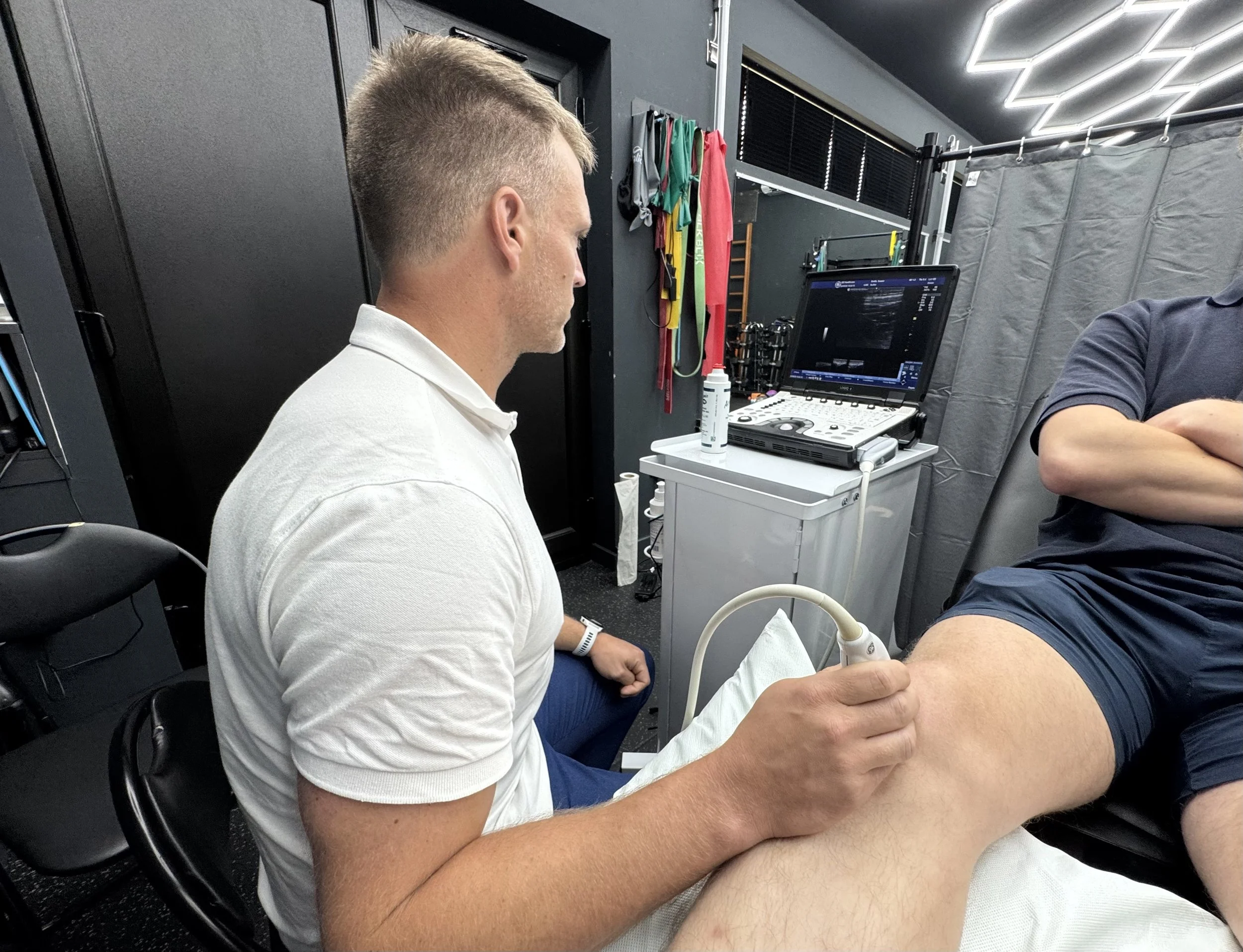
Ultrasound thickness increased in the rectus femoris; results for the vastus lateralis were inconsistent. These are regional measurements, rather than a measurement of total quadriceps volume or a direct estimate of how someone's legs will look.
A useful reading habit is to finish the sentence precisely: which muscle, measured where, using which method? The answer can remain positive while becoming narrower. Saying that a measured region changed communicates more than replacing every anatomical detail with the word gains. It also leaves room for another region to respond differently without treating the entire study as a contradiction.
For your own progress log, avoid promoting a convenient substitute into a measurement it cannot provide. A thigh circumference, a photograph and the fit of your shorts are different observations. Each has a place, but none tells you exactly which muscle changed. Use consistent conditions and keep the original observation visible instead of attaching a more impressive explanation to it.
Imagine that your trousers feel tighter while your training performance stays the same. That can be a reason to check the pattern over time; it is not enough to calculate a percentage increase in quadriceps size. Equally, a better set in the gym cannot tell you the thickness of a specific muscle region. This distinction is especially helpful when a headline encourages you to choose a program based on an outcome you will never actually measure.
3. Separate a strength test from your next personal record
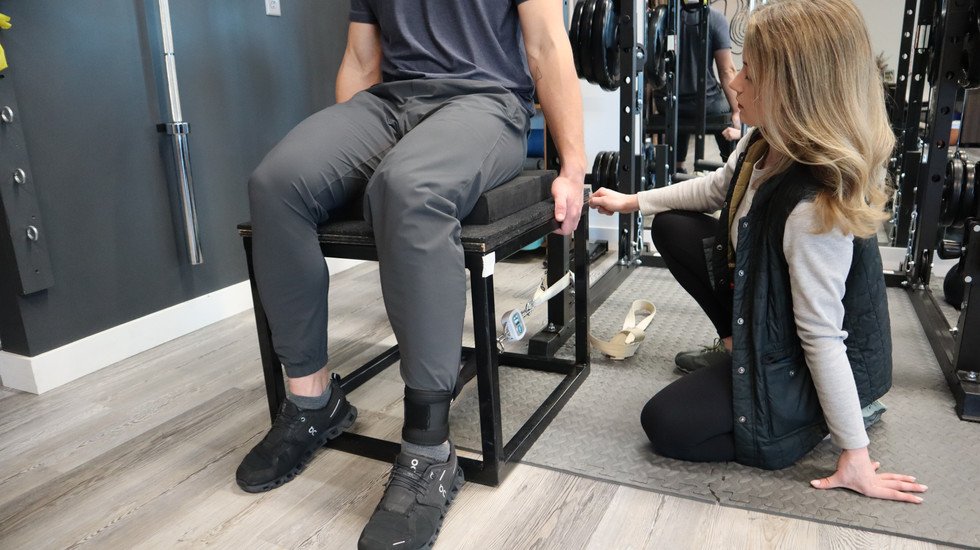
The strength finding depended on the knee position used for an isometric test. Improvement at one tested position did not establish improvement at the other. The experiment did not measure a squat or leg-press personal record.
An isometric test asks for force without the joint movement of a normal repetition. Your gym performance also includes the exercise setup, available range, pacing and the rules you use to count a completed rep. Keep those descriptions separate. A result from one task can prompt a useful question about another task, but it cannot supply the missing test result.
Consider a hypothetical lifter who wants a stronger split squat. A practical benchmark might hold the bench height, stance, depth and dumbbell load steady while recording completed repetitions. If the rear support moves or the depth becomes shallower, a higher rep count becomes harder to interpret. The log benefits from those details regardless of which accessory exercises the lifter chooses.
For general strength development, regular resistance training remains a sensible base. Choose movements you can perform consistently, train the major muscle groups and progress according to your ability. A stretching paper does not require you to replace a workable program. It can instead encourage a better question: what outcome would justify adding this activity, and what existing work would have to make room for it? Answer that before adding another block to every session.
4. Ask which balance task improved
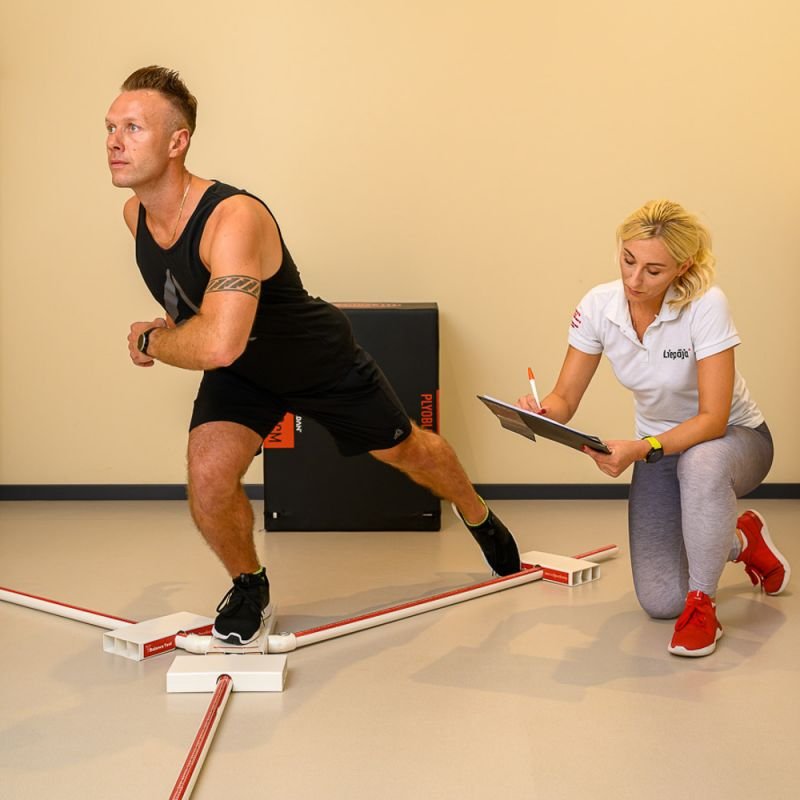
Comparative Y-Balance improvements appeared in three of six direction-and-leg outcomes. The test involves reaching while maintaining single-leg support. These findings do not demonstrate fewer falls or universal improvement across balance tasks.
Balance is a broad everyday word. Reaching farther on a controlled assessment, staying upright after an unexpected disturbance and handling a loaded exercise are different challenges. Name the challenge before claiming success. Otherwise, an appealing general label can hide a narrow outcome that would have been useful if described accurately.
For a personal exercise check, decide in advance what counts as a repeatable attempt. Use the same surface, footwear, starting position and support rules. If you change the setup to make the task easier, record the change. A cleaner comparison is more informative than a larger number produced under different conditions. These are logging suggestions, not an invitation to diagnose an injury risk from a home balance score.
Also separate the observation from its explanation. Better performance does not, by itself, identify the physical change responsible. An exercise can affect several things, while familiarity with a task can alter how it is performed. You do not need to solve every mechanism to make a useful training decision. You do need to avoid selling a measured improvement as proof of an unmeasured benefit. For lifting equipment, apply the same care: a leg-extension attachment, bench and free-weight exercise offer different tasks, not interchangeable experimental results.

Equipment Worth Exploring
Explore equipment, accessories and gear from our carefully selected range.

Leg Extension/Curl BCO-780
Leg extension and lying leg curl combo with plate loading, band pegs and a cable-loading option.

Seated Leg Combo BCO-680
Adjustable seated leg extension and leg curl machine with band pegs for added resistance.

HUSLA Leg Extension Pad
Pad attachment designed to increase usable range of motion on compatible leg-extension machines.

Leg Press/Hack Squat BPR-790
Convertible 45-degree leg press and hack squat machine with a broad footplate and band pegs.

Studio V-Squat
Plate-loaded V-squat machine for supported lower-body strength training.


FID Bench MAX
Adjustable bench offering flat, incline, and decline positions + adjustable headrest.

Multi Bench MBX-650 2.0
Adjustable multi-bench with roller adjustment, 15 backrest positions and accessory mounts.


5. Give stretching and lifting separate jobs
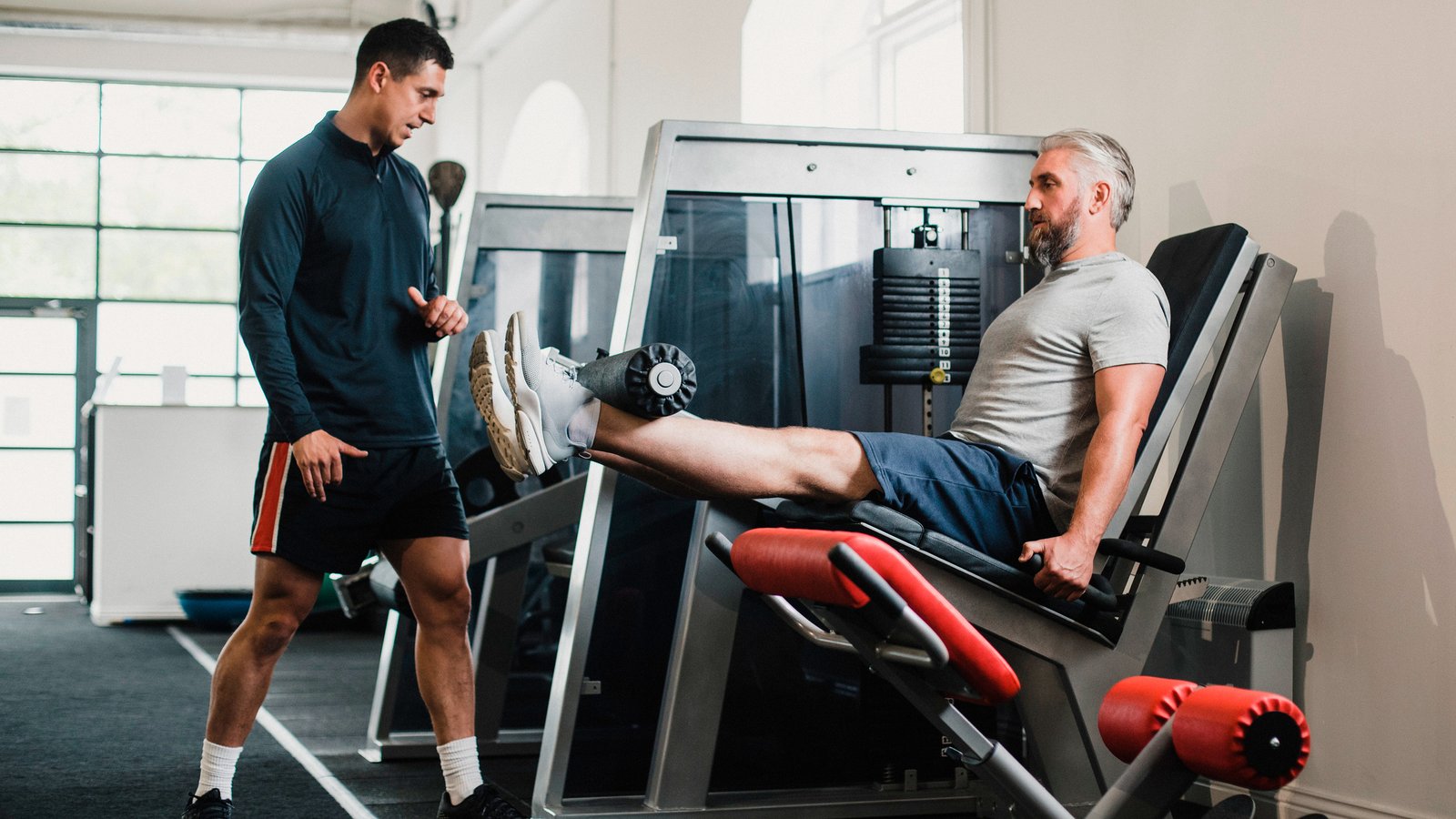
Start with a goal you can describe plainly. Perhaps you want a comfortable position for a particular activity, or perhaps you want stronger knee extension. Those goals can coexist, but one activity does not have to justify itself by promising every benefit at once. Flexibility work and strengthening can occupy different parts of a plan without competing for a single label of best exercise.
For routine stretching, use a controlled setup and keep pain out of the target. For lifting, choose equipment around the movement you intend to train. An adjustable bench may support a split-squat setup; dumbbells offer loading options; a dedicated leg-extension machine provides another knee-extension task. Check an add-on's stated compatibility with your own equipment before buying. A pad, wedge or new attachment is not evidence that you have reproduced a research intervention.
A simple log can keep the decisions honest. Record the stretching position and comfortable duration in one entry, then the exercise, load, range and repetitions in another. Add a short note about whether the routine fits your week. Avoid changing several major training variables at once if your aim is to understand why performance changed. If the extra work is taking time away from the lifting you value, revisit the trade instead of defending it because a headline sounded exciting.
The most useful reading of this experiment is disciplined curiosity. Preserve the differences between a muscle measurement, a force test and a reach test. Keep your training goal visible, and ask for evidence that matches it before expecting the same result from a different routine.

Funny Gym Shirts & Workout Gear
Funny gym shirts, tanks, hoodies and workout gear for lifters who like training hard.

Anti Stretching Stretching Club Meme Shirt – T-Shirt
Bring “Anti Stretching Stretching Club” humor to your next gym day.

| Pencilneck Science-Based Lifting Gym Nerd Muscle Shir Tank Top
Train hard, laugh a little, and rep “Pencilneck Science-Based Lifting Gym Nerd”.

Bro Science Graph Shirt – Essential & Gains T-Shirt
Heavy lifts, good laughs, and a little “Bro Science Graph” energy.

Leg Day Squats Deadlifts Meme Hooded Hoodie
Show off your leg-day humor in a laid-back “Leg Day” hoodie.

Never Skip Leg Day Chicken Legs Meme Decal Water Sticker
Give your everyday gear a playful “Never Skip Leg Day” twist.

Everyday Is Leg Day Octopus Meme & Top T-Shirt
Show some leg-day attitude with a playful “Everyday Is Leg Day Funny Octopus” tee.

Mind Muscle Perfection Embroidered Brain and Biceps Gym Hat
A playful “Mind Muscle Perfection Embroidered Dad” cap for workouts and weekends.

Leg Day Is Calling You Squats, Deadlifts & Gains T-Shirt
Rep “Leg Day Is Calling You” humor in and out of the gym.

Vive La Resistance Bands – Resistance Bands Warmup Reha Hoodie
Stay casual and show some lifting attitude with “Vive La Resistance Bands”.

Safety Practice Safe Sets Hooded Jumper Top Hoodie
Show off your bodybuilding humor in a laid-back “Gym Safety” hoodie.