Advertising disclosure: This page includes affiliate product links that may earn us a commission, as well as products from our own store.
Creatine is one of the few gym supplements with a genuinely useful evidence base, yet the simplest question keeps being turned into a complicated ritual: should you take it right before the first working set or immediately after the last one? A 16-week comparison involving 27 resistance-trained adults offers a useful reality check. It found no statistically significant advantage for either schedule over the other, and neither creatine group clearly beat placebo on the outcomes measured.
That finding matters, but it needs a second sentence. The participants used five grams only on training days, not the conventional everyday maintenance approach. A small study using one dosing schedule cannot settle every question about creatine, especially when the two active groups contained just 10 and nine people. The right lesson is not that creatine is worthless. It is that precise workout timing deserves far less confidence than consistency, adequate training and sensible measurement.
What the 16-week trial actually tested
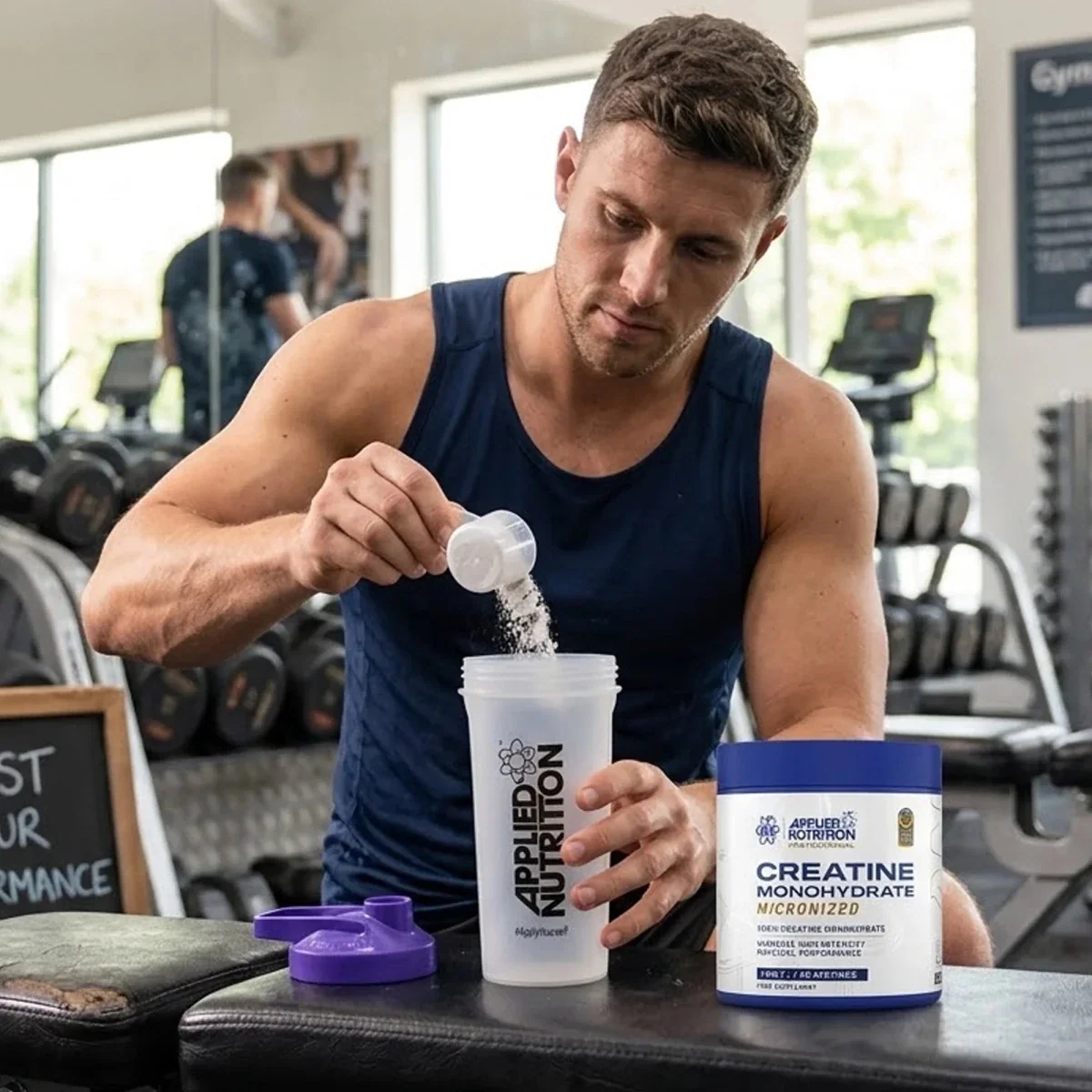
The participants were 27 healthy, already resistance-trained adults aged 18 to 39, randomized into three groups. Ten received five grams of creatine monohydrate immediately before lifting and placebo immediately afterward. Nine did the reverse, receiving five grams after their session and placebo before it. Eight received placebo at both moments. The before-and-after placebo approach helped make the ritual itself similar across groups, rather than letting timing expectations dominate the comparison.
The investigators assessed body composition, muscle thickness in the limbs and several measures of muscle performance at the start and after 16 weeks. Those are useful endpoints because a supplement can feel noticeable without changing the things a lifter is actually pursuing. The study was also more relevant to experienced gym-goers than a one-week experiment in people who had never trained, although the relatively small number of participants limits how much certainty its results can provide.
The tested question was narrow: would five grams of creatine right before a workout outperform the same amount right afterward, or outperform placebo, under this particular schedule? The experiment was not a direct test of daily creatine supplementation against no creatine across all days of the week. Keeping that distinction in view prevents a surprisingly common mistake: turning a negative result for one dosing protocol into a verdict on an entire supplement.
The results: no clear winner in size or performance

At the end of the study, neither the before-training group nor the after-training group showed a statistically significant advantage over placebo for the reported body-composition, limb-muscle-thickness or performance measures. The comparison also did not establish that one creatine timing strategy was better than the other. A result reported as p greater than 0.05 means the measured differences did not pass the study’s chosen threshold for statistical significance; it does not mean every group performed identically.
That distinction between no detected difference and proof of no possible difference is essential with samples this small. One unusually strong or unusually weak responder can shift a group average when there are only eight to ten people per arm. Even a 16-week training period cannot eliminate the limitations of modest sample size, differences in individual training response or measurement noise. The findings are best treated as a reason to doubt dramatic timing claims, not proof that the true effects must be exactly zero.
For an ordinary lifter, the benchmark remains straightforward: do your reps or loads progress at comparable technique and effort, and do repeated measurements show a meaningful trend over weeks? A brief post-workout pump, temporary water-weight change or unusually energetic session is not direct evidence of additional contractile muscle growth. The measured outcomes here are more useful than supplement marketing language, but their uncertainty should stay attached to the conclusion.

Equipment Worth Exploring
Explore equipment, accessories and gear from our carefully selected range.


Rubber Hex Dumbbells
Rubber-coated hex dumbbell pairs with a stable shape for home and commercial strength training.

FID Bench MAX
Adjustable bench offering flat, incline, and decline positions + adjustable headrest.


Competition Plates
Competition-style bumper plates for Olympic lifts and loaded strength training.


Open Hex Bar
Open-frame trap bar with multiple handles for deadlifts, carries, and lower-body training.


Multi Pull Smith Rack MPHR-780
All-in-one rack with a Smith machine, functional trainer, lat pulldown and low row.
Why muscle saturation matters more than a narrow clock
Creatine helps replenish high-energy phosphate availability during repeated demanding muscular efforts. That benefit is linked to the amount stored in skeletal muscle over time, not simply to whether a scoop enters the stomach five minutes before a bench press. Supplements must be digested, absorbed and transported, while muscle uptake and replenishment operate on a broader timescale than one workout. A precisely timed drink should not be confused with an instant pre-workout stimulant.
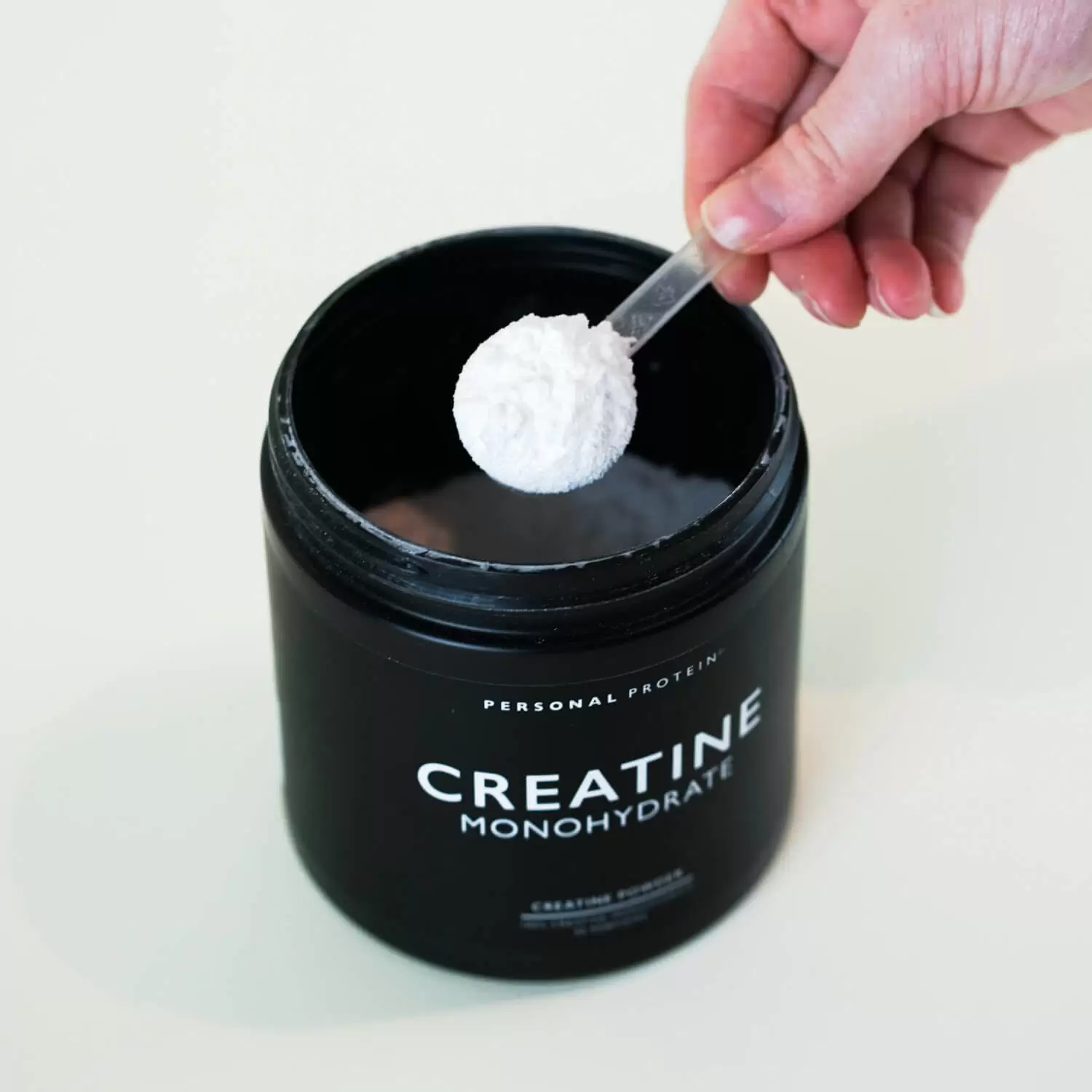
With a conventional daily maintenance approach, many healthy adults use roughly three to five grams of creatine monohydrate every day. A faster saturation strategy sometimes uses about 20 grams per day divided into smaller servings for five to seven days before switching to maintenance, although loading is optional. People who skip loading can gradually raise muscle creatine stores over several weeks with ordinary daily dosing. Those approaches describe a different exposure pattern from isolated doses around training days.
The simplest way to picture this is a reservoir rather than an on-off switch. Topping up the reservoir consistently is usually more actionable than deciding whether to add a scoop before or after Tuesday’s last set. That analogy has limits: baseline muscle creatine, dietary intake, individual physiology and other factors differ. It does, however, explain why timing studies must be interpreted alongside dose frequency and total exposure, rather than treated as a competition between two magical minutes.

Bodybuilding Shirts & Workout Gear
Bodybuilding shirts, tanks and gym gear for lifters chasing muscle, size, symmetry and the pump.

Creatine Gym Cosmic Decal , Funny Workout Supplement En Sticker
Give your everyday gear a playful “Creatine” twist.

Powered By Creatine Breaking Bad Meme & Bros Tank Top
Add some lifting attitude to training with “Powered By Creatine”.

Creatine Miami Crime Gym Parody , Bodybuilders & Movie T-Shirt
Show some gym-day personality with “Creatine”.

Creatine Monster – Bro Weightlifting, & Gains – Meme T-Shirt
Rep “Creatine Monster” humor in and out of the gym.

Shirt – Hilarious – Sniffing Creatine Meme , Gymbros T-Shirt
Make gym days more fun with “Hilarious” style.

Funny Protein Sniffing Gym | Hilarious Bodybuilding Mem Tank Top
Your gym-day look, with a playful “Protein Sniffing” twist.

Protein Monster Gym Hoodie for Protein Lovers
Bring “Protein Monster” gym humor to lazy days and post-workout plans.

Protein Bro Supplement Decal Water Bottles & Shaker Sticker
Give your everyday gear a playful “Protein” twist.

Blue Protein Shaker Bottle : Decal For Water Bottles & Sticker
Stick a little “Blue Protein Shaker Bottle” humor on your favorite gear.

Free Protein Gym | Sarcastic Workout Decal for Water Bo Sticker
Bring “Free Protein” attitude to your water bottle or laptop.
The training-day-only detail changes the answer
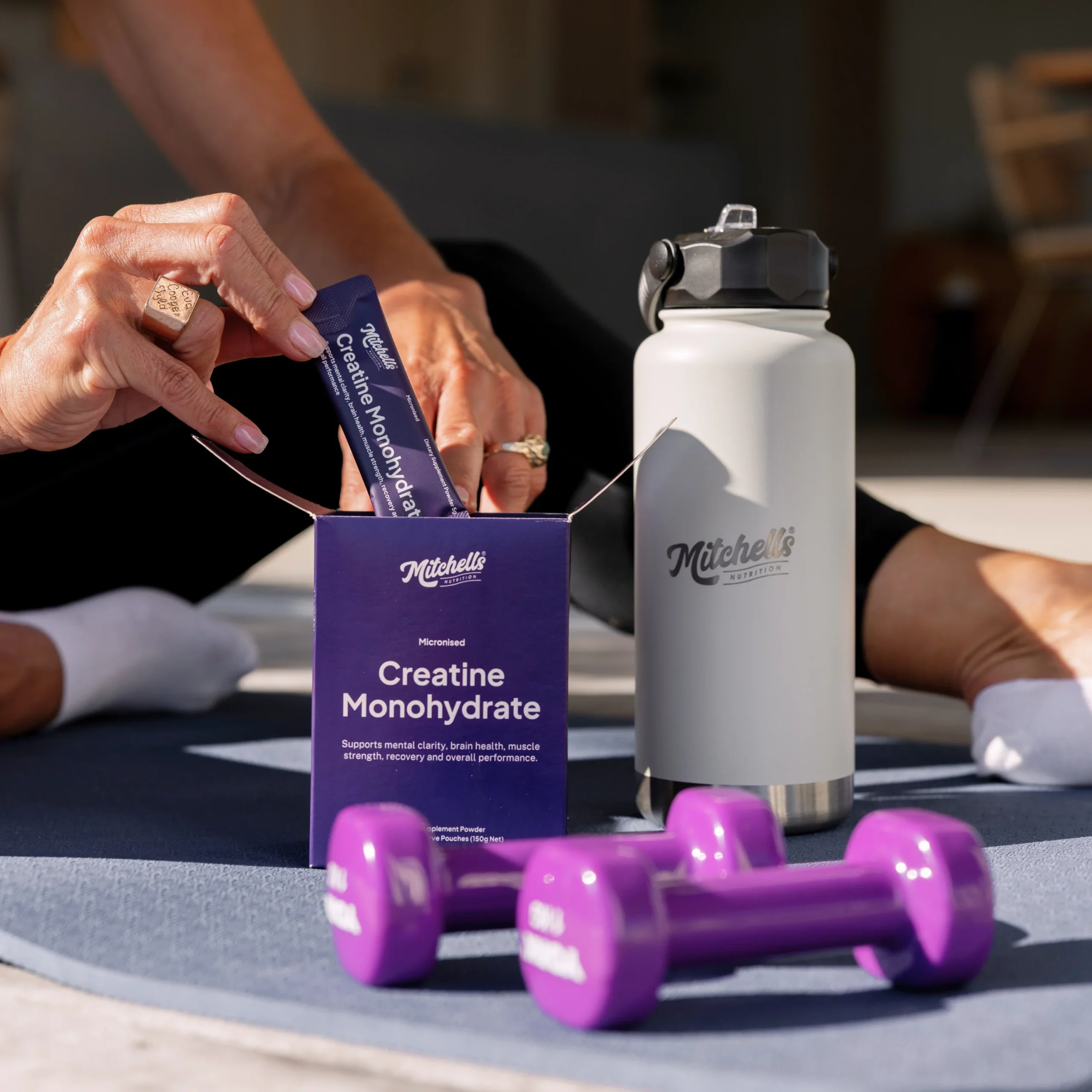
The researchers reported a total of 280 grams of creatine for each supplemented participant across the intervention. At five grams per dose, that amounts to 56 supplemented workouts over 16 weeks, averaging three and a half dosing occasions per week. Participants were not taking a standard five-gram maintenance serving every single day. On non-training days the active creatine groups were not following the full daily regimen that many supplement users choose.
This detail matters because timing and frequency can become entangled. If one trial gives creatine only before or after training, an absence of additional growth may reflect limited total exposure, the characteristics of the participants, modest power to detect differences, or other aspects of the training and testing. It does not identify exactly which of those explanations is correct. Likewise, the placebo group is useful for interpreting this particular experiment, but it is not a universal control for every established daily supplementation protocol.
Another limitation is that changes in body measurements and gym performance are not direct measurements of muscle creatine saturation. Without confirming the relevant stores under the chosen schedule, it is risky to assume that the regimen created the same physiological conditions as an everyday maintenance program. The study is valuable because it asks a specific, practical question in trained adults. Its value grows when we preserve the full protocol rather than removing the qualifier that makes the findings intelligible.
How to take creatine without turning it into a ritual
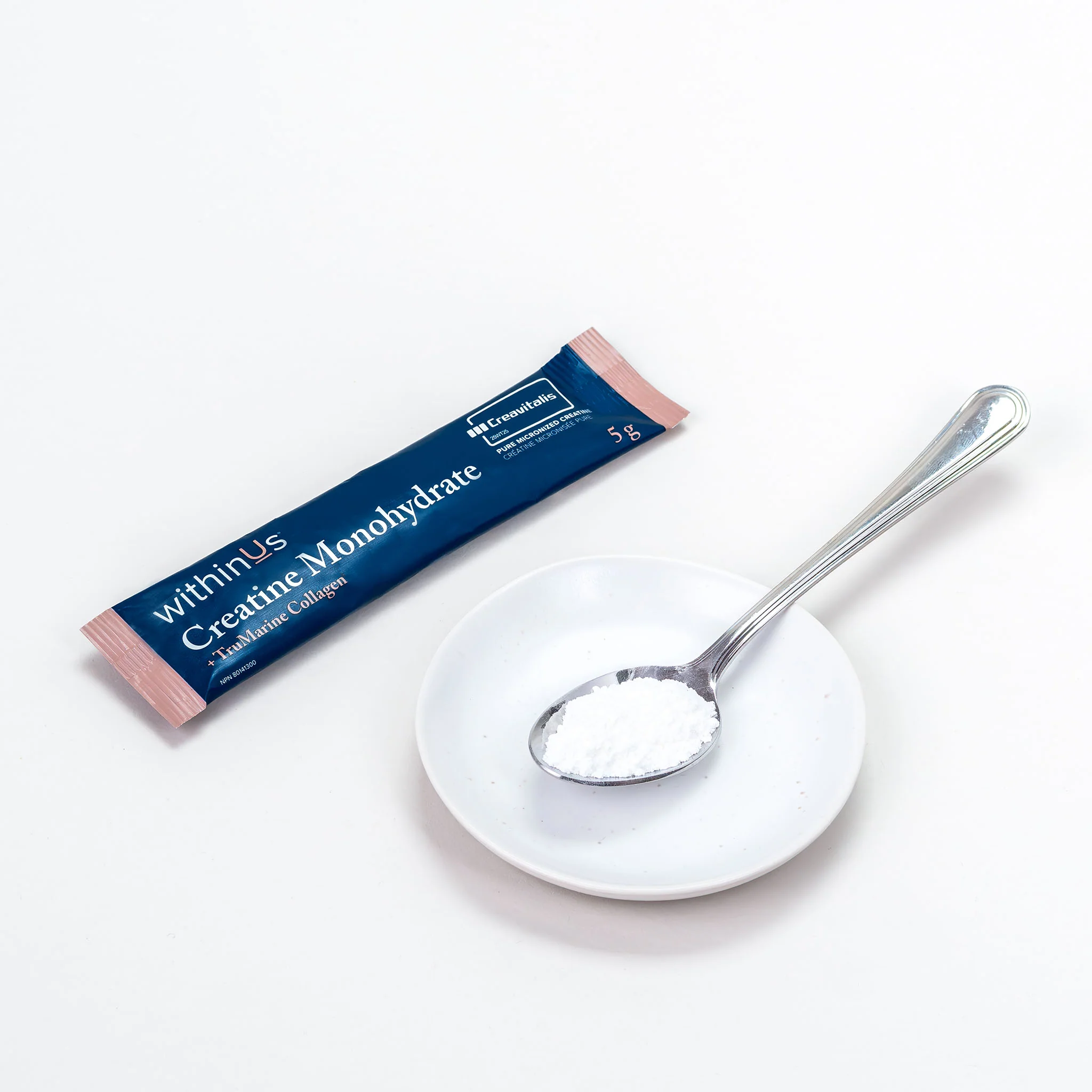
If you are a generally healthy adult choosing to use creatine, a simple routine is usually easier to maintain: measure an ordinary daily serving of creatine monohydrate, follow the product’s directions and use a consistent time that fits your life. Taking it with breakfast, a regular meal or a post-training shake may all be more convenient than trying to hit an exact minute around your first or final set. Consistency is a behavior you can measure; a supposed perfect anabolic window is harder to justify.
Mix the powder into water or another drink rather than dry-scooping it. If a full serving causes stomach discomfort, dividing it or taking it with food may be more tolerable. More powder is not automatically more progress, and there is little reason to escalate beyond an established plan simply because a workout was hard. Check your supplement’s serving size; some blends contain several ingredients and should not be treated as interchangeable with a plain five-gram creatine-monohydrate serving.
People with kidney disease or other relevant medical conditions should discuss supplementation with a qualified clinician before starting, and creatine can affect the interpretation of blood creatinine tests. Those who are pregnant or nursing should also seek individualized medical advice. For most lifters, the bigger training levers are still progressive exercise, enough total food and protein, recovery and adherence. Creatine may be helpful in that environment, but it does not replace any one of those fundamentals.
Equipment Worth Exploring
Explore equipment, accessories and gear from our carefully selected range.
VOLTRA
Compact digital cable trainer with smooth, adjustable resistance.

VForce 3IN1
All-in-one rack combining an adjustable Smith machine, functional trainer, and free-weight station.


Go-Tone Pro
Portable digital cable trainer with up to 66 lb (30 kg) of adjustable resistance.

VForce Wall Trainer
Space-saving wall-mounted functional trainer with pivoting cable arms and variable resistance ratios.


Standing Chest Press SCP-760
Standing chest-press machine with adjustable handle positions for chest and close-grip pressing.


Leather Lifting Straps
Padded leather straps support grip during heavy rows, deadlifts and pulling exercises.

A four-week checklist that measures the right things
Start by deciding on one supplement routine you can actually repeat. If you already use creatine, avoid switching the entire plan every three days based on a single good session. Keep the timing consistent for four weeks, but do not treat that four-week period as proof that one time of day builds more muscle. Its value is behavioral: you can establish whether the routine is convenient, well tolerated and easy to remember on training days as well as rest days.
Next choose two or three benchmark lifts, such as a bench-press variation, a squat or leg press, and a row. Record the load, reps, technique standard and approximate effort for one comparable working set in each exercise. Hold the basic program reasonably steady and let progression respond to real performance rather than chasing a pump. A new personal best after a week of better sleep does not isolate a creatine effect, so look for trends across enough sessions to distinguish progress from normal day-to-day variation.
Finally, weigh yourself under similar morning conditions several times per week, observe the longer-term average and use the same tape-measure landmarks or photographs when tracking physique change. Creatine can increase body mass through water retention, which is not the same as newly built muscle. If your strength is progressing, your recovery is manageable and the daily habit is easy, there is little reason to obsess over whether your scoop preceded or followed the workout. The best schedule is usually the one you will actually follow.
Funny Gym Shirts & Workout Gear
Funny gym shirts, tanks, hoodies and workout gear for lifters who like training hard.

Rice Chicken Broccoli Sweatshirt
For laid-back days and meal-prep humor: “Powered By Rice Chicken Broccoli”.

Work Hard Eat Hard Bulk Tank Top
Your gym-day look, with a playful “Work Hard Eat Hard” twist.

Lift Eat Sleep Repeat Hoodie
Make your off-duty look more fun with “Lift Eat Sleep Repeat”.

Eat Your Chicken – Chicken Bro Protein Meme Vest Muscle Tank Top
Show some personality between sets with “Eat Your Chicken”.

Hustle For That Muscle Gym Sweatshirt
Keep things casual with a little “Hustle For That” attitude.

Bear Protein : Hilarious Meme Hooded Hoodie
Stay casual and show some bodybuilding attitude with “Gym Bear Protein”.

Wheysted | GTA Parody Workout Sweater | Whey Protein Pu T-Shirt
Show some gym-day personality with “Wheysted”.

with Protein Shaker Print | Bodybuilding Muscle Shirt Tank Top
Train hard, laugh a little, and rep “with Protein Shaker Print”.

Bro – Protein Tub Meme , & Fans – Protein T-Shirt
Bring “Gym Bro” humor to your next gym day.

Funny Protein Addict Gym | Breaking Bad Parody Muscle S Tank Top
Add some lifting attitude to training with “Protein Addict”.
Some product links may be affiliate links, which can support Mind Muscle Perfection at no additional cost to you.