Advertising disclosure: This page includes affiliate product links that may earn us a commission, as well as products from our own store.
Get RXd's NEXUS system takes a familiar home-gym idea further: keep the rack, change the station attached to it. The current range includes jammer arms, a belt squat, a linebacker attachment and an adjustable row pad built around a common mounting system. That creates an interesting equipment decision, but the useful questions are practical. Will it fit your rack, which parts does each configuration need, and how often would you actually change between them?
Start with the NEXUS base and rack compatibility
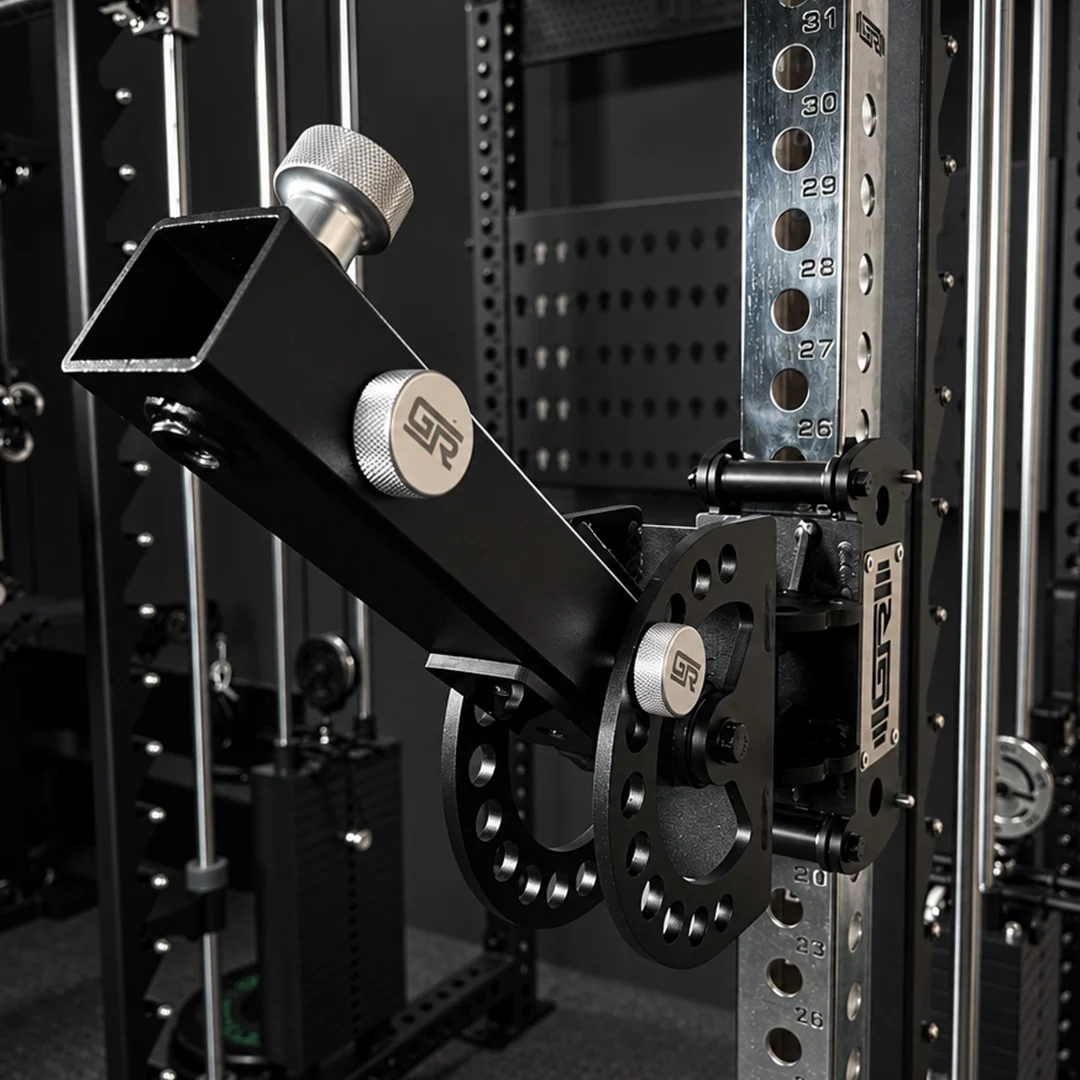
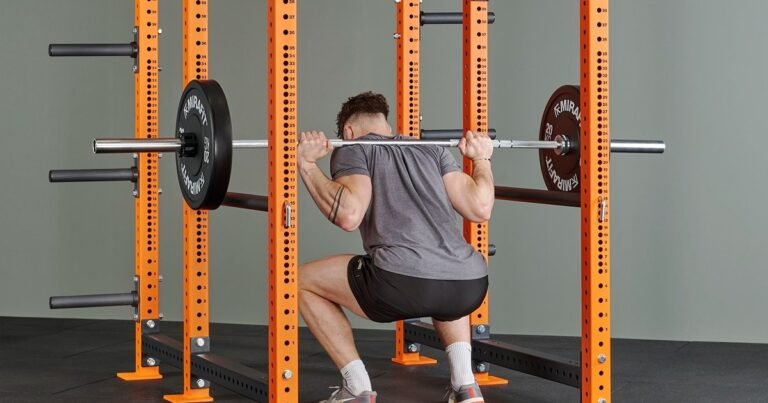
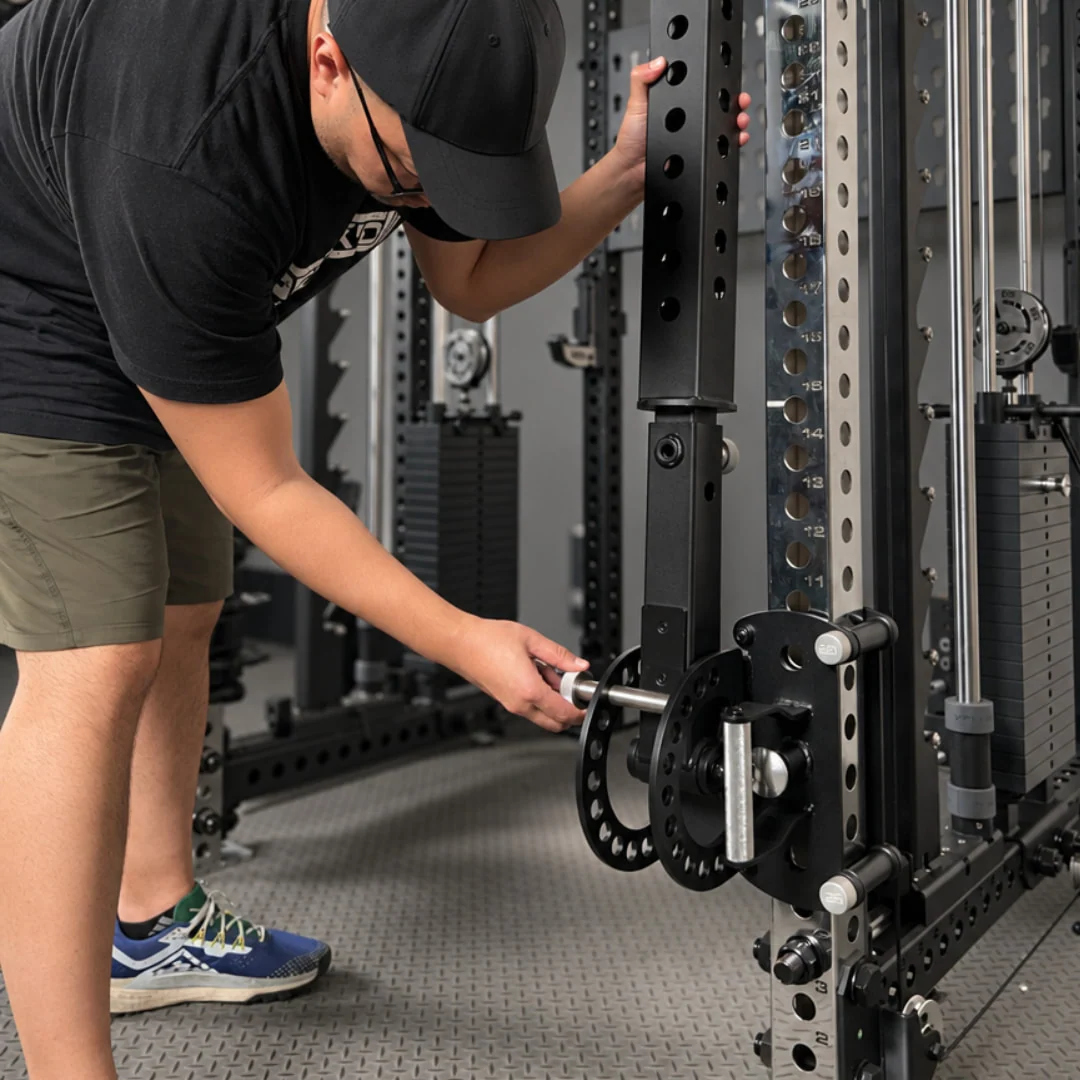
The shared foundation is a trolley mounted to a rack upright. Get RXd describes four rollers for height adjustment, pivoting in vertical and horizontal directions, and pins that constrain movement or set limits. Rear rollers can be removed to take the assembly off without dismantling the rack. In principle, that allows the same mounting architecture to support several stations rather than requiring a separate frame for each exercise.
The published fit specification is specific: 75 by 75 mm uprights, 26 mm holes and 50 mm hole spacing. The manufacturer describes NEXUS as built for its RX3 rack. Those metric dimensions matter more than a retailer's shorthand of three-by-three steel and one-inch holes. Similar labels are not proof that two brands share the same tolerances, roller clearances, hardware or hole alignment.
Before ordering for another rack, ask Get RXd to confirm the exact model and installation requirements. Provide measurements and photographs of the upright, holes and surrounding attachments. Also check whether crossmembers, cables or storage pegs occupy the area the trolley needs. A pin entering one hole does not establish that the complete assembly can travel, lock and support the intended exercise correctly.
Think of the rack upright as working space. Your barbell J-cups, safeties and cable accessories may already need it. A removable trolley helps with that conflict, but removing equipment still involves handling and storage. Plan where the detached components will go and whether the rack can meet the manufacturer's stability requirements in every configuration you intend to use.
Belt squat: consider the start position as well as the movement
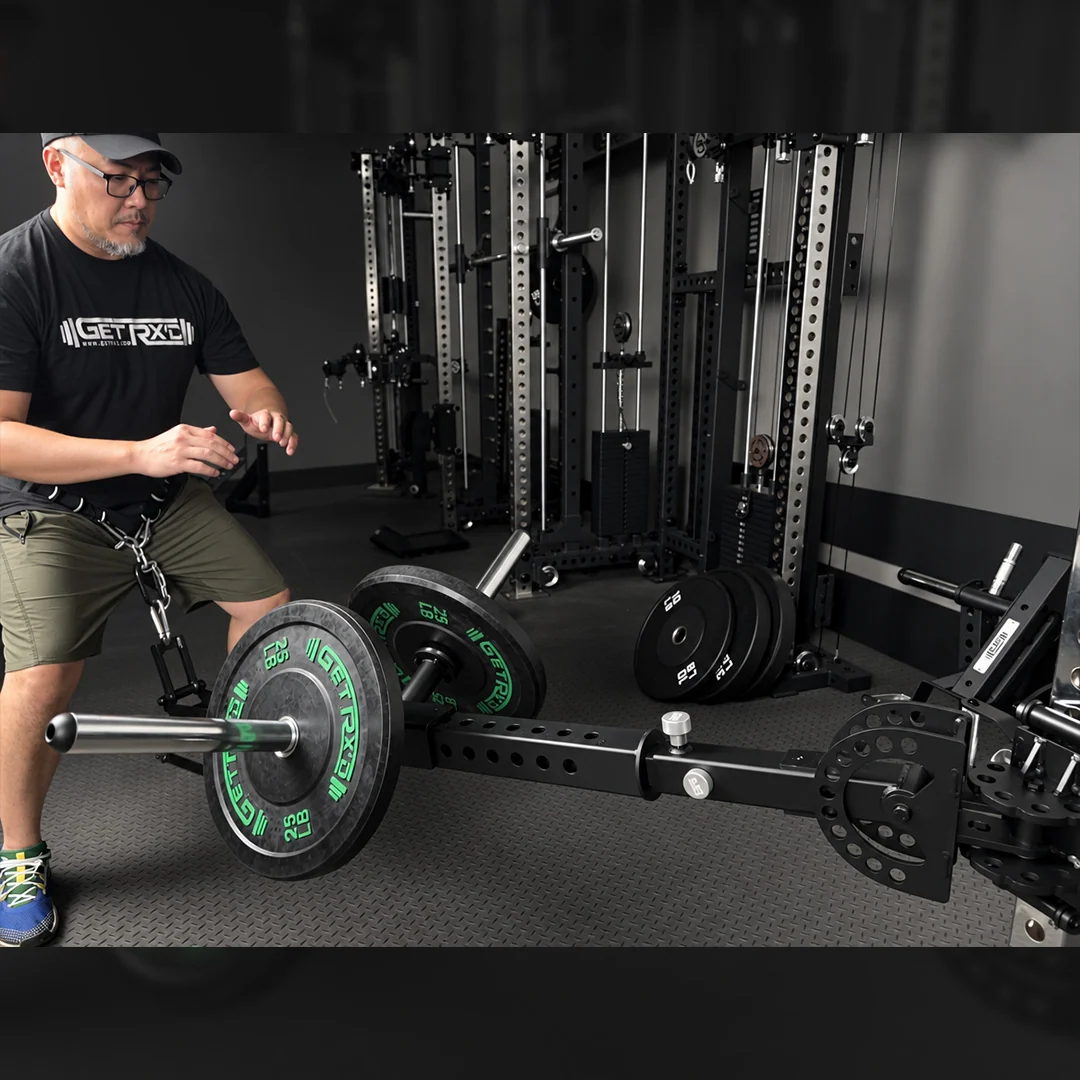
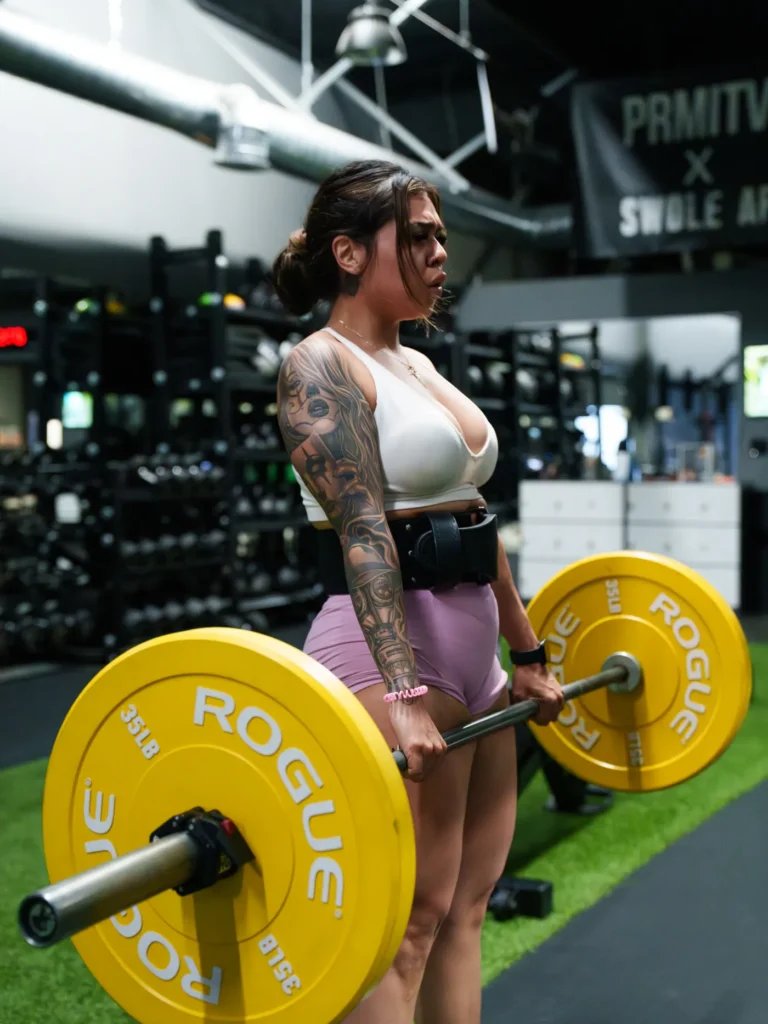
The NEXUS Belt Squat uses plate-loaded sleeves, an arc-reducing pivot arrangement and a spring-assisted kickstand. Get RXd describes vertical and horizontal movement with options to restrict the movement planes. The aim is to make the lever path more vertical than a simple fixed-pivot belt-squat arm. That describes the design intention; it does not establish how the resistance will feel for your proportions.
The practical distinction is where the load connects to you. A belt squat applies resistance through a belt connection rather than placing a bar on your shoulders. That can be useful when selecting exercises, but it does not make the movement automatically comfortable or suitable for every lifter. Belt fit, connection length, stance and available travel all affect the starting position and depth you can use.
Check the kickstand sequence before loading heavily. You need to understand how to enter, start, finish and disengage the attachment without being trapped in a position you cannot control. The manufacturer presents the kickstand as a way to begin and end standing. Confirm that the complete setup you order includes the components needed for that process, and follow the supplied instructions.
For a small gym, sketch the operating area with plates fitted, not just the empty rack footprint. Include room to attach the belt, reach the plates and move around the lever. Storage against an upright and usable exercise clearance are different measurements. A compact parked position is helpful only if deploying it still leaves enough room for your actual squat and a controlled exit.
Linebacker and jammer options change the training task
The NEXUS Linebacker Squat configuration adds a shoulder-supported attachment with knurled handles, a telescoping tube and plate-loading sleeves. Get RXd also lists cable connection points for compatible functional-trainer resistance. Adjusting the distance from the upright changes where the lifter stands relative to the system. Confirm the usable setup before assuming the attachment will match your preferred squat stance or reach.
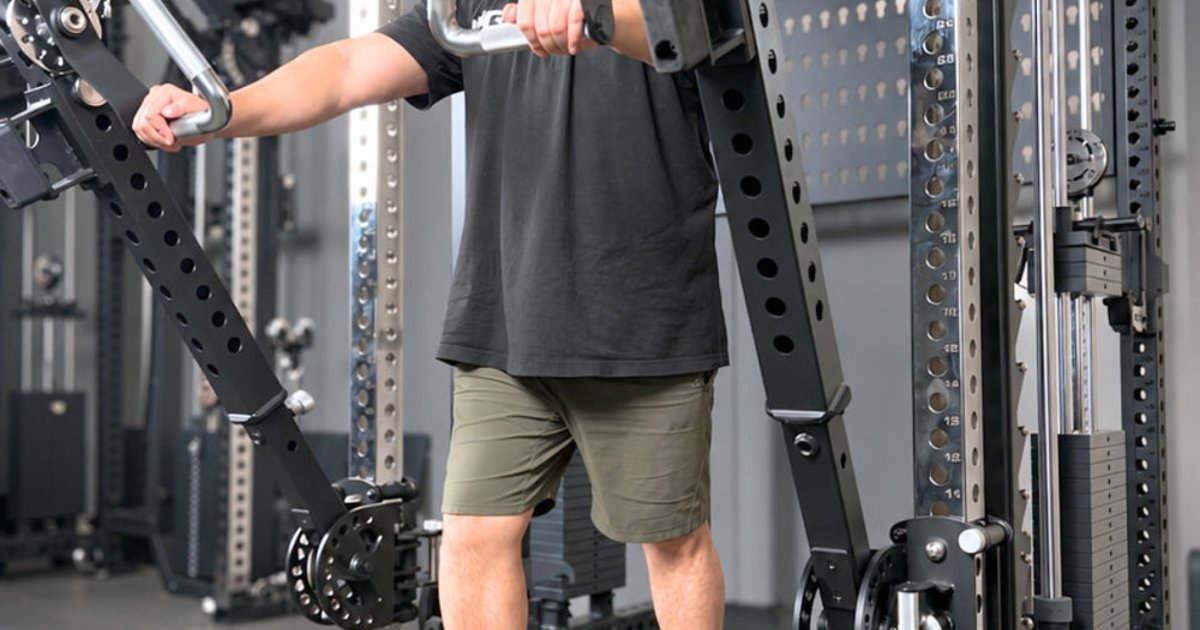
The jammer-arm configuration uses a pair of bases and attachment tubes with handle assemblies. Its two movement axes allow more freedom than a lever constrained to one plane, while adjustment pins can limit that freedom. This is a meaningful choice: a converging press, a more fixed pressing path and a rowing setup ask for different positions. More available motion does not automatically create a better exercise.
Standard Texas Horn Handles can swivel or lock. Separate rotating handles offer another grip arrangement, but the optional upgrade is not a complete standalone arm system. Check the required components instead of ordering a handle pair from a photograph and expecting it to work by itself. Decide whether the ordinary handles already provide the grip you need before adding another accessory to store.
Resistance deserves its own check. Plates on a lever and a connection to a weight stack are different loading arrangements, and the same number printed on the weight is not a direct comparison of force at your hands. Cable routing and the lever's geometry affect the result. Treat compatibility with the intended cable system as a specific requirement rather than assuming any nearby pulley can be connected.
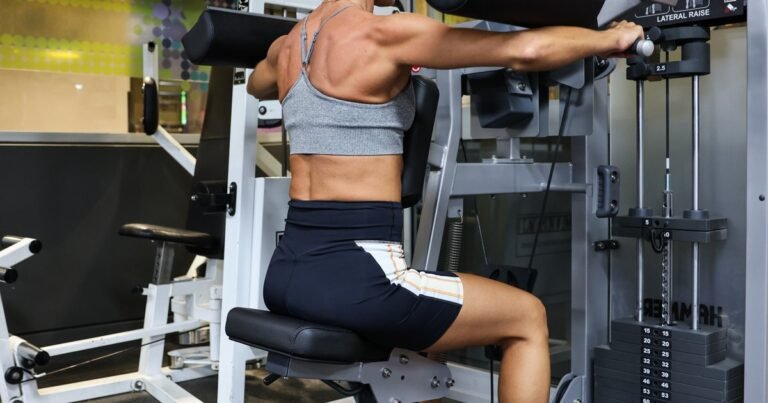
The adjustable row pad adds support without adding a full machine
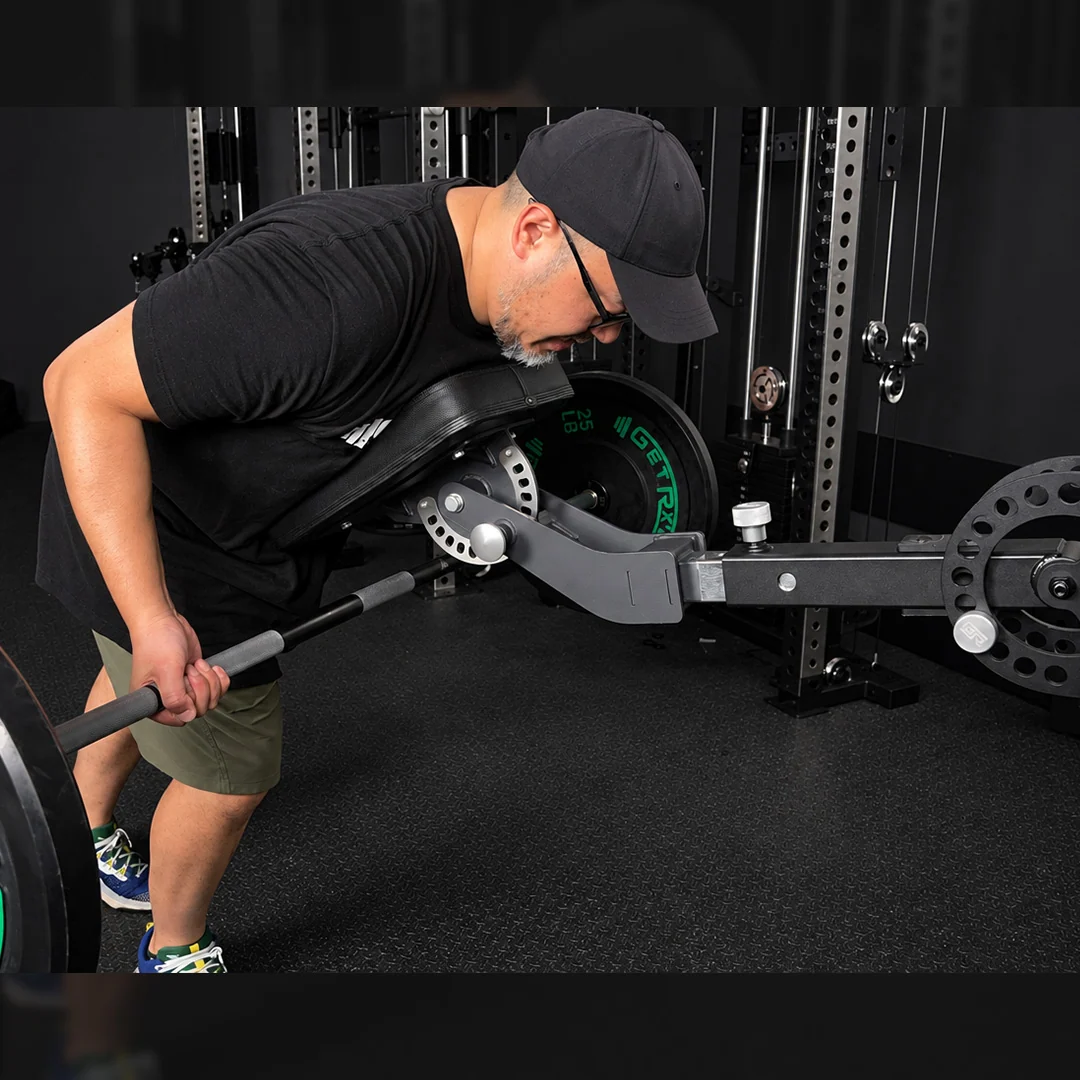
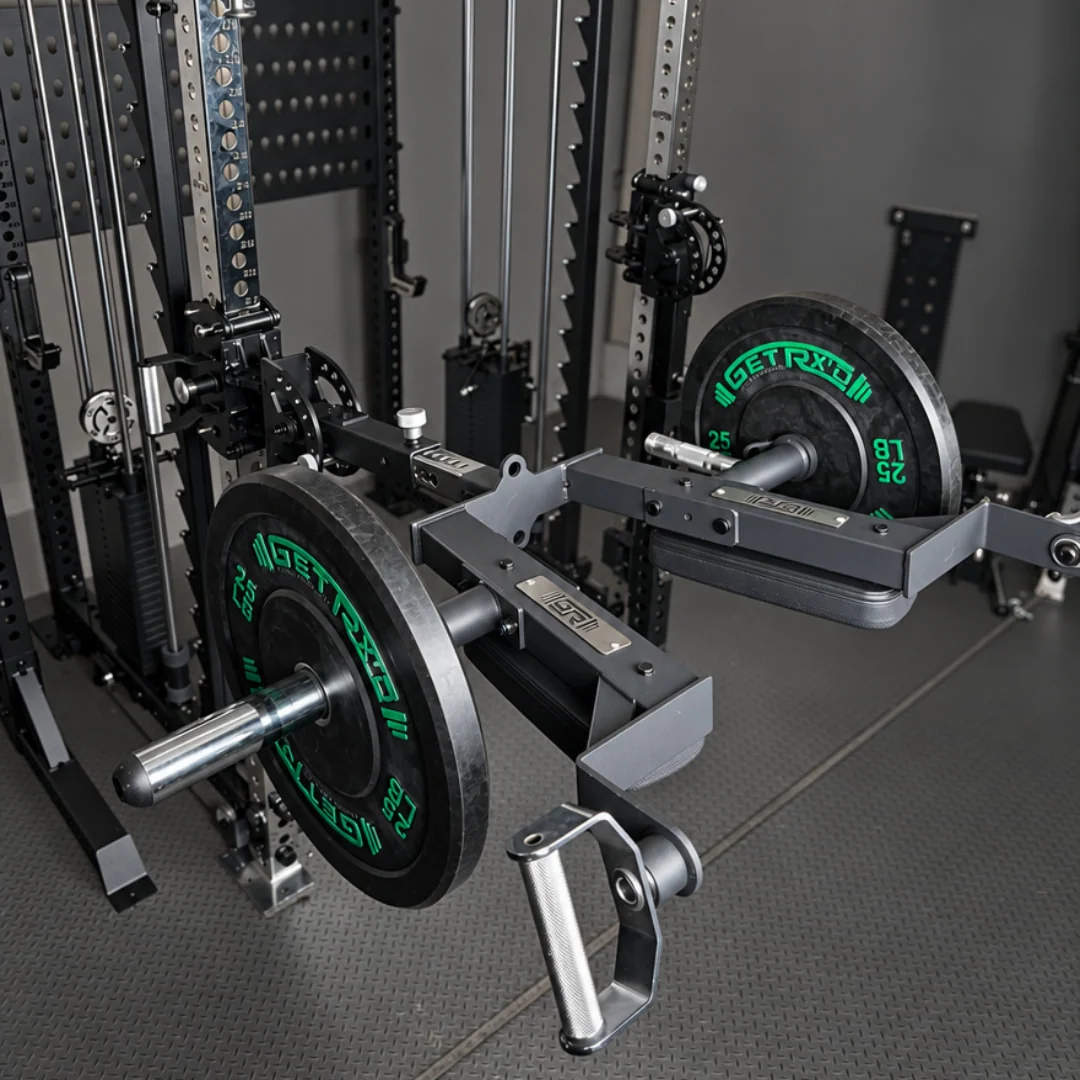
The NEXUS Seal Row Pad uses the base's positioning options plus its own pad-angle adjustment and a telescoping tube. Get RXd describes it as a chest-supported station for movements including dumbbell rows and reverse flys. The listed configuration contains a base and the adjustable pad; other NEXUS modules are additional purchases. This is a support attachment, so consider the implements you will use with it.
Chest support can make a rowing setup easier to repeat, but pad placement still matters. You need room for the shoulders and arms to move, a comfortable contact point and enough clearance for the dumbbells or other approved resistance. Test whether the proposed height and distance from the rack suit your body. A photograph of another lifter shows the concept, not a guaranteed fit for your torso and arm length.
The pad can be raised toward the upright and secured for storage. That is useful in a shared rack area, particularly if a supported row is an occasional accessory rather than a permanent station. However, count the steps needed to move from your main lift to the row setup. If you must unload another module, remove a trolley and relocate several attachments, the nominal space saving may come with a real setup cost.
Compare the attachment with equipment you already own. An adjustable bench may cover some supported dumbbell work, while the rack-mounted pad may offer positions that your current bench cannot provide conveniently. The sensible comparison is between the exact exercises and clearances you would use. Buying another module simply because it belongs to an ecosystem is less useful than filling an identifiable gap in your weekly training.

Equipment Worth Exploring
Explore equipment, accessories and gear from our carefully selected range.

Multi Pull Smith Rack MPHR-780
All-in-one rack with a Smith machine, functional trainer, lat pulldown and low row.

Lever Arm Multi Press LMP-650
Multi-press with independent lever arms and an integrated adjustable bench for upper-body training.

VForce Lat Tower
Wall-mounted cable tower with pivot arms and adjustable 1:1 or 2:1 pulley ratios.

VForce Wall Trainer
Space-saving wall-mounted functional trainer with pivoting cable arms and variable resistance ratios.

VForce 2IN1
Half rack and pivot-arm functional trainer with switchable 1:1 and 2:1 pulley ratios.



FID Bench MAX
Adjustable bench offering flat, incline, and decline positions + adjustable headrest.


Grip Plates
Rubber-coated weight plates with handholds for loading barbells and machines.
Build a complete configuration before judging price or availability
As checked on November 19, 2026, the NEXUS listings carry an Available 12/01 label and describe preorder shipping. The date string itself does not specify a year. Confirm the dispatch estimate, destination and order terms directly with Get RXd before relying on a particular delivery day. A listing or preorder estimate is not confirmation that a unit is sitting in a local warehouse ready to ship.
The bundle pages can show a zero-dollar headline while directing the customer through component choices. That should not be read as a free system or a usable final price. Build the configuration you actually want and verify the complete cart: bases, tubes, handles, squat components, pad, belt and any necessary cable connections. Add freight, taxes and regional availability before comparing it with another purchase.
A useful buying exercise is to choose one primary job first. If you mainly want a belt squat, evaluate that configuration on its own before assigning value to future pressing and rowing options. If you want several stations, write down their component overlap and the parts you would change between exercises. A modular system saves duplicated structure only when the shared parts and switching process work for your routine.
Include ownership tasks in that comparison. Ask about assembly instructions, replacement rollers or pins, warranty coverage and the process for obtaining missing components. These questions are particularly useful when one base serves several stations: a small unavailable part could affect more than one planned exercise.
The strongest reason to investigate NEXUS is the possibility of adding several training roles to a compatible rack. The unresolved questions are equally concrete: confirmed fit, complete cost, operating clearance, changeover effort and the feel of the loaded movement. This is a specification-based look at the current system, not a hands-on verdict. Decide from a complete, confirmed configuration rather than the number of exercises shown in a product gallery.

Funny Gym Shirts & Workout Gear
Funny gym shirts, tanks, hoodies and workout gear for lifters who like training hard.

Funny Home Gym | Home Is Where Your Gym Is Muscle Shirt Tank Top
Bring “Funny Home Gym Tank” humor to your next lifting session.

Home Gym & Garage Gym Tee
Heavy lifts, good laughs, and a little “Home Gym & Garage” energy.

Ultimate Meme : Power Rack Shirt & Home Gains T-Shirt
Show some lifting attitude with a playful “Ultimate Gym Meme” tee.

Funny Basement Gym Crewneck Pullover Sweater for Home G T-Shirt
Add a playful “Basement” touch to your casual rotation.

Anti Gym Home Gym Club Muscle Shirt Athletic Vest for H Tank Top
Your gym-day look, with a playful “Anti Gym Home Gym Club” twist.

Anti Social Home Gym Club Decal for Water Bottles Garag Sticker
Stick a little “Anti Social Home Gym Club” humor on your favorite gear.

Home Gym Nerd Garage Gym Basement Gym Meme Workout Body Hoodie
Bring “Home Gym Nerd” gym humor to lazy days and post-workout plans.

Home Gym Hero Crewneck Pullover Sweater for Garage Gym T-Shirt
Keep things casual with a little “Home Gym Hero” attitude.

Home Gym Built Not Bought Decal for Garage Gym Equipmen Sticker
A fun “Home Gym Built Not Bought” touch for bottles, laptops, and lockers.

No Cars Allowed In My Garage Gym Muscle Shirt Vest for Tank Top
Train hard, laugh a little, and rep “No Cars Allowed In My Garage”.