Advertising disclosure: This page includes affiliate product links that may earn us a commission, as well as products from our own store.
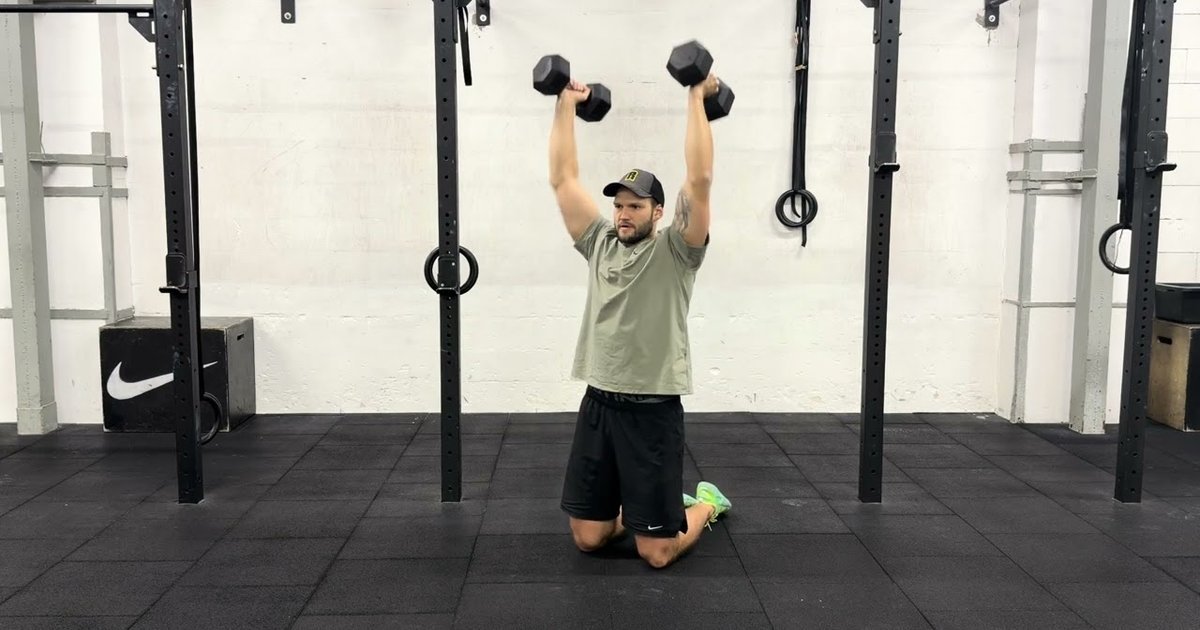
Kneeling for a dumbbell press changes the setup without changing the basic task: move a manageable weight overhead and bring it back under control. With both knees on the floor, you have fewer ways to borrow a push from the legs, but you can still lean back, move the hips or rush the return. The useful version is a deliberate shoulder press from a position you can comfortably maintain. This guide explains the two-dumbbell tall-kneeling press, how to assess the repetition and when a different position or implement makes more sense.
Set up on both knees with room to finish
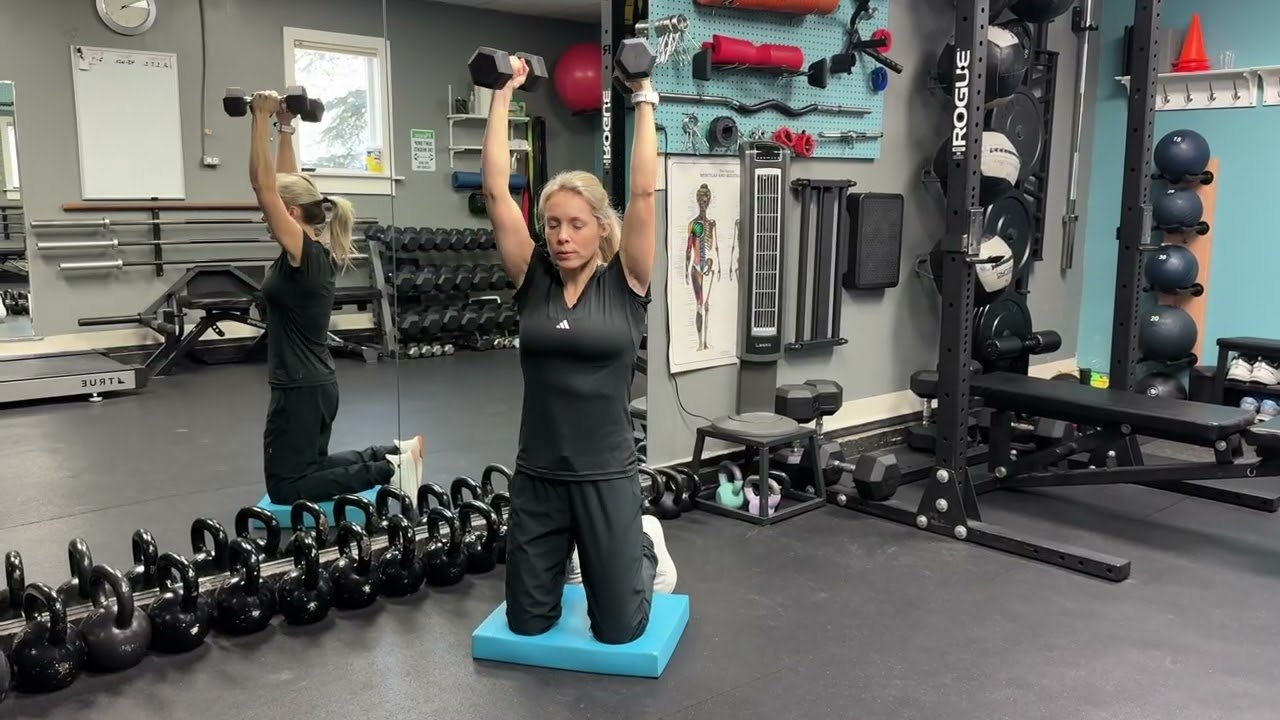
Tall kneeling means both knees are down and the hips are extended so the body is upright above them. It differs from half kneeling, where one foot is planted in front. Start without weights and find a comfortable knee spacing on a stable surface. Use suitable padding when needed, but avoid a cushion so soft that the position becomes a balancing exercise you did not intend.
Arrange the space before lifting anything. You need room above the hands, beside the elbows and around the knees, plus a clear place to put the dumbbells down. Check overhead clearance while upright and reaching with empty hands. Do not discover a low beam or nearby machine halfway through a loaded repetition.
Then bring a light pair of dumbbells to shoulder height. Plan that transfer and the return to the floor rather than improvising with heavy weights once you are kneeling. If getting into position is harder than the planned working set, use less weight or choose another pressing setup. A good training variation should not require an awkward struggle before the first repetition.
Knee comfort matters. Padding can reduce pressure against the floor, but it does not make persistent discomfort something to ignore. You can choose a seated or standing press instead. Being able to kneel is a setup requirement for this exercise, not a test you need to pass to train the shoulders.
Press without turning the repetition into a back bend
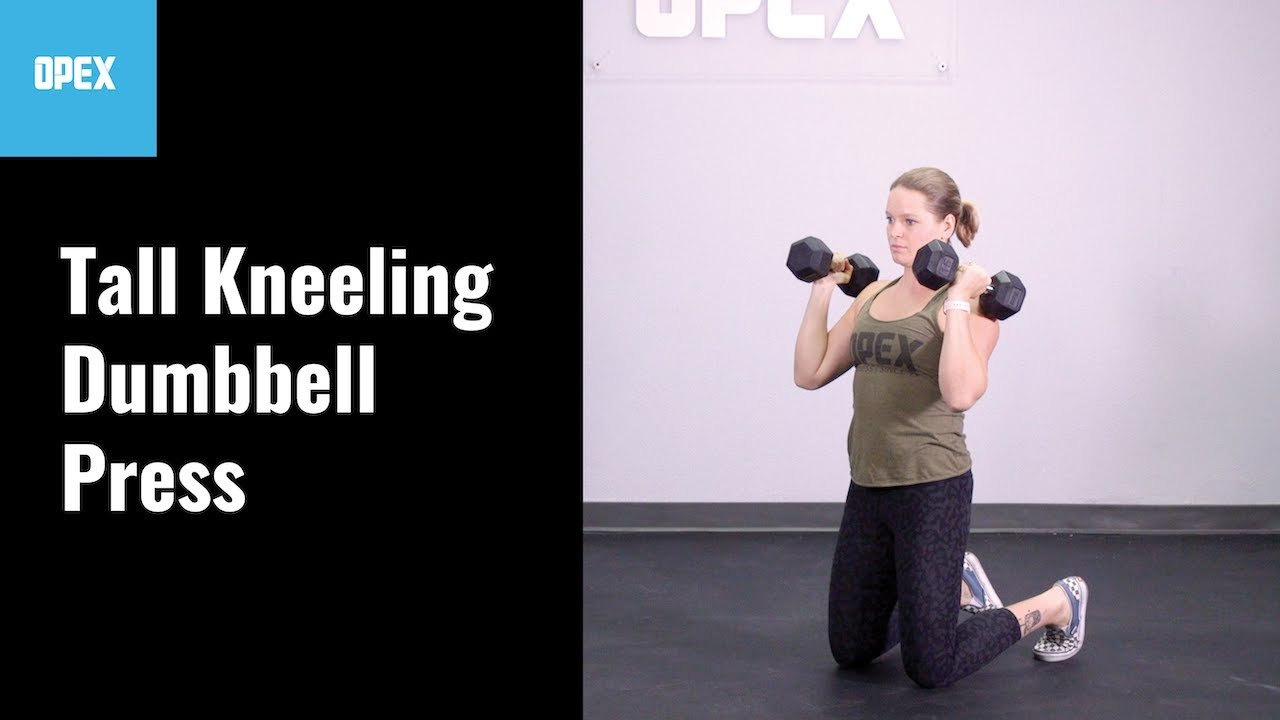
Begin with one dumbbell at each shoulder and the forearms positioned to support the weights. Gently engage the glutes and brace the trunk so the hips and rib cage remain organized. Avoid pushing the hips far forward or forcing the ribs down so aggressively that you cannot breathe. The goal is an upright position you can sustain while the arms move.
Press the dumbbells overhead, then lower them back to the shoulders with control. Choose a hand orientation and elbow path that feel comfortable and allow the weights to move without striking your head. Do not force a particular rotation simply because another lifter uses it. Keep the grip secure and avoid letting the wrists collapse backward under the handles.
As the arms rise, let the shoulder blades move naturally. Keeping the shoulders rigidly pinned down is not the objective of an overhead press. Equally, reaching higher by throwing the chest upward changes the trunk position. If the weights only reach the top after a pronounced backward lean, reduce the load and reassess your available pressing range.
Lowering is part of the repetition. Bring the dumbbells to a consistent starting height instead of letting them drop into the next press. Use a breathing rhythm that fits controlled work and reset between repetitions when necessary. There is no need to hurry through the set before you lose the position.
Use a light set to find the actual limiting factor
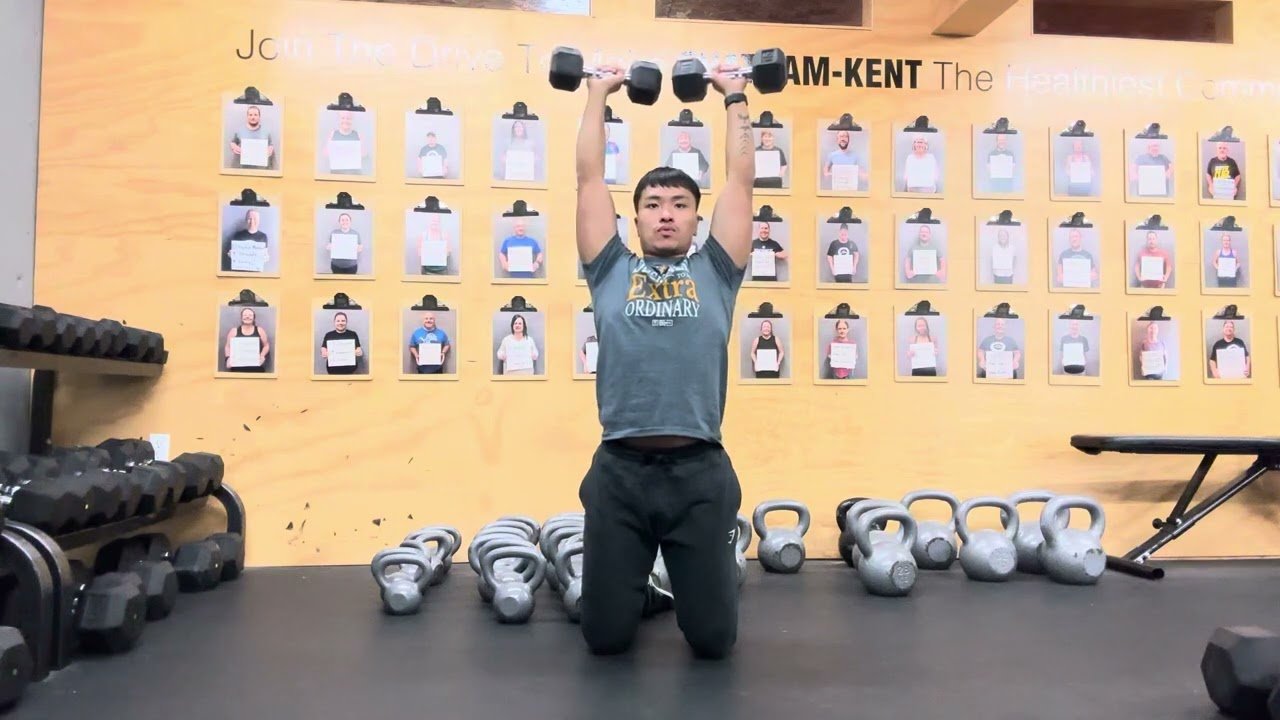
Record a side-view set with weights you can manage easily. Watch the relationship between the hips, rib cage and upper arms. Look for the hips moving backward, the chest lifting progressively or the head being pushed forward to clear the dumbbells. Compare the last repetition with the first rather than judging the whole set from one tidy moment.
A front view can reveal a sideways lean or one dumbbell moving ahead of the other. That observation is a reason to adjust the task, not a diagnosis of an imbalance or an injury. Reduce the load and see whether the difference persists. Do not automatically add extra work to one side based on a single video taken after a tiring session.
Separate shoulder effort from the difficulty of holding the kneeling position. If maintaining balance, tolerating knee pressure or controlling the trunk ends every set first, a seated press may be a more useful way to train pressing strength that day. You can practice tall kneeling separately with a lighter task rather than making every shoulder set a struggle.
This variation is not automatically easier, harder or safer than standing. It removes some options for leg assistance while introducing a different support position. Treat it as a distinct exercise in your log. A smaller dumbbell pair than you use standing can still be appropriate when the purpose is controlled pressing from both knees.
Match the equipment and variation to the purpose
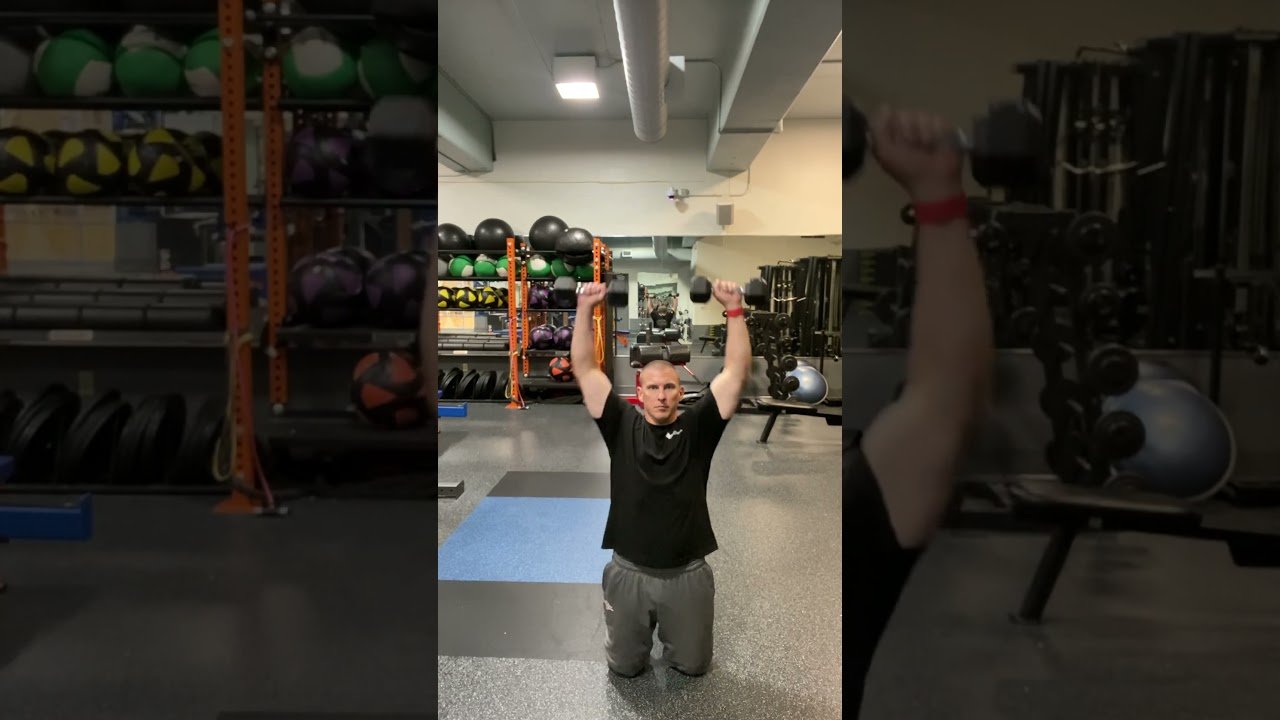
Choose dumbbells with usable handle clearance and increments that suit a modest press. Fixed dumbbells are straightforward; adjustable and plate-loaded models offer different loading options. With adjustable equipment, verify the locking mechanism and the manufacturer's permitted use. Large plates or long handles can change how comfortably the weights sit near the shoulders, even when the total weight looks suitable.
Small loading increments are helpful when a larger jump disrupts the repetition. Check plate diameter, mounting and clearances for the specific handle rather than assuming change plates or add-on plates fit every system. Do not attach improvised extras to an overhead dumbbell. The useful equipment is the equipment you can hold securely, position comfortably and set down deliberately.
A seated press on a stable bench is a separate option when kneeling does not suit you. Backrest position, foot contact and dumbbell clearance still need attention. Supporting the back changes the task; it does not make the seated numbers directly comparable with your tall-kneeling numbers. Keep a separate record for each version.
Single-arm dumbbell presses, a two-handed goblet press and kettlebell presses are further alternatives, not interchangeable repetitions. A one-sided load changes the demand to resist leaning, and a kettlebell changes the grip and rack position. Fixed and adjustable kettlebells can be useful for those versions when their fit and loading suit you. Choose one variation for a clear purpose and learn its setup before adding weight.

Equipment Worth Exploring
Explore equipment, accessories and gear from our carefully selected range.


Rubber Hex Dumbbells
Rubber-coated hex dumbbell pairs with a stable shape for home and commercial strength training.




FID Bench MAX
Adjustable bench offering flat, incline, and decline positions + adjustable headrest.


Build a short block around consistent repetitions
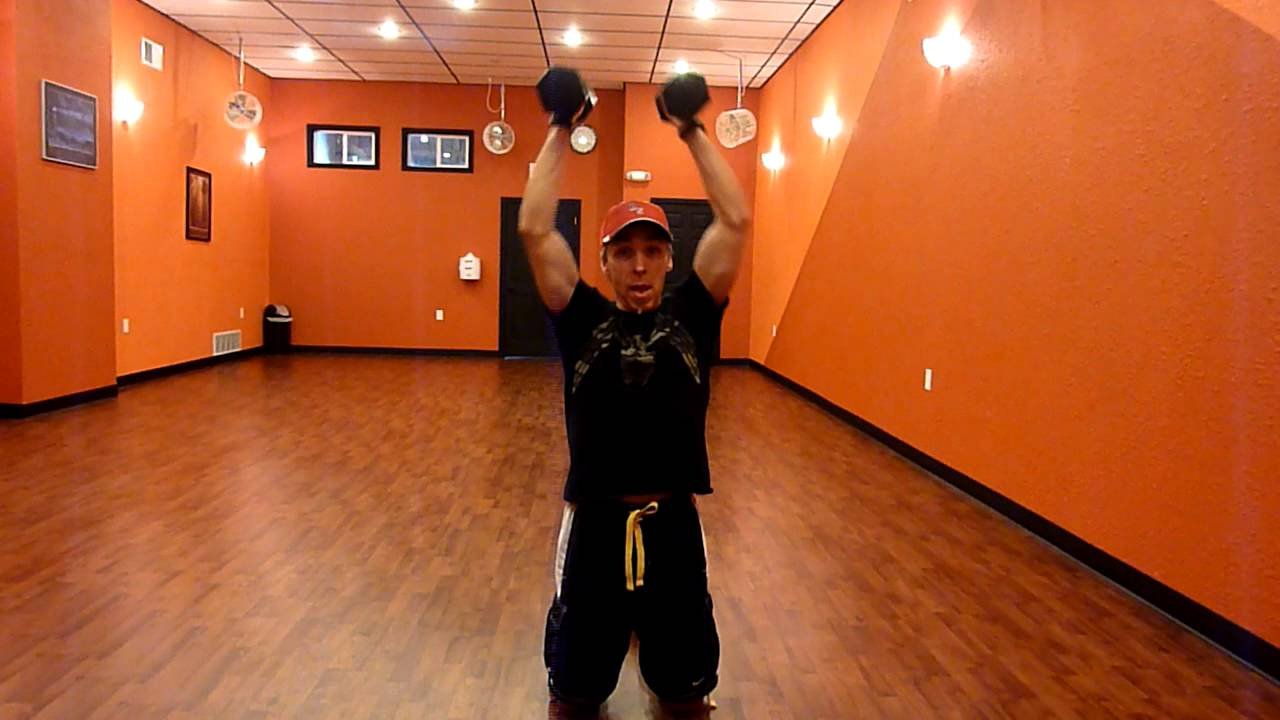
An adjustable starting example is two working sets of six to ten repetitions after a light rehearsal set. Select weights that leave a few controlled repetitions available. This is a practical trial, not a universally optimal prescription. Place it where it fits your shoulder or upper-body session, taking the pressing work already present into account.
For the first few sessions, keep the same knee spacing, padding, grip and starting height. Record the dumbbell weight per hand, repetitions and why you stopped. If you switch from pressing both weights together to alternating arms, note the change. It creates a different task and should not quietly inflate a progression record.
When both sets reach the top of your chosen range with a similar trunk position and controlled return, consider the smallest useful increase. If the next pair makes you lean or rush, stay with the previous weights and build consistency. Progress can mean a more dependable setup before it means a heavier implement.
Use mind-muscle attention to notice how the movement feels, but judge the block with more than a pump or soreness. Can you prepare the position easily, complete the intended work and recover alongside the rest of your training? Keep the tall-kneeling press when it serves that purpose. If a seated or standing version fits better, changing the setup is a programming decision rather than a failure.

Funny Gym Shirts & Workout Gear
Funny gym shirts, tanks, hoodies and workout gear for lifters who like training hard.

Dumbbell Heartbeat Crewneck Pullover Sweater Workout Fa T-Shirt
Add a playful “Dumbbell Heartbeat” touch to your casual rotation.

I Have Abs-Olutely No Idea Meme Hooded Newbies & Hoodie
Keep it laid-back with a little “I Have Abs-olutely No Idea” attitude.

Gymhead Mind Muscle Connection Sweater Meme T-Shirt
Bring “Gymhead” humor to your everyday gym style.

Progress Stoic Sigma Greek God Marble Sculpture – T-Shirt
Rep “Progress Stoic Sigma Greek God Marble” humor in and out of the gym.

Consistency Is Key Stoic Greek God Marble Sculpture T-Shirt
Make gym days more fun with “Consistency is Key Stoic Greek God Marble” style.

One More Rep Shirt: Motivational & T-Shirt
Make gym days more fun with “One More Rep” style.

Lifting Is In My DNA Shirt – & Gains T-Shirt
Make gym days more fun with “Lifting Is In My DNA” style.


Be Stronger Than Your Excuses Motivational Workout for Sticker
A fun “Be Stronger Than Your Excuses” touch for bottles, laptops, and lockers.

Live Love Lift Muscle Shirt Athletic Vest Workout Gym L Tank Top
Your gym-day look, with a playful “Live Love Lift” twist.