Advertising disclosure: This page includes affiliate product links that may earn us a commission, as well as products from our own store.
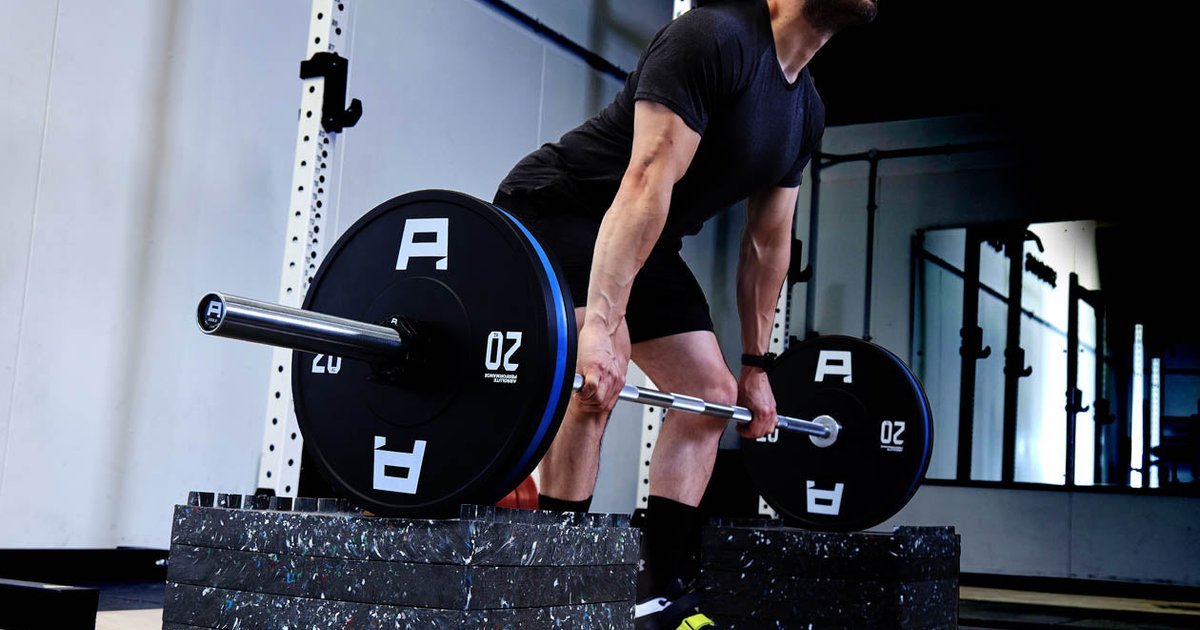
A deadlift can break smoothly from the floor yet stall as the bar reaches the knees. A block pull starts the loaded plates on two stable supports, letting you practice a chosen part of that range. That sounds simple, but the height, block stability and quality of the reset matter far more than a flashy overload number.
Used deliberately, the lift can add targeted deadlift practice. Used carelessly, it becomes an excuse to raise the bar too high and perform an unstable partial rep. Here is how to build a reliable setup, lift cleanly and decide whether block pulls fit your actual goal.
Why a block pull is not just a shorter deadlift
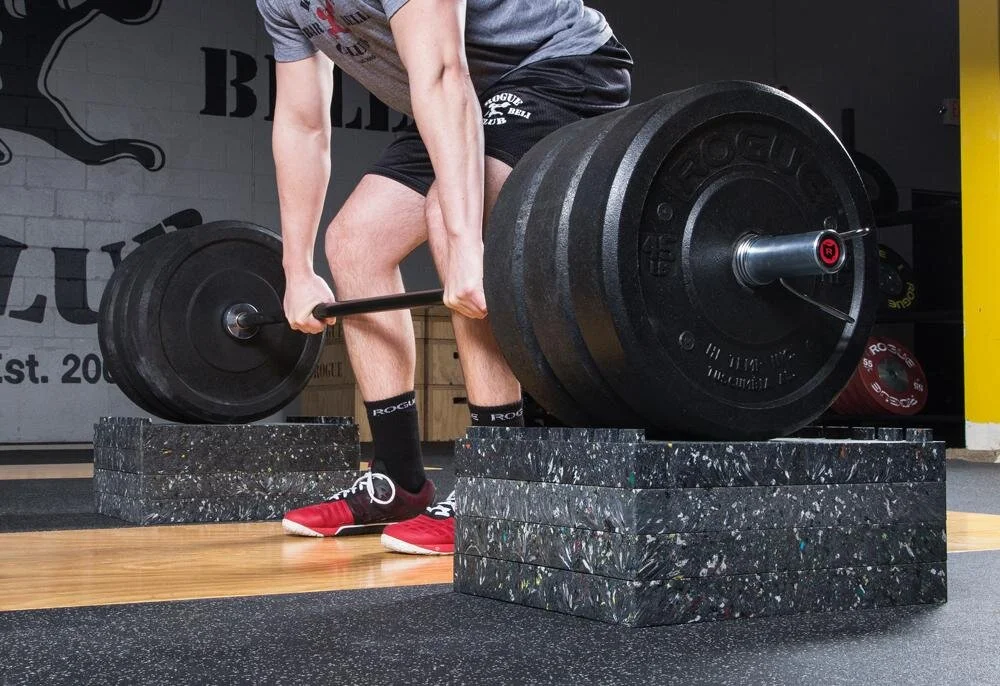
With a conventional deadlift, the bar starts with the weight plates on the ground, and the lifter must create force and preserve position from the bottom to lockout. Put those plates on two secure blocks and part of the lower range disappears. The shorter start generally changes the knee and hip angles and makes a relatively heavy top-half pull possible. The remaining work still requires strong hips, back extensors, lats, trunk bracing and grip. It is not simply a deadlift that becomes easy.
The defining feature is where the load rests. In a genuine block pull, the large outside plates sit on blocks of equal height. In a rack pull, the bar itself typically lies across the safety pins of a rack. The shaft behaves differently when its plates are resting on a surface than when the shaft is supported directly. A lifter who pulls the slack out of a bar with the plates on blocks gets a start closer to the contact mechanics of a floor deadlift. That does not make every block pull automatically better than every rack pull.
The useful question is whether the variation trains a meaningful portion of your pull. If the bar breaks the floor well but regularly stalls just below the knees, low block work might let you accumulate additional clean repetitions through that range. If you struggle from the floor, high block work will not replace the practice you need there. Nor does adding a huge number of plates prove the original weakness has been fixed.
Decide on a single training objective before setting the blocks: a repeatable midrange start, a stronger lockout, practice holding heavy weights, or a temporary reduction in range while you build sound hinge mechanics. Then judge success against that objective rather than a headline number.
Choose block height by the range you need to train
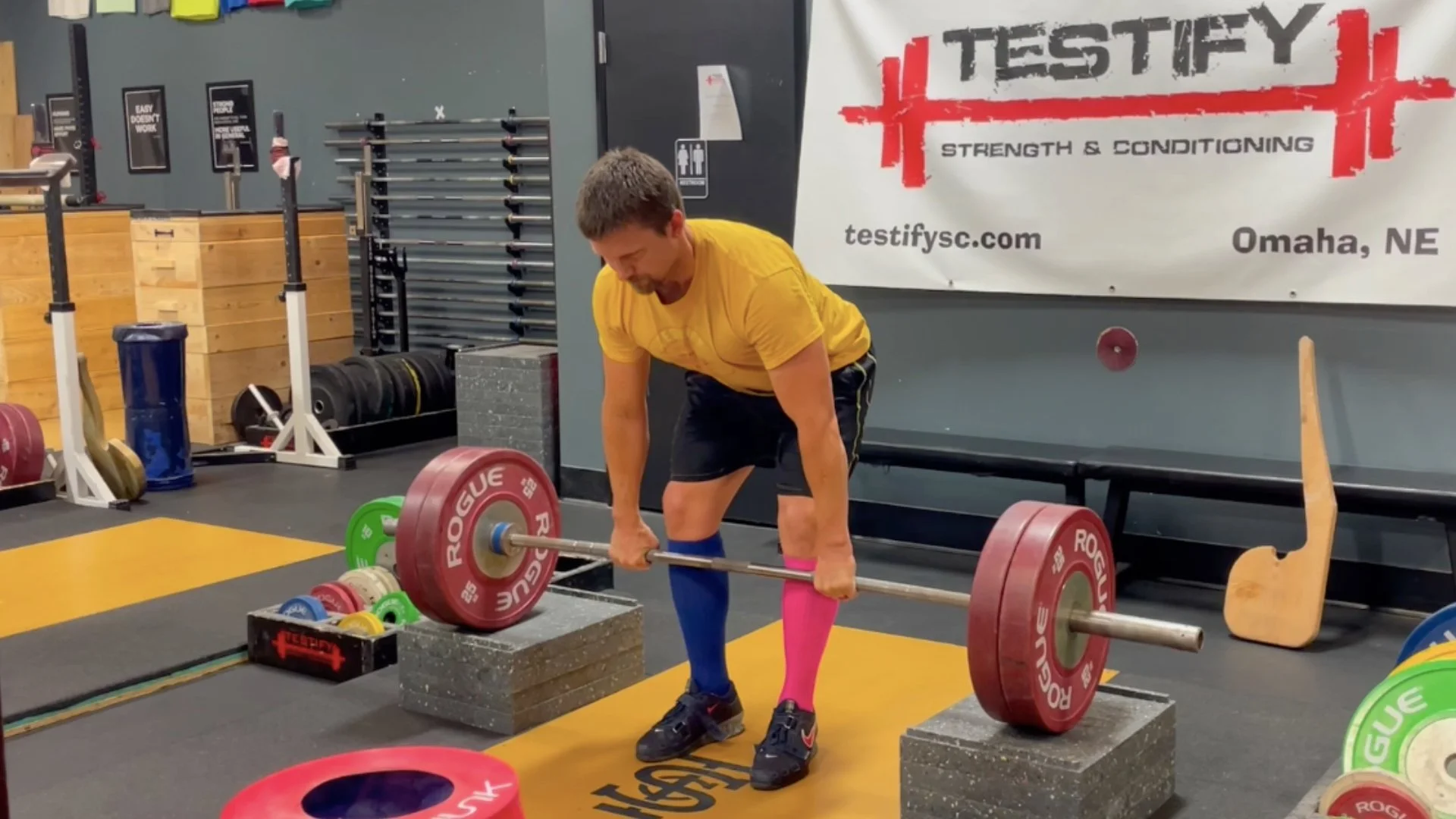
The most common mistake is choosing the tallest available supports because they allow the biggest weight. Raising the starting point changes the movement itself. A bar just a few inches above its normal plate-supported height still demands a substantial hinge and knee drive. A knee-height bar reduces the movement further. An above-knee bar may emphasize lockout exposure, but it says far less about your ability to break a loaded deadlift from the floor.
Watch ordinary deadlift repetitions from the side to see where the bar consistently slows. Do not rely on one maximal attempt; fatigue, stance, footwear and a weak initial position can create misleading sticking points. A sensible first experiment is a block height that puts the shaft slightly below the range you want to strengthen. It forces you to travel through that section rather than starting above the difficulty.
Record the height of the shaft from the ground, the plate diameter and the kind of support used. Standard large plates already place a loaded bar several inches above the floor, so adding a three-inch support raises the shaft by roughly three inches relative to its ordinary start, not to an entirely new reference point. For consistent comparisons, keep shoes, stance width, grip and block arrangement the same from session to session.
Adjust height for an actual reason. If low blocks force the same uncontrolled spine position you were trying to avoid, a modestly higher start or lighter weight may be a sensible regression. If your aim is strength carryover to full deadlifts, favor lower supports initially because they preserve more of the relevant movement. Higher blocks may still make sense for specific top-end or grip training, but record them as a distinct exercise rather than comparing the load directly to a full pull.
Build a stable station before loading the bar
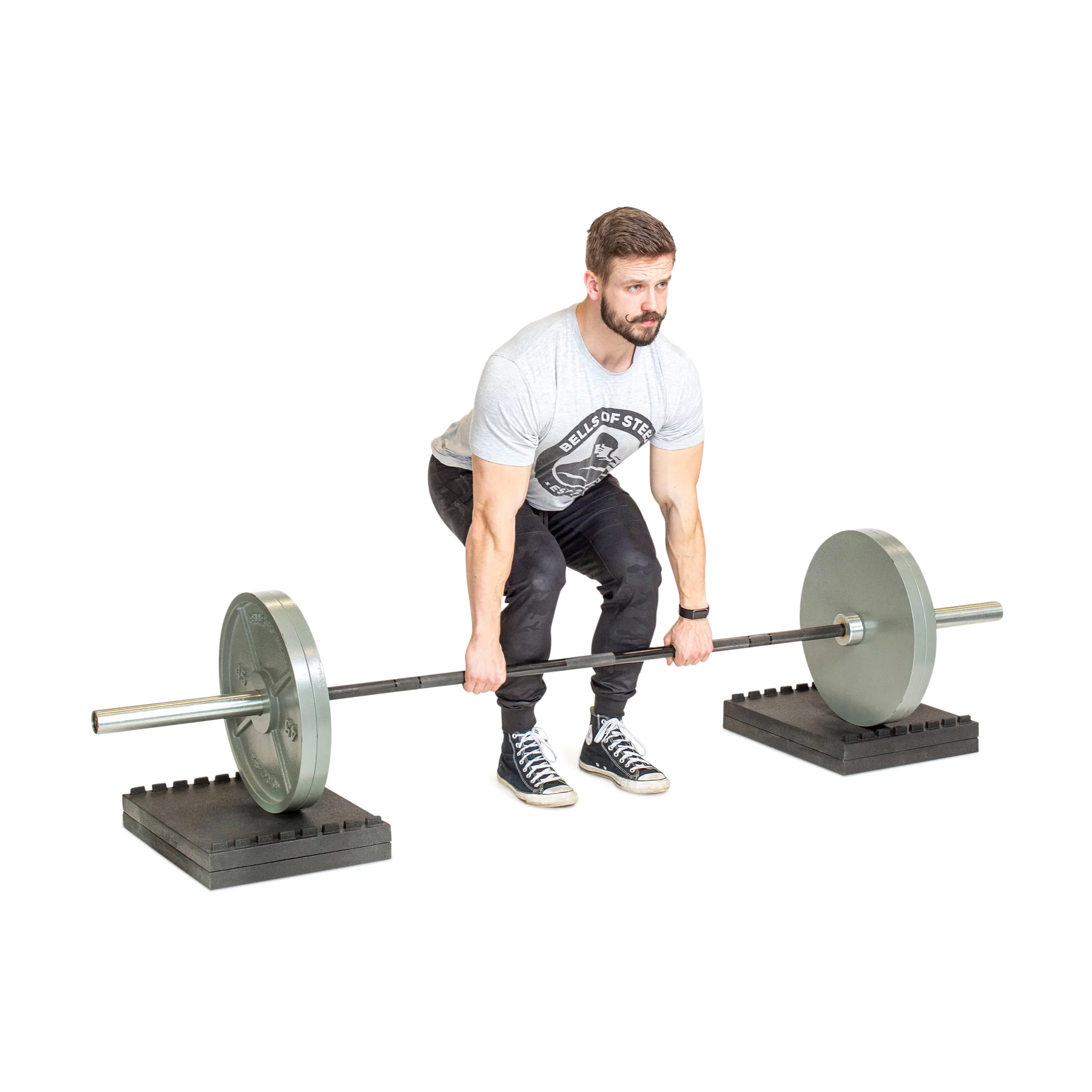
Heavy block work puts repeated force into the floor, the blocks and the plate edges. A secure station is therefore part of the exercise, not a cosmetic accessory. Use purpose-built pulling blocks or sturdy wooden supports intended for barbell loading. Both supports should be equal in height, placed on an even non-slip surface and far enough apart that each loaded outside plate sits centered on its own platform. A plate resting close to the edge can tip or shift during the reset.
Interlocking plastic blocks and padded metal platforms can be practical options, but their capacities, dimensions and behavior vary. Check what the manufacturer says about the load and intended use; a foam step, unstable tower of loose plates or improvised stack with unknown strength is not automatically safe. Test the station with a light bar first. If a block rocks, moves or compresses unevenly, fix the arrangement before adding weight.
Set up as you would for a normal deadlift: stand with the bar over the middle of the foot, feet at a repeatable width and shins close to the shaft. Hinge back, bend the knees as needed, and take the bar just outside your legs. Choose double overhand, hook grip, mixed grip or straps to match the goal. Heavy posterior-chain work may justify straps when grip gives up first; a grip-focused session should not automatically remove the very demand you are trying to build.
Clear the area around the bar, make sure collars hold the plates and plan the return. A loaded bar should not roll off a block or rebound into a nearby person. Some surfaces settle or bounce when the plates touch. Take time to see what happens after each repetition, especially if the supports have been moved or the loading has changed.

Equipment Worth Exploring
Explore equipment, accessories and gear from our carefully selected range.


Competition Plates
Competition-style bumper plates for Olympic lifts and loaded strength training.


Multi Pull Smith Rack MPHR-780
All-in-one rack with a Smith machine, functional trainer, lat pulldown and low row.


Grip Plates
Rubber-coated weight plates with handholds for loading barbells and machines.
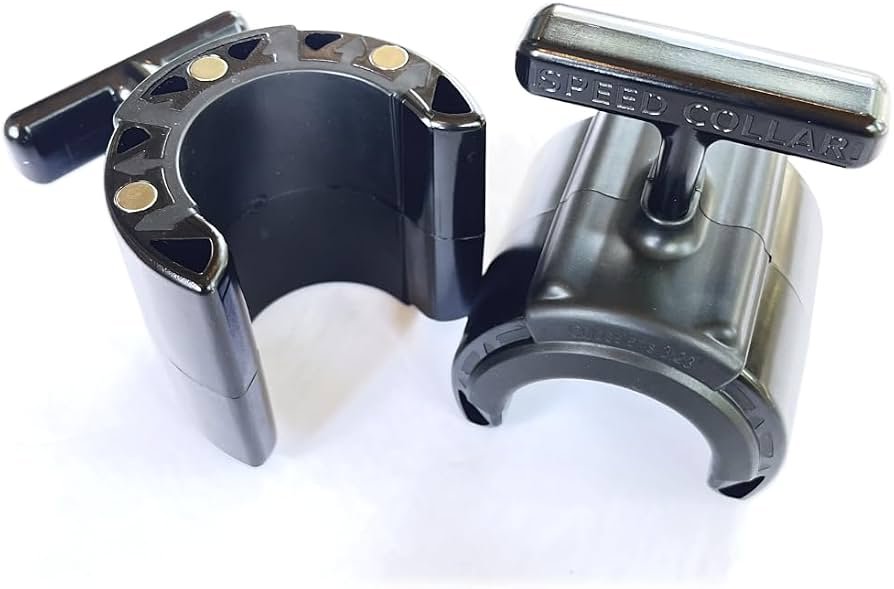
Speed Collar
Quick-release collars designed to secure weight plates on standard two-inch Olympic bars.
Brace, take out the slack and finish without leaning back
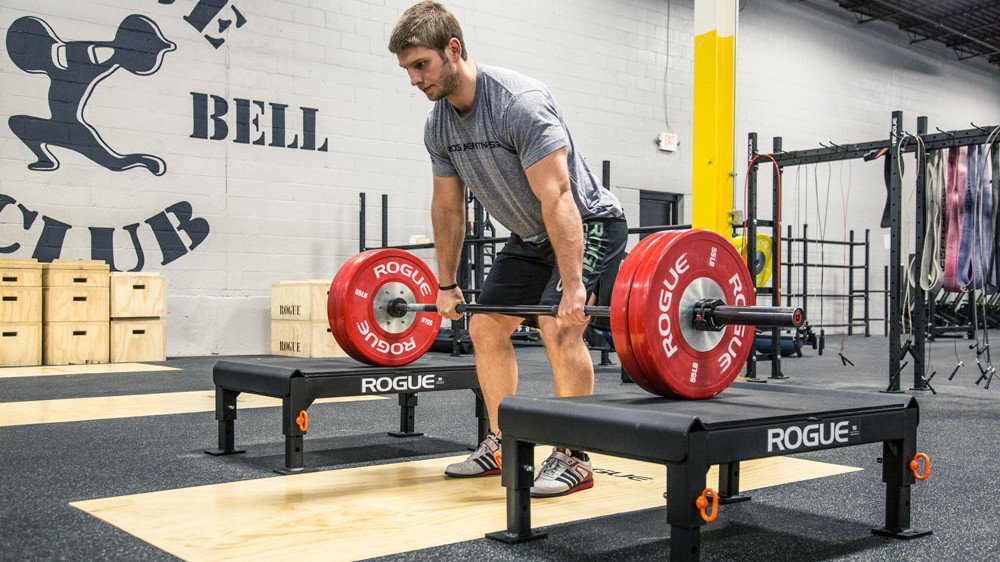
Approach the bar with a stance you can reproduce. Keep your arms straight and begin with the shoulders close to the bar’s vertical plane, while setting your hips in a position that lets the knees and hips extend together. Inhale, create a firm trunk brace and keep the bar near the legs by holding the upper back tight. Avoid treating a higher start as permission to yank with an unprepared spine.
Build tension before the plates leave the blocks. As the shaft and arms become tight, push through the floor and extend the knees and hips in a coordinated motion. The bar should travel close to the shins and thighs. Jerking against a completely loose system may jerk the torso out of position; drifting several inches in front of the legs increases how hard the hips and back must work to complete the lift.
At lockout, stand tall. Straight knees and fully extended hips are enough. There is no benefit to pushing the hips far forward or leaning back aggressively with the lower spine. If you need to rest the bar on the thighs, bend the knees again or hitch upward to finish, the load has become too heavy for the intended clean repetition. Reduce it and own the range you selected.
Lower by sending the hips back first, then bending the knees enough to return the plates to the same place on the supports. Let them settle. Treat the next repetition as a fresh start: maintain foot placement, reset the brace and take slack out again. Bouncing the plates to get another rep skips the exact dead-stop strength the drill is meant to develop and can send blocks out of position.
Film one repetition from the side when working near your training limit. Check bar proximity, hip and shoulder rise, lockout and the full return. A smooth video tells you more about technique than how dramatically the bar bends under the plates.
Block pulls versus rack pulls, RDLs and full deadlifts
The deadlift family shares many muscles, but the differences matter for programming. Full deadlifts train the complete task from a settled start on the floor to lockout. Block pulls train a selected elevated start, usually with the plates bearing on supports. Rack pulls also shorten the range, but the shaft typically sits on safety pins. A Romanian deadlift is commonly started standing and emphasizes a controlled hip hinge on the way down and back up, usually without resetting the plates on every repetition.
For a lifter whose floor position is already reliable, a low block pull can be a useful secondary day. It reinforces keeping the bar close while allowing the start position to be repeated at a chosen height. If a gym lacks proper blocks but has a secure rack, rack pulls may be the convenient way to train a similar segment; just acknowledge the different support mechanics instead of pretending the two lifts are identical.
A shorter range is not a guaranteed improvement for muscle growth. The glutes, hamstrings and spinal erectors still work, but removing the deepest portion of the lift reduces the joint excursion. For broad posterior-chain development, retain exercises through productive full ranges, such as controlled hinges and suitable knee-flexion work, rather than assuming that an extra-heavy partial pull must build more tissue.
Use the movement that matches the training problem. Poor speed from the floor usually calls for better floor-pull practice and appropriate technique work. Losing back position near the knees may justify a carefully chosen low block height. A weak top-end position may justify higher partial pulls, but they need not displace all full-range training. Grip-specific work is another legitimate reason to practice holding heavy weights from a stable elevated position.
There is no magic universal block height, loading percentage or guaranteed transfer. The most honest test is whether the training improves technically sound performance in the task you originally cared about.
A four-week progression and common mistakes
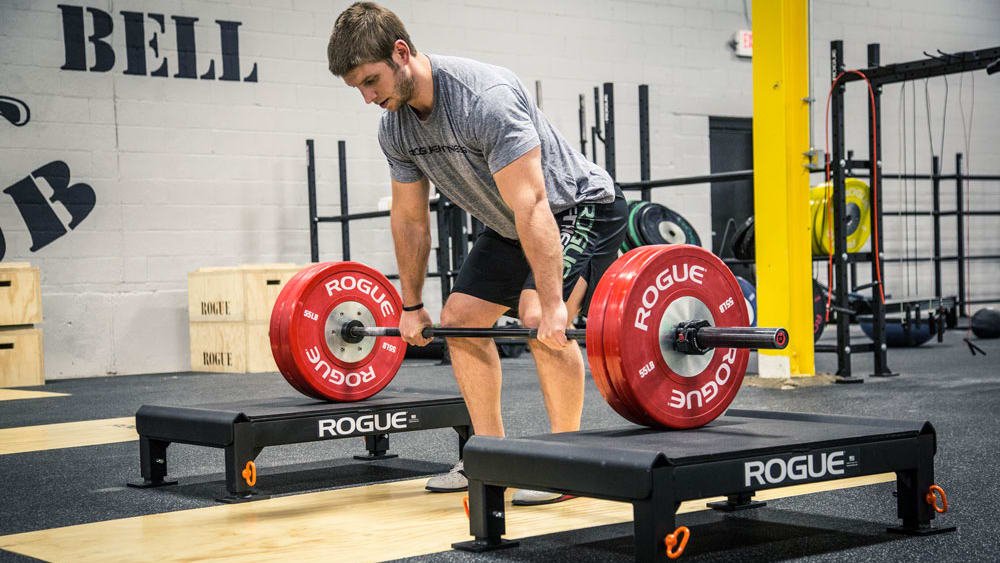
Use the same supports and shaft height for at least several sessions so your log compares comparable repetitions. One block-pull session per week can work as an accessory for an intermediate lifter whose overall training already includes deadlifts, squats and rows. Choose a load with one or two clean repetitions left rather than starting above your floor-deadlift maximum just because you can.
- Week 1: Three sets of five controlled dead-stop repetitions; write down block height, plates and rest time.
- Week 2: Four sets of four. Add a small amount of load only when the brace, bar path and reset remain unchanged.
- Week 3: Four sets of three, working somewhat heavier while leaving a clean repetition in reserve.
- Week 4: Two or three lighter sets of four, then compare a familiar floor-pull load or a previously recorded clean block-pull set.
This is a practical example, not a study-proven formula for everyone. Reduce sets if you are accumulating heavy hinges elsewhere. If your technique changes when the weight rises, hold the load steady until the rep quality catches up, or reduce it. Recover appropriately between hard sessions; adding overload work blindly can crowd out the normal full-range training it is meant to support.
The most revealing faults are simple: uneven or sliding blocks; plates failing to land centrally; a jerky first inch; hips shooting up before the shoulders; the shaft drifting away from the legs; a hitched top; and bouncing into the next repetition. Solve the underlying issue. Poor bar path calls for a lighter load and a better setup, while unstable hardware calls for different hardware, not a stronger verbal cue.
Stop if there is sharp pain, numbness or symptoms radiating down a leg, and obtain individualized medical assessment rather than forcing another heavy pull. The objective is more control in a useful strength range. A clean block pull that contributes to better full-range lifting is worth much more than a giant partial-lift number that cannot be repeated.

Funny Gym Shirts & Workout Gear
Funny gym shirts, tanks, hoodies and workout gear for lifters who like training hard.

Grip Train Get A Grip Jumper Grip Training T-Shirt
Show some gym-day personality with “Grip Train”.

I Love Deadlifts Valentine's Gym Shirt | Funny Leg Day T-Shirt
Show some leg-day attitude with a playful “I Love Deadlifts Valentine's” tee.

PR or ER – Hardcore Powerlifting for Deadlift PR Chaser Hoodie
Show off your deadlift humor in a laid-back “PR or ER” hoodie.

Deadlift Flaming Skull Decal , Hardcore Gym Accessory G Sticker
Put “Deadlift” gym humor on your laptop, bottle, or gym gear.

Deadlift Skull Cyberpunk Gym Shirt for Powerlifting Leg T-Shirt
Make gym days more fun with “Deadlift Skull” style.

Gym The Bar Does Not Lie Medieval Knight Crewneck for S T-Shirt
Show some gym-day personality with “The Bar Does Not Lie Medieval Knight”.

Lift Heavy – Hardcore Heavy Metal Gym Muscle Shirt for Tank Top
Bring “Lift Heavy Tank” humor to your next lifting session.

Gym Sworn to the Iron Oath Medieval Knight Lifting Shir T-Shirt
Make gym days more fun with “Sworn to the Iron Oath Medieval Knight” style.

Platehead Powerlifting Tee
Heavy lifts, good laughs, and a little “Platehead Gym Skull” energy.

Día de los Muertos Deadlift Gym – Mexican Calavera Crew T-Shirt
Show some gym-day personality with “Día de los Muertos Deadlift”.