Advertising disclosure: This page includes affiliate product links that may earn us a commission, as well as products from our own store.
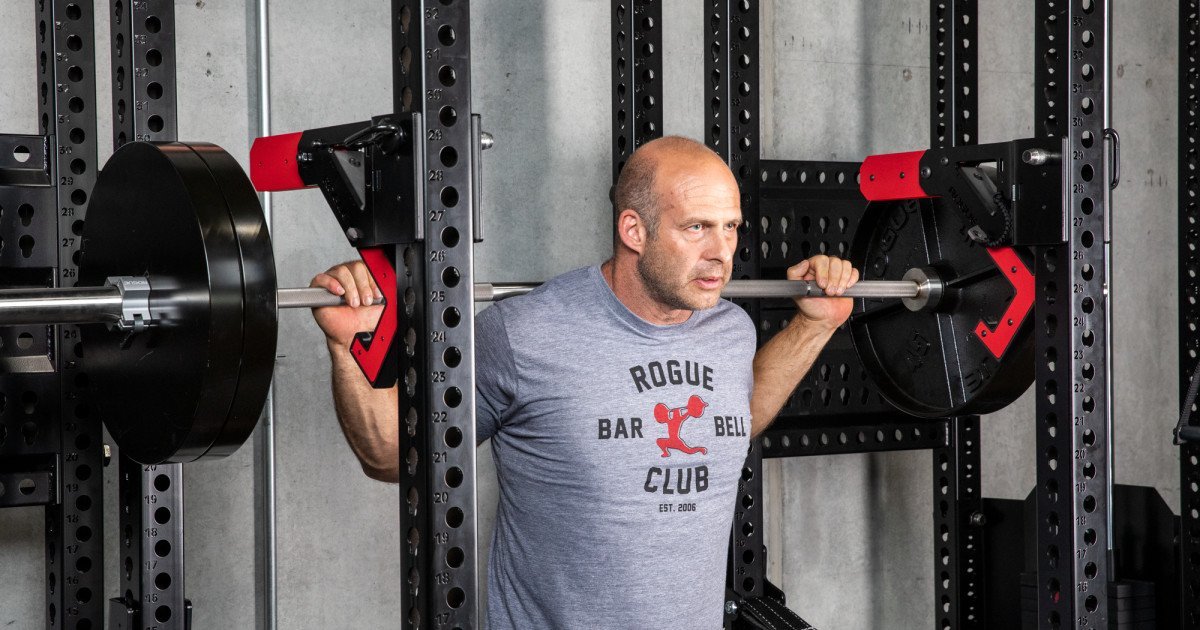
A rack-mounted monolift changes the handoff between the rack and the lifter. Instead of walking a squat backward from fixed hooks, you lift the bar and let the hooks retract. The Rogue AM-2 Adjustable Monolift 2.0 brings that mechanism to Monster racks. Its value depends on more than how much weight it can hold: the rack interface, loaded hook position, bar clearance and adjustment procedure all need to work together.
Start with the rack interface, not the product silhouette
The AM-2 is the Monster version and uses 1-inch detent pins. The similarly named AML-2 is for Monster Lite and uses 5/8-inch pins. Both have black brackets and red jaws, so a photograph alone is a poor way to identify the correct purchase. Check the full model name and the rack family before comparing prices or planning a training station.
Nominal upright dimensions do not settle every fit question. Bracket clearance, mounting-hole position and nearby hardware also affect installation. A manufacturer declaring compatibility with its own rack family does not certify every other rack with a similar-looking tube. If the proposed combination is outside the stated compatibility, get a specific answer for that combination rather than treating a close measurement as permission to proceed.
This principle also applies to ordinary J-cups. REP's Round Sandwich J-Cups 2.0 have separate rack-series choices, and REP does not guarantee compatibility with other manufacturers' products. Moving from a fixed cup to a pivoting attachment adds moving parts to an already important interface. The sensible first question remains the same: is the attachment intended for the rack that will support it?
Inspect the entire mounting area, including anything already installed on adjacent faces. Plate-storage horns, cable hardware and other attachments may occupy space that looks empty in an isolated product image. Make a list of the exact rack and attachments in the intended bay. A compatible part is useful only when it can operate properly in the actual arrangement you intend to use.
Read the hook geometry in loaded and unloaded positions
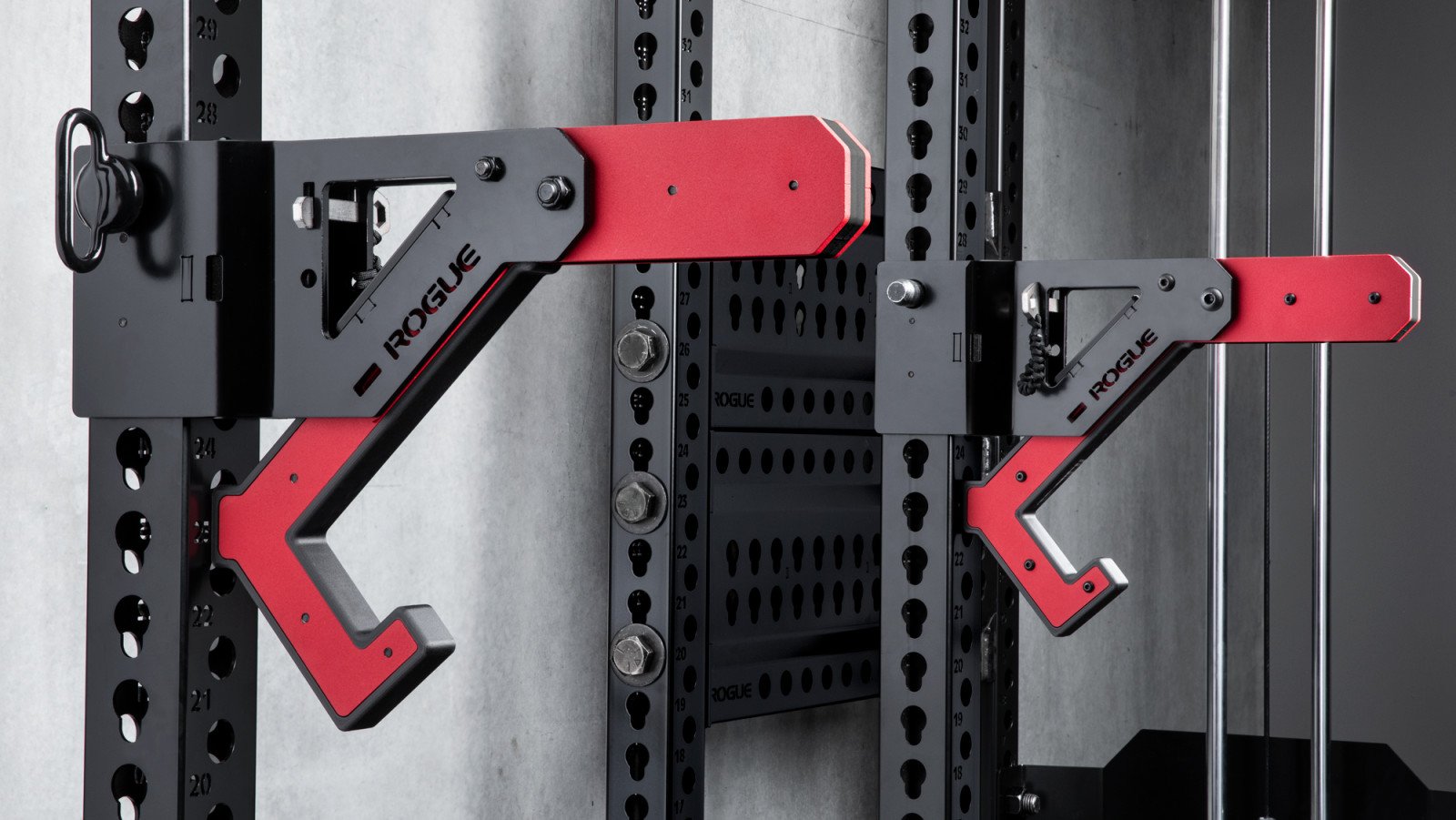
The AM-2 hooks retract approximately 5.5 inches toward the rack after the bar is lifted. The published overall depth from the mounting face is 16.75 inches, and the jaw depth is 3.25 inches. Those dimensions describe different parts of the mechanism. Retraction distance is not a promise that every lifter, grip or specialty bar has that much usable clearance everywhere.
Picture the start of a squat in three stages: the bar rests in the jaws, the lifter takes its weight, and the unloaded hooks swing away. The important relationship changes during that transition. A photograph showing a retracted hook does not show where the bar began. Before a demanding set, rehearse the complete transition with a manageable load and a clear plan for returning the bar.
Height is part of this geometry too. The working jaw sits below its mounting point, so noting an upright hole number without identifying the attachment can be misleading. If you switch between ordinary cups and the monolift, establish each setup separately. Copying the same hole number is not evidence that the starting bar height stayed the same.
Look at the return path as carefully as the lift-off. Both ends of the bar need to arrive at the intended receiving surfaces. A larger advertised receiving area can be helpful, but it does not steer the bar for you. The useful question is whether you can consistently find the jaws from your actual squat or bench position without reaching, twisting or guessing where the other side is.
Use the locking key and adjustment procedure deliberately
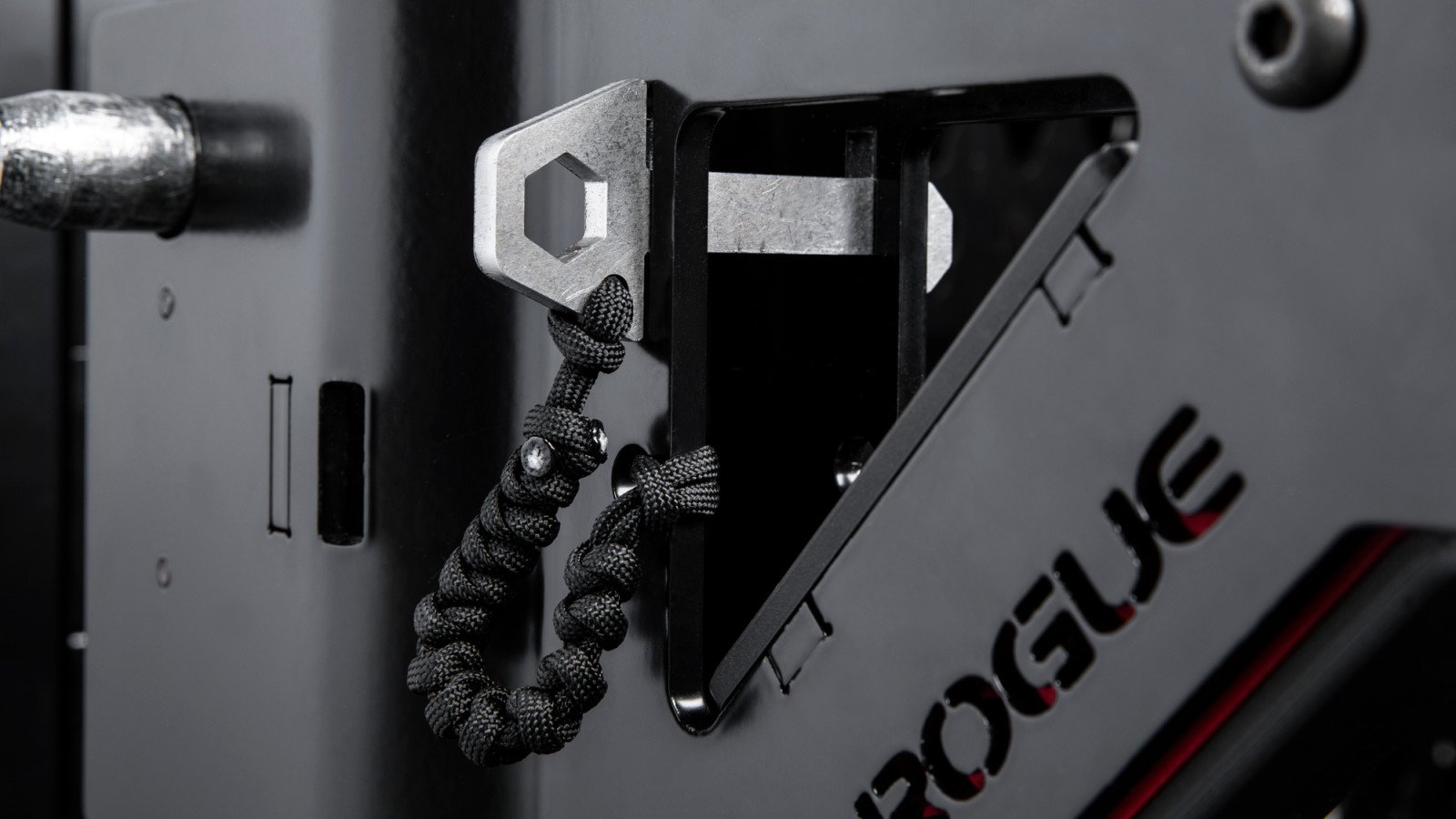
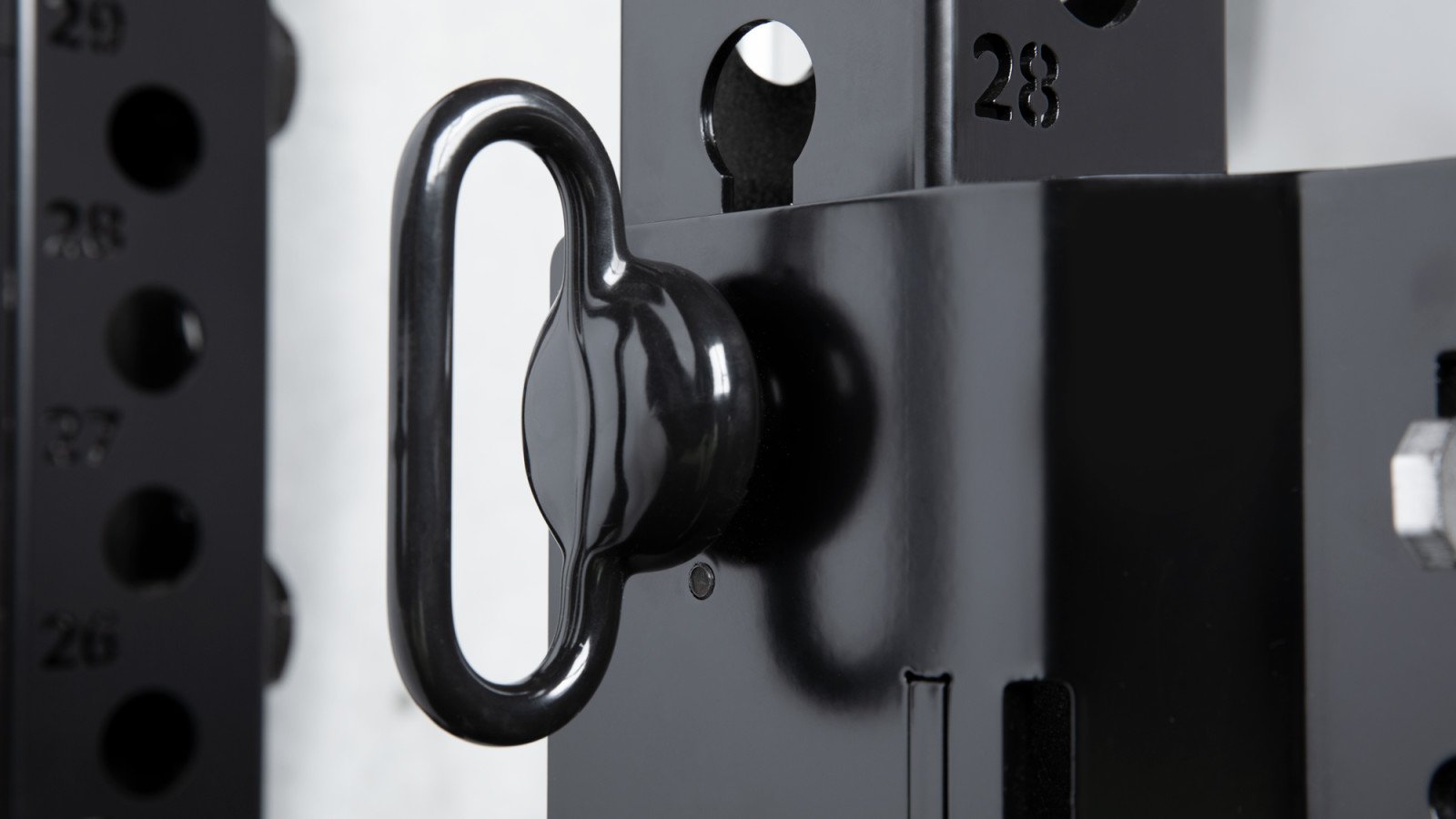
A tethered stainless-steel key can hold a jaw in place for adjustment or fixed-cup use. The attachment weighs 49 pounds per pair, or 24.5 pounds per side. A handle designed to make adjustment easier does not make the assembly weightless. Decide how you will support each unloaded unit while repositioning it, especially when moving between lifters or changing exercises.
The assembly instructions require the J-hook to move freely after the pivot hardware is tightened. They also specify the inward-facing orientation of the button heads when the assembled units are attached to the rack. Follow the complete instructions for the exact model. Do not improvise a bolt-tightening rule that prevents movement, and do not substitute an internet torque number for a specification that was never supplied.
Treat locked and free-moving use as two deliberate configurations. Before starting, establish which one you intend to use and check both sides accordingly. A tether helps keep the key nearby; it does not tell you whether the key is currently securing the jaw or sitting in its storage location. That distinction should be obvious during setup, rather than discovered after taking the bar's weight.
For a shared rack, keep separate setup notes for each lifter and exercise. Include the rack hole and whether the jaws are locked. Repositioning the bench or changing the bar can invalidate an otherwise familiar setup. A short preparation check is more useful than assuming that the person before you left the station in the configuration you prefer.
A cleaner lift-off still needs safeties and a return plan
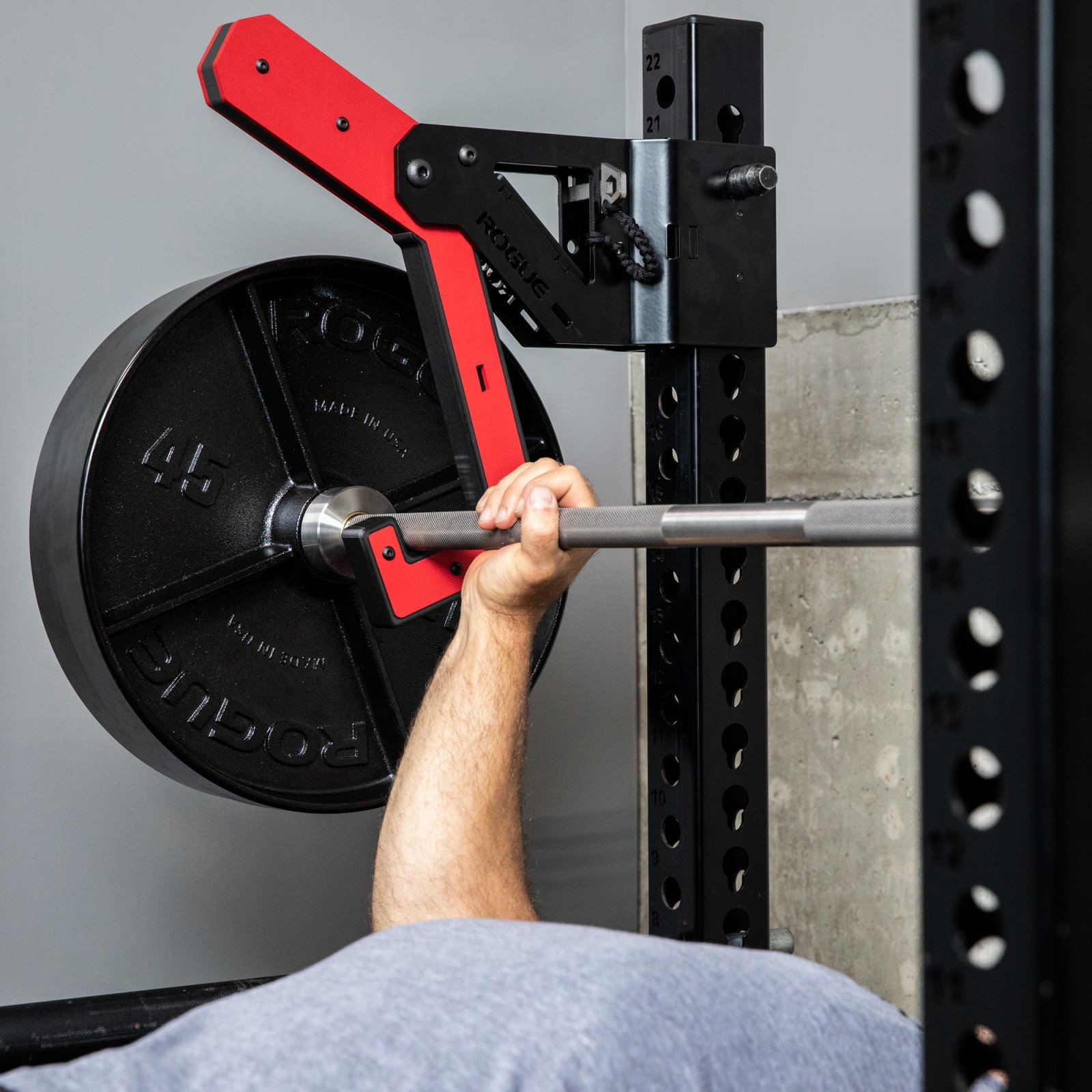
Removing the squat walkout changes how you reach the starting position; it does not make the squat itself a different strength exercise. Practice establishing the stance you intend to use before loading heavily. If the reason for buying is to avoid shuffling a heavy bar into position, judge whether the attachment actually makes that transition more repeatable in your rack.
For bench pressing, the bench position determines where your shoulders sit relative to the loaded bar. The hooks retract after lift-off, so clearance during the press and access during reracking are separate checks. Start with an easy rehearsal of the entire sequence. Do not assume that a setup which clears the hooks during repetitions automatically provides a comfortable return path at the end of a demanding set.
Retracting hooks receive the bar at the rack; they are not a catch system for a failed repetition below that height. Keep appropriate safeties and a competent spotting plan for the lift. Rogue recommends a rack or rig secured to the floor or wall and spotters for heavier lifting. The attachment should not be treated as a reason to remove those protections.
The broader equipment comparison is a station comparison. Racks, benches, straight or specialty bars, plates and collars each affect how that station is used. Check each component's instructions and fit independently. Products shown alongside a monolift guide are equipment options, not a certification that they fit the AM-2 or that they reproduce the same bar position on another rack.

Equipment Worth Exploring
Explore equipment, accessories and gear from our carefully selected range.


Multi Pull Smith Rack MPHR-780
All-in-one rack with a Smith machine, functional trainer, lat pulldown and low row.

Foldable Wall Rack
Wall-mounted folding squat rack designed to save floor space between workouts.


Multi Bench MBX-650 2.0
Adjustable multi-bench with roller adjustment, 15 backrest positions and accessory mounts.


Speed Collar
Quick-release collars designed to secure weight plates on standard two-inch Olympic bars.

Check the actual bar before deciding the upgrade is worthwhile
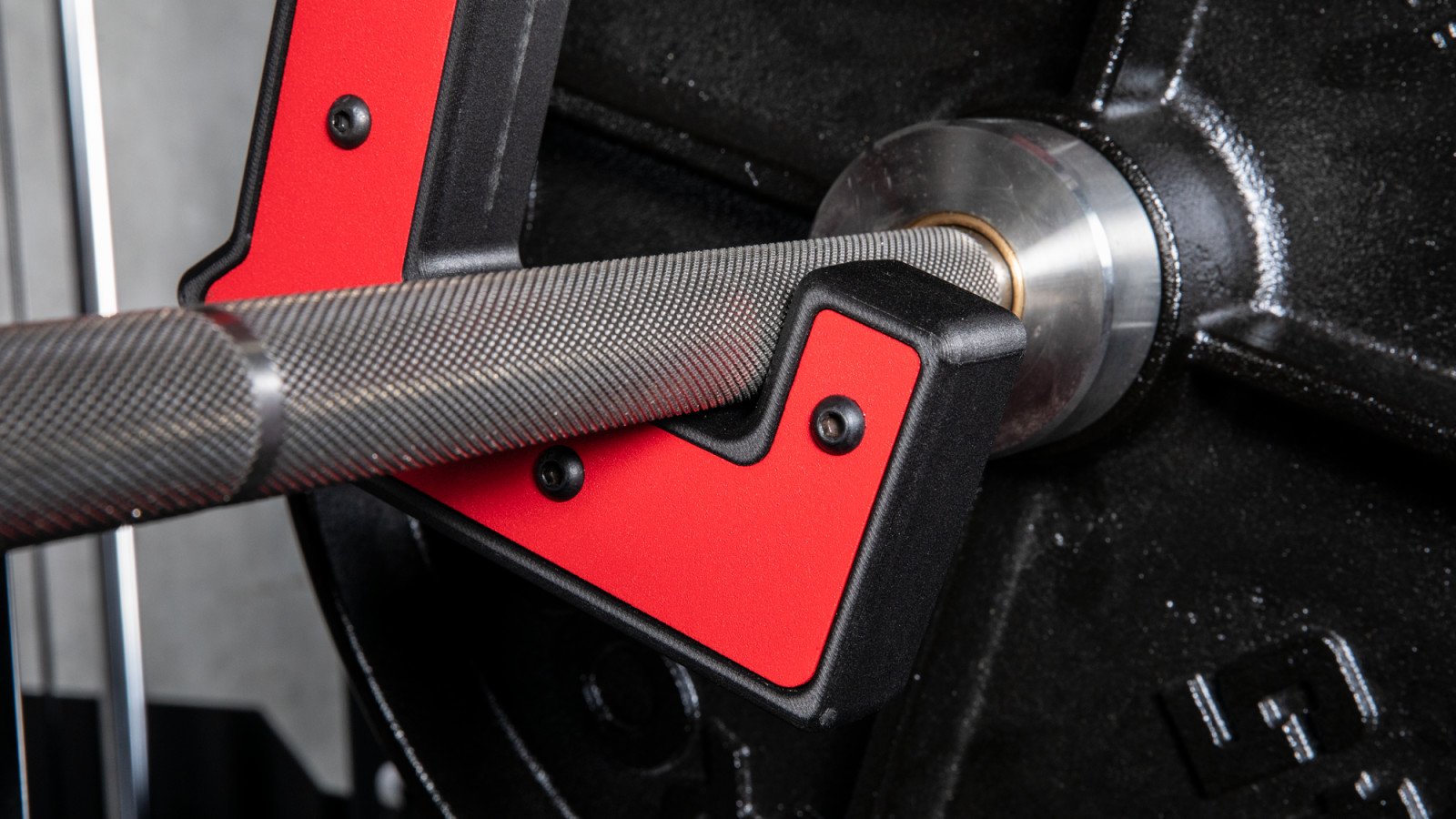
A straight shaft and a specialty bar can interact differently with the receiving surfaces. Handle projections, camber, sleeves and collars deserve a visual clearance check through the complete sequence. 'It rests in the jaw' is only the beginning of that check. The bar must also lift clear, travel through the exercise and return in a predictable way in the intended rack configuration.
Do the measurement work on the equipment you will actually use. Compare the relevant shaft section and surrounding projections with the receiving area, then check both sides together. Do not apply a diameter limit published for another manufacturer's J-cup to the AM-2. Similar-looking hooks can have different shapes and restrictions, and an attractive comparison table cannot replace the correct product instructions.
Record whether the new setup improves the task you bought it for: fewer awkward adjustments, a clearer start or a more consistent rerack. Keep the exercise and other setup choices recognizable while evaluating it. A larger load on the bar is not the only useful outcome; a station that is easier to prepare consistently can be valuable even if it does not change your training numbers.
A fixed J-cup remains a reasonable choice when it already provides an uncomplicated start and return. The AM-2 becomes more compelling when its retracting action solves a specific problem and the extra adjustment steps fit your routine. Buy the mechanism for that practical benefit, then keep checking the rack, key, hooks and actual bar as one working system.

Funny Gym Shirts & Workout Gear
Funny gym shirts, tanks, hoodies and workout gear for lifters who like training hard.

Meme : Squat Rack Top Home T-Shirt
Make gym days more fun with “Powerlifting Gym Meme” style.


Bench Press and Chill Funny Gym T
Make gym days more fun with “Bench Press and Chill” style.

Safety Practice Safe Sets Hooded Jumper Top Hoodie
Show off your bodybuilding humor in a laid-back “Gym Safety” hoodie.


Meme – Shhh I'm Doing Math Plate Math Weightlifting T-Shirt
Heavy lifts, good laughs, and a little “Shhh I'm Doing Math Plate Math” energy.

Lift Smart Brain Weight Plate Mind Muscle Connection 45 T-Shirt
For laid-back days and lifting humor: “Lift Smart Brain Weight Plate”.

Consistency King Tee
Make gym days more fun with “Consistency King Stoic Greek God Marble” style.

Repetition Stoic Shirt: Meme Sigma & Greek God Pump T-Shirt
Show some lifting attitude with a playful “Repetition Stoic” tee.

Barbell Crossed Weights 45LB Plate Decal Sticker
Put “Classic Barbell Crossed Weights 45LB Plate” gym humor on your laptop, bottle, or gym gear.