Advertising disclosure: This page includes affiliate product links that may earn us a commission, as well as products from our own store.
Resisted Sled Sprints: What 14 Studies Reveal About the First 10 Metres
Think of the first ten metres of a sprint. You are not upright and cruising yet. You are trying to drive your body forward from a near standstill, turn each contact with the ground into useful acceleration, and get to speed without wasting steps. This is the phase that sled towing deliberately overloads.
But a sled is not a magic acceleration machine. A review of 14 controlled studies involving 344 team-sport athletes found a clearer improvement at five and ten metres than at twenty. That distinction matters if you play football, rugby, basketball or another sport where a short burst can be more important than top speed. It also changes how you should load the sled, choose distances and judge progress.
1. The 14-study result: the first metres matter most
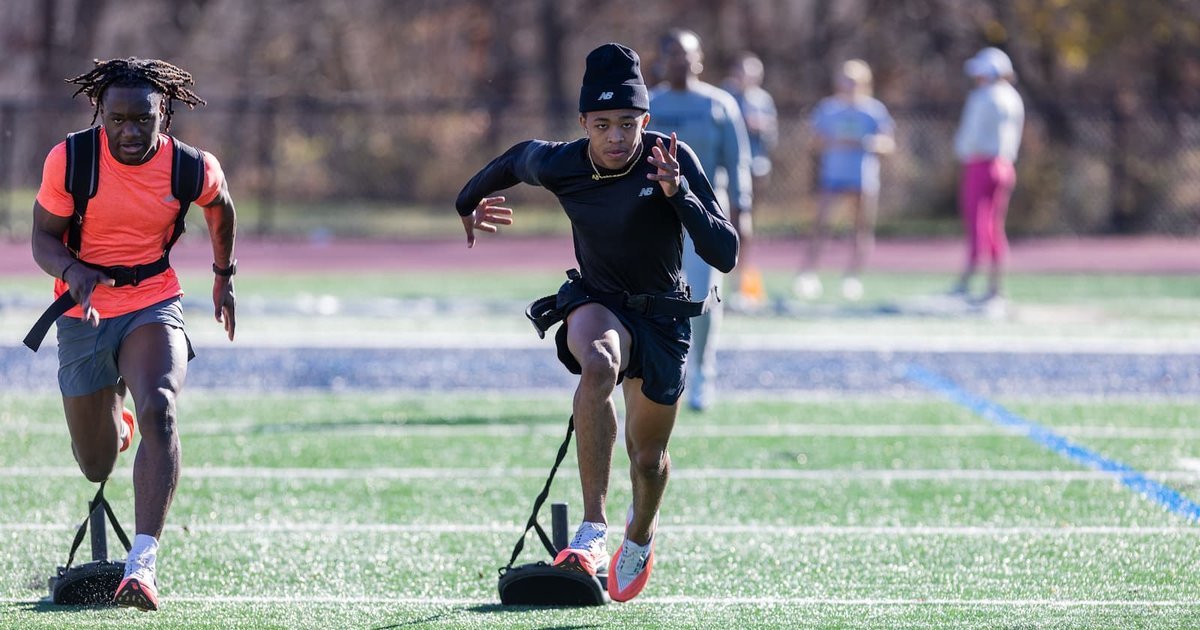
The 14-study synthesis assessed resisted sled work in team-sport athletes, then examined sprint times over five, ten and twenty metres. The combined results favored sled training at five metres, with a standardized mean difference of -0.87, and at ten metres, at -0.40. Both estimates met the review’s statistical-significance threshold. At twenty metres, the estimate was -0.34 but its uncertainty range crossed zero, so that result was not statistically conclusive.
Those are standardized research effects, not seconds taken off a particular athlete’s time. A negative number means faster sprint times in the way the data were coded; it does not mean every participant improved or that dragging more weight automatically produces greater gains. The studies also had an overall high risk of bias and only moderate methodological quality. Differences in athlete level, training dose, surfaces and comparison groups limit how precisely the result can be translated into one program.
The practical inference is narrower and more useful than the slogan “sleds make you faster.” They can be a worthwhile tool for improving short acceleration, especially when paired with regular free sprinting. The evidence is much less persuasive that tow work alone will improve high-speed running or reliably outperform every well-designed sprint program. If the sport demands long chases, retain longer unresisted sprints as well.
2. Set up a true sled tow, not just another heavy push
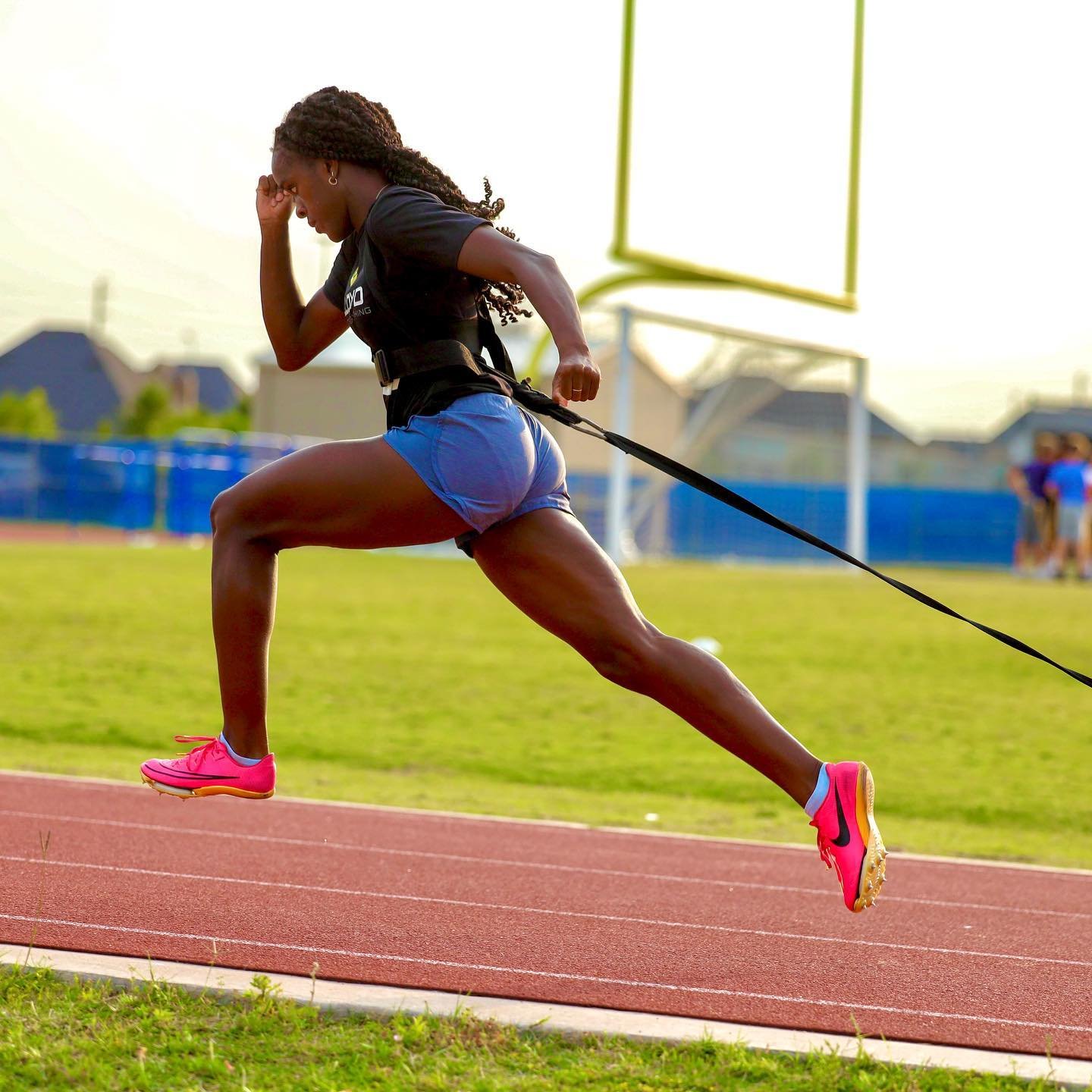
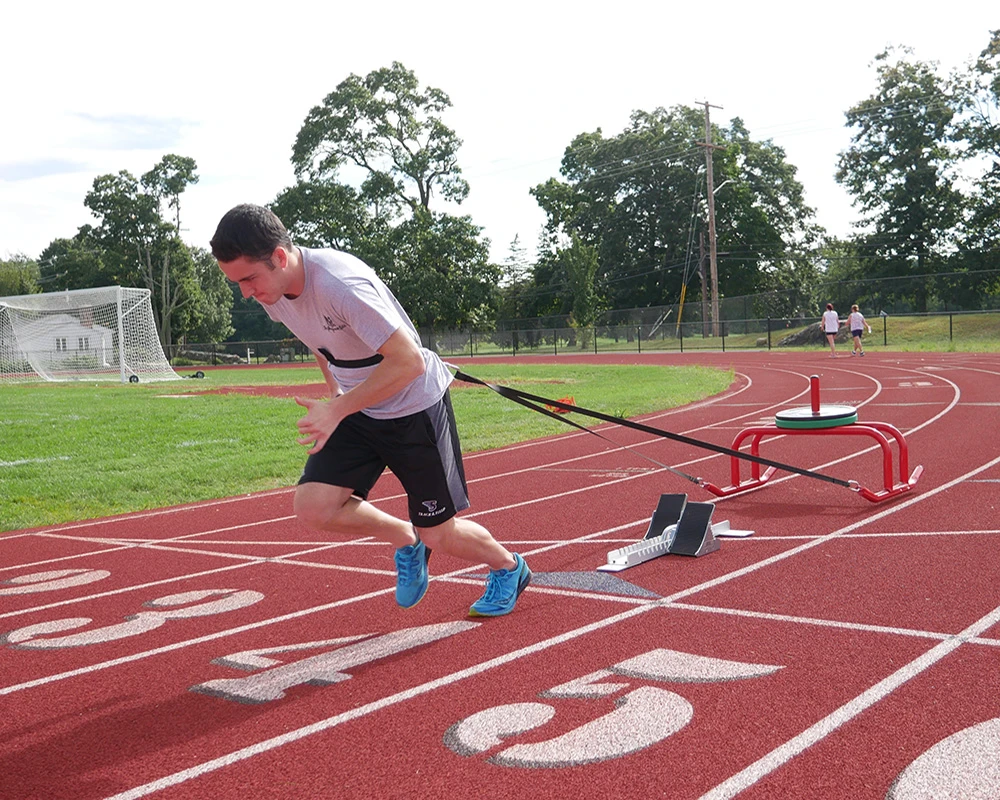
For this article, a sled sprint means towing a weighted sled behind you while accelerating. That differs from pushing a high-handle sled, even though both can produce demanding forward drive. A tow requires a secure waist harness or purpose-built attachment, a rated connection, enough tether length to keep the sled clear of your heels, and an unobstructed lane. An ordinary dip belt or lifting strap should not be assumed suitable for sprint towing merely because it has a carabiner.
Inspect the sled base, tow eye, rope and connection before loading. Start on an approved turf or track surface with no other people crossing the lane. Walk the whole distance first, check where the sled will stop, and account for the extra space the tether and sled need after the athlete finishes. When turning around, walk back with the load controlled rather than whipping the towline across another lane.
A forward sled push may be more accessible when a gym has no proper harness; it can serve as a separate resisted-conditioning option. It is not an interchangeable replica of a timed towing sprint, so log it as a different drill. Likewise, a cable machine’s virtual sled mode or a weighted vest may be useful for training, but it does not automatically reproduce the traction, direction and progressive drag of a physical sled.
First-time users should rehearse the starting position, towline tension and a few easy accelerations before any all-out effort. Never sprint with an improvised attachment that might unclip, catch a limb or turn the load into a projectile.
3. Choose resistance by sprint quality, not plate arithmetic
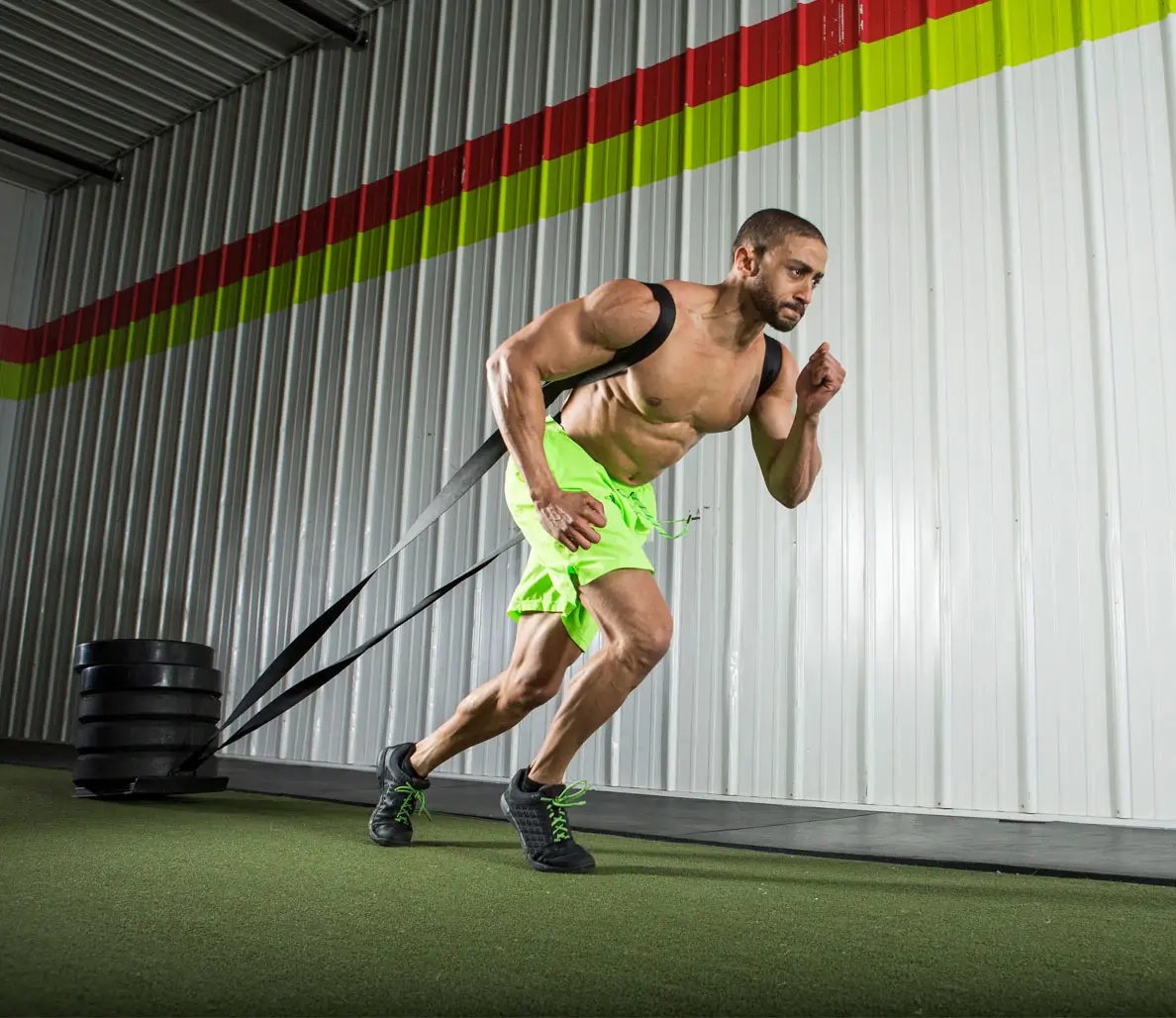
It is tempting to prescribe sled work as a fixed percentage of body mass. That is convenient for logging, yet it hides a big variable: friction. The same 25-kilogram stack can pull smoothly on one artificial surface and feel brutally heavy on another. Sled runners and plate distribution also affect how the load moves. Even identical plates cannot guarantee identical resistance on different days or in different facilities.
Instead, find a resistance that still allows a recognizable acceleration pattern. Establish a baseline over the same short distance with no tow. Add a small load and perform two or three controlled trials, noting whether the athlete can project forward, take decisive steps, avoid excessive stalling and accelerate throughout the rep. If the trunk folds, the feet churn in place or the sprint becomes a slow march, the load is probably too high for the intended speed session.
More advanced coaches sometimes prescribe resistance through velocity decrement: how much slower the athlete runs with a sled than without it. This can be a useful individualized measurement if reliable timing and repeatable conditions are available. But no universal decrement threshold has been proven best for every athlete and surface. A recent review specifically found that evidence was insufficient to establish load category or surface as definitive moderators of training benefit.
Keep one training goal per block. A moderate tow designed for crisp acceleration is different from a heavy drag that emphasizes grinding force or a long sled effort designed for conditioning. All three can be hard; only the first is the direct practice focus here. Change one major variable at a time rather than increasing distance, load and repetitions together.
4. Run the first ten metres with purposeful mechanics
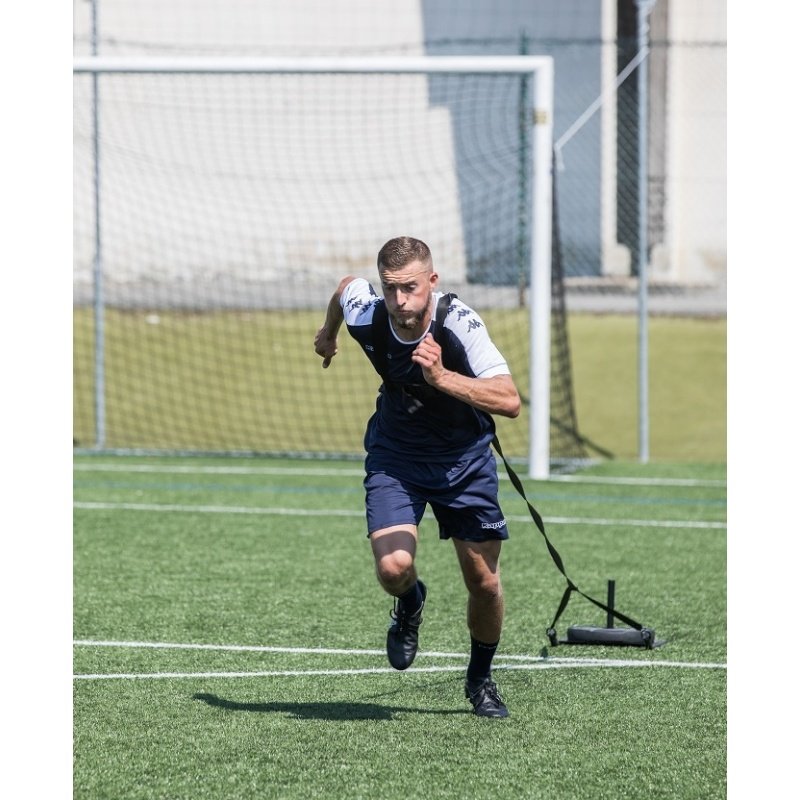
Use a stable standing, split or three-point start that matches the sport and the athlete’s experience. Position the body so the first steps can push backward into the ground while the centre of mass moves forward. The torso will naturally lean more during early acceleration; avoid forcing the head down or exaggerating the lean into a collapse at the waist. Let the shin angles and body rise gradually as speed increases.
For a short resisted rep, keep the movement aggressive but controlled: drive the ground away, swing the arms without crossing wildly, and push through each contact rather than reaching too far ahead with the foot. A tow can encourage forward projection, but an excessive load may create a different pattern from a real sprint. The goal is transfer, not merely moving a heavy object ten metres.
Use distances such as five to fifteen metres for the resisted efforts, depending on available space and technical ability. Include some unresisted ten- to twenty-metre accelerations while fresh so that athletes practice the actual movement they want to improve. If the session includes maximum-velocity running, leave that for a distinct segment with suitable warm-up, full recovery and a safe longer lane.
Do not race teammates while towing sleds in a shared walkway. Once speed rises, control around the finish area becomes more difficult. Treat every start, lane and stopping zone as part of the drill. Short reps are not a reason to ignore collision risk.

Equipment Worth Exploring
Explore equipment, accessories and gear from our carefully selected range.

Pro Sled System
Heavy-duty push-pull training sled for loaded conditioning, speed, and strength work.

GymPin Starting Blocks
Portable high-density foam blocks for adjusting machine starting positions and range of motion.

Competition Plates
Competition-style bumper plates for Olympic lifts and loaded strength training.


Grip Plates
Rubber-coated weight plates with handholds for loading barbells and machines.


5. Keep surfaces, timing and recovery consistent
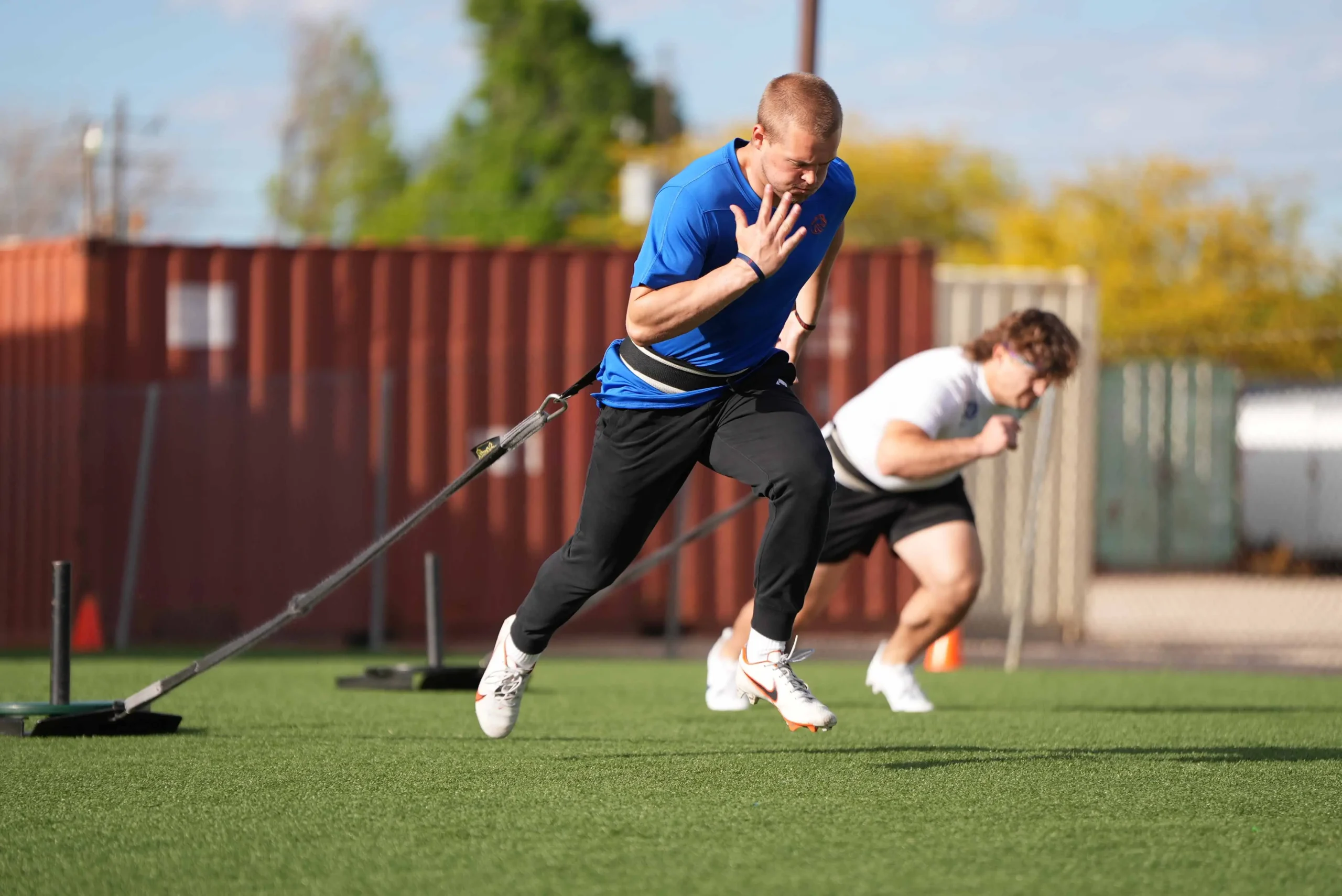
A sprint time is only meaningful when the conditions around it are repeatable. Record the distance, start type, tow load, surface, footwear and whether the lane is dry or damp. If you use timing gates, put them in the same position and keep the start rule unchanged. Handheld timing can still identify broad training patterns, but small differences are easily swallowed by reaction-time and operator error.
For a useful baseline, warm up with progressive drills and several easy accelerations, then perform two or three short free sprints with generous recovery. Use the best or average of a consistent set of trials; do not switch the scoring method halfway through the block. For the loaded test, allow enough rest to preserve true sprint quality rather than treating the session as continuous cardio.
Surface traction is not just a spreadsheet nuisance. Grass, rubber and synthetic track change the friction acting on the sled and the grip available underfoot. Wetness and worn runners complicate comparisons further. If you change facilities, perform a fresh trial instead of assuming the previous weight means the same thing. A training log that includes conditions is more honest than a plate-count progression alone.
Fatigue also changes the picture. These reps demand high intent, so long circuits of heavy squats, lunges and breathless sled intervals beforehand are unlikely to give you a clean acceleration session. Put high-quality acceleration early in a workout or on a suitably recovered training day. Athletes returning from injury should obtain individualized clearance rather than treating sled resistance as automatically safer than sprinting.
6. Turn the evidence into a six-week training block
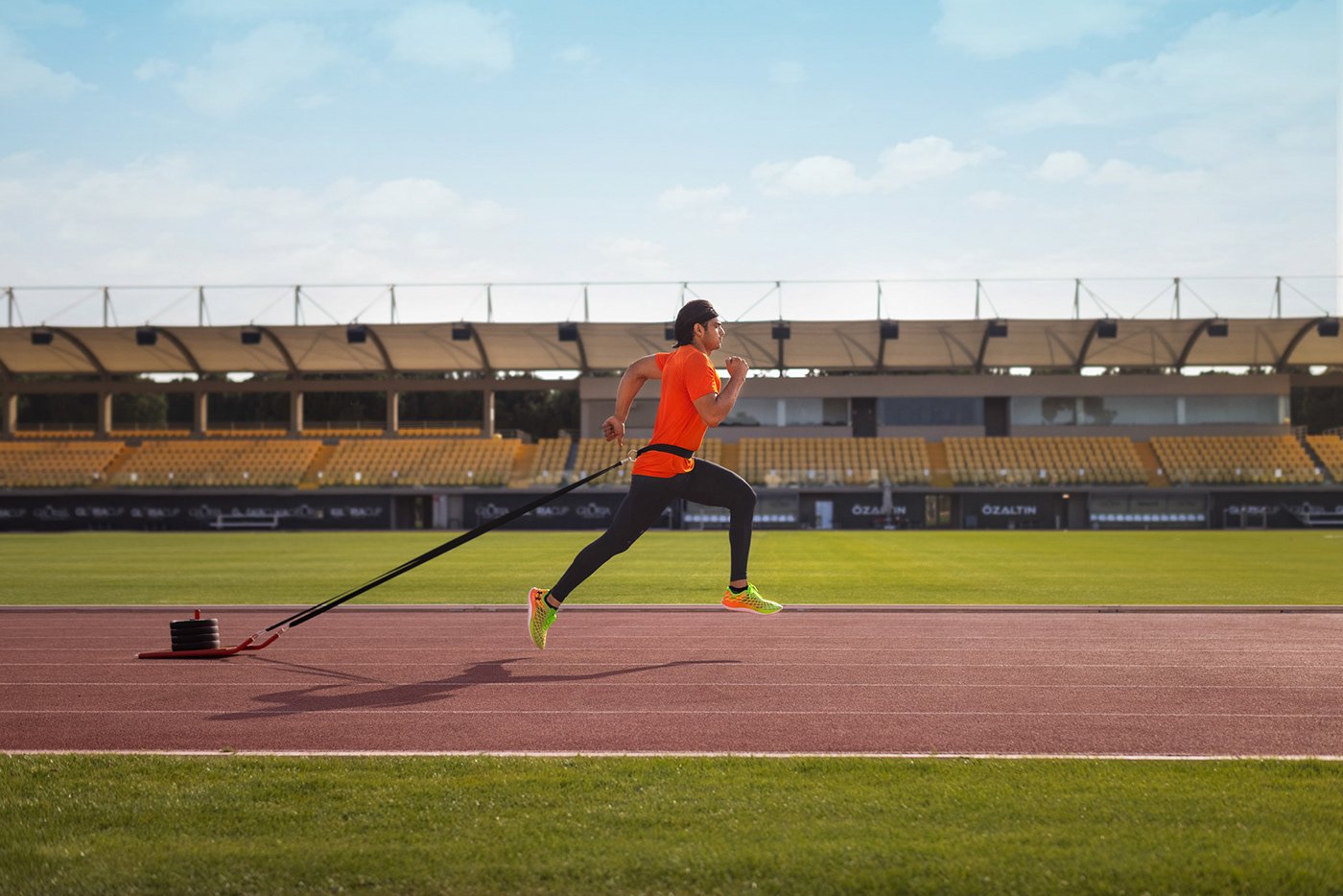
Here is an illustrative six-week progression for a healthy athlete who already tolerates fast running. It is a coaching example, not the exact protocol of the 14-study review and not an individualized prescription. Start each session with an appropriate general warm-up, progressive running drills and a few relaxed accelerations. Use a suitable tow harness and leave at least one recovery day between intense acceleration sessions.
Weeks 1-2: complete two sessions weekly. In each, try four to six sled tows over ten metres at a load that preserves a convincing sprint pattern, resting about two to three minutes between quality reps. Follow with two to four unresisted ten-metre starts. Note the load, surface and perceived sprint quality rather than chasing exhaustion.
Weeks 3-4: if technique remains sharp, use five to seven resisted ten-metre efforts and three unresisted accelerations. Choose either a small increase in load or a small increase in total high-quality work; do not force both. An athlete struggling to accelerate under the existing load should stay there or lighten it.
Weeks 5-6: maintain quality and vary the emphasis across two sessions: one with shorter five- to ten-metre resisted bursts, the other with ten-metre resisted bursts plus a few free accelerations up to twenty metres. Keep rest long enough that early repetitions and late repetitions have comparable execution. In the final week, slightly reduce volume and retest the same free five- and ten-metre distances under matched conditions.
If time improves, great: keep the useful pieces and adjust gradually. If the stopwatch hardly changes, inspect your timing consistency, training load and recovery before assuming you need a heavier sled. Better first-step mechanics can come from a balanced combination of sprint practice, strength work and well-dosed resisted acceleration, not from endlessly piling plates on a tow.

Cardio Shirts & Workout Gear
Cardio and conditioning gym gear for runners, endurance athletes and anyone who earns the sweat.


Cardio Heartbeat Hoodie
Show off your cardio humor in a laid-back “Cardio Heartbeat” hoodie.

Cardio Speed Flash Pullover Hooded for Treadmill Runnin Hoodie
Stay casual and show some cardio attitude with “Cardio Speed Flash”.

Track Panther Black Panther Running Decal Workout for F Sticker
Stick a little “Track Panther” humor on your favorite gear.

Cardio Is Calling You , Meme Top Answer Or Decline? T-Shirt
Make gym days more fun with “Cardio Is Calling You” style.

Shirt – Don'T Quit Do It – Meme & Gains T-Shirt
Show some lifting attitude with a playful “Don't Quit Do It” tee.

Hybrid Athlete – HYROX Workout Checklist Gym Decal for Sticker
Give your everyday gear a playful “Hybrid Athlete” twist.

Triathlon – Iron Man Medieval Knight Swim Bike Run Deca Sticker
Give your everyday gear a playful “Triathlon” twist.

Shirt – I Want You To Do Cardio Uncle Sam Patriotic T-Shirt
Heavy lifts, good laughs, and a little “I Want You To Do Cardio Uncle Sam Patriotic” energy.

For gym lifters who also play a field or court sport, the most sensible takeaway is simple: use sled sprints as focused acceleration practice, not as a replacement for running fast without a sled. The first ten metres are where the evidence is most encouraging, and the quality of each rep matters more than how much equipment you can drag.