Advertising disclosure: This page includes affiliate product links that may earn us a commission, as well as products from our own store.
Hip Airplanes: What Muscle Activation Can Tell Lifters
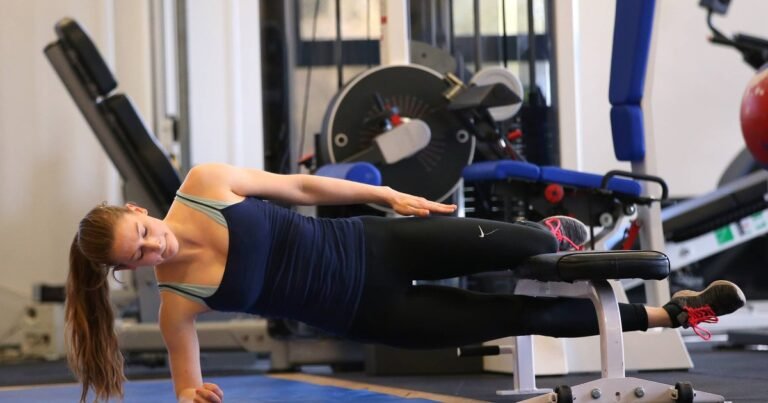
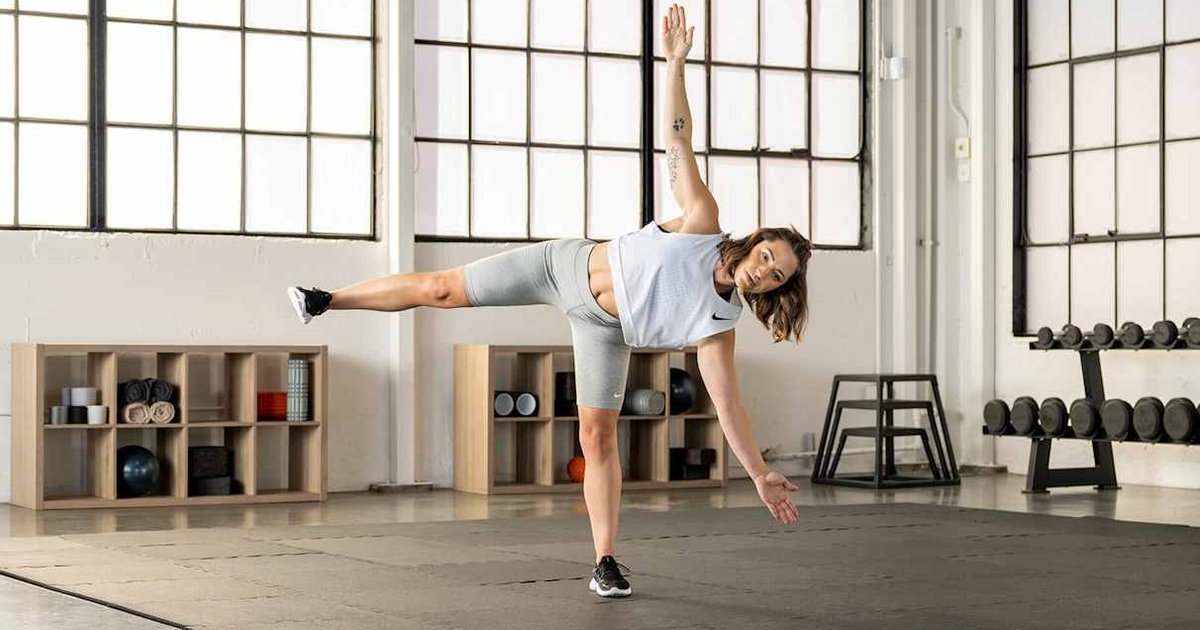
A hip airplane asks you to balance on one leg, hinge forward and rotate the pelvis without losing control of the standing leg. It can feel demanding with no external weight. That makes it an interesting training drill, but the difficulty of balancing does not automatically make it the best exercise for building bigger glutes.
A small 2025 muscle-activation study offers a useful starting point. Its results help explain why an airplane belongs in a different category from a hard squat or loaded hinge. The practical question is how to use that distinction: choose a version you can control, give it a clear purpose and keep your main strength work productive.
1. Read the activation findings without turning them into a growth ranking
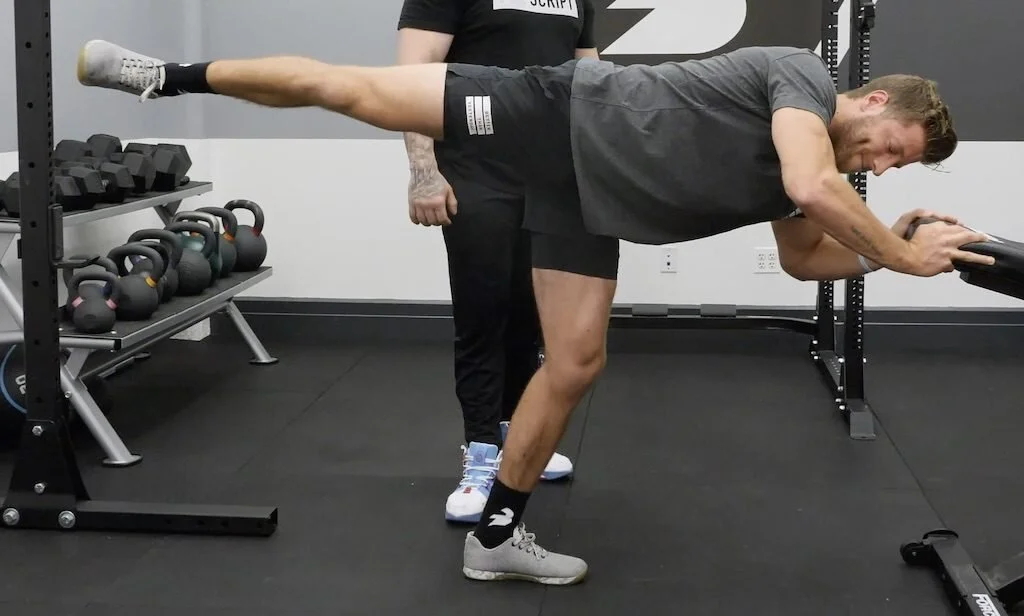
The study compared original and modified hip airplanes, single-leg squats and pelvic drops in 20 healthy adult men. Surface electromyography measured activity in the gluteus maximus, gluteus medius and tensor fasciae latae, or TFL. The single-leg squat produced the highest gluteus maximus activity; both airplane versions produced higher gluteus medius activity than the other two tasks.
The modified airplane produced lower TFL activity and a higher gluteus medius-to-TFL ratio. However, gluteus maximus and medius activation did not differ significantly between the original and modified airplanes. These are immediate electrical-activity findings, not evidence that one version produced more muscle growth, greater long-term strength or fewer injuries.
The practical interpretation is modest: different tasks emphasize different demands. A favorable ratio also does not make the TFL a bad muscle that needs switching off. Use the findings to ask what an exercise contributes, rather than to crown a universal winner. The coaching variations below are general practice options, not a reconstruction of the study’s modified protocol.
2. Establish the single-leg hinge before adding a turn
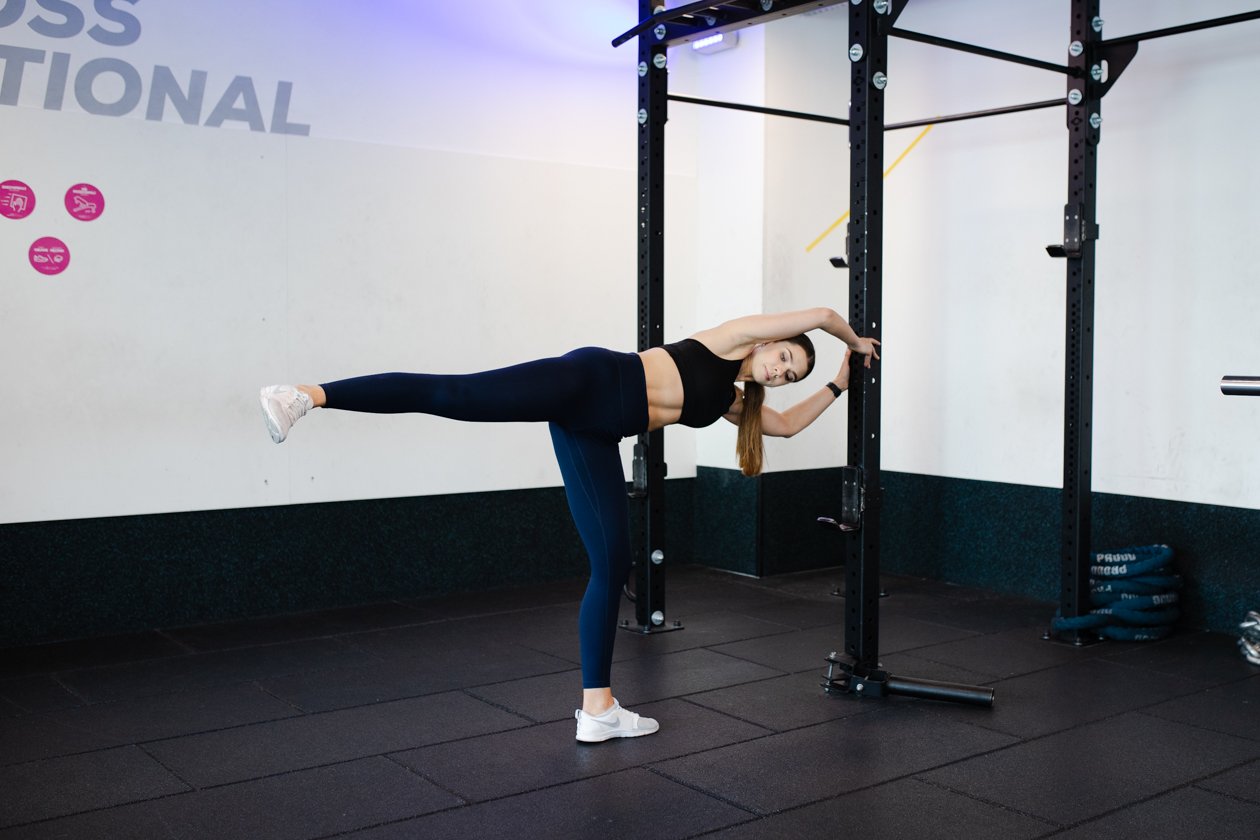
Begin beside a fixed rack upright or wall so you can use light hand support. Stand on one leg with a small, comfortable knee bend. Reach the other leg behind you while hinging at the standing hip. Your trunk moves forward as the free leg travels back; you do not need to force either into a perfectly horizontal position.
Find a position you can pause in without repeatedly hopping, twisting the planted foot or collapsing onto the support. A shallower hinge with a steady stance gives you a better starting point than chasing a photograph’s depth. Keep the hand contact consistent: fingertips for balance and a strong arm push create different versions of the task.
Before rotating, return to standing and repeat the basic hinge a few times. If finding the position is already challenging, practice that part first. Record which leg supports you, how much assistance you use and roughly how far you hinge. Those details make later comparisons more useful than recording only a repetition count.
3. Turn the pelvis through a range you can reverse smoothly
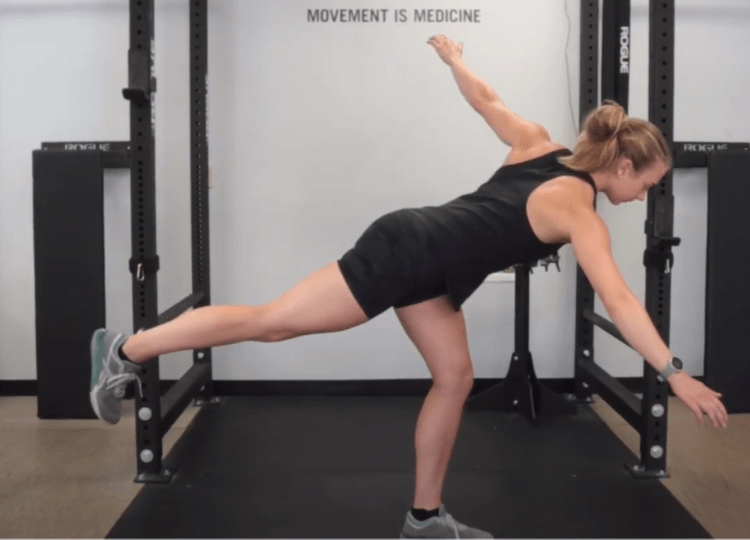
From the supported hinge, slowly open the free side of the pelvis, then bring it back toward the starting position. Explore a small inward turn only while the standing leg and balance remain controlled. Think of opening and closing around the standing hip rather than flinging the free foot upward to create a bigger-looking movement.
Your trunk will turn with the pelvis to some extent. The goal is not to freeze every body segment; it is to avoid substituting a large shoulder swing or rushed spinal twist for movement you can control at the hip. Use a smaller arc if the knee repeatedly dives inward, the planted foot pivots or the return becomes a sudden drop.
A short set of deliberate rotations can reveal more than a long set of increasingly improvised ones. Watch the first and last repetitions from a consistent camera angle. If the later repetitions change substantially, end the set there. Comfortable muscle effort is different from sharp pain or a catching sensation; do not force more range through either.
4. Progress the challenge without making balance the whole workout
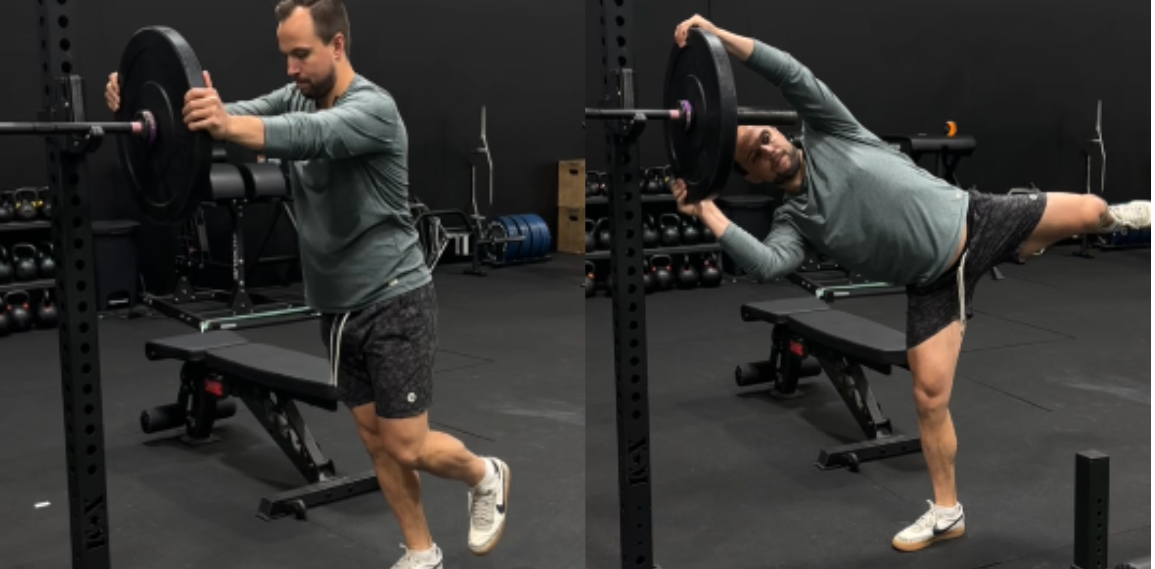
Support is a useful adjustment, not an admission that the exercise has failed. It lets you spend attention on the hinge and rotation rather than repeatedly stepping down. Start with a stable contact point, then try less hand pressure while preserving approximately the same range and speed. You can also keep the support and make the reversal smoother.
Change one feature at a time. For example, compare a lightly supported set with the previous session’s lightly supported set before testing an unsupported version. If removing the hand immediately halves the controlled range, you have changed several demands at once. That can be a worthwhile challenge, but it should not be mistaken for an equivalent repetition.
Do not rush to hold a heavy dumbbell just because bodyweight practice becomes easier. External load changes the task again, and the balance limitation may still arrive before useful loading of the target muscles. Keep the airplane as a controlled skill when that is its purpose. Save heavier loading for exercises whose setup lets you apply it consistently.
5. Give airplanes a defined place beside strength work
A brief, low-fatigue practice block before lower-body training is one option. Another is separate technique work when you have time to concentrate. Neither requires turning every set into a maximal balance test. Compare sessions under similar conditions: a fresh drill and the same drill after hard squats start from different levels of fatigue.
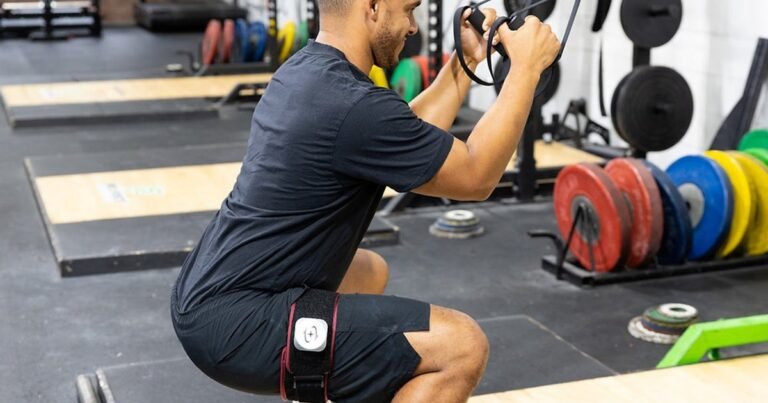
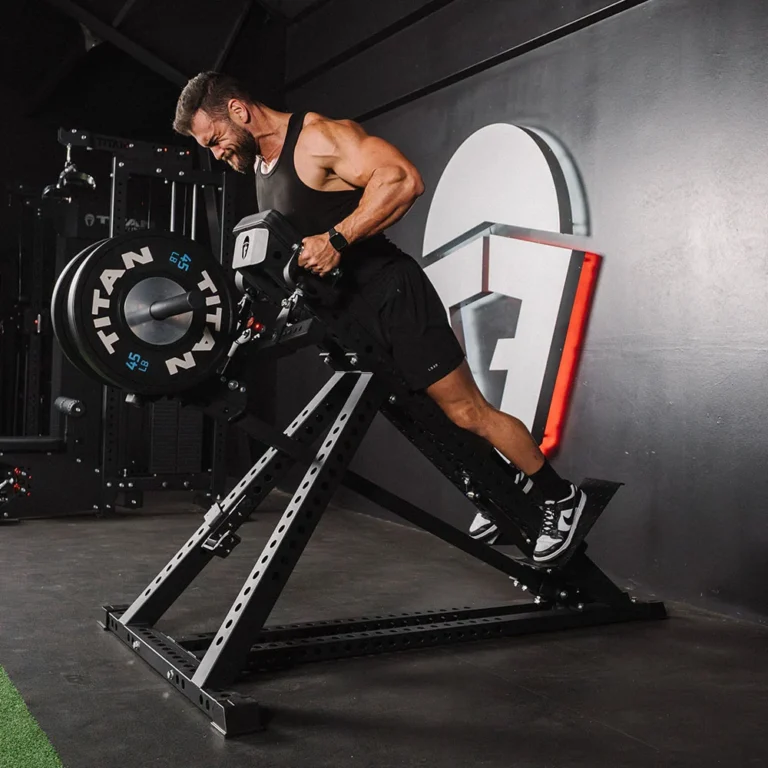
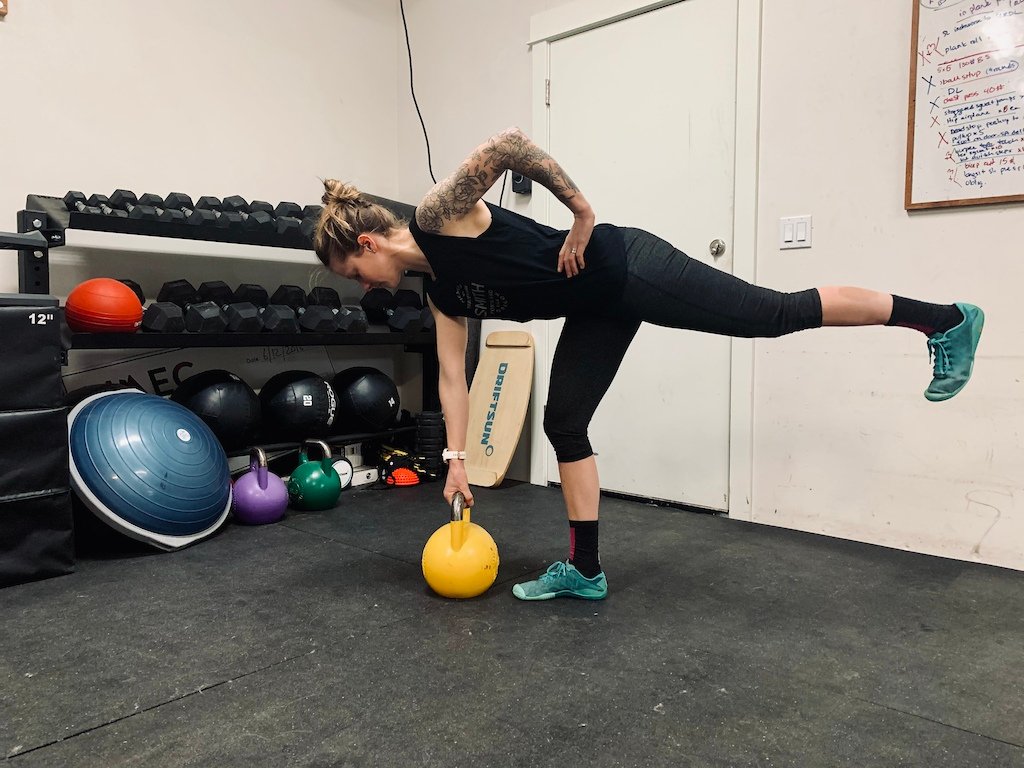
For a lifter pursuing stronger or larger glutes, retain exercises that can be progressed through meaningful resistance and repeatable effort. A loaded single-leg hinge, illustrated here, is a different task from an unloaded rotational airplane. Squats, hinges and other suitable lower-body movements should earn their place through your goals, tolerance and ability to train them consistently.
The equipment below is optional for that separate strength work. Dumbbells, kettlebells and a weighted vest offer different ways to load appropriate exercises; small plates require compatible equipment and are not universal add-ons. None is necessary for learning an airplane. Choose the movement first, then the tool that actually suits it.

Equipment Worth Exploring
Explore equipment, accessories and gear from our carefully selected range.

Rubber Hex Dumbbells
Rubber-coated hex dumbbell pairs with a stable shape for home and commercial strength training.


Cast Iron Kettlebells
Textured cast-iron kettlebells for swings, squats, carries, and full-body training.


Grip Plates
Rubber-coated weight plates with handholds for loading barbells and machines.
Keep the same distinction in your training log: airplane practice records support, range and control; strength work records the relevant load, repetitions and effort. Consistent practice is more useful than collecting difficult-looking variations. The training and leg-day designs below fit that wider lifting context.

Funny Gym Shirts & Workout Gear
Funny gym shirts, tanks, hoodies and workout gear for lifters who like training hard.

Spread Cheeks Not Hate Sweater Glutes Lovers Meme T-Shirt
Show some gym-day personality with “Spread Cheeks Not Hate”.

Consistency Is Key Stoic Greek God Marble Sculpture T-Shirt
Make gym days more fun with “Consistency is Key Stoic Greek God Marble” style.

Lift Smart Brain Weight Plate Mind Muscle Connection 45 T-Shirt
For laid-back days and lifting humor: “Lift Smart Brain Weight Plate”.

Safety Practice Safe Sets Hooded Jumper Top Hoodie
Show off your bodybuilding humor in a laid-back “Gym Safety” hoodie.


Never Skip Leg Day Chicken Legs Meme Decal Water Sticker
Give your everyday gear a playful “Never Skip Leg Day” twist.

I Love Squats Gym | Valentine's Workout Pullover with F T-Shirt
For laid-back days and leg-day humor: “I Love Squats”.

Anti Leg Day Leg Day Club Decal Water Bottles & Sticker
Give your everyday gear a playful “Anti Leg Day Leg Day Club” twist.

Negative Leg Day Review 1 Star Not Recommended Tank Top
Train hard, laugh a little, and rep “Negative Leg Day Review”.

Leg Day No Thanks Skip Leg Day Meme Sweater Squats T-Shirt
Show some gym-day personality with “Leg Day No Thanks”.