Advertising disclosure: This page includes affiliate product links that may earn us a commission, as well as products from our own store.
Dumbbell Squeeze Press: Keep the Contact, Control the Rep
Two dumbbells, one bench and a deliberate inward squeeze: that is the basic idea behind the squeeze press, also called a hex press. The exercise adds a contact task to a chest press. You keep the weights together while moving them up and down, using a manageable load rather than treating every repetition as a test of maximum strength.
The useful question is whether you can repeat that task clearly. If the dumbbells separate, your wrists fold or you cannot finish the set safely, a bigger number on the handles has not improved the exercise. Start by defining a good repetition, then choose the equipment, bench position and progression that let you reproduce it.
1. Understand what the squeeze changes
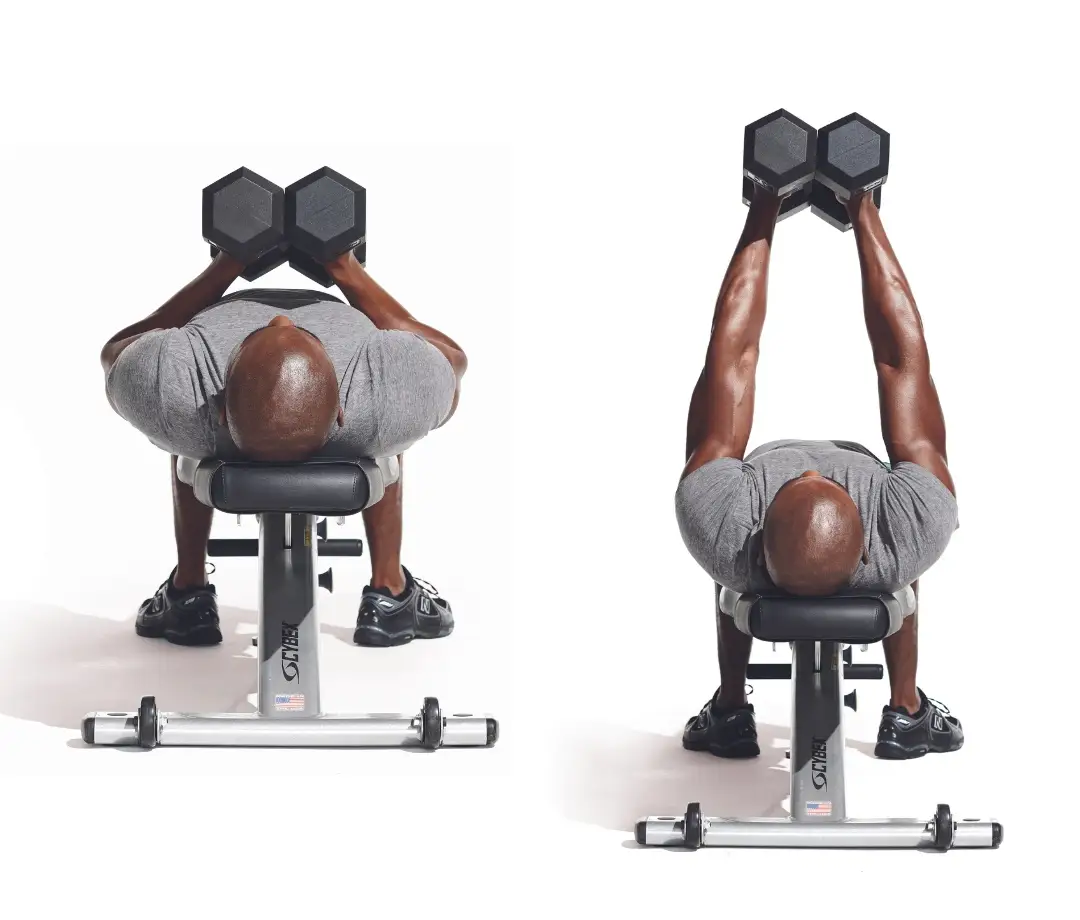
Hold one dumbbell in each hand with the palms facing each other. The inner faces of the weights stay in contact over your chest as you press. Maintaining that inward effort is what distinguishes a squeeze press from simply performing a narrow neutral-grip dumbbell press.
The chest helps bring the upper arms toward the body’s midline, while the triceps straighten the elbows during the press. Your shoulders also contribute. The upward movement and inward effort are related tasks, but they are not interchangeable: you can press the weights upward while barely squeezing, or squeeze hard enough that you lose control of the press.
Use the contact as a practical cue, rather than a reason to make exaggerated claims. Feeling a stronger contraction does not establish that this variation produces more muscle growth than every other press. It also does not turn the inner edge of your chest into a separate muscle you can isolate. Judge the exercise by controlled repetitions, tolerable joints and progress within a balanced programme.
There is an easy way to make your sessions comparable: write down what contact means before the first work set. For example, keep the dumbbell heads touching throughout the descent and ascent, without banging them together or letting one slide over the other. This gives you an observable standard even though you cannot measure the exact inward force with an ordinary pair of weights.
2. Choose the equipment and set up before pressing
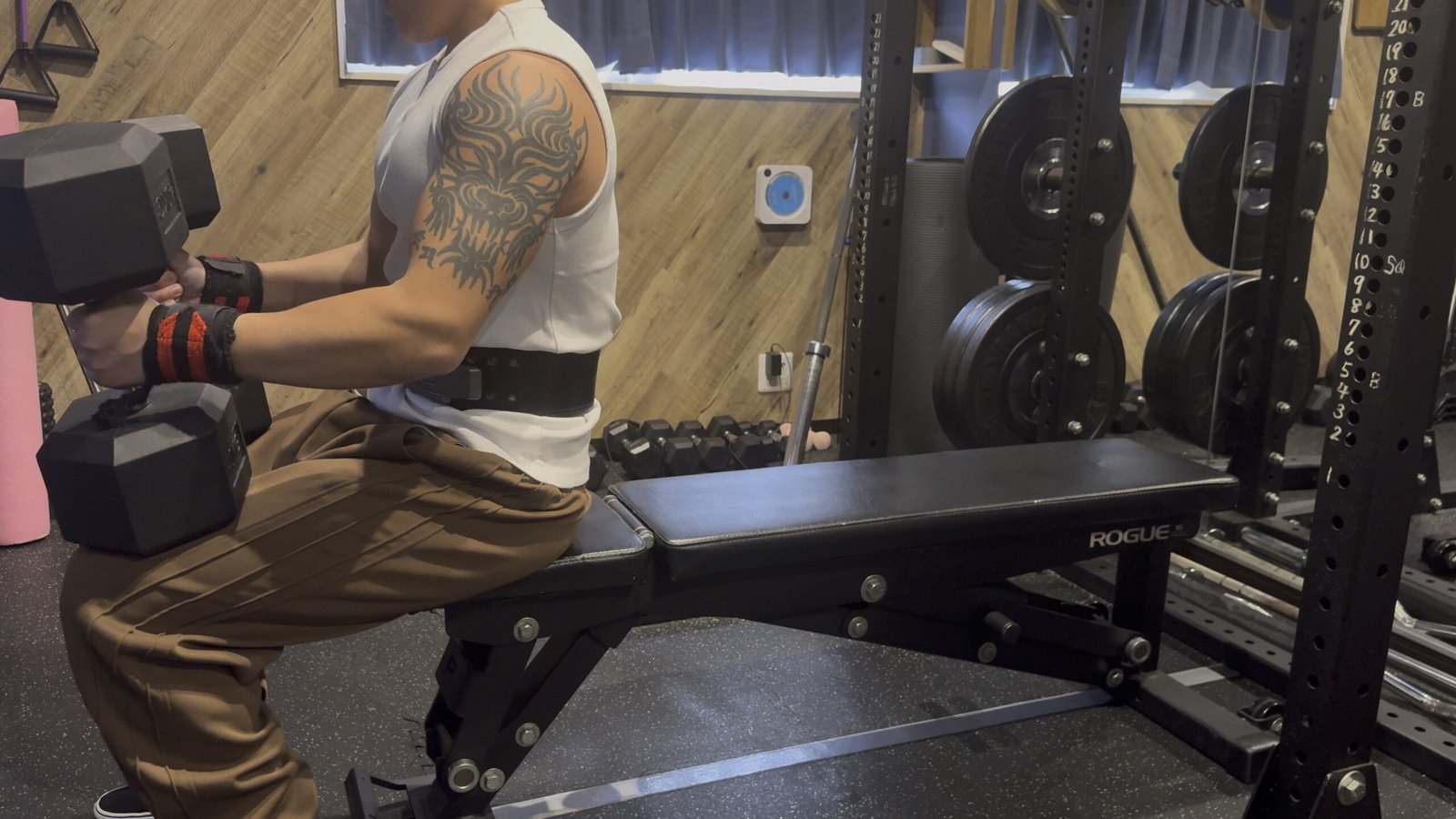
The seated photograph illustrates dumbbell handling before a press, rather than the squeeze itself. That preparation matters. Clear the floor around the bench, check its adjustment pins and choose weights you can bring into position and put down without a last-second escape plan. Ask a qualified trainer to teach the transition if handling dumbbells is unfamiliar.
Flat-sided hex dumbbells offer a straightforward contact surface. Round, plate-loaded and adjustable models differ in head size, handle clearance and how securely their faces meet. Do a light rehearsal before assuming that a model which works for ordinary presses will work equally well here. Grip each handle with the thumb wrapped around it; pressure between the heads never replaces a secure hand grip.
Settle with your head, upper back and hips supported, and your feet stable. Keep the wrists approximately in line with the forearms. Bring the dumbbells together above the chest, then lower slowly into a comfortable working range. Avoid dropping the upper arms far below the torso or bouncing the weights from your chest. Press smoothly while retaining contact, and breathe rather than holding your breath through an entire set.
If you use plate-loaded dumbbells, check the manufacturer’s plate, collar and loading instructions. Smaller compatible plates can be more practical than large-diameter bumpers for this movement. Sleeve diameter, secure retention and clearance around the torso all matter. An adjustable bench offers position choices; a stable flat bench is enough to learn the flat version. You do not need every implement shown below to perform one exercise.

Equipment Worth Exploring
Explore equipment, accessories and gear from our carefully selected range.

Rubber Hex Dumbbells
Rubber-coated hex dumbbell pairs with a stable shape for home and commercial strength training.




Multi Bench MBX-650 2.0
Adjustable multi-bench with roller adjustment, 15 backrest positions and accessory mounts.

FID Bench MAX
Adjustable bench offering flat, incline, and decline positions + adjustable headrest.


3. Keep the squeeze press distinct from other chest exercises
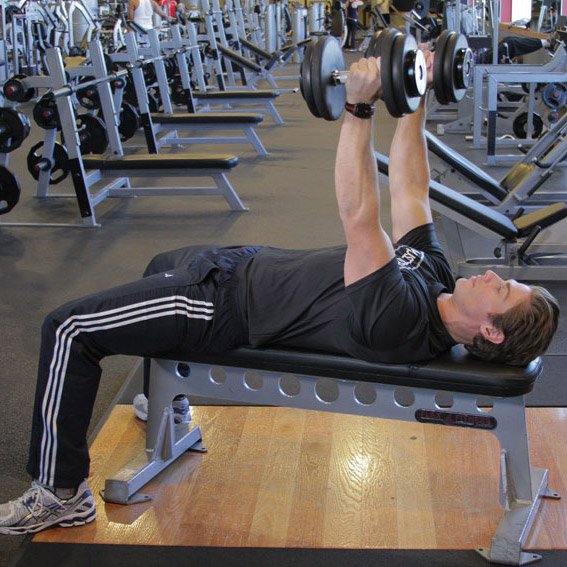
The photograph here shows an ordinary neutral-grip dumbbell press with space between the weights. That is a valid exercise in its own right. Its hand orientation resembles the squeeze press, but the dumbbells do not need to remain touching. Label the two movements separately in your training log so their loads and repetition counts do not become misleading comparisons.
A conventional dumbbell press gives each arm its own path. A squeeze press adds the requirement to keep the implements together, so you may need a lower load. Do not copy your usual dumbbell-press weight and then sacrifice the defining contact task to finish the set. Equally, do not count inward pressure as a substitute for completing a controlled pressing movement.
A dumbbell fly uses a different arm action and a more open elbow position. Separating the weights into a fly halfway through a squeeze-press set changes the exercise. Learn each movement independently before combining them. If the aim today is to practise the squeeze press, an uncomplicated set is easier to assess than a sequence of changing techniques.
A straight barbell or a neutral-grip multi-grip bar is another equipment choice for pressing, but neither recreates the same two-dumbbell contact task. Keep those options for a separate bench-press goal, with the appropriate rack and safety arrangements. A whole chest session can contain more than one kind of press without requiring every exercise to feel identical or share the same working weight.
4. Treat flat, incline and floor positions as separate choices
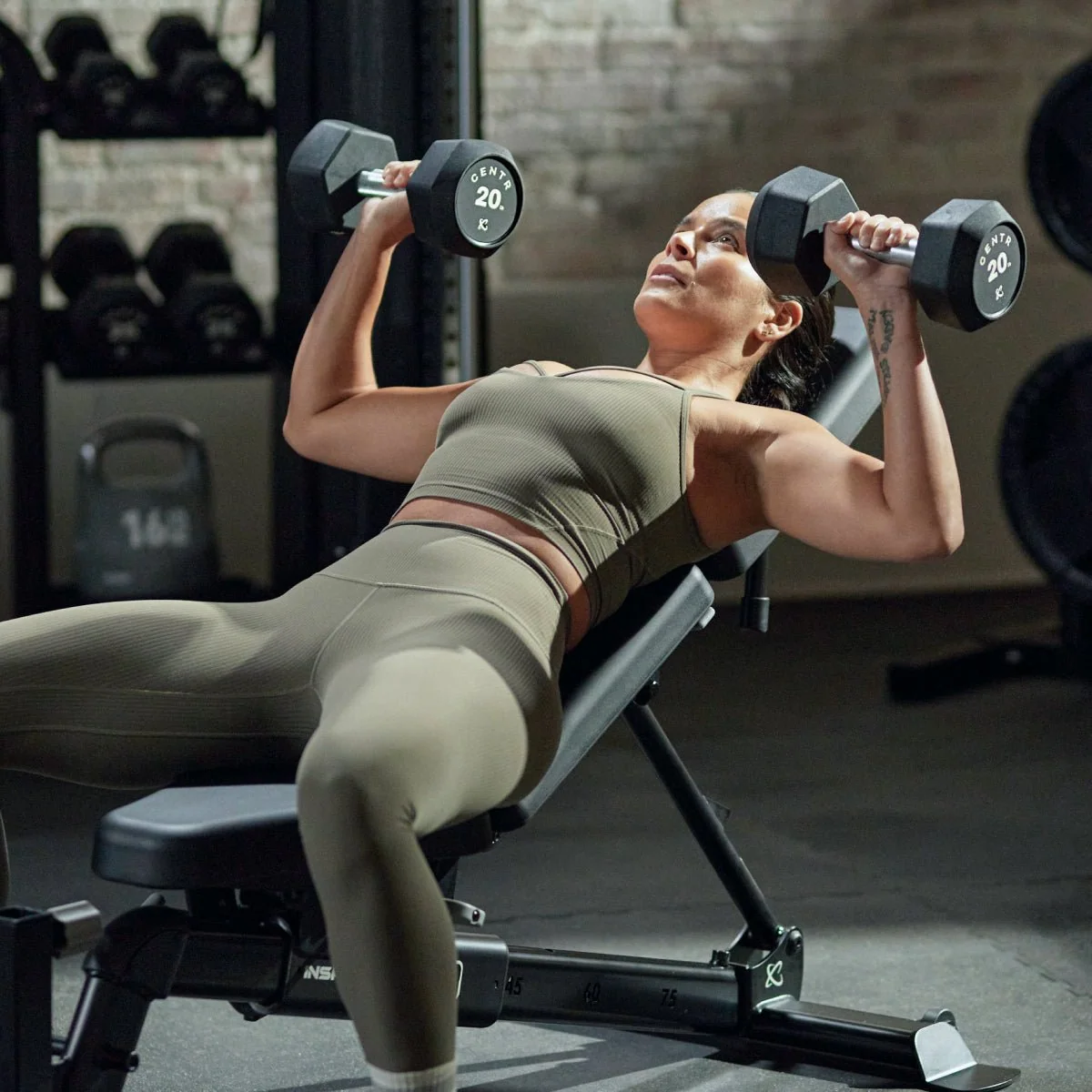
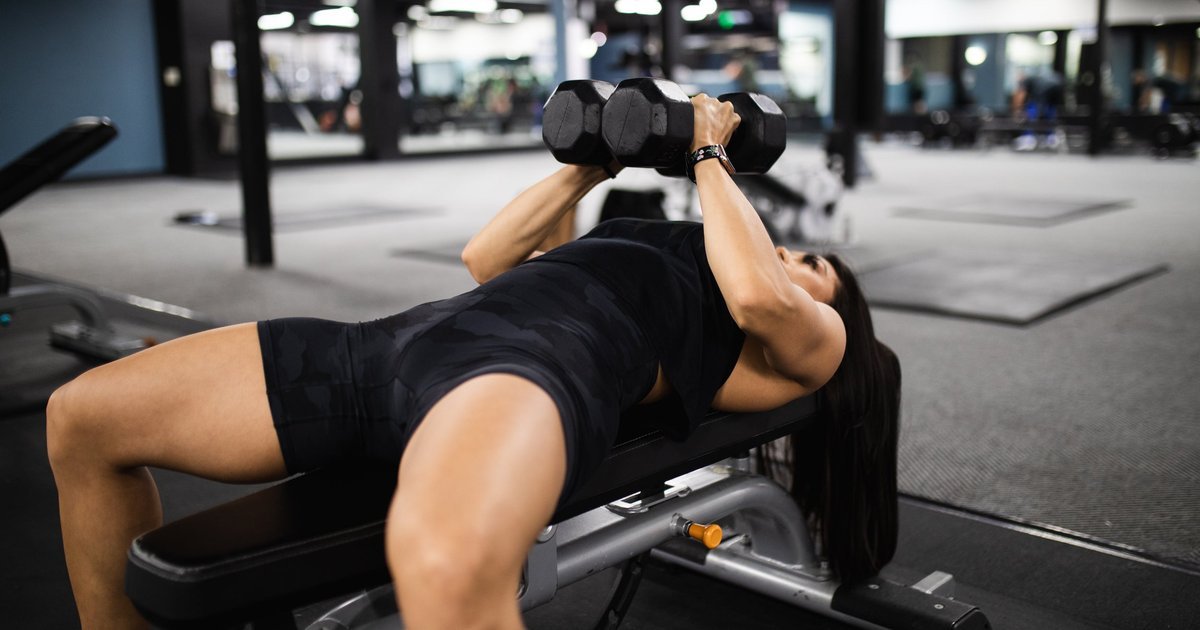
The incline photograph shows a conventional dumbbell press, used here to illustrate the supported bench position. For an incline squeeze press, you would additionally bring the dumbbell heads together and retain that contact. A modest incline, often around 30–45 degrees, is a common starting choice; it is not a guarantee of maximum recruitment or superior results.
Changing the angle changes your position and the pressing task. Select a lighter rehearsal load when moving from flat to incline, and check that the bench’s seat and backrest are securely set. Keep the weights over a controlled path above the upper torso rather than allowing fatigue to turn the movement into an unstable overhead press.
The floor limits how far the upper arms can descend. It can provide a practical pressing option without a bench, but floor contact is a boundary to control, not permission to crash the elbows down. Getting the weights into position still requires care. A shorter range is not automatically pain-free, and equipment contact can feel different from the bench version.
Choose one position for a short block of training before swapping it every session. Record the bench setting or floor variation alongside the load. Otherwise, an apparent jump in strength may simply reflect a shorter range or a different angle. If a position causes sharp pain, stop and reassess rather than forcing it because somebody called the exercise shoulder-friendly.

Bodybuilding Shirts & Workout Gear
Bodybuilding shirts, tanks and gym gear for lifters chasing muscle, size, symmetry and the pump.

Ultimate Meme : The Essential Bench Press Shirt T-Shirt
Show some powerlifting attitude with a playful “Ultimate” tee.

Ultimate Bench Press Tee
Heavy lifts, good laughs, and a little “Ultimate Bench Press” energy.

Bench Press and Chill Funny Gym T
Make gym days more fun with “Bench Press and Chill” style.

Control Your Gains Stoic Greek God Marble Sculpture T-Shirt
Make gym days more fun with “Control Your Gains Stoic Greek God Marble” style.


Gym Sir Swole of Benchalot Medieval Knight Bench Press Hoodie
Show off your medieval humor in a laid-back “Sir Swole of Benchalot Medieval Knight” hoodie.

I Love Bench Press Gym | Heart Plate Chest Day Funny Wo T-Shirt
For laid-back days and powerlifting humor: “I Love Bench Press”.

Gym Dost Thou Even Fly Medieval Knight Chest Fly Muscle Tank Top
Bring “Dost Thou Even Fly Medieval Knight Chest” humor to your next lifting session.

Shirt – Dumbbell Heartbeat Gymbros, & Meme Lovers T-Shirt
Show some bodybuilding attitude with a playful “Dumbbell Heartbeat” tee.

Live Love Lift Decal for Water Bottles Laptops Gym Gear Sticker
Put “Live Love Lift” gym humor on your laptop, bottle, or gym gear.
5. Progress a repeatable set rather than chasing a bigger squeeze
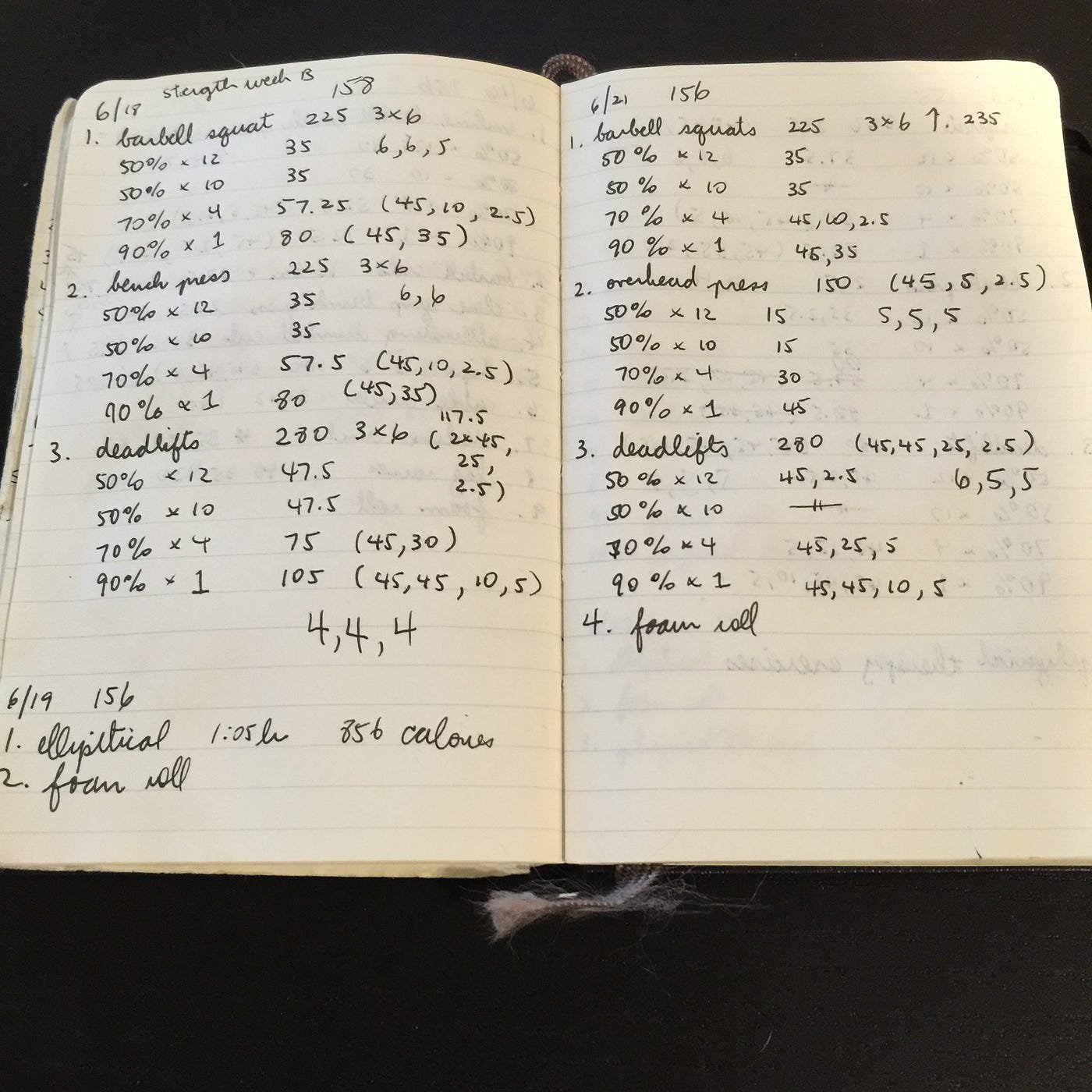
The handwritten notebook photograph illustrates recording training; its entries are not the programme below. For your own log, track the implement, bench position, load per hand, completed repetitions and whether contact stayed consistent. Those details make the next session more informative than a note saying only that the chest felt tired.
Here is an illustrative four-session experiment for someone already comfortable with dumbbell pressing. It is a starting framework to adjust, not a validated optimal dose. Place the exercise after your main press if that lift has priority, and account for the chest and triceps work already in your programme.
- Session one: Rehearse lightly, then perform two controlled sets of ten. Finish with a few repetitions still possible and check how the setup and exit feel.
- Session two: Repeat the load and position. Add a repetition only if you can keep the same contact, range and wrist control.
- Session three: Continue toward two sets of twelve. Rest long enough between sets to reproduce the movement instead of rushing into another fatigued attempt.
- Session four: If both sets remain consistent, consider the smallest available increase and return toward ten repetitions. Keep the load unchanged if the equipment jump is too large.
One simple decision rule is to stop a set when the weights repeatedly separate or the path becomes unstable. That is useful feedback about today’s load or fatigue, not a demand to squeeze harder at any cost. Review the same exercise after several sessions: cleaner repetitions, a more reliable setup or a small load increase under the same conditions are all clearer signs of progress than a stronger burning sensation alone.