Advertising disclosure: This page includes affiliate product links that may earn us a commission, as well as products from our own store.
Svend Press: Secure the Plates, Control the Path and Give It a Clear Purpose
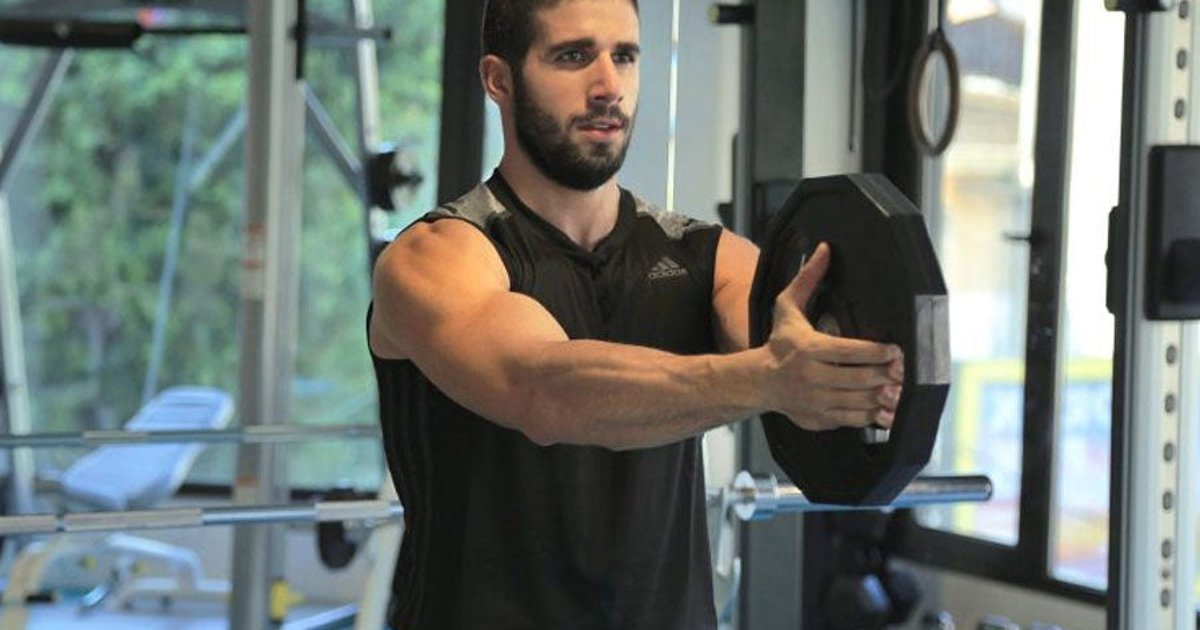
The Svend press asks you to squeeze a plate between your palms while moving it away from your chest. That sounds simple until the weight starts dipping, the shoulders rise and the squeeze becomes a struggle to stop the plate slipping. Used deliberately, it can be a light accessory for chest day. It does not need to replace your main presses or promise a special shortcut to an inner-chest line. The useful version starts with a secure object, a repeatable path and a reason for including it.
1. Choose plates you can control before chasing a heavier number
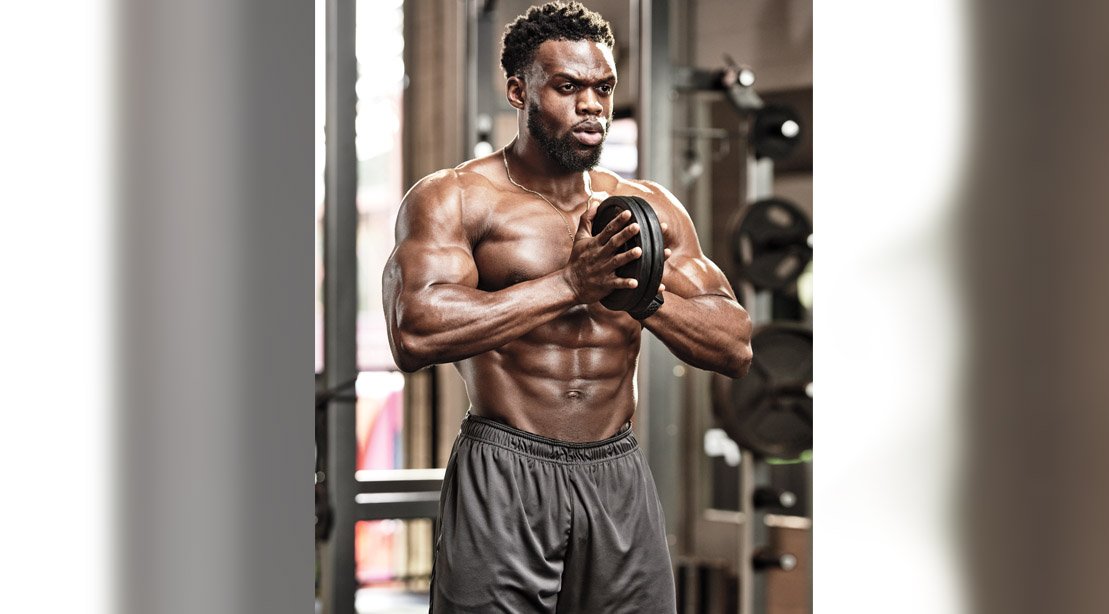
Stand with a comfortable base and hold one light plate, or two small plates together, between your palms in front of your chest. Keep the fingers clear of any place where the plates could pinch them. Apply inward pressure before moving the weight outward. Your first test is whether you can hold the starting position without the plate slowly sliding down.
Plate size and surface matter. A large bumper plate can be awkward even when its mass sounds manageable, while a smooth surface may require more grip effort than you expect. Choose clean, dry equipment with a shape you can control. A cut-out change plate designed to fit around another implement is not automatically suitable for being pinched between the hands.
Start lighter than your usual pressing numbers would suggest. Your ability to bench press a substantial load does not tell you how securely you can hold an object by squeezing its sides. The inward effort is also voluntary: two people can move the same plate while applying very different amounts of pressure. Treat the printed mass as one detail, rather than a complete measure of difficulty.
Keep the space in front of you clear, including your feet. If the plate begins slipping, end the set and lower it under control instead of trying to rescue the repetition with a sudden grip change. Practise picking it up and setting it down while fresh. An accessory should not introduce a preventable handling problem before the chest work even begins.
For early sessions, a short rehearsal with a very light plate is enough to decide whether the exercise suits your hands and shoulders. If you cannot find a secure hold, select another chest exercise rather than trying to squeeze harder around unsuitable equipment.
2. Press outward without turning the movement into a front raise
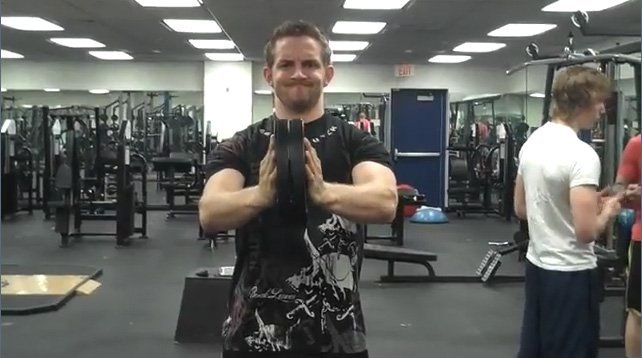
Begin close to the chest, apply inward pressure and extend the arms forward in a controlled path. Bring the plate back toward the same starting point. The elbows straighten as the plate moves away; the movement should not become a swing from the hips or an upward heave toward the face.
Choose a comfortable height around the chest-to-shoulder region and keep it reasonably consistent. If every repetition climbs higher, the exercise has changed. Likewise, a plate that drops substantially as your arms extend may indicate that the load or the chosen reach is beyond what you can presently control. Reduce the demand before shortening every repetition into a barely visible movement.
Your torso supplies a stable reference. Keep your knees unlocked and avoid leaning backward to counterbalance the plate. You do not need to force an exaggerated chest-up posture or hold the shoulder blades rigidly in place. Aim for a stance that lets your arms move comfortably without the lower back supplying the missing range.
A useful rehearsal is to pause briefly near the outward endpoint, then return without a sudden drop. The pause is a coaching check, not a requirement to hold your breath or force the elbows into an uncomfortable lockout. Breathe through the movement and keep the effort controlled.
Watch one set from the side if you are unsure what changes under fatigue. Compare the first few repetitions with the last: plate height, reach and torso position should remain recognisable. A lower load performed in a consistent pattern gives you a clearer starting point than a heavier plate moved with a different workaround on every rep.
3. Understand the squeeze without turning the burn into a growth claim
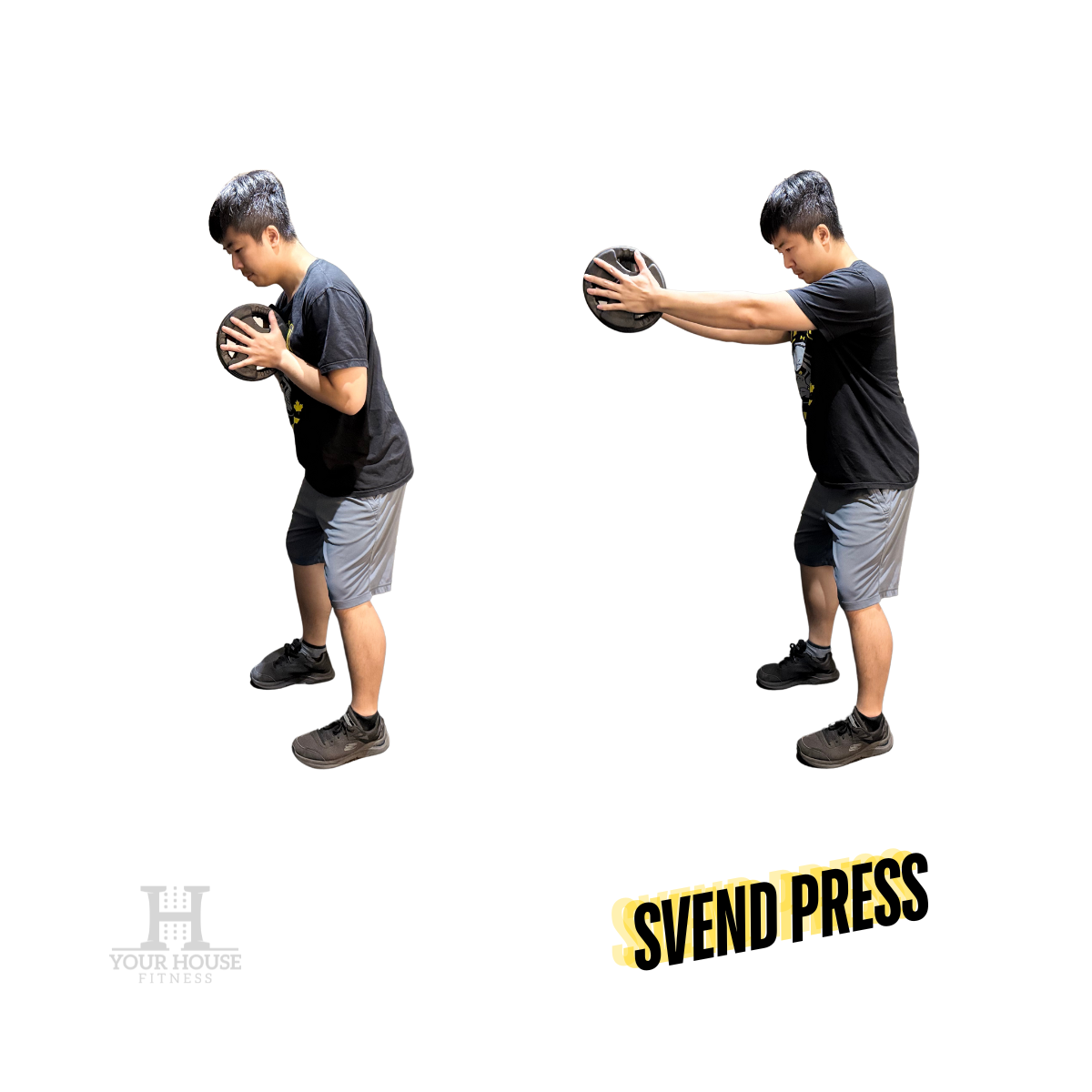
The inward pressure is part of what distinguishes this movement from simply holding a plate out in front. You are resisting your own hands while supporting the plate against gravity. That can produce a noticeable effort across the chest and front of the shoulders, but sensation alone cannot tell you how much muscle growth the exercise will cause.
A strong burn, a pump and an unusually tiring set are observations about that session. They do not establish that the Svend press outperforms a dumbbell press, a cable fly or a machine press over months of training. Avoid judging the exercise by how dramatic the sensation feels during its first unfamiliar set.
Be equally cautious with the phrase “inner chest.” A squeeze does not create a separate muscle at the centre of the chest, and a visible line depends on more than choosing a particular finisher. You can train the pectoral muscles without promising that this movement will selectively sculpt a small strip beside the sternum.
For practical use, identify the purpose before adding sets. Perhaps you want a light chest accessory after your main pressing, or a brief rehearsal of controlled inward pressure. Those are different aims from improving a heavy bench-press performance. If you cannot explain what the exercise adds to your session, there is little reason to retain it just because it feels unusual.
Keep the interpretation modest when comparing sessions, too. Better coordination and familiarity can make the movement smoother quickly. That is worthwhile progress, but it is not proof that a new chest-building effect has appeared. Let consistent training performance, comfort and your broader programme determine whether it remains useful.
4. Compare the standing plate press with supported alternatives
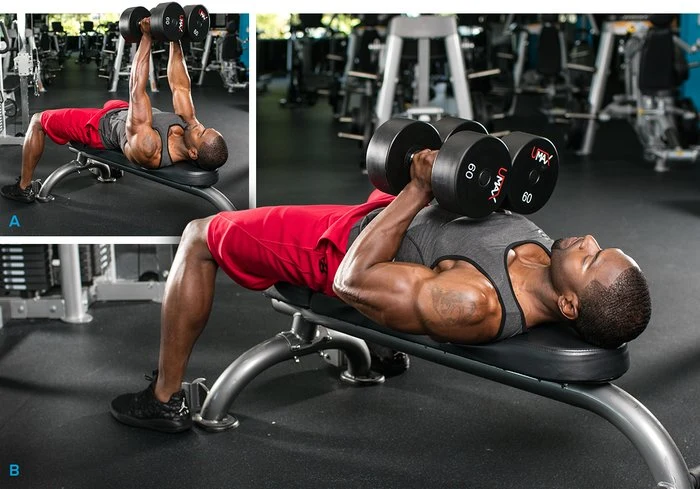
A dumbbell squeeze press on a bench changes the arrangement. You lie supported, hold the dumbbells together and press them upward while maintaining inward contact. Gravity now opposes the upward press directly, rather than mainly pulling a standing plate toward the floor. The two exercises share a squeezing action, but they are not mechanically identical.
Use a stable bench and weights you can position safely. Dumbbell shape can affect how reliably the two implements meet. Keep the movement controlled, choose a comfortable depth and avoid letting the desire for a stronger squeeze turn the weights into a slipping stack. A conventional dumbbell press is also a valid option if the close position feels awkward.
A cable fly or pec deck provides another way to train an inward arm movement with externally applied resistance. The station and its setup determine the path and how the resistance feels. You do not need to assume that every exercise described as a squeeze has the same effect, or that the one producing the strongest sensation must be the best choice.
For main chest work, favour exercises you can load, repeat and progress confidently. Then decide whether a small amount of Svend-press work earns a place beside them. If your grip gives out first, the standing plate version may be testing a different limitation from the one you hoped to train.
Equipment choices should follow that distinction. Plates are relevant to the standing version; dumbbells and a suitable bench support the lying comparison. A different item in the rack is an alternative tool, not evidence that buying more equipment will improve the original exercise. Use what makes the intended movement repeatable.

Equipment Worth Exploring
Explore equipment, accessories and gear from our carefully selected range.


Grip Plates
Rubber-coated weight plates with handholds for loading barbells and machines.

Competition Plates
Competition-style bumper plates for Olympic lifts and loaded strength training.


Rubber Hex Dumbbells
Rubber-coated hex dumbbell pairs with a stable shape for home and commercial strength training.



Multi Bench MBX-650 2.0
Adjustable multi-bench with roller adjustment, 15 backrest positions and accessory mounts.

5. Run a small trial and log more than plate weight
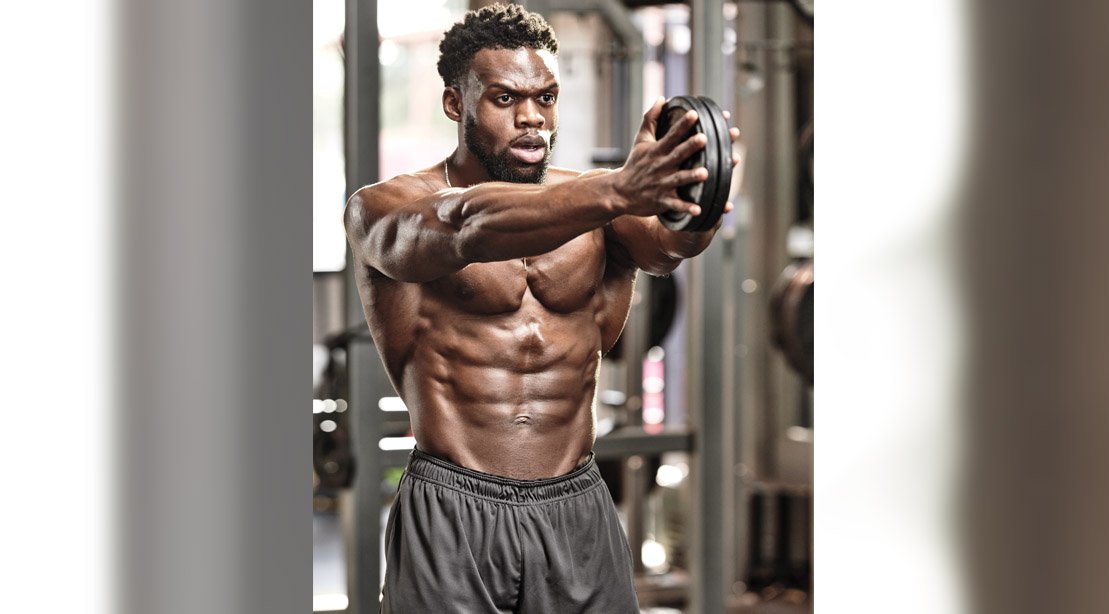
Try a limited amount of work before expanding the programme. For example, after your main chest exercises, perform one or two controlled sets in a comfortable moderate repetition range. This is an illustrative starting experiment, not a scientifically established optimal Svend-press prescription. Leave enough control to return the plate securely at the end of each set.
Write down the plate or plate combination, its mass, the approximate pressing height, the outward reach and the number of comparable repetitions. Add a brief note about the inward effort you intended to maintain. That effort cannot be measured precisely from a training log, but recording the intention helps prevent a heavier plate with a weaker squeeze from automatically being labelled progress.
During chest day, compare like with like. Twelve steady repetitions with the same plate and reach tell you more than fifteen achieved by progressively bending backward. If you make a small load increase, check the path again. You may need fewer repetitions while you learn to control the new demand.
Keep the rest of the session in view. A light accessory performed after several demanding presses can feel harder than the same movement performed fresh. Changing exercise order, adding sets and increasing plate weight simultaneously makes the result difficult to interpret. Change one useful detail at a time and observe several sessions.
Retain the exercise if it contributes manageable chest work without disrupting your main training. Adjust or remove it if grip, shoulder discomfort or awkward plate handling repeatedly limits the set. The successful version does not need a spectacular load: it needs secure handling, a stable path and a clear role in a programme you can sustain.

Bodybuilding Shirts & Workout Gear
Bodybuilding shirts, tanks and gym gear for lifters chasing muscle, size, symmetry and the pump.


If You're Reading This Its Chest Day Gym | Drake Meme W Tank Top
Train hard, laugh a little, and rep “If You're Reading This Its Chest Day”.

Gym Sir Swole of Benchalot Medieval Knight Bench Press Sticker
Give your everyday gear a playful “Sir Swole of Benchalot Medieval Knight” twist.

Meme – Shhh I'm Doing Math Plate Math Weightlifting T-Shirt
Heavy lifts, good laughs, and a little “Shhh I'm Doing Math Plate Math” energy.

Shirt – Dumbbell Heartbeat Gymbros, & Meme Lovers T-Shirt
Show some bodybuilding attitude with a playful “Dumbbell Heartbeat” tee.

Work on His Pecks Tee
Show some bodybuilding attitude with a playful “Why Did The Chicken Go To The Gym? To Work” tee.

I Love Bench Press Gym | Funny Bench Press Meme Crewnec T-Shirt
For laid-back days and gym-girl humor: “I Love Bench Press”.

Platehead Powerlifting Tee
Heavy lifts, good laughs, and a little “Platehead Gym Skull” energy.

Control Your Gains Stoic Greek God Marble Sculpture T-Shirt
Make gym days more fun with “Control Your Gains Stoic Greek God Marble” style.

The Only Difference Between Good And Great Is One T-Shirt
Bring “The Only Difference Between Good And Great” humor to your next gym day.