Advertising disclosure: This page includes affiliate product links that may earn us a commission, as well as products from our own store.
Freak Athlete Adjustable Kettlebell: Does 12–32 kg Fit Your Training?
An adjustable kettlebell solves a storage problem only if its available loads suit the exercises you actually perform. A bell that is useful for swings can still be too heavy for learning an overhead press. Two adjustable bells offer more combinations than one, but also require a bigger investment and a plan for changing weights between exercises.
The Freak Athlete Adjustable Kettlebell is worth considering through that practical lens: starting weight, progression, handling and the difference between owning several load settings and needing them. This is a specification-based buying and training guide, not a hands-on durability review. The useful question is whether the equipment fits your current programme, rather than whether the largest number sounds impressive.
1. Check the bottom of the range before the top
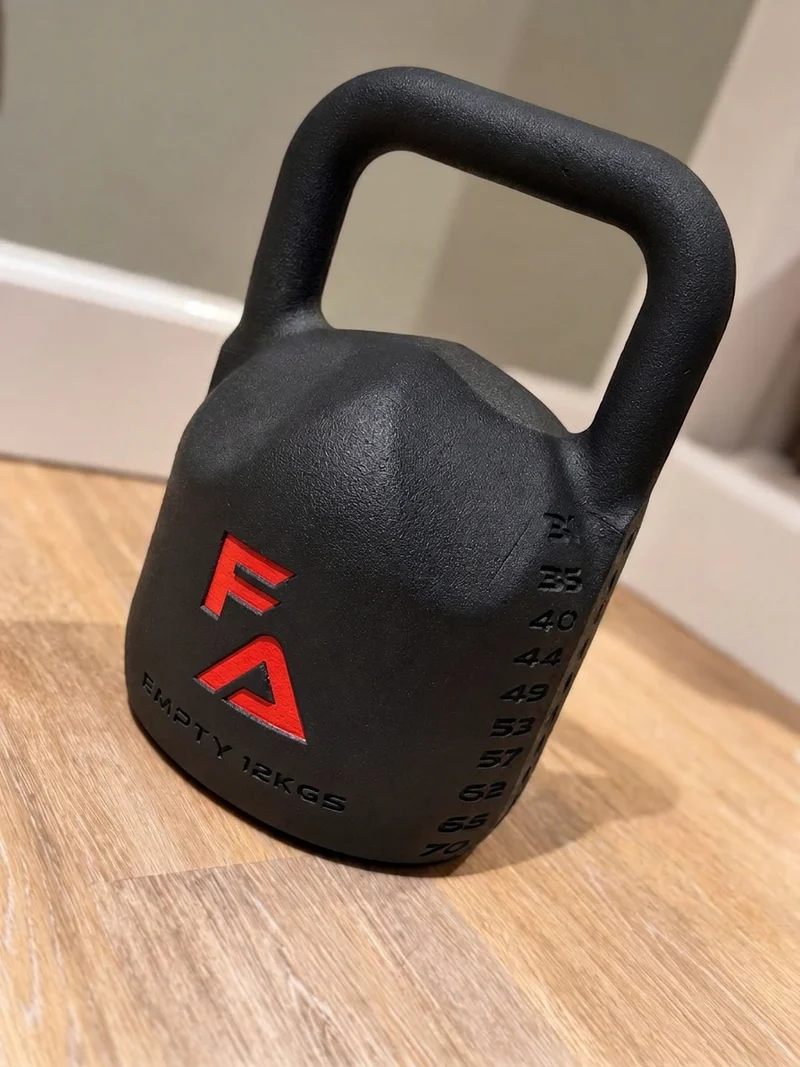
The FA Adjustable Kettlebell runs from 12 to 32 kilograms in two-kilogram steps. Its listed construction is cast iron with a black powder-coated finish, and the handle diameter is 33 millimetres. The specified height is 302.5 millimetres. These are product specifications, not measurements from an MMP test. The manufacturer also advises against dropping the bell.
For a buying decision, the minimum load deserves attention first. Write down a weight you can control for each intended movement. If your comfortable press weight is eight kilograms, a bell starting at twelve does not fill that role simply because its upper range gives you room to grow. You may still need a lighter fixed bell or a different adjustable tool for that exercise.
Do the same check for the movements that matter most to you: a controlled deadlift, a goblet squat, a carry and, if you already have the skill, a swing. There is no requirement to use one weight for all of them. Your hands, balance, practice and the way you get the weight into position can limit an exercise before the target muscles do.
A simple purchase worksheet helps: movement, current working load, how you reach the start position, and the next useful increment. Mark the exercises that fall outside the available range. That produces a clearer answer than asking whether an adjustable kettlebell is generally suitable for beginners or advanced lifters. Those labels hide large differences between exercises and individuals.
2. Decide whether the increments match your progression
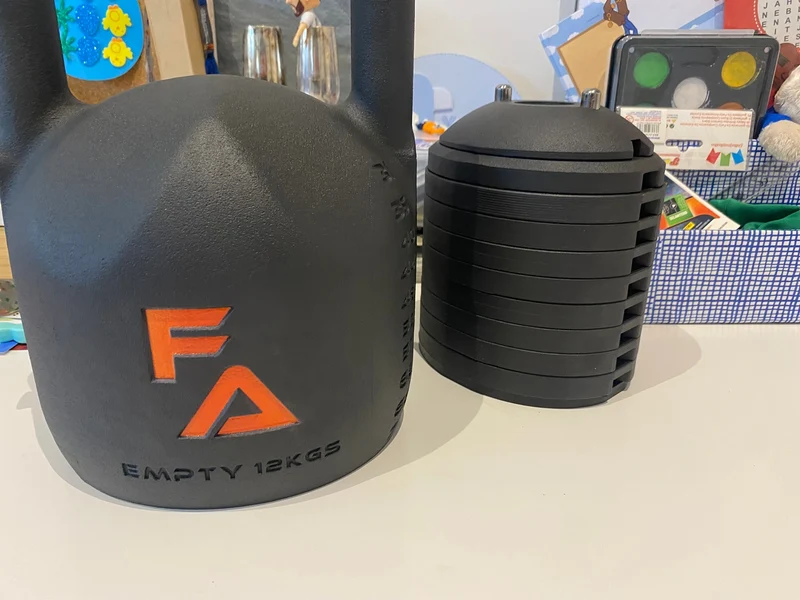
A two-kilogram increase is not the same relative change at every load. Moving from twelve to fourteen is about a 16.7% increase; moving from thirty to thirty-two is about 6.7%. That arithmetic does not prescribe how you should train, but it explains why the next setting can feel disproportionately demanding at the lower end.
You do not have to increase the load each session. Within a planned exercise, you might first repeat the same controlled repetitions, then add a repetition while keeping the setup consistent. An example is working from three sets of six to three sets of eight before trying the next setting. Treat this as an adjustable progression example, not a universal programme or a promise that every jump will then be manageable.
Record the actual weight and exercise, rather than “light” or “heavy.” If you use a pair, note the load of each bell. Two sixteen-kilogram bells are a different task from one sixteen-kilogram bell, and an uneven pair is a deliberate variation rather than an interchangeable substitute. Keep those distinctions visible in the log.
Compare the alternative loading systems on the same basis. Kensui’s EZ-BELL uses separate weight plates, so the plates you own become part of the decision. Fixed kettlebells avoid adjustment between loads but require separate units. Dumbbells offer another route for controlled squats, rows and carries, although the grip and load position change. Existing plate sizes and compatibility should be checked before assuming a plate-loaded alternative provides the increments you want.
The equipment options below illustrate those different routes. They are not interchangeable attachments: loose plates are for compatible plate-loaded systems, and they should never be added to an enclosed adjustable bell unless its manufacturer specifically permits it.

Equipment Worth Exploring
Explore equipment, accessories and gear from our carefully selected range.


Cast Iron Kettlebells
Textured cast-iron kettlebells for swings, squats, carries, and full-body training.


Rubber Hex Dumbbells
Rubber-coated hex dumbbell pairs with a stable shape for home and commercial strength training.


Grip Plates
Rubber-coated weight plates with handholds for loading barbells and machines.
3. Judge the handle and rack position as separate questions
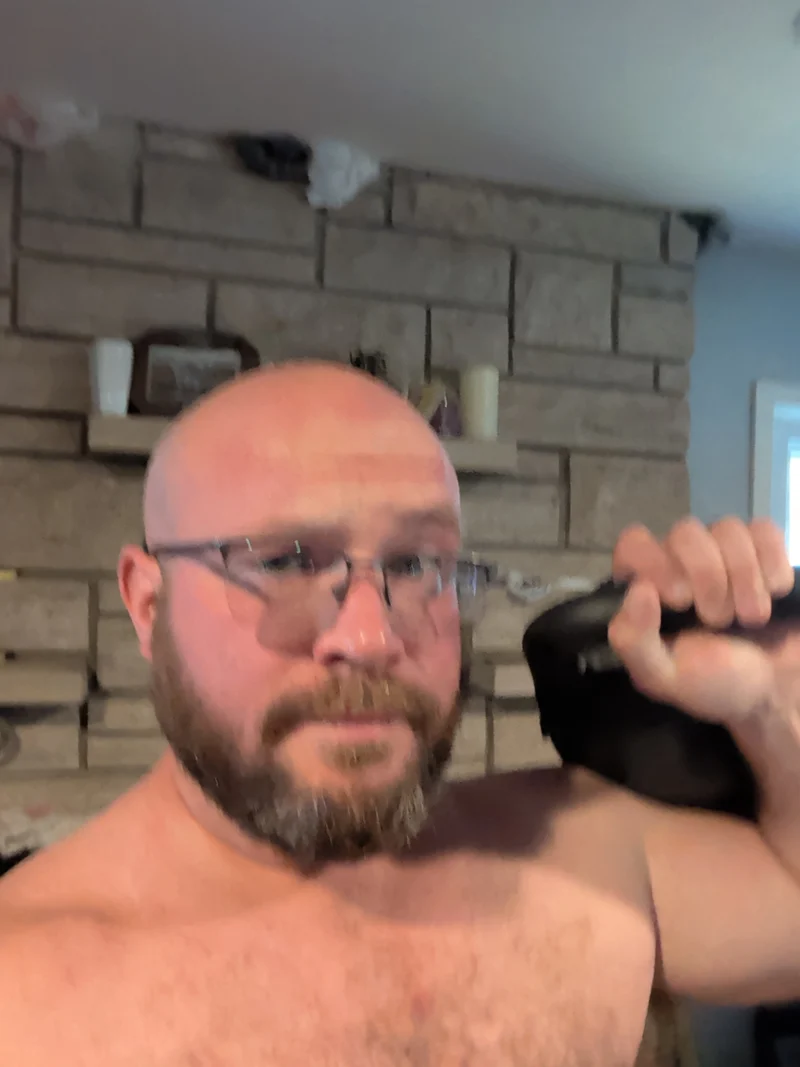
Being able to hold a handle does not tell you how comfortable the same bell will feel at the shoulder. For a purchase, consider both a two-handed grip and a one-handed grip, then the clearance around the wrist and forearm in the rack position. Hand size, technique and the shape of the bell all influence that interaction.
Photographs can show the broad geometry, but they cannot establish your personal comfort. If you can try an example, begin with a controlled hold rather than an ambitious clean. Check that you can keep the wrist in a manageable position and avoid treating pressure against the forearm as something you must simply tolerate. A coached adjustment may help; a particular shape may also be a poor match.
Remember that getting the bell into place is its own skill. A clean should not be an uncontrolled flip that crashes into the arm. Someone who can press a weight once it is supported at the shoulder may still need a lighter load or coaching to reach that position reliably. That is a reason to separate skill practice from the working load, not evidence that the press itself is impossible.
Set aside a clear place to put the equipment down. Before each session, use the current product instructions to confirm the selected load and secure all required locking components. If something does not engage normally, stop and resolve it before lifting. Do not improvise a substitute pin, rely on a photograph as an assembly manual, or test a questionable setting overhead.
4. Keep controlled lifts and ballistic practice distinct
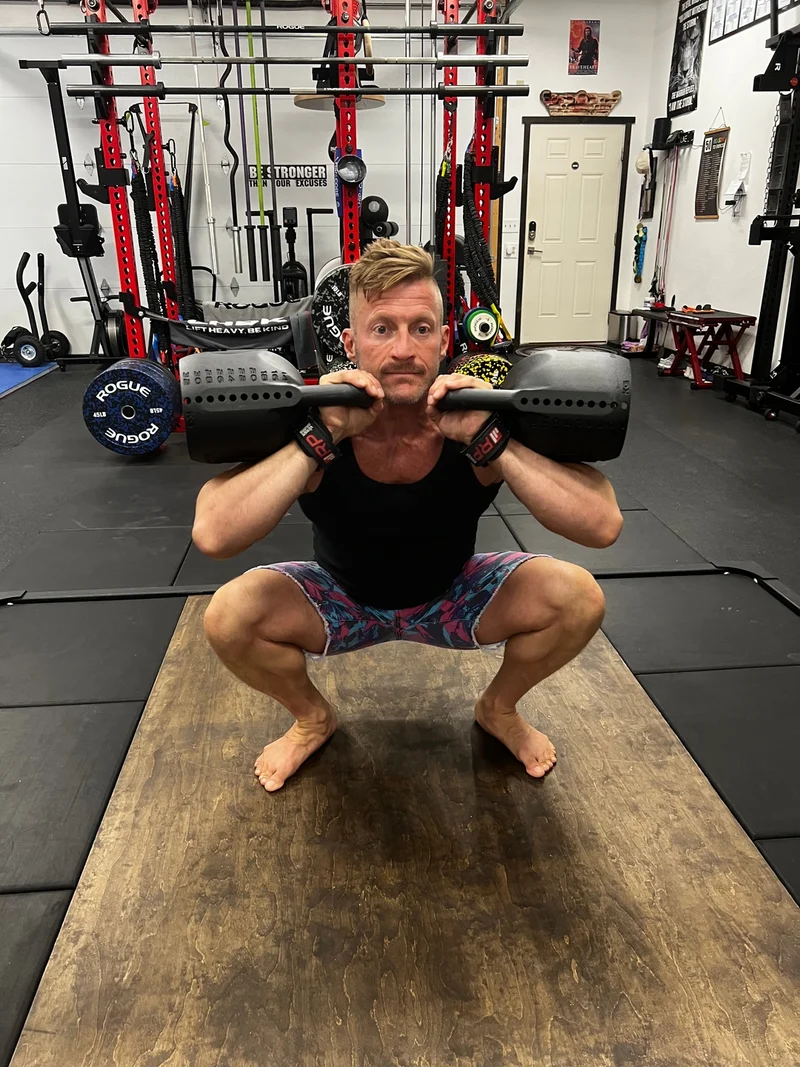
A kettlebell deadlift is a useful controlled starting task: establish a stable stance, take the handle securely and stand through the hips without turning the finish into a backward lean. A goblet squat instead holds the weight near the chest while the hips and knees bend. These movements offer different ways to assess whether a load is manageable before adding speed.
The two-handed swing requires a repeatable hinge and coordinated hip drive. It is not simply a front raise performed with a different weight. The bell travels through an arc while the hips supply the movement; the set should finish with the momentum brought under control and the bell returned to the floor. Learn that pattern before chasing long sets or heavier settings.
For initial practice, separate the tasks instead of combining them into an exhausting circuit. Perform a short controlled set, put the weight down and assess what happened. Can you keep the same position on the final repetition? Can you stop when intended? If not, reduce the challenge or choose a simpler movement rather than relying on momentum to finish a target number.
Your workout can still include strength and conditioning, but decide which is the priority for that session. A clear technique practice period gives you different information from a timed circuit. Log them separately. A faster round is not necessarily a stronger lift, and a heavier bell is not necessarily the right tool for learning a new movement.
5. Buy a pair only when the programme calls for one
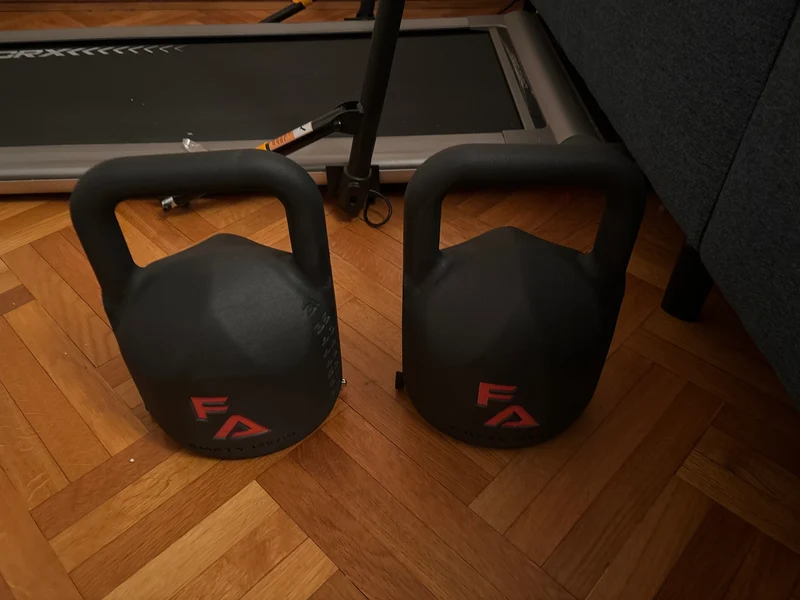
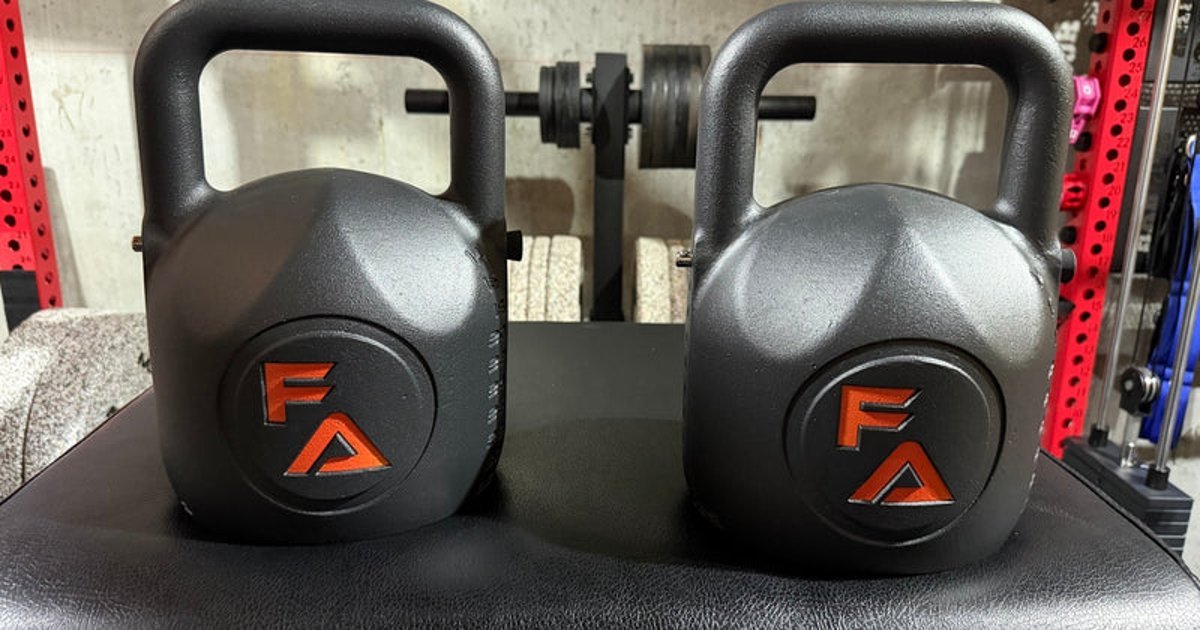
One bell allows unilateral work and two-handed movements. A pair adds bilateral loading options, such as double front-rack work, but it also changes the handling task and total load. Think through the exercises you would actually perform with two before buying them on the assumption that a pair is automatically a more complete setup.
Sketch a normal session on paper. If the same bell handles several exercises at similar loads, one may be convenient. If you alternate exercises requiring different loads, include adjustment time in the plan. A second unit may reduce those changes, while fixed bells at your most-used weights could be another solution. The best layout depends on the session rather than a theoretical number of possible combinations.
Leave room for getting into position, setting the weight down and moving around it. Consider the floor surface, nearby furniture and whether other people share the space. Storing less equipment is useful, but the working area still needs to suit the movements. Avoid building a routine around dropping or throwing an adjustable bell to end a set.
The functional-fitness designs below reflect the actual kettlebell theme rather than an unrelated character collection. They are optional training apparel and accessories, not equipment requirements or a claim that a particular routine needs special clothing.

Functional Fitness Shirts & Workout Gear
Functional-fitness shirts, tanks and workout gear for athletes who train strength, conditioning and everything in between.


Donut Kettlebell – Bakery Gains Meme Vest Muscle Shirt Tank Top
Show some personality between sets with “Donut Kettlebell”.

Pancake Kettlebell – Breakfast Gains Meme Hooded Pullov Hoodie
Show off your lifting humor in a laid-back “Pancake Kettlebell” hoodie.

Heavy Metal Skull Kettlebell | Rock Music Lifting Graph T-Shirt
Show some metalhead attitude with a playful “Heavy Metal Skull Kettlebell” tee.

Hells Kettlebells Hells Bells Parody AC/DC Heavy Metal Sticker
Bring “Hells Kettlebells” attitude to your water bottle or laptop.


Happy Kettlebell Emoji Smiley Kettlebell Fitness Decal Sticker
Give your everyday gear a playful “Happy Kettlebell Emoji” twist.

Heart Shaped Kettlebell Valentine’s Day Gym for Kettleb T-Shirt
Show some gym-day personality with “Heart Shaped Kettlebell Valentine’s Day”.

Earth Kettlebell Meme Shirt – Lifting The Earth T-Shirt
Show some lifting attitude with a playful “Earth Kettlebell” tee.

Vitruvian Kettlebell Tee
Heavy lifts, good laughs, and a little “Vitruvian Man With Kettlebells” energy.
Make the final decision from your exercise list: suitable minimum load, useful increments, manageable grip and setup, and a clear reason for one unit or two. Check the current price, delivery estimate and return terms for your region before ordering. Those details can change; a familiar training task and an honest account of what you need remain the stronger basis for the purchase.