Advertising disclosure: This page includes affiliate product links that may earn us a commission, as well as products from our own store.
The straight-arm cable pulldown looks almost too simple to matter: hold a cable attachment, keep the elbows nearly fixed, and draw the arms down toward the hips. But that simple arc gives back training something standard rows and pulldowns do not emphasize in quite the same way. You can challenge shoulder extension without having to repeatedly curl a heavy handle toward your chest.
That makes the movement useful when you want more lat-focused work but your biceps, grip, or general fatigue are already limiting another set of rows. It is not a magic lower-lat isolation trick, and it does not replace heavy pulling. The difference comes from how you set up the cable, hold your torso, move at the shoulder, and progress without turning the exercise into a swinging contest.
What straight-arm pulldowns actually train
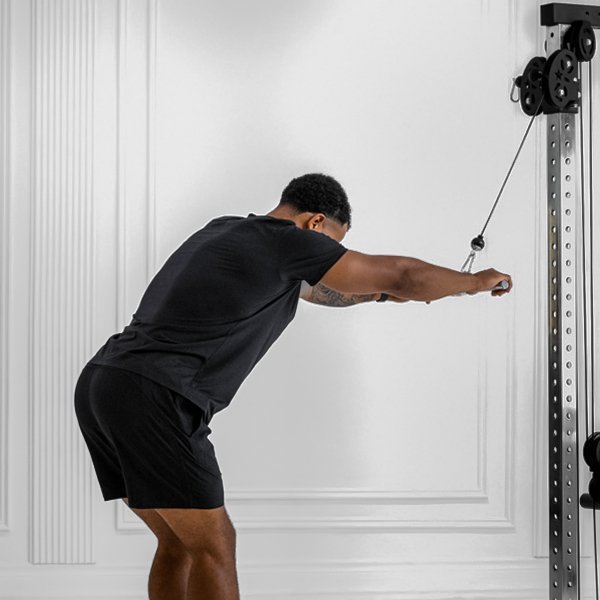
The latissimus dorsi is the main muscle people intend to train here. It helps bring the upper arm down and back relative to the torso. With the elbow angle held almost constant, the cable challenges that shoulder motion through an arc from overhead toward the thighs. Teres major, the rear shoulder, and the long head of the triceps can also contribute. The abdominal wall and spinal muscles keep you from being dragged into an exaggerated arch.
The phrase ‘lat isolation’ is useful shorthand but it should not be taken literally. Shoulder extension is a shared action, the shoulder blades move, and different lifters feel different tissues during the set. Some triceps sensation is normal because one head of that muscle crosses the shoulder. What matters is whether the shoulder moves smoothly while the elbow stays at a repeatable, slightly bent angle.
Compared with a conventional lat pulldown, your forearms do much less dynamic work and your biceps do not have to close the elbow through every repetition. That can be useful after pulling exercises, but it also limits how much weight is practical. A cable pulldown performed with a long arm creates a substantial lever; chasing huge stack numbers usually changes the exercise before it improves the stimulus.
Judge a set by repeatable arm travel, controlled resistance, and a useful stretch rather than an extreme claim about which individual lat fibers are being trained. You do not need to force the cable into an uncomfortable overhead position or wrench the shoulder blades downward to prove you are using your back.
Set the high pulley, stance and brace first
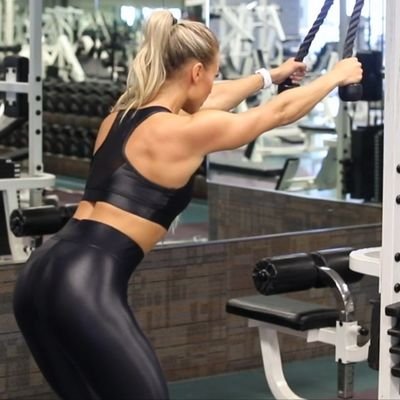
Attach a straight bar or rope to a high pulley. Start with a light enough stack that you could comfortably complete more than your target repetitions. Take a step or two backward to keep the cable under tension, stand roughly hip-width apart, soften the knees, and make a small hinge at the hips. The hinge is a positioning tool, not a second exercise; keep your torso angle steady once the set begins.
Reach toward the pulley until your upper arms are above shoulder level without pushing beyond a comfortable range. Your elbows should be almost straight but not jammed into a painful lock. Set an elbow angle you can reproduce and keep it throughout the rep. Bring your ribs over your pelvis, breathe out gently, and brace enough to prevent the stack from pulling your low back into an arch.
The best distance from the machine depends on the cable’s height, your arm length, the attachment, and the tower geometry. Standing too close may cause the bar to collide with the machine or put the cable directly into your face. Standing very far away can make the load pull you onto your toes. Adjust one foot-length at a time until the handle travels cleanly and your feet remain planted.
Before your first working set, do three slow rehearsal reps and check that the stack stays clear, the carabiner is fully closed, the rope or bar is sound, and nothing strikes the rack. If your wrists or shoulders dislike one attachment, change the grip before adding load. An effective setup is one you can repeat with the same pulley height, stance, and range next week.

Equipment Worth Exploring
Explore equipment, accessories and gear from our carefully selected range.

Lat Pulldown Set
Multi-grip cable attachment set for pulldowns, rows, and varied upper-body training.

Trinity Lat Machine LSW-850
Weight-stack pulldown tower offering three cable directions and adjustable seated support.

48in Aluminum Lat Bar
48-inch aluminum lat pulldown bar with knurled grip and rotating center swivel.

VForce Lat Tower
Wall-mounted cable tower with pivot arms and adjustable 1:1 or 2:1 pulley ratios.
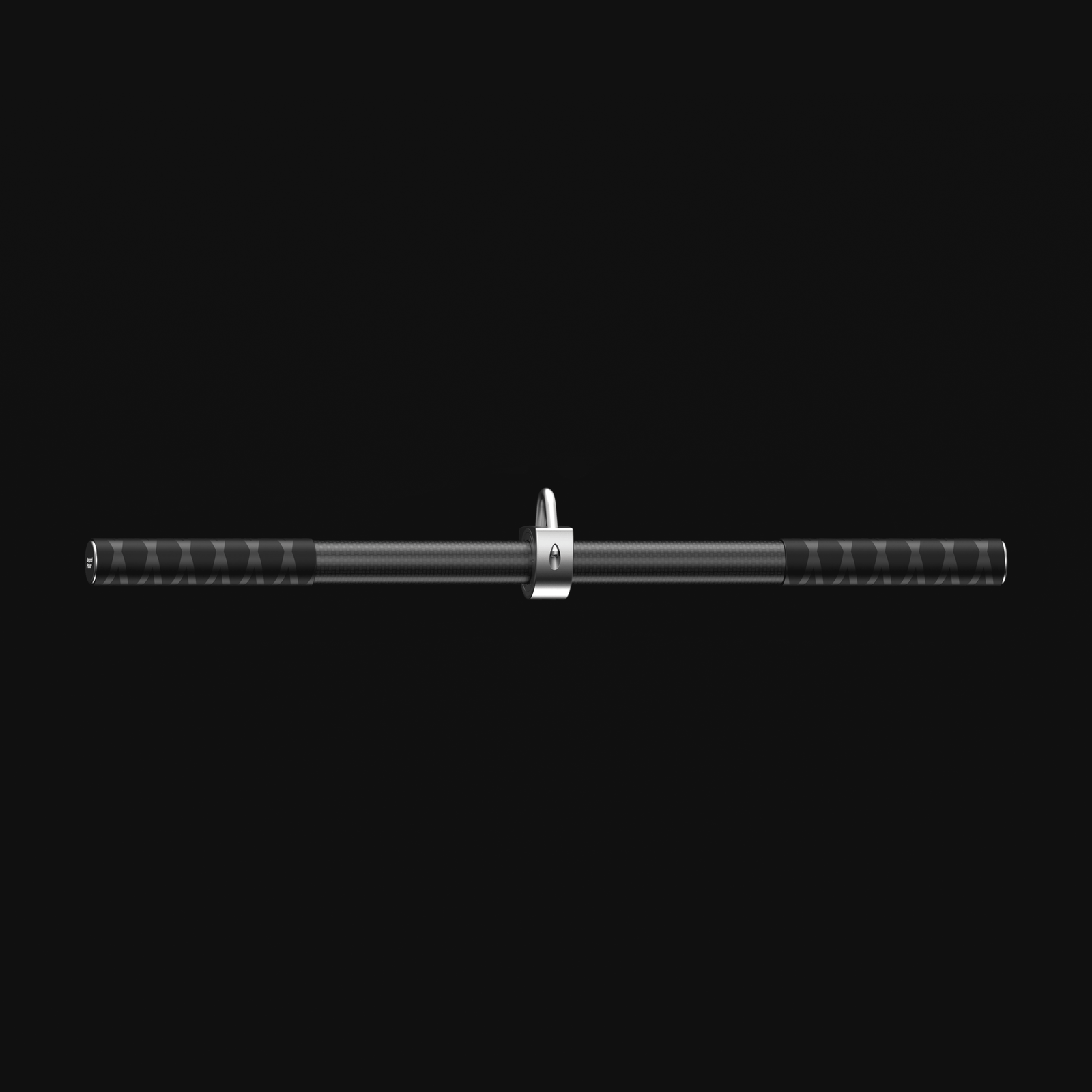

44in Dual Hook Bar
44-inch aluminum dual-hook straight bar for cable rows, pulldowns, and curls.
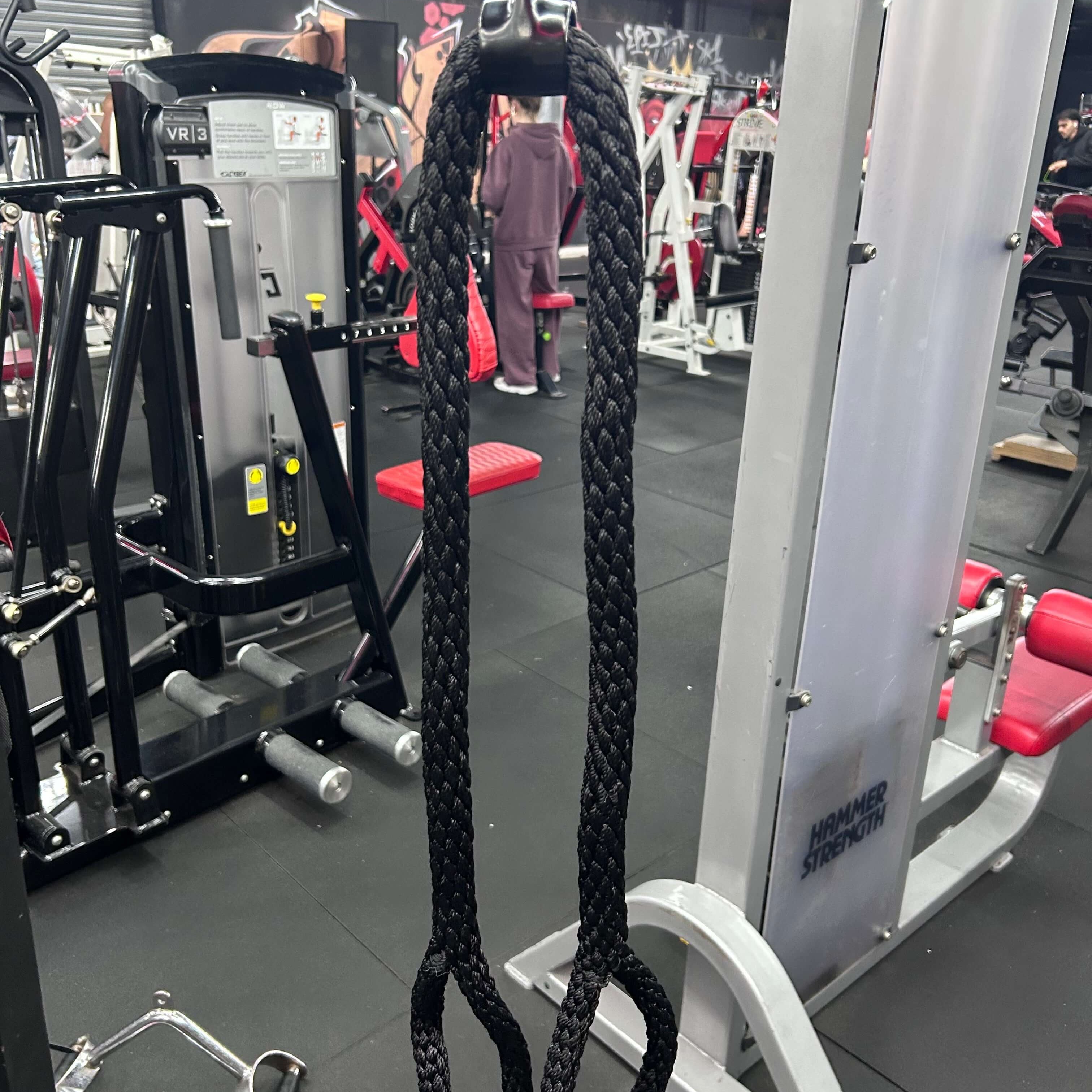
Super Long Tricep Rope
Extra-long looped cable rope for triceps pressdowns and overhead extensions.

Dual Hook EZ Curl Bar
Angled aluminum dual-hook cable bar for biceps curls and pulldown variations.

GymPin Ergo Handles
Pair of ergonomic cable handles shaped for comfortable triceps and pulling exercises.
Make the arms move, not the whole body
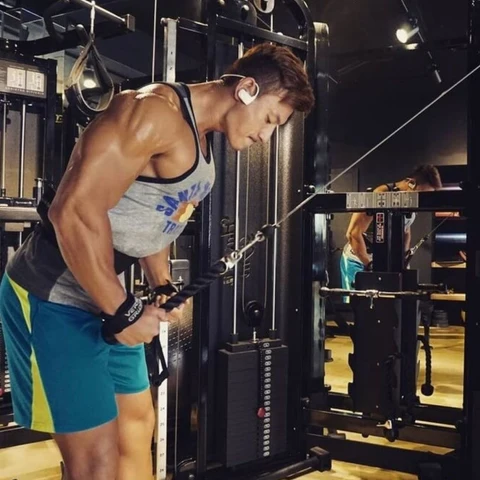
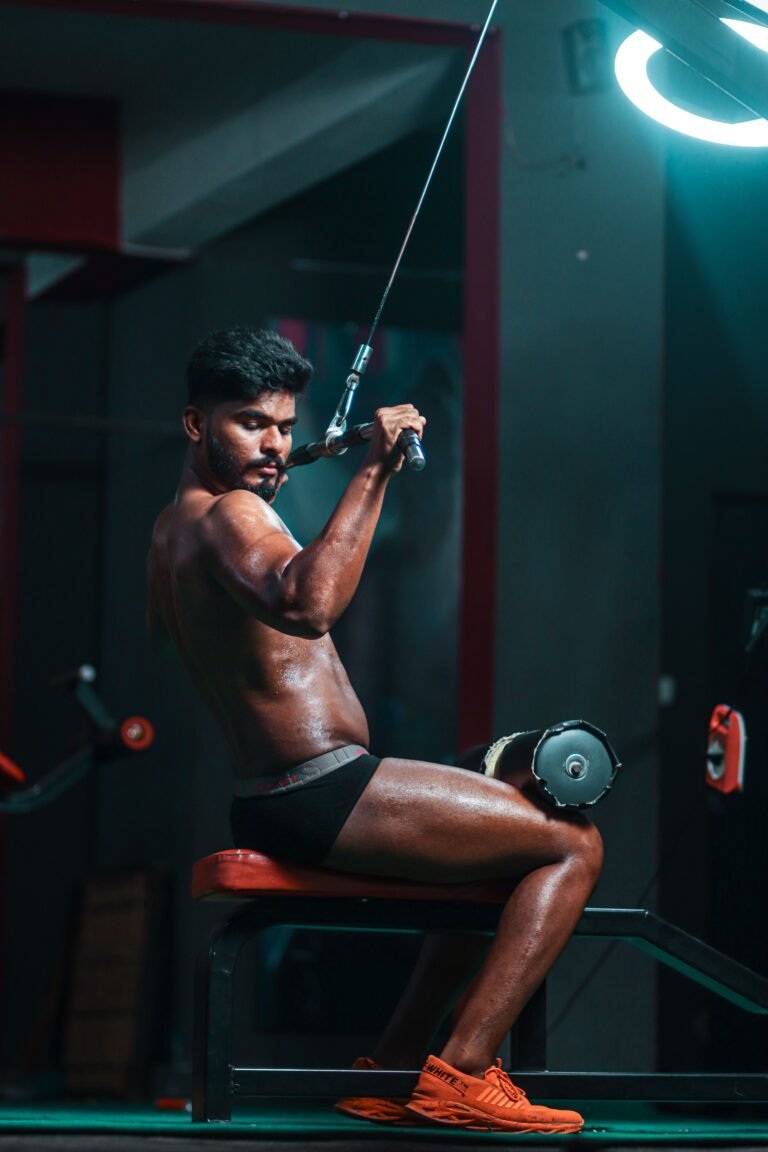
Start with the upper arms elevated and the elbows in that nearly fixed position. Drive the upper arms down in a smooth arc until your hands approach the front or sides of the thighs. A useful cue is to bring the upper arms toward your back pockets; thinking only about forcing the handle down can make people turn the movement into a triceps pushdown. Keep the cable moving while the torso stays quiet.
At the bottom, stop when you have completed shoulder extension without leaning farther back or rolling the shoulders forward to squeeze out another inch. Pause for a brief beat if you can hold the position without your body rocking. Then let the arms travel overhead under control, taking roughly two seconds to return. The return is a working part of the repetition, not a free ride back to the start.
Your shoulder blades do not have to be clamped into one artificial position throughout the set. Allow a comfortable, controlled overhead reach and let the shoulder girdle move naturally. If you feel pinching at the top, limit the reach, alter your hinge or handle, and use a lighter load. Sharp or persistent pain is a reason to stop and reassess rather than stretch deeper under tension.
Use a side-on phone video for one set if you are unsure where the motion comes from. Your elbows should trace a reasonably consistent arc, your knees should not dip to launch the handle, and your torso should not jerk upright as the stack rises. A controlled set with a smaller number on the machine is the more productive training signal.

Bodybuilding Shirts & Workout Gear
Bodybuilding shirts, tanks and gym gear for lifters chasing muscle, size, symmetry and the pump.

Dost Thou Even Pull Tee
Make gym days more fun with “Dost Thou Even Pull Medieval Knight Lat” style.

Lat Man Big Back – Jumper With Huge Lats – Back Day T-Shirt
Add a playful “Lat Man Big Back” touch to your casual rotation.

Demon Back Big Back Sweater & Lat Gains Meme T-Shirt
Add a playful “Demon Back” touch to your casual rotation.


Back To The Sci-Fi Meme Gains T-Shirt
Keep things casual with a little “Back to the Gym” attitude.

Back Sabbath Back Day Funny Gym Hoodie
Bring “Back Sabbath Back Day” gym humor to lazy days and post-workout plans.


Wide Privilege – Wide Back Meme Hooded Pullover Hoodie
Make your off-duty look more fun with “Wide Privilege”.

Nice Traps Big Back – Horror Halloween Jigsaw Meme Pull T-Shirt
For laid-back days and Halloween humor: “Nice Traps Big Back”.

Strong Back Bodybuilder Gym | Funny Workout Decal | The Sticker
Stick a little “Strong Back Bodybuilder” humor on your favorite gear.
Rope, straight bar or one hand: choose for fit
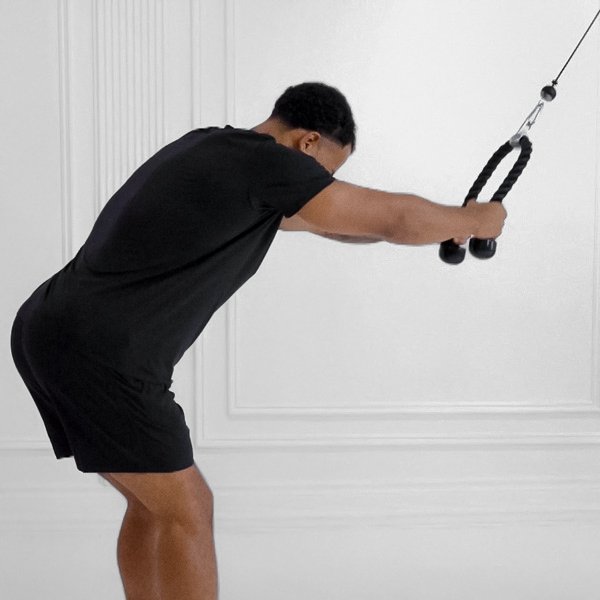
A straight bar makes it easy to keep both hands on the same path and compare loads from session to session. Take a comfortable overhand grip, usually around shoulder width. If the bar is very wide or forces your wrists into an awkward position, it is not automatically a better lat exercise. A narrower comfortable bar can be perfectly suitable.
A rope permits a neutral hand position and a little independent movement of each arm. Some people find this friendlier on their wrists or elbows. Let the rope ends separate slightly near the hips only if doing so feels natural; pulling the ends dramatically apart converts the finish into a different shoulder action. Rope length and cable height can change how far you must stand from the pulley.
A single-handle version lets you work each shoulder separately and find a smooth path toward the same-side hip. It is a good option when your shoulders prefer slightly different paths, but it is not a guaranteed cure for asymmetry. Keep your torso facing forward rather than twisting the weight down. Match the number of clean reps on the two sides and choose a load that respects the less comfortable side.
Do not interpret attachment changes as proof that one tool uniquely develops a special region of the back. The main job remains shoulder extension. Keep your grip choice stable for several weeks, track the reps and handle position, and switch only when comfort, machine access, or a genuine plateau makes the change worthwhile. Consistency makes progress easier to judge.
Six mistakes that make the exercise less useful
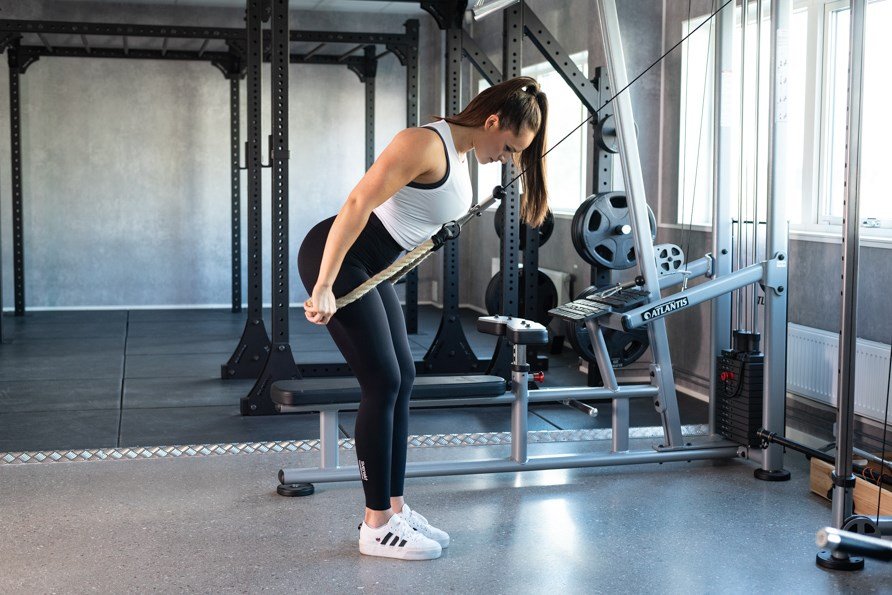
1. Curling the attachment down. If the elbows bend substantially on the way to the hips, elbow extension can take over at the finish. Lighten the stack and keep a soft, consistent angle rather than locking the joints as hard as possible.
2. Swinging through the hips. A deep hinge at the start is fine when stable. Repeatedly straightening and folding the torso to generate momentum changes the resistance and disguises weak reps. Brace and take a small step back if the pull direction is awkward.
3. Shrugging through the overhead return. Some shoulder-blade movement is expected, but uncontrolled elevation and neck tension may signal a load you cannot manage. Slow down, shorten the painful portion if necessary, and check whether the pulley is too high for your comfortable reach.
4. Letting the low back supply the finish. Watch for flared ribs and leaning backward at the bottom. Exhale slightly and stop the rep where the upper arm reaches its natural endpoint, not where your chest can be thrust farther up.
5. Racing the negative. If the handle shoots overhead and the plates crash between repetitions, most of the useful control has vanished. Use a two-second return, avoid bouncing the stack, and keep tension where the machine allows it.
6. Changing everything each workout. A different rope, pulley height, stance and weight make it hard to tell whether you improved. Keep a simple record of the setup and the number of technically clean reps. Adjust one variable at a time.
Equipment Worth Exploring
Explore equipment, accessories and gear from our carefully selected range.
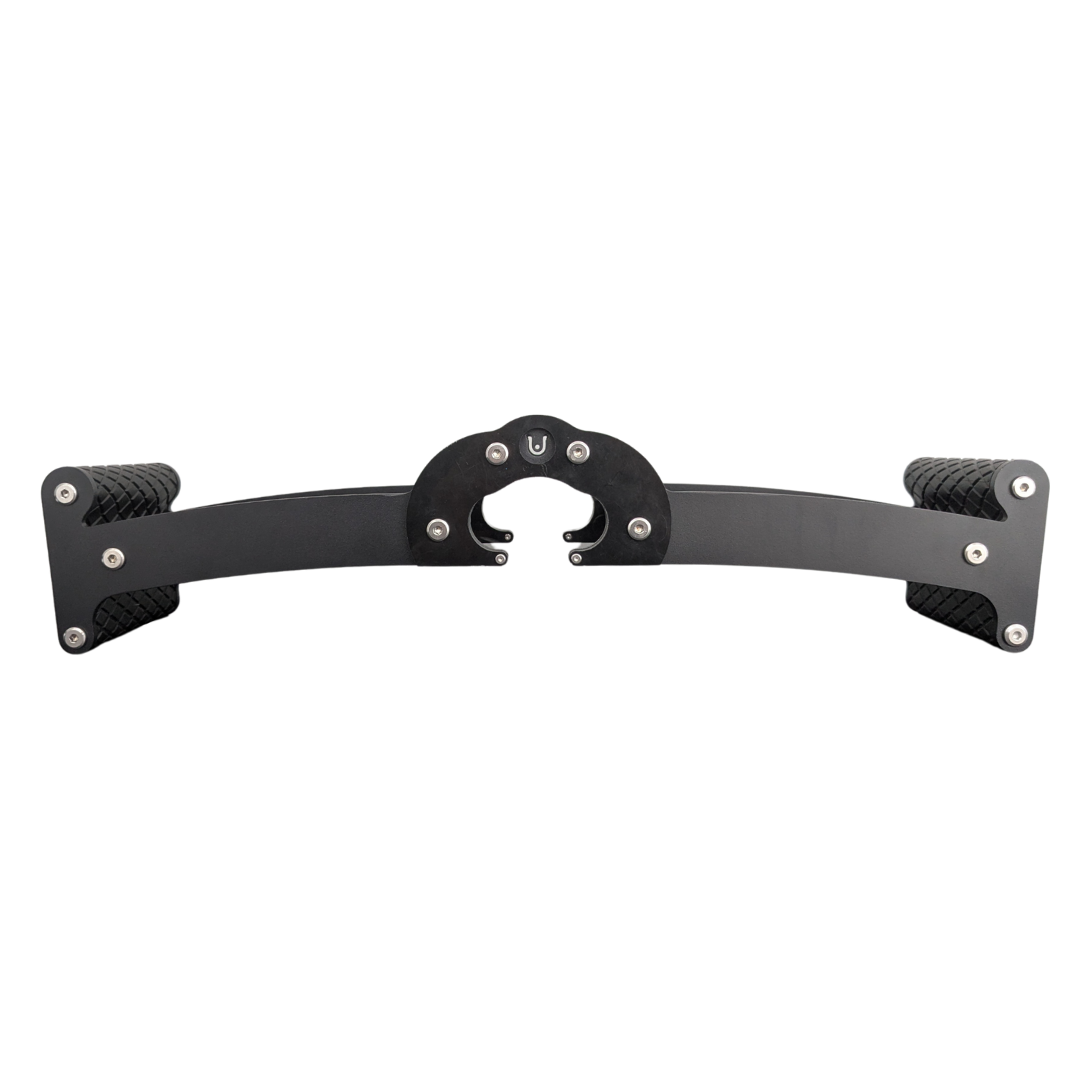
Back Bar
Multi-grip cable and landmine bar with a built-in deadlift jack.

GymPin D Handle Bar
Multi-use steel D-handle bar for cable rows, pulldowns and other cable exercises.

VForce Wall Trainer
Space-saving wall-mounted functional trainer with pivoting cable arms and variable resistance ratios.
VOLTRA
Compact digital cable trainer with smooth, adjustable resistance.
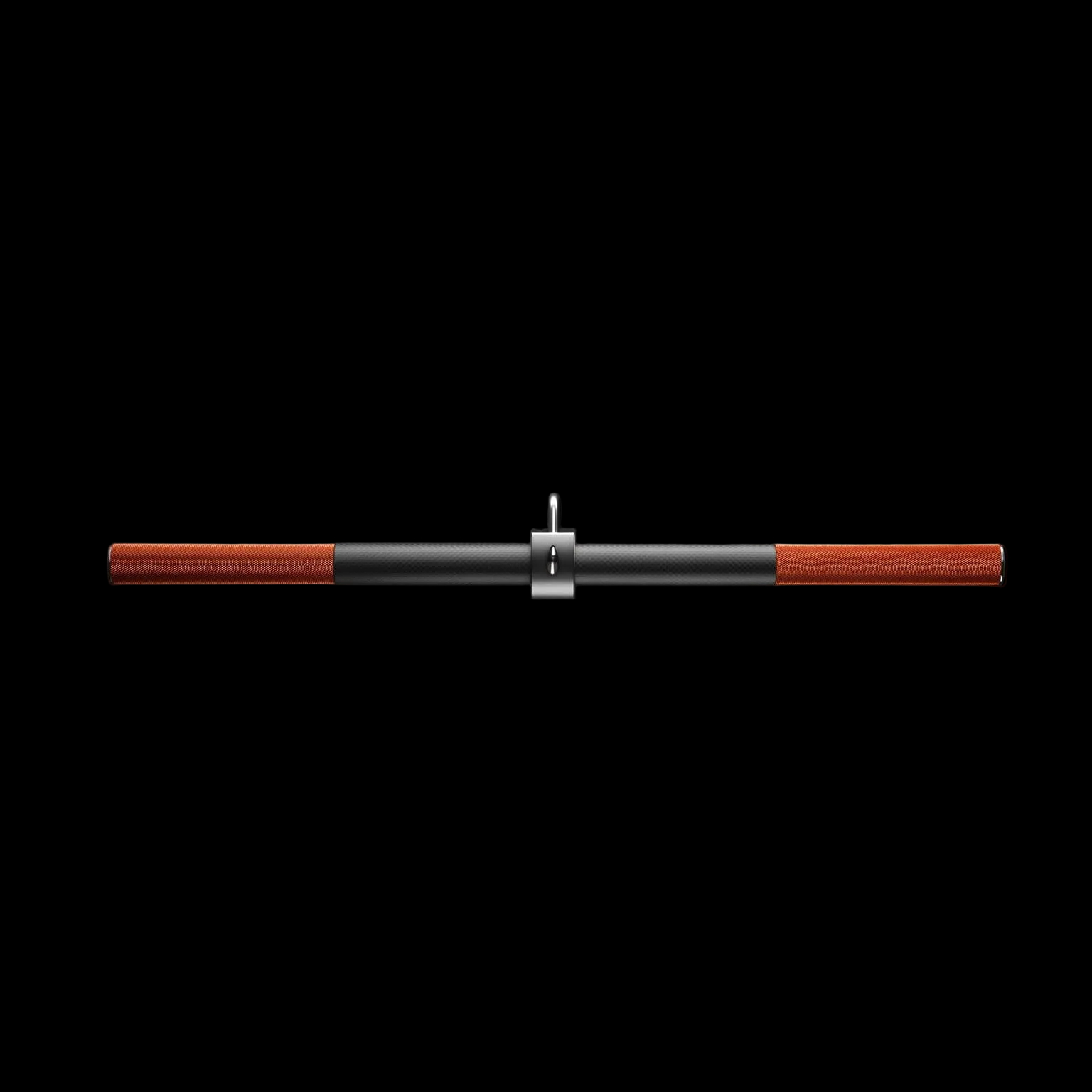
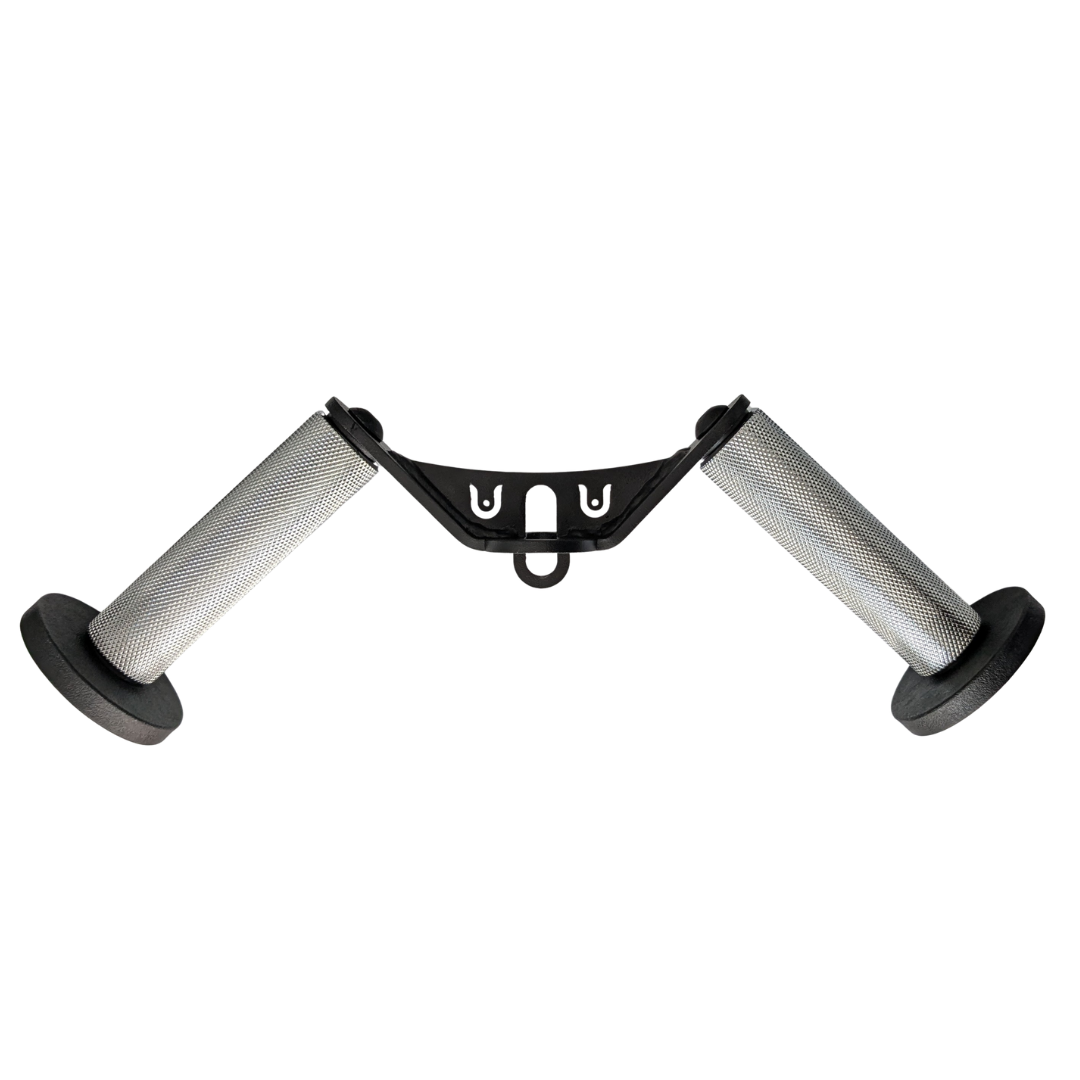
W Grip
Angled cable grip for comfortable rows, pushdowns, and curls.
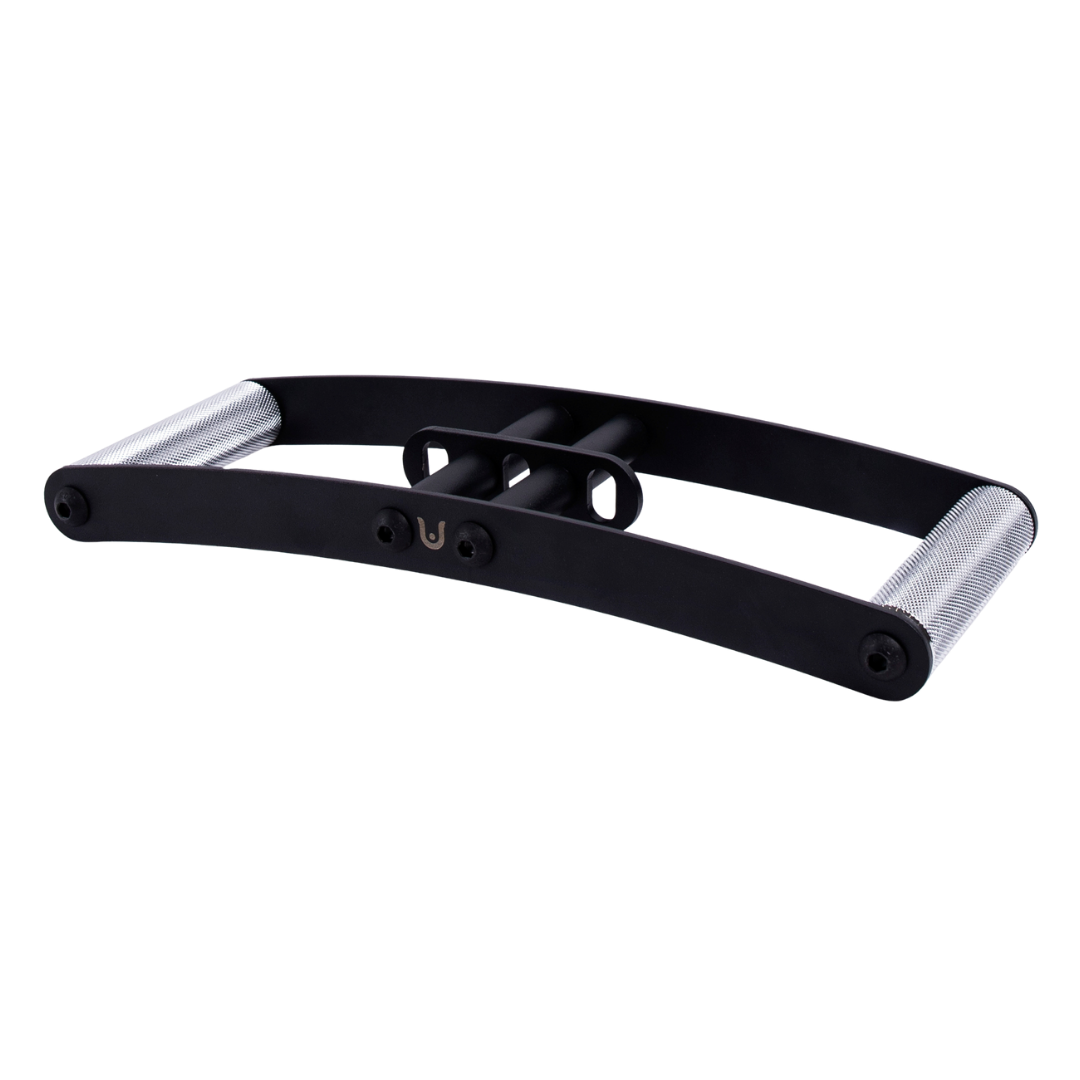
Horizon Grip
Ergonomic V-style cable grip for rows and back training.

Angles 90 Grips
Flexible grip attachments that allow natural wrist movement during pulling exercises.


VForce Lat Seat
Rack-mounted seat attachment for supported lat pulldowns and seated cable exercises.
Where it belongs beside rows, pull-ups and pullovers
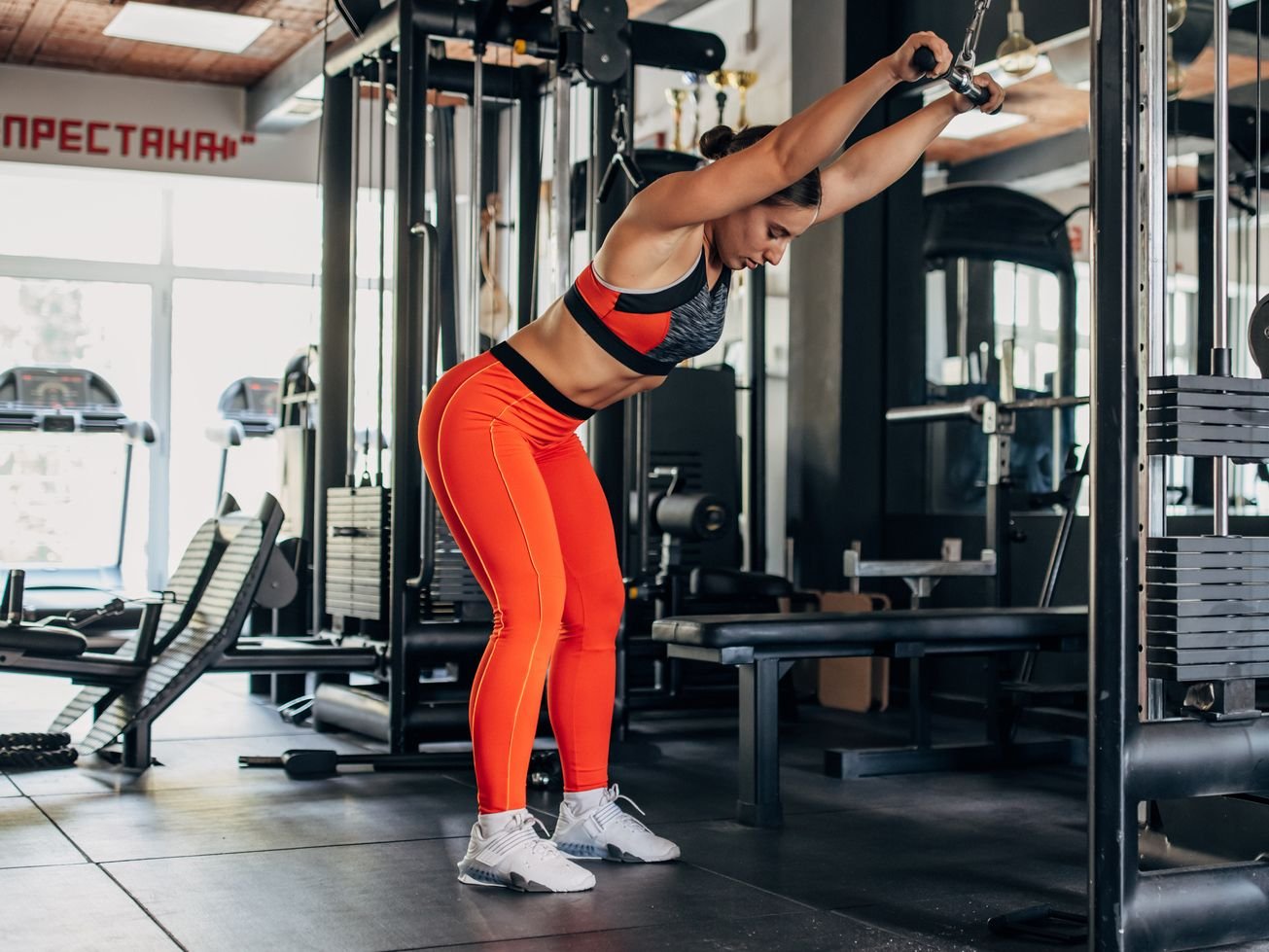
Rows and pull-ups remain the backbone of a sensible back program because they train substantial pulling loads and develop multiple muscles together. Straight-arm cable pulldowns fill a narrower role: extra shoulder-extension work with limited repeated elbow bending. For many people they make the most sense after the first heavy horizontal or vertical pull, particularly if grip and biceps are already tired.
You can also use one or two easy warm-up sets to rehearse the lat-driven arm path before pull-ups. Treat that as a coordination choice, not proof of more muscle growth. If your hardest straight-arm sets before rows leave your lats fatigued, expect the following heavy work to feel harder. Decide whether the session’s priority is maximal performance on rows or a local accessory stimulus.
A dumbbell pullover is an alternative when cables are unavailable, but its resistance curve and shoulder demands are different. A band can provide a similar-looking arc, although the tension normally climbs as the band stretches rather than following a cable stack’s profile. Do not claim the variations are identical simply because all three involve nearly straight arms.
A useful starting slot is two or three sets of 10 to 15 clean reps after your main pulls, with about 60 to 120 seconds between sets. That is enough to see whether the movement fits without making your whole back session revolve around it. If you already have demanding rows, pulldowns, pull-ups and other back accessories, adding more sets is not automatically progress.
A six-week lat-focused progression for two back days
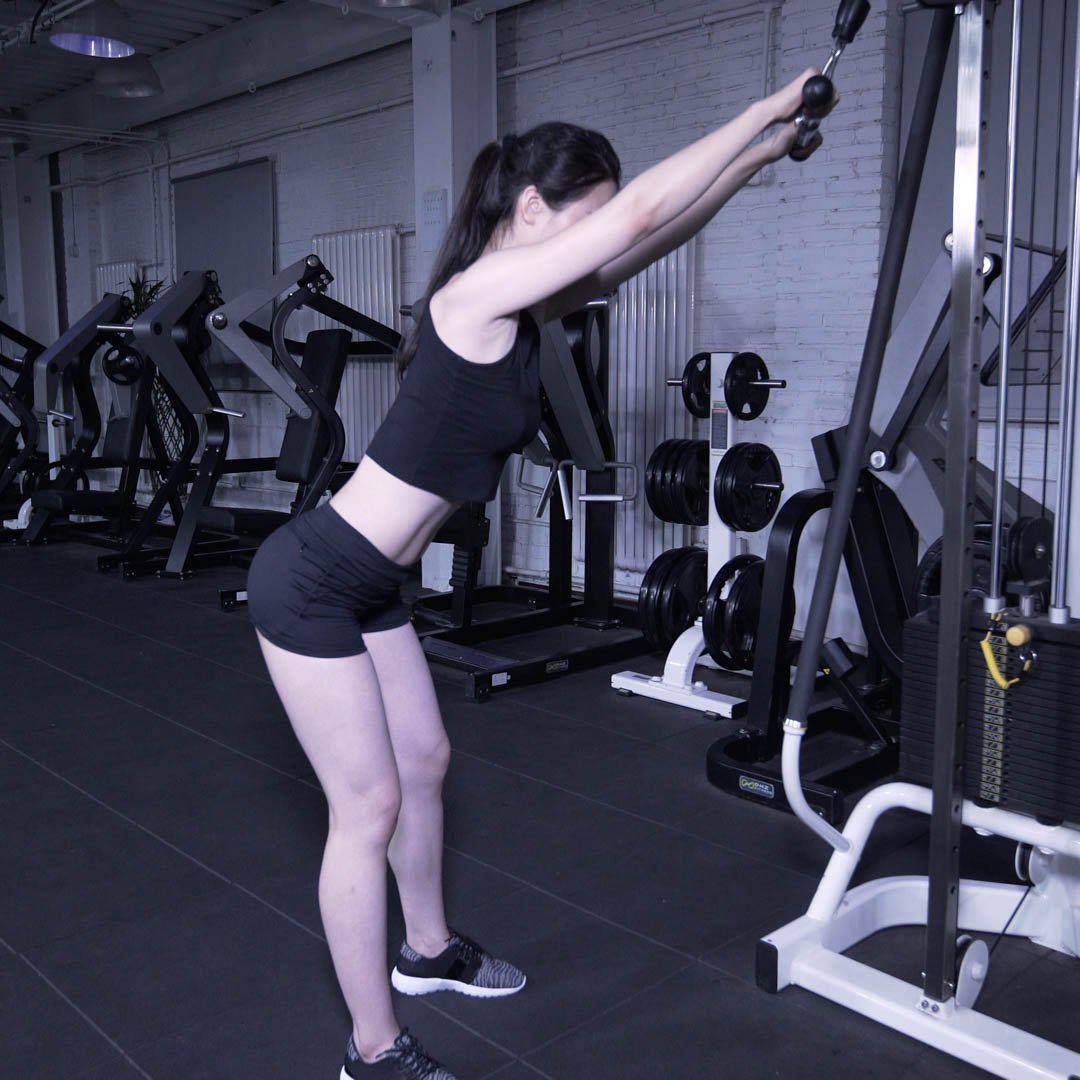
Use the same attachment and pulley height for the full block unless they cause discomfort. On Day A, perform your heavier row or pull-up variation first, then straight-arm pulldowns. On Day B, choose your other main pulling pattern and repeat a slightly lighter pulldown set. Leave at least a day between the two back sessions when your wider program allows it. This is a sample progression for healthy adults, not an obligation to train through pain or fatigue.
Weeks 1-2: establish the movement. Start Day A with two sets of 12 to 15 and Day B with two sets of 12 to 15. End with roughly two or three clean repetitions still possible. Record your exact handle, height, stance and load. If one shoulder does not tolerate the top reach, find a comfortable range now rather than hoping heavier training will correct it.
Weeks 3-4: earn more work. Add a third set on Day A if recovery and form remain good; keep Day B at two sets. Aim to build toward the top of the 10 to 15 rep range without changing the elbow angle or torso position. When all prescribed sets reach the top of the range with the same honest technique, use the smallest available stack increase at the next session.
Weeks 5-6: consolidate. Keep Day A at three sets and consider a third on Day B only if your back work and elbows are recovering normally. Work mostly in the 10 to 15 rep range, with the last set ending around one or two controlled reps before your form breaks down. If the weight jump causes swinging or cramps, return to the previous weight and accumulate better reps.
The progression is deliberately modest. A stronger session might mean adding one rep at the same load, moving through a more comfortable range, or finally controlling the negative at a weight you used to throw around. Log those wins. When the block ends, reassess your total weekly back volume and whether straight-arm pulldowns improved the quality of your training; keep them if useful and rotate them out if another accessory serves you better.
Funny Gym Shirts & Workout Gear
Funny gym shirts, tanks, hoodies and workout gear for lifters who like training hard.

Shirt Pull Day – Back & Biceps Meme Top T-Shirt
Heavy lifts, good laughs, and a little “Pull Day Graphic” energy.

Back In Gym Back In Black Album Cover Parody AC/DC Heav T-Shirt
Add a playful “Back In” touch to your casual rotation.

Black Panther Big Back Gym Funny Workout Muscle Shirt A Tank Top
Add some lifting attitude to training with “Black Panther Big Back”.

Train Back You Must Gym | Funny Yoda Bodybuilding Meme Sticker
A fun “Train Back You Must” touch for bottles, laptops, and lockers.


Pull Up Not Out Hoodie
Show off your bodybuilding humor in a laid-back “Pull Up Not Out” hoodie.

Grip Training Get A Grip Hoodie
Show off your lifting humor in a laid-back “Grip Training” hoodie.

Always Pull Yourself Up Tank
Show some personality between sets with “Always Pull Yourself Up”.

The Empire Lifts Back – Star Wars Back Day Meme Vest Mu Tank Top
Your gym-day look, with a playful “The Empire Lifts Back” twist.

Big Back SpongeBob Sweater Back Day & T-Shirt
Bring “Big Back” humor to your everyday gym style.