What a 2026 rowing-versus-cycling experiment tested
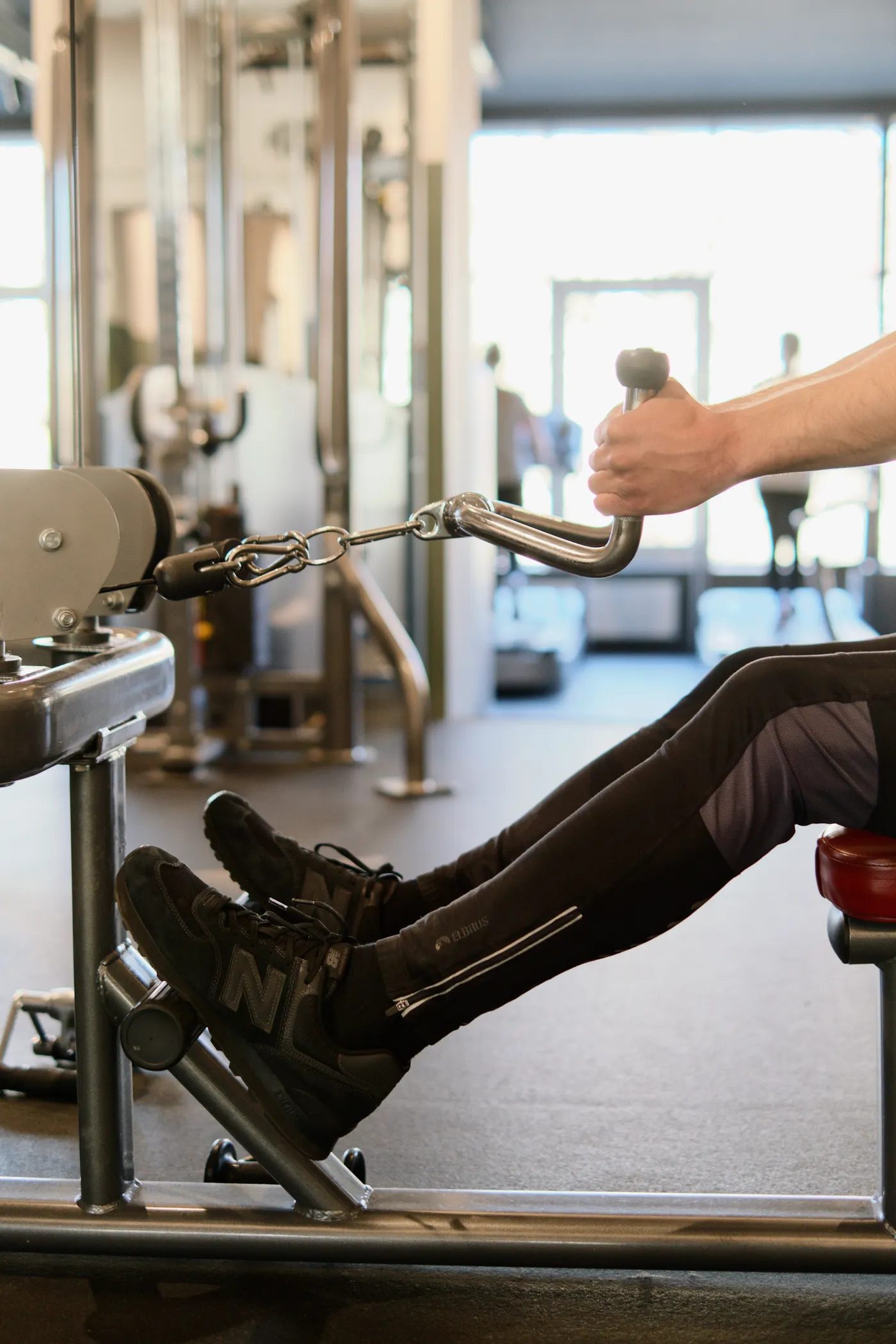
Rowing and cycling can both turn short intervals into demanding conditioning sessions. Yet identical sprint durations do not necessarily feel identical. A study appearing in a 2026 issue compared reduced-exertion high-intensity interval training, or REHIT, on an indoor rowing ergometer and a stationary cycle. Its focus was blood lactate and the experience of hard exercise, rather than a contest over which machine burns more calories or builds more muscle.
Twenty healthy, physically active adults, averaging about twenty-seven years old, completed testing and then performed both rowing and cycling sessions. Each condition included three all-out twenty-second efforts separated by active recovery. Using the same people for both modes reduced some of the noise caused by individual differences. Even so, twenty participants make a small sample, and an acute experiment cannot show how fitness changes over months.
Peak heart rate was similarly high on both machines, at approximately ninety-eight percent of maximum for rowing and ninety-five percent for cycling. That difference was not statistically significant. Maximum workload relative to testing also did not differ significantly. The rower was therefore not merely a leisurely alternative to the bike. Both conditions demanded substantial effort, yet the immediate responses differed in other ways.
The useful conclusion is specific. Exercise mode may change how a hard interval session feels even when cardiovascular demand is high in both cases. The findings do not establish superior long-term aerobic adaptation, safer joints, faster fat loss or more muscle growth. Those questions require different studies. The comparison still gives athletes a reason to consider personal tolerance alongside performance numbers.
Lower lactate after rowing does not mean less training
Lactate is often described as a waste product that needs to be flushed away after exercise. That is misleading. Lactate is produced and used during normal metabolism, and its concentration reflects production, transport and clearance. It is not a direct measure of muscle damage. A lower blood reading is not automatically a better workout or evidence of faster recovery.
Two minutes after the sprint session, average blood lactate was about 7.0 millimoles per liter following rowing and 11.6 following cycling. At thirty minutes the figures were approximately 3.1 and 6.2. At sixty minutes they were roughly 2.0 and 3.1. Those differences were statistically significant in this sample despite similarly elevated peak heart rates. They describe this protocol, not every possible interval workout.
Rowing distributes work through a coordinated leg drive, hip movement and upper-body pull. Cycling emphasizes repeated pedaling by the lower body. Different muscle recruitment and power profiles may contribute to different lactate responses, but the experiment was not designed to identify one causal mechanism. It would be an overreach to conclude that cycling is metabolically inferior or that every person will respond the same way.
Use the findings as context rather than as a target to minimize. If you can row hard with good technique and recover well enough to train again, that is useful. If cycling is more comfortable and easier to repeat consistently, that is useful too. Long-term progress depends on appropriate training accumulated over time, not winning a competition for the lowest post-exercise lactate reading.

Equipment Worth Exploring
Explore equipment, accessories and gear from our carefully selected range.

VOLTRA
Compact digital cable trainer with smooth, adjustable resistance.

Go-Tone Pro
Portable digital cable trainer with up to 66 lb (30 kg) of adjustable resistance.


Power Tower
Freestanding pull-up and dip station with adjustable handles for bodyweight training.


Apple Watch Ultra 3
Rugged 49 mm smartwatch with cellular connectivity, GPS and fitness tracking.

Powerbeats Fit
Secure-fit wireless workout earbuds with active noise cancellation and a charging case.
Enjoyment may be the most practical finding
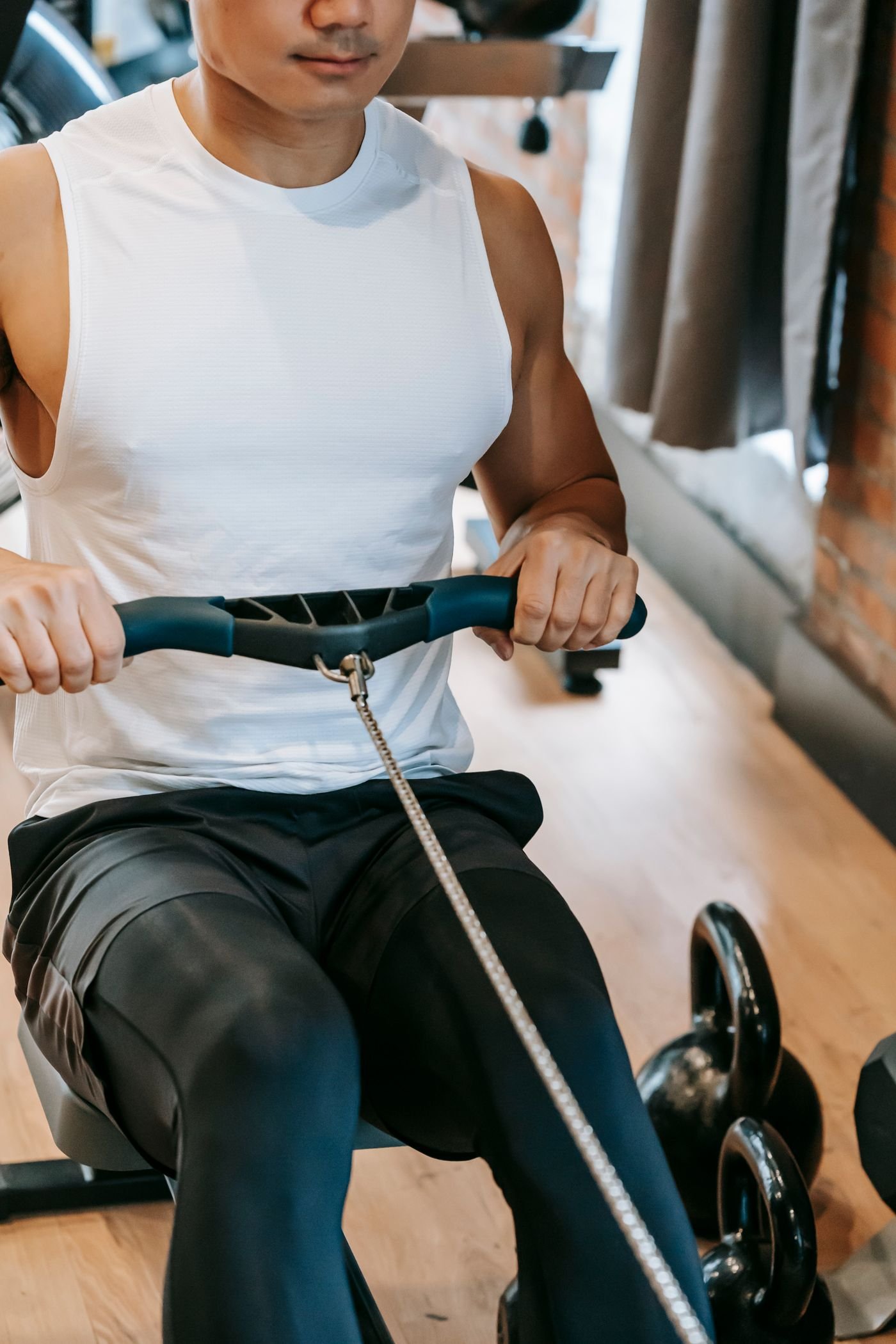
The participants rated rowing more favorably. Average enjoyment scores were about 101 after rowing and 89 after cycling. The increase in perceived exertion was smaller on the rower, and the change in affective valence, a measure of how pleasant or unpleasant the session felt, was less negative. These differences were statistically significant within this small study.
That does not make three maximal rowing sprints easy. Both conditions involved extremely hard efforts and recovery periods. The finding means that participants, on average, reported a more positive immediate experience with rowing. For someone who dreads stationary cycling, a different movement might make short intervals feel more approachable without requiring a less demanding cardiovascular effort.
Immediate enjoyment is not proof of adherence. The investigators did not track how many workouts participants completed over six months, whether one mode improved aerobic fitness faster or whether either caused more body-fat loss. Familiarity can also change preference. An experienced cyclist may enjoy pedaling much more than a novice rower enjoys learning the stroke. Group averages cannot decide which modality an individual will prefer.
Try a fair personal comparison with moderate, not maximal, intervals on separate days. Use a familiar warm-up, similar work durations and comparable recovery periods. Record session difficulty, comfort, technique and whether you would willingly repeat it. These observations are not substitutes for laboratory measurements, but they help identify a conditioning approach you can sustain alongside strength or sport training.
Technique can change the rowing experience
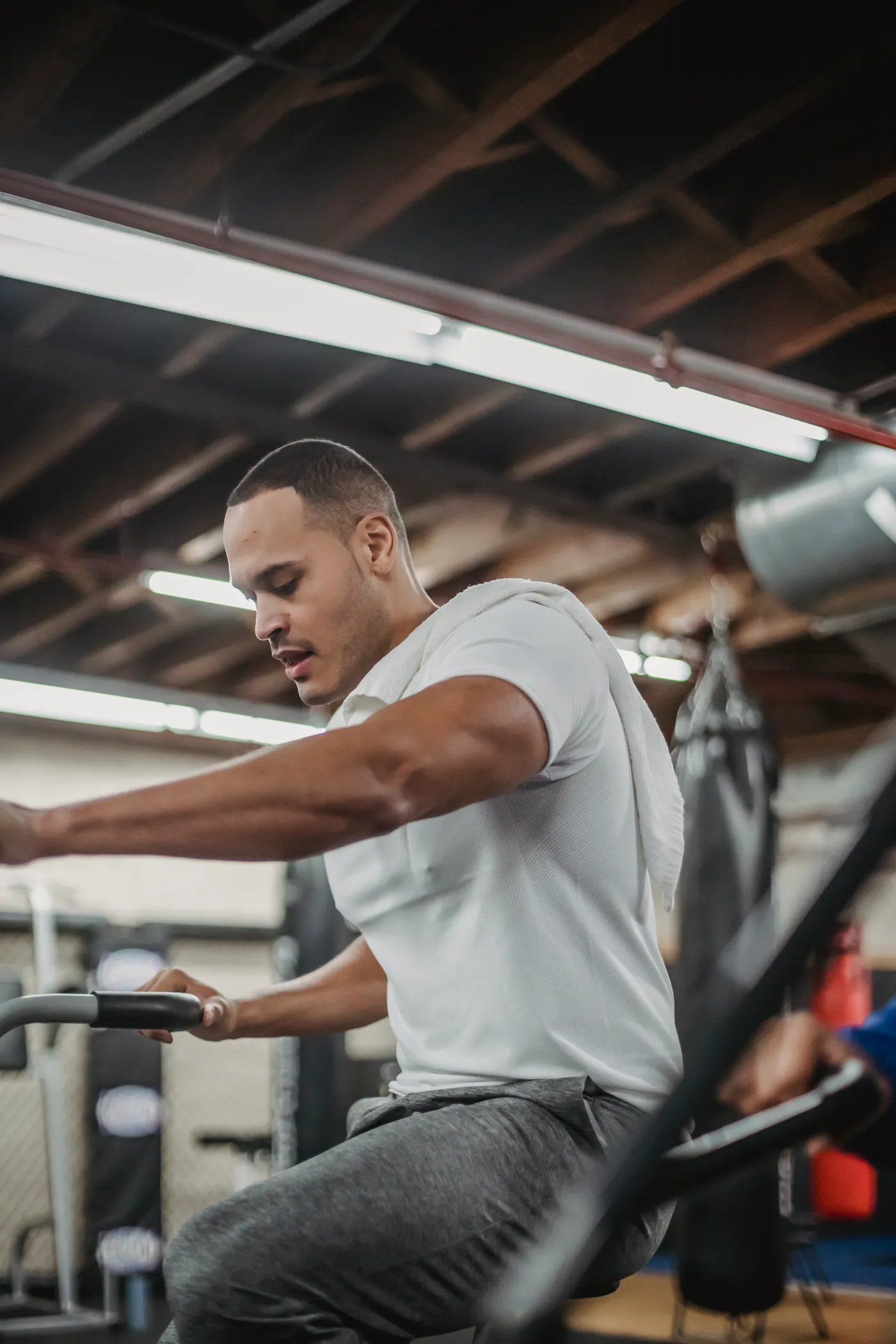
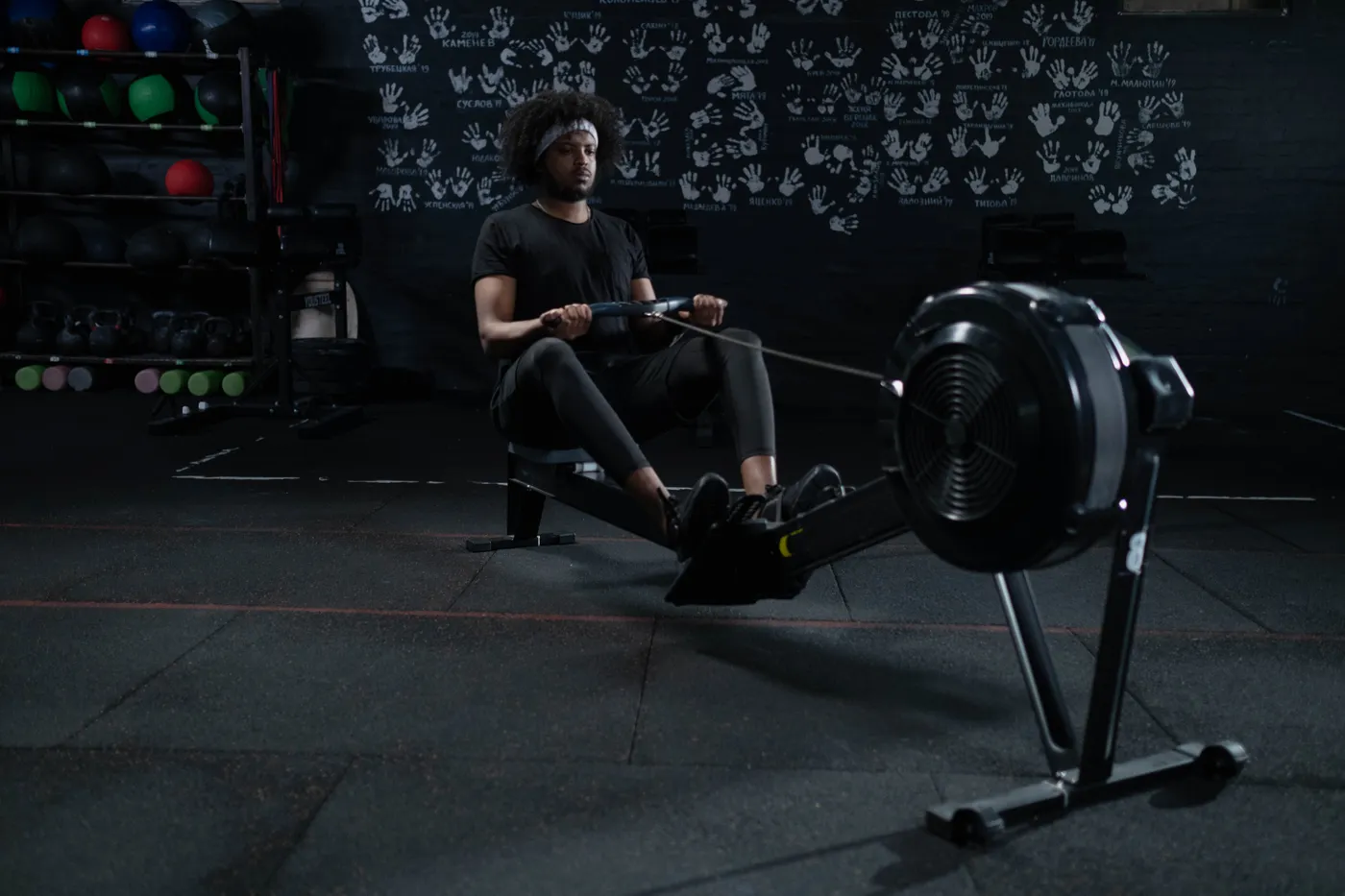
Rowing is a technical skill as well as a cardiovascular exercise. Begin the drive by pressing through the legs, then allow the torso to swing through the hips, and finally pull the handle toward the lower ribs. The recovery reverses that order: extend the arms, hinge forward and then bend the knees as the seat slides toward the flywheel. A smooth sequence matters more than frantic stroke speed.
When fatigue rises, technique can deteriorate. Common mistakes include pulling with the arms before the legs have driven, excessive rounding through the back and rushing forward on the slide. Practice several comfortable sessions before attempting hard intervals. A moderate damper setting is usually a more useful starting point than automatically choosing the heaviest resistance. The goal is repeatable, coordinated work.
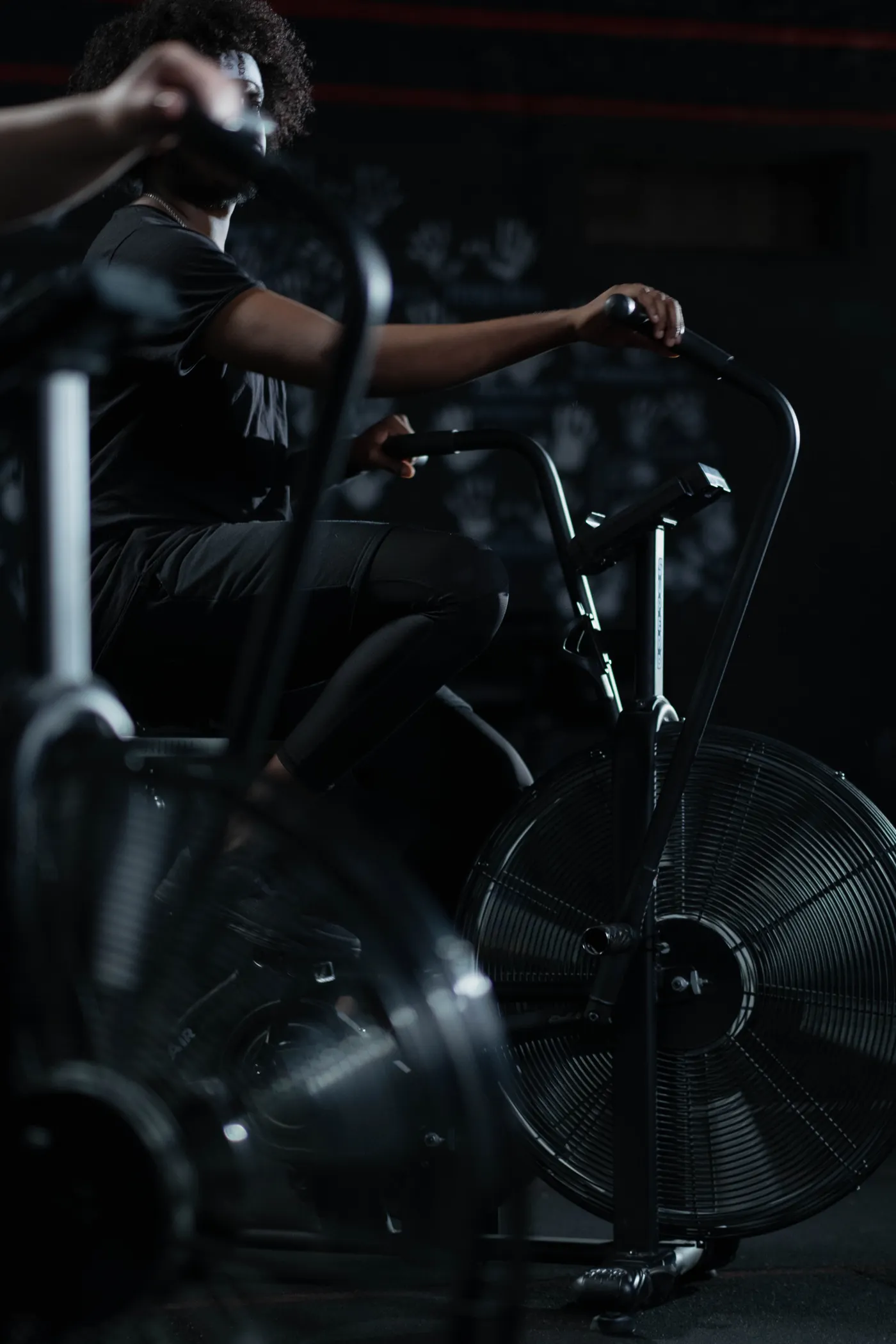
Cycling has a different learning curve. Adjust the seat so the hips stay stable and the legs can pedal comfortably, and choose a handle position that does not force the shoulders or wrists into discomfort. It is generally straightforward to change intensity while maintaining a predictable movement. That can make the bike attractive when grip fatigue or rowing coordination limits the effort.
Neither device is automatically safer or better for every athlete. Comfort, technique, existing symptoms and the intended workout all matter. If a movement repeatedly causes pain, modify the setup or select another mode rather than overpowering the symptom. The study involved healthy active adults; it did not test injury prevention, rehabilitation or outcomes in people with specific medical conditions.

Cardio Shirts & Workout Gear
Cardio and conditioning gym gear for runners, endurance athletes and anyone who earns the sweat.


Gym Dost Thou Even Pedal Medieval Air Bike Humor for Cr Tank Top
Bring “Dost Thou Even Pedal Medieval Air Bike” humor to your next lifting session.

Cardio Heartbeat Hoodie
Show off your cardio humor in a laid-back “Cardio Heartbeat” hoodie.

Hybrid Athlete – HYROX Workout Checklist Gym Decal for Sticker
Give your everyday gear a playful “Hybrid Athlete” twist.

Hybrid Athlete – Iron Man Medieval Triathlon Crewneck f T-Shirt
Show some gym-day personality with “Hybrid Athlete”.

Anti Rowing Rowing Club Shirt – Meme & Top T-Shirt
Show some cardio attitude with a playful “Anti Rowing Rowing Club” tee.

Shirt – Cardio Is Hardio – & Gymbros T-Shirt
Show some cardio attitude with a playful “Cardio is Hardio” tee.

Cardio Is Calling Decline Decal Water Bottles Meme Sticker
A fun “Cardio Is Calling” touch for bottles, laptops, and lockers.

Shirt – Don'T Quit Do It – Meme & Gains T-Shirt
Show some lifting attitude with a playful “Don't Quit Do It” tee.

Everything Hurts And I'M Tired Motivation Jumper T-Shirt
Add a playful “Everything Hurts And I'm Tired” touch to your casual rotation.
Short sprints are not an entire conditioning plan
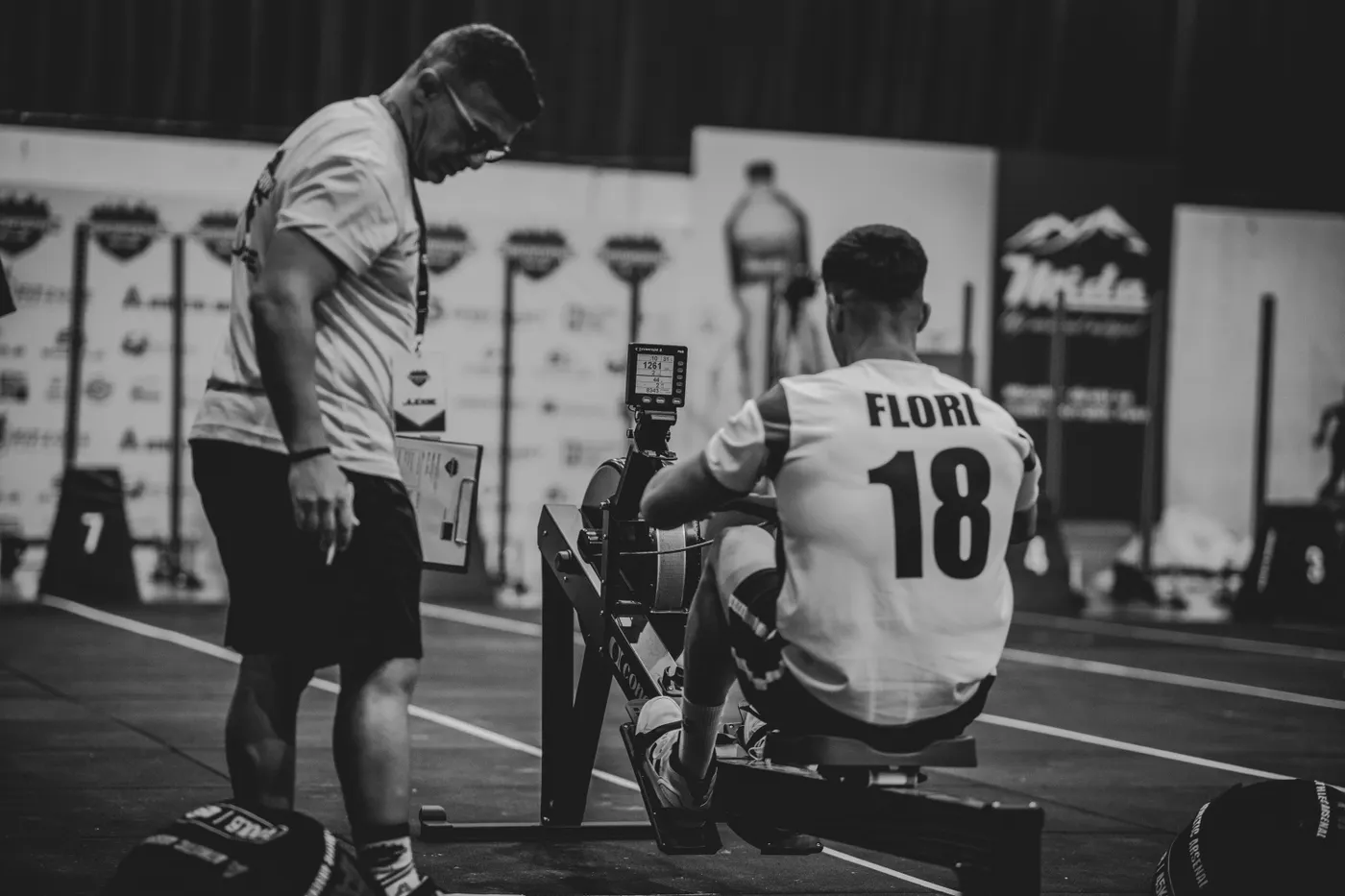
Three twenty-second efforts add up to sixty seconds of maximal work, but the complete workout also includes preparation, active recovery and a cool-down. The shorter and harder the intervals, the more important a proper warm-up becomes. A demanding sprint protocol should not be mistaken for a sixty-second replacement for all other cardiovascular activity. Easy aerobic work still has an important place.
A large evidence synthesis in 2024 examined twenty-four reviews representing hundreds of studies and nearly thirteen thousand participants. Across varied programs, high-intensity intervals generally improved cardiorespiratory fitness compared with no exercise and often compared favorably with moderate continuous training. That broad evidence supports intervals as a useful tool. It does not prove that this exact rowing protocol produces better long-term adaptations than cycling.
Someone who lifts several times per week can combine comfortable aerobic sessions with a smaller amount of hard work. Two twenty-to-thirty-minute easy sessions and one short interval day may be a reasonable example for a trained adult. That is a coaching illustration, not a prescription validated by the rowing-versus-cycling experiment. The appropriate dose depends on training history, other activity and recovery.
If hard intervals repeatedly reduce the quality of important squat, deadlift or sport sessions, move them away from heavy lower-body training or reduce their frequency. Beginners should establish a base of comfortable movement before attempting all-out sprints. Fitness comes from repeatable training across weeks and months, not from making every cardio workout feel like a test of survival.
Equipment Worth Exploring
Explore equipment, accessories and gear from our carefully selected range.


FID Bench MAX
Adjustable bench offering flat, incline, and decline positions + adjustable headrest.


A conservative four-week interval progression
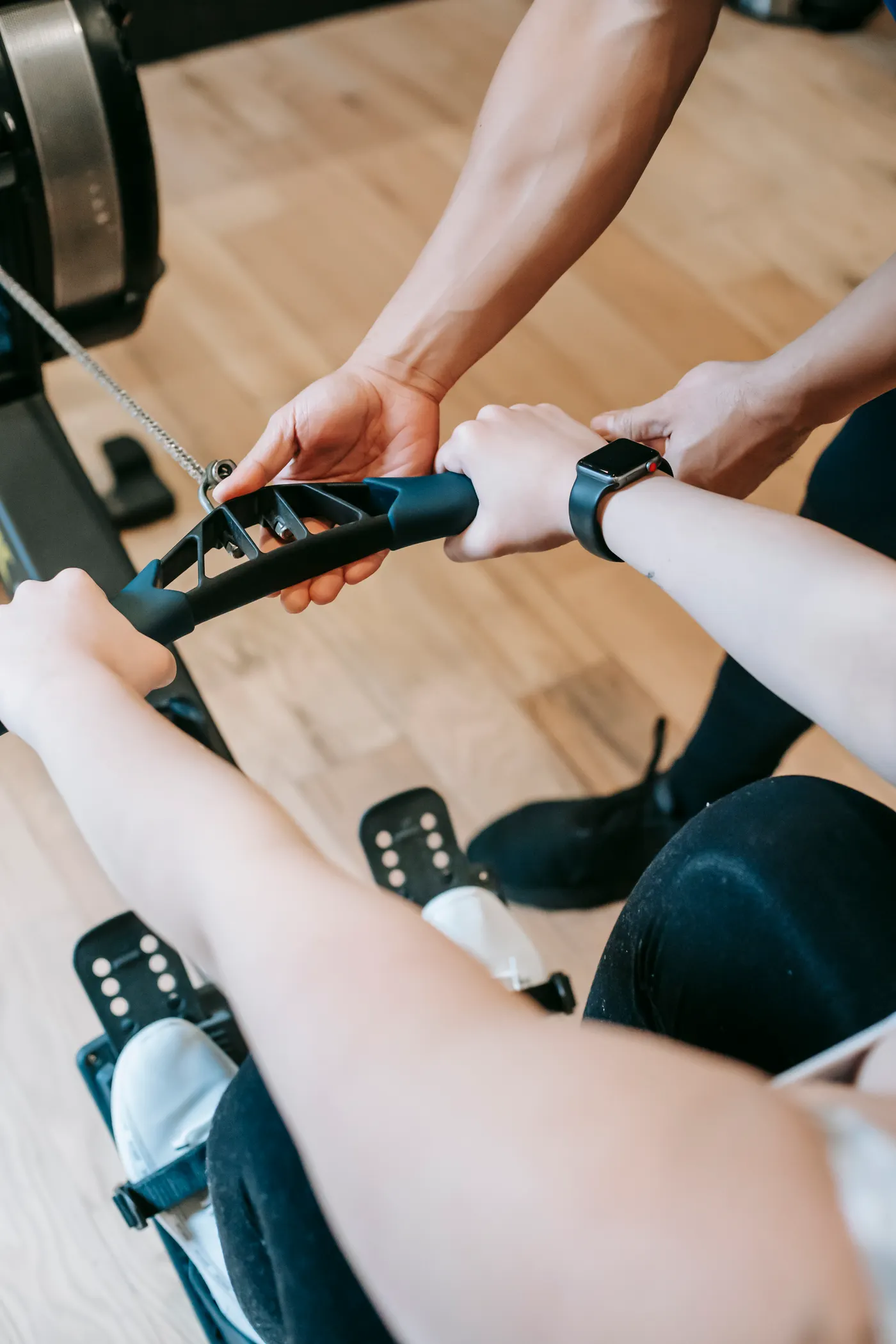
This is a practical introductory template, not a reproduction of the laboratory protocol. It assumes a healthy adult who can already perform moderate aerobic exercise comfortably. People with cardiovascular disease, unexplained symptoms or medical restrictions should obtain individualized guidance before maximal exertion. Anyone new to rowing should first learn the stroke at an easy pace and avoid making technique a limiting factor.
Week one is about familiarity. On two separate days, complete eight to ten minutes of easy rowing or cycling, followed by four controlled fifteen-second accelerations. Separate these with at least ninety seconds of easy movement. They should feel brisk rather than maximal. Finish with several minutes of comfortable exercise. Record whether you can maintain smooth strokes or a consistent pedaling rhythm throughout.
In week two, keep one comfortable aerobic session and add a single short interval day. After a thorough warm-up, perform two fifteen-second hard efforts separated by about three minutes of easy recovery. Week three can progress to three fifteen-to-twenty-second efforts if the previous sessions were well tolerated. Repeating a week instead of increasing intensity is sensible when recovery is poor.
Week four may include three twenty-second efforts with generous active recovery for an experienced, healthy participant. Maximal intensity is optional; strong but controlled efforts can still be useful. Stop if you experience chest discomfort, dizziness, unusual breathlessness or clear deterioration in movement quality. Do not chase a particular power number at the expense of control or sensible recovery.
Track repeatable output on the same machine, how difficult the session feels and the effect on your next strength workout. Rowing watts and cycling watts are not directly interchangeable measures of mechanical efficiency. Compare progress within a modality rather than pretending the devices measure identical work. A session you can repeat and recover from is a stronger foundation than one spectacular sprint followed by missed training.
Choosing the rower or bike for your own training
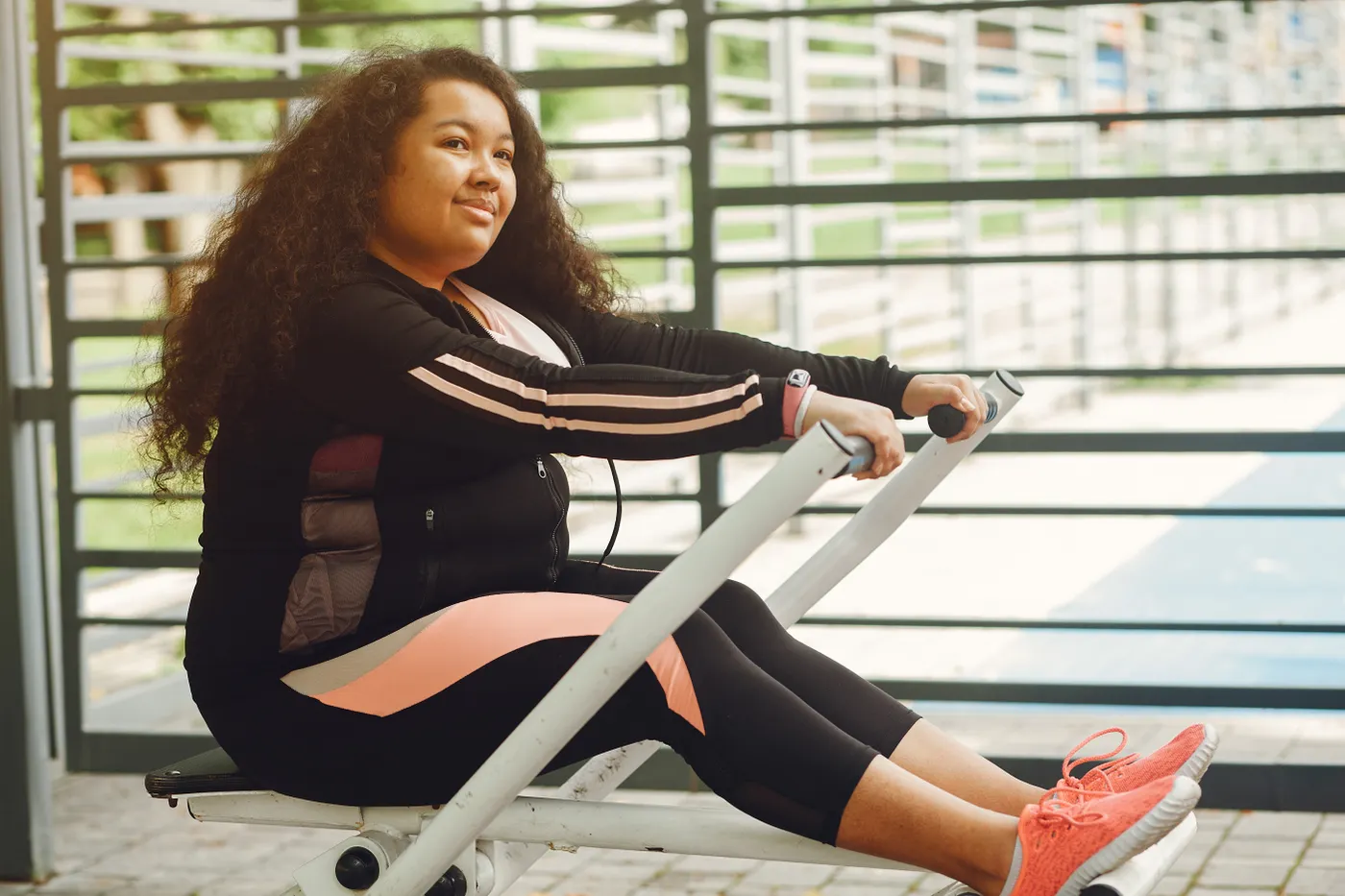
If you already row comfortably and enjoy the movement, the findings provide a reason to consider it for short intervals. In twenty active adults, rowing produced lower post-exercise lactate and a more positive immediate experience than cycling, while peak heart rates were similarly high. That is encouraging, but it does not prove that rowing improves endurance faster or causes more fat loss.
If you prefer cycling, there is no problem to solve. A stationary bike allows precise changes in effort without requiring the coordination of a rowing stroke. Some athletes may also find its position more comfortable, although individual fit and symptoms should guide the decision. Alternating both modes can be reasonable when they are available and enjoyable.
Ask which machine supports the sessions you actually want to complete. Can you use it comfortably for a longer easy workout? Can you raise intensity without losing technique? Does it fit around lifting, sport and recovery needs? Will you keep using it consistently? Those questions may be more decisive than an isolated physiological comparison from a small experiment.
Keep the outcomes separate. Similar peak heart rates suggest both modes can be demanding. Lower lactate describes a metabolic difference after these particular sessions. Higher enjoyment describes an immediate subjective difference. None of these alone demonstrates superior long-term adaptation. Exercise selection can change the experience of hard training, and that experience deserves consideration alongside physiology.
The takeaway is straightforward: learn the movement, warm up properly, establish an aerobic foundation and introduce hard efforts gradually. Choose the modality you can repeat while still training well afterward. The best interval workout is not necessarily the one that feels most punishing; it is the one that fits a consistent plan.
Functional Fitness Shirts & Workout Gear
Functional-fitness shirts, tanks and workout gear for athletes who train strength, conditioning and everything in between.

Hybrid Athlete – Strength & Endurance Crewneck for Func T-Shirt
For laid-back days and lifting humor: “Hybrid Athlete”.


Kettlebell Heartbeat Muscle Shirt Athletic Vest Workout Tank Top
Add some lifting attitude to training with “Kettlebell Heartbeat”.


Viva La Resistance Bands , Meme Shirt, Top T-Shirt
Make gym days more fun with “Viva La Resistance Bands” style.

Lift Together Grow Stronger for Gym Buddies Who Train T T-Shirt
Show some gym-day personality with “Lift Together Grow Stronger”.

Break the Stereotype Tee
Show some gym-girl attitude with a playful “Break The Stereotype Gym Girl” tee.

Heavy Metal Skull Kettlebell Gym | Funny Workout Liftin Sticker
Put “Heavy Metal Skull Kettlebell” gym humor on your laptop, bottle, or gym gear.

Burpees Bad Breaking Bad Shirt – Meme & Cardio Haters T-Shirt
Show some cardio attitude with a playful “Burpees Bad Breaking Bad” tee.