Advertising disclosure: This page includes affiliate product links that may earn us a commission, as well as products from our own store.
A cable pull-through looks simple, but it exposes whether you are actually hinging at the hips. Here is how to set up the rope, train the glutes, fix common mistakes and use a sensible six-week plan without unsupported claims about muscle growth.
Why the cable pull-through deserves a place on leg day
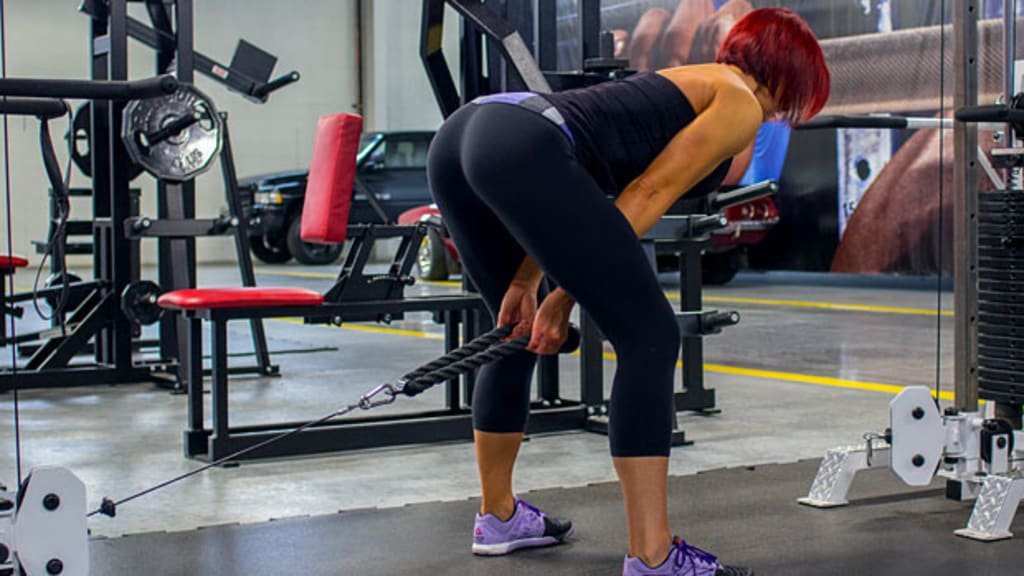
The cable pull-through is a hip hinge, not a squat and not a rope row. A rope runs between your legs from a low pulley behind you. Your hips travel backward as the torso tips forward, then your glutes and other hip extensors bring you upright. The arms mostly connect your body to the resistance. This simple setup makes it unusually easy to see whether you are moving from the hips or disguising knee and lower-back motion as a hinge.
The gluteus maximus is a major hip extensor. Hamstrings contribute as well, and the trunk helps keep the spine and pelvis controlled. A pull-through therefore belongs among the useful glute-focused accessory exercises, especially when you want to train a repeatable hinge after your main lower-body work. It is not a one-muscle isolation test, and the strength of a contraction you feel is not a reliable measurement of how much growth will follow.
The cable pulls toward the low anchor behind you instead of vertically downward like a dumbbell. This can make the upright portion of the movement feel surprisingly loaded. But constant cable tension does not mean constant torque at the hip: line-of-pull angle, the lifter’s proportions and distance from the machine all matter. Use that difference as a programming option rather than proof that the exercise is superior to every free-weight alternative.
Technique guidance and long-term training research must also be kept separate. Research on other hip-extension exercises can provide context about muscle growth and range of motion, but it does not directly demonstrate that cable pull-throughs produce more hypertrophy than Romanian deadlifts or hip thrusts. This guide treats the movement as a practical, controllable way to train rather than a shortcut backed by comparisons that were never actually tested.
Set up the rope, low pulley, feet and cable distance
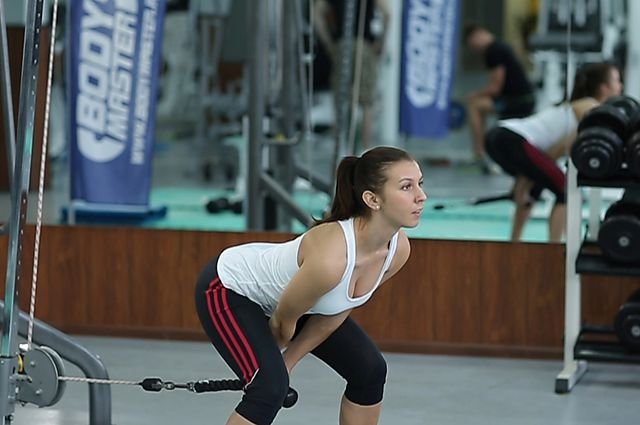
Put the adjustable pulley at its lowest setting. Attach a full-length rope securely to the carabiner and make sure the weight stack travels freely. A rope gives each hand room on either side of the thighs; a short rigid handle that digs into the legs is a poor substitute. If an attachment is frayed or a clip does not close fully, replace it before lifting.
Stand facing away from the stack with the cable between your legs. Put your feet a little wider than hip width so the rope can travel without scraping the inner thighs, and let your toes point naturally forward or slightly outward. Unlock your knees, reach back to grab the two rope ends and take controlled steps forward until the stack lifts. Keep both feet flat rather than balancing on your toes or allowing the pull to tip you backward.
The best distance leaves steady resistance through a comfortable hinge. Too close and the plates can settle at the bottom, interrupting tension. Too far away and the force may pull you off balance or turn the exercise into a fight to keep your heels down. Start with a light stack and adjust distance until you can pause upright without drifting backward, then hinge without the plates hitting their rests.
Brace your midsection gently, keep your ribs over your pelvis and let your arms hang like straps. Rehearse two light repetitions before committing to a working set. The machine should have room in front of it, and no equipment, loose plates or foot traffic should intersect the cable path. A correctly adjusted setup feels unremarkable; you can concentrate on the hips rather than fighting the attachment.

Equipment Worth Exploring
Explore equipment, accessories and gear from our carefully selected range.
VOLTRA
Compact digital cable trainer with smooth, adjustable resistance.

Go-Tone Pro
Portable digital cable trainer with up to 66 lb (30 kg) of adjustable resistance.

VForce Wall Trainer
Space-saving wall-mounted functional trainer with pivoting cable arms and variable resistance ratios.

VForce 2IN1
Half rack and pivot-arm functional trainer with switchable 1:1 and 2:1 pulley ratios.

VForce 3IN1
All-in-one rack combining an adjustable Smith machine, functional trainer, and free-weight station.

Original GymPin
Adds Olympic plates to compatible cable-machine weight stacks for extra resistance.

GymPin MiniPin
Compact Olympic-plate loading pin for compatible cable stacks with limited clearance.

Long Tricep ERGO Ropes
Extended triceps ropes with ergonomic grips for cable pressdowns and overhead extensions.
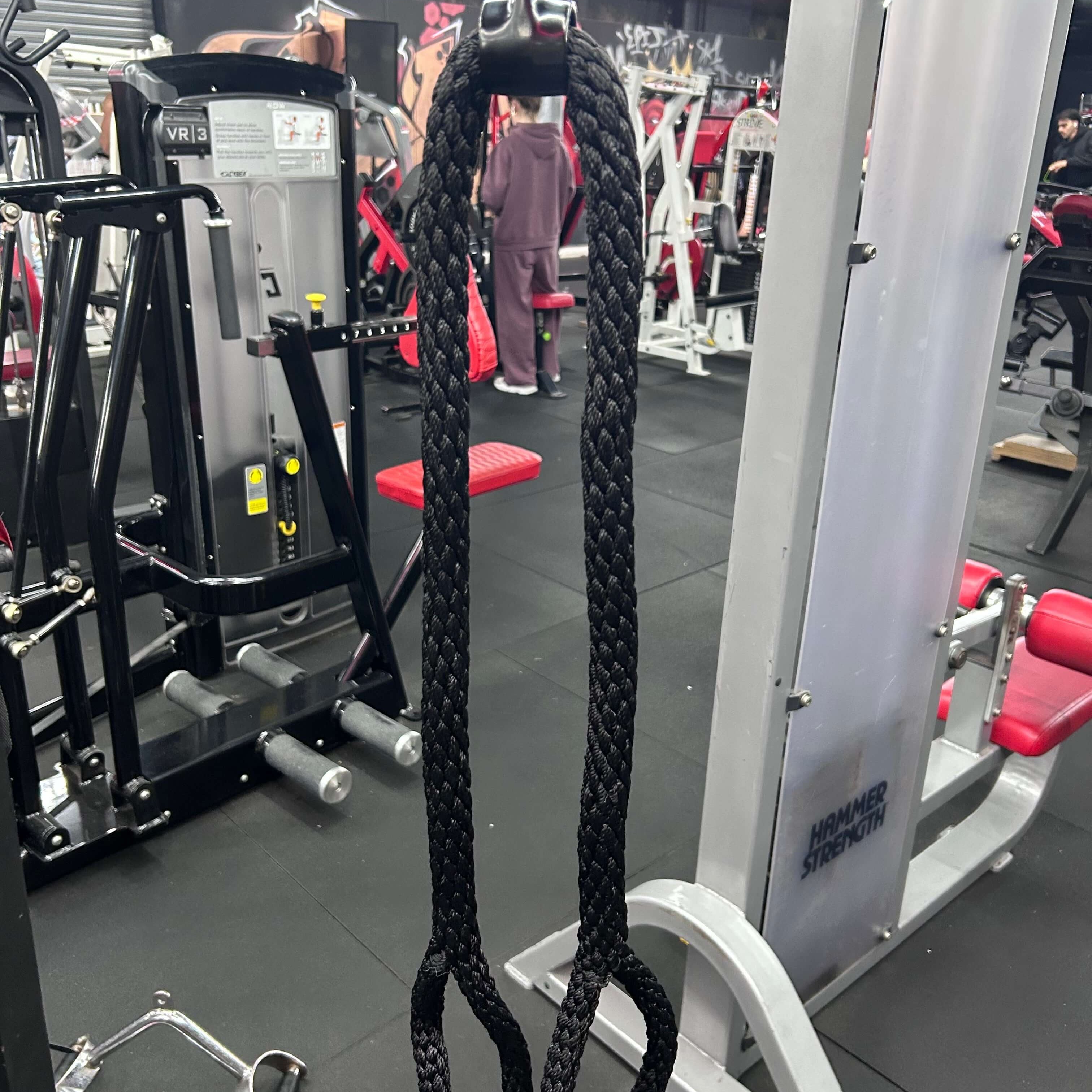
Super Long Tricep Rope
Extra-long looped cable rope for triceps pressdowns and overhead extensions.
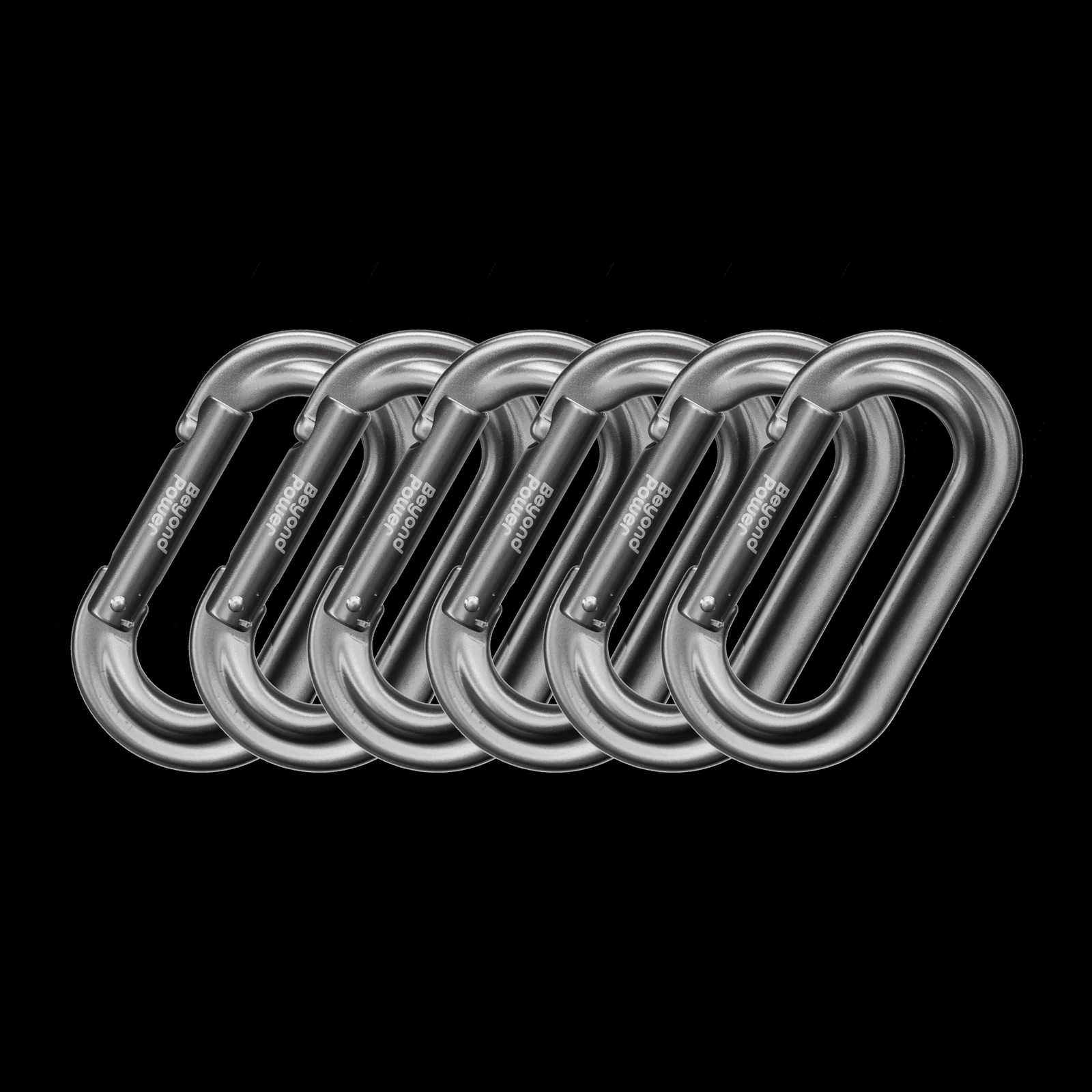
Premium Carabiner
Durable carabiner for connecting cable attachments and training accessories.
The rep: hinge back, extend forward, finish tall
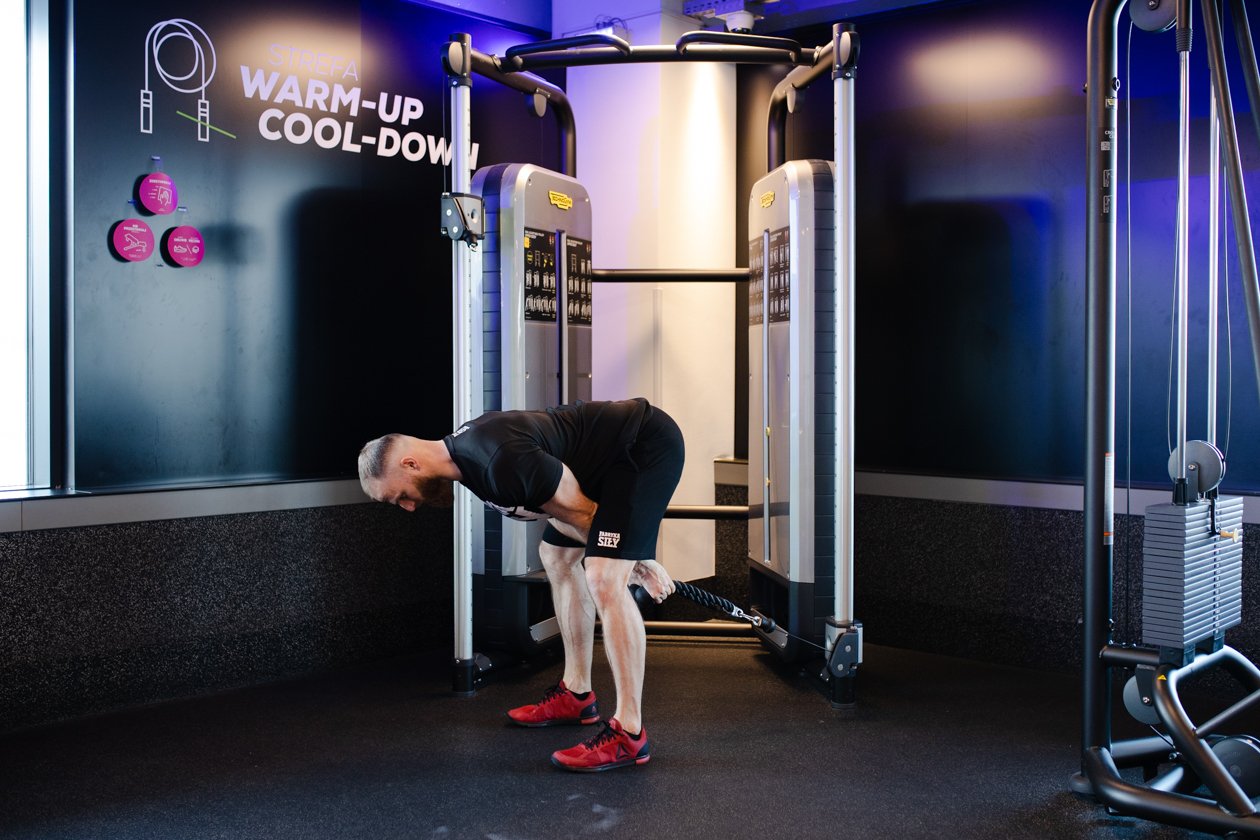
Begin standing tall without exaggerating an arch in your lower back. Breathe in, establish comfortable abdominal pressure and push your hips toward the machine. Let the torso fold forward at the hip joints while the knees maintain a modest bend. Your hands move backward between your legs because the pelvis moves, not because you pull the rope through with a bent-elbow row.
Descend slowly until you feel the hamstrings and glutes become loaded, stopping before your spinal position deteriorates. Your bottom position depends on limb lengths, flexibility and the cable geometry. You do not need to reach the rope to a specific distance behind the knees; reaching for artificial depth often makes the back round and changes the movement. Keep the weight stack hovering above its bottom position.
Drive through the feet and extend the hips to stand upright. The torso rises as the pelvis moves forward. At lockout the body forms a straight, balanced standing line: hips extended, ribs down, glutes engaged. Do not throw the shoulders backward or push the stomach forward to finish. Hold upright briefly to prove that your weight selection is under control.
Return over roughly two seconds, letting the hip hinge unfold in reverse. Avoid slamming the stack or bouncing out of a deep position. Early sets can use eight to twelve deliberate repetitions, with the same shape on the first and last rep. If the movement becomes a fast squat-and-swing, lower the pin and re-establish a slower hinge before adding more weight.

Leg Day Shirts & Workout Gear
Leg-day gym shirts and workout gear for lifters who never skip squats, lunges and lower-body punishment.


Big Booty Energy Glute Lover Sweater Meme T-Shirt
For laid-back days and lifting humor: “Big Booty Energy”.

Thicc AF Sweater Booty Lovers & Glute Gains Meme T-Shirt
Keep things casual with a little “Thicc AF” attitude.

Booty Building Mode Sticker
Stick a little “Booty Building Mode” humor on your favorite gear.

Let It Grow Girl – Bootybuilder, Leg Day & Hip T-Shirt
Heavy lifts, good laughs, and a little “Let It Grow Gym Girl” energy.

Butt Stuff Glute Hip Thrust Lovers Athletic Shirt Tank Top
Show some personality between sets with “Butt Stuff”.

Hippo Thrust Meme Leg Day Hooded Booty Day & Glute Hoodie
Keep it laid-back with a little “Hippo Thrust Gym Meme” attitude.

Squats Booty Builder Barbie Meme Leg Day & Strong Tank Top
Bring “Squats Booty Builder” humor to your next lifting session.

Six technique mistakes that steal the work from your hips
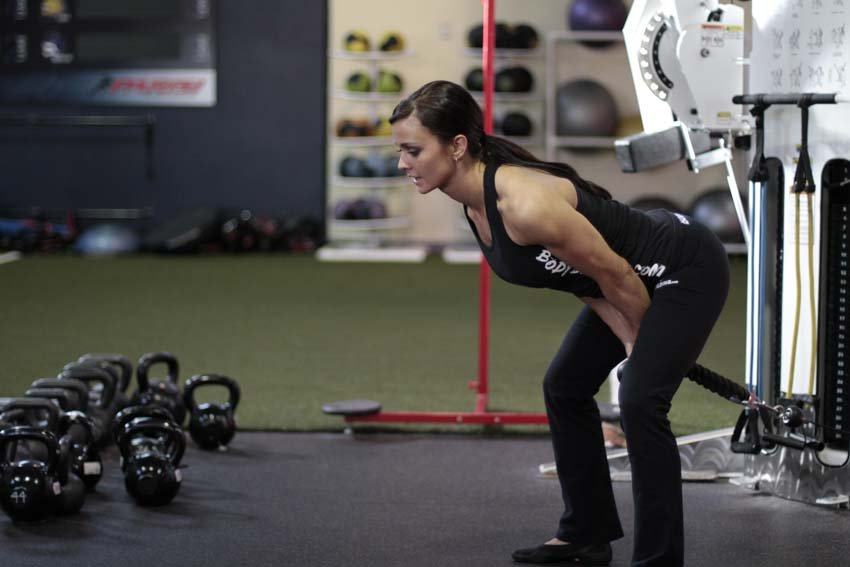
First, turning it into a squat: the knees bend deeply while the hips drop toward the floor. Keep the knees soft but comparatively quiet and think about sending the pelvis backward. Second, pulling with the arms: bent elbows and a moving upper back turn the rope into a row. Relax the elbows and use the hands as hooks so the hip joint supplies the movement.
Third, leaning backward at lockout. A huge rib flare and lower-back arch do not create extra useful hip extension. Stand tall, keep your ribs stacked and stop there. Fourth, moving too far from the pulley. If the cable drags you onto your heels, step back toward the machine or lower the load. You should be able to stand perfectly still at the top.
Fifth, forcing more depth after the hinge has ended. Once your pelvis cannot travel farther back without spinal rounding, stop lowering. Sixth, choosing a weight that turns smooth repetitions into a stack-slamming rhythm. Use a lower load and longer lowering phase until the cable follows a predictable path and the plates stay controlled.
A side-view video of one light set can reveal these errors without guesswork. Look for backward hip travel, limited unnecessary knee movement and a neutral upright finish. If the rope rubs painfully, the pulley or stance may need adjustment. Sharp pain or persistent symptoms are not technique challenges to power through; stop and reassess the exercise choice.
Pull-through vs RDL, hip thrust and squat
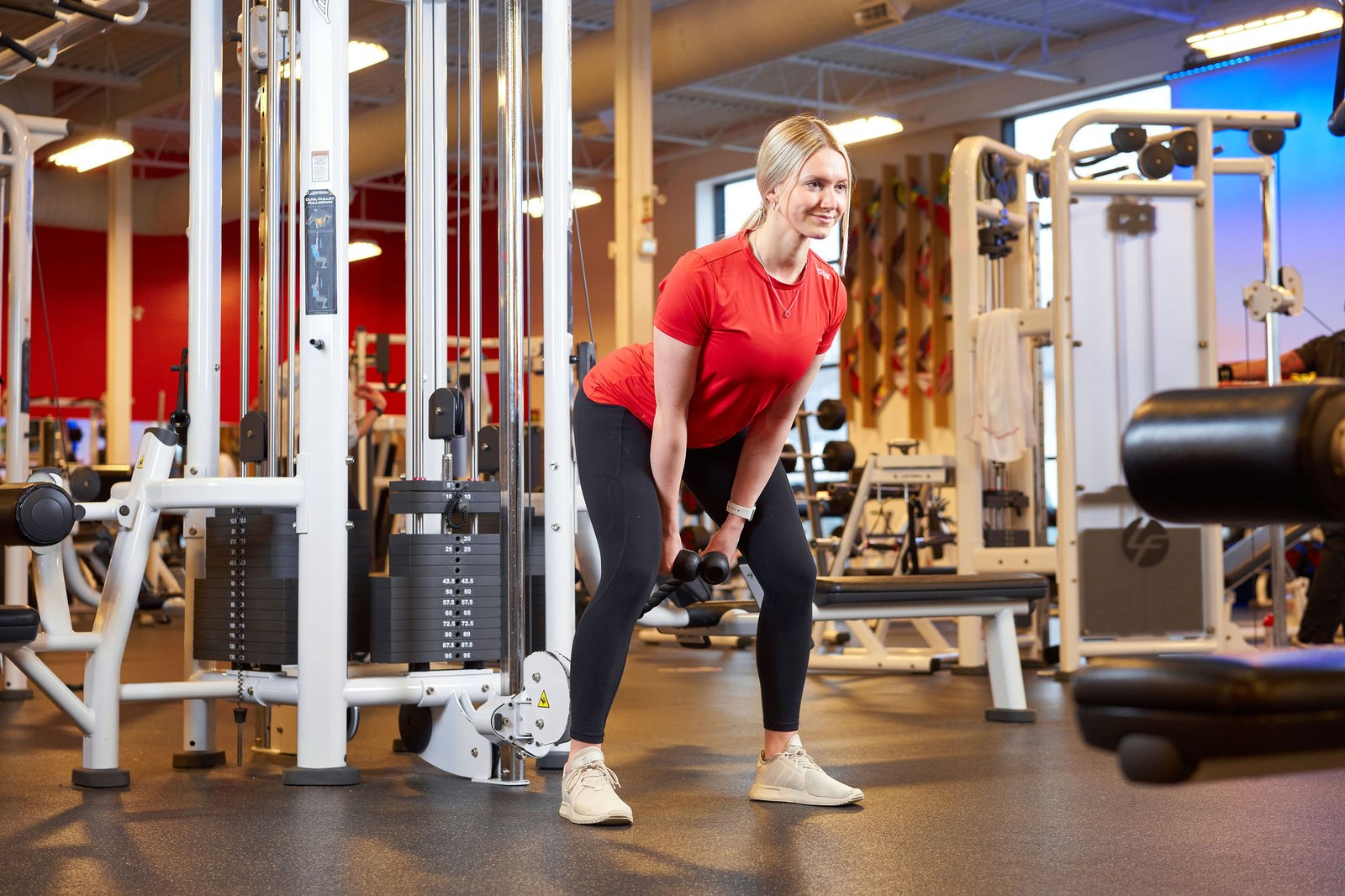
A Romanian deadlift is a close relative because both exercises hinge at the hips with relatively modest knee travel. With dumbbells or a barbell, gravity pulls the weight down and the mechanical challenge changes as the torso inclines. In a pull-through, the cable pulls backward toward a low anchor. One may feel harder at standing; the other may load a longer hinge position more. Different loading curves do not automatically establish which produces more muscle over months.
Hip thrusts put the torso against a bench or machine and ask for powerful hip extension through a different body setup and knee angle. Their loading is often easier to increase dramatically, while cable pull-throughs are simpler to slot in as modest accessory sets. A nine-week comparison of squats and hip thrusts found similar measured glute growth despite differences in exercise-specific strength gains. That trial was not a cable pull-through study, so it cannot rank the three movements.
Squats use knee and hip extension together and usually challenge the quadriceps more. They remain useful for lifters whose program demands squatting strength or broader lower-body development. A pull-through can complement these lifts rather than replace them: a pair of controlled hinge sets after heavy squats may deliver an additional stimulus without another technically demanding barbell setup.
Range of motion is worth attending to as well. In a comfortable hinge, let the hips travel back enough to create meaningful movement rather than doing only tiny top-end pulses. Reviews across resistance exercises suggest that movement range can influence adaptation, but they do not determine the single ideal pull-through depth for every lifter. Favor the range you can control, track, progressively load and recover from alongside the rest of your training.
Equipment Worth Exploring
Explore equipment, accessories and gear from our carefully selected range.

Studio Glute Drive
Plate-loaded hip-thrust machine with supported back pad and adjustable foot platform.

Studio V-Squat
Plate-loaded V-squat machine for supported lower-body strength training.

Squat Harness
Wearable harness for hands-free cable squats, sled work, and lower-body training.


Cast Iron Kettlebells
Textured cast-iron kettlebells for swings, squats, carries, and full-body training.


Open Hex Bar
Open-frame trap bar with multiple handles for deadlifts, carries, and lower-body training.


Rubber Hex Dumbbells
Rubber-coated hex dumbbell pairs with a stable shape for home and commercial strength training.
A six-week plan for stronger glutes and a better hinge
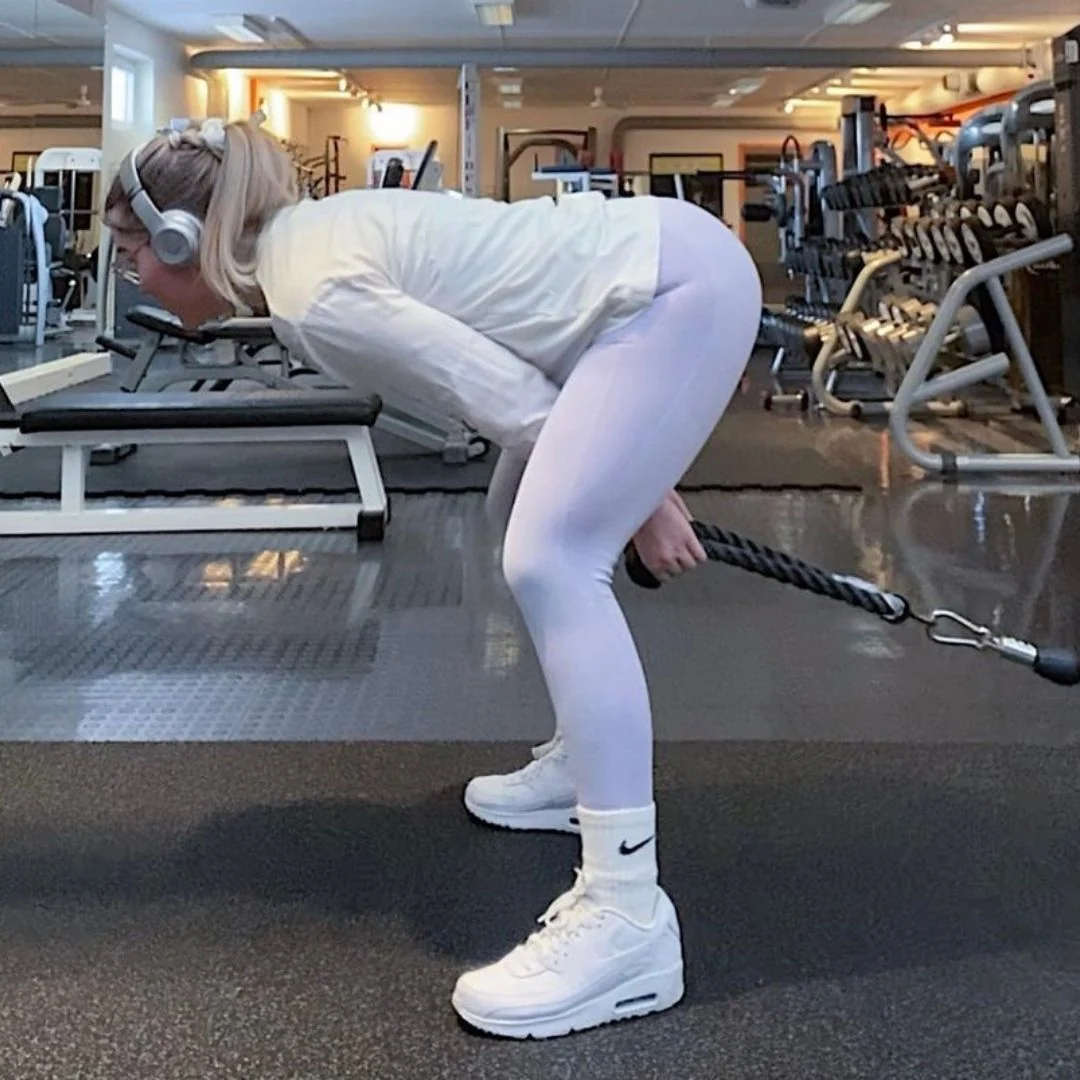
Use the cable pull-through as a secondary lift, either after the principal squat, deadlift or hip-thrust exercise or as a light hinge drill before heavier work. Two weekly exposures separated by a recovery day are a reasonable starting template. The goal of the first sessions is repeatable technique; piling on volume before learning cable distance and lockout position is unnecessary.
| Weeks | Sets and reps | Goal |
|---|---|---|
| 1–2 | 2 × 12–15, twice weekly | Keep the same hip hinge on every rep |
| 3–4 | 3 × 10–15, twice weekly | Add clean repetitions before load |
| 5–6 | 3 × 8–12, twice weekly | Add a small stack increment if form holds |
Rest around 60–90 seconds between sets, longer if breathlessness or fatigue makes it difficult to control posture. Keep roughly two or three good repetitions in reserve on most sets. When every set reaches the top of its range without shortened depth or a backward lean, increase resistance by the smallest suitable increment and start again at the low end. Do not chase an exact pin number across different machines, because pulley ratios and friction vary.
Record the load, repetitions and any breakdown in cable control. If the stack touches down, fix the distance before assuming you need more weight. Lifters already doing substantial RDL, squat and hip-thrust work can stay at two sets to manage total volume. This six-week sample is a coaching progression, not a clinical result proving special muscle gains from this exact schedule.
Cable, band and free-weight alternatives: choosing equipment
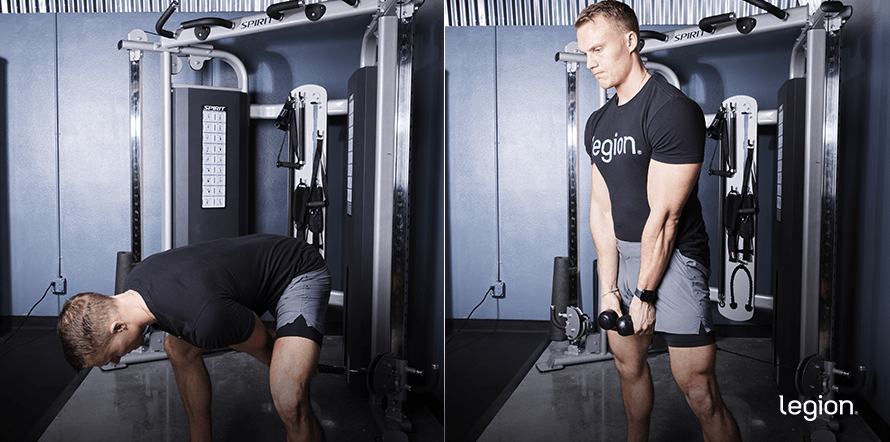
A cable station with a genuine low pulley and a long rope is the most direct choice. Functional trainers also work if the cable path is low enough and the machine has clear space for a forward stance. Inspect the carabiner, attachment and cable before each workout. A short rope or awkward high pulley should not force the handle to press painfully against your thighs.
A long resistance band secured to a genuinely stable low anchor can reproduce the general hinge pattern. Unlike a stack, resistance rises as the band stretches, so the sensation near standing will change. Never anchor it to loose furniture or an object that can move toward you, and retire bands with visible tears. Bands can be a convenient form-learning variation, but they are not identical to pulley resistance.
Where no safe cable or band setup exists, choose dumbbell Romanian deadlifts, a controlled kettlebell hip hinge or a glute-drive movement instead. Each shares hip-extension demands but has its own balance, setup and resistance characteristics. A lifter whose primary goal is strong heavy deadlifts should still practice the deadlift pattern rather than hoping a cable accessory will create identical skill adaptations.
The takeaway is deliberately simple: cable pull-throughs are worthwhile when they fit your equipment, are comfortable and let you train hip extension consistently. Set the pulley low, establish a planted stance, keep the movement at your hips and finish vertically. Once the reps look the same, progress the load gradually. You do not need to claim that one glute exercise beats all the others to get useful work from it.
Powerlifting Shirts & Lifting Gear
Powerlifting shirts and gym gear for squat, bench and deadlift lifters who live for heavy numbers.

Powerlift Deadlifts Tee
Show some metalhead attitude with a playful “Powerlift Deadlifts” tee.

Minecraft Deadlift Gym | Funny Pick Up Heavy Blocks Wor Sticker
A fun “Minecraft Deadlift” touch for bottles, laptops, and lockers.

Deadlift Skull Tank Top Pink Heavy Metal
Bring “Deadlift Skull” humor to your next lifting session.

Viking Deadlift Motivational | Viking Workout Hooded Hoodie
Make your off-duty look more fun with “Viking Deadlift Motivational”.

Deadlift Skull Graphic , Hardcore Bodybuilding Training Tank Top
Add some deadlift attitude to training with “Deadlift”.

The Walking Deadlift Gym | Zombie Workout Decal For Wat Sticker
A fun “The Walking Deadlift” touch for bottles, laptops, and lockers.

Captain Deadlift Crewneck Pullover Sweater Leg Day Work T-Shirt
Add a playful “Captain Deadlift” touch to your casual rotation.

Pumping Love Strong Heart Stronger Soul Valentine’s Day T-Shirt
Show some gym-day personality with “Pumping Love Strong Heart Stronger Soul”.

Lifting Is King | Kanye Muscle Shirt | Blue Weight Plat Tank Top
Train hard, laugh a little, and rep “Lifting Is King”.