Advertising disclosure: This page includes affiliate product links that may earn us a commission, as well as products from our own store.
A heavy barbell Romanian deadlift is excellent for loading a hip hinge, but there is a different challenge waiting when you remove one point of contact with the floor. The single-leg Romanian deadlift asks one leg to produce force while the hips stay level, the trunk resists rotation and the hamstrings control a long lever. It is not simply a balancing trick or a lighter deadlift.
For lifters who want stronger hamstrings and glutes, it can expose differences between sides, add useful unilateral work and make moderate dumbbells surprisingly demanding. The catch is that wobbling, twisting and rushing can turn it into a frustrating circus act. Better technique comes from making the movement repeatable before chasing depth or heavier loads.
This guide walks through the setup, the muscle demands, equipment choices, progressions and a practical eight-week plan. You will also learn when a kickstand hinge is the smarter step, how to tell whether your hamstrings are doing the work, and where single-leg hinging fits beside squats, conventional RDLs and curls.
What a single-leg RDL actually trains
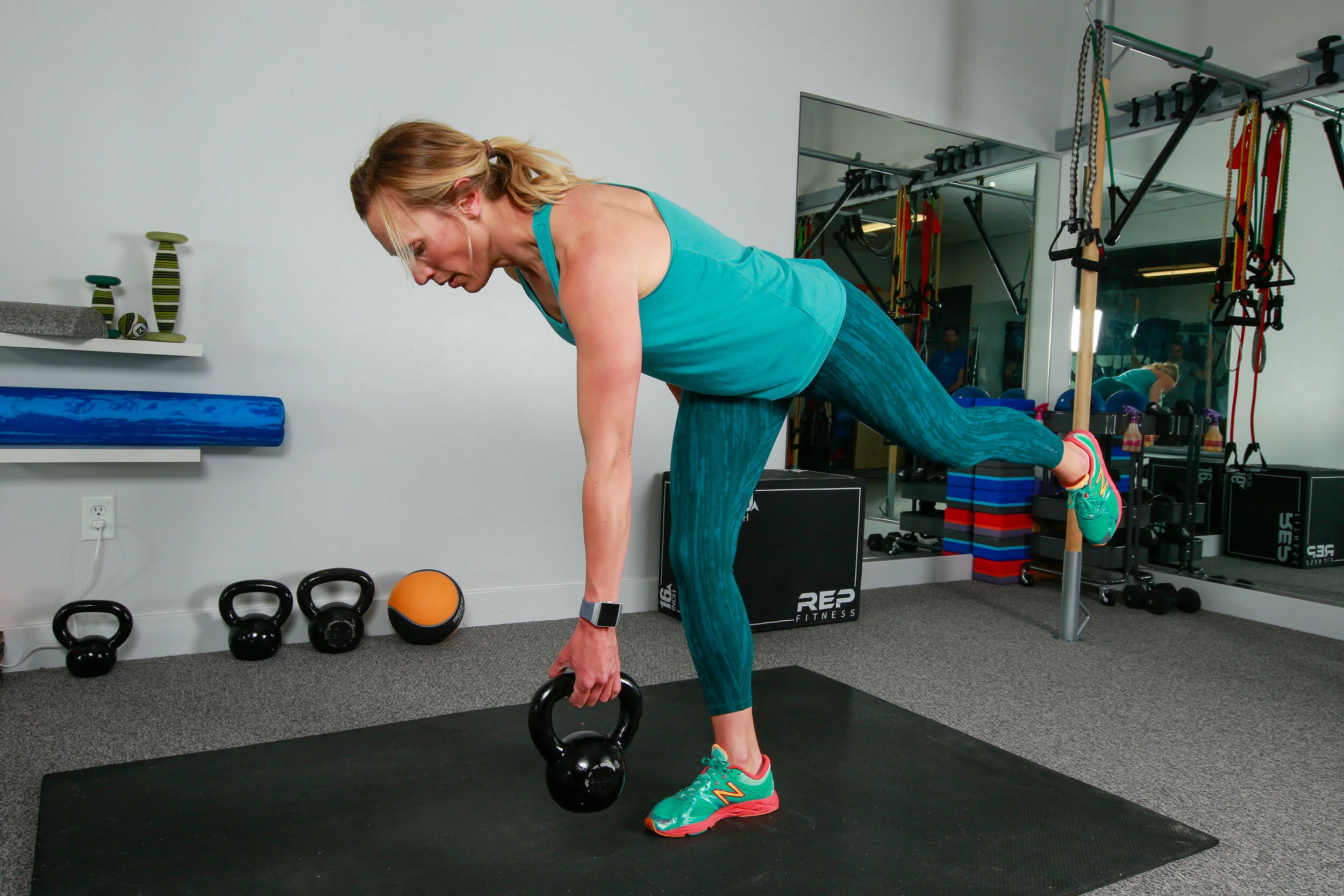
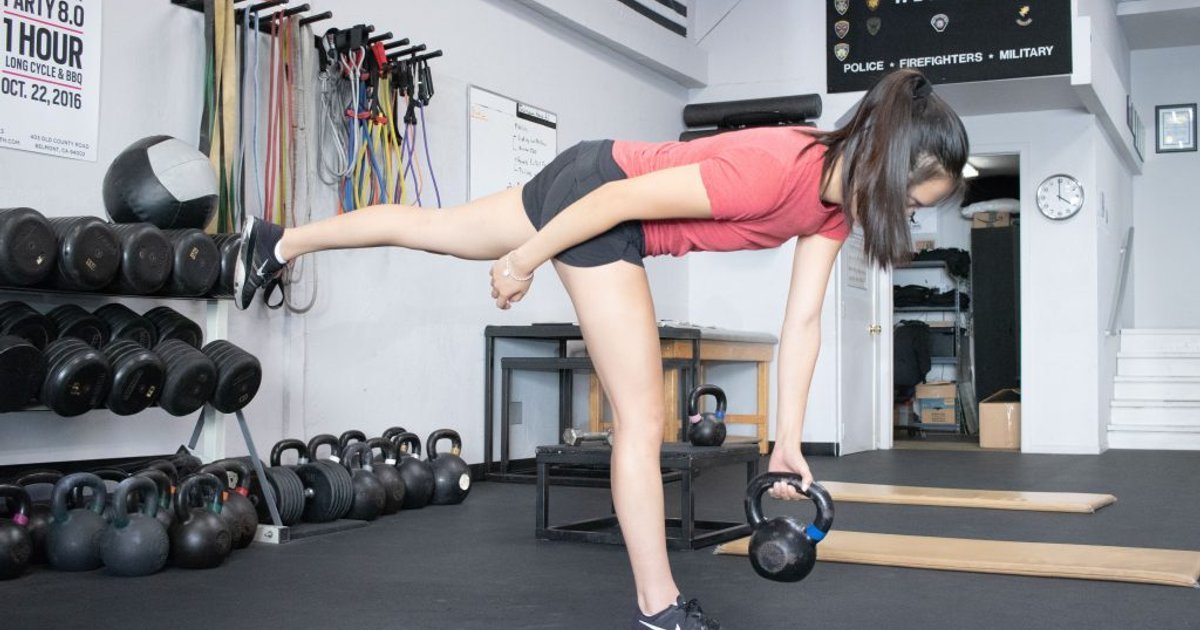
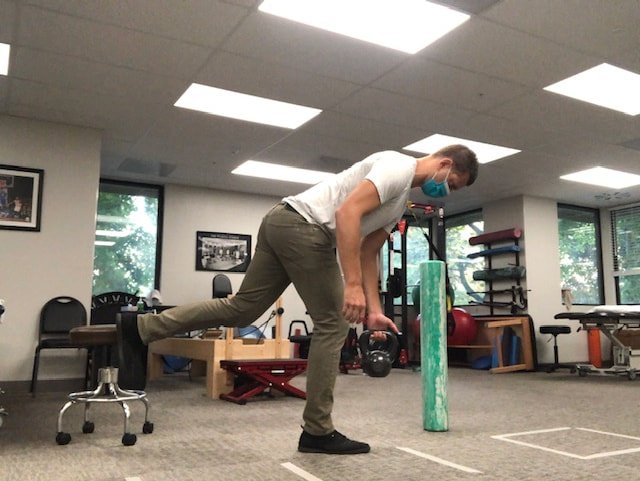
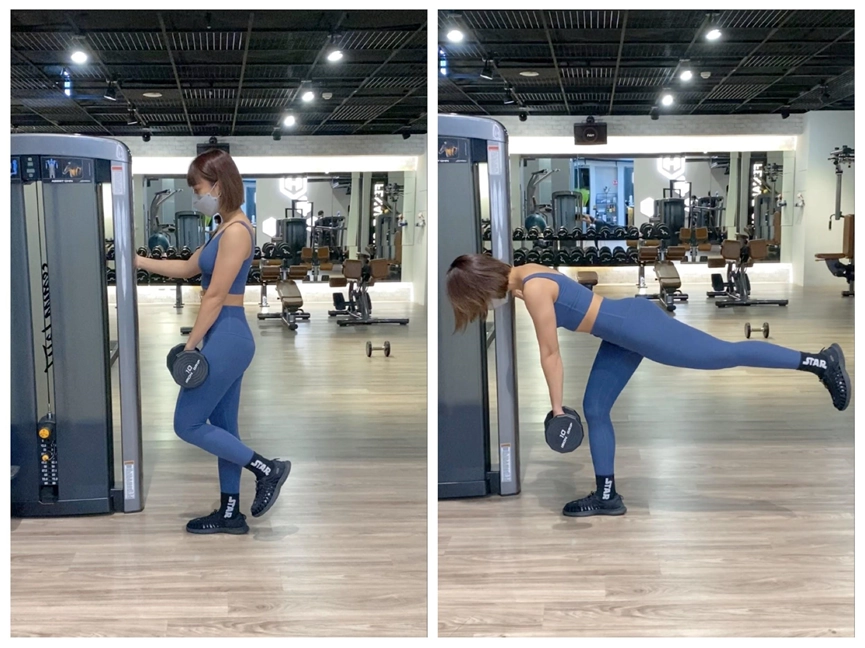
The Romanian deadlift is a hip-hinge pattern: the knees soften slightly, the hips travel backward and the trunk inclines while the weight stays close to the body. In the one-leg version, the planted leg supplies the primary hip-extension effort; the free leg moves backward to counterbalance the torso. The back stays controlled, not artificially rigid like a statue, and the supporting foot remains connected to the floor.
The hamstrings help control the lowering and extend the hip on the way up. The gluteus maximus contributes hip extension, while the gluteus medius and other lateral-hip muscles work to keep the pelvis from tipping or turning outward. Your trunk musculature resists rotation and the foot and ankle provide small balance corrections. That combination explains why a moderate dumbbell can feel harder than expected, without implying that instability makes it automatically better for muscle growth.
In a laboratory comparison involving 15 trained men, the single-leg deadlift produced greater measured activity in the gluteus medius and biceps femoris than a conventional bilateral deadlift during part of the lift. That is useful evidence about muscular demands, not proof that one variation builds more muscle over months. Muscle activation, absolute loading, training effort and long-term adaptations are different questions.
For practical programming, think of the single-leg RDL as an accessory hinge with an added pelvic-control challenge. It can complement a heavier bilateral hinge, but it need not replace the main lift if maximizing total load is your goal. The important question is whether each set gives the intended leg a controlled, progressively challenging stimulus.
Set up the hinge before you chase depth
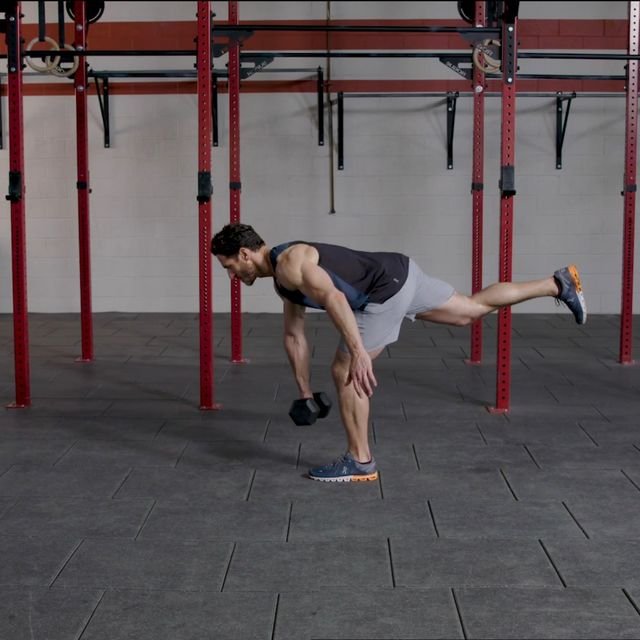
Start barefoot or in stable, flat-soled shoes on a firm floor. Stand tall with your weight distributed across the heel, base of the big toe and base of the little toe of the working foot. Keep that knee softly bent; you should not deliberately lock it, and you should not keep bending it deeper as the rep proceeds. Lightly brace the torso and look toward the floor a few feet ahead rather than craning your head upward.
- Shift your weight onto the working leg. Let the other foot hover a few centimeters above the floor.
- Push your hips backward as your chest tips forward and the free leg reaches behind you.
- Keep both hip bones pointing approximately down. Imagine the free foot’s toes pointing at the floor, not toward the side wall.
- Let the dumbbell travel close to your standing leg. Your shoulders remain roughly square, and your trunk moves as a connected unit.
- Stop when you feel a clear hamstring stretch or just before pelvic position and spinal control deteriorate. You do not have to touch the floor.
- Press the planted foot into the ground and drive the hip forward to stand, finishing tall without leaning backward.
A useful first checkpoint is three slow bodyweight repetitions in front of a mirror or video recorded from a front-three-quarter angle. Does the supporting knee change only slightly? Does the pelvis rotate open? Does the weight path stay near the shin? Those observations reveal more than how far your fingertips descend.
If balance prevents you from loading the target muscles, hold a rack upright with the free hand. Support is not cheating: it removes an unhelpful coordination limit so the hamstring and glute can work through an honest range. After stable supported repetitions, gradually reduce hand assistance rather than abruptly adding weight.

Equipment Worth Exploring
Explore equipment, accessories and gear from our carefully selected range.

Rubber Hex Dumbbells
Rubber-coated hex dumbbell pairs with a stable shape for home and commercial strength training.


Cast Iron Kettlebells
Textured cast-iron kettlebells for swings, squats, carries, and full-body training.


Leather Lifting Straps
Padded leather straps support grip during heavy rows, deadlifts and pulling exercises.

Choose the hand position and the right equipment
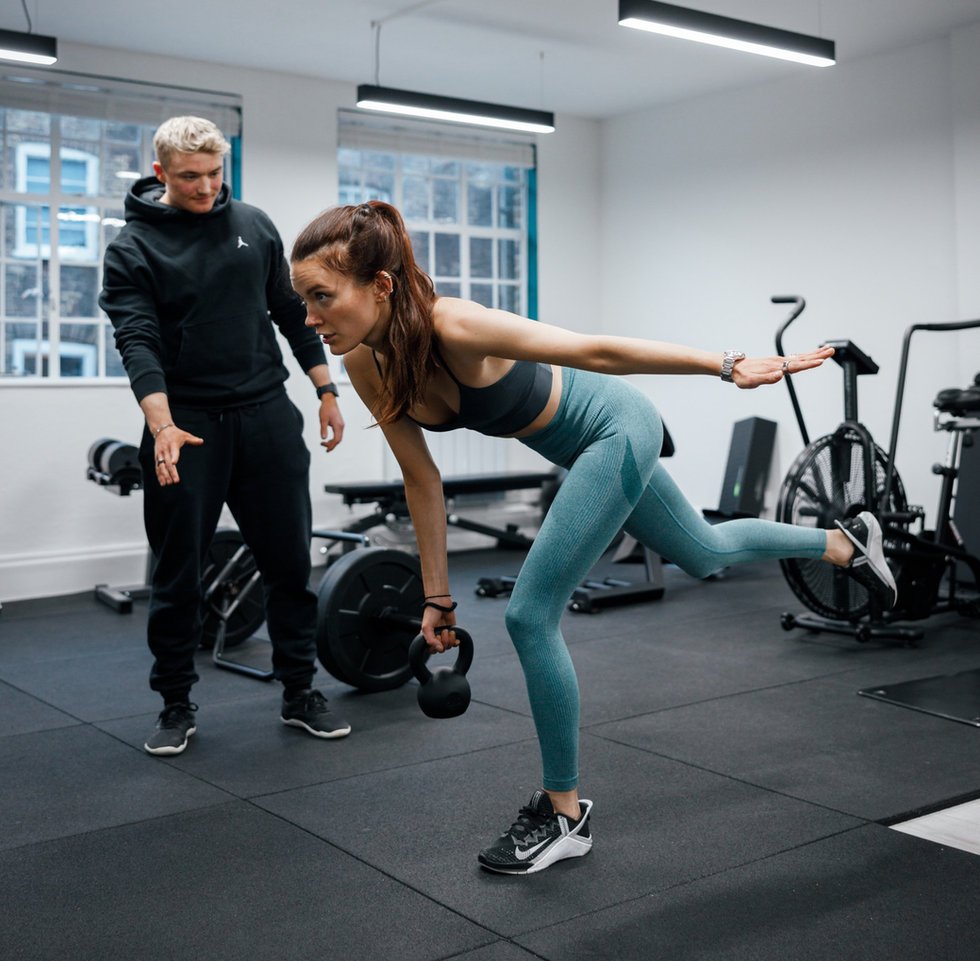
For the most common version, hold one dumbbell or kettlebell in the hand opposite the working leg. For example, plant the right foot and carry the weight in the left hand. This contralateral loading asks the standing-side hip to resist rotation while you hinge. It is a sensible default, but not the only legitimate way to perform the exercise.
Holding the weight in the same-side hand changes the torque and coordination challenge. Carrying two dumbbells can make the load easier to distribute and creates an obvious path for progressive overload, though balance may still limit absolute weight. A single kettlebell is useful when its handle is comfortable to grip; adjustable dumbbells are convenient when you want small increases between weeks. No particular implement has a magical hypertrophy advantage.
Begin with a load you can move for eight clean repetitions per side while leaving roughly two or three controlled reps in reserve. A dumbbell that feels light in a two-leg RDL may be substantial on one leg. If you lose control of the pelvis, cut range or touch down between every repetition, reduce the weight or use support before deciding the exercise is too easy.
For a stable progression, track four pieces of information: hand position, whether the free hand is supported, approximate lowering depth and the external load. If any of those change, the next session may not be an apples-to-apples comparison. You can rotate hand position for variety later, but keep one version consistent long enough to observe a real training trend.
Progress from a kickstand to an unsupported rep
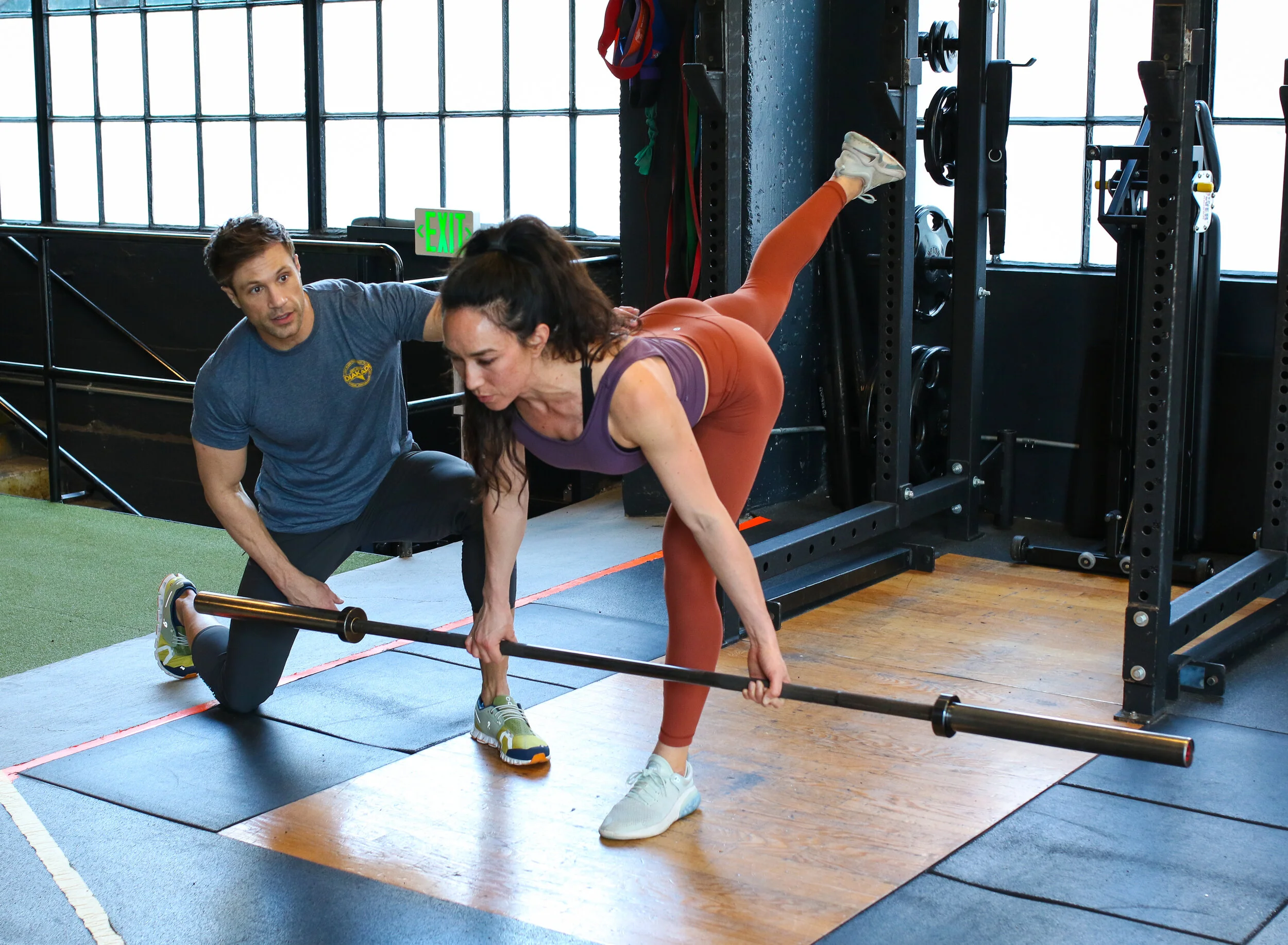
The fastest way to learn the exercise is often to make balance less interesting. Try a B-stance or kickstand Romanian deadlift: the working foot stays flat while the other foot sits a short step behind with its toes resting lightly on the floor. Most of the work stays in the front leg, and the rear foot functions like a kickstand instead of an equal contributor. This is not the same exercise mechanically, but it builds the hinge pattern you will need.
Once ten deliberate kickstand reps per side look consistent, try a lightly supported single-leg version. Hold the rack with two fingers, then with one hand only when needed. Move next to a full bodyweight version, a light contralateral dumbbell, and eventually a heavier dumbbell or two weights. A three-second lowering phase makes it easier to notice an opening hip or a collapsing arch in the foot.
Do not confuse range of motion with range of control. An athletic lifter with long femurs may reach a deep hinge without the torso becoming completely horizontal; another person may reach parallel sooner. Stop at the position where the hamstrings are challenged while the pelvis stays organized. Elevating the standing foot on a thick unstable pad usually makes the balance task more demanding and can reduce useful loading or range, so use a solid floor for most strength-focused sets.
Another useful regression is to place the back toe briefly on the floor between repetitions. This small reset prevents increasingly crooked reps. Over time, aim to keep the rear foot floating through a whole set, but only if that is compatible with a strong hinge and repeatable leg position. Control is the progression, not a picture-perfect pose.

Leg Day Shirts & Workout Gear
Leg-day gym shirts and workout gear for lifters who never skip squats, lunges and lower-body punishment.

I Look Better Bent Over Sweater Squats Deadlifts & T-Shirt
For laid-back days and leg-day humor: “I Look Better Bent Over”.

Thicc Booty Energy Leg Day Lovers & Squat Enthusiasts Tank Top
Bring “Thicc Booty Energy” humor to your next lifting session.

Fantastic Booty Leg Day Sweater Squats & Glutes Meme T-Shirt
Keep things casual with a little “Fantastic Booty” attitude.

Deadlift Lovers Grim Reaper Skeleton Sweater & Leg T-Shirt
Add a playful “Deadlift Lovers” touch to your casual rotation.

Never Skip Leg Day Gym | LEGO Workout For Squat & Deadl Hoodie
Bring “Never Skip Leg Day” gym humor to lazy days and post-workout plans.

Adventure Girl Booty Builder Leg Day Meme Squats & T-Shirt
Heavy lifts, good laughs, and a little “Gym Adventure Girl” energy.

Squats Booty Builder Barbie Leg Day Decal Water Sticker
Give your everyday gear a playful “Squats Booty Builder” twist.

Witch Sweater Booty Building & Leg Day Meme Top T-Shirt
For laid-back days and leg-day humor: “Gym Witch”.


Leg Day Gains | LEGO Parody Workout Sweater For Squats T-Shirt
Show some gym-day personality with “Leg Day Gains”.
Five mistakes that steal the work from your hamstrings
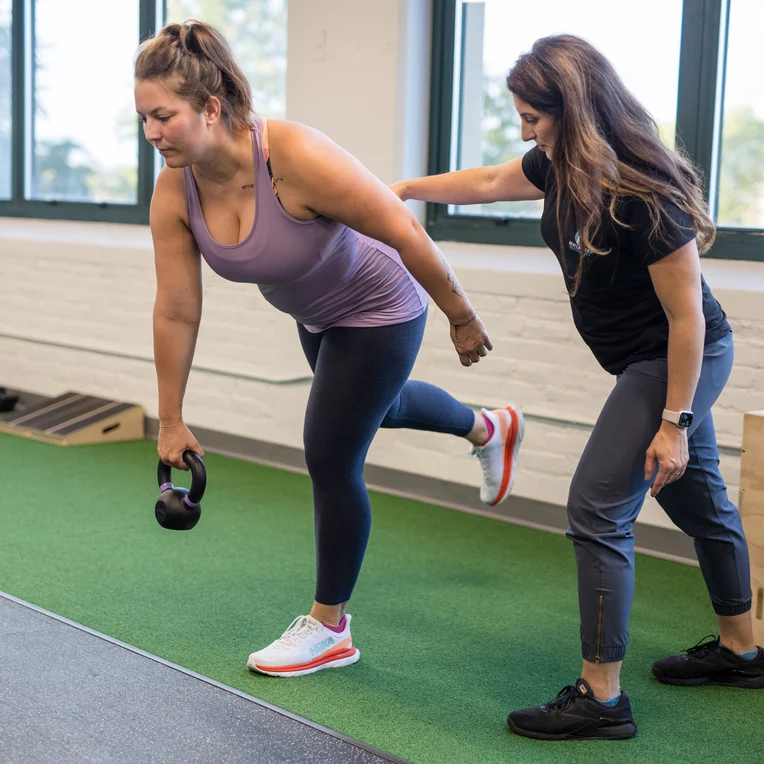
Opening the pelvis: The free-leg hip rotates upward and the toes turn toward the ceiling. This often makes the movement look deeper while removing some of the desired hip-control demand. Point the rear toes toward the floor and imagine your hips staying as level as headlights on a car.
Turning the hinge into a squat: The standing knee keeps bending as the weight lowers, so the torso drops through the knee rather than rotating at the hip. Set a small knee bend before each rep and keep it relatively constant. It is acceptable for the knee to move naturally a little; it should not dominate the movement.
Reaching the weight away: Holding a dumbbell far in front of the shin increases the demand on the back and often pulls you off balance. Let it hang almost vertically below the shoulder and travel near the standing leg. Where the bell hangs matters more than whether its bottom plate brushes the ground.
Rounding to touch the floor: More depth is not useful if the lumbar spine folds and the pelvis tucks to get there. Stop at the end of your controlled hip range. Work on gradual range gains separately instead of turning the last centimeters of every rep into a contest.
Rushing and bouncing: A hurried descent can disguise weak positions and a quick touchdown may become a momentum trick. Use a smooth two- or three-second lower, a brief pause near the bottom and a deliberate rise. If dizziness, sharp pain or a fresh hamstring injury enters the picture, stop the exercise rather than forcing reps through symptoms.
Equipment Worth Exploring
Explore equipment, accessories and gear from our carefully selected range.


FID Bench MAX
Adjustable bench offering flat, incline, and decline positions + adjustable headrest.
VOLTRA
Compact digital cable trainer with smooth, adjustable resistance.
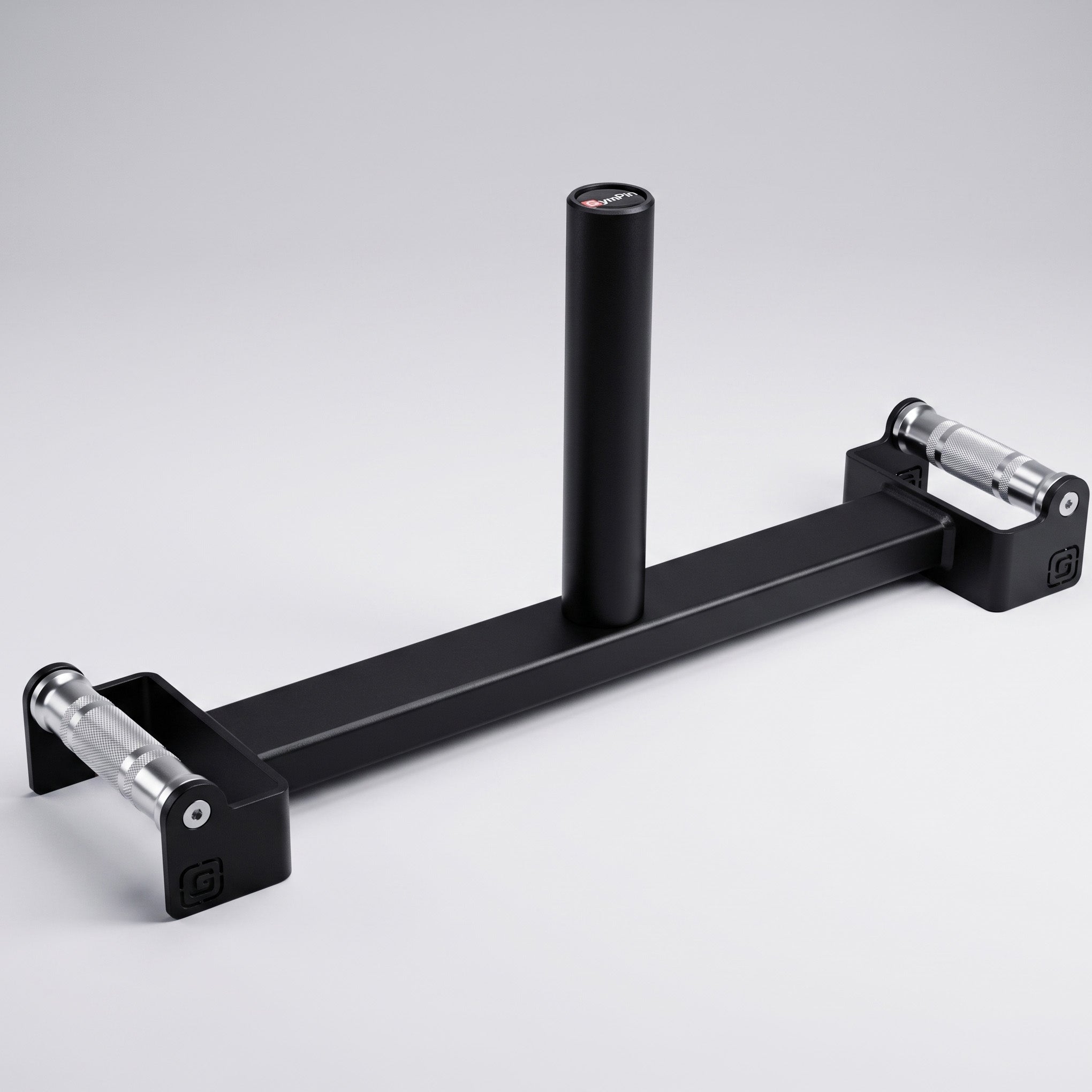
GymPin Hyper Loader
Central Olympic-plate loading attachment for weighted hyperextensions.

Studio Glute Drive
Plate-loaded hip-thrust machine with supported back pad and adjustable foot platform.

Leather Wrist Grips
Padded leather lifting grips help support the hands and wrists on heavy pulling exercises.

An eight-week plan to make progress measurable
Train the single-leg RDL twice a week with at least one day between sessions, preferably after the main squat or bilateral hinge. Keep the first session a little more demanding and the second slightly easier so quality stays high. This is a template, not an experimentally validated optimal dose for every athlete.
| Weeks | Session A | Session B | Progression checkpoint |
|---|---|---|---|
| 1–2 | 2 × 8–10 each side, supported | 2 × 10 each side, light | Level hips, steady foot, identical depth |
| 3–4 | 3 × 8–10 each side | 2 × 10–12 each side | Less hand support, no balance rescue |
| 5–6 | 3 × 8–12 each side | 3 × 8–10 each side | Add a small load when reps stay clean |
| 7–8 | 3 × 8–10 each side, heavier | 2–3 × 10–12 each side | Compare matched load, reps and range |
Rest around 75–120 seconds after each completed side pair, longer if your breathing or balance still affects performance. Work at about two repetitions in reserve initially. As technique stabilizes, some final sets can approach one controlled rep in reserve, but avoid an ugly balance failure just to reach a numerical target.
Progress with a double-progression method. Keep the same weight until all planned sets reach the top of the rep range with both hips square and without touch-downs. Then add the smallest practical amount of load, return to the lower end of the rep range and build again. Start each set with the less confident side, then match its clean reps on the stronger side rather than automatically doing extra on your favorite leg.
During week eight, compare short videos from the first two weeks with the same camera angle. Did you reduce support? Did the planted knee stay calmer? Are you handling more load through comparable depth without turning the last reps into a squat? These specific improvements are better evidence of progress than a random personal record performed with completely different technique.
Powerlifting Shirts & Lifting Gear
Powerlifting shirts and gym gear for squat, bench and deadlift lifters who live for heavy numbers.

3 Plates Deadlift Club : Motivational & Ultimate Top T-Shirt
Rep “3 Plates Deadlift Club” humor in and out of the gym.

2 Plates Squat Club Meme Shirt – Motivational Leg T-Shirt
Heavy lifts, good laughs, and a little “2 Plates Squat Club” energy.

Deadlift PR or Die Skull Graphic , Hardcore Horror Work Hoodie
Make your off-duty look more fun with “Deadlift”.

Deadlift Fiery Skull Decal , Hardcore Gym Accessory Gif Sticker
Put “Deadlift” gym humor on your laptop, bottle, or gym gear.

Día de los Muertos Deadlift Gym – Mexican Calavera Crew T-Shirt
Show some gym-day personality with “Día de los Muertos Deadlift”.

Deadlift Zombie Skull Muscle Shirt , Halloween Bodybuil Tank Top
Train hard, laugh a little, and rep “Deadlift”.

Deadlift Snake Skull – Hardcore Powerlifting for Heavy Hoodie
Show off your metalhead humor in a laid-back “Deadlift Snake Skull” hoodie.

Skeleton Deadlift Sweater & Fans Meme T-Shirt
Show some gym-day personality with “Skeleton Deadlift”.

Meet Me At The Bar Meme Shirt – & Gymbros T-Shirt
Rep “Meet Me At The Bar” humor in and out of the gym.

Deadlift Skull Explosion Gym Decal for Powerlifting Hea Sticker
Give your everyday gear a playful “Deadlift Skull” twist.
Fit single-leg hinges beside squats, curls and heavy RDLs
Single-leg RDLs work best when each movement in your program has a job. Squats and leg presses emphasize knee extension alongside hip work; heavier bilateral RDLs allow substantial hip-hinge loading; leg curls directly challenge knee flexion. The single-leg RDL contributes a one-sided hinge and pelvic-control element. It overlaps with the other hamstring and glute exercises rather than creating an entirely new muscle group that needs unlimited extra sets.
A practical two-day lower-body split might put squats first, then three sets of single-leg RDLs, then a leg curl and a calf raise. The second day can lead with a heavier two-leg RDL, follow with a lunge or split squat, and finish with a couple of light supported single-leg sets only if recovery permits. Heavy deadlifts, hard running and explosive jumps all add demands that may influence how much hinge work you tolerate.
If your training week already includes a large amount of bilateral hamstring work, swap two or three sets for unilateral sets rather than adding six more automatically. Watch for persistent soreness, deteriorating technique, falling performance across sessions or discomfort that lasts outside the gym. The goal is sustainable progression, not a marathon of posterior-chain fatigue.
The exercise is especially useful when your left and right sides feel different under load, but do not diagnose an injury or structural problem from one awkward set. If one side needs support or a shorter range, treat it as a training observation and build from that baseline. Persistent pain, neurological symptoms or a recent significant injury deserve individualized professional assessment.
There is also no reason to force a single-leg hinge if your main goal is simply the heaviest deadlift possible and your program is already working. Use it because it offers controlled unilateral loading, a manageable equipment footprint and a clear way to train hip stability while the hamstrings and glutes perform meaningful work.
Make the next repetition more consistent than the last. An honest eight-rep set with level hips and a controlled hinge will teach you more than fifteen swaying repetitions performed with too much weight. Progress the work patiently and let cleaner loading do the talking.