Advertising disclosure: This page includes affiliate links that may earn us a commission at no additional cost to you.
A barbell that feels manageable in your usual grip can become a different challenge when you have to pinch a broad block instead. That is the purpose of AbMat Saxon Grips: change the hand contact without buying a separate specialty bar. The useful question is whether you want to train that particular hold, and whether the attachment works properly on the equipment you already own.
This is a specification-based buying and training guide, not an MMP hands-on review. Treat the grips as a separate accessory exercise rather than assuming they improve every lift. A more difficult hold can be useful while requiring less weight, fewer repetitions or a simpler movement.
Understand what the block changes
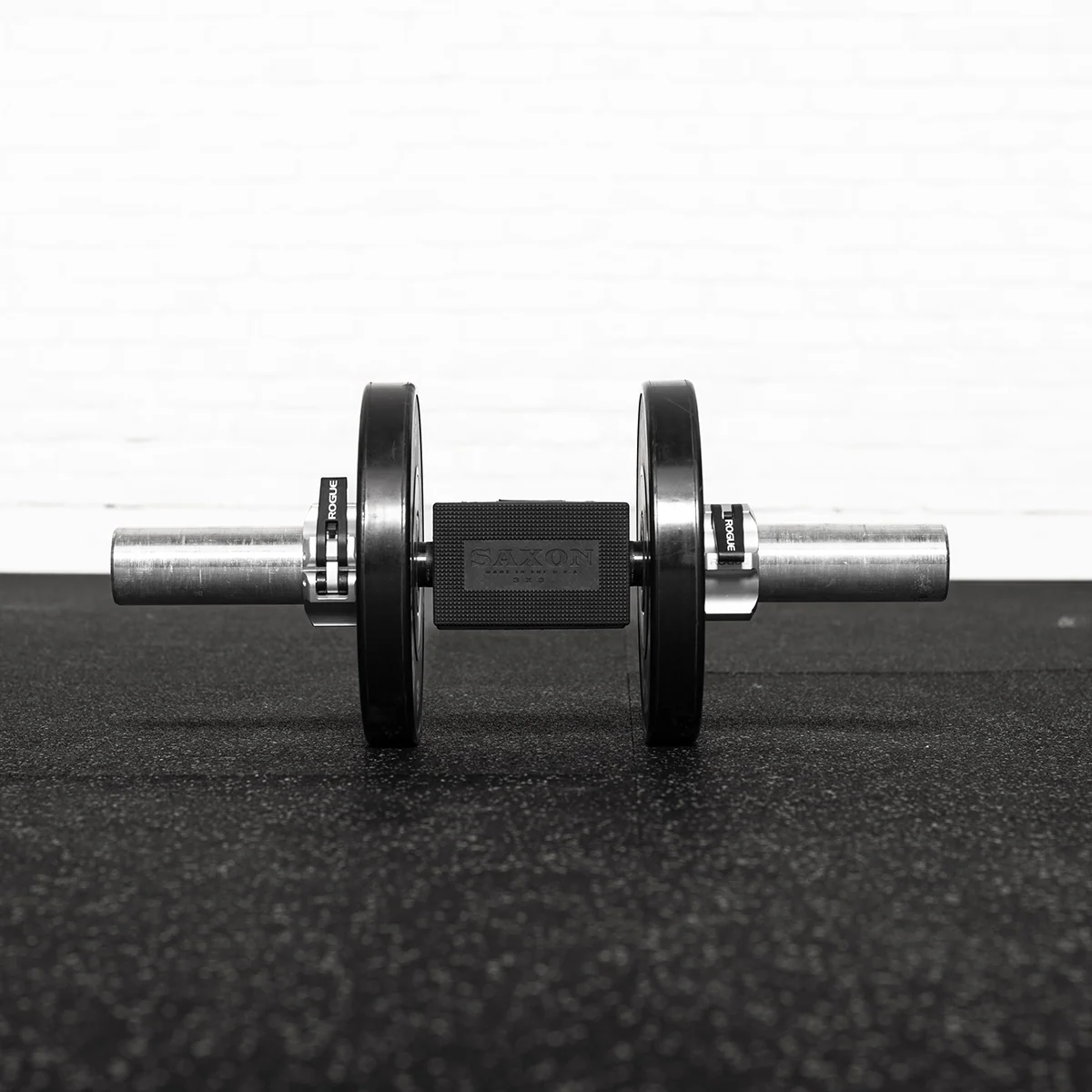
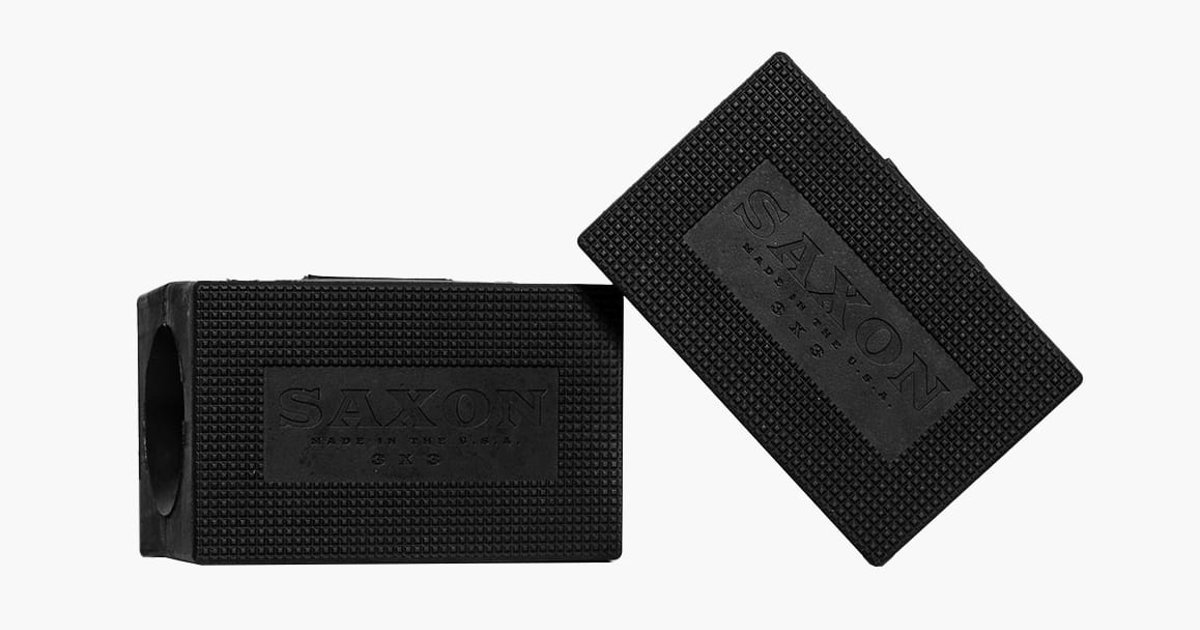
Saxon Grips are sold in pairs and use molded high-density rubber. The product is presented as a way to give a barbell or loadable dumbbell a 3-by-3 Saxon-style gripping surface. Instead of wrapping the hand around an ordinary narrow handle, you oppose the thumb and fingers across a broader shape.
That makes the gripping task different. Pinching a block, squeezing a hand gripper and holding a conventional bar are useful distinctions when deciding what to practise. Being strong at one does not establish a particular result at another. The shape, width and surface of the object influence the task, so the weight alone does not describe its difficulty.
It is also different from simply making a round handle thicker. Our guide to thick-grip sizes and training loads explains that separate equipment choice. Pick an accessory because the contact matches your goal, rather than treating every grip attachment as an interchangeable forearm upgrade.
For example, a lifter might keep ordinary barbell rows for back training and practise a short pinch hold afterwards. Those exercises serve different purposes. If the pinch ends the row long before the back is challenged, that is a consequence of the new task rather than proof that the back workout became more effective.
Confirm the fit on your exact equipment
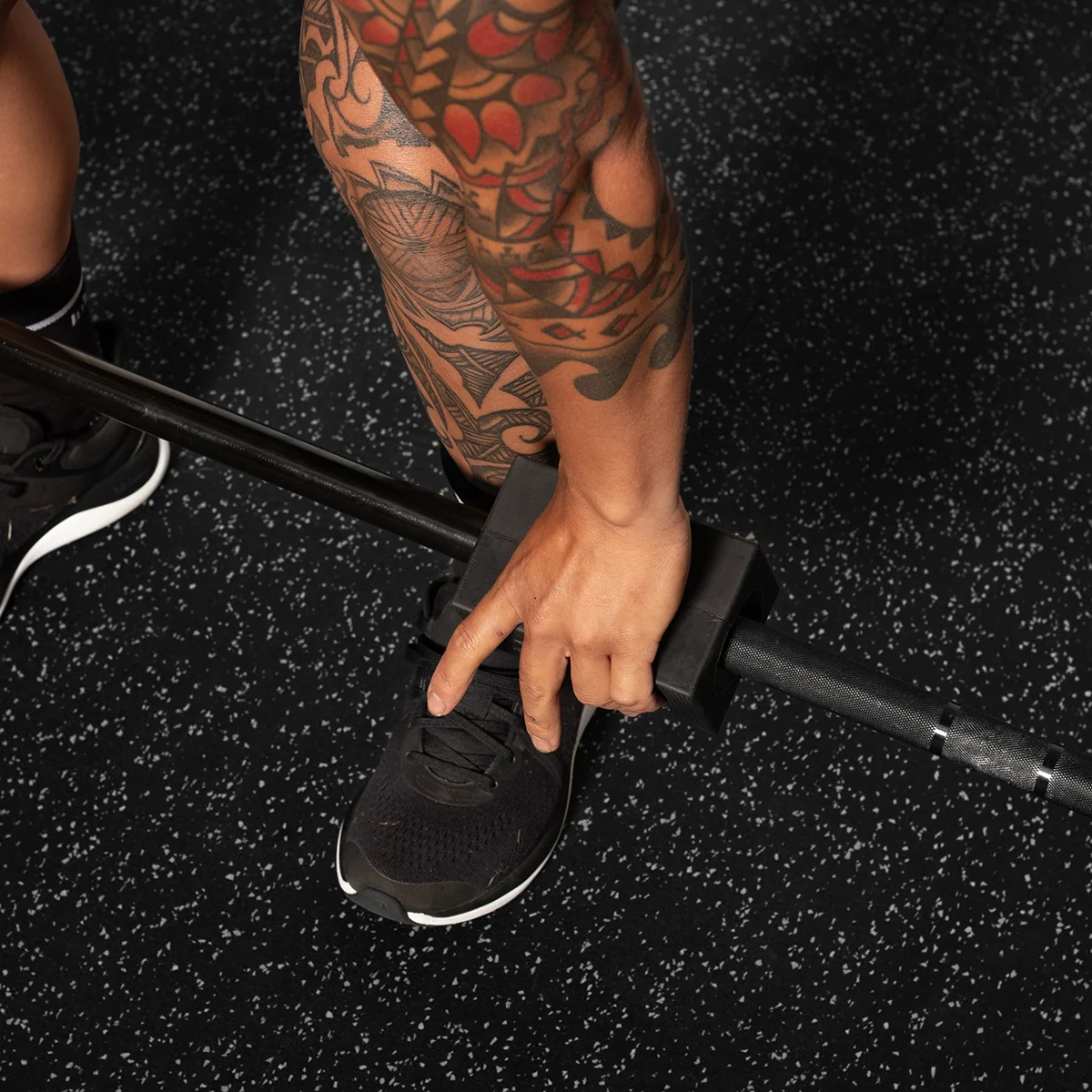
The manufacturer describes snap-on use with barbells, loadable dumbbells and other handles. That broad description should start a compatibility check, not finish it. Handle diameter, usable length and the surrounding hardware can differ. Ask AbMat about your exact equipment if the fit is uncertain; a photograph of another bar is not a compatibility guarantee.
Fit the attachment on unloaded equipment that is securely supported. Check that it seats correctly, that the intended contact faces are usable and that both hands have sufficient room. On a dumbbell, inspect the space between the heads or plates. On a barbell, consider your hand spacing and the area needed to attach and remove the blocks.
Do not force a poor fit, cut the rubber or add improvised fastening hardware to make the accessory work. A block that changes angle or shifts unpredictably turns a simple grip exercise into an uncertain equipment arrangement. Resolve the fit before adding training load.
Then rehearse the entire movement with a manageable setup. Decide where the weight will finish, keep the landing area clear and account for the full length of the bar or dumbbell. A grip accessory does not create more floor space. The useful first result is a predictable pickup and controlled return, not a heavier number.
Make a simple hold repeatable before adding complexity
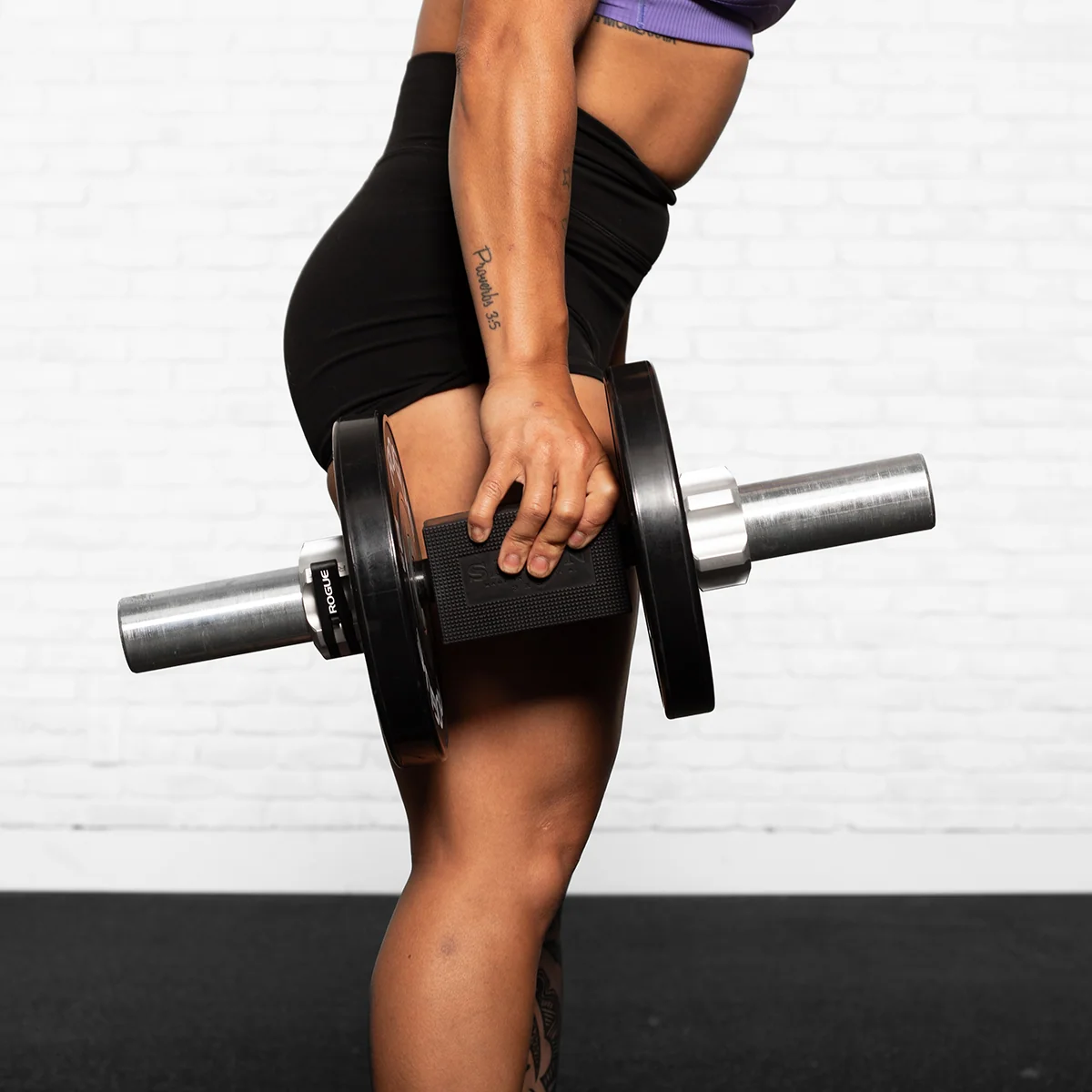
Begin with a movement you can organise calmly. A brief lift and hold near a clear set-down is easier to assess than combining a new pinch surface with walking, curling or an overhead movement. Keep the load manageable enough to place it down deliberately instead of waiting for the hand to open unexpectedly.
Notice whether the contact remains consistent on both sides. Changing hand placement midway through a hold makes comparisons less useful. If you cannot find a stable position or the accessory moves on the handle, stop and revisit the setup rather than trying to rescue the attempt with more squeezing.
Log the implement and the attachment as well as the load. Include the duration or repetitions, where the lift started and what counted as a finish. A short hold with an orderly return can be a more useful baseline than an uncertain maximum that cannot be reproduced.
Our article on making pinch-grip results comparable discusses why the implement and performance standard matter. The Saxon attachment and a hub remain different tasks; their numbers should not be treated as direct equivalents.
Progress one variable at a time. If you add weight, extend the hold and change the exercise together, you lose a clear comparison with the previous session. Keep enough detail to identify what improved while accepting that hand position and surface conditions can affect an individual attempt.
Keep pinch work in proportion to the rest of training
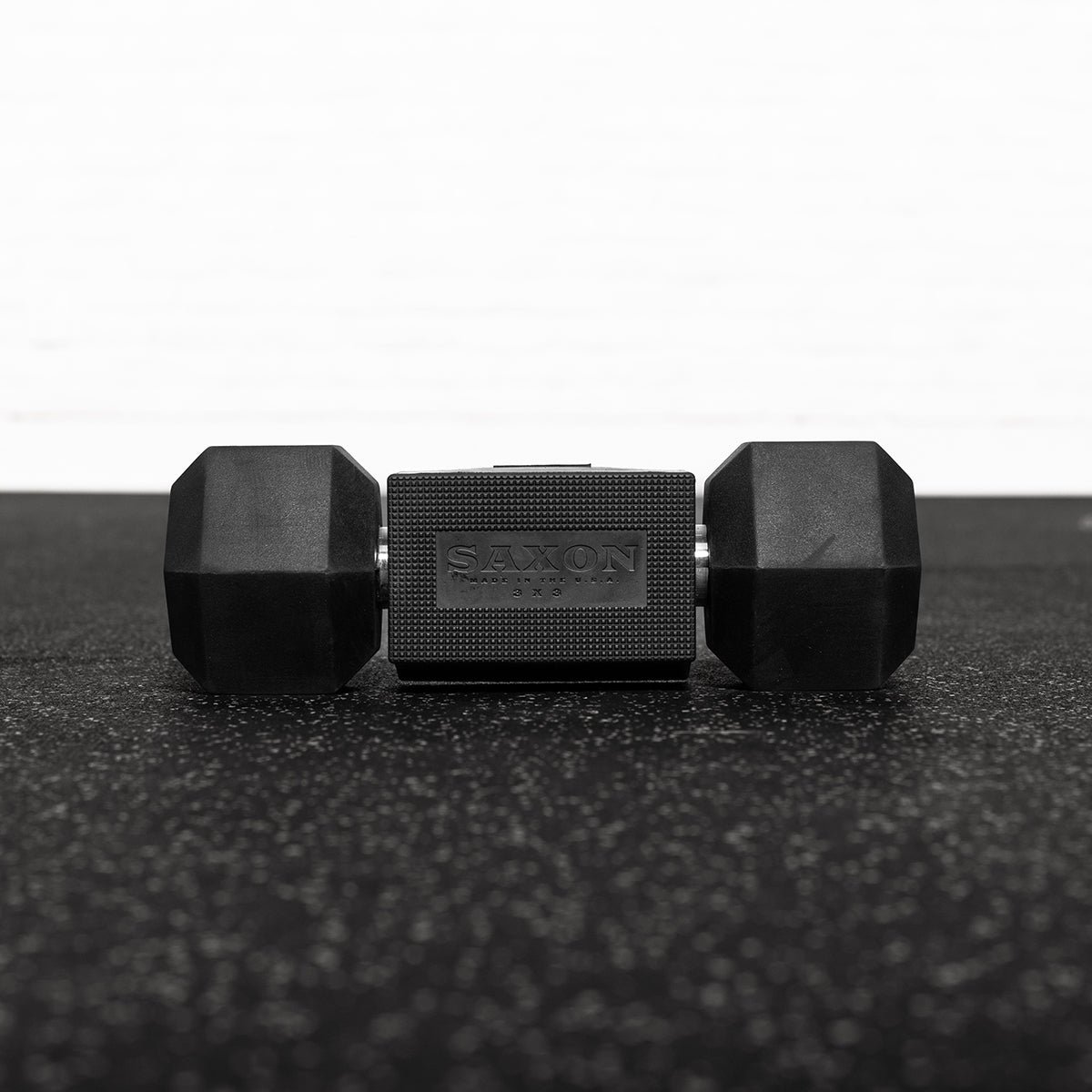
Extra grip work adds another demand to hands already used during rows, pull-ups, carries and deadlifts. Consider the whole week before adding a demanding new accessory session. More exercises are not automatically better if the next important workout becomes harder to complete as planned.
Place an unfamiliar pinch exercise where it will not unexpectedly limit the session’s main work. Start with a modest amount, observe the response and leave room to adjust. This is a practical introduction to a new task, not a claim that one fixed set-and-repetition prescription suits every lifter.
Distinguish normal effort from pain. Sharp, persistent or worsening hand or wrist symptoms are a reason to stop the painful movement and seek appropriate advice when needed. A rubber surface is not a rehabilitation treatment, and a product testimonial does not establish that a particular condition will benefit.
Barbell and deadlift enthusiasts may also enjoy strength-themed clothing or a sticker for a training bottle. Those are optional expressions of the same lifting interest, separate from the programming decision. Neither a slogan nor the weight shown in a product photograph tells you what load belongs in your session.

Powerlifting Shirts & Lifting Gear
Powerlifting shirts and gym gear for squat, bench and deadlift lifters who live for heavy numbers.

Shirt – Deadlift – Meme Gains & Bros T-Shirt
Heavy lifts, good laughs, and a little “Deadlift” energy.

Be Happy Lift Heavy Happy Weights Smiley Face Weight Pl Tank Top
Bring “Be Happy Lift” humor to your next lifting session.

Barbell Heartbeat Hooded Pullover for Powerlifting Lift Hoodie
Bring “Barbell Heartbeat” gym humor to lazy days and post-workout plans.

Iron Is My Therapy – Lifting Bodybuilding Powerlifting T-Shirt
Add a playful “Iron Is My Therapy” touch to your casual rotation.

Forged In Iron Shirt – Essential & Top T-Shirt
Heavy lifts, good laughs, and a little “Forged In Iron” energy.

Barbell Country Club Shirt Meme Top & T-Shirt
Heavy lifts, good laughs, and a little “Barbell Country Club” energy.

Big Boy Barbell Club Shirt Meme & Essential Top T-Shirt
Make gym days more fun with “Big Boy Barbell Club” style.

Raise The Barbell Shirt – Motivational & T-Shirt
Show some powerlifting attitude with a playful “Raise The Barbell” tee.

1 Plate Deadlift Club Meme – Motivational Top T-Shirt
Heavy lifts, good laughs, and a little “1 Plate Deadlift Club” energy.

I Love Deadlifts Gym | Pink Heart Weight Plate Funny Wo Sticker
Put “I Love Deadlifts” gym humor on your laptop, bottle, or gym gear.
Choose the movement because it fits the goal
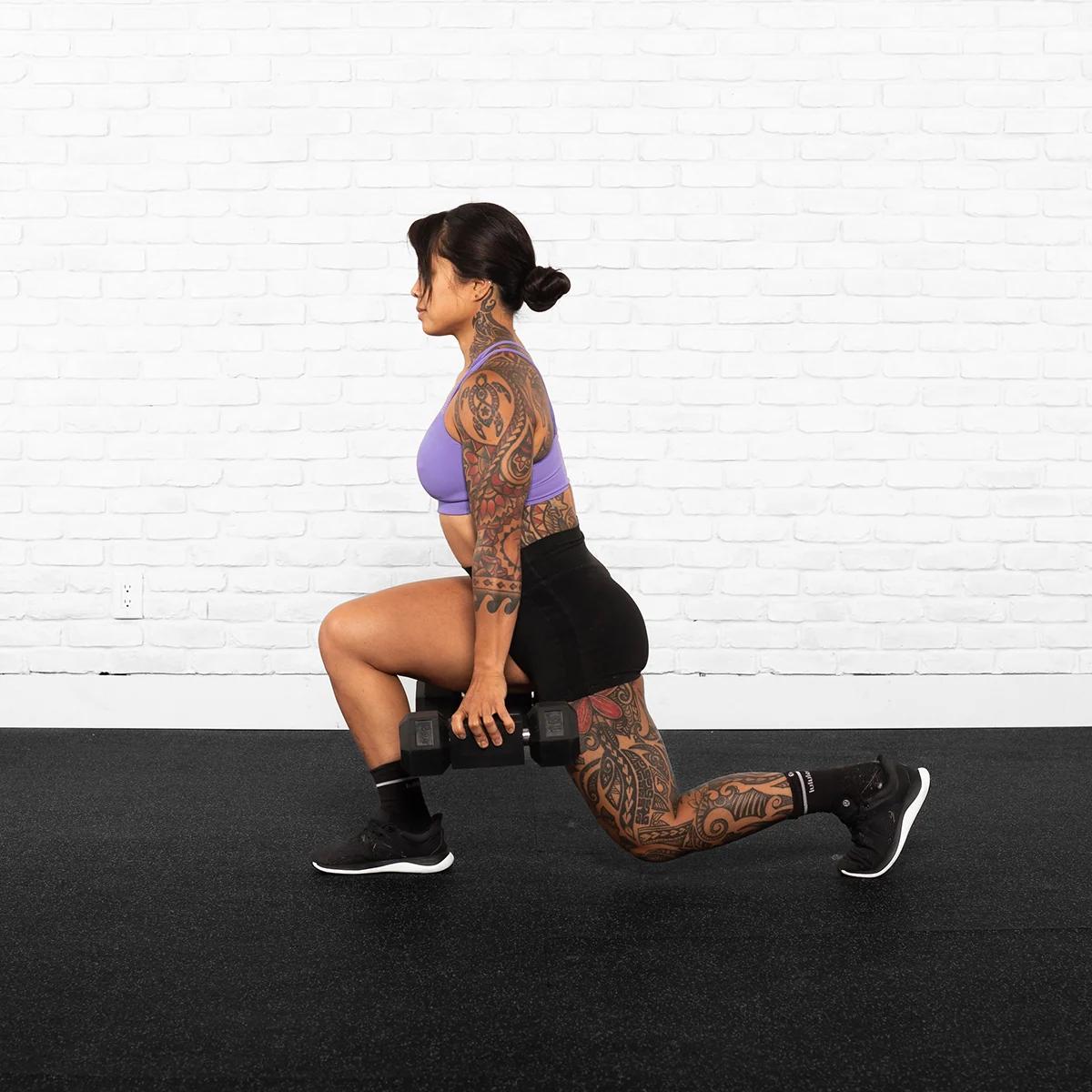
The product’s listed applications extend beyond a static hold. A demonstration of a lunge, carry or curl can show what the accessory looks like in use, but it does not establish that you need every variation. Choose one that fits your training and available equipment, then learn that setup on its own terms.
A carry adds travel and a return route. A lunge adds stepping and balance while the hands maintain the hold. Those extra demands may be interesting, but they also make it harder to isolate the gripping task. If the purpose is to compare pinch performance, a simpler movement can make the result easier to interpret.
Likewise, do not assume an accessory duplicates the feel or judging standard of a particular competition implement. If event preparation is the goal, check the actual implement, surface and rules. Training on a related tool and reproducing a contest task are different claims.
The strongest buying case is a specific one: you want broad-block pinch practice, have confirmed the fit and can organise a repeatable lift and return. If ordinary holds or existing grip tools already meet your needs, there is less reason to add another attachment. Choose the extra gripping task deliberately, keep its results identifiable and let useful practice decide its place in your programme.