Advertising disclosure: This page includes affiliate links that may earn us a commission at no additional cost to you.
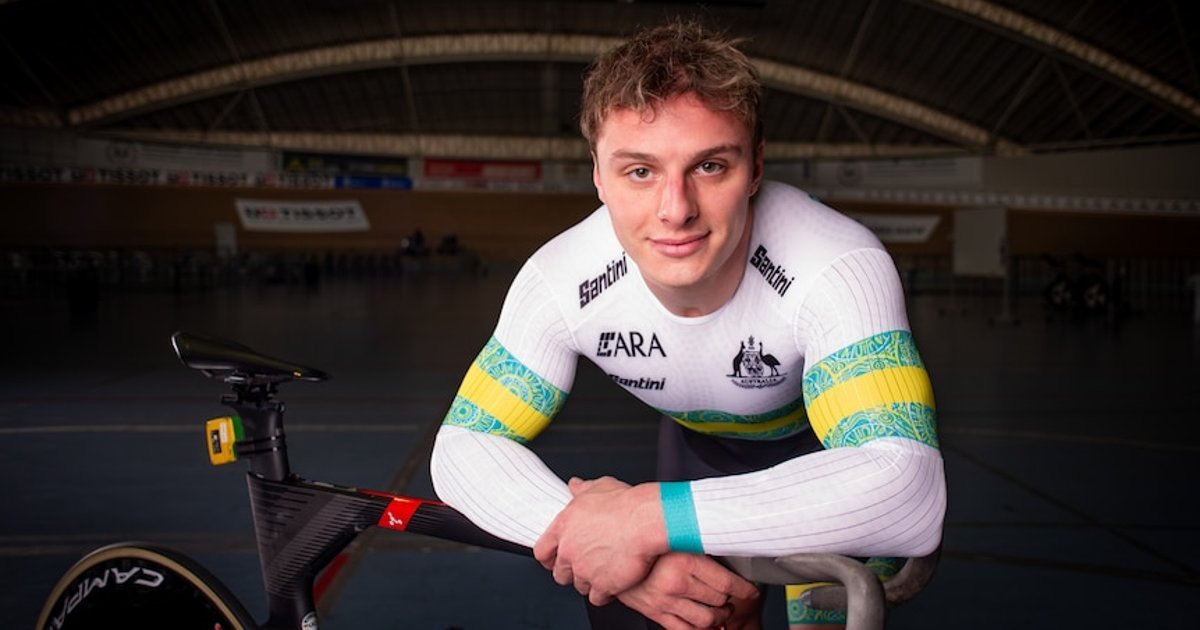
Matthew Richardson did not start out as a specialist in making a bicycle go as fast as possible. He came to track cycling from gymnastics, eventually becoming an Olympic medalist in three sprint disciplines at Paris 2024. That transition is particularly interesting for anyone who enjoys lifting and wonders how much gym strength carries over to a sport that demands explosive speed.
The useful lesson is not that a certain physique guarantees speed. It is that strength, technique and the ability to express power at the right moment are separate qualities. Richardson’s career provides a way to think about how they fit together, without pretending that an elite rider’s exact training plan is public or that a recreational athlete needs to copy it.
A different sport, not a shortcut to the podium

Born in England and raised in Western Australia from childhood, Richardson spent his early athletic years in gymnastics. An elbow injury interrupted that path and he eventually directed his competitive energy toward cycling. The transition was not a straight line from one elite result to another. Cycling required learning a new movement pattern, different competitive rules and a different way of measuring progress.
Gymnastics can develop useful qualities such as coordination, body awareness and the ability to produce force while maintaining position. But these qualities do not automatically teach a cyclist how to accelerate a fixed-gear bicycle, manage the banking of a velodrome or hold a line under pressure. A rider still needs extensive practice specific to cycling.
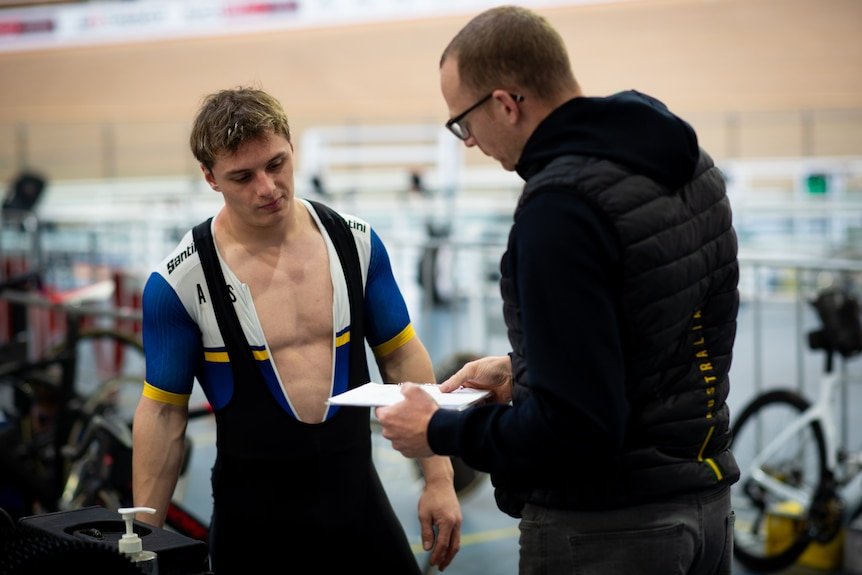
Richardson began to take preparation more seriously around the end of his teenage years, including nutrition and recovery. He moved to Adelaide in 2019 to develop his track cycling career. At the Tokyo Olympics he was part of an Australian team sprint squad that finished fourth. By 2022, he had won individual and team sprint gold at the Commonwealth Games and helped Australia win the world team sprint title.
For a gym-focused athlete, this progression is an argument for keeping useful general athletic qualities while allowing time for a new skill to develop. A strong squat can be an asset, but a beginner on a bicycle should expect the first phase of training to involve learning efficient pedaling and safe handling rather than immediately chasing elite power numbers. The better you become at the new skill, the more specific your strength work can become.
Build the strength that a sprint can actually use
Track sprinting rewards the ability to deliver force through the pedals while they are moving rapidly. In the gym, a heavy lift tests how much resistance you can move. On a bicycle, that force must be applied repeatedly at the cadence and body position demanded by the event. The strongest lifter in a group is not necessarily the fastest rider.
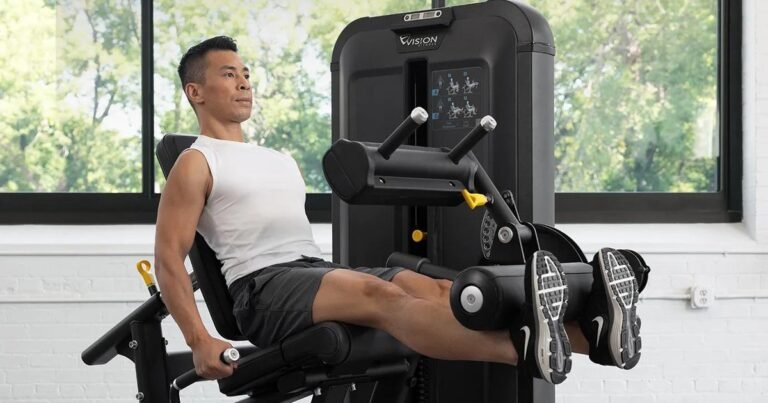
Squats, trap-bar deadlifts and leg presses are reasonable examples of exercises that could build a general lower-body strength base. A squat develops knee and hip extension together, while a hinge provides another way to train hip extension. A leg press can load the legs without the same balance demands as a free-weight squat. A leg curl can complement that work by training knee flexion directly. These are exercise options for readers, not a claim that Richardson performs this particular selection.
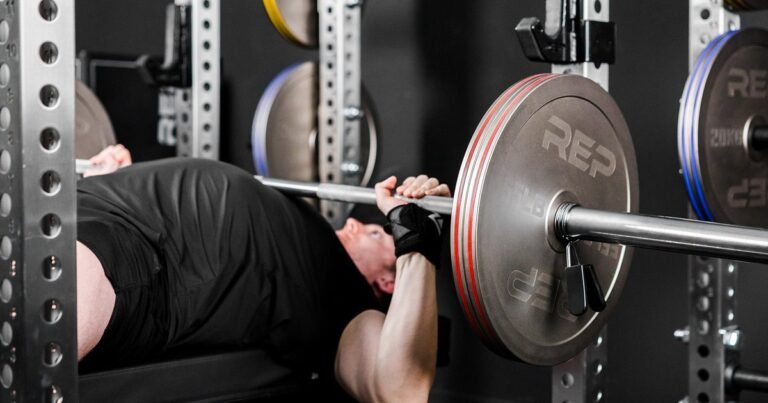
Choose movements you can perform consistently through a comfortable range. If a straight bar squat does not suit your shoulders, a safety squat bar or a belt squat may be an alternative. A rack with appropriate safeties, a suitable bar, plates and secure collars can support progressive loading. Machines offer other options, particularly when you want to reduce the coordination demand of a strength session.
Resist the urge to judge a leg session entirely by soreness. If strength training leaves you unable to complete the next important riding session at the intended quality, the cost of those extra sets may outweigh the benefit. Keep a manageable number of hard sets and record your loads, repetitions and perceived effort. Build the capacity you need rather than trying to prove how exhausted you can become.

Equipment Worth Exploring
Explore equipment, accessories and gear from our carefully selected range.


Compact Leg Press CLP-700
Compact reverse-style leg press with a moving seat carriage and an adjustable footplate.

Leg Extension/Curl BCO-780
Leg extension and lying leg curl combo with plate loading, band pegs and a cable-loading option.


Why the team sprint changes the training problem
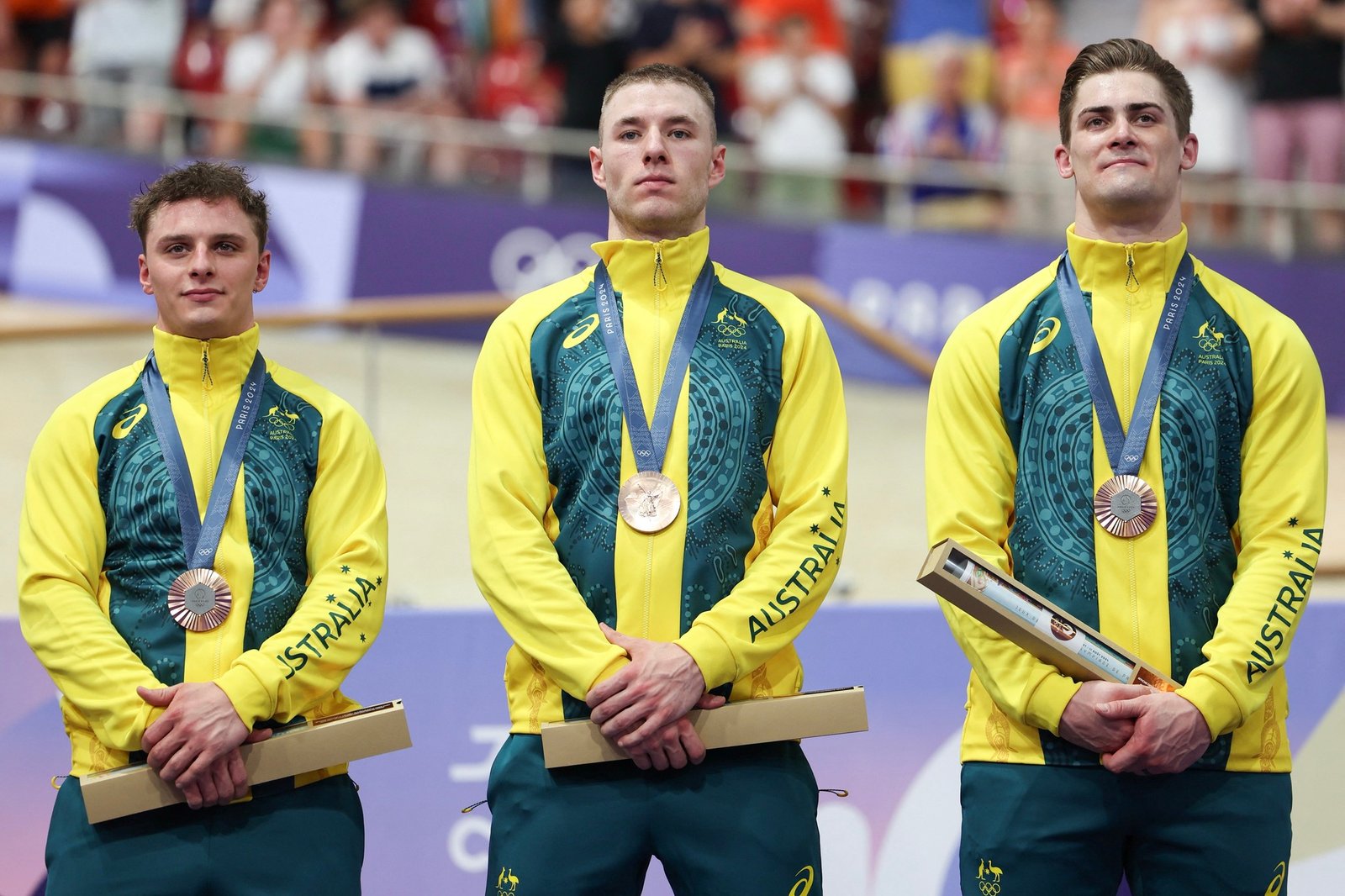
The team sprint is a good example of why the same sport can require different preparation for different roles. In the men’s event, three riders start together, with each rider taking a turn at the front before peeling away after completing his lap. The opening rider launches the team from a standing start, while the riders behind build speed in the slipstream and then have to maintain or increase it as they take over.
Richardson moved from the opening position to the second position in the Australian team sprint during his development. That meant adjusting to a different effort profile. In a 2024 interview he described demanding training sessions involving several maximal 500-meter efforts. That is a specific example from an experienced international athlete preparing for competition, not a recommended starter workout.
Think about the difference between getting a heavy object moving and keeping it moving quickly. Both tasks require effort, but the distribution of force and fatigue is different. In the team sprint, an opening rider needs a very effective launch; a second rider also has to be prepared for the high-speed demands that follow it. A training program needs to reflect the part of the race that the athlete is actually trying to improve.
At Paris, Richardson earned bronze in the team sprint with Australia. The medal was one of three he won at those Games. For readers who participate in team sports, the broader point is that a gym program is best designed around the athlete’s role, not simply around what teammates happen to be doing. Two athletes can compete in the same event and still benefit from different emphases in their preparation.
Race speed is not the same as gym strength
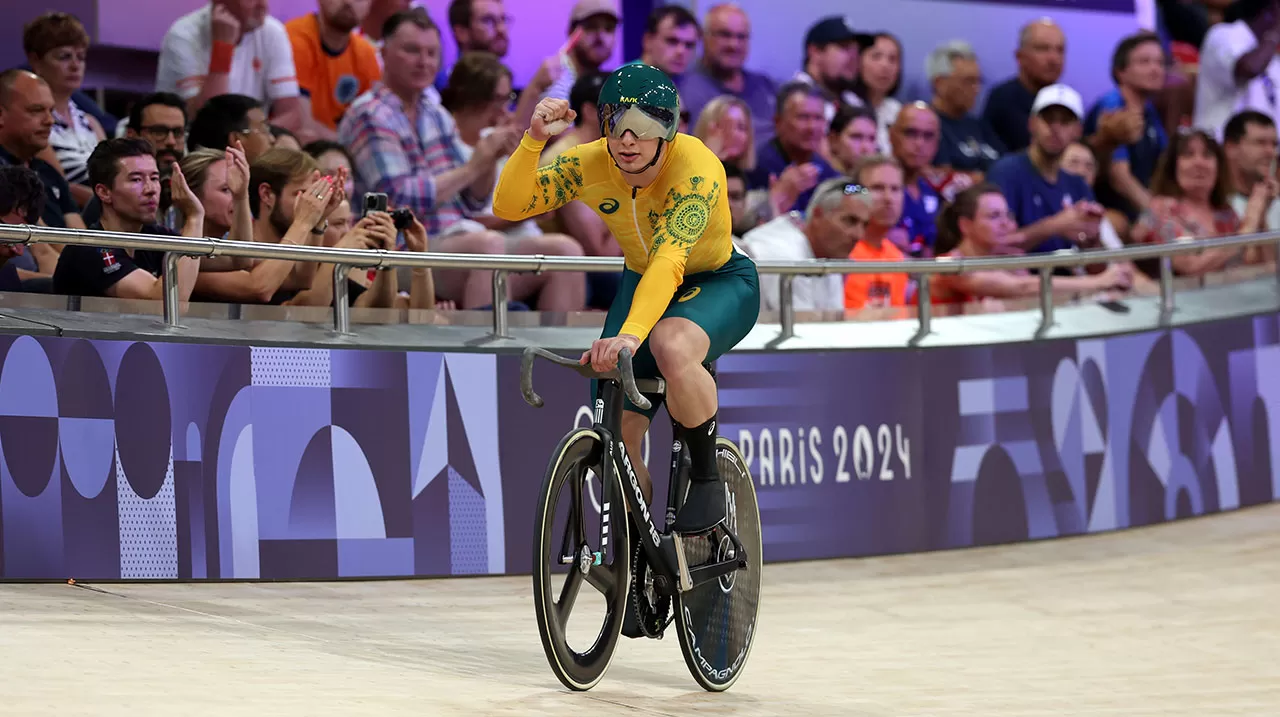
Individual sprint competition adds another complication: tactics. Riders may spend time positioning themselves before the decisive acceleration, so the outcome is not simply a contest of who recorded the highest number on a power meter. A rider who can accelerate strongly still has to choose when and where to use that acceleration.
In Paris, Richardson won silver in both the individual sprint and the keirin, completing his set of three Olympic medals. In the sprint qualification, his flying 200-meter time was 9.091 seconds before Harrie Lavreysen rode 9.088 seconds. The difference shows just how closely matched two exceptional athletes can be. It also illustrates why qualifying speed and winning an individual race should be treated as related but distinct achievements.
A flying 200-meter effort is timed after the rider has built up speed. That is not comparable to riding 200 meters from a stationary start, just as a sprint on an air bike in a gym is not equivalent to a timed velodrome effort. Equipment, air resistance, positioning, track geometry and the nature of the start all influence the result.
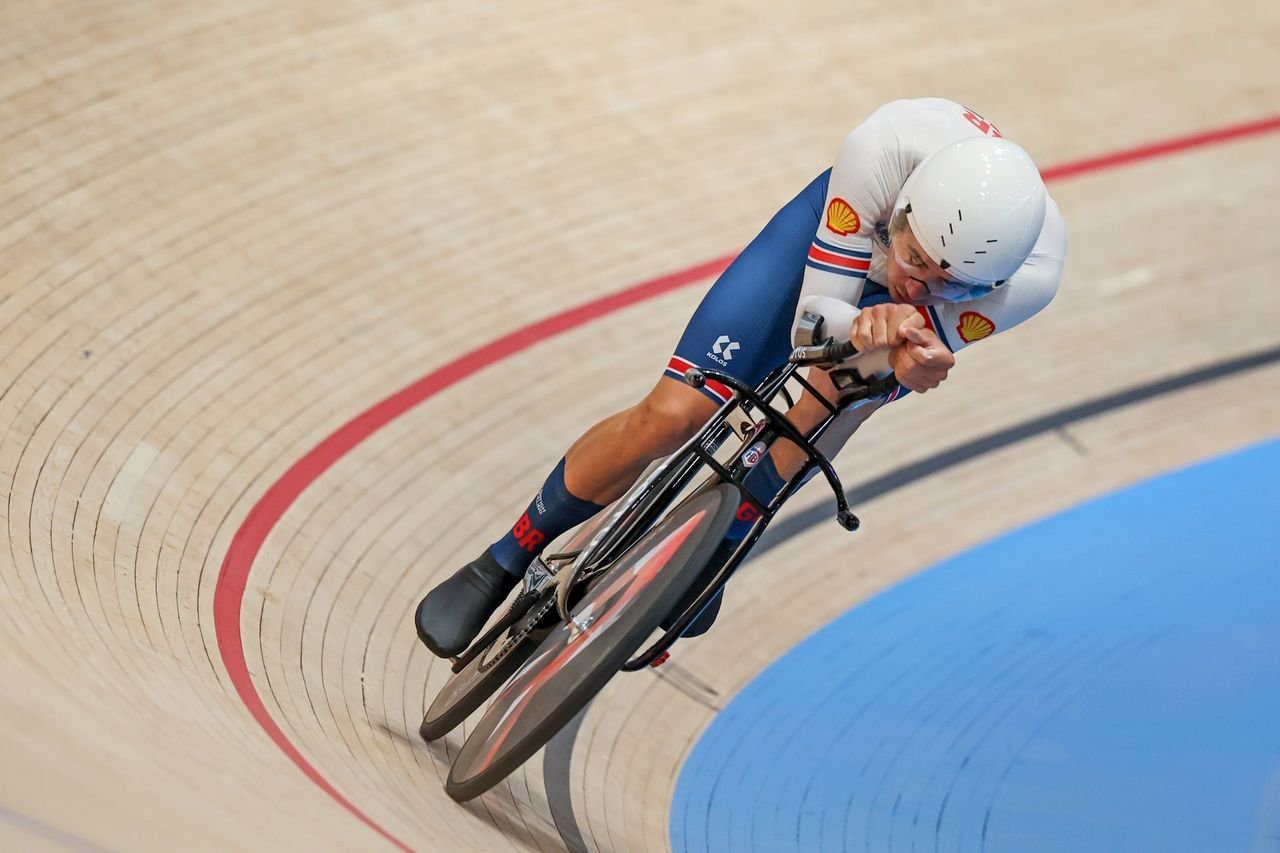
Richardson later represented Great Britain. On August 14, 2025, at the velodrome in Konya, Turkey, he recorded 8.941 seconds for the flying 200 meters, becoming the first rider to break the nine-second barrier in that event. This is a dated milestone, not an assertion that the time remains the current record. It is a reminder that elite performance can continue improving after an Olympic Games, and that testing conditions and the specific discipline matter when comparing times.
A practical way to train for explosive cycling
A recreational cyclist who also likes lifting can borrow the principle of separating strength development from speed practice. The following is an example of how to organize training, not Richardson’s personal routine. It assumes you already tolerate basic resistance training and cycling; if you are new to either, begin with easier sessions and build up gradually.
One approach is to use two nonconsecutive strength sessions each week. In the first, choose a squat variation and a hip hinge, then add a modest amount of single-leg or trunk work. In the second, use a leg press or another squat pattern and a hamstring exercise, alongside upper-body work if desired. For the main lifts, two or three controlled sets of approximately four to eight repetitions can provide a starting point, leaving a few repetitions in reserve. Progress gradually rather than forcing a maximum every week.
Keep short acceleration practice separate from exhausting conditioning. On a suitable stationary bicycle, after warming up, a relatively experienced rider might practice a few short, controlled accelerations with generous recovery between them. Stop when technique or speed deteriorates noticeably. An air bike can provide general conditioning, but its fan resistance and moving handles mean it is not a substitute for learning track cycling. Actual track practice should take place at an appropriate facility with qualified instruction.
Keep at least one easier day between the hardest leg sessions and adjust the schedule according to your recovery. A simple example is strength on Monday and Thursday, easy riding on Tuesday, a short quality acceleration session on Saturday and rest or gentle activity on the remaining days. If your legs are consistently heavy, reduce strength volume before adding another intense ride. Track the quality of your efforts, not just their number.
Richardson’s story is ultimately about becoming more capable in a new discipline over years. Build general strength, learn to express it in the sport, then protect the quality of the training that matters most. A good program is not the one that looks most punishing on paper. It is the one that repeatedly makes the athlete better at the task.