Advertising disclosure: This page includes affiliate links that may earn us a commission at no additional cost to you.
Sergey Bubka became the first pole vaulter to clear six metres, then built a championship record that lasted well beyond that breakthrough. He won six successive outdoor world titles, yet his Olympic medal collection contains one gold. Those facts belong in the same career story.
For anyone interested in athletic performance, that contrast is more revealing than a supposed secret workout. Physical capacity, technical execution and the result of a particular competition are related, but they answer different questions. Bubka’s career gives us a way to discuss all three without pretending that a medal table explains how to train.
Six metres was a milestone, not a complete explanation
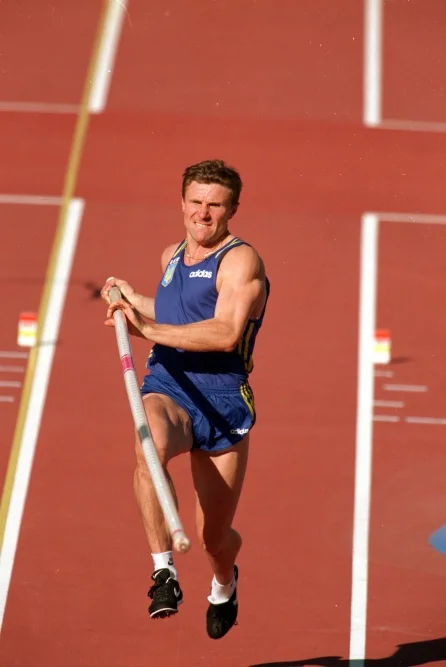
On 13 July 1985, Bubka cleared 6.00 metres in Paris. It was the first time a pole vaulter had reached that height. The date matters: this is a historical breakthrough, rather than a new record or a claim about the current world-record holder.
A round-number barrier gives spectators a clear story. Before it happens, the height can seem like a boundary; afterwards, it becomes something an athlete has actually done. But the extra significance of the number does not mean that the performance came from one newly discovered exercise.
The pole vault combines a fast approach with a highly specific sequence of movements. An athlete must use the pole and organise the body around the task of clearing the bar. Being physically capable is part of that process, but the height alone cannot tell us how much each component contributed on a particular attempt.
That distinction helps when discussing other explosive athletes. Our profile of how speed, strength and skill meet in Mondo Duplantis’s vault explores the same general question. It is useful to examine the demands of the event before turning an extraordinary result into advice for a completely different sport.
A personal best records a successful performance under particular conditions. It does not expose the athlete’s entire preparation, and it is not proof that the same result can be produced whenever requested. Appreciate the milestone while keeping those limits in view.
Six world titles tell a longer story
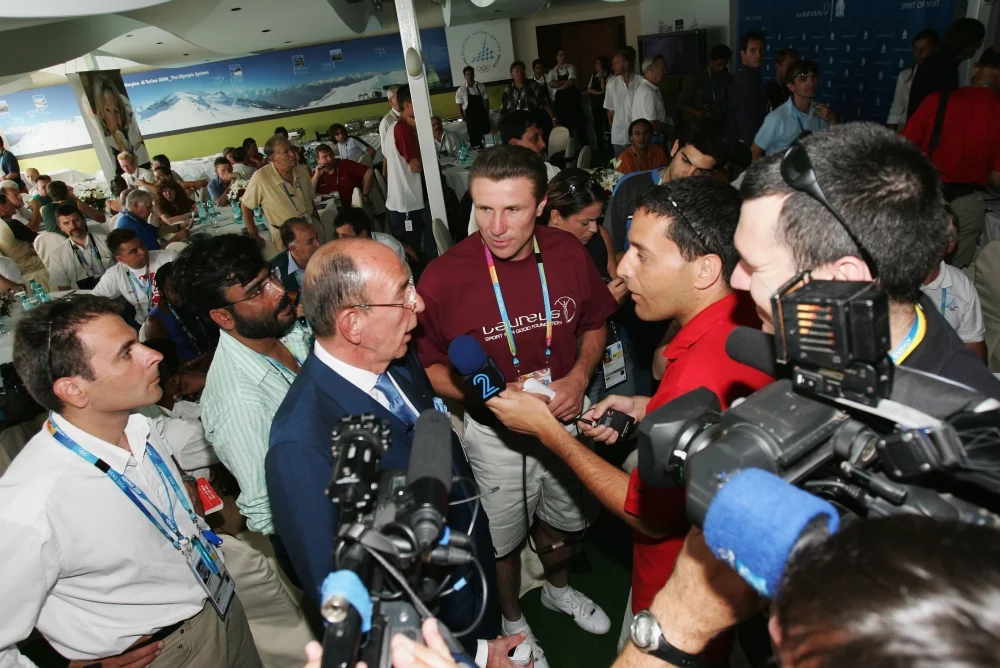
Bubka won the outdoor world title in 1983, 1987, 1991, 1993, 1995 and 1997. That is six consecutive editions, spread across fourteen years. The competition was not held every year, so the sequence should not be described as six straight annual championships.
The first victory came in Helsinki in 1983, before the six-metre breakthrough. The last came in Athens in 1997, long after the moment that introduced the barrier to the record books. Looking at both ends of the sequence gives a better sense of the career than focusing only on the most famous height.
Repeated championships ask something different from a single outstanding attempt. An athlete has to arrive at another important competition and deliver a winning result again. The medal history establishes that Bubka did this repeatedly. It does not, by itself, identify an exact training split, recovery method or psychological strategy that caused the sequence.
This is where retrospective fitness stories can go wrong. A writer sees a long winning career, names a desirable habit and then treats the habit as a verified explanation. Unless the athlete’s preparation is documented, that step remains an assumption. Consistency is visible in the results; the complete mechanism behind it is not.
For your own training records, separate an exceptional session from the broader pattern. A best-ever lift, a stronger normal session and a successful competition can all be worth tracking. You do not have to choose one number to represent every kind of progress.
One Olympic gold does not cancel the rest
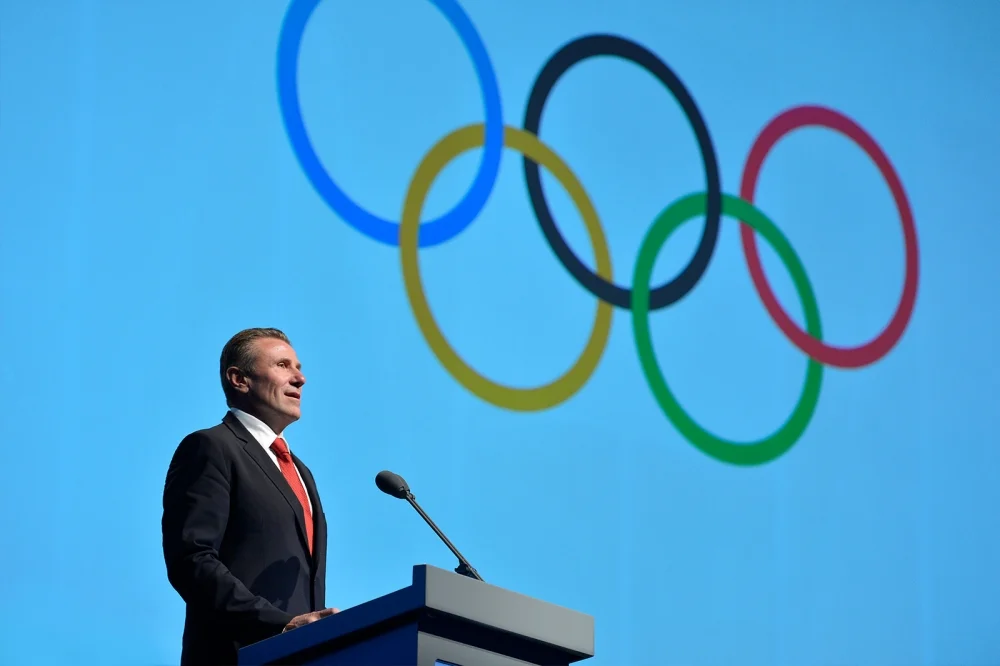
Bubka won Olympic gold in Seoul in 1988. His other Olympic experiences were different: the Soviet boycott kept him out of Los Angeles in 1984, he failed to clear a height in the Barcelona final in 1992, injury prevented competition in Atlanta in 1996, and he did not advance from qualification in Sydney in 2000.
Those are distinct circumstances. A political exclusion, an unsuccessful competition and an injury should not be compressed into one explanation about an athlete lacking the ability to perform. Nor should the six world titles make the Olympic disappointments disappear.
The contrast is precisely what makes the career interesting. Championship history can contain both remarkable dominance and important failures. Counting only Olympic medals would leave out much of what Bubka achieved; counting only his strongest results would hide part of his competitive experience.
For an ordinary lifter, the useful comparison is how you review a disappointing day. Record what actually happened before assigning a cause. Were you unable to attempt the task, did you attempt it unsuccessfully, or did you perform below your usual level? Those descriptions call for different follow-up questions.
A result can be disappointing without becoming a judgement on the entire training year. Equally, an impressive personal best does not remove the need to understand a later mistake. Keep the evidence specific enough that it can guide a practical decision.
A public record cannot supply a private programme

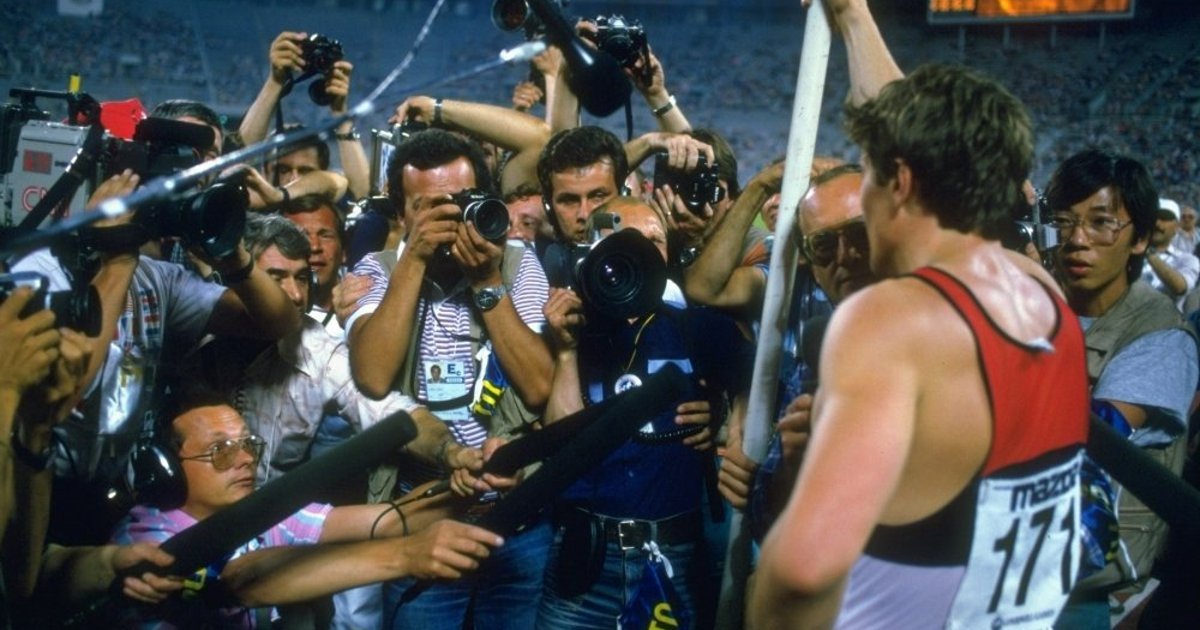
Bubka’s public career supports a discussion of sport-specific skill and repeated high-level performance. It does not give us permission to invent his weekly gym routine. A photograph, a medal list or a short biographical description cannot establish his exercise selection, sets, repetitions and progression rules.
That matters because an athletic profile and a training prescription serve different purposes. The profile explains what happened and why the story is interesting. A programme needs enough information about the task and the person doing it to justify the work being proposed.
If you want to borrow a principle from this career, start with the question of transfer. What is the performance you actually want to improve? Decide how you will observe it, and then examine whether your training is helping. Stronger gym numbers can be valuable without automatically guaranteeing a better sporting result.
The look at Jan Železný’s skill and long championship career offers another example of keeping physical capacity separate from the specialised task that expresses it. The events differ; the need to avoid making up a champion’s workout is the same.
This is an editorial way to think about progress, rather than a claim that Bubka used a particular tracking system. Make that boundary explicit and the historical example becomes more useful: it encourages better questions instead of selling an unsupported shortcut.
For a recreational athlete, general strength work can be organised with a barbell, appropriate plates and collars, or with dumbbells and a bench. A suitable rack may be part of the setup when the chosen exercise requires it. These are equipment options for ordinary progressive strength training, not a list of products Bubka used or endorsed. The equipment lets you adjust resistance; it does not supply the technical practice needed to clear a pole-vault bar.

Equipment Worth Exploring
Explore equipment, accessories and gear from our carefully selected range.


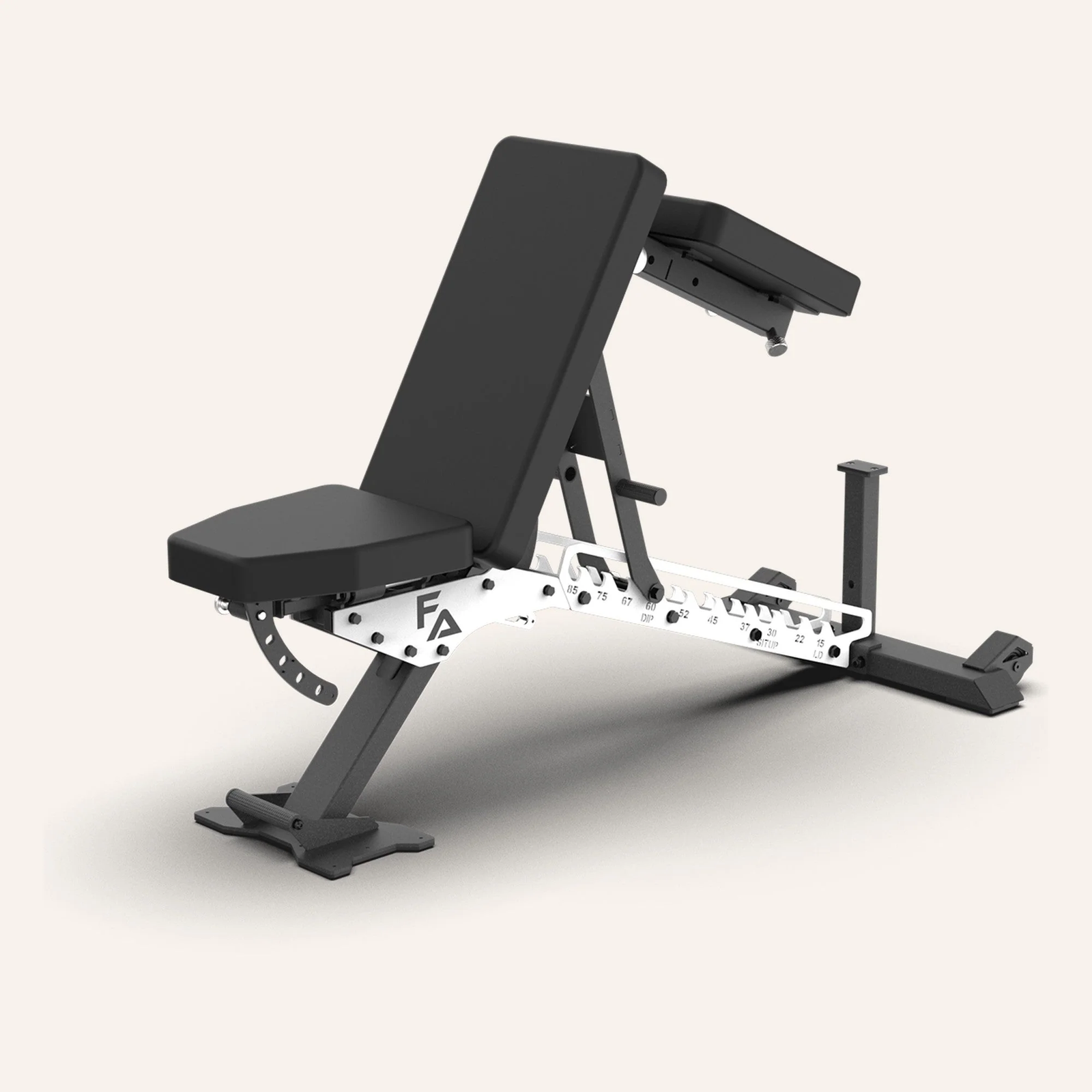

FID Bench MAX
Adjustable bench offering flat, incline, and decline positions + adjustable headrest.

Rubber Hex Dumbbells
Rubber-coated hex dumbbell pairs with a stable shape for home and commercial strength training.
For readers who enjoy running as part of their own training, the optional cardio-themed clothing and stickers below cover running-club jokes, everyday motivation and the less glamorous side of conditioning. This is merchandise for that broader interest, not pole-vault equipment, a claim about Bubka’s preparation or an endorsement by him.

Cardio Shirts & Workout Gear
Cardio and conditioning gym gear for runners, endurance athletes and anyone who earns the sweat.

Running Dost Thou Even Trot Medieval Treadmill Crewneck T-Shirt
Show some gym-day personality with “Running”.

Cardio Heartbeat Hoodie
Show off your cardio humor in a laid-back “Cardio Heartbeat” hoodie.

Anti Running Club Tee
Heavy lifts, good laughs, and a little “Anti Running Running Club” energy.

Cardio Is Calling Decline Decal Water Bottles Meme Sticker
A fun “Cardio Is Calling” touch for bottles, laptops, and lockers.

Cardio Is Hardio – Workout Meme Pullover Jumper T-Shirt
For laid-back days and cardio humor: “Cardio Is Hardio”.

Cardio Sucks Shirt Meme & Gymbros Top T-Shirt
Make gym days more fun with “Cardio Sucks” style.

Negative Cardio Review Cardio Sucks 1 Star Vest Tank Top
Bring “Negative Cardio Review” humor to your next lifting session.

Skip Cardio Exit Cardio Meme Hooded Hoodie
Keep it laid-back with a little “Skip Cardio” attitude.

Straight Outta Shape – Out Of Shape Meme Vest Tank Top
Your gym-day look, with a playful “Straight Outta Shape” twist.

Don't Quit Do It – Motivational Workout Decal for Gym B Sticker
Give your everyday gear a playful “Don't Quit Do It” twist.
Read the whole career, then choose your own target

Bubka officially retired in 2001. His later recognition included a Lifetime Achievement Award in 2008. That places the famous performances within a longer sporting life, although an award does not add another centimetre to a competitive result.
Records, titles and later recognition are different forms of achievement. Keeping them separate makes the story easier to understand. The first six-metre clearance answers a historical question, the six world titles describe a championship sequence, and the Olympic gold belongs to a particular edition of the Games.
Your targets can be just as clearly defined, even at a different level. You might want a personal best, a more dependable competition performance or a better technical standard. Write down which of those you are pursuing before deciding whether a session was successful.
That does not require turning every workout into a test. It requires using a measure that fits the goal and being honest about what it can show. Bubka’s career remains compelling because the evidence contains more than one simple story. Respecting that complexity gives fitness readers more to work with than another invented champion’s routine.