Advertising disclosure: This page includes affiliate product links that may earn us a commission, as well as products from our own store.
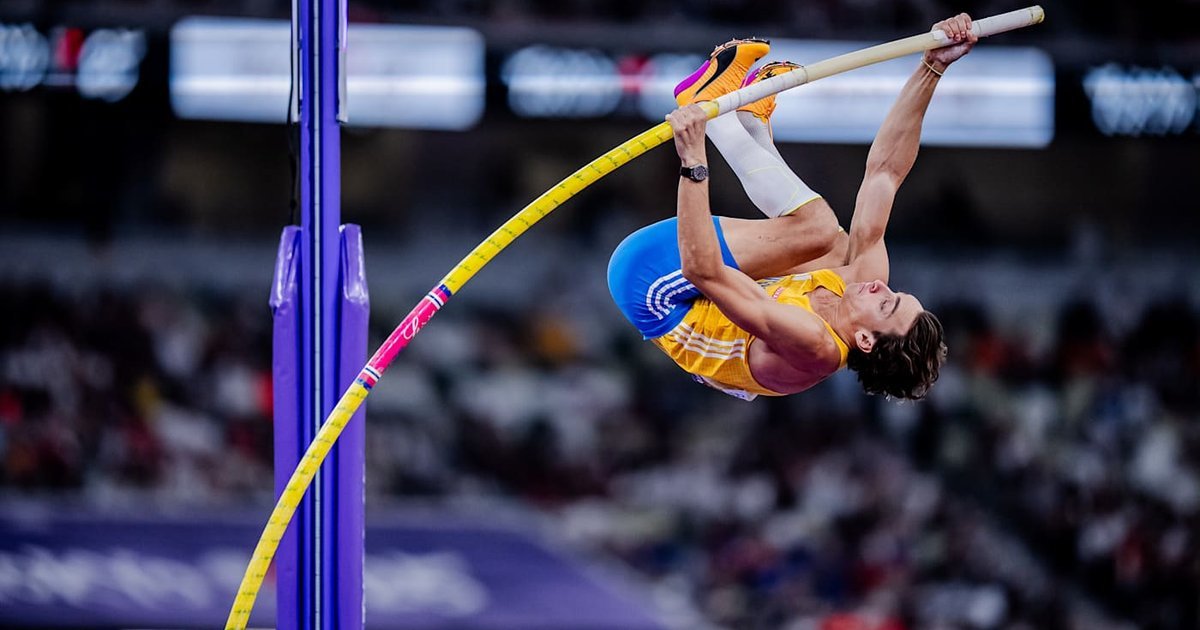
Mondo Duplantis makes pole vault look like a single spectacular jump. It is really a sequence: build speed, arrive in the right position, load the pole and coordinate the body around its release. That makes his preparation interesting even if you never intend to leave the ground with a pole. The useful question for a lifter is how physical improvements become a better sporting performance, rather than simply a bigger gym number.
Runway speed matters when you can use it
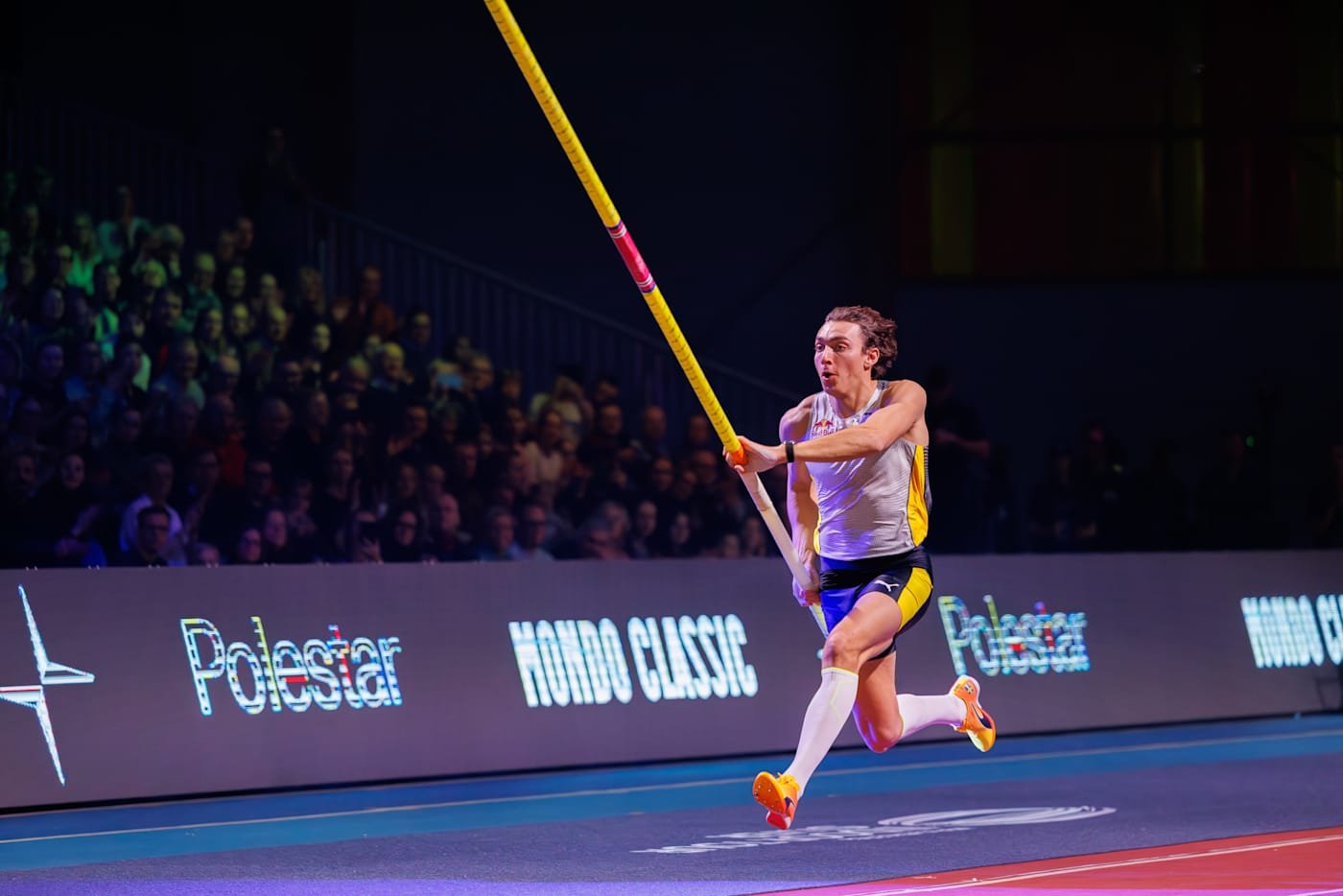
Duplantis’s approach is a reminder that explosive sport starts before the obvious explosive moment. Measurements from 2024 put his top runway speed at 10.31 metres per second, with an average of 10.05 across the final three steps. Those figures describe an approach carrying a pole, rather than an interchangeable 100-metre sprint result.
The distinction matters. A fast approach has to deliver the athlete to a precise action. If extra speed makes the final steps disorganized, the athlete has gained a quality without yet learning to use it. Think of a basketball player who can sprint quickly but arrives underneath the rim with no room to jump. More speed is potentially valuable; its timing determines what happens next.
For a gym-focused reader adding running, separate speed practice from exhausting conditioning. The purpose of a short acceleration can be to move crisply and repeat the same pattern, rather than finish breathless. A sensible session stops being a speed session when every attempt becomes a visibly slower struggle. That is a coaching principle, not a reconstruction of Duplantis’s weekly schedule.
If resisted running interests you, our guide to sled sprints and the first 10 metres explains the loading question in more detail. A heavy sled, an unloaded sprint and a pole-vault approach create different tasks. Treat their results separately instead of expecting one exercise to stand in for all three.
The pole changes what strength has to accomplish
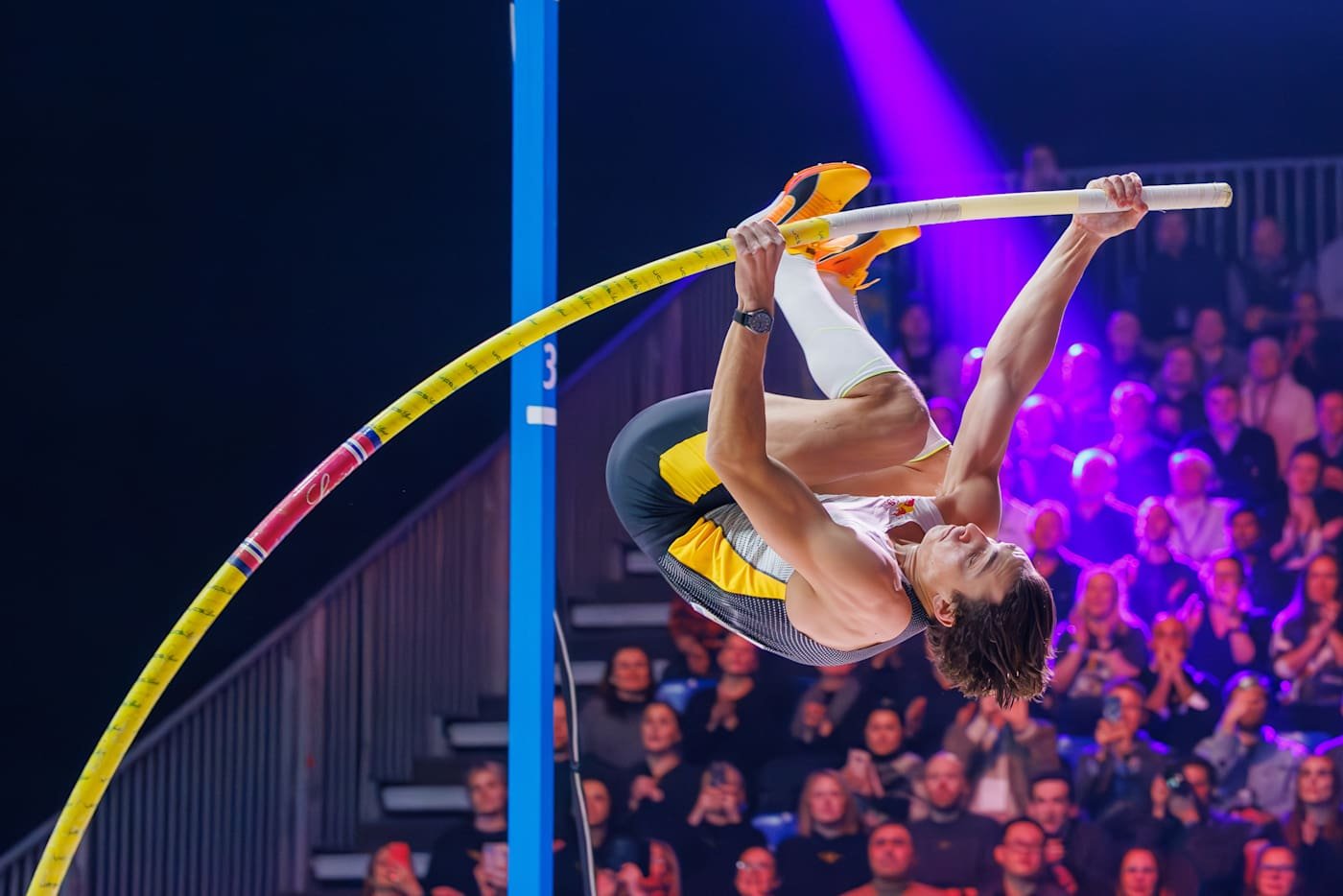
A pole is not a powered elevator. The athlete supplies movement, interacts with the implement and has to organize the body as it bends and straightens. Upper-body strength, grip and coordinated movement matter alongside the approach. A successful clearance therefore cannot be explained by leg drive alone, or by the stiffness of the equipment in isolation.
Basic mechanics gives a useful way to appreciate the challenge. Kinetic energy depends on mass and the square of speed. At an unchanged body mass, moving 5% faster would mean about 10.25% more kinetic energy: 1.05 multiplied by 1.05. That is arithmetic, not a prediction of a 10.25% higher vault. The transition, pole behavior and athlete’s movement determine how the available energy contributes to the attempt.
It also explains why gaining weight is not automatically an advantage. Additional mass changes the problem; it does not guarantee more useful speed, a better take-off or cleaner clearance. For someone training mainly for muscle size, gaining mass may be an intended result. For a technical jumping event, the athlete and coach have to judge the effect on the whole performance.
For your own training, ask what the strength exercise is meant to support. A stronger pull-up is a clear achievement. Whether it improves a particular sporting movement needs its own evidence. Keep celebrating the gym result while measuring the skill separately, under comparable conditions.
A useful comparison records the details that can change the result. For a pull-up, that includes your starting position, range and whether you used assistance. For a short run, it includes how the clock starts and stops. Filming from a consistent angle can help you notice changes in execution, although a phone clip cannot measure every force or diagnose a technical problem. If the conditions change substantially, label the result as a different test rather than a straightforward personal best.
Strength and technique develop together
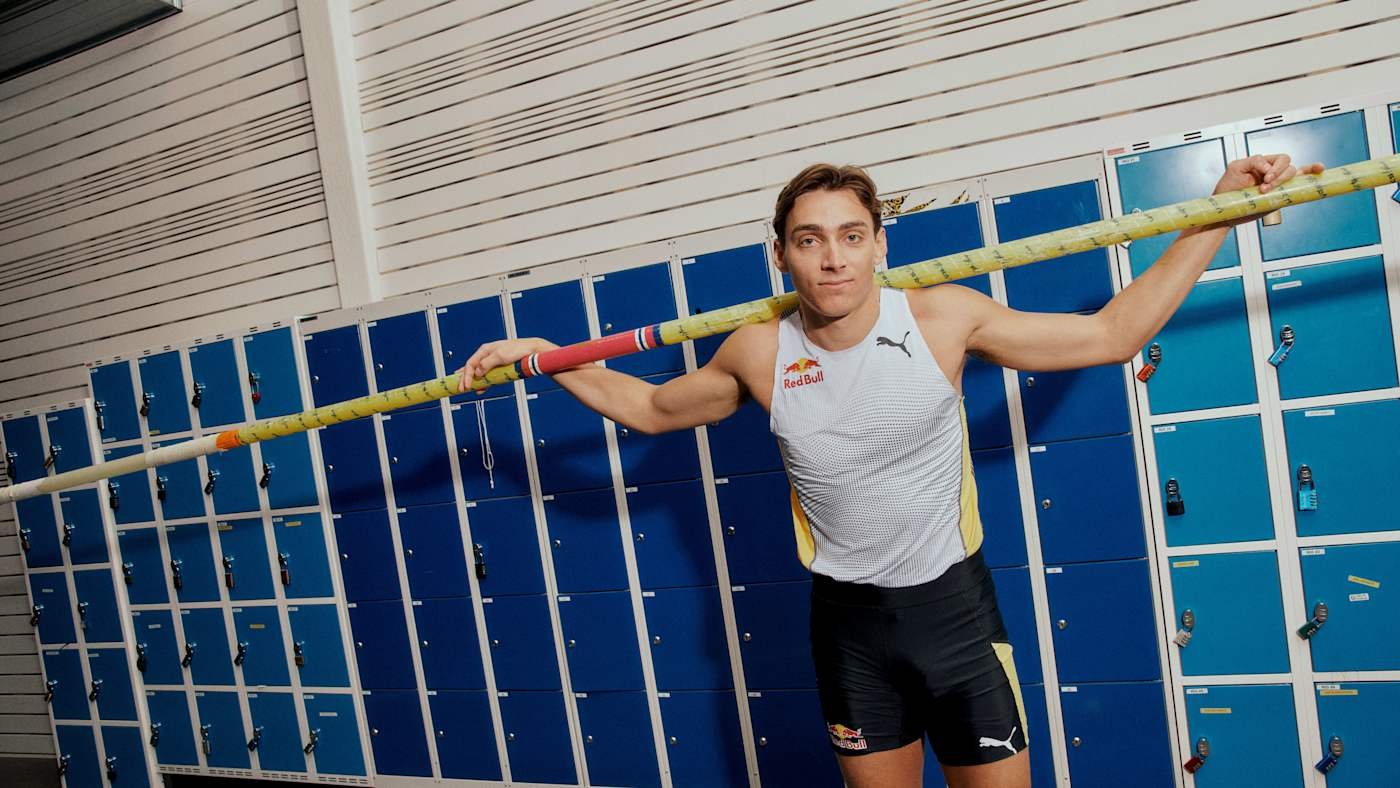
Duplantis’s documented preparation includes frequent sprint work alongside technical refinement. His parents, Helena and Greg, coach different aspects of his development. Their explanations emphasize that physical conditioning cannot replace vault practice: getting stronger and faster can change the pole selection and the demands of the event.
That is a useful corrective to the idea that elite athletes simply find the perfect workout and repeat it forever. An improvement can create a new coordination problem. The athlete has more physical capacity, but the timing has to catch up. It is similar to learning to control a heavier implement: the old rhythm may need adjustment rather than more effort.
The suspended and inverted positions in pole vault also make body control visibly important. Calisthenics offers familiar examples of strength expressed through position, although a controlled pull-up or support hold is not a substitute for learning the vault. You can use straightforward pushing, pulling and trunk exercises for your own strength goals without claiming that they recreate an Olympic movement.
Our guide to bracing, carries and practical core training develops that supporting-work idea. Choose exercises you can perform and progress reliably. Rings, a suitable pull-up station or adjustable weights are possible tools for general training; none of the equipment below is presented as Duplantis’s personal setup or a shortcut to his results.

Equipment Worth Exploring
Explore equipment, accessories and gear from our carefully selected range.


Power Tower
Freestanding pull-up and dip station with adjustable handles for bodyweight training.


Cast Iron Kettlebells
Textured cast-iron kettlebells for swings, squats, carries, and full-body training.


Borrow a training principle before borrowing a workout
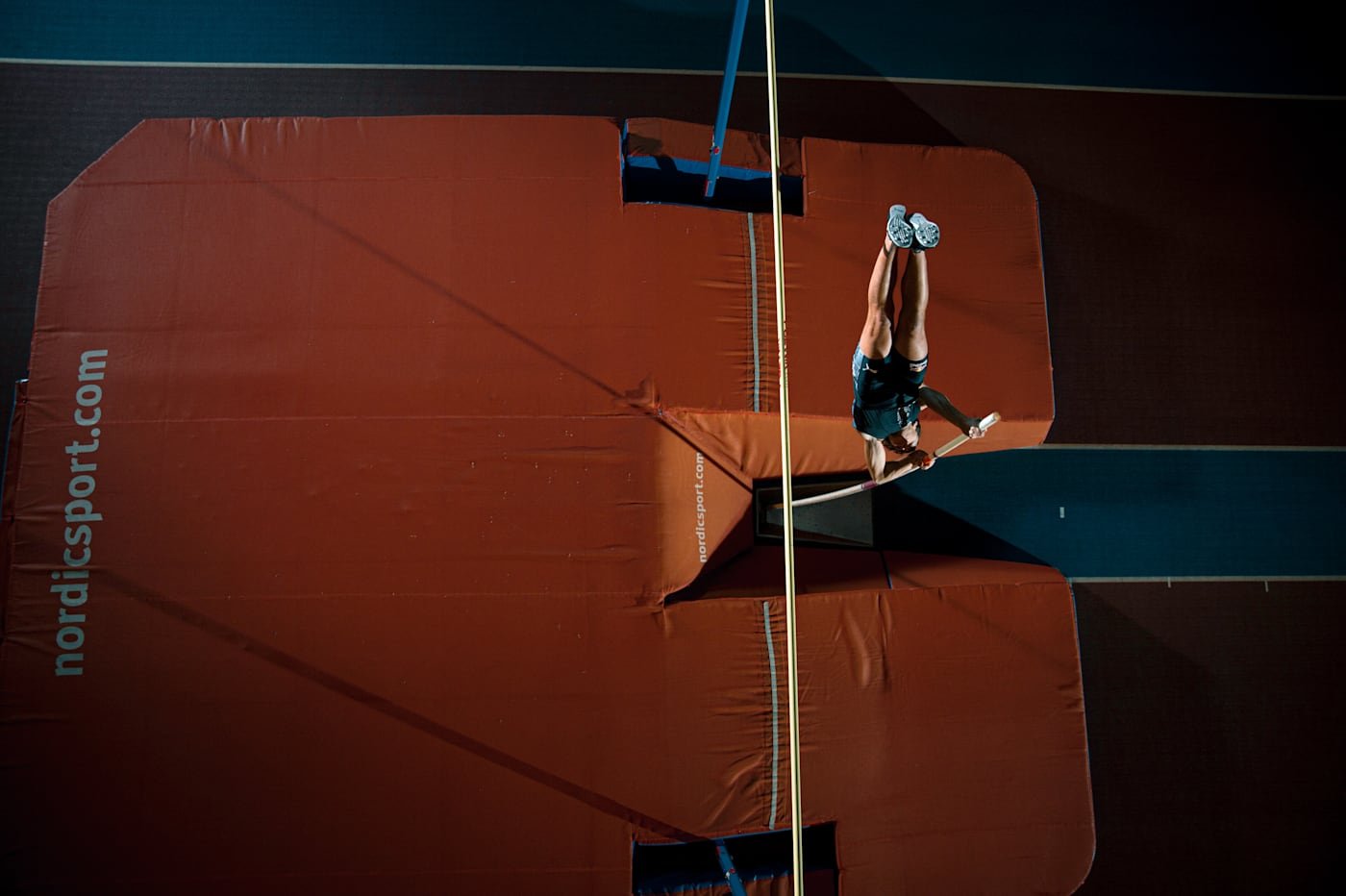
A celebrity training clip usually reveals one session or one piece of preparation. It rarely gives the full progression, coaching decisions or adjustments that made the session appropriate. With Duplantis, the most useful takeaway is to keep a relationship between physical preparation and the skill you want to improve.
For example, suppose your goal is a cleaner bodyweight pull-up. You might track strict repetitions while practicing a consistent start and finish position. Adding a controlled row could support that goal, but an improved row does not automatically mean the pull-up has improved. Test the actual task. If the goal is a faster short run, record the distance, surface and timing method instead of using general tiredness as the score.
Change one manageable part of the plan at a time. If you simultaneously add sprinting, more lifting, demanding calisthenics and extra conditioning, it becomes difficult to tell which change helped or simply made you tired. Keep enough of the week familiar that you can interpret the result. A simple training log can be more useful than collecting another impressive exercise.
Be equally careful with a branded athlete workout. A public session promoted with Duplantis in April 2020 was a 30-minute lower-body and core event, explicitly separate from teaching pole vault. Its existence does not establish his full elite program. Use an accessible session for the purpose it actually serves, and seek qualified coaching and proper facilities if you want to learn vaulting itself.

Calisthenics Shirts & Street Workout Gear
Calisthenics and bodyweight-training gear for pull-ups, dips, handstands and street-workout athletes.

Pull Up or Shut Up Hooded Pullover for Calisthenics Pul Hoodie
Keep it laid-back with a little “Pull Up or Shut Up” attitude.

Always Pull Yourself Up Calisthenics Decal for Water Bo Sticker
A fun “Always Pull Yourself Up” touch for bottles, laptops, and lockers.

Calisthenics Heartbeat Crewneck Pullover Sweater for Hu T-Shirt
Add a playful “Calisthenics Heartbeat” touch to your casual rotation.

Calisthenics Heartbeat Hoodie
Keep it laid-back with a little “Calisthenics Heartbeat” attitude.

Pullups Heartbeat Tank
Train hard, laugh a little, and rep “Calisthenics Pullups Heartbeat”.

Be Stronger Than Your Excuses Funny Gym
Bring “Be Stronger Than Your Excuses” humor to your everyday gym style.

Calisthenics – Meme & Lovers – Top & Gains T-Shirt
Heavy lifts, good laughs, and a little “Calisthenics” energy.


Record heights reward a long process
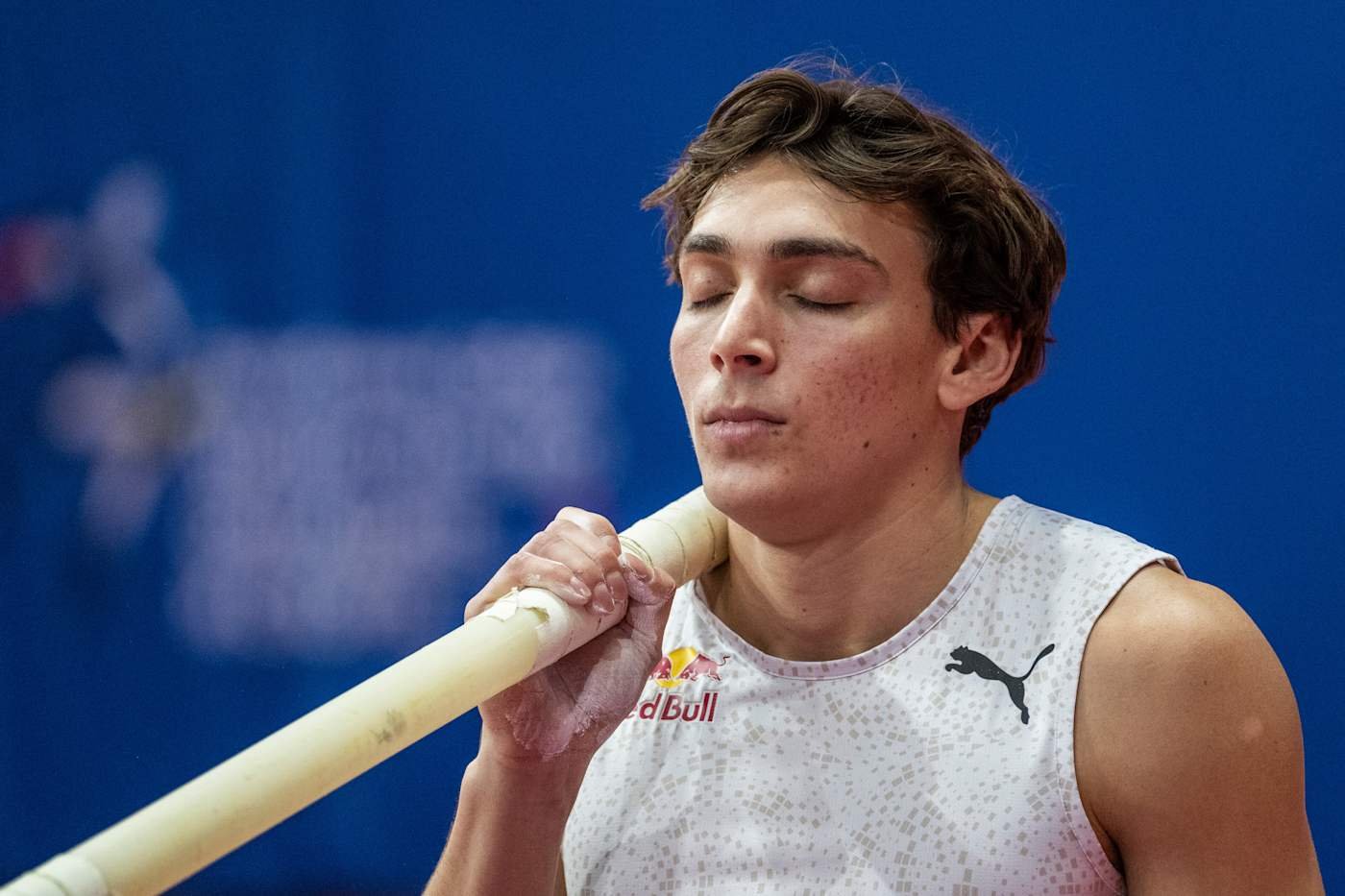
Duplantis’s competitive history puts the spectacular moments in perspective. He was already a world youth champion in 2015, won the NCAA indoor title during his 2019 college season and took Olympic gold in Tokyo in 2021. At the Paris Olympics on 5 August 2024, he won again and cleared 6.25 metres. That height is a dated Paris result, not a claim about today’s world record.
The sequence is useful because it prevents a misleading before-and-after story. A short compilation can make elite performance appear to arrive through a newly discovered exercise. Years of skill acquisition and competition are much harder to show in a few seconds. An athlete may change one part of preparation while drawing on an enormous foundation that the viewer never sees.
Apply that perspective to your own next block. Choose a result you can describe, such as a repeatable set of controlled pull-ups or a consistently timed short run. Decide what evidence would count as improvement, keep the conditions reasonably stable and review what actually happened. A missed target can still reveal whether the limiting issue was strength, execution or an unrealistic progression.
Duplantis’s example is compelling because strength, speed and skill meet in one visible attempt. Your useful version can be much less dramatic: develop a physical quality, practice the task that needs it and check whether the two are connecting. There is no need to imitate his apparatus, bodyweight or weekly workload to take that lesson seriously.