Advertising disclosure: This page includes affiliate links that may earn us a commission at no additional cost to you.
A jerry can is an unusual alternative to a dumbbell for loaded carries. The narrow body, single handle and different available loading systems can make it useful for strongman training, functional fitness or a home gym where a dedicated farmer’s carry handle is not the obvious choice. But the Rogue JC range includes substantially different implements: solid cast weights, a loadable cast shell, a water-filled plastic can and a flexible sandbag.
Here is how the models differ, based on their published specifications rather than hands-on testing. The practical buying question is not simply how heavy the can can become. It is how much weight you can actually start with, how precisely you can progress it, and whether the handle and footprint fit your training space.
Fixed cast jerry cans: a dedicated implement for repeatable loads
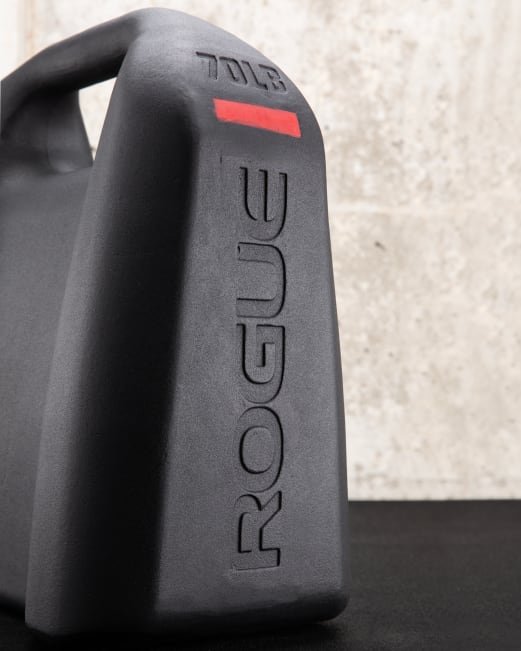
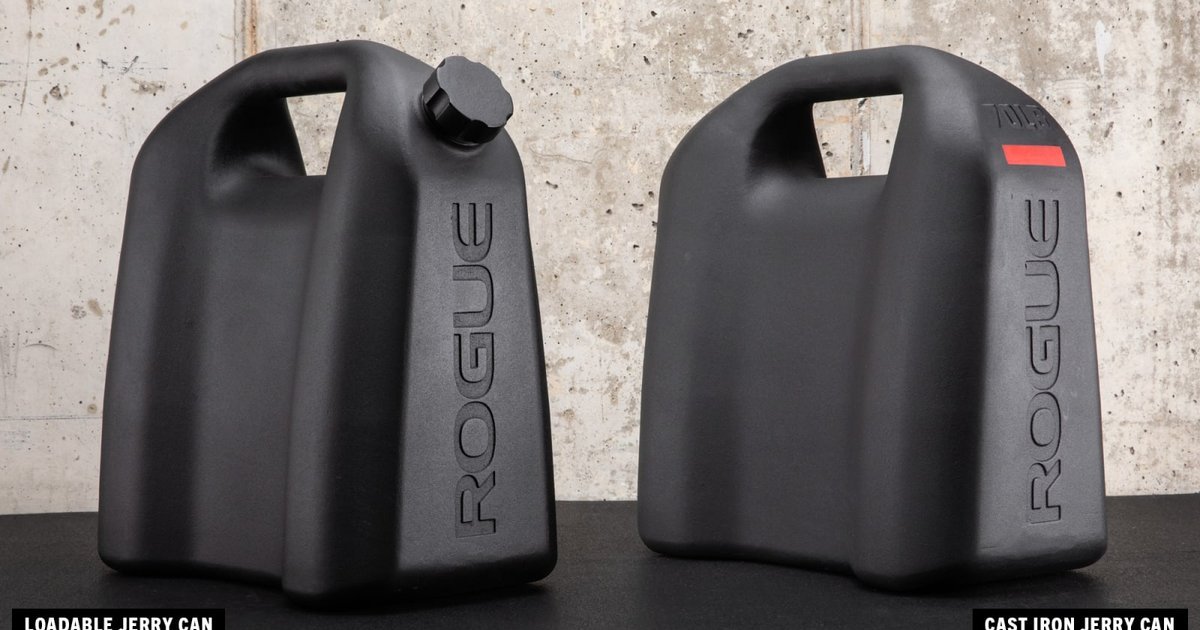
The fixed Rogue JC Cast Jerry Cans are shaped like fuel cans, but their purpose is to put a known training load into a compact implement with a single top handle. They are sold individually in 12 fixed weights spanning 35 to 250 pounds. That is a substantial range: a beginner using one 35-pound can and an experienced strongman using a heavy pair are effectively buying different training tools, despite the shared outline.
The top handle is specified at 1.5 inches in diameter. That is notably thick relative to many everyday dumbbell handles and can change how quickly the fingers and forearms fatigue. Handle diameter is particularly relevant for people with smaller hands. Do not treat a personal best with a conventional dumbbell as a guaranteed starting weight on a jerry can. Even at identical scale weights, grip comfort, clearance and the position of the load relative to the hand can change the exercise.
The cast design has a flat machined base. The listed footprint is approximately 15 inches long and 8 inches wide, with the lightest version slightly narrower. The 35-pound version is also shorter than most of the heavier models. Those dimensions matter in a narrow garage or apartment gym: measure the storage spot and then measure the route you will actually walk. A weight can fit on a shelf yet be awkward to carry through a doorway or around a rack.
Fixed cans make the most sense when an athlete already knows the weight range they need. There is no filling, weighing or adjustment between sessions, and another athlete can use the same pair with the same nominal load. However, purchasing two identical cans doubles the purchase quantity, and collecting multiple pairs takes space. Check the individual weight markings rather than relying only on the stripe color, particularly if the gym stores several heavy sizes together. A mismatched pair is not a good way to discover that the two sides are loaded differently.
Fillable cast cans: flexibility comes with a starting weight
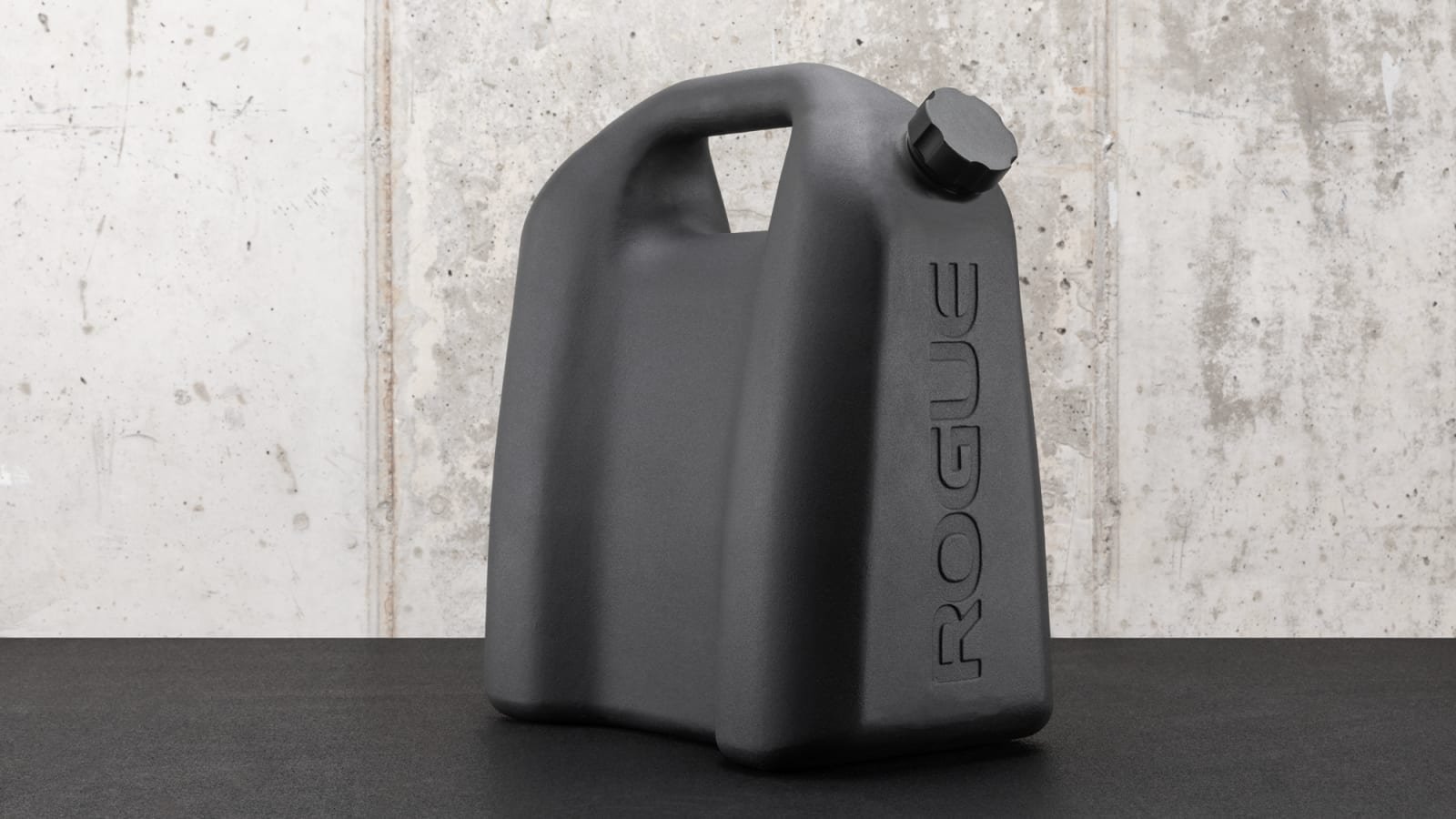
The fillable cast version addresses the biggest limitation of a fixed can: buying another complete implement every time you want a different training load. The manufacturer lists this version at 50 pounds empty, with dimensions of approximately 15 by 8.41 by 16 inches. Sand can bring its total weight to roughly 100 pounds, depending on the material and packing. That is the useful distinction for a typical buyer: the empty shell is already a serious carry weight, rather than a lightweight container you can gradually build up from nothing.
Start by asking whether 50 pounds per hand is comfortably manageable. A pair of empty shells represents 100 pounds in total before any filler has been added. Someone who is currently doing 25-pound dumbbell carries may be better served by a different implement, even if the loadable version seems like the most economical long-term purchase. Conversely, an athlete working consistently around 50 to 100 pounds per hand may benefit from being able to make smaller changes rather than jumping to a new fixed pair.
Use only a filler that the manufacturer specifies as suitable, and follow its filling and closure instructions. Sand is a practical choice for ordinary training. The usable capacity is not a promise that every type of sand will produce the same final weight. Weigh each assembled can independently with a suitable scale and write the actual measured total into your training log. If you make a matched pair, check both rather than assuming the same number of scoops produces identical loads.
Adjustability also has a time cost. Repeatedly opening, filling, weighing and closing an implement is less convenient than selecting a dumbbell from a rack. A loadable can works well when you keep the same setup for several weeks and change it at planned progression points. It is less appealing for a busy gym in which athletes need different weights every few minutes. Inspect the handle, body and closure regularly, and lower the implement deliberately instead of treating a carry as a dropping event.
Water-filled jerry cans: a lighter and more portable alternative
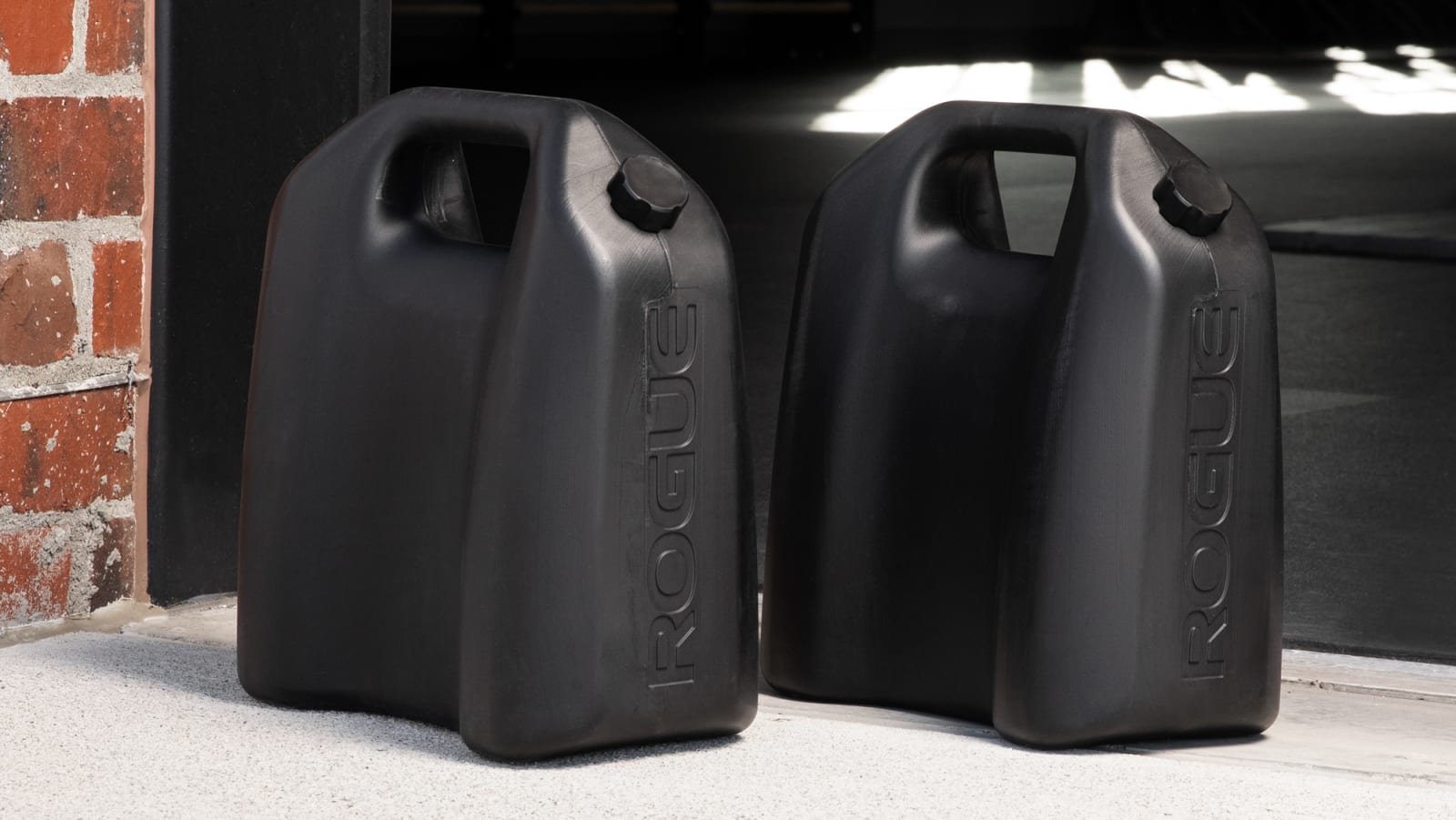
The Rogue JC-40 is a separate product, not a lighter version of the cast shell. It is a high-density polyethylene container designed for water filling. Its listed empty weight is about 3.35 pounds, and the full implement is approximately 40 pounds. This is a completely different starting range from the 50-pound empty cast version.
Water offers a convenient advantage when you train in different locations. An empty container is easier to transport than a solid iron weight, and a partially filled can allows an athlete to work below the full weight. But the physical experience is different. Liquid moves when the container accelerates, stops or turns. A partially filled can may therefore feel less predictable than an equally heavy fixed weight, particularly if the athlete changes direction abruptly. That is a practical consideration, not evidence that the product builds more muscle.
For a first session, fill both cans to a comfortably manageable amount, close them according to the product instructions and weigh them. Use a straight, unobstructed lane and walk at a controlled pace. If the water movement repeatedly interrupts the stride, slow down or choose a more stable loading arrangement. Avoid deliberately exaggerating the sloshing while learning the carry. The point is to control the load rather than to make every step a surprise.
The water-only specification should be respected; a plastic water container is not interchangeable with the fillable cast model. Do not assume that a denser filler, a heavier total load or repeated impacts will be compatible with its design. For a shared gym, also consider the practical consequences of a leak: an implement should be dry on the outside, secure at the closure and used on a surface that can be kept clear and non-slip.
Sandbag jerry cans: a softer implement with a different feel
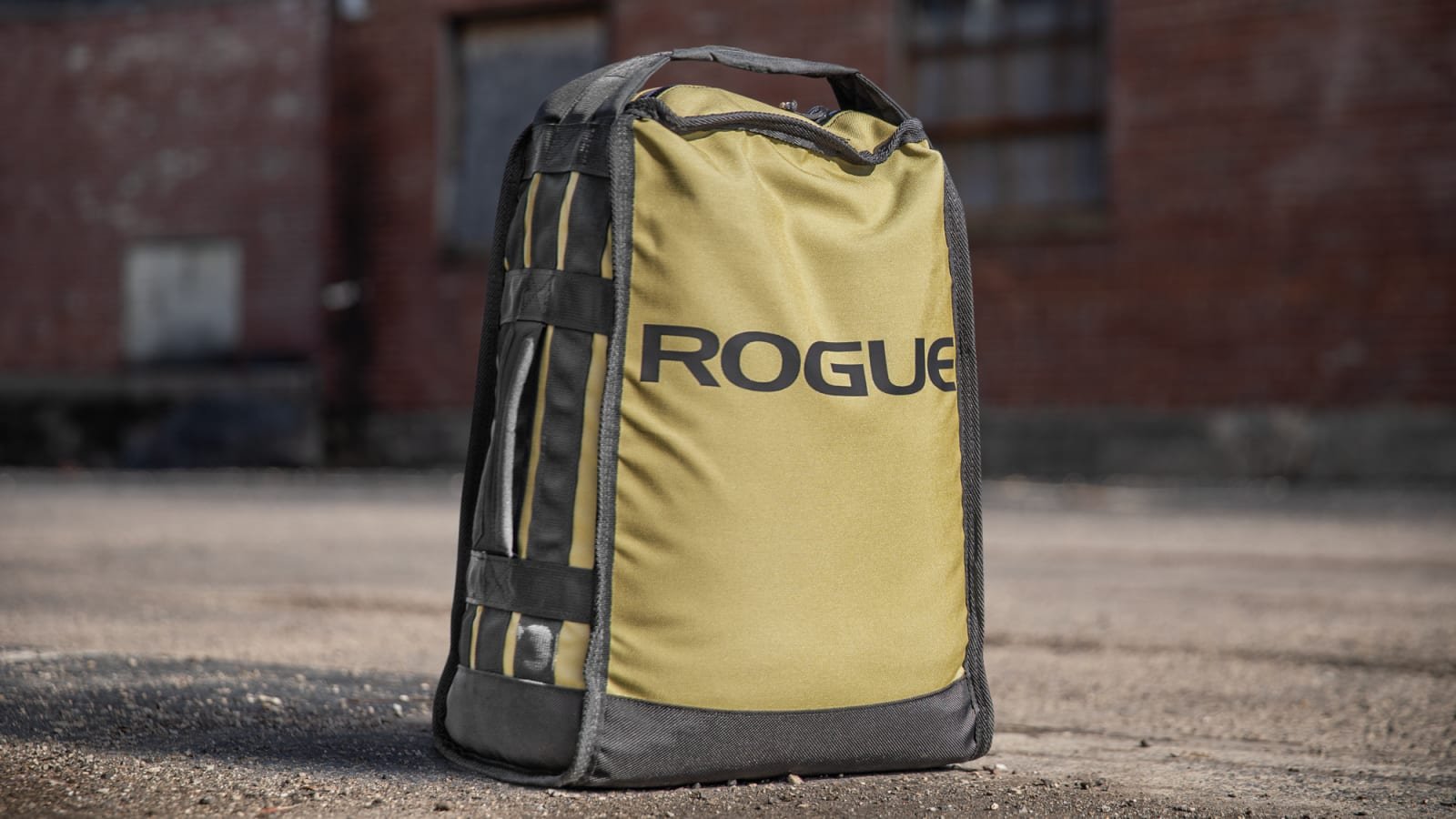
The JC-100S sandbag is another distinct option. Its flexible Cordura construction and top handle retain the general idea of a narrow carry implement without the rigid cast body. The published empty weight is about 1.85 pounds, with an approximate capacity of 100 pounds when filled with sand or 40 pounds with crumb rubber. Those figures reflect different filler densities, so verify the actual assembled weight rather than treating the model name as a measurement.
A fabric bag changes the interface between the hand, body and implement. It can deform slightly and the filler may settle differently during use. That can be helpful for athletes who want a softer implement, but it also means that a session with a flexible bag is not an exact reproduction of a fixed cast carry. A rigid can and a soft bag of equal mass can hang and contact the leg differently. Neither is intrinsically better; the relevant question is which one lets you train the movement you want to improve.
For mixed conditioning sessions where many athletes share equipment, adjustable bags can provide a wider accessible starting range than a 50-pound cast shell. For a strongman athlete who wants repeatable heavy runs, a fixed implement may be simpler. Dedicated farmer’s handles, dumbbells, kettlebells and an appropriate open trap bar can also cover much of the same general training territory. The jerry-can shape is a specialist option, not a prerequisite for effective loaded carries.
Think about your existing inventory before buying. If you already have a pair of heavy kettlebells and a safe route, you can begin training grip and walking under load immediately. Buy a jerry can because its compact profile, handle diameter or loading system solves a specific problem. The equipment should make the desired exercise easier to set up and progress, not simply create another object to store.

Equipment Worth Exploring
Explore equipment, accessories and gear from our carefully selected range.

Rubber Hex Dumbbells
Rubber-coated hex dumbbell pairs with a stable shape for home and commercial strength training.


Cast Iron Kettlebells
Textured cast-iron kettlebells for swings, squats, carries, and full-body training.


Open Hex Bar
Open-frame trap bar with multiple handles for deadlifts, carries, and lower-body training.

How to choose a carry weight and progress it
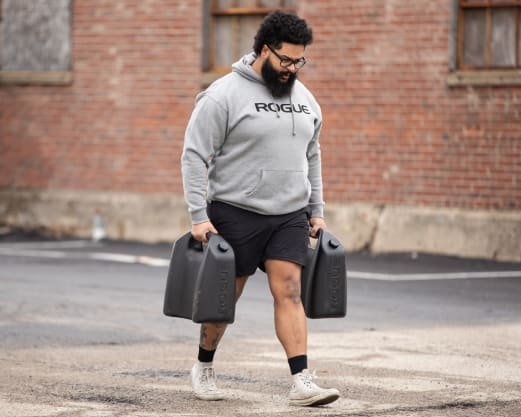
Loaded carries combine hand support with locomotion. A 2024 comparison of carrying and stationary holding tasks found that moving under load changed measured trunk-muscle activity. A separate gait experiment with 19 adults examined how a load carried on one side changes walking mechanics. These findings help explain why a one-handed suitcase carry and a two-handed farmer’s carry are not interchangeable, even though both use the same implement. Neither experiment tested Rogue jerry cans or established that a particular handle shape produces superior long-term results.
Strongman biomechanics research also makes clear that event-specific equipment and technique matter. When training a competition carry, match the event demands as closely as practical. If you are using jerry cans for general fitness, prioritize repeatable distance, stable walking and a manageable grip challenge rather than chasing somebody else’s maximal load. Our farmer’s carry versus hold guide explains how walking and standing under the same load serve different training purposes.
Choose a starting weight that permits three controlled walks of around 15 to 20 metres, with a comfortable margin before grip failure. Begin with a straight route. Lift the implements under control, walk upright without forcing a shrug, and set them down without dropping them. For a one-sided carry, repeat the same load and distance on the other side. Keep your breathing steady and stop if you become dizzy or cannot maintain control. A short carry is not a competition against the clock unless that is a deliberate and appropriate training goal.
For the next two or three sessions, keep the weight the same and extend each walk by a few metres only if posture, pace and grip remain consistent. Then increase the weight modestly and shorten the distance again. If you train grip after deadlifts or rows, use a lighter carry so that accumulated fatigue does not turn a simple walk into a failed maximal effort. Record the actual weight per hand, distance, handle type and whether the load was fixed or fillable.
For most home gyms, the best initial purchase is the implement that covers the greatest useful range without unnecessary duplication. Pick the fixed cast cans if fast repeatability and very heavy loading are the priorities; choose the fillable cast model if its 50-pound starting weight suits you and you want controlled changes; choose the JC-40 if low empty weight and water filling matter; or choose the JC-100S if you want a flexible sand-filled alternative. If existing dumbbells or kettlebells meet the same goal, keep using them. The most useful carry tool is the one that fits your actual training, not the one with the biggest possible maximum weight.