Advertising disclosure: This page includes affiliate links that may earn us a commission at no additional cost to you.
A rowing workout can look short on paper and occupy most of your training window. The hard efforts attract attention; the preparation, recoveries and decisions between efforts are what make the session repeatable.
In a 2007 program written by trainer Logan Hood, Jason Statham’s rowing day used six 500m efforts with three-minute active recoveries, after ten easy minutes. This was a specific historical example, not his current routine.
The useful question is what that structure asks of you. Before borrowing an actor’s workout, decide whether you are practising a movement, completing controlled conditioning or testing your limits. Those are different appointments, even when the distance on the screen looks identical.
Count the whole appointment
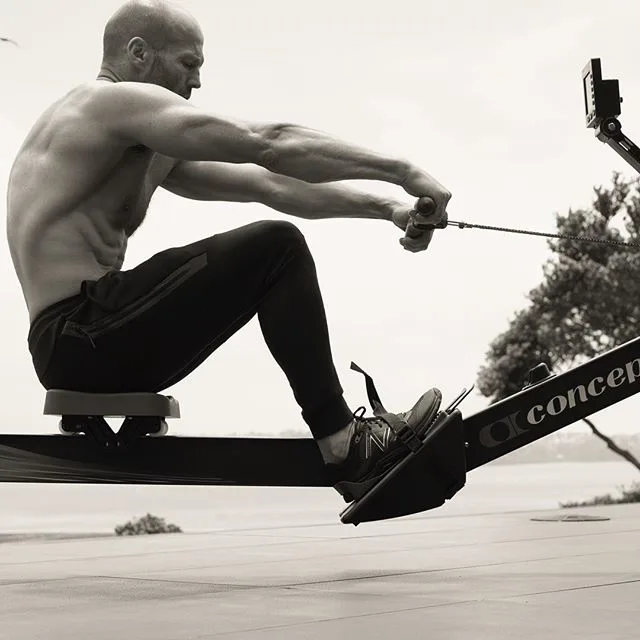
The work adds up to 3,000 metres. Five recoveries between those efforts add another fifteen minutes before you count the warm-up or any time spent actually rowing the work intervals. That arithmetic explains why this belongs in a planned session rather than being squeezed into a few spare minutes.
For your own training diary, separate work time from elapsed time. A monitor’s summary may describe the measured efforts, while your watch includes walking, drinking and adjusting the foot straps. Neither number is inherently wrong. They answer different questions, so label them before comparing two visits.
Imagine booking the rower for twenty minutes and discovering halfway through that you cannot finish the session as intended. Rushing the recoveries to meet the clock changes the task. Extending the visit might disrupt your next commitment. Writing the entire appointment down beforehand avoids turning a scheduling mistake into a supposed test of determination.
There is also a practical difference between an interval recovery and the recovery phase within each rowing stroke. One happens between work bouts; the other returns you to the front of the machine. Keeping those terms separate makes instructions much easier to follow.
Use a simple note before starting: today’s purpose, available time, planned work, recovery arrangement and stopping point. Leave room afterwards for what actually happened. A shortened session recorded accurately is more useful than a completed-session label attached to a different workout.
In a shared gym, also check whether stepping away means losing the machine. Agree on its use beforehand rather than discovering during recovery that somebody else has started a workout. Practical arrangements belong in the plan too.
Choose a pace that tells the whole story
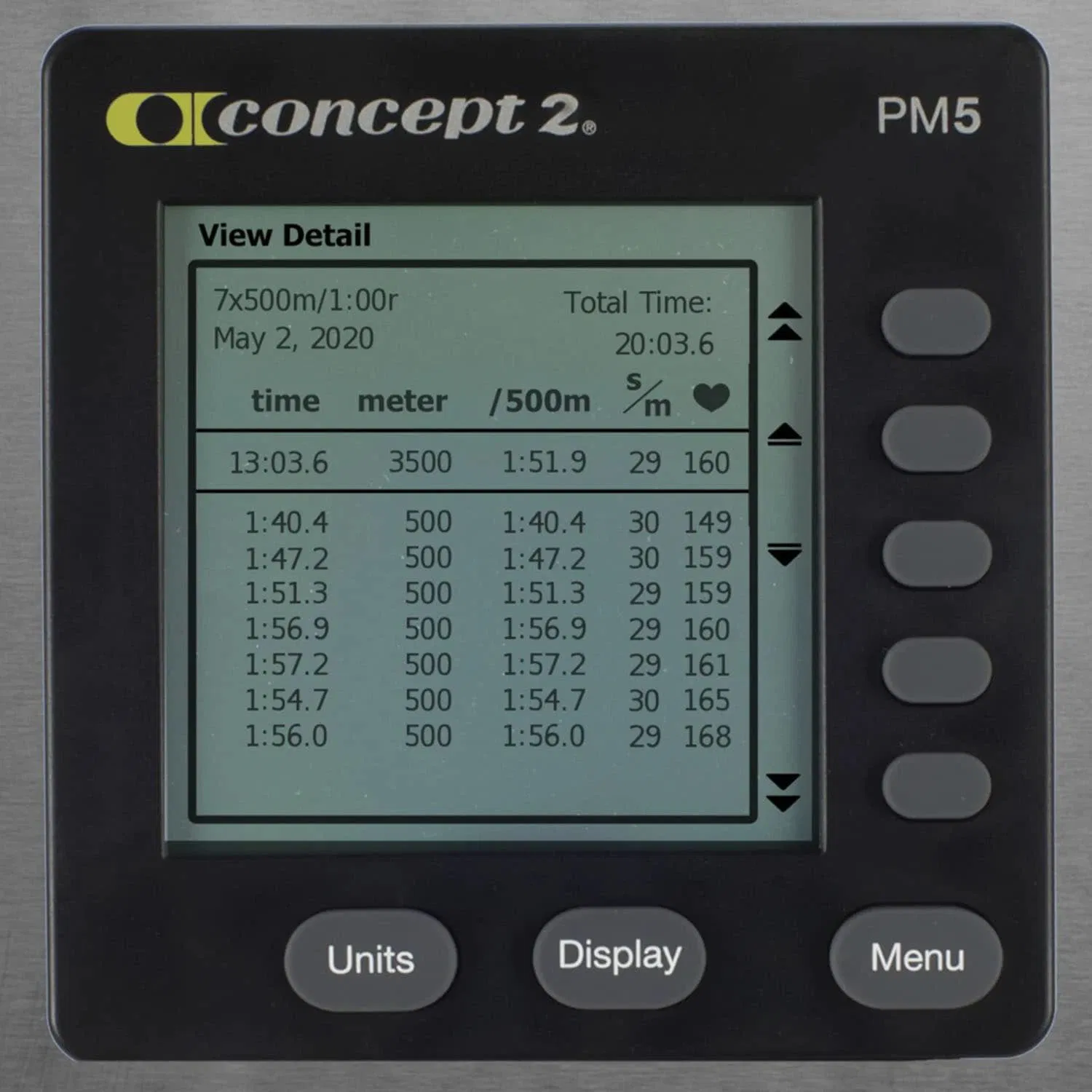
The monitor photograph illustrates an interval summary, not Statham’s results. Treat any athlete’s numbers the same way: first identify whose performance you are looking at, then ask whether the conditions and task match yours. A borrowed screenshot is not a personal target.
For a controlled conditioning session, an opening effort that leaves you able to repeat the intended movement is a sensible starting decision. That is a planning principle, not a universal pace prescription. Your own recent rowing experience gives a better reference than an action star’s training history.
Here is an invented comparison. One person completes equal-distance efforts in 2:10, 2:14 and 2:24; another records 2:16 three times. Both total 6:48. The average alone hides a very different distribution. These are arithmetic examples, not recommended standards or evidence that one strategy always wins.
Write down each result and a short effort note. Was the final effort deliberately faster, or did the opening effort make every later one a struggle? Were you working harder while the time became slower? Those observations help you decide what question to bring to the next session.
If the display itself is confusing, our guide to rowing splits, stroke rate and finish-time calculations explains the units. Understanding the screen is a separate skill from producing an impressive number on it. Learn both without pretending that one proves the other.
The optional cardio-themed clothing and accessories below are a bit of training humour. They are not equipment requirements, performance aids or products endorsed by Statham.

Cardio Shirts & Workout Gear
Cardio and conditioning gym gear for runners, endurance athletes and anyone who earns the sweat.

Rowing – Dost Thou Even Row Medieval Knight Crewneck fo T-Shirt
Show some gym-day personality with “Rowing”.

Anti Rowing Rowing Club Shirt – Meme & Top T-Shirt
Show some cardio attitude with a playful “Anti Rowing Rowing Club” tee.

Cardio Heartbeat for Runners, Cyclists, Rowers and Fitn Sticker
Give your everyday gear a playful “Cardio Heartbeat” twist.

Cardio Is Hardio – Workout Meme Vest Muscle Shirt For S Tank Top
Add some cardio attitude to training with “Cardio Is Hardio”.

Cardio Is Calling Decline Vest Meme Tank Top
Show some personality between sets with “Cardio Is Calling”.

Negative Cardio Review 1 Star Sweater Cardio Sucks T-Shirt
Show some gym-day personality with “Negative Cardio Review”.

Don't Quit Do It – Motivational Workout Hooded Pullover Hoodie
Show off your cardio humor in a laid-back “Don't Quit Do It” hoodie.

Death By Cardio Shirt Meme & Top T-Shirt
Bring “Death By Cardio” humor to your next gym day.

Straight Outta Shape – Out Of Shape Meme Decal Water Sticker
Bring “Straight Outta Shape” attitude to your water bottle or laptop.

Everything Hurts And I'M Tired Motivation Hooded Hoodie
Stay casual and show some cardio attitude with “Everything Hurts And I'm Tired”.
Keep the stroke recognisable as effort rises
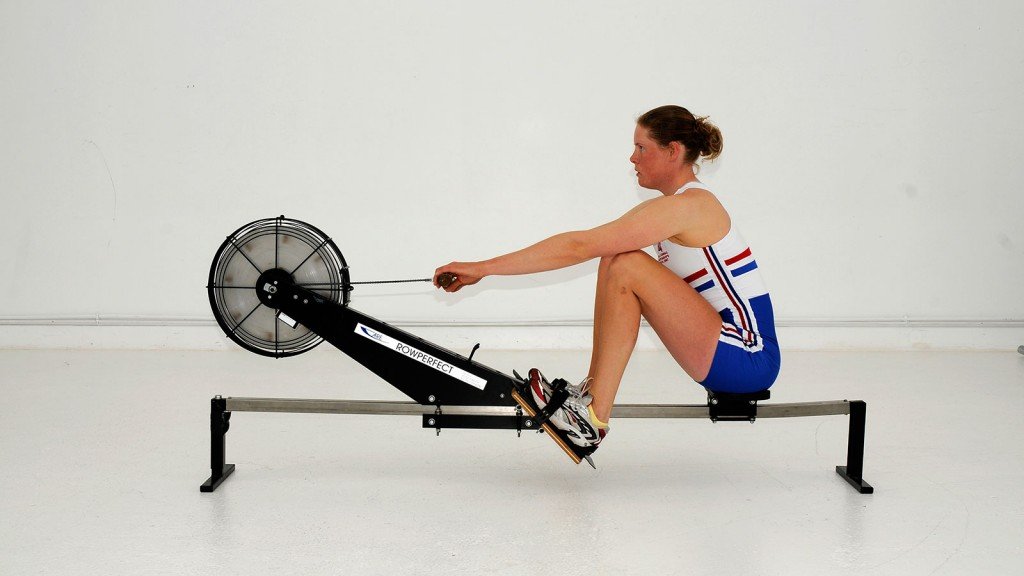
A faster-looking movement is not automatically a better stroke. The basic sequence starts with the leg push, continues through the trunk and finishes with the arms. On the return, send the arms away, tip forward from the hips and then bend the knees. Let the handle clear the knees rather than steering around them.
At the front, aim for a comfortable position with relaxed shoulders, long arms and a loose grip. Avoid reaching farther by collapsing the back. The technique photograph is an instructional rowing image; it does not document the actor’s historical session.
Before demanding a particular split, check whether you can repeat that sequence during easy rowing. Our rowing technique guide to the drive and recovery takes the movement apart in more detail. A coach observing your actual stroke can also answer questions a training article cannot see.
Choose one observation for the day. Perhaps you want to notice whether your hands clear your knees on the return. Keep that question small enough to remember between efforts. Trying to overhaul posture, breathing, grip, rate and pacing simultaneously makes it difficult to know what changed.
For the diary, distinguish what you observed from what you inferred. “My hands kept catching my knees late in the session” is an observation. “My conditioning is terrible” is a much larger conclusion. The first gives you a specific issue to review; the second may simply hide it.
Set the machine before chasing the score
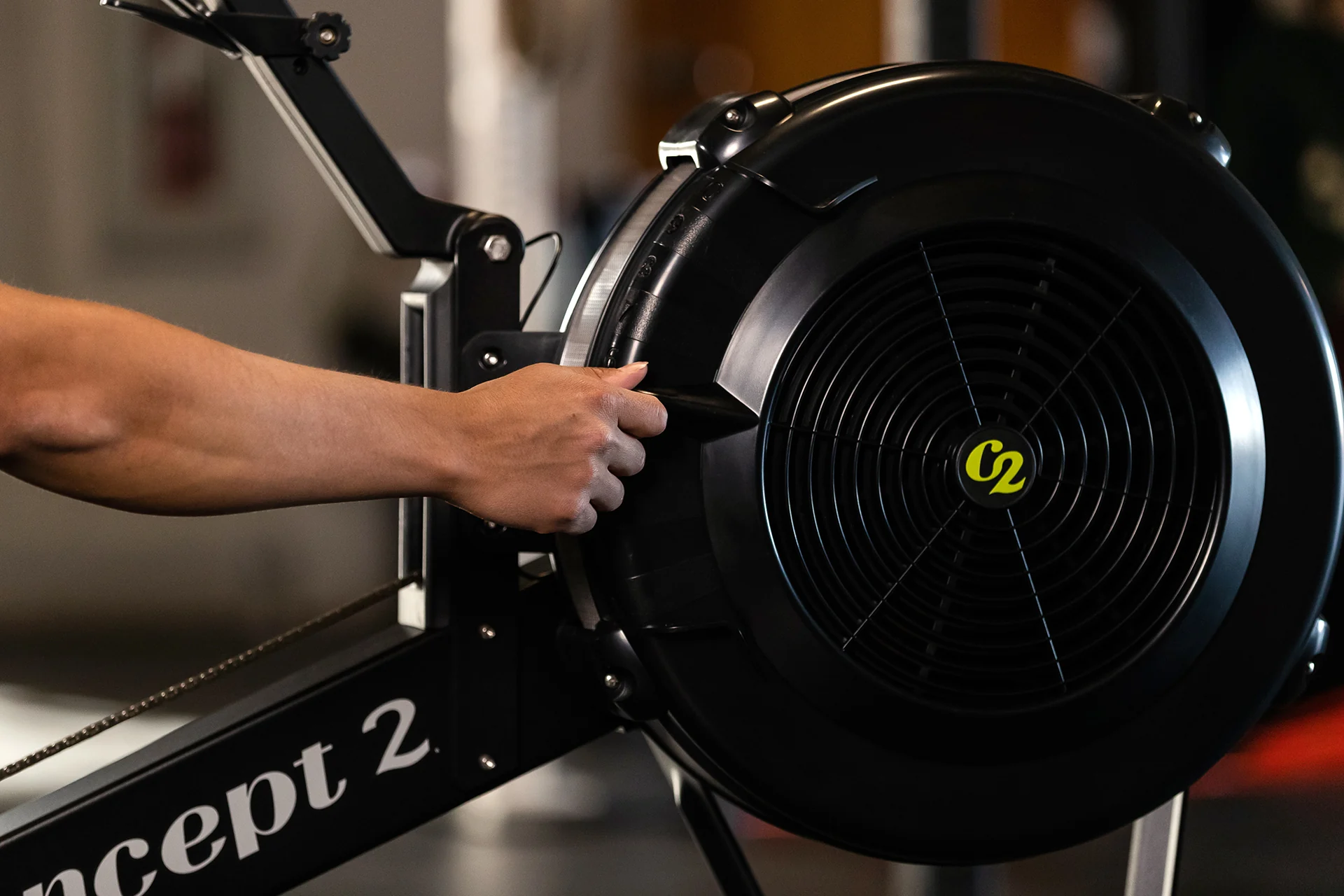
On a Concept2 air rower, the damper controls airflow into the flywheel housing. It changes the feel of the stroke; it is not a simple intensity dial. The work you put into moving the handle still matters. Moving the lever to the highest number does not automatically make a session more useful.
The monitor measures how the flywheel slows between strokes and uses that drag factor in its calculations. The same lever position can produce a different feel on another machine, including when maintenance or environmental conditions differ. Recording drag factor can therefore be more informative than writing only the lever number.
Start with a manageable setup and learn the machine’s instructions. The manufacturer suggests an initial damper setting around 3–5, with technique and personal response guiding adjustment. That range describes this type of machine; do not transfer it to every magnetic, hydraulic or water-resistance rower.
In your own repeatability checklist, note the model, setup and monitor settings before the work begins. If you change them midway, record that too. A comparison between two sessions becomes harder to interpret when an unrecorded equipment change is mixed with a deliberate training change.
You do not need to buy a different rower to make those notes. With only one machine available, the useful task is understanding its display and controls. With several available, choose deliberately rather than treating every distance readout as interchangeable.
Give the session a clear place in your week
Intervals combine work bouts with easier periods, and their difficulty can be adjusted through several variables. Distance, effort, recovery and total repetitions all contribute to the task. A celebrity example supplies an interesting structure; it does not tell you which combination fits your current preparation.
If rowing is new, make learning the machine a separate visit before deciding whether a demanding interval session belongs in your training. If you already row regularly, use your recent log and overall schedule to decide how ambitious to be. There is no need to turn the first attempt into a maximum test to make the visit count.
Consider two hypothetical diary entries. One says, “Hard rowing after a demanding lower-body session; final efforts shortened; next lifting session felt unusually difficult.” The other says, “Rowing on a separate day; planned efforts completed; normal lifting session afterwards.” Neither proves cause and effect, but together they give you a concrete scheduling question to investigate.
Change one thing deliberately at the next comparable visit. You might preserve the planned effort and allow more calendar space, or choose a less demanding session while you practise the movement. Record the choice as your adaptation. Do not present a modified workout as an exact recreation of somebody else’s program.
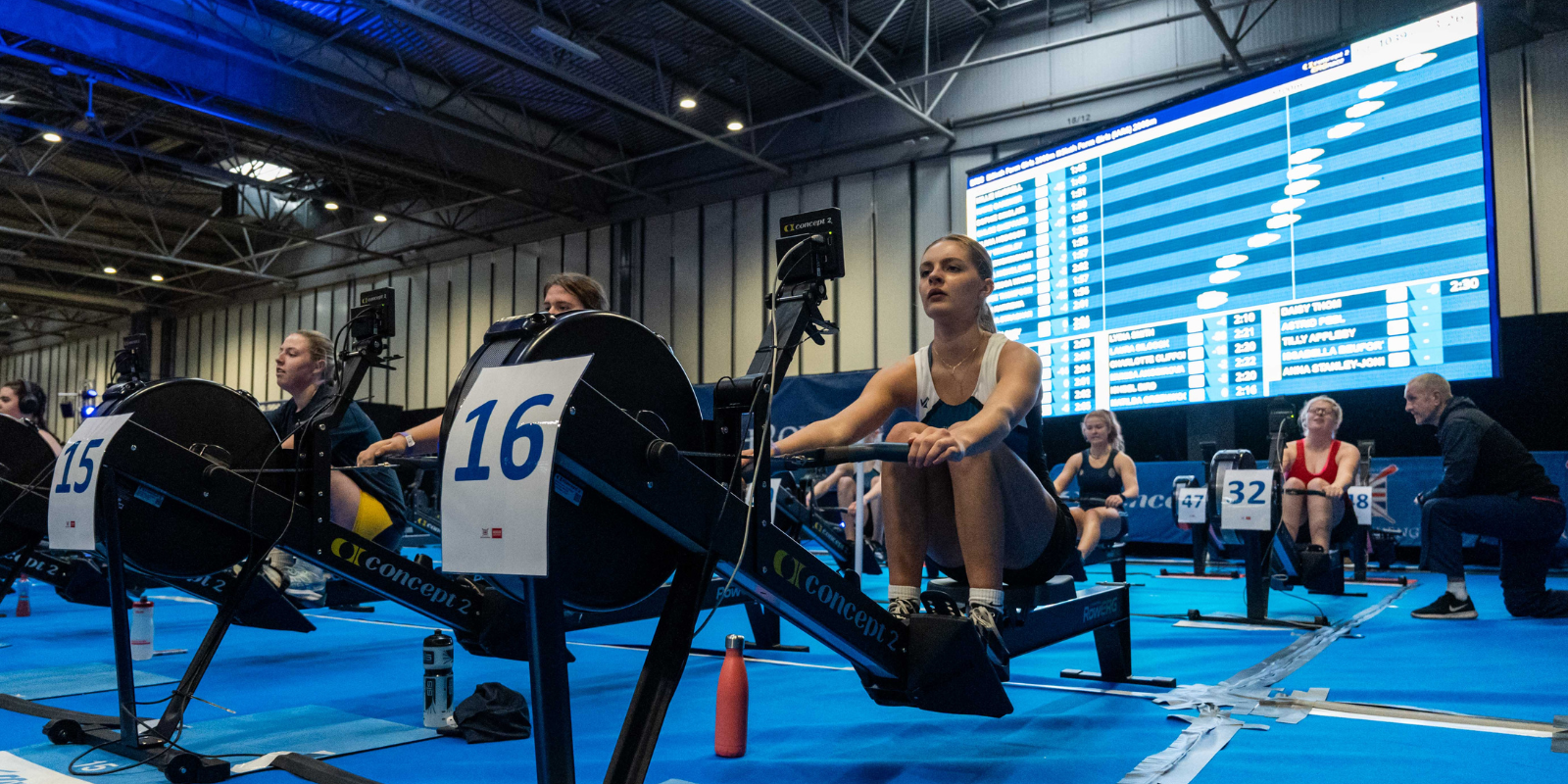
The race photograph above shows competitive indoor rowing, not a standard you must match. It is a useful reminder that the machine serves different purposes. Preparation for competition, general conditioning and a short technique practice can all involve rowing while requiring different decisions.
Finish the diary with what you would repeat and what you would change. A clear purpose, an honest record and a manageable next step make a historical workout useful long after the celebrity headline has caught your attention.