Advertising disclosure: This page includes affiliate links that may earn us a commission at no additional cost to you.
A set of 20 curls with barely enough time to catch your breath feels nothing like eight heavy repetitions followed by three minutes of recovery. One leaves your sleeves tight and your forearms burning. The other gives you time to reset your grip, then asks for another genuinely challenging set. Which approach makes your arms grow? The useful answer is not that one sensation wins. A small eight-week experiment compared these two combinations and found that both increased upper-arm muscle size. The results are worth examining, especially if you have been judging the quality of arm day by how swollen your biceps look on the walk home.
What the eight-week comparison actually tested
The 2018 journal report, first available online in December 2016, assigned 20 participants to two resistance-training protocols. Ten used a load corresponding to a 20-repetition maximum and rested 30 seconds between sets. Ten used an eight-repetition maximum load and took three minutes. Training volume was matched by the investigators. Before and after eight weeks, MRI scans assessed the cross-sectional area of the upper arm. That measurement is much more informative for growth than a photograph taken immediately after the last set.
The average increase was 9.93% in the short-rest, lighter-load group and 4.73% in the long-rest, heavier-load group. Both groups improved significantly relative to their starting values. The spread of individual responses was substantial: the standard deviations were approximately 4.86 and 3.01 percentage points, respectively. These are group averages, not an expected increase in the circumference of your own arm. Cross-sectional area and circumference are not interchangeable measurements. The abstract reports significant changes within each group; it does not establish that the numerical difference by itself proves a superior treatment effect between groups.
Most importantly, two programming variables changed together. A comparison between 20-repetition and eight-repetition loads alone would require the same rest duration. A comparison of rest durations alone would require the same loading prescription. Matching training volume does not erase differences in repetition count, proximity to fatigue or the demands of individual sets. With only ten people per condition, it is sensible to treat this as a useful experiment rather than a universal prescription. Its strength is showing that a demanding lighter-load approach can produce meaningful measurable growth, not proving that everyone should abandon heavy curls or rest exactly 30 seconds.
A bigger pump is not the same thing as more muscle
The lighter protocol also produced a striking immediate response. Only that group showed statistically significant acute increases in growth hormone and measured muscle thickness. The researchers did not find a significant association between the immediate growth-hormone response and the eventual increase in upper-arm cross-sectional area. That detail is more important for a gym routine than any impressive hormone percentage. A temporary systemic response is not a reliable scorecard for the muscle tissue you will build over two months.
During a demanding set, repeated contractions and changes in local blood flow can make the working muscle appear fuller. Fluid shifts contribute to that temporary increase in thickness. The sensation can be enjoyable and can help you notice whether a movement is loading the intended area. It is still a different phenomenon from the durable adaptations that accumulate after repeated training and recovery. A sleeve that fits tightly for an hour does not establish how much muscle you have added.
Conversely, a heavy set can feel relatively unremarkable from a pump perspective and still be productive. Imagine finishing eight controlled curls with just one more repetition available, putting the dumbbells down and resting long enough to repeat the same quality of work. You may never experience the burning sensation of a continuous high-repetition sequence, yet the target muscles have been challenged. Do not add endless finisher sets simply because that workout felt less dramatic.
A pump is best treated as feedback about an exercise, not the objective of every exercise. If a cable curl feels almost entirely in your wrist or lower back, it is worth examining the setup. If your biceps feel loaded but the pump fades by the time you leave the gym, that alone is no reason to change the program. Let repeatable performance and longer-term measurements determine whether the exercise stays.
Where heavier sets still earn their place
Other resistance-training research helps put the eight-week result into perspective. A separate experiment in trained men compared one-minute and three-minute rest intervals while keeping the exercise program otherwise comparable. Longer breaks supported stronger improvements in maximal strength and greater growth at some measured sites. A broader review of load comparisons found that muscle growth can be similar across different loading ranges when sets are taken to failure, while heavier training generally favors improvements in maximal strength. A review specifically examining rest intervals also found that both short and longer breaks can support hypertrophy, with some indication that longer rest may benefit experienced lifters.
The studies are not interchangeable. Their participants, exercises, volume prescriptions and measurements differ. Taken together, they make a strong case against a rigid rule that a muscle must burn or that you should never rest longer than a minute. If the next set matters, your break should leave you capable of performing it with the intended technique and effort. Longer recovery may be especially useful when you are pursuing a strength target or training several demanding sets of the same movement.
Heavier does not mean reckless. An eight-repetition curl should still be a curl rather than a series of hip thrusts and shoulder swings. Keep the exercise variation stable, choose a comfortable grip, and lower the weight under control. A neutral grip may suit a lifter whose wrists dislike a fixed straight bar; an angled curl bar or independent cable handle gives another option. The best load is the one you can use to challenge the intended movement without having to invent new technique halfway through the set. If a particular exercise causes sharp or persistent pain, stop and modify it instead of trying to train through it.
Equally, a 20-repetition set does not need to be performed with a trivial load. It should become demanding toward the end while preserving the intended range. The first few repetitions of a lighter set may feel easy; that does not mean the entire set will be. Choose a load that makes the last few repetitions challenging, rather than performing dozens of comfortable repetitions just to increase the counter.
Build a session around both kinds of effort
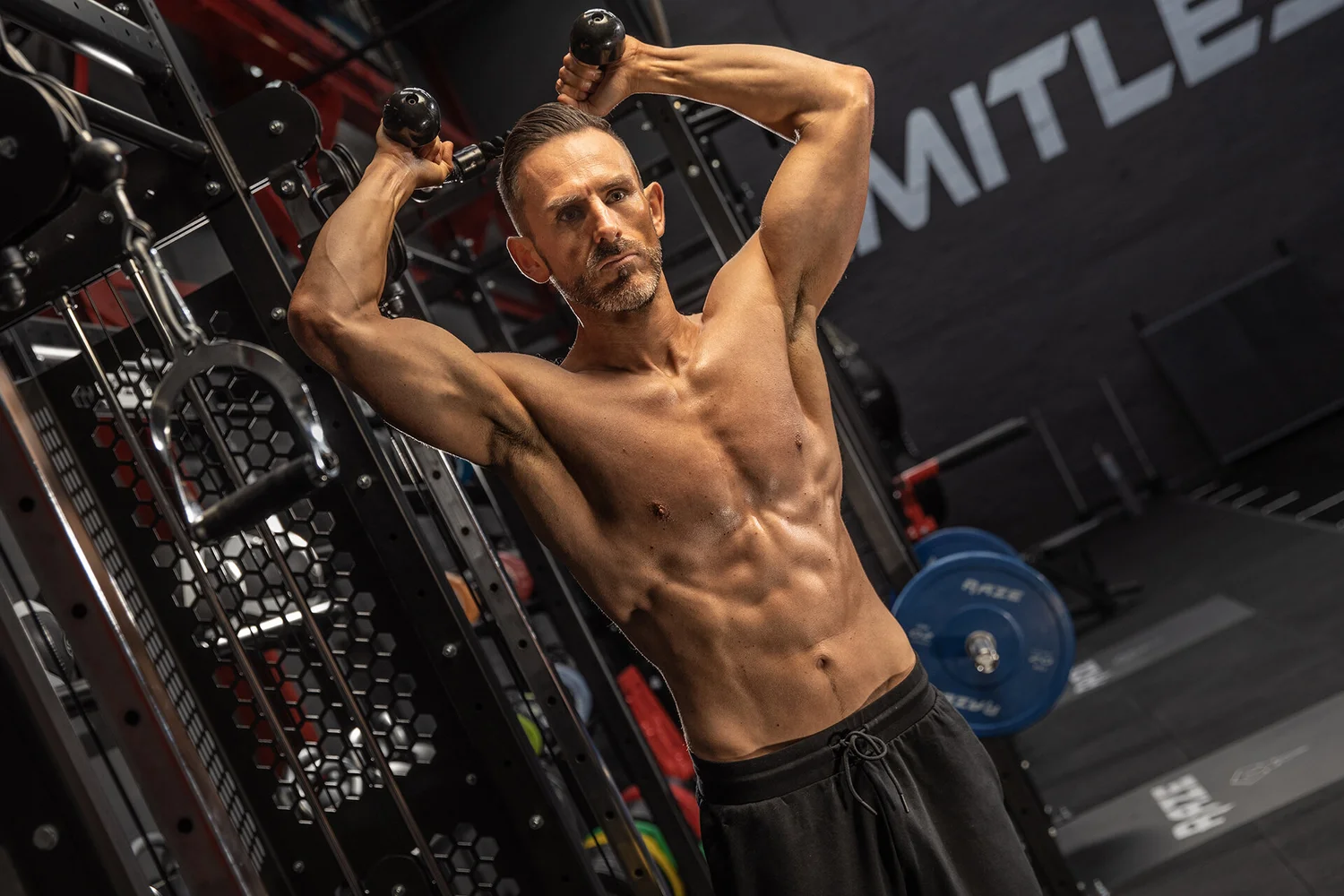
For a practical arm session, use the heavier work first while you are fresh, then use a lighter variation to accumulate additional challenging repetitions. This is an independent training example, not the exact study protocol. The starting ranges below leave room to adjust to your training history and the demands of your other pressing and pulling work.
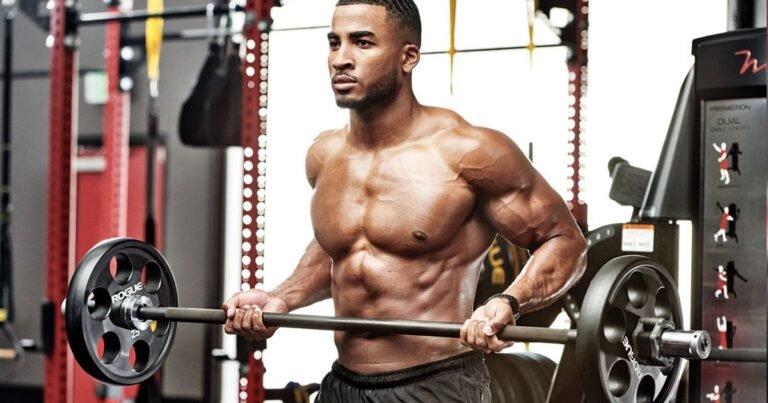
- EZ-bar curl: Two or three sets of 6–10 repetitions with two to three minutes between sets.
- Overhead cable triceps extension: Two or three sets of 8–12 repetitions with around two minutes of rest. Set the pulley and grip to allow a comfortable elbow path.
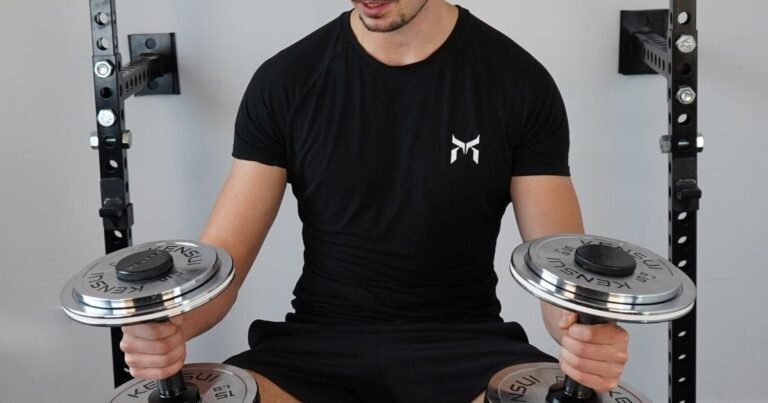
- Independent dumbbell or cable curl: Two sets of 12–20 repetitions, resting 60–90 seconds initially.
- Rope pressdown: Two sets of 12–20 repetitions, using approximately 60–90 seconds or more if the next set deteriorates.
Start with roughly one to three repetitions in reserve rather than taking every set to failure. If a short-rest isolation set is enjoyable and you can maintain good movement quality, try shortening that particular break on a later session. If repetition count collapses, extend it. There is no prize for following the stopwatch at the expense of the exercise. A lifter who already performs substantial chin-up, rowing and pressing volume may need fewer additional direct arm sets than someone who trains those patterns less often.
Equipment can make the transition easier. An adjustable dumbbell or rack of fixed dumbbells lets you change load without losing much time. A cable station with a low pulley can make small load adjustments straightforward. Choose attachments that allow the wrist and elbow to move comfortably; neither a premium rope nor a particular handle automatically produces more muscle. Use the setup you can reproduce, and note the cable height and attachment in your training log.

Equipment Worth Exploring
Explore equipment, accessories and gear from our carefully selected range.


Long Tricep ERGO Ropes
Extended triceps ropes with ergonomic grips for cable pressdowns and overhead extensions.
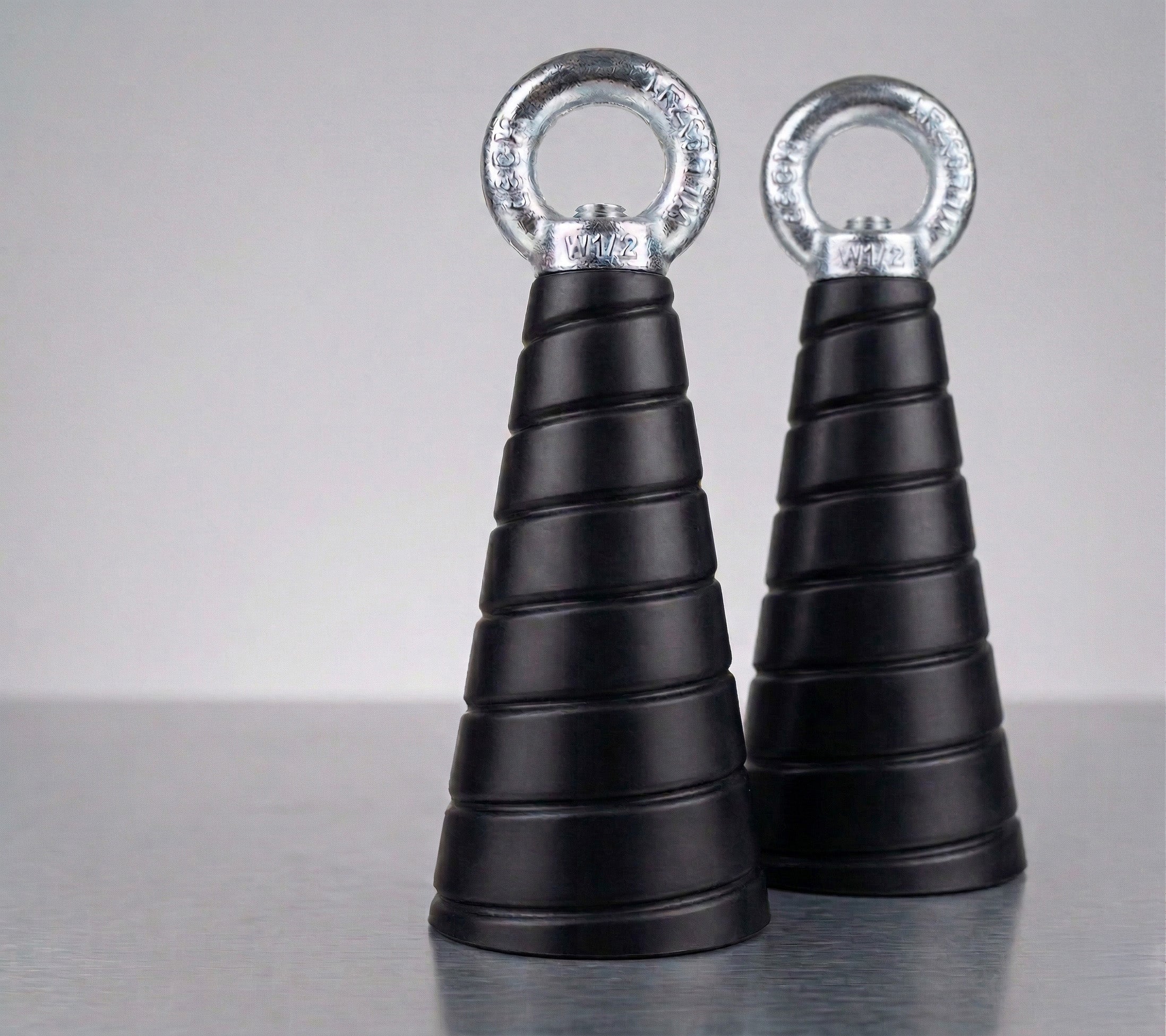
Tapered Tricep Cone
Tapered rubber cable grip for triceps extensions, face pulls and hammer curls.

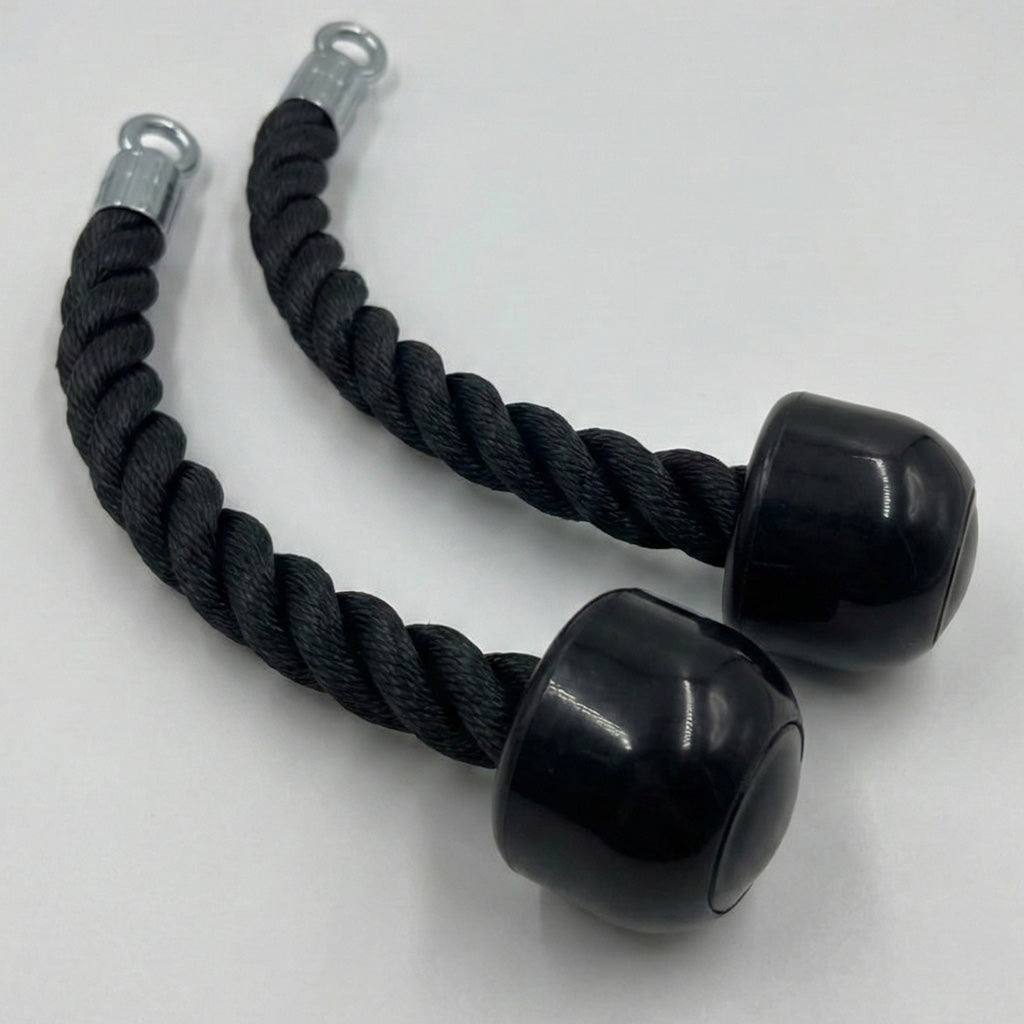
Individual Tricep Ropes
Pair of individual cable ropes for triceps pressdowns and cable hammer curls.

Dual Hook EZ Curl Bar
Angled aluminum dual-hook cable bar for biceps curls and pulldown variations.


Multi-Length Tricep Strap
Adjustable-length cable strap for triceps, biceps and upper-body cable exercises.

Rubber Hex Dumbbells
Rubber-coated hex dumbbell pairs with a stable shape for home and commercial strength training.

GymPin Ergo Handles
Pair of ergonomic cable handles shaped for comfortable triceps and pulling exercises.
Track performance when the pump disappears
Give your program several weeks before deciding whether it works. Record the exercise, load, repetitions on each set, approximate rest and whether the final repetitions stayed within your intended technique. A useful example is progressing from 10, 9 and 8 curls to 10, 10 and 10 at the same load and rest. Once you can repeat the upper end of your target range, increase the resistance slightly and work back up. For a higher-repetition exercise, use the same principle: gradually raise clean repetitions before chasing a bigger pump or shortening every rest interval.
If you measure arm circumference, do it under consistent conditions away from training. Use the same point on the arm, position, tape tension and time of day. Keep body weight and general recovery in mind when evaluating the trend. Home measurements are noisier than MRI scans, so do not try to compare your tape-measure percentage directly with the eight-week study’s cross-sectional area figures.
Finally, keep the routine flexible. If your elbows are irritated or the next pressing or pulling workout suffers, reduce the direct arm volume or modify the exercise before adding more. If both strength and repeatable higher-repetition performance are improving, there is little reason to replace a successful setup. The pump can remain one of the most satisfying parts of arm training. It just should not become the only thing you train for.

Bodybuilding Shirts & Workout Gear
Bodybuilding shirts, tanks and gym gear for lifters chasing muscle, size, symmetry and the pump.

Beauty And The Biceps Meme – Top , Princess & T-Shirt
Bring “Beauty and the Biceps Meme” humor to your next gym day.

Ha Ha Hammer Curls Joker Gym Funny Workout Villain Meme Sticker
Stick a little “Ha Ha Hammer Curls Joker” humor on your favorite gear.

I Love Gym Bicep Heart Muscle Shirt | Swole Heart Funny Tank Top
Train hard, laugh a little, and rep “I Love Gym Bicep Heart”.

Biceps of the Caribbean Gym | Funny Pirate Workout Swea T-Shirt
Bring “Biceps of the Caribbean” humor to your everyday gym style.

The Real Rocky Mountains Bicep Mountain Meme & T-Shirt
Heavy lifts, good laughs, and a little “The Real Rocky Mountains Bicep Mountain” energy.

Micro Biceps Club President Gym | Funny Workout Decal | Sticker
Stick a little “Micro Biceps Club President” humor on your favorite gear.

Lightning Curls Pikachu Meme – Pokemon Shirt & T-Shirt
Make gym days more fun with “Lightning Curls Pikachu Gym Meme” style.

Gym Dost Thou Even Curl Medieval Knight Arm Day Crewnec T-Shirt
Show some gym-day personality with “Dost Thou Even Curl Medieval Knight Arm Day”.

OnlyGains Big Biceps & Meme Fans Hooded Hoodie
Make your off-duty look more fun with “OnlyGains Big Biceps”.

Big Biceps Theory Decal Water Bottles & Gear Meme Sticker
Bring “Big Biceps Theory” attitude to your water bottle or laptop.