
Advertising disclosure: This page includes affiliate product links that may earn us a commission, as well as products from our own store.
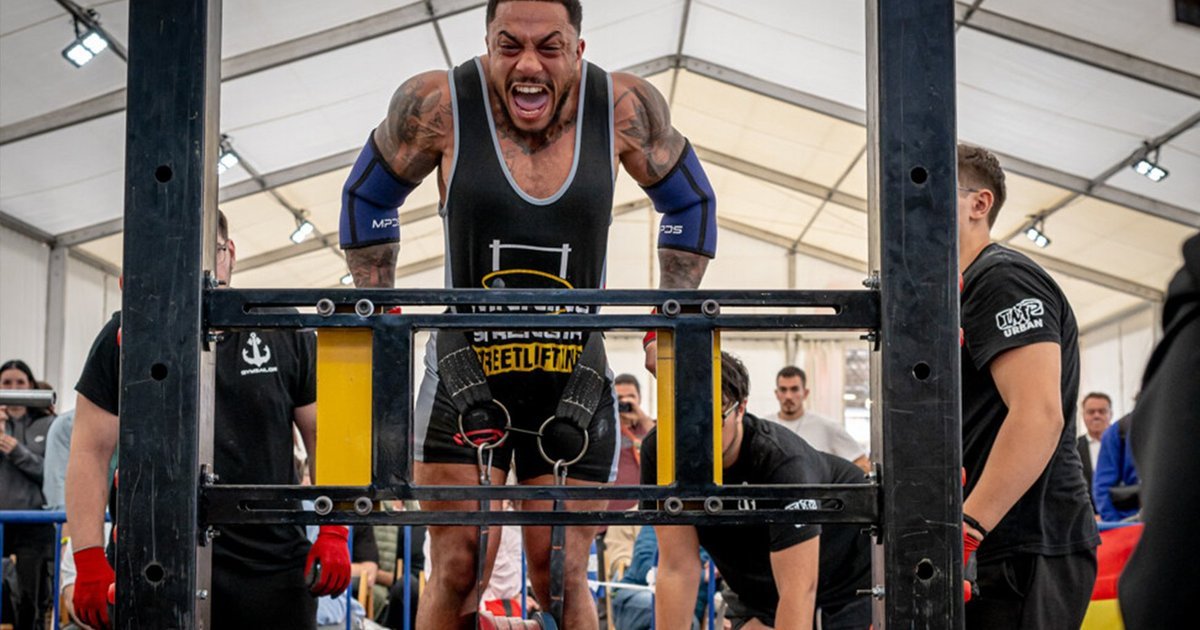
Streetlifting sounds almost too simple to be a world-championship sport: hang from a bar, pull yourself up, step onto parallel bars, and dip. Add serious weight to those movements and the picture changes. The International Streetlifting Federation’s 2026 World Championship in Oral, Kazakhstan, brings maximal weighted reps, repetition endurance, and an all-around four-lift test under one roof. It is a useful reminder that impressive gym numbers depend on how the lift is performed, not just what hangs from the belt.
Competition is scheduled for Saturday, November 28, 2026, after registration and weigh-ins on Friday, November 27. With the meet still ahead, there are no winners or world-record performances to announce. Here is what lifters can actually expect, what separates the formats, and how to borrow the sensible parts of this training style.
Oral has one competition day, not a whole weekend of lifting
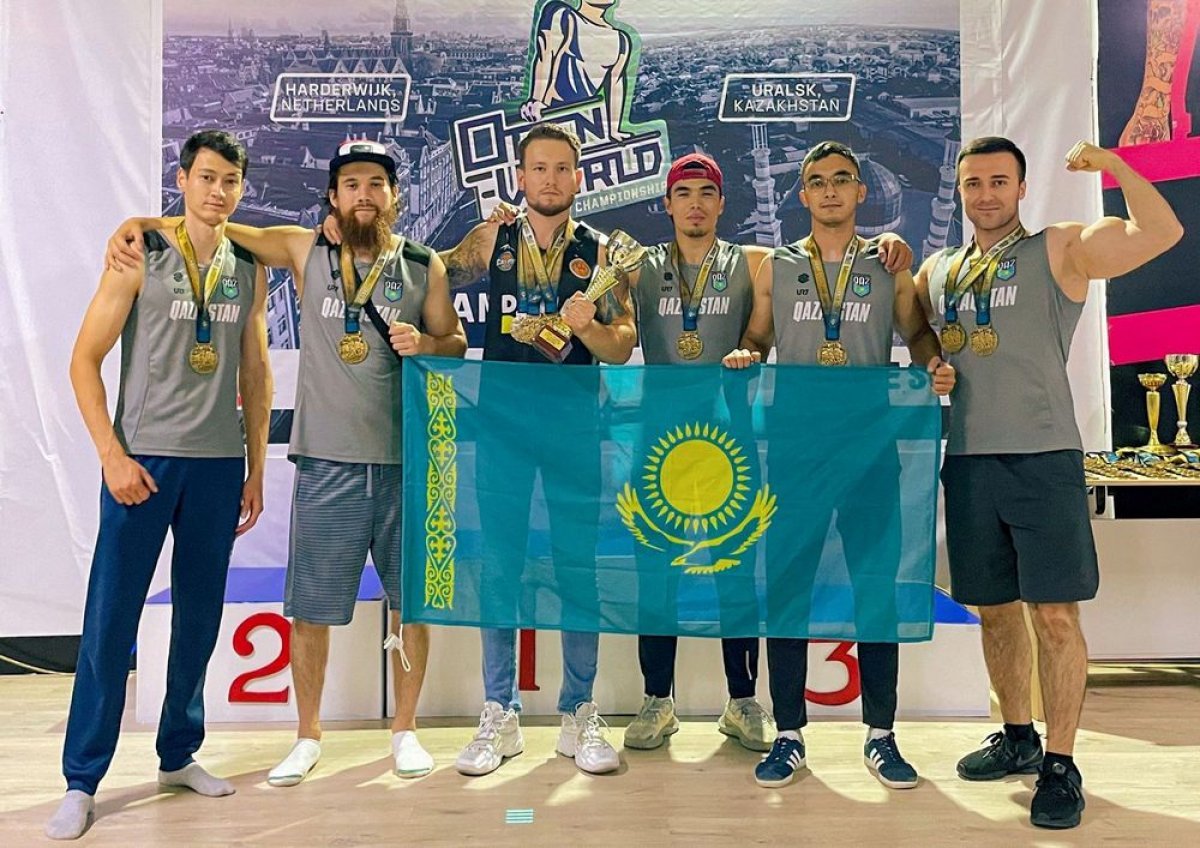
Oral, also called Uralsk, hosts the championship at Olympia Sports Club. The current programme opens with athlete registration and weigh-ins from 14:00 to 18:00 on Friday, November 27, followed by a rules session at 18:30. Saturday adds an 08:00–09:30 weigh-in, a 10:00 opening, Classic Streetlifting and Weighted Calisthenics from 10:30, Multirep from 14:00, and awards planned for 18:00. November 29 is listed for departure, not an additional competition day.
The event’s three directions are more different than their shared equipment suggests. Classic rewards a successful maximum added load. Multirep rewards valid repetitions with a specified weight. Four-lift Weighted Calisthenics extends the challenge beyond the pull-up and dip to the muscle-up and barbell squat. Those separate tests give viewers several ways to recognize elite strength: peak force, repeatable control, and broader technical competence.
The entry deadline was November 15, so the sensible takeaway for readers now is to follow the event, not to assume late registration is open. The published details also distinguish age and bodyweight categories rather than treating the heaviest athlete as the automatic winner. Any claim about a record or placing needs a final approved result after competition.
Classic: the weighted pull-up and dip become judged maximums
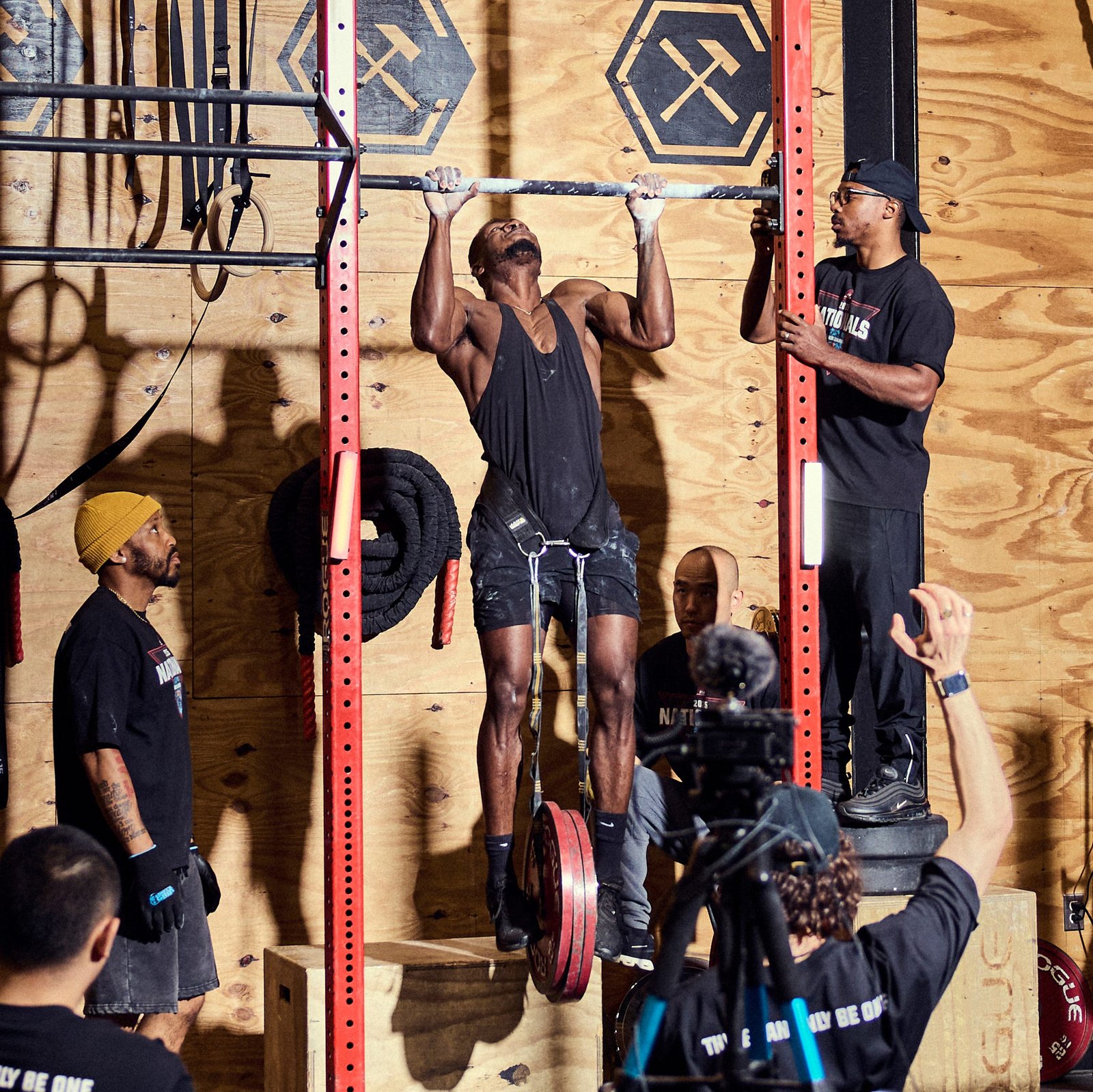
In Classic Streetlifting, the familiar pull-up or chin-up and the parallel-bar dip become single-repetition strength events. An athlete’s best successful added weight on each lift contributes to the two-lift total; individual events can also be classified. Think of the difference between hoisting a heavy backpack once and repeating a lighter lift to fatigue: Classic tests the first quality, but with exact movement standards.
The attached plates make for striking photographs, yet the most useful number is not always the load alone. Bodyweight matters: a 75kg athlete pulling another 60kg moves a different combined mass from a 100kg athlete using the same belt weight. The competition separates bodyweight classes for that reason. Even within a class, the best preparation is not simply trying a maximal load every session.
For training, start with repeatable bodyweight reps, stable shoulders and a reliable range of motion. Add small weights once clean sets feel dependable. Separate heavy weighted pull-ups and dips with enough recovery that elbows and shoulders are not permanently irritated. Strong scapular control, sensible volume and a predictable setup make the next kilogram more likely to become a valid lift rather than a video of an almost-rep.

Equipment Worth Exploring
Explore equipment, accessories and gear from our carefully selected range.

Power Tower
Freestanding pull-up and dip station with adjustable handles for bodyweight training.


Leather Wrist Grips
Padded leather lifting grips help support the hands and wrists on heavy pulling exercises.

Multirep: fixed resistance turns strength into pacing
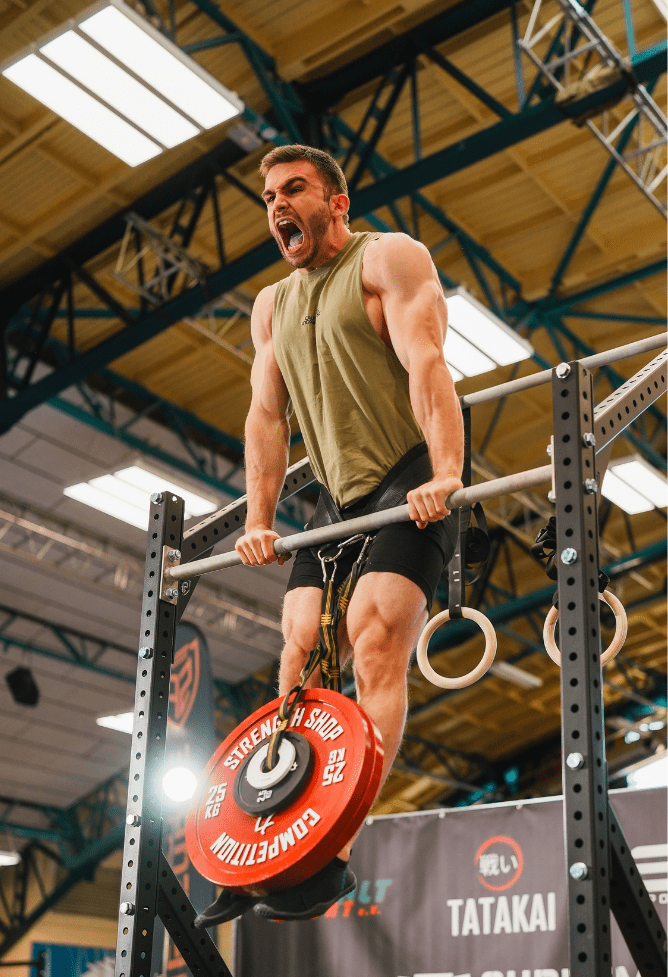
Multirep uses a fixed additional weight and asks how many repetitions satisfy the standard. Pull-ups for reps, dips for reps and a combined two-lift total appear on the championship menu. That changes the athlete’s problem: maintaining a smooth rhythm without surrendering the body positions needed for a counted repetition.
A lifter who attacks the opening repetitions too aggressively may gain a few early seconds, then spend the rest of the attempt hanging, shaking or producing shortened movements that do not count. Another athlete may sacrifice a flashy first burst and keep every rep controlled. The deciding factor is the official valid-rep count, not how loud the crowd gets or how many partial repetitions appear on a phone recording.
For ordinary training, a useful progression is to build strict sets of bodyweight pull-ups and dips before adding load for higher repetitions. Keep a rep or two in reserve on most sets, track comparable tempos and avoid using momentum as a substitute for capacity. If reps fall sharply between sets, reduce the load or extend the rest rather than collecting junk volume. High-rep dips can irritate the front of the shoulder when fatigue distorts depth, so quality needs to remain visible all the way through.
Four-lift weighted calisthenics adds skill and a real squat
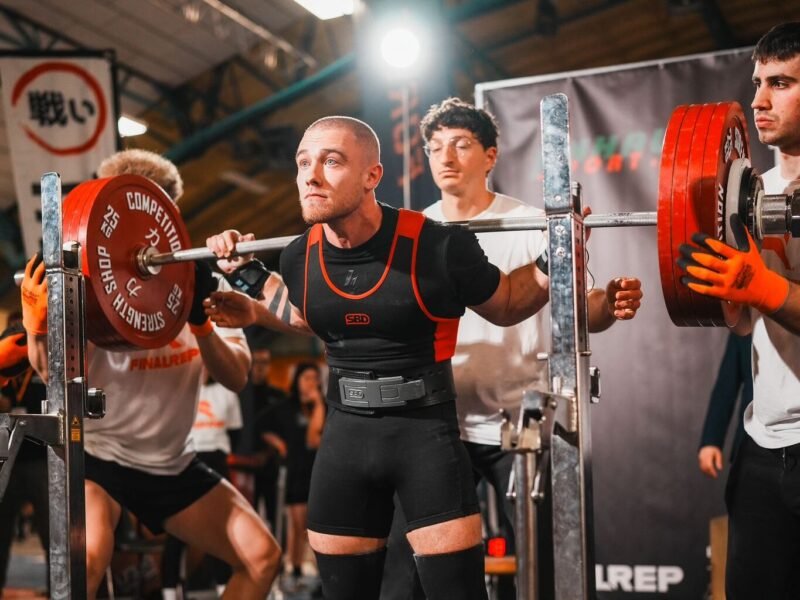
The four-lift format includes a weighted muscle-up, weighted pull-up, weighted dip and barbell squat. It is a different competitive proposition from merely combining the two movements most streetlifters know. The muscle-up requires sufficient pulling force, a decisive transition and solid control over the bar. The squat adds leg strength and bracing under an external barbell rather than hanging plates from a dip belt.
The broader format helps explain why a gifted pull-up specialist is not automatically the best all-around streetlifting athlete. Technical muscle-up ability and a repeatable squat can change the balance. Results from national streetlifting competitions have already shown how totals can include substantially different strengths across the four movements. These are separate events under their own rules; performances across organizations should not be compared as though every judging system were identical.
For a gym-going lifter, the transferable lesson is balanced progression. Maintain one or two technical muscle-up practice blocks while fresh, progress weighted vertical pulling and dipping in manageable steps, and give squats a dedicated place rather than tacking them onto an exhausted upper-body session. No one needs to be elite at all four lifts to benefit from learning the difference between coordination, upper-body strength and lower-body force.
Equipment Worth Exploring
Explore equipment, accessories and gear from our carefully selected range.


Competition Plates
Competition-style bumper plates for Olympic lifts and loaded strength training.

GymPin Squat Wedges
Non-slip 15-degree squat wedges help elevate the heels for deeper quad-focused squats.

Foldable Wall Rack
Wall-mounted folding squat rack designed to save floor space between workouts.

Leather Lifting Straps
Padded leather straps support grip during heavy rows, deadlifts and pulling exercises.


Cast Iron Kettlebells
Textured cast-iron kettlebells for swings, squats, carries, and full-body training.
Judges decide whether the kilogram and repetition actually count
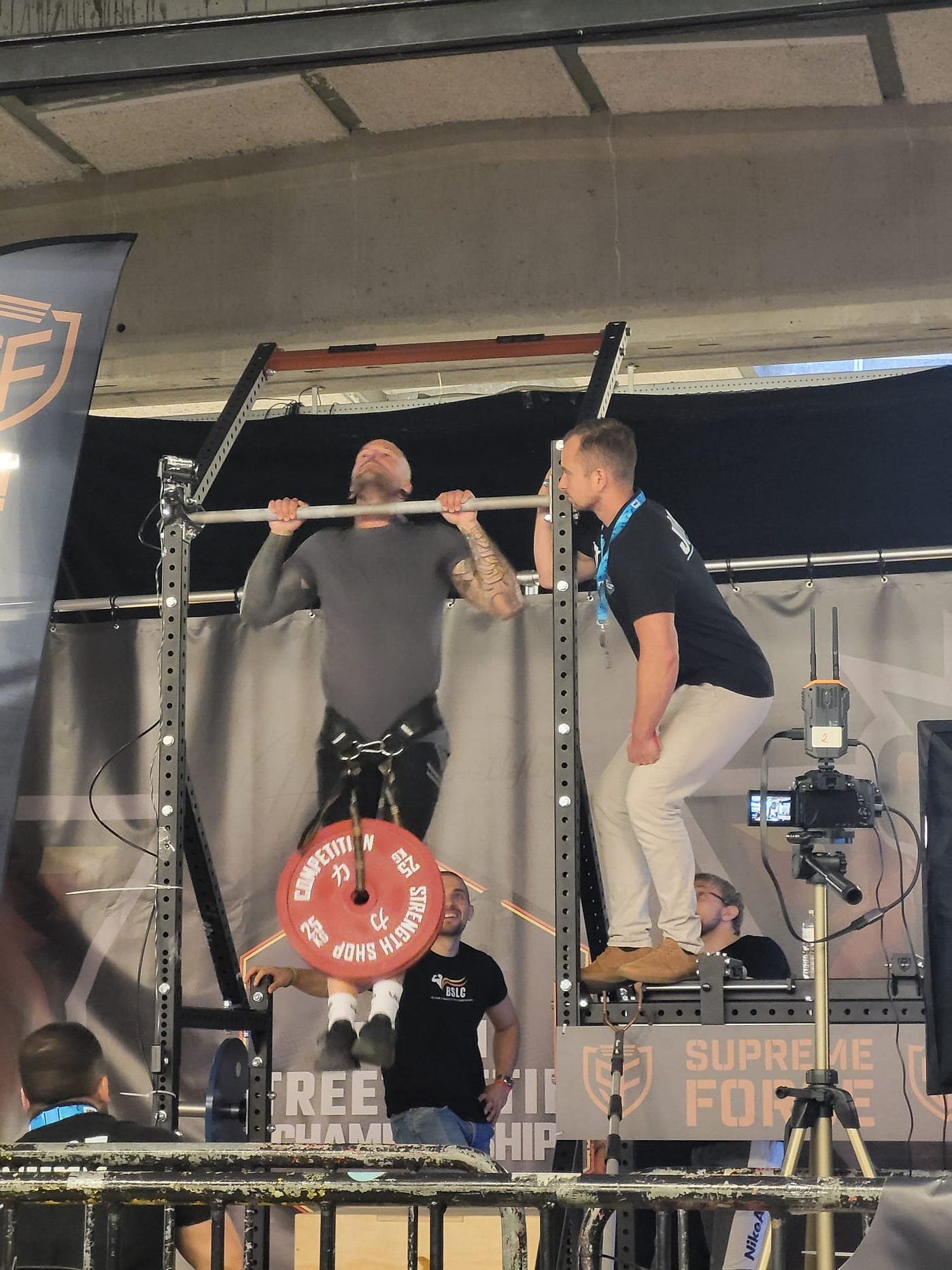
Competition footage can make a marginal pull-up or abbreviated dip look spectacular. The rulebook matters because numbers only travel well when athletes meet the same criteria. The federation’s technical rules version 5.3 took effect on November 17, 2026, shortly before this championship. That timing is important: a highlight recorded under an older system or another organization’s standards is not proof that the same attempt would be accepted here.
For a pull-up, pay attention to a controlled starting hang and a complete finish; for a dip, shoulder and elbow position, full extension and the absence of an unsupported bounce can all affect a decision. Squats and muscle-ups have their own movement requirements. Clothing and equipment must allow referees to see the relevant joints, and attached weights must be secured safely. A gym video rarely shows every angle an official needs.
Weight categories offer a fairer contest than lumping everyone into one open leaderboard. They also discourage misleading comparisons: the biggest plate stack does not automatically indicate the best performance relative to the athlete’s bodyweight. For viewers, the best habit is to watch the lift first, then the judging signal, then the official score. For lifters, filming clean side and front angles can uncover technical inconsistencies before trying to increase a personal best.
How to borrow streetlifting training without chasing a world record
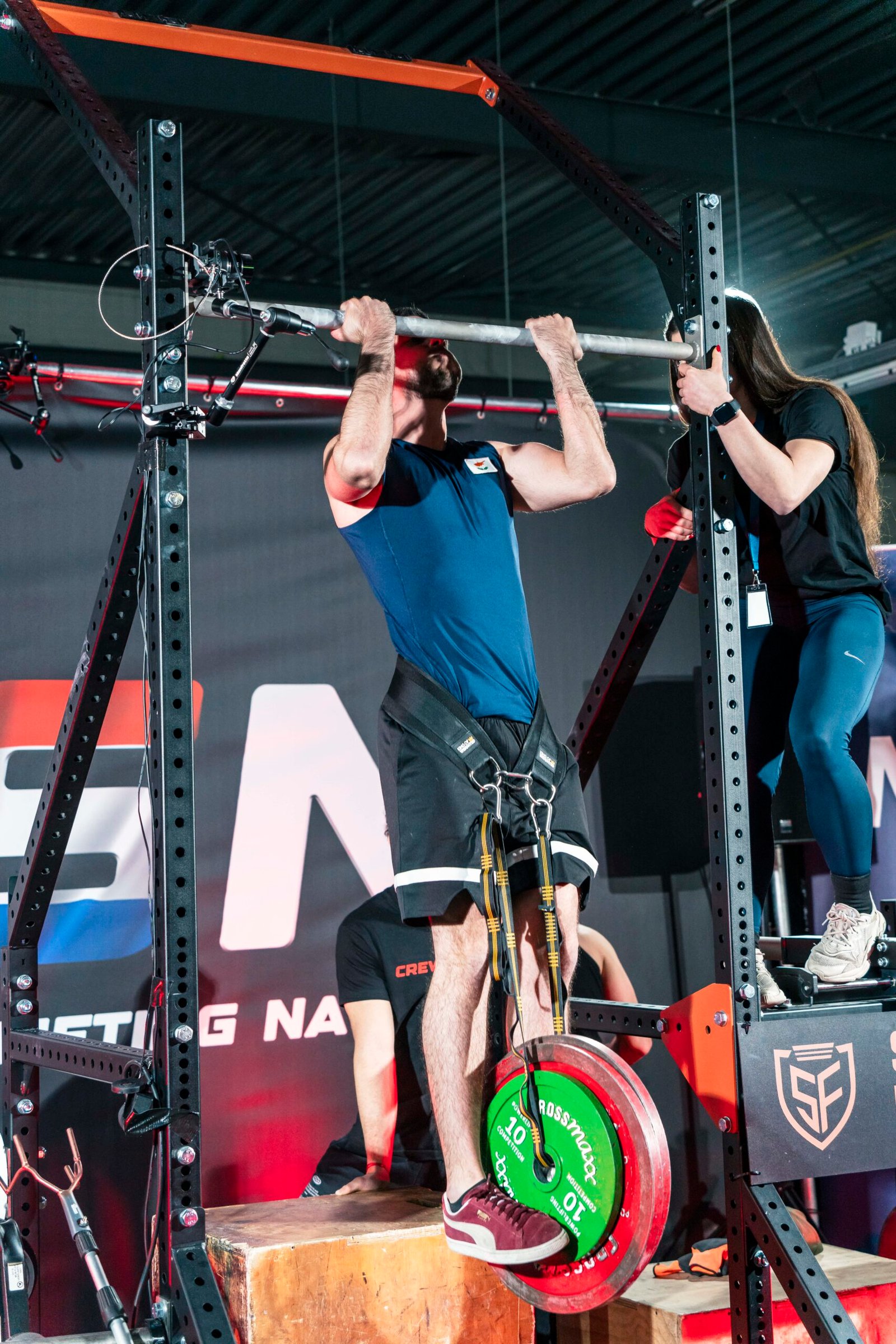
A recreational lifter can use the sport’s logic without copying a finalist’s peak. First establish pain-free bodyweight pulling and dipping, with controlled descents and a range of motion you can reproduce. If either movement is not yet solid, use assistance, band-supported progressions or lower loads; a heavy belt does not solve a missing foundation.
Week one: choose two upper-body sessions, each with moderate pull-up and dip volume, leaving a couple of clean repetitions in reserve. Note which grip and dip-bar width feel stable. Week two: keep the movements consistent and add a small amount of work only where technique holds. Week three: introduce modest added weight for low-rep sets on one day and keep the other day lighter. Week four: reduce fatigue, then evaluate a controlled submaximal set or technically clean heavier single rather than a reckless limit attempt.
For anyone interested in the four-lift format, place barbell squats on a day that leaves your legs fresh, and practise muscle-up transitions at a difficulty that allows safe execution. Balance these with rows, shoulder stability work and ordinary recovery. Tendon discomfort that grows between sessions is a reason to adjust volume, not something to prove toughness through.
When the November 28 results arrive, the intriguing story will be who can combine added weight with a valid standard. Until then, the clearest lesson is already available: consistent, reproducible reps turn a gym challenge into a meaningful strength benchmark.

Calisthenics Shirts & Street Workout Gear
Calisthenics and bodyweight-training gear for pull-ups, dips, handstands and street-workout athletes.


Pull Up or Shut Up Crewneck Pullover Sweater for Calist T-Shirt
For laid-back days and bodybuilding humor: “Pull Up or Shut Up”.

Always Pull Yourself Up Calisthenics Decal for Water Bo Sticker
A fun “Always Pull Yourself Up” touch for bottles, laptops, and lockers.

Calisthenics Heartbeat Hoodie
Keep it laid-back with a little “Calisthenics Heartbeat” attitude.

Stronger Than Excuses Tank
Show some personality between sets with “Be Stronger Than Your Excuses”.

Funny Calisthenics Gym Decal for Water Bottles Laptops Sticker
Bring “Calisthenics” attitude to your water bottle or laptop.

Turn Off Gravity Funny Calisthenics Gym Muscle Shirt fo Tank Top
Bring “Turn Off Gravity Funny Calisthenics” humor to your next lifting session.

Calisthenics Evolution Hoodie
Bring “Calisthenics Evolution” gym humor to lazy days and post-workout plans.

Human Flag Crewneck Calisthenics Pullover Sweater Worko T-Shirt
Bring “Human Flag” humor to your everyday gym style.





One Comment