
Advertising disclosure: This page includes affiliate links that may earn us a commission at no additional cost to you.
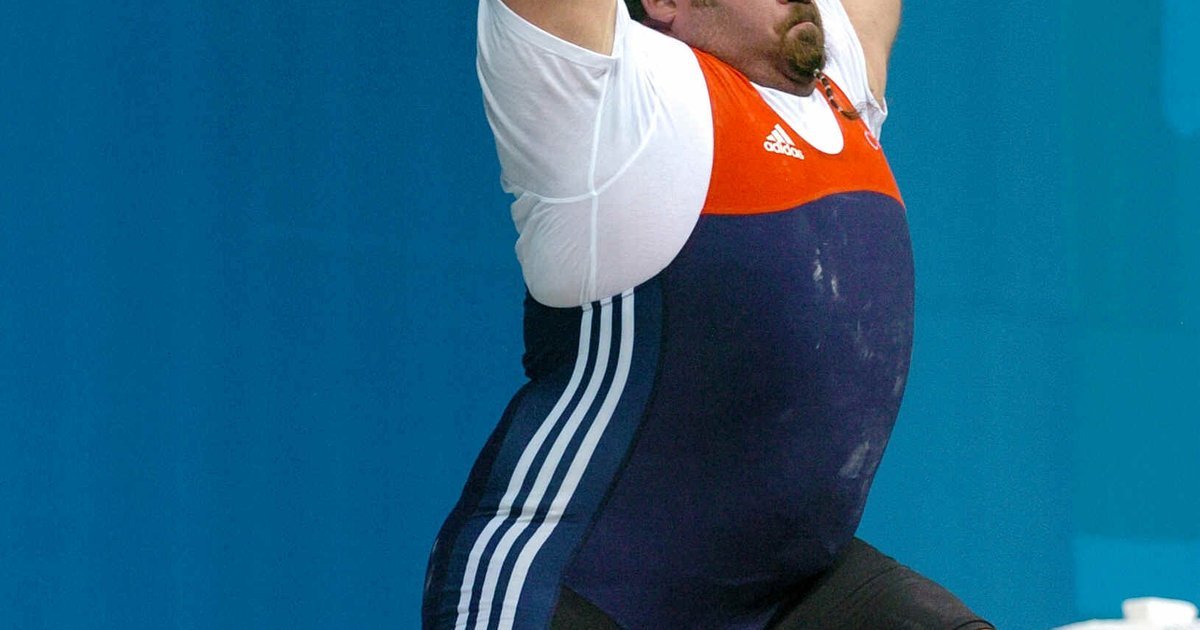
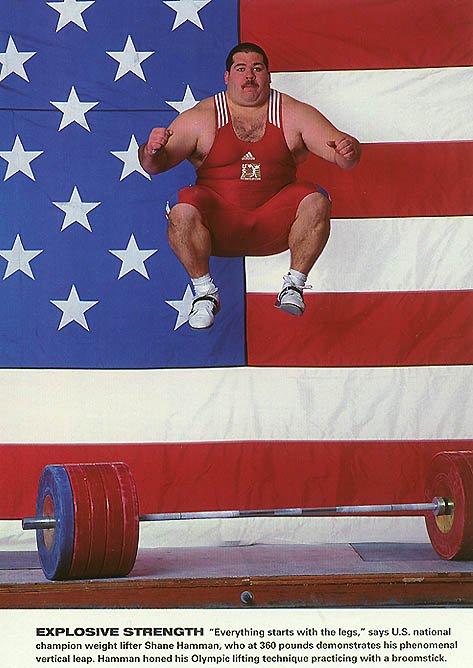
Shane Hamman had already put an enormous number on the scoreboard before he became an Olympic weightlifter. In 1996 he squatted 457.5 kilograms in equipped powerlifting competition. Eight years later, he stood on the Olympic weightlifting platform in Athens and completed a 430-kilogram total across two very different lifts.
Those numbers are not directly comparable. One measures a single supported squat; the other combines a snatch and a clean and jerk. That distinction is precisely what makes Hamman’s career interesting. A lifter can possess world-class strength and still face a steep learning curve when a new sport demands different positions, a different rate of force production and a much narrower margin for technical error.
The 457.5 kg squat: what Hamman brought to weightlifting
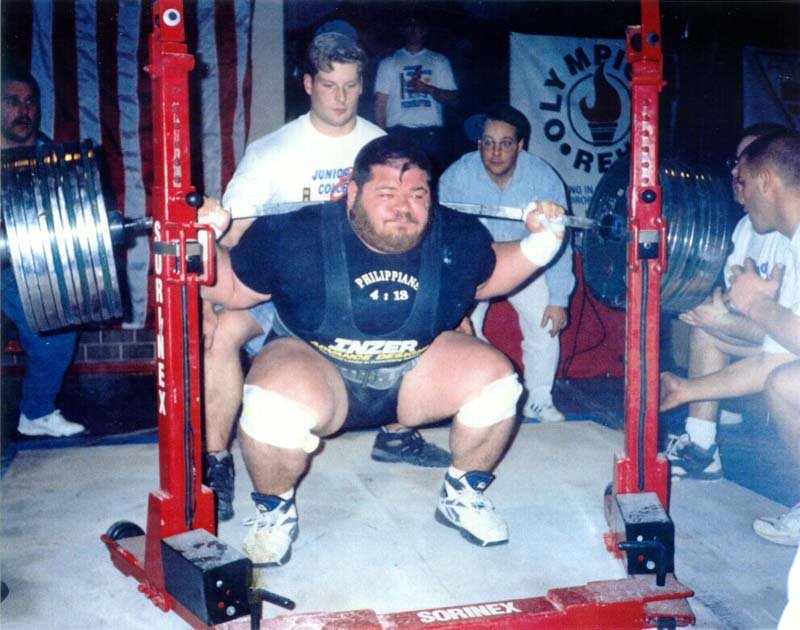
Hamman competed at the World Powerlifting Championships in 1994 and 1995, finishing third and second respectively. His record of national success and his 457.5 kg squat establish that he was not an ordinary beginner when he changed sports. He entered weightlifting with years of training, competition exposure and an exceptional ability to move heavy loads.
The squat came from equipped competition, an important qualification. Supportive equipment can change how the lifter descends, stores elastic energy and drives out of the bottom. A raw gym squat or a front squat performed after a clean is not the same test. Treating the 457.5 kg figure as a prediction of what Hamman should clean would ignore how much the movement and rules matter.
Powerlifting combines the squat, bench press and deadlift. The athlete may move the bar slowly as long as the lift satisfies the relevant competition standards. A difficult squat that takes several seconds to rise can count just as much as a fast one. Weightlifting does not reward a similarly slow pull from the floor if it fails to create enough upward momentum to get under the bar.
Consider two lifters whose back squats are identical. One can front squat comfortably with the bar balanced on the shoulders, transition quickly from extension to receiving, and hold a loaded bar overhead. The other struggles to reach those positions with a light training bar. Their squat numbers say little about which will win a weightlifting meet until those other capacities are tested.
That is the first useful lesson for strength athletes considering a change of discipline: preserve the work that built your foundation, but do not confuse a foundation with the finished structure. There is no reason to throw away years of squat training, yet the exercises that improve your next result may be the ones at which you currently feel least impressive.

Powerlifting Shirts & Lifting Gear
Powerlifting shirts and gym gear for squat, bench and deadlift lifters who live for heavy numbers.

Heavy Squatter Meme Squats & Gains Leg Day Wizard Top T-Shirt
Heavy lifts, good laughs, and a little “Heavy Squatter” energy.

Superman Barbell Weight Plate Logo – Superhero Bodybuil Sticker
A fun “Superman Barbell Weight Plate Logo” touch for bottles, laptops, and lockers.


Rat Cheese Barbell | Workout Sweater & Bodybuilding Mem T-Shirt
For laid-back days and lifting humor: “Gym Rat Cheese Barbell”.

Siuuu Deadlift Cristiano Ronaldo Meme Football Jumper Hoodie
Keep it laid-back with a little “Siuuu Deadlift” attitude.

Deadlift Skull Tank Top Pink Heavy Metal
Bring “Deadlift Skull” humor to your next lifting session.

The Ultimate Deadlifter Jesus Christ – Deadlifts Liftin T-Shirt
Heavy lifts, good laughs, and a little “The Ultimate Deadlifter Jesus Christ” energy.

Gym Cult Occult Barbell Meme – Powerlifting Bodybuildin Sticker
Give your everyday gear a playful “Gym Cult” twist.

Minecraft Deadlift Gym | Funny Pick Up Heavy Blocks Wor Hoodie
Make your off-duty look more fun with “Minecraft Deadlift”.

Doctor Deadlift Superhero Comic Book Meme , Villain T-Shirt
Show some superhero attitude with a playful “Doctor Deadlift” tee.
Why a stronger squat does not automatically produce a better clean
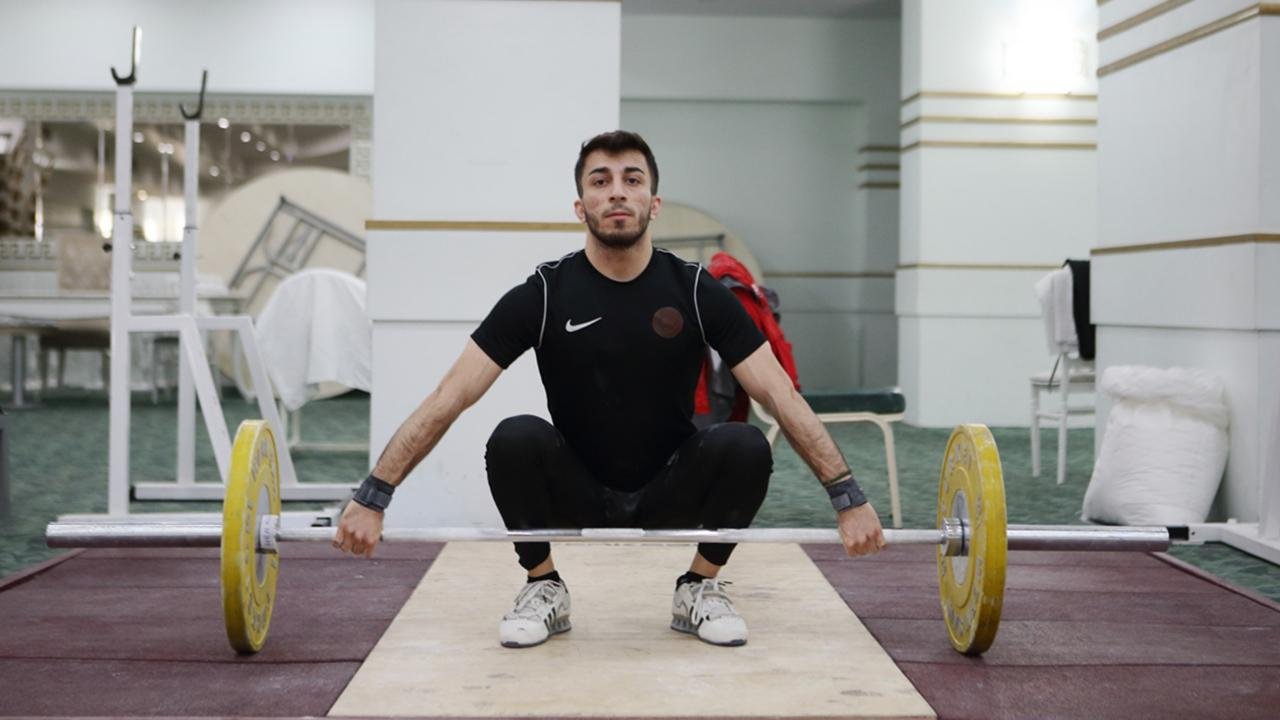
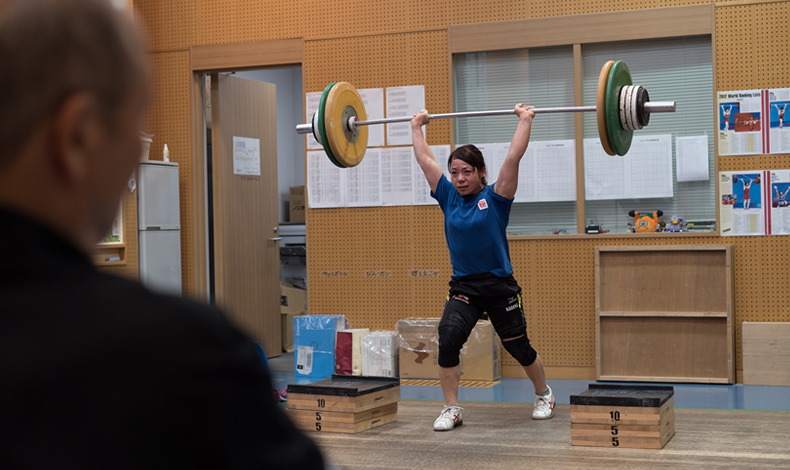
In the snatch, the athlete takes the bar from the floor to overhead in one continuous lift. The clean brings the bar to the shoulders before the jerk sends it overhead. Both movements require an effective pull, an active movement under the bar and a stable receiving position. The clean adds the task of standing up with the bar on the shoulders, whereas the snatch demands that the lifter control the bar overhead while rising.
A strong powerlifter may have no difficulty breaking a moderate training weight from the floor. But a successful clean is not simply a heavy deadlift followed by a reverse curl. After extending, the athlete must move into the receiving position quickly enough to meet the bar. The arms then help guide the transition, and the legs must absorb and reverse the downward motion without the bar crashing into the front rack.
For a lifter coming from years of heavy barbell training, it can be tempting to add plates as soon as the pull feels easy. That is often the wrong criterion. If every clean finishes with the feet in a different place, the elbows struggle to reach the rack, or the lifter needs to chase the bar forward, the load is already too high for useful technical practice. The ability to stand up with the weight does not erase the errors that occurred before it.
Start by checking the positions without a demanding load. Can you hold a front rack without supporting the entire bar with your wrists? Can you lower into a comfortable front squat while keeping the bar over your base of support? Can you hold a light bar overhead and control a shallow squat without losing balance? If a position is painful or cannot be reached safely, a qualified coach can help choose a suitable regression.
Then practice the transition itself. A light hang clean can remove some of the complexity of the initial pull, and a front squat can isolate the receiving strength. A lifter may be strong enough to make quick progress once the timing clicks, but that does not justify assuming it will click on the first day.
From a Pan American title to two Olympic appearances
Hamman’s move into weightlifting was not a brief experiment. He began the transition in 1996 and pursued the sport seriously enough to train full-time in Colorado Springs by 1998. At the 1999 Pan American Games he won gold in the men’s super-heavyweight category. He also claimed nine consecutive American weightlifting championships across 1997 through 2005.
International competition supplied a different benchmark from domestic dominance. Hamman finished tenth at Sydney 2000 and seventh at Athens 2004. His successful Athens results were 192.5 kg in the snatch and 237.5 kg in the clean and jerk, combining for 430 kg. The results also reveal why the clean and jerk is not the whole sport: a huge overhead lift cannot compensate indefinitely for a weaker snatch result.
| Athens 2004 result | Weight |
|---|---|
| Snatch | 192.5 kg |
| Clean and jerk | 237.5 kg |
| Total | 430 kg |
| Final placing | 7th |
His best clean and jerk was approximately 23 percent heavier than his successful snatch. That percentage describes one athlete’s results on one particular day. It is not a universal target ratio, nor does it tell us how much weight he could front squat at the time. It simply shows the different demands of the two events and the importance of measuring them independently.
For a recreational athlete, it is easy to fall into the habit of judging progress by a gym personal best. Competition forces a more demanding standard: a result must be executed successfully under the rules when the athlete is called to lift. Being able to move something once in training and being able to reliably produce a valid attempt are related but distinct achievements.
One of the most impressive aspects of Hamman’s story is therefore not a single record but the duration of the transition. He spent years developing an entirely new competitive identity after he had already succeeded in another sport. That gives a useful perspective to anyone frustrated by a slow first few months of Olympic lifting.
What carries over: pulls, leg strength and the jerk
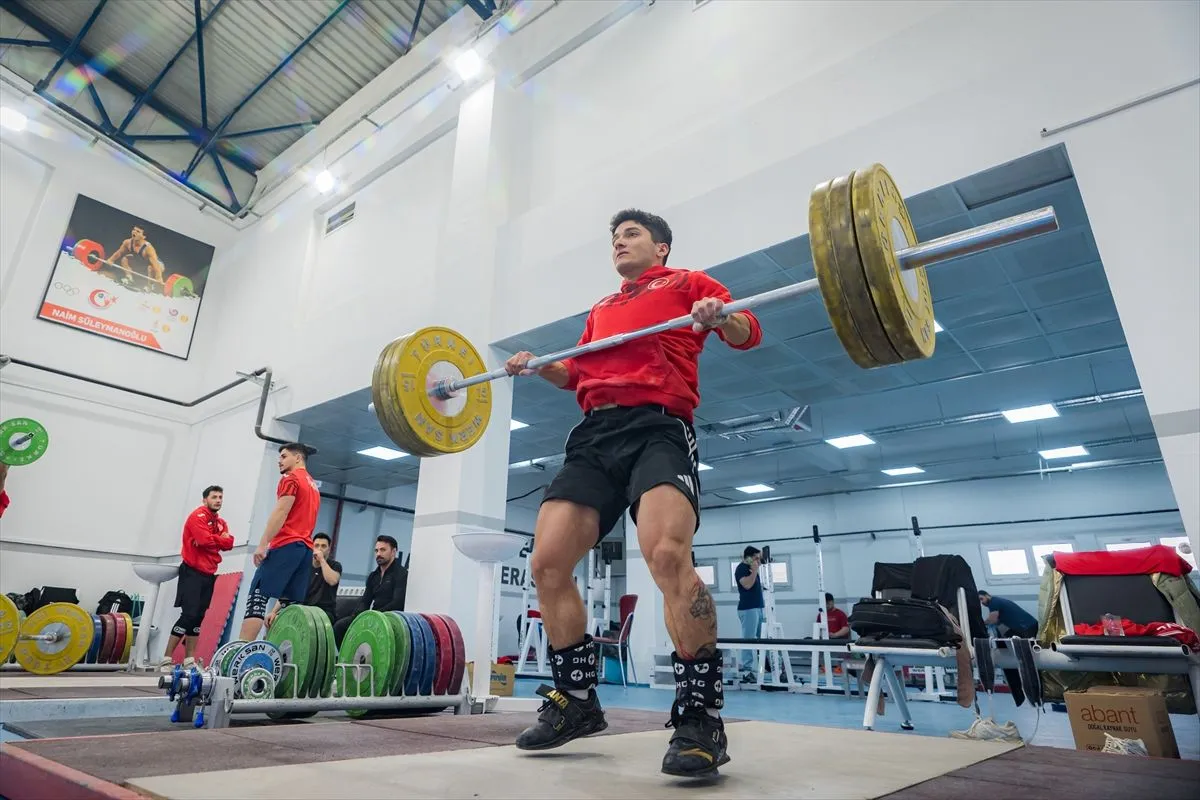
Hamman’s own account of the transition emphasized pulling work and the need to move rapidly under the bar. These were not random additions to a powerlifting program. They addressed physical and technical qualities the new sport required. His background in squatting and pulling was valuable, but its usefulness depended on how he could express that strength in the Olympic movements.
Clean pulls and snatch pulls give lifters a way to rehearse the mechanics of extension without completing the receiving phase on every repetition. The movements are not simply renamed deadlifts: their purpose is to reinforce the positions and force application that support the corresponding Olympic lift. A Romanian deadlift, in contrast, can be used as assistance work for the posterior chain and control through a hip hinge.
It is useful to separate the roles of assistance exercises. Squats develop the capacity to stand up with heavy loads. Pulls reinforce the ability to accelerate the bar through the relevant positions. The competition lifts connect those qualities to timing, balance and receiving. Treating all three as interchangeable can result in an impressive training log without a better competition total.
The jerk deserves its own attention, too. A lifter must first support the bar securely on the shoulders, use a controlled dip and forceful drive, and then move underneath to stabilize it overhead. Bench pressing strength alone does not provide those skills. Practicing the footwork with a light bar and learning to keep the dip balanced are more useful than immediately trying to force a heavy bar overhead.
For training equipment, a proper barbell, suitable bumper plates and an appropriate lifting surface are much more relevant to the Olympic lifts than specialized powerlifting assistance devices. Racks and collars support controlled squat and assistance work; straps can be useful for some pulls, but should not be treated as a substitute for learning a safe grip and release in the competition movements.

Equipment Worth Exploring
Explore equipment, accessories and gear from our carefully selected range.


Competition Plates
Competition-style bumper plates for Olympic lifts and loaded strength training.


Leather Lifting Straps
Padded leather straps support grip during heavy rows, deadlifts and pulling exercises.


Glute Ham Developer GHD-820
Adjustable glute-ham developer with contoured pads and a fold-out knee support.

45° Hyperextension HPX-650
Angled back-extension trainer with split padding, a ribbed footplate and resistance-band pegs.
How to build a bridge between strength and speed
Hamman’s career is an unusually high-level example of a general principle: strength becomes more valuable when it can be expressed in the task you actually want to perform. The following example is a modern practice framework, not a reconstruction of his personal program.
For someone who already trains the squat and deadlift but wants to learn Olympic lifts, two short skill sessions each week can be a manageable starting point. Place technical practice early in the workout, before heavy strength work or exhausting conditioning. Keep the first several weeks deliberately conservative and use a coach when available.
- Session one: rehearse the front rack, practice light hang cleans for sets of two or three repetitions, then perform front squats and a small amount of posterior-chain assistance work.
- Session two: practice light snatch-grip positioning or overhead progressions that match your current mobility, rehearse jerk footwork and controlled dips, and finish with moderate back squats or pulls.
- Progression: add weight only when you can repeat the same balanced positions across several sets. If a set becomes inconsistent, reduce the load and fix the movement instead of making every session a personal-record attempt.
For the first month, the most informative numbers may not be kilograms at all. Count how many technically repeatable attempts you complete. Note whether the bar stays close during the pull, whether the catch feels secure, and whether you finish without stepping to recover your balance. Film a few light repetitions from a useful angle, or have a coach observe the movement. These checks make it easier to distinguish a strength limitation from a skill limitation.
If your squat is improving while your clean stagnates, more squats may not be the immediate answer. Conversely, if you consistently receive the bar in a balanced front rack but cannot stand up, additional squat work could be justified. The purpose of diagnosing the weak link is to choose training that solves it rather than simply doing more of the exercise you enjoy most.
Not every powerlifter needs to become a weightlifter, and not every weightlifter needs to chase equipped powerlifting records. Hamman’s achievements in both sports are remarkable because the disciplines are different, not because they are interchangeable. The most transferable lesson is to value the ability to learn a new movement as highly as the ability to add another plate.




One Comment