Two weight benches can look almost identical and still produce different bench-press setups. A few centimetres of height can change how easily your feet reach the floor, where your hips sit, and whether your shoulders stay planted when you press. Height also affects the exercises you perform beside the bench, from step-ups to supported rows. That makes it a fit question, not just a specification to skim on a product page.
1. What the 42-45 cm bench standard actually measures
For international powerlifting competition, the bench surface must sit between 42 and 45 centimetres above the floor. That is approximately 16.5-17.7 inches. The measurement is taken to the top of the uncompressed pad, not to the metal frame and not to the height of a pad after a lifter has settled onto it. The same technical specification calls for a flat, level bench at least 122 cm long and 29-32 cm wide.
These are equipment dimensions, not a promise that every lifter will find a 43 cm bench comfortable. Two people of the same height may have different shin lengths, thigh lengths, foot sizes and preferred pressing arches. A person with a long torso and shorter legs can have a different foot-contact problem from someone with the same total height and longer legs. Shoes and the thickness of the pad add further variables.
It is also easy to confuse bench height with bench-pad thickness. A thick pad can be comfortable yet change the surface height and the sensation of stability. Firmness matters because a pad that compresses substantially under the shoulders and hips may feel different from its listed unloaded dimensions. Measure the surface, check the manufacturer’s method, and test it under your normal training conditions rather than assuming that all benches labelled competition-style are interchangeable.
For general strength training, the competition range is a useful reference point, not a universal medical or biomechanical optimum. The best everyday bench is one that stays stable, fits your pressing position and supports the other exercises you actually perform.
2. Foot contact and leg drive: test the setup before the load
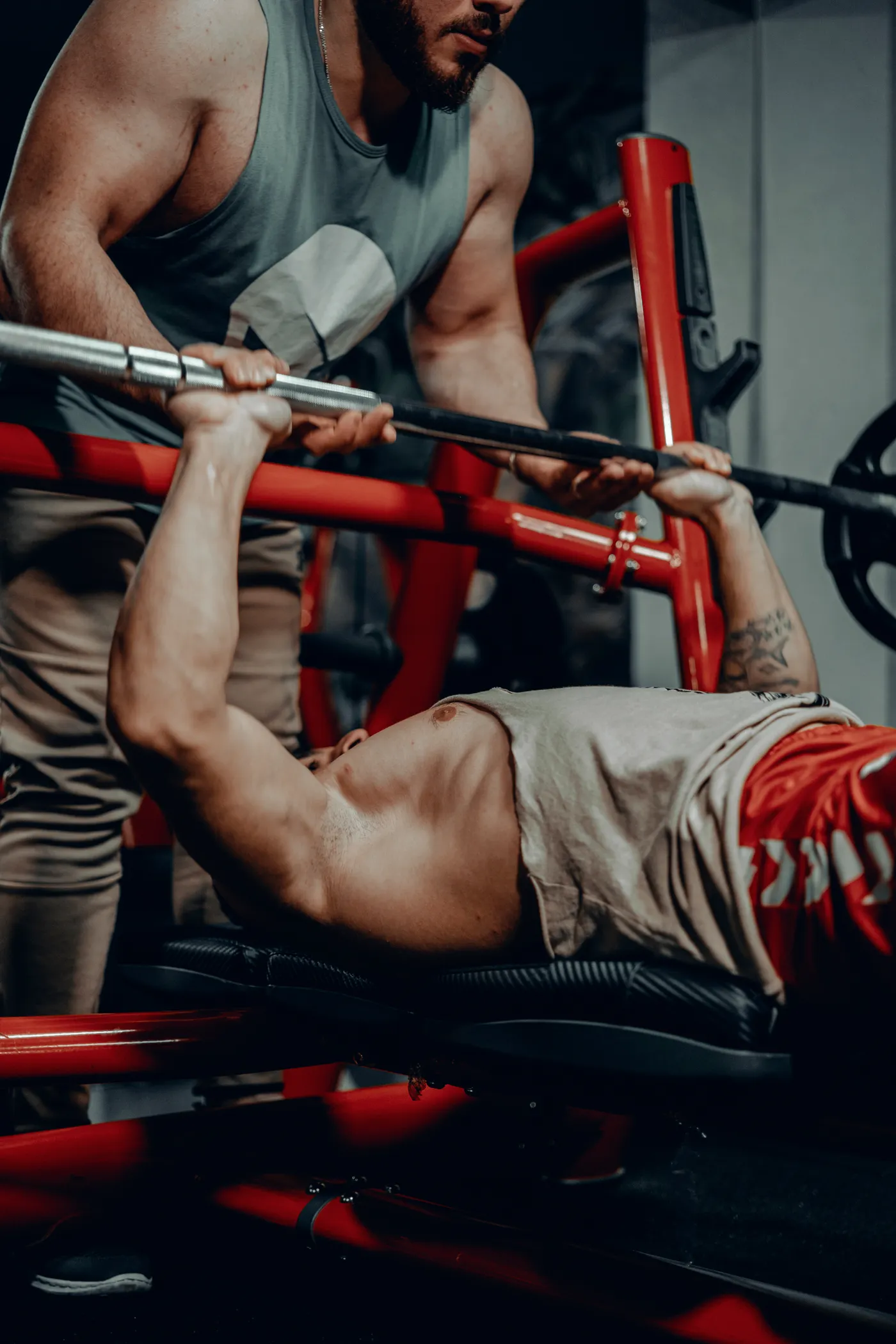
Bench pressing is not just an upper-body action. The feet create a stable connection with the floor while the torso transfers force through the upper back into the bench. Some lifters deliberately use leg drive to reinforce their position during heavy presses. The important point is not to kick the bar upward with your legs; it is to keep a consistent base so your shoulders and hips do not wander as the repetition gets difficult.
Start by lying on the bench with an empty bar or very light dumbbells. Put your head, upper back and hips in the positions you intend to use for working sets. Bring your feet to a repeatable position where they make secure contact with the floor. Try a gentle push through the floor while keeping your buttocks on the pad. If your heels keep lifting unintentionally, your feet slide or your hips shift, adjust the foot position before concluding that the bench is the wrong height.
A high bench can make floor contact difficult for shorter lower legs; a low bench can create an awkwardly folded position for some longer-legged lifters. But neither outcome follows from standing height alone. Hip position, arch, shoe sole, foot angle and the distance between feet all change the geometry. Experiment with one variable at a time and record the position that feels stable across several repetitions.
Do not chase an extreme arch or force your feet into a painful position just to imitate a competition video. Research on bench-press techniques shows that changes in back position, grip and shoulder positioning can alter performance and modeled joint loading, but those measurements do not identify a single ideal setup for every person or prove long-term injury outcomes.
Quick check: with an unloaded bar, perform five controlled repetitions. Your head and upper back should remain settled, your feet should not migrate, and your hips should not pop off the bench. Repeat with a moderate training load only after the empty-bar pattern is consistent.

Equipment Worth Exploring
Explore equipment, accessories and gear from our carefully selected range.


FID Bench MAX
Adjustable bench offering flat, incline, and decline positions + adjustable headrest.


3. Competition benches and training benches have different jobs
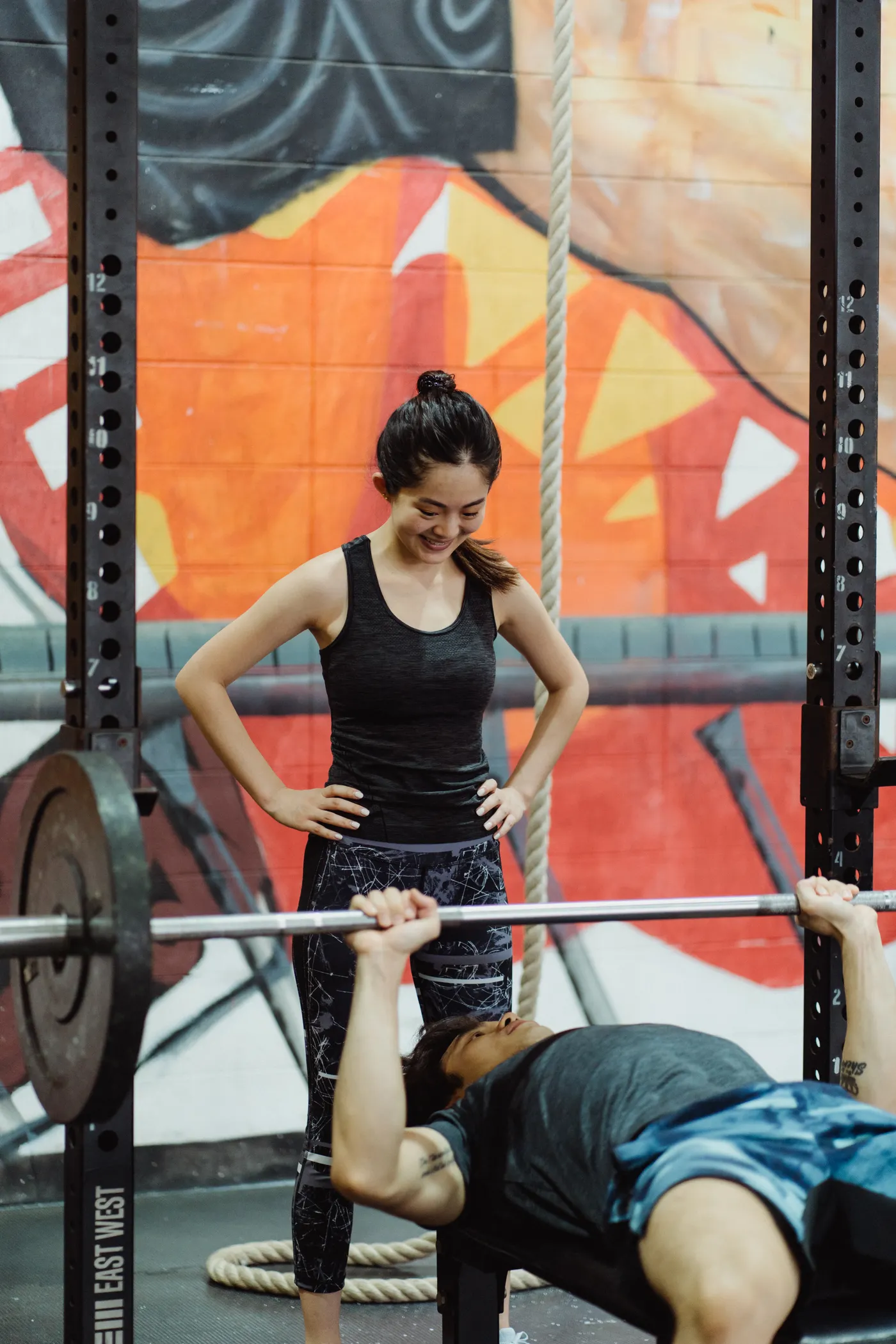
A dedicated powerlifting bench has a narrow purpose: provide a repeatable, rule-compliant platform for a heavy flat barbell press. The dimensions, pad grip, rack geometry and safety stands are part of the total system. In competition, feet must remain flat on the floor or approved blocks; the rules permit foot blocks in several fixed heights for lifters who cannot achieve the required contact naturally. Training on a surface that resembles the one used in a meet reduces avoidable surprises.
That does not mean a home or commercial gym needs a single-purpose competition bench. Adjustable benches offer incline, upright and sometimes decline positions. A good adjustable bench may be excellent for chest presses, seated shoulder work, supported rows and accessories even if its pad width, hinge, seat gap or overall shape differs from a meet bench. What matters is whether the flat setting is genuinely level and secure and whether the adjustment mechanism stays locked under appropriate loads.
One current adjustable-bench specification, for example, lists a 17.2-inch assembled height, which converts to about 43.7 cm and falls inside the competition height band. But matching the height number alone does not make a particular adjustable model approved for sanctioned competition. Approval, pad width, bench-rack construction and the federation’s equipment rules are separate questions.
For a competitive lifter, practice the exact competition cues and confirm the rules of the event. For a recreational lifter, prioritize stable contact, a secure rack and safeties, a suitable pad and the ability to train consistently. Do not confuse a bench’s advertised maximum load with a guarantee that any rack, spotter arrangement or user technique is safe.
A bench that suits your everyday sessions can still be a poor choice for a meet-specific peaking block, and a competition bench can be less versatile for the rest of a full-body program. Choose deliberately instead of assuming one specification solves both jobs.

Powerlifting Shirts & Lifting Gear
Powerlifting shirts and gym gear for squat, bench and deadlift lifters who live for heavy numbers.

2 Plates Bench Club Chest Day Meme & Top T-Shirt
Heavy lifts, good laughs, and a little “2 Plates Bench Club” energy.

4 Plates Bench Club Chest Day Meme & Top T-Shirt
Make gym days more fun with “4 Plates Bench Club” style.

Help I Need a Spotter – Beatles Inspired Spotter Meme H Hoodie
Keep it laid-back with a little “Help I Need a Spotter” attitude.

If You're Reading This Its Chest Day Gym | Drake Meme W Tank Top
Train hard, laugh a little, and rep “If You're Reading This Its Chest Day”.

I Want You To Bench Press Uncle Sam – 4th of July Patri Hoodie
Bring “I Want You To Bench Press Uncle Sam” gym humor to lazy days and post-workout plans.

Ultimate Bench Press Tee
Heavy lifts, good laughs, and a little “Ultimate Bench Press” energy.

Chest Day Decal Water Bottles & Equipment Meme Sticker
Bring “Chest Day” attitude to your water bottle or laptop.

My Bench Press Is Stuck Horror Movie Meme Sweater T-Shirt
Show some gym-day personality with “My Bench Press Is Stuck”.

Bench Press and Chill Funny Gym T
Make gym days more fun with “Bench Press and Chill” style.

Gym Sir Swole of Benchalot Medieval Knight Chest Day Cr T-Shirt
Show some gym-day personality with “Sir Swole of Benchalot Medieval Knight”.
4. Adjustable benches: pad width, firmness and angle matter too
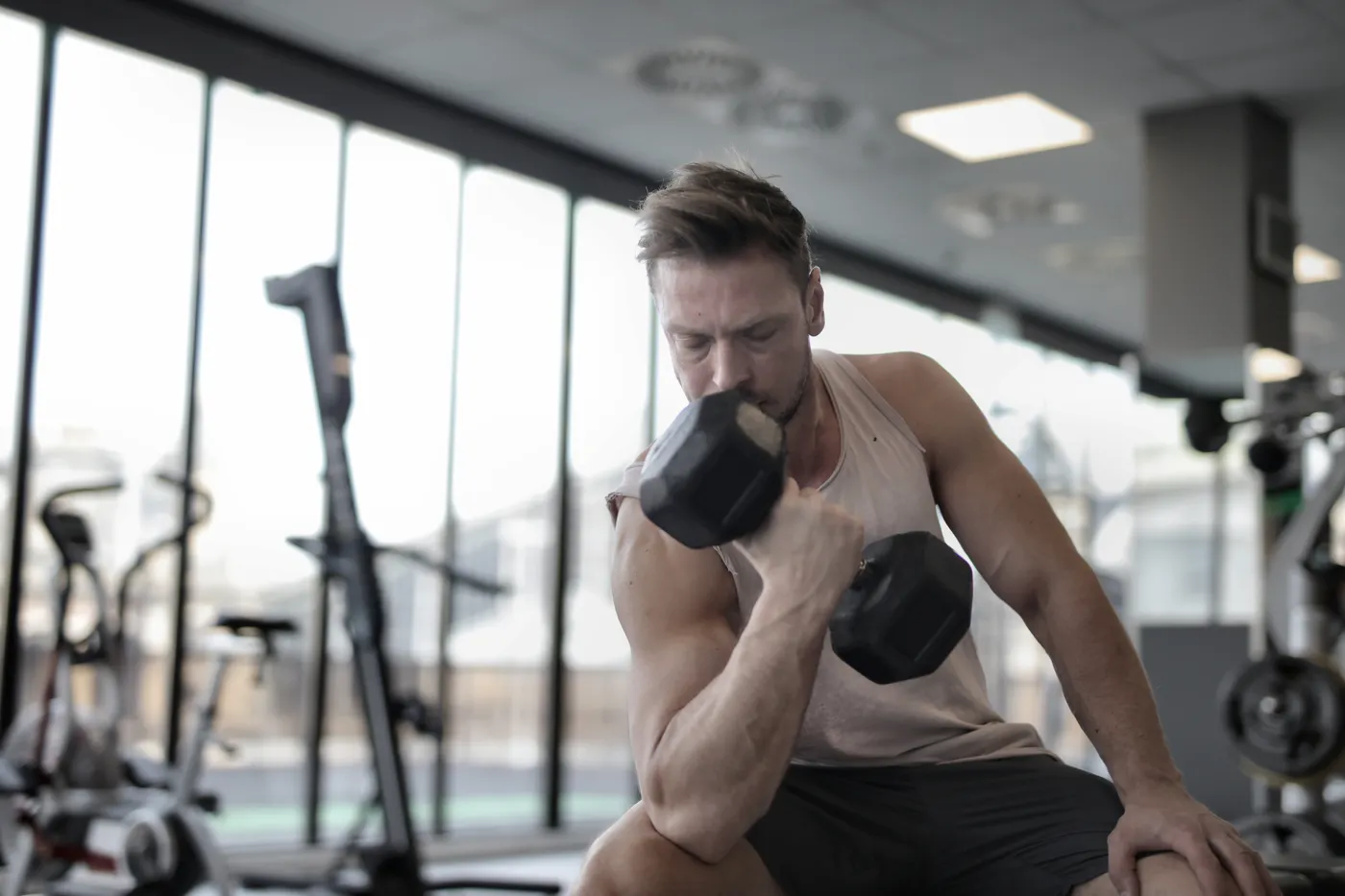
Height attracts attention because it is easy to compare. Yet a bench’s pad width can change how much support the upper back feels and how freely the arms travel beside the torso. A wider pad may feel secure to a broad-shouldered lifter but awkward to someone whose upper arms contact its edges. A narrower pad can provide clearance while offering less surface area for shoulder support. Neither is automatically superior for everyone.
Pad firmness and surface grip deserve an equally practical test. An excessively soft pad may compress unevenly; a slippery one can allow the shoulders to shift during repeated sets. A very hard pad may be unpleasant during long sessions. Lie on the bench in your normal shirt and try your regular scapular setup. If you need to constantly reset your shoulders between reps, investigate the pad surface, setup and load before blaming height alone.
For an adjustable model, inspect the flat position first. Some designs have a gap between seat and back pads; others use a sliding seat to minimize it. Check whether the gap lands under your lower back or hips, and whether the seat can be made level with the back pad. Test the incline positions you actually use rather than treating the highest number of angle settings as a quality score.
Pay attention to the frame and feet. A broad, stable base is reassuring, but the front foot should not prevent your preferred bench-press foot position. Wheels and upright storage can matter in a shared or compact room, while a very heavy bench may be awkward to move daily. Check floor clearance, available space behind the bench, and compatibility with the rack’s crossmembers and spotter arms.
The buying question is not simply, ‘Is this a 43 cm bench?’ It is, ‘Can I get into my preferred setup, load it safely, move it when needed, and use the positions that justify its cost?’
5. One bench height cannot optimize every accessory exercise
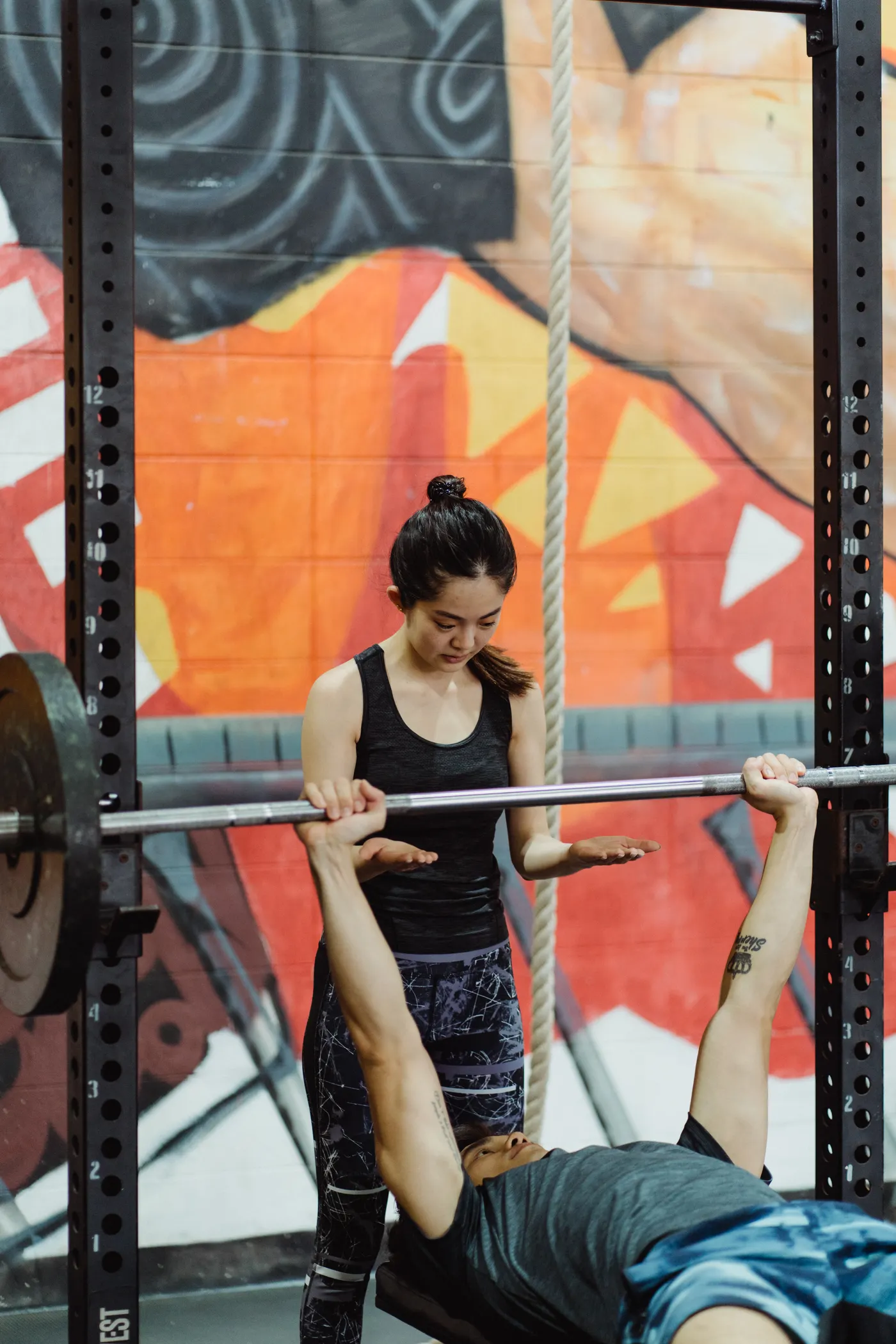
The same bench may serve as a chest-press platform, a rear-foot support, a hip-thrust anchor and a step-up target. Those tasks place the body in very different positions. Treating the competition bench height as an automatic optimum for all of them oversimplifies the problem.
Hip thrusts: the upper back rests against the bench edge while the hips move. A higher support changes torso angle and the amount of motion available; a lower one changes where the shoulder blades contact the edge. Before adding plates, test an unloaded thrust with the bench braced against a stable structure so it cannot slide. The top position should feel controlled without neck extension or the bench tipping. Some lifters will prefer a lower dedicated hip-thrust platform to a standard bench.
Rear-foot-elevated split squats: a tall bench can demand more hip extension and make balance difficult, particularly for someone with shorter legs or limited tolerance for a stretched rear hip. A low step or roller may be more suitable than a 43-45 cm bench. The front leg should do most of the work; the rear support is there for balance and positioning, not to turn the exercise into an acrobatic challenge.
Step-ups: bench height determines how high the lead foot starts. A 43 cm step may be a substantial challenge, not a beginner default. Use a lower, stable platform if you cannot step up without pushing hard off the trailing leg or losing control on the descent. A bench designed for pressing is not necessarily designed to withstand repeated dynamic step-ups.
Supported dumbbell rows: the bench should let you brace comfortably without twisting your torso or crowding your knees and hands. Adjust your stance or incline angle to achieve a stable hinge. The exact bench height is less important than a position that allows the working arm to move freely.
These differences are a reason to assess equipment by movement, not a reason to purchase a separate machine for every exercise.
Equipment Worth Exploring
Explore equipment, accessories and gear from our carefully selected range.
VOLTRA
Compact digital cable trainer with smooth, adjustable resistance.

Go-Tone Pro
Portable digital cable trainer with up to 66 lb (30 kg) of adjustable resistance.


GymPin Squat Wedges
Non-slip 15-degree squat wedges help elevate the heels for deeper quad-focused squats.

6. The ten-minute bench-fit audit before buying
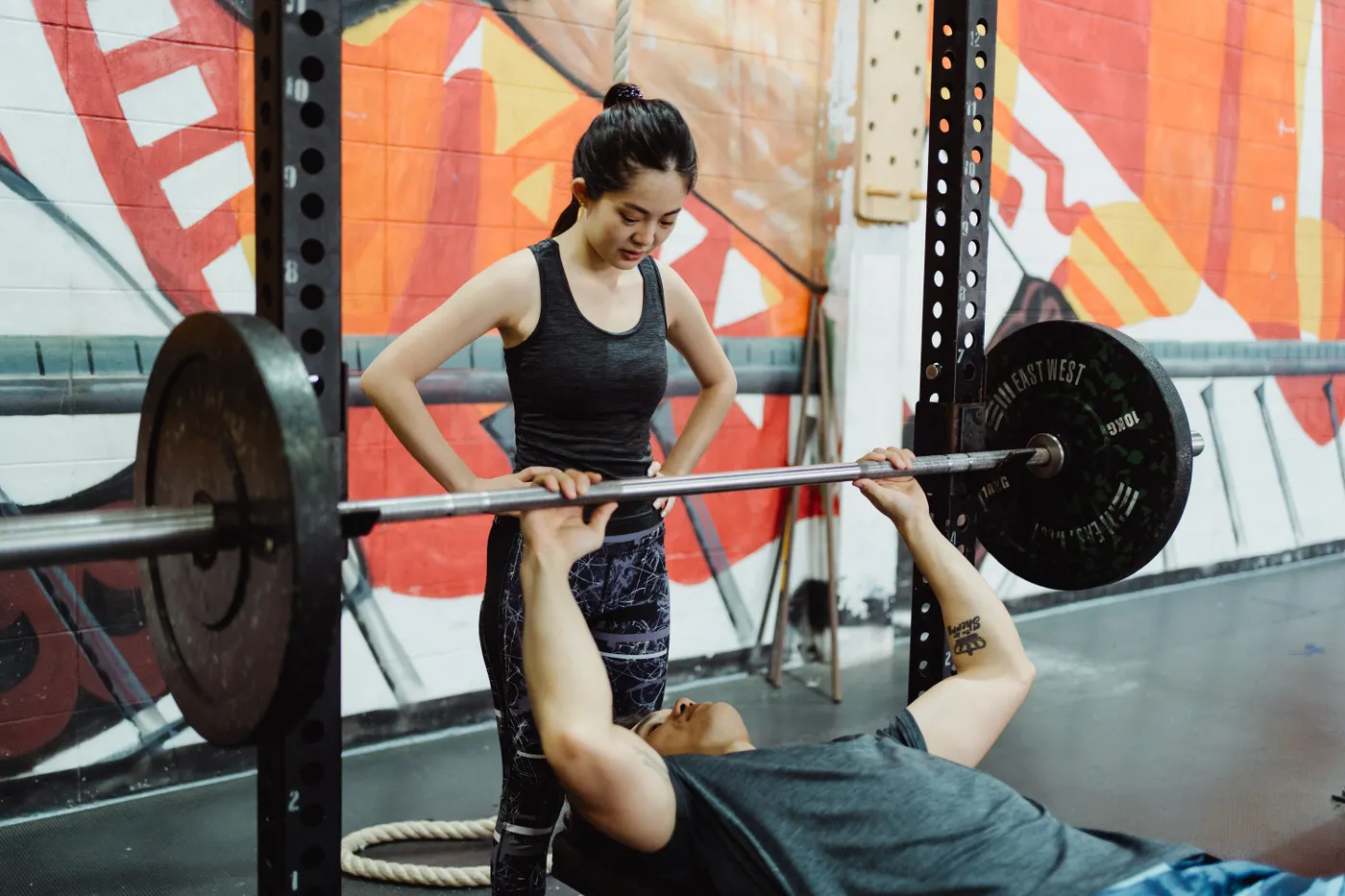
Bring a tape measure and, if possible, the shoes you usually train in. If shopping online, ask for the height from the floor to the top of the pad in its flat position, not a frame measurement or an ambiguous marketing diagram. Record the height in both centimetres and inches so you do not accidentally compare different reference points.
- Measure: confirm the unloaded pad height, length and width. Note whether the bench is flat or adjustable and whether the flat position has a pad gap.
- Lie down: set your head, shoulders and hips as you would for a working bench-press set. Check where your feet naturally land.
- Test pressure: press gently through the floor without lifting your hips. If contact feels insecure, adjust foot distance and angle before rejecting the bench.
- Check the rack: confirm bar-unrack height, spotter-arm clearance, front-foot interference and whether the bench can be centered without hitting a crossmember.
- Try accessories: sit for curls, set a moderate incline, brace for a row and simulate a split squat with no weight. Note where the pad edges and hinges contact your body.
- Move and store: roll or carry the bench as you would at home. Verify that upright storage, if offered, is approved by the manufacturer and stable in the available space.
Keep a short scorecard with three headings: pressing stability, accessory versatility and practical fit. A bench that scores brilliantly on one but poorly on the other two may be the wrong purchase. If you already own a bench, this audit can tell you whether a simple setup change solves the problem before you spend money.
For shared gyms, test more than one user. A bench that suits a tall powerlifter may be awkward for a shorter partner, and the reverse can also be true. A removable, stable foot platform may help with foot contact where permitted, but improvised unstable stacks of plates are not a substitute for a purpose-built solution.
Bodybuilding Shirts & Workout Gear
Bodybuilding shirts, tanks and gym gear for lifters chasing muscle, size, symmetry and the pump.

Kanye Chest Gym | Funny Bodybuilding Vest | Chest Day W Tank Top
Train hard, laugh a little, and rep “Kanye Chest”.

The Chestfather Arnold Meme Sweater Big Chest T-Shirt
For laid-back days and lifting humor: “The Chestfather”.


I Love Bench Press Gym | Funny Heart Plate Muscle Shirt Tank Top
Add some lifting attitude to training with “I Love Bench Press”.


Ultimate Meme : The Essential Bench Press Shirt T-Shirt
Show some powerlifting attitude with a playful “Ultimate” tee.

Work on His Pecks Tee
Show some bodybuilding attitude with a playful “Why Did The Chicken Go To The Gym? To Work” tee.

– Muscle Inflation Graph Meme Jumper | Gym Economics Pu T-Shirt
Keep things casual with a little “Muscle Inflation Graph Meme” attitude.

Live Love Lift Hooded Pullover Workout Gym Lifestyle Fa Hoodie
Stay casual and show some donut-loving attitude with “Live Love Lift”.

Muscle Mountain – Bicep Mountain Meme Decal for Water B Sticker
Put “Muscle Mountain” gym humor on your laptop, bottle, or gym gear.
7. Four weeks to build a repeatable pressing setup
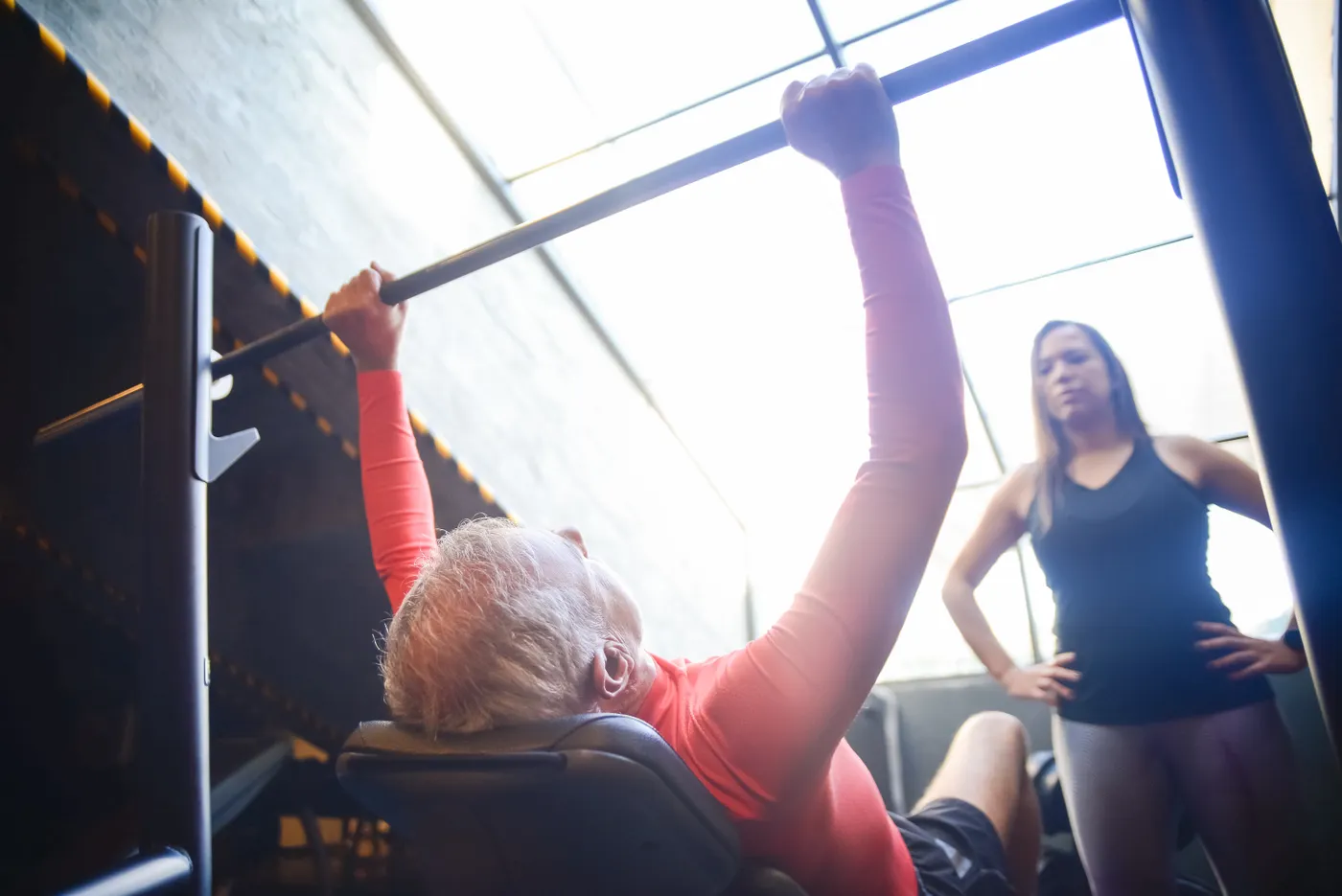
Bench fit becomes meaningful when it survives repeated training, not just a single showroom test. Use a four-week technique audit alongside your normal program. Keep the main exercise and bench constant long enough to judge the setup; changing height, grip, arch, load and footwear every session makes it hard to know which change helped.
Week 1 – establish a baseline. On two pressing days, record bench height, shoe type, grip width, foot position and whether your heels stay in contact. Perform three controlled working sets at an effort that leaves two or three repetitions in reserve. Note any slipping or repeated repositioning. Use spotter arms or a competent spotter for barbell work.
Week 2 – fix the weakest link. Change only one setup detail: foot distance, shoe choice, pad grip or bench placement inside the rack. Repeat the same movement and similar loading. A stable setup should feel reproducible across the first and last reps rather than relying on a lucky first set.
Week 3 – progress conservatively. If technique is consistent, add a small amount of load or one repetition per set while keeping the same contact points. Do not force extra weight when the buttocks lift, the feet slide or the bar path becomes uncontrolled. If a different bench is available, compare it with identical footwear and similar effort.
Week 4 – make the decision. Compare your notes. Is the bench comfortable, stable and compatible with your rack? Can you perform the accessory exercises you need without awkward compromises? If yes, there is little reason to chase a different height just because another model has a more impressive specification. If not, identify whether the actual limitation is height, pad width, surface grip, rack geometry or accessory versatility.
Bottom line: 42-45 cm is a clear competition equipment standard, but fit depends on your proportions and setup. Buy or keep the bench that lets you press safely and consistently, and use appropriately sized supports for other exercises instead of expecting one height to be perfect for everything.