Advertising disclosure: This page includes affiliate product links that may earn us a commission, as well as products from our own store.
A side-to-side difference is a question to investigate, not an automatic order for extra sets. An October 2026 review offers useful clues about targeted leg training. Start with a repeatable task, keep both raw scores and judge any programme change against the performance goal that matters to you.
What the review found, and what it leaves unanswered
A systematic review published on 13 October 2026 examined whether programmes targeting differences between legs performed better than general training. It included 11 studies with 297 healthy athletes aged 12–30. Eligible interventions lasted at least four weeks, and the search covered research available through April 2025. That age range and search date matter: this is neither a survey of every lifter nor a complete account of all research published in 2026.
Two ideas were considered: individualising work after identifying the lower-performing side, and training one limb at a time rather than both together. Reductions in measured asymmetry were more consistent with targeted and unilateral approaches. Performance improvements tended to favour the kind of task trained. However, differences between protocols and tests limit generalisation, and stronger evidence is needed before declaring a universally superior method or a fixed extra-volume prescription.
Those approaches are not identical. Doing the same split-squat work on both legs is unilateral training, but it is not automatically an individualised programme. A programme that changes the order or amount of work according to a repeatable side-to-side assessment asks another question. Keep that distinction clear when someone says their routine fixes imbalances. Ask what was measured and what was actually changed before interpreting the claim.
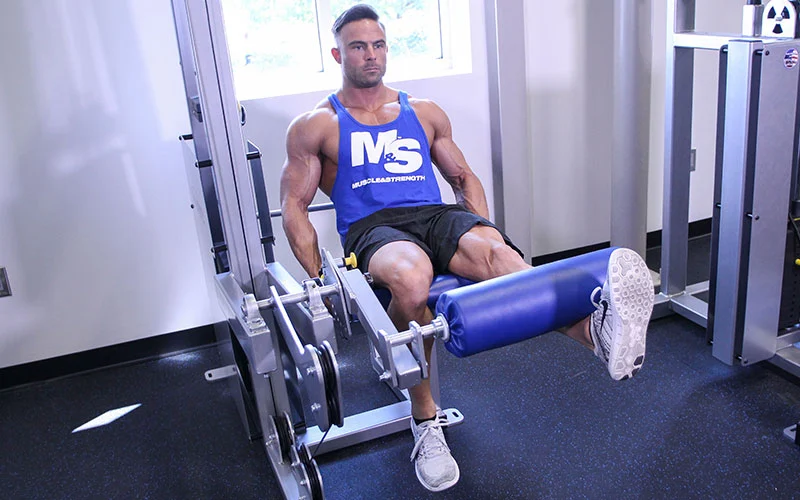
The accompanying single-leg extension photograph illustrates one way of working a leg separately; it does not show review participants or establish that this exact machine was used in the included studies. The practical starting point is a clear question about performance. Decide whether you are concerned with an exercise, a sport task or a persistent pattern in training. A vague impression that one leg feels different is not yet a complete assessment.
Choose a repeatable task before labelling a weaker leg
Side-to-side differences are specific to the task and measurement. A leg that produces a lower score in one test need not be the lower-performing leg in every other test. Strength, jump distance, jump height and balance are different outcomes. Avoid converting one observation into a permanent label for the whole limb. Write down the task alongside the result so that a number retains its meaning outside the session.
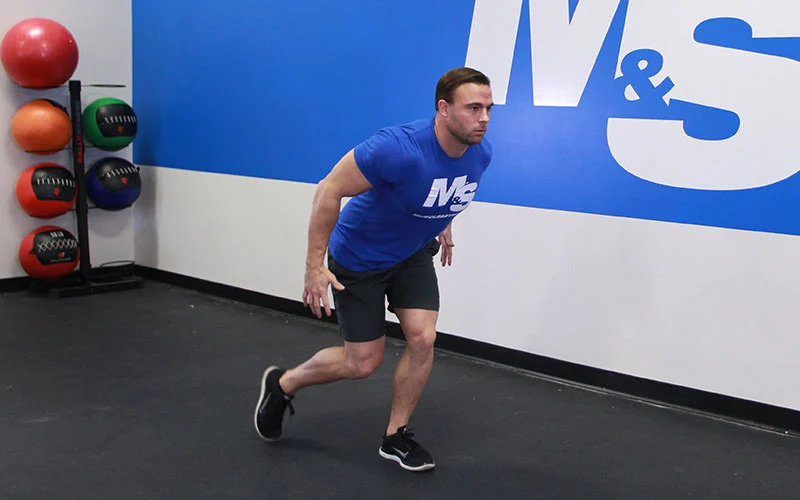
The single-leg hop pictured is an example of a different task from a seated leg extension. It involves propulsion and landing rather than simply moving a machine lever. A result from one cannot stand in for a result from the other. Choose an assessment you can perform competently and safely; adding an unfamiliar hopping test merely to obtain an asymmetry percentage may add confusion rather than useful information.
For a gym-based comparison, standardise the equipment settings, range, loading, warm-up and rest. Consider whether you are comparing maximum effort, a fixed-load repetition count or movement quality. These are separate questions. If you change the seat height between sides or shorten the movement on the last repetitions, you have changed the assessment. Start with a task you understand well instead of hunting for whichever test creates the biggest difference.
Familiarisation also deserves time. A new exercise may improve because you learn where to place the foot or how to balance. Repeat the setup on another suitable occasion before making a major programme change from one result. If you work with a coach, agree on the repetition or trial standard first. A clear, modest assessment can be more useful than an elaborate set of scores collected without consistent execution.

Equipment Worth Exploring
Explore equipment, accessories and gear from our carefully selected range.


Rubber Hex Dumbbells
Rubber-coated hex dumbbell pairs with a stable shape for home and commercial strength training.


Cast Iron Kettlebells
Textured cast-iron kettlebells for swings, squats, carries, and full-body training.


Keep the raw scores beside any percentage
An asymmetry percentage depends on how it is calculated. Using the higher score as the reference is one simple descriptive option: subtract the lower score from the higher, then divide by the higher and multiply by 100. This is not a universal diagnostic equation. Different calculations and different tests can produce different values, so keep the chosen method consistent when comparing your own repeated assessments.
For illustration, scores of 100 and 90 give a 10% difference with that calculation. Scores of 90 and 90 give zero, but the original higher score has fallen. By contrast, 110 and 100 produce about 9.1% while both sides exceed their starting scores. Those examples show why the percentage alone cannot tell you whether training improved performance. Always retain the two numbers that produced it.
Keep the side labels as well. A smaller gap can conceal a change in which side scored higher. That may matter when you are trying to understand a repeated training pattern. Record left and right rather than saving only stronger and weaker. The labels should describe the current assessment, not lock a leg into a role that you keep applying even after the results have changed.
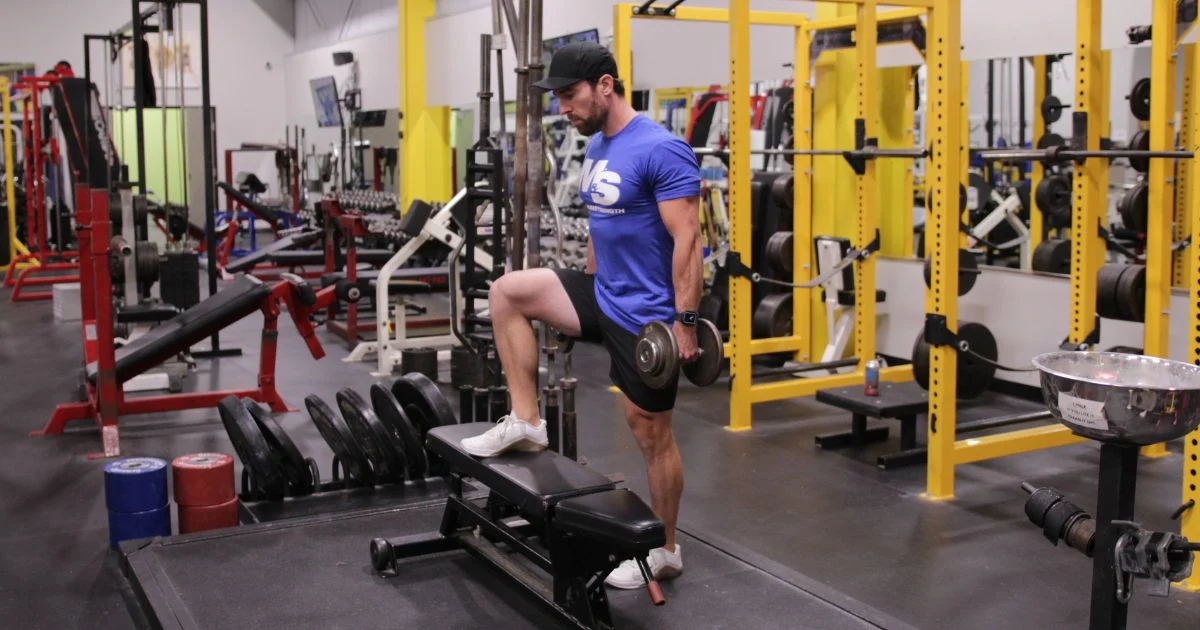
The step-up image illustrates another exercise whose setup matters. A different step height, more help from the trailing foot or a changed external load can alter the task. A repetition count from it is not automatically comparable with a hop or machine test. Avoid adopting a dramatic percentage from social media as a universal threshold that requires correction. The measurement method, repeatability and actual performance deserve attention before the label does.
Change the programme deliberately rather than adding work everywhere
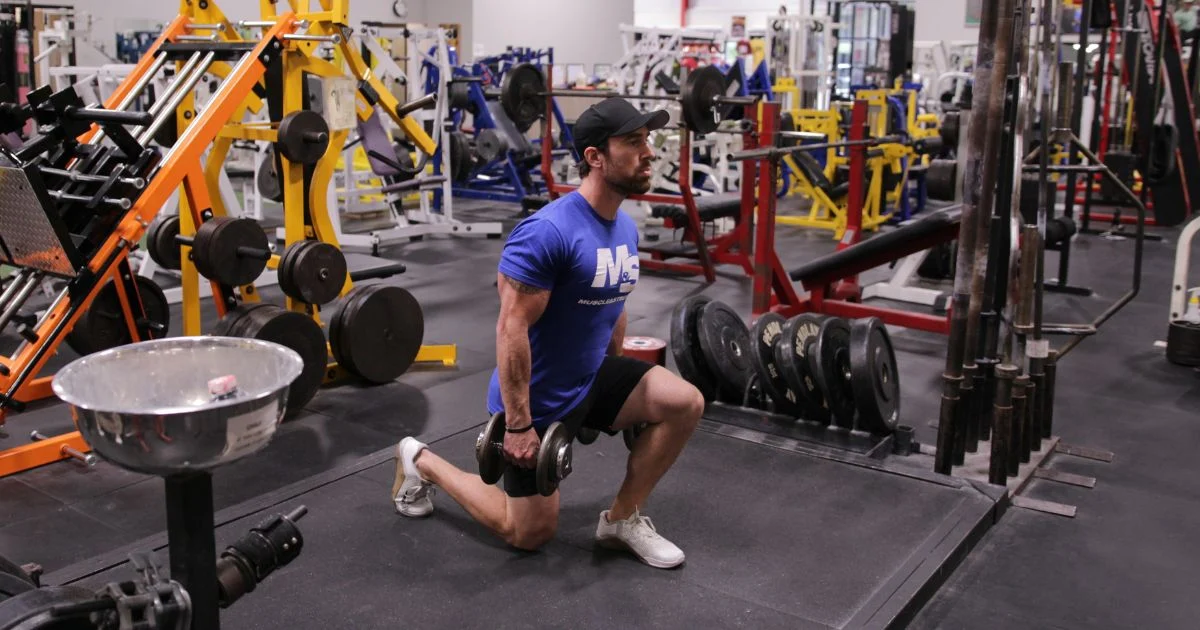
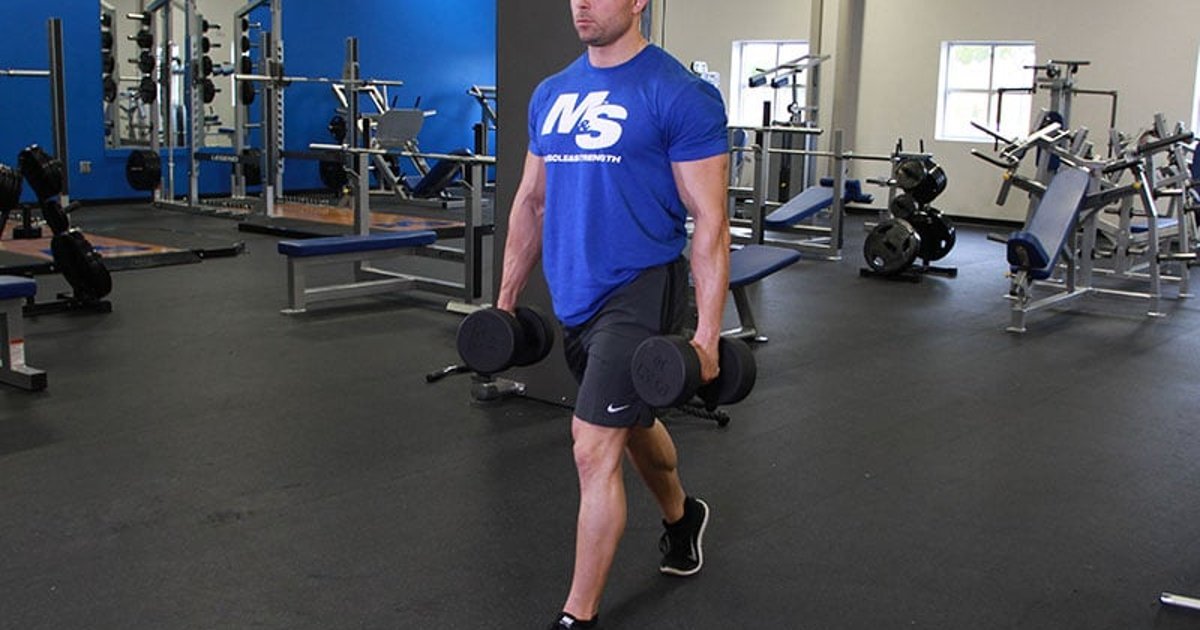
Unilateral and bilateral exercises can coexist. A bilateral leg press or squat may serve a general strength goal while a familiar single-leg movement gives each side an individual task. The forward-lunge photograph illustrates one accessory option, not a treatment or a required exercise from the review. Keep the main goal visible: improving a sport skill, building strength and monitoring a particular exercise do not always demand the same training decision.
If a consistent difference remains relevant to your goal, discuss a small, clear adjustment with your coach. Starting a unilateral exercise with the lower-performing side is one possible way to organise the work without automatically adding sets. Extra volume is another variable, but it should not become an unlimited response to an uncertain measurement. Change one element at a time so you can understand how the session and subsequent performance respond.
A practical planning example is to retain the main bilateral lift and replace one existing accessory with a controlled unilateral exercise. Keep the initial amount of work manageable and log both sides separately. This example is an editorial organisational option, not a protocol proven superior by the review. It avoids the common mistake of keeping every old exercise and then adding several new ones simply because a test produced a difference.
Consider the whole week. Training, sport practice and fatigue all compete for time and recovery. A change that makes every leg session longer may be harder to sustain than one integrated into existing work. Prioritise exercises you can repeat with suitable equipment and a clear technique standard. You do not need every type of machine or free weight to investigate one specific question about how you train.
Equipment Worth Exploring
Explore equipment, accessories and gear from our carefully selected range.

Leg Press/Hack Squat BPR-790
Convertible 45-degree leg press and hack squat machine with a broad footplate and band pegs.

Leg Extension/Curl BCO-780
Leg extension and lying leg curl combo with plate loading, band pegs and a cable-loading option.

Studio V-Squat
Plate-loaded V-squat machine for supported lower-body strength training.



FID Bench MAX
Adjustable bench offering flat, incline, and decline positions + adjustable headrest.


Multi Bench MBX-650 2.0
Adjustable multi-bench with roller adjustment, 15 backrest positions and accessory mounts.

Multi Pull Smith Rack MPHR-780
All-in-one rack with a Smith machine, functional trainer, lat pulldown and low row.

Competition Plates
Competition-style bumper plates for Olympic lifts and loaded strength training.
Retest both performance and the usefulness of the change
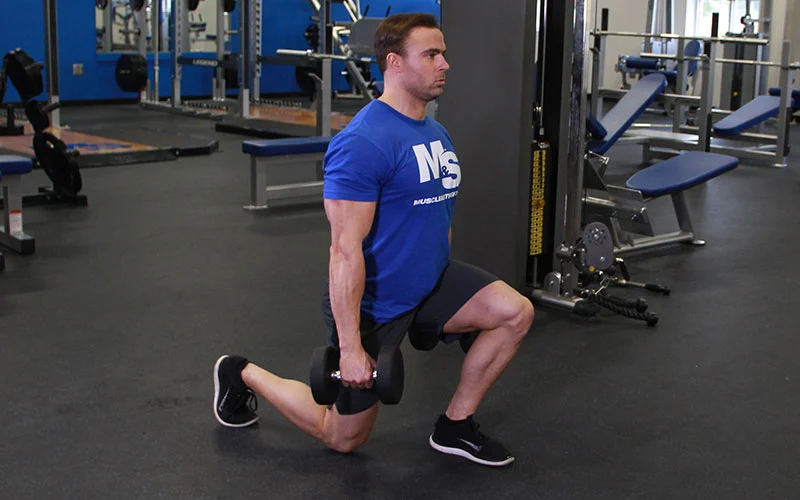
Set a review point before changing the programme. Decide what you will repeat, which setup details must stay the same and what would count as useful progress. The reverse-lunge photograph illustrates a training exercise you might record; it is not a substitute for whichever assessment you chose. Keep exercise performance and assessment results distinct when their tasks differ. Both can be informative without being interchangeable.
Record the exercise, load, sets, clean repetitions, side order and any relevant setup changes. Note whether a session followed unusually demanding training or sport practice. A concise log helps you interpret a result without pretending to eliminate every source of variability. If the step height, machine or exercise changed, write that down rather than forcing the new score into an old comparison. Clear records make consistency more useful than memory.
At the review point, inspect the raw performance of both sides as well as the gap. Ask whether the programme still supports the main lifts or sport sessions, whether execution is more repeatable and whether the adjustment was practical to maintain. A smaller percentage is not automatically a successful outcome if overall performance has declined. Equally, a remaining difference does not automatically erase improvements in the task you actually care about.
This is a training discussion for healthy athletes and lifters, not an injury diagnosis or a return-to-sport checklist. Pain, a recent injury or a marked unexplained change deserves individual assessment rather than a homemade correction plan. Use the evidence to ask better questions, not to promise perfect symmetry. Keep changes proportionate to reliable observations, retain useful general training and judge the result by performance as well as numbers.

Leg Day Shirts & Workout Gear
Leg-day gym shirts and workout gear for lifters who never skip squats, lunges and lower-body punishment.

Legday – Squats & Deadlifts , Meme Top Bros & T-Shirt
Bring “Legday” humor to your next gym day.


Leg Day Is Calling You Sweater Squats & Deadlifts T-Shirt
Add a playful “Leg Day Is Calling You” touch to your casual rotation.

Negative Leg Day Review Leg Day Sucks Meme Squats, T-Shirt
Show some leg-day attitude with a playful “Negative Leg Day Review” tee.


Quadzilla Massive Quads Leg Day Squatting Meme Tank Top
Train hard, laugh a little, and rep “Quadzilla”.


Leg Day Thou Shalt Not Skip Leg Day Medieval Knight Pul Hoodie
Show off your medieval humor in a laid-back “Leg Day” hoodie.

Never Skip Legday – Chicken Legs Meme , , & Leg Day T-Shirt
Heavy lifts, good laughs, and a little “Never Skip Legday” energy.