Advertising disclosure: This page includes affiliate product links that may earn us a commission, as well as products from our own store.
Triceps Kickbacks: Keep the Upper Arm Still Before Adding Weight
The dumbbell triceps kickback can look almost effortless from across the gym. Hinge forward, move a small weight behind you and bend the elbow again. The useful distinction is what stays still: if the shoulder swings the whole arm backward, the repetition has changed. A controlled kickback asks you to extend the elbow while preserving the upper-arm position. That makes setup, load selection and the return more important than the size of the dumbbell. Give the exercise a defined place in your arm training rather than treating every movement behind the body as the same lift.
1. Build a support position you can repeat
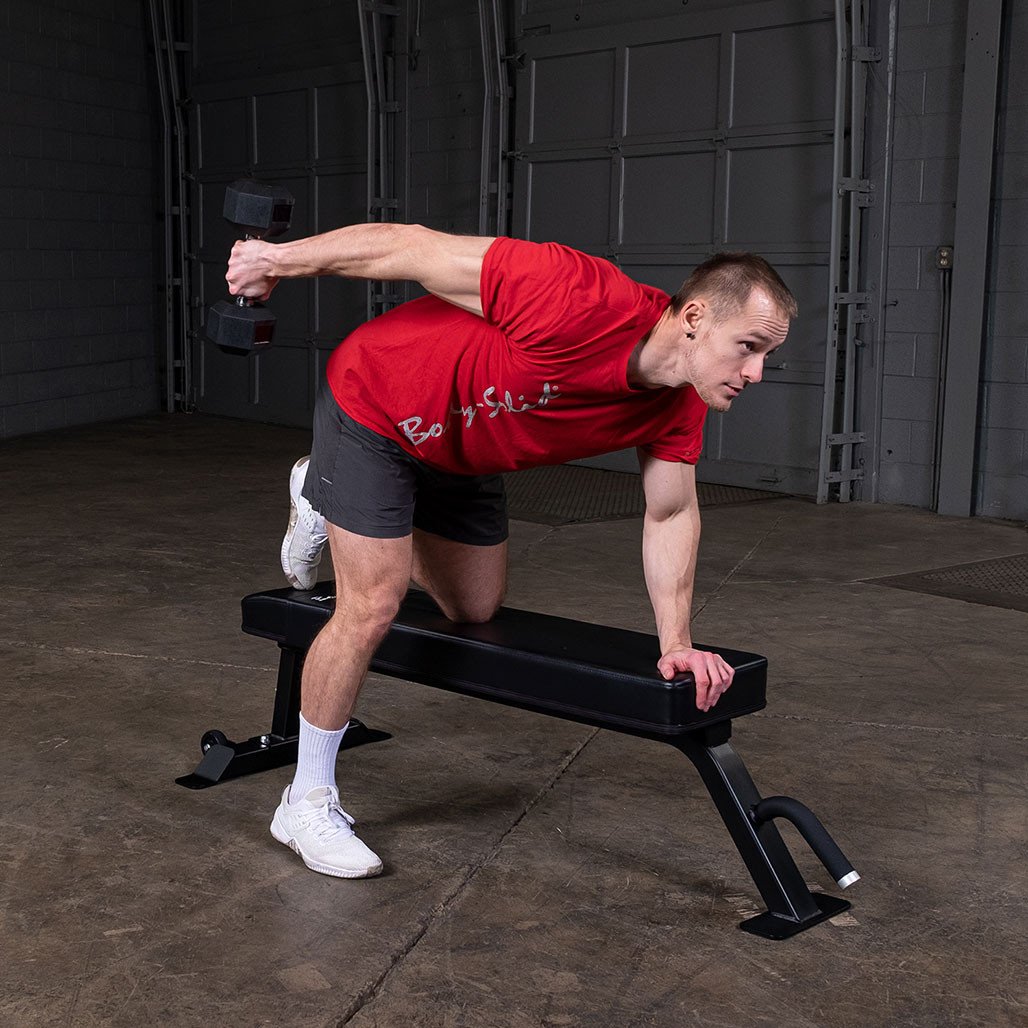
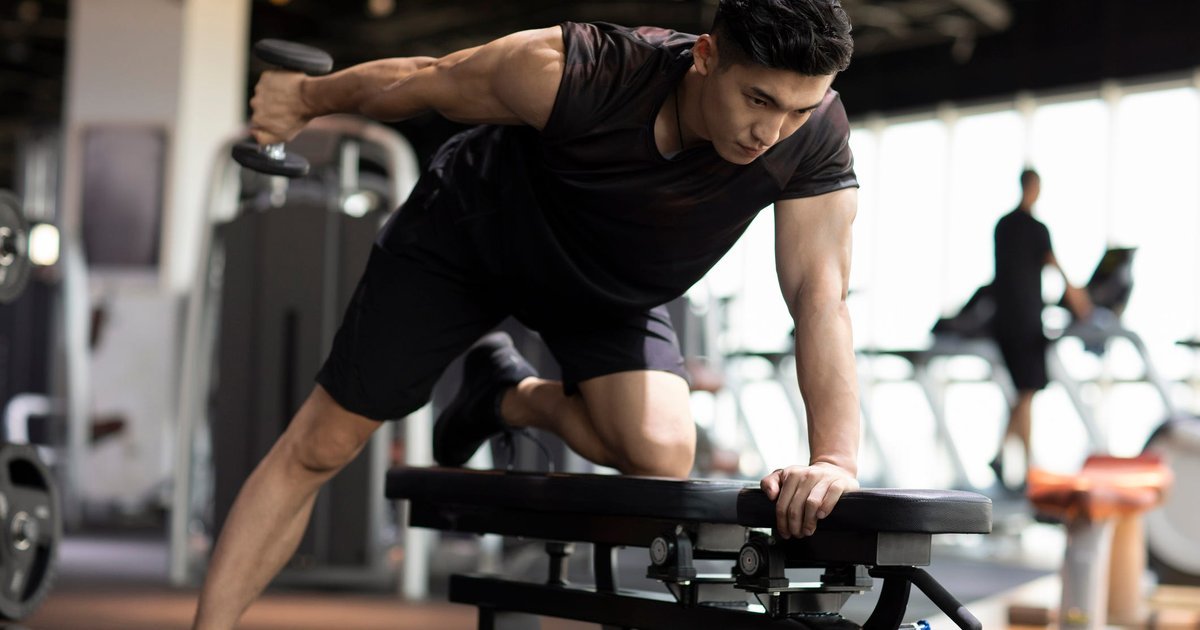
Choose either a supported standing stance or a bench-supported position. In the standing version, stagger the feet and place the free hand on the forward thigh or another stable support. With a bench, the opposite hand and knee can provide support while the working-side foot stays on the floor. The goal is a steady torso, not a particular photograph-perfect stance.
Hinge forward without letting the lower back sag. Keep the head in line with the trunk rather than craning upward to watch the mirror. Arrange the support before lifting the working arm into place. If you are already wobbling while holding an empty hand beside your ribs, adding a dumbbell will not make the position easier to maintain.
Check the space behind your hand. A passing lifter, bench leg, wall or plate tree can interrupt the arc. Put the unused dumbbell somewhere that will not become a trip hazard, and choose a bench that stays put when you press through the supporting hand. A narrow crowded gap is a poor place to learn a movement that travels behind your field of view.
Practise a few unloaded repetitions before selecting a working weight. Notice whether your torso rises when the elbow straightens. This simple rehearsal gives you a reference for the loaded version: the same support, the same upper-arm position and the same deliberate return.
2. Separate elbow extension from rowing the whole arm
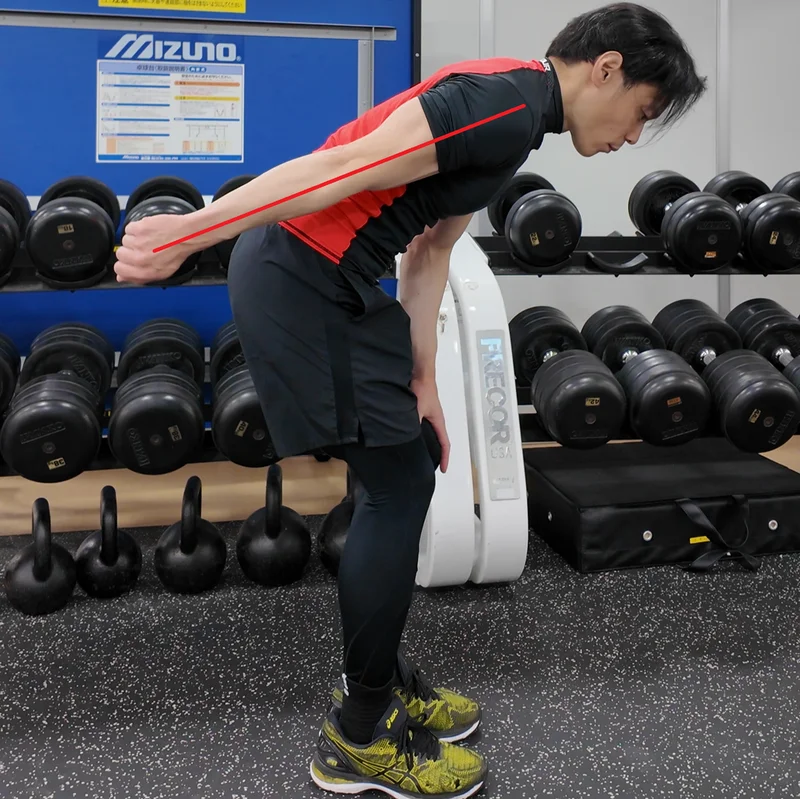
Bring the working upper arm close to your side and approximately in line with the torso. Start with the elbow bent so the forearm points roughly downward. Then straighten the elbow without throwing the shoulder backward. The dumbbell moves because the forearm changes position relative to the upper arm, not because you repeatedly row the elbow toward the ceiling.
A useful observation is to watch the elbow rather than the weight. If the elbow makes a large forward-and-back trip on every repetition, part of the movement has become a shoulder action. Reduce the load and rebuild the starting position. You do not need to clamp the arm painfully against the ribs; you need a position that stays recognisable throughout the set.
Let the elbow straighten under control rather than snapping into the end position. Keep the wrist from folding as the forearm approaches horizontal. A brief controlled finish can help reveal whether you arrived through elbow extension or simply flicked the dumbbell backward. The pause is a practice cue, not a requirement to chase an extreme contraction or joint lock.
Return through the same path. If the upper arm falls forward as soon as you bend the elbow, reset before the next repetition. For example, eight deliberate extensions followed by three shoulder swings should not become eleven identical repetitions in your log. Recording the distinction makes a later increase in clean repetitions meaningful.
If a side-on video is permitted in your gym, one short set can make the elbow path easier to judge. Keep other people out of the frame. Use what you see to choose one correction at a time instead of stacking five cues while you are trying to balance.
3. Choose the load for the difficult part of the arc
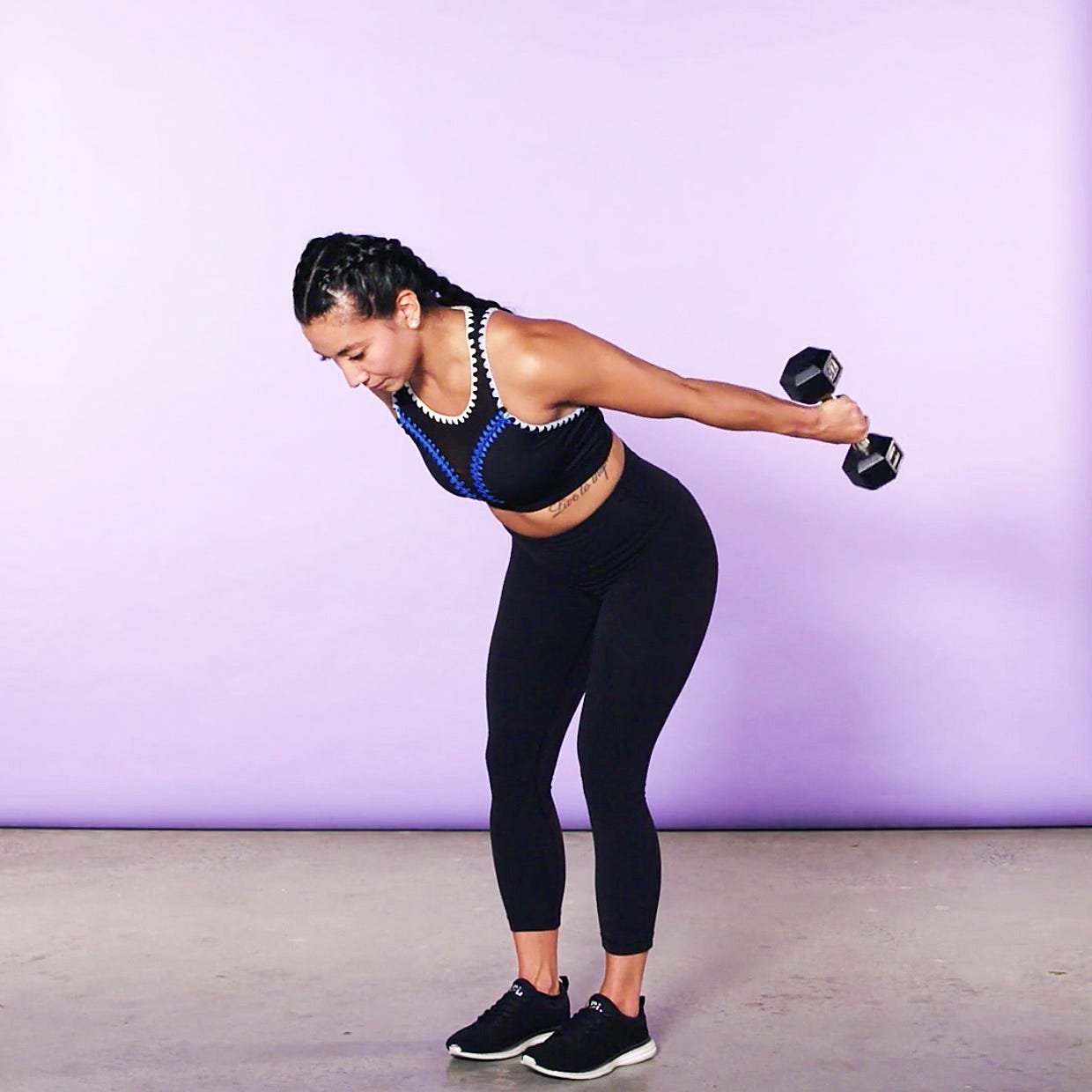
A dumbbell always pulls downward. When the forearm hangs closer to vertical, the weight’s line of pull passes nearer the elbow. As the forearm moves toward horizontal, the horizontal distance between the elbow and that line becomes larger. This changes the turning demand around the elbow. It explains why the end of a strict kickback can feel demanding with a modest weight.
The practical consequence is simple: select a dumbbell that allows the finish you intended. A weight you can lift by swinging through the first part of the movement may still be too heavy to extend smoothly. Using a smaller dumbbell is not a failure to train hard; it is a way to keep the task consistent.
Torso angle and upper-arm height also change the relationship between the arm and gravity. A more upright stance is therefore not automatically comparable with a more horizontal supported position. Keep those details consistent when judging progress. Do not compare your kickback number with somebody else’s photograph when their setup and range differ.
Imagine using the same dumbbell for two sets. In the first, you maintain the hinge and control every finish. In the second, you stand taller and sweep the shoulder backward to complete more repetitions. The extra repetitions do not demonstrate the same improvement as adding repetitions while preserving the original setup.
Keep breathing rather than turning a small isolation movement into a prolonged strain. If the support position becomes the limiting task, change the setup or use a suitable alternative. Sharp pain is a reason to stop and reassess, not a signal to throw the weight harder.
4. Cable and band versions change more than the equipment
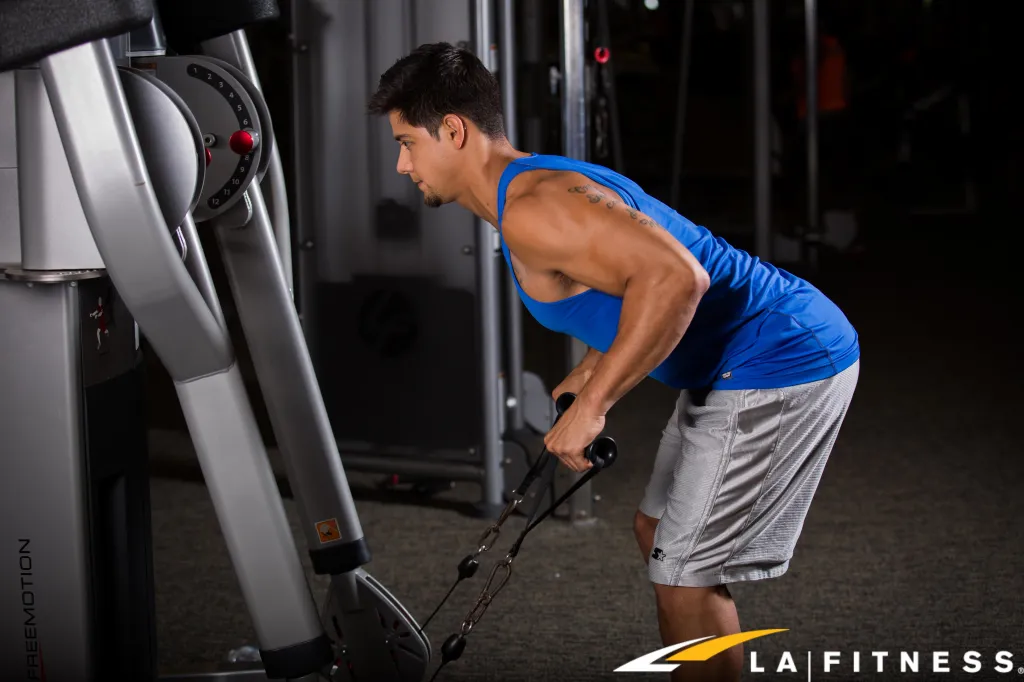
A cable pulls toward its pulley, while a dumbbell pulls toward the floor. Changing the cable’s position changes its direction relative to the forearm. A cable kickback can therefore offer a different resistance pattern, but it is not enough to attach a handle and assume every part of the repetition is equally loaded.
Arrange a stable stance, choose a manageable stack setting and check that the cable has a clear path. Keep the upper arm in a repeatable position and extend at the elbow. The photograph shows cable practice in a flexed-arm position; the same distinction between elbow movement and whole-arm swing still applies as the hand travels backward.
Resistance tubing provides another option. Its tension changes as it stretches, so the starting length matters. Inspect the tubing and its anchor before loading it, keep the wrist controlled and avoid a setup in which a slipping anchor could recoil toward you. Do not compare the printed label on a band directly with a dumbbell weight or a cable-stack number.
Pick the version for a reason. A bench-supported dumbbell setup may make the upper-arm position easier to learn. A cable may let you adjust the direction of resistance. Tubing may be convenient when that is the equipment available. None needs to be presented as a universally superior arm builder.
The options below cover dumbbells, stable benches and single-hand cable equipment. Check the actual loading increments and handle fit for this exercise. A large maximum capacity is less useful here than being able to choose a small, manageable load and repeat the same movement.

Equipment Worth Exploring
Explore equipment, accessories and gear from our carefully selected range.


Rubber Hex Dumbbells
Rubber-coated hex dumbbell pairs with a stable shape for home and commercial strength training.



FID Bench MAX
Adjustable bench offering flat, incline, and decline positions + adjustable headrest.


Multi Bench MBX-650 2.0
Adjustable multi-bench with roller adjustment, 15 backrest positions and accessory mounts.

GymPin D Handle Bar
Multi-use steel D-handle bar for cable rows, pulldowns and other cable exercises.

5. Progress the clean repetitions, not the shoulder swing
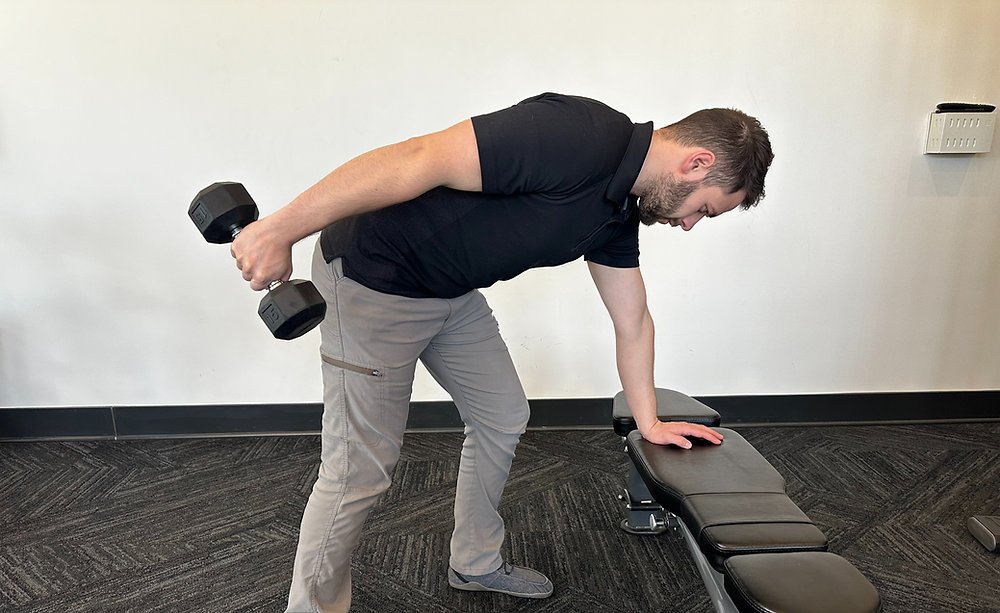
Give kickbacks a modest accessory role within an existing programme. They do not have to replace every other press or triceps exercise, and a strong local sensation does not by itself prove that an entire arm routine is complete. Start with a small amount of practice that leaves you able to maintain position through the last repetition.
As an illustrative approach, choose a comfortable repetition range and keep the first few sessions focused on consistency. Log the implement, weight per hand, support, repetitions and whether the upper arm stayed still. This is a practice example, not a researched optimal prescription. Someone already doing substantial pressing may need less additional triceps work than someone with a different routine.
Suppose your initial clean set ends at ten repetitions. Aim to repeat that standard before forcing a heavier dumbbell. When more controlled repetitions become repeatable, try the smallest suitable increase and reassess the finish. If the available jump immediately turns the exercise into a swing, stay with the lighter option or choose equipment with finer increments.
Complete both sides with comparable technique, while recording differences honestly. Do not quietly shorten the range on one arm to make the numbers match. Rest enough to set up deliberately again, and stop the set when you cannot recover the intended upper-arm position without momentum.
Arm-day slogans are more entertaining than a detailed log, but the log tells you what actually improved. Keep the clothing fun and the repetitions specific: steady support, controlled elbow extension and a return you can recognise. If those details disappear when the load rises, the next useful step is a better repetition rather than a larger number.

Bodybuilding Shirts & Workout Gear
Bodybuilding shirts, tanks and gym gear for lifters chasing muscle, size, symmetry and the pump.


Every Day Is Arm Day
Make gym days more fun with “Every Day is Arm Day Octopus Gym Meme” style.

Shirt – Liftionaire Golden Dumbbell Gymbros & Gains T-Shirt
Make gym days more fun with “Liftionaire Golden Dumbbell” style.

Welcome To The Gun Show Bro Meme Hooded Weightlifting Hoodie
Bring “Welcome to the Gun Show” gym humor to lazy days and post-workout plans.


Dumbbell Heartbeat Muscle Shirt Athletic Vest Fitness F Tank Top
Your gym-day look, with a playful “Dumbbell Heartbeat” twist.

GymTok – TikTok Parody Bicep Crewneck for Gymbros and F T-Shirt
Show some gym-day personality with “GymTok”.

Gym If You're Reading This It's Arm Day Drake Parody & Sticker
Stick a little “If You're Reading This It's Arm Day Drake” humor on your favorite gear.

Meme Pink Dumbbells Top & Gymbros T-Shirt
Rep “Pink Dumbbells” humor in and out of the gym.

Hells Dumbbells Hells Bells Parody AC/DC Heavy Metal Ro Hoodie
Stay casual and show some metalhead attitude with “Hells Dumbbells”.