Advertising disclosure: This page includes affiliate product links that may earn us a commission, as well as products from our own store.
Barbell Rollouts: Set Up the Plates and Own Your Range
A barbell rollout turns a familiar implement into a moving support for your upper body. Kneel behind a loaded bar, roll it away and bring it back while controlling your trunk. The challenge comes from changing your position, not simply from making the bar heavier. A repetition that reaches farther but leaves you hanging through the lower back is a different task from one you can control.
This guide concentrates on the barbell version: plate geometry, floor space, starting position, a repeatable stopping point and useful regressions. It is not a contest to get your chest to the floor. Choose a range you can reverse without losing position, then make changes small enough that you can tell what improved.
1. Understand the moving-support challenge
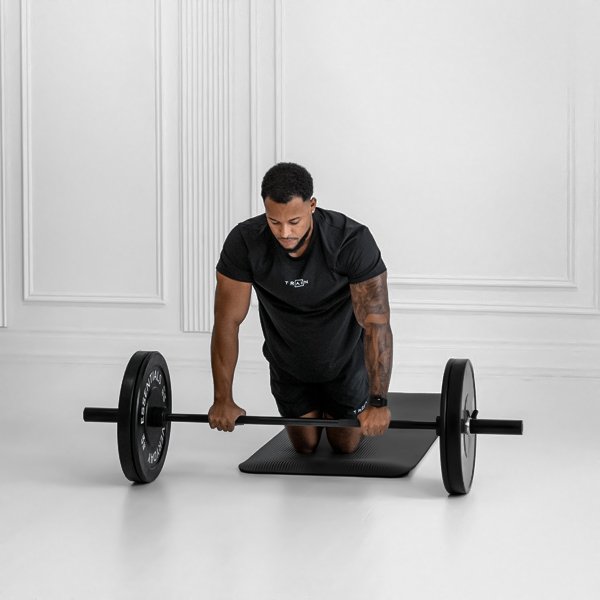
In a kneeling rollout, your knees provide one contact with the floor and your hands hold a support that can travel away. As the bar moves forward, maintaining the trunk position becomes more demanding. The abdominal muscles help resist excessive extension while the shoulders and arms control the moving implement.
Think of the exercise as keeping the middle organised while the supports move. It differs from repeatedly curling the spine, as in a crunch, and from holding a fixed plank. Those exercises can all have a place in training, but a longer rollout is not automatically a better version of either one. Define which movement you intend to practise.
The barbell also changes the handling compared with a small ab wheel. Grip width, plate diameter and the width of the implement affect your setup. A wider hand position does not guarantee an easier repetition for every lifter. Shoulder comfort, the distance travelled and the ability to reverse the movement still matter.
For a first rehearsal, separate the outward and return phases in your mind. You need to control both. Rolling away until gravity wins and then recovering by throwing the hips backward does not show that the extended position was manageable. Stop earlier and make the same controlled return your standard.
2. Check the plates, floor and grip before loading effort
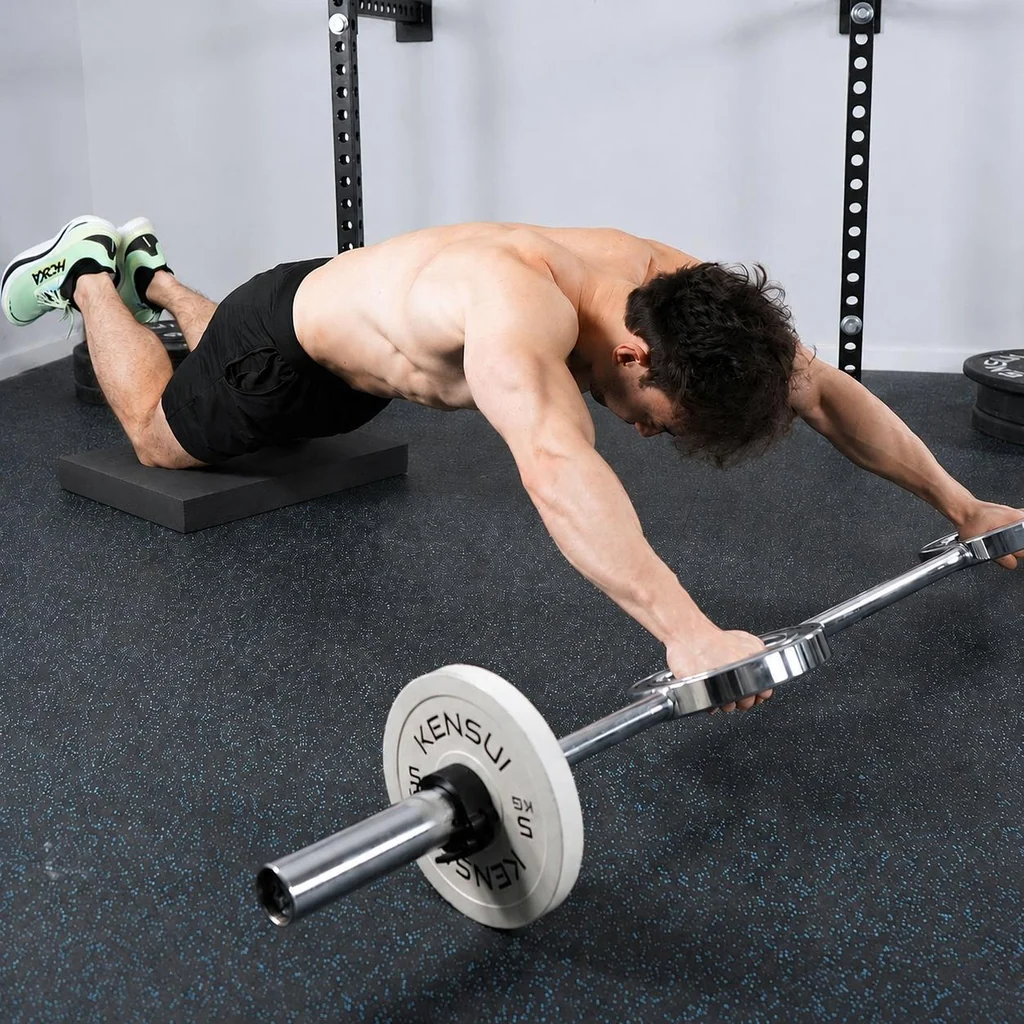
Use matching round plates on both ends of a suitable bar. Secure them with compatible collars and check that the assembly rolls smoothly along the chosen floor. A plate with a flat edge can interrupt the movement; a loose collar or uneven load can make the bar unpredictable. Test the implement before putting your bodyweight behind it.
Plate diameter determines the height of the shaft above the floor. Two setups with the same total mass can place the hands at different heights and feel different. Record the plate arrangement, rather than comparing sessions only by kilograms. You are not performing a deadlift, and adding more plates is not the default way to make this exercise productive.
Choose a level, nonslip surface with enough clear space for the whole bar and your return. Keep other people, loose plates and belongings out of the travel path. A thin, stable knee pad may improve comfort; a pad that slides or sinks unpredictably changes the support beneath you.
Grip the shaft securely around shoulder width as a starting point, with the thumbs wrapped around it. Begin with the bar close enough to control and your shoulders approximately over the hands. Keep the elbows straight or nearly straight without forcing them into an uncomfortable position. Brace before the bar moves and choose a head position that follows the trunk instead of craning upward.
Straight-bar setups are the clearest starting reference. Curved, cambered and multi-grip bars change hand position and clearance; do not assume that any bar advertised for strength training is a direct substitute. Similarly, a dumbbell-based rolling variation requires securely assembled weights that actually roll. Hex heads can stop abruptly. Check the equipment instructions rather than improvising with a loose or unsuitable implement.

Equipment Worth Exploring
Explore equipment, accessories and gear from our carefully selected range.


Competition Plates
Competition-style bumper plates for Olympic lifts and loaded strength training.

Grip Plates
Rubber-coated weight plates with handholds for loading barbells and machines.



Speed Collar
Quick-release collars designed to secure weight plates on standard two-inch Olympic bars.
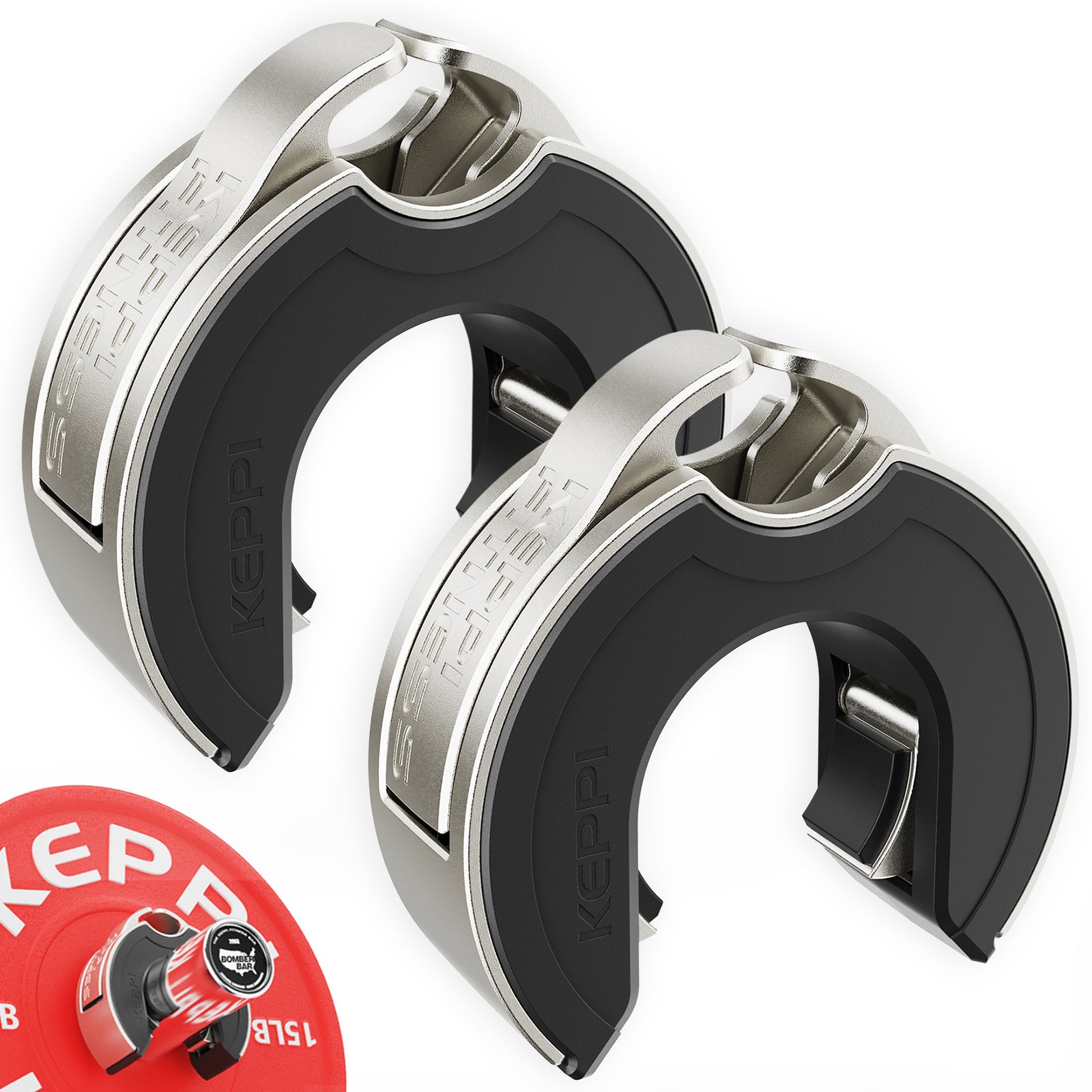
Keppi Open Collars
C-shaped magnetic Olympic barbell collars with a quick-lock mechanism and grippy lining.

EZ Curl Barbell
Olympic EZ curl bar with angled grips for curls and triceps exercises.
3. Choose a stopping point you can reverse
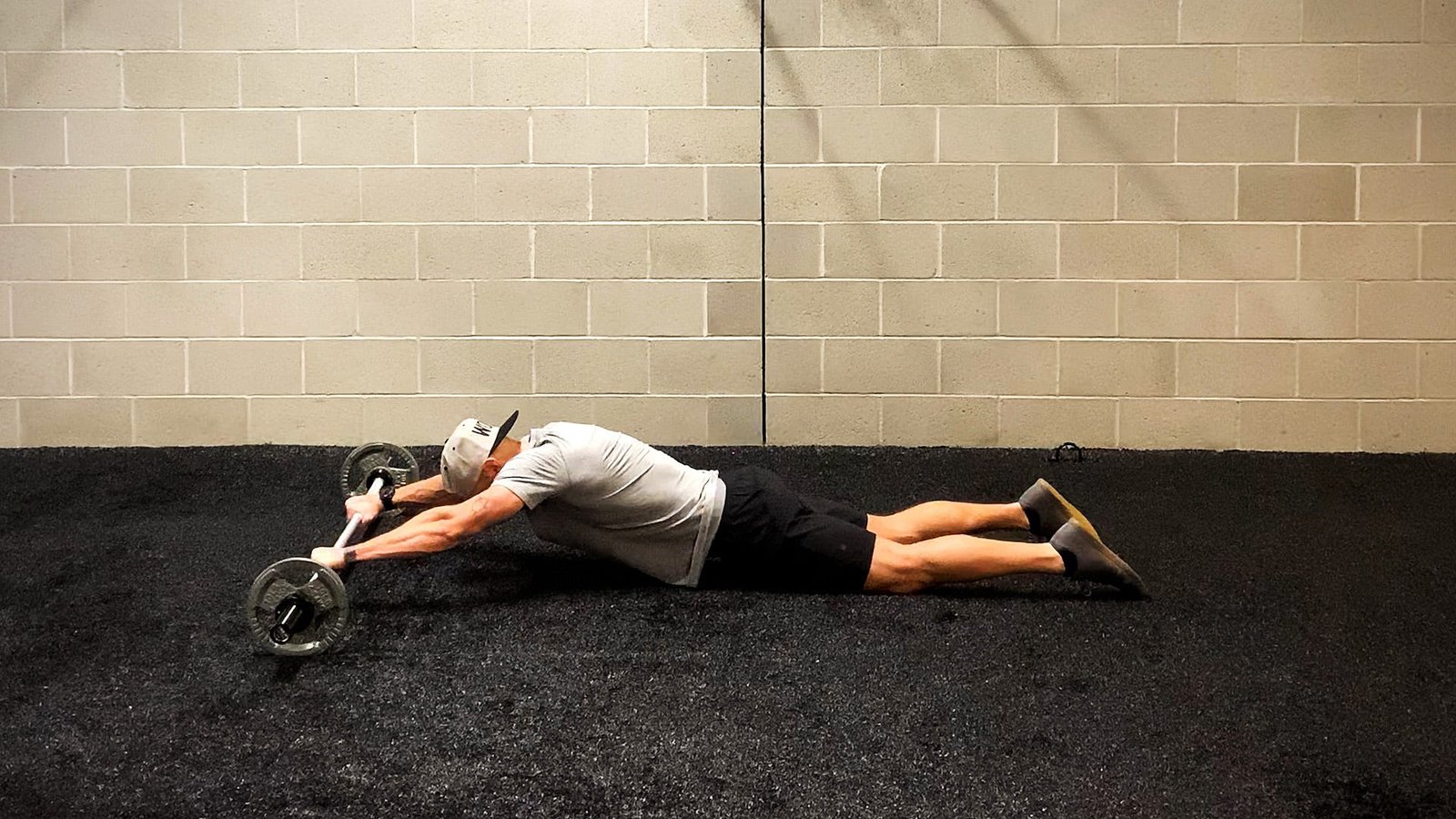
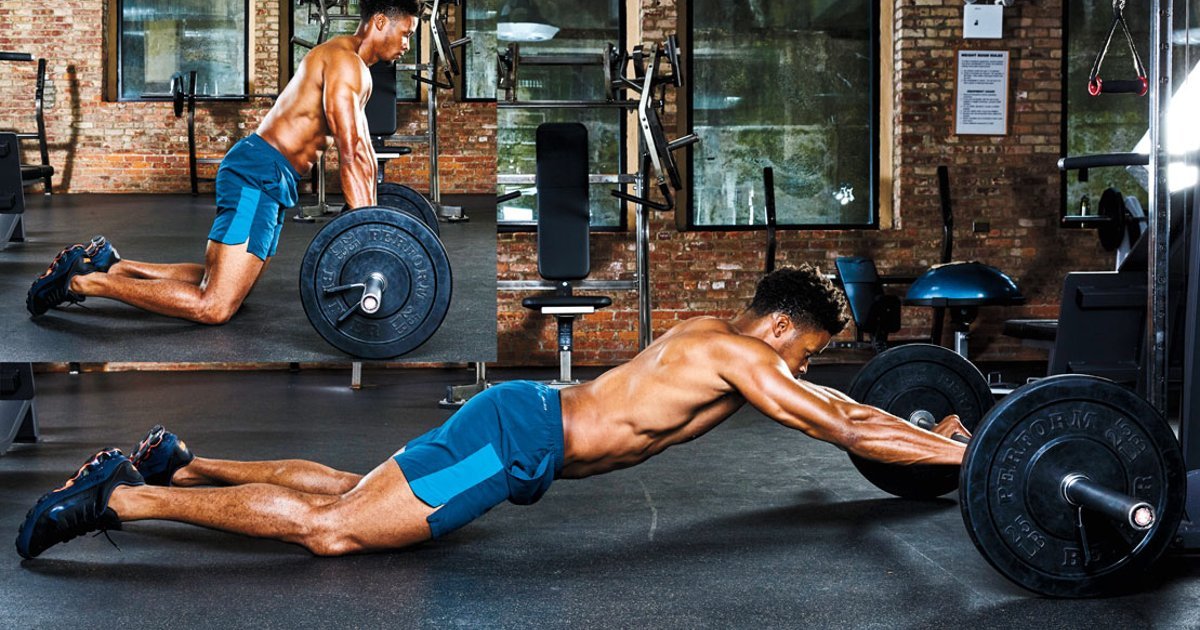
Begin with a short excursion. Let the shoulders and hips move into the rollout while keeping the trunk controlled, then bring the bar back before the lower back starts to sag. Your first useful range may look modest beside a photograph of a fully extended athlete. The photograph illustrates the exercise; it does not prescribe your starting distance.
A simple way to compare sessions is to use a floor seam or a piece of tape beside the travel path as a visual reference. Keep anything that could catch a plate out of the actual rolling line. Note where the bar starts and the farthest point you reach under control, so an extra repetition does not secretly become a shorter one.
During the return, bring the implement back smoothly rather than yanking the arms or folding sharply at the hips. If your return depends on a sudden change in posture, reduce the excursion. The aim is not to freeze every joint; it is to avoid replacing the planned movement with a rescue strategy.
Film a light set from the side if you can do so safely. Review the relationship between the ribs, pelvis and lower back, and whether the last repetition resembles the first. A side view often makes a loss of position easier to notice than the sensation of working hard. Keep the same implement when you compare recordings.
4. Recognise the errors that a harder effort will not fix
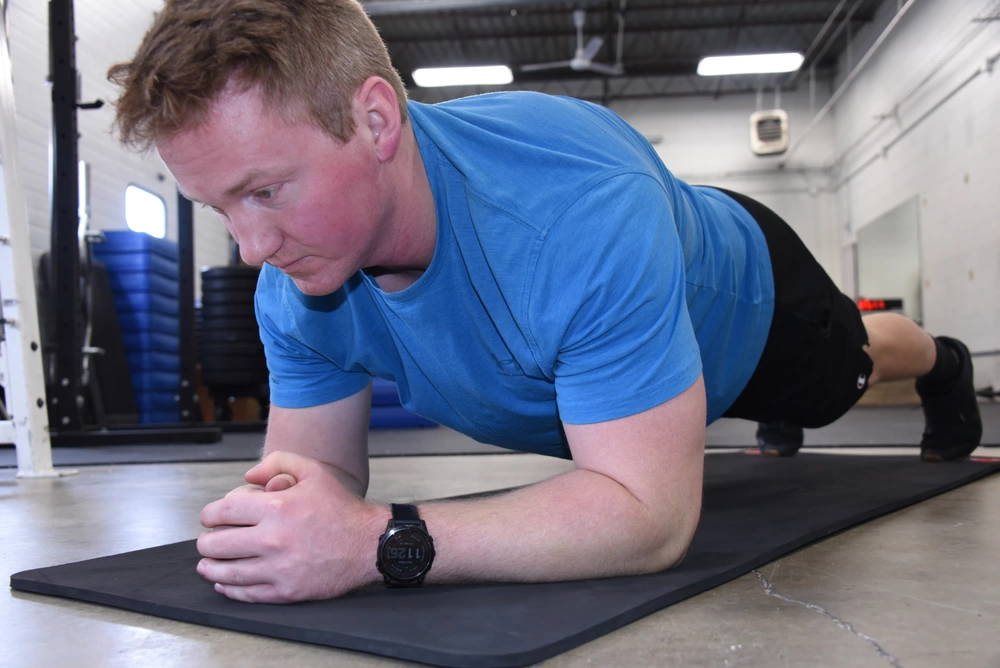
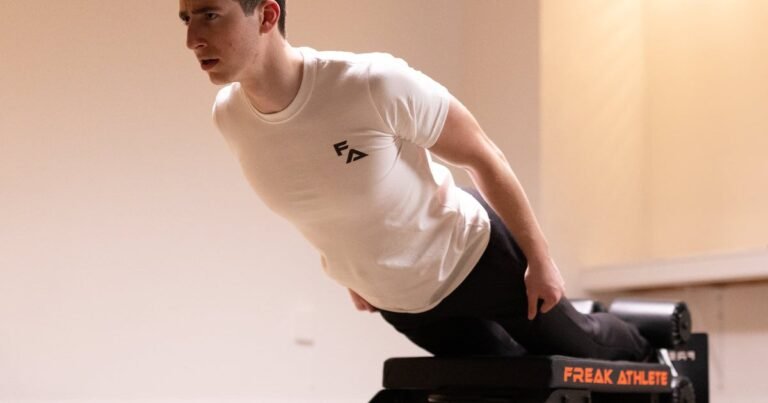
The forearm-plank photograph shows a fixed-support core exercise, not a barbell rollout. It provides a useful comparison: maintaining a controlled body line is a separate skill from sending a rolling implement farther away. If basic support positions are difficult, use an appropriately modified plank before adding the moving support.
A dropping pelvis and increasing lower-back arch suggest that the chosen range exceeds your present control. Shorten the movement instead of trying to solve the problem by reaching even farther. Bending the elbows into a rowing action or suddenly sitting back toward the heels can also disguise a range you cannot reverse consistently.
Holding the breath through a long set can make an already demanding task harder to regulate. Practise bracing while continuing to breathe, and stop to reset if you lose that coordination. A stronger burning sensation is not proof that the repetition is better. Neither is shaking or collapsing at the end of the set.
Stop for sharp pain or a new joint symptom, rather than interpreting it as evidence that the exercise is working. People with existing back, shoulder or knee problems may need individual guidance and a different starting exercise. A controlled plank does not automatically qualify someone for a particular rollout distance, and there is no universal stopwatch threshold that guarantees readiness.

Bodybuilding Shirts & Workout Gear
Bodybuilding shirts, tanks and gym gear for lifters chasing muscle, size, symmetry and the pump.

Meme I Have Abs-Olutely No Idea What I'M Doing T-Shirt
For laid-back days and bodybuilding humor: “I Have Abs-olutely No Idea What I'm Doing”.

Practice Stoicism Under The Barbell Meme – Sigma T-Shirt
Bring “Practice Stoicism Under the Barbell” humor to your next gym day.

Barbell Heartbeat Muscle Shirt Athletic Vest for Powerl Tank Top
Train hard, laugh a little, and rep “Barbell Heartbeat”.

Barbell Crossed Weights 45LB Plate Hardcore Hoodie
Keep it laid-back with a little “Classic Barbell Crossed Weights 45LB Plate” attitude.

Valentine'S Day : Heart Weight Plate Top & Gymbros T-Shirt
Heavy lifts, good laughs, and a little “Gym Valentine's Day” energy.


Heavy Barbell – Meme Shirt & Top T-Shirt
Make gym days more fun with “Heavy Barbell Powerlifting Graphic” style.

Raise The Barbell Shirt – Motivational & T-Shirt
Show some powerlifting attitude with a playful “Raise The Barbell” tee.

Shirt – Lifting Is My Therapy Bros & – Barbell Meme T-Shirt
Make gym days more fun with “Lifting Is My Therapy” style.

Vitruvian Man With A Barbell Shirt – Leonardo Da T-Shirt
Show some powerlifting attitude with a playful “Vitruvian Man With A Barbell” tee.
5. Build a progression around consistent repetitions
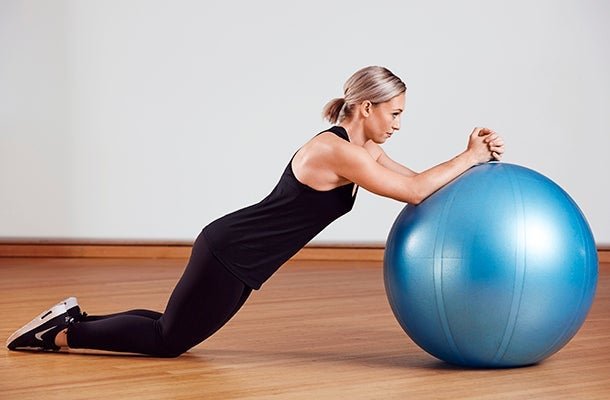
The stability-ball photograph illustrates another moving-support option. A ball changes the support height and contact surface, so treat it as its own exercise rather than assuming it is identical to a barbell. A modified plank, a short ball rollout or a short barbell excursion can each be useful when they match the control you currently have.
Here is an illustrative starting experiment for a lifter already comfortable supporting the upper body. It is not a validated optimal dose. After a brief warm-up, rehearse a short range, then try two sets of five controlled barbell repetitions. Rest until you can reproduce the movement. Finish with control remaining rather than waiting for the bar to outrun you.
Repeat the same setup on the next suitable session. If both sets remain consistent, add one repetition or a small amount of travel, not both at once. If the last repetitions become shorter or the return becomes abrupt, keep the easier version. Progress can mean a smoother reversal at the same distance, not just a longer reach.
Write down the bar, plate diameter, grip, starting point, finishing reference and completed repetitions. Include a brief note about symptoms or loss of position. That record makes a short block of practice useful: after several sessions you can distinguish improved control from a different implement or an easier range.
Keep the rollout within a broader training programme. It does not replace every other trunk exercise or guarantee visible abdominal definition. The practical goal is simpler: choose suitable equipment, move through a range you can reverse and repeat that standard well enough to make the next decision clear.