Advertising disclosure: This page includes affiliate links that may earn us a commission at no additional cost to you.
Steve Reeves helped establish an image of muscularity that still influences bodybuilding: broad shoulders, developed legs and a balanced silhouette rather than size at any cost. His association with three weekly full-body workouts is especially interesting to anyone who cannot spend six evenings in the gym. But the useful lesson is not that there is a secret 1950s routine. It is that a manageable schedule, repeatable exercises and patient progression can support a surprisingly ambitious training goal.
The physique that made bodybuilding visible
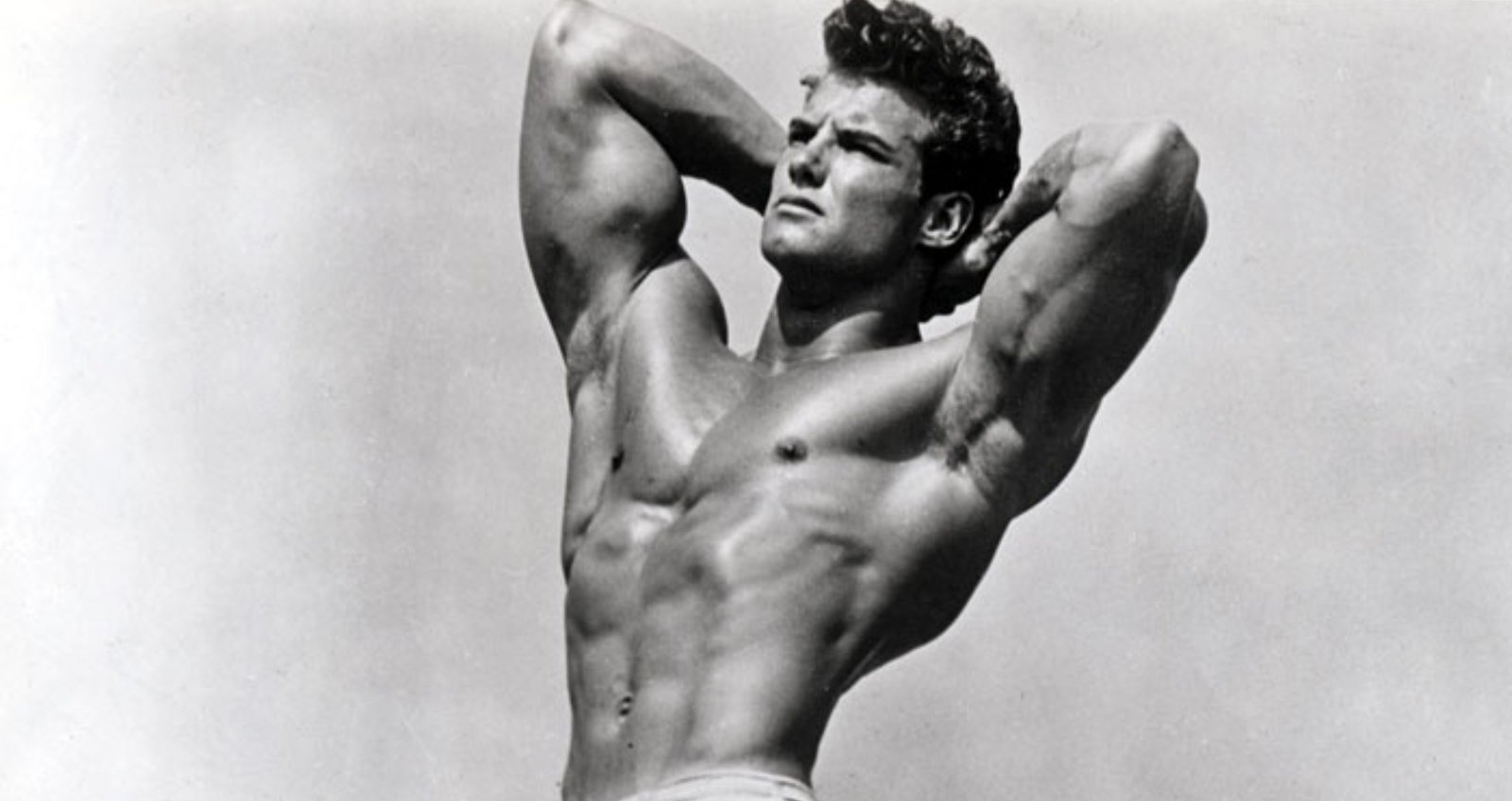
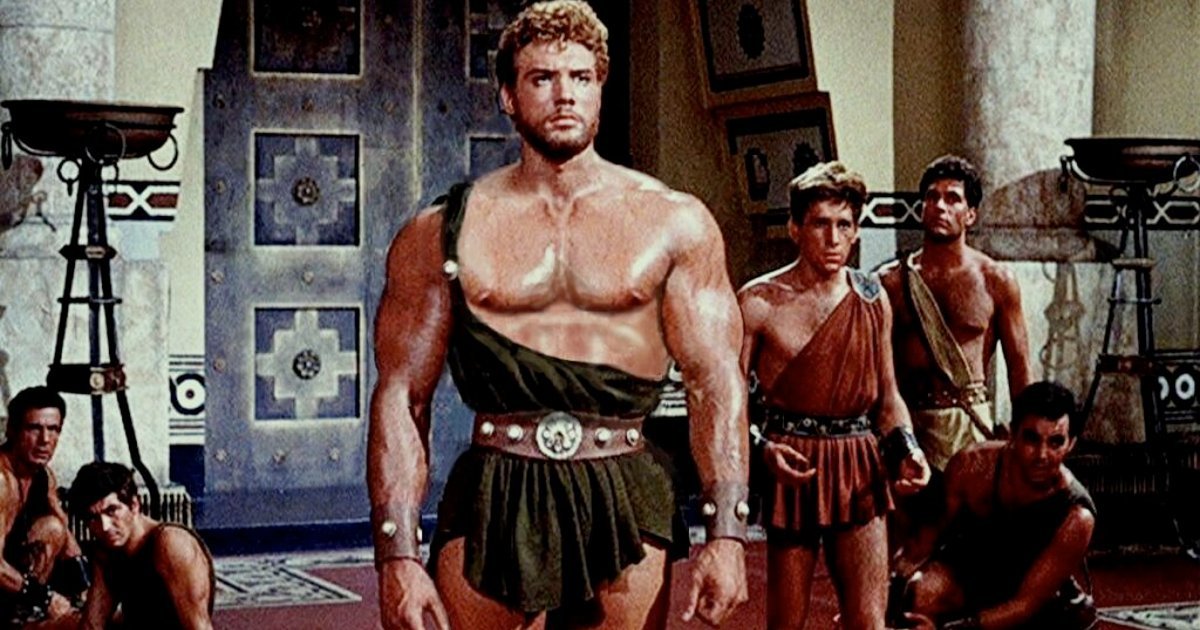
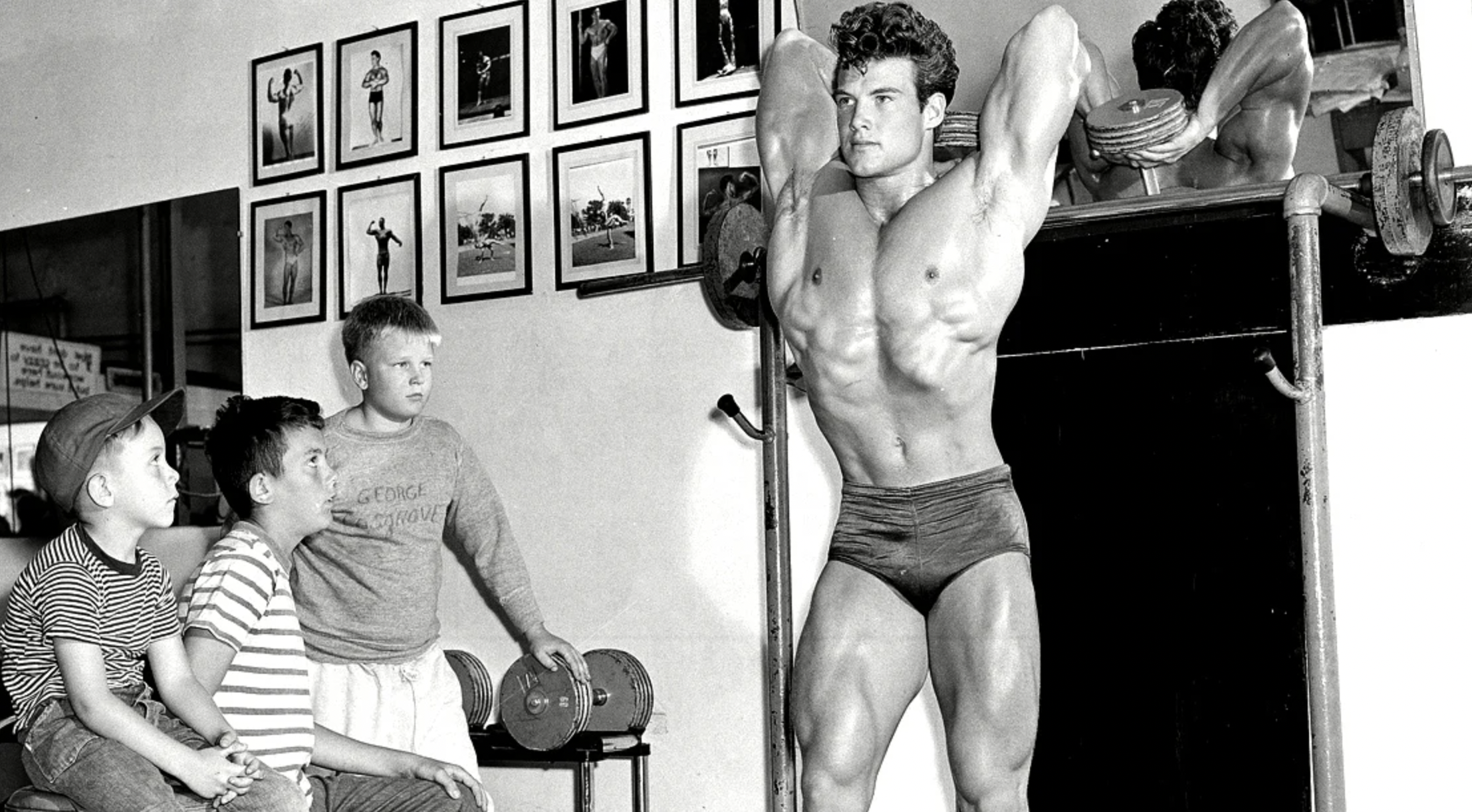
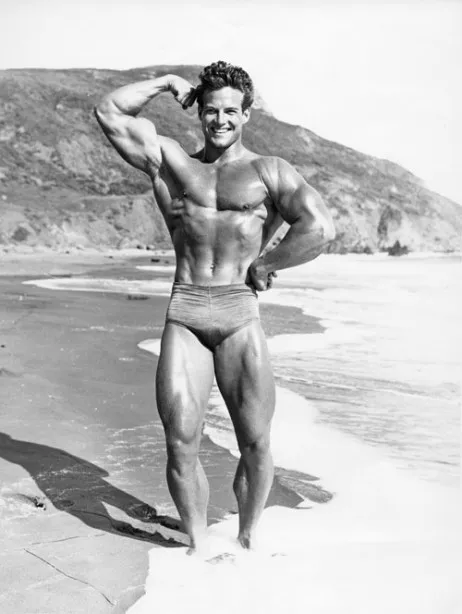
Reeves won major bodybuilding titles, including Mr America in 1947 and Mr Universe in 1950, before becoming an international film star through Hercules. The contrast between his stage photographs and movie appearances illustrates a different kind of physical goal from a modern heavyweight bodybuilding competition. The viewer notices the relationship between the shoulders, torso, arms and legs, not merely the absolute size of one body part.
Proportions are not a fixed recipe. A lifter with long arms may need more direct arm work to achieve the appearance they want, while another may find that heavy pressing already provides plenty of triceps stimulus. Broadening the upper back and developing the lateral deltoids can create a stronger visual taper without requiring an extreme diet. Training legs and calves consistently matters too: an upper-body silhouette is only part of the overall picture.
Reeves also promoted physical activity beyond lifting. His later interest in walking is a reminder that building muscle and maintaining general fitness are compatible goals. A few easy walks on non-lifting days can make a sedentary week more active without adding another demanding workout. There is no need to turn recovery into a second competitive sport.
Historical photographs are useful illustrations, not a complete training log. They cannot establish exactly how a person trained in every phase of a career, what their body composition was, or their lifetime drug history. Separate the documented career and stated training philosophy from modern interpretations of the physique.
Why three full-body sessions can be enough

Reeves is associated with a Monday, Wednesday and Friday whole-body schedule. That arrangement creates two relatively short recovery intervals during the working week and a longer weekend gap. Its strength is simplicity: each visit contributes to several muscle groups, so missing a single workout does not necessarily mean losing an entire week’s leg or back training.
Three days also make weekly volume easy to distribute. Suppose you want nine challenging sets of chest work. Rather than doing nine sets in one exhausting session, you can press for three sets each time. The first approach might suit someone who enjoys a dedicated chest day; the second gives you repeated opportunities to practice pressing while relatively fresh. Neither distribution automatically makes the sets more effective.
A 2024 synthesis of 14 studies involving 392 participants found comparable improvements in muscle size and strength from split and full-body routines when the amount of training was matched. The finding supports flexibility rather than declaring one schedule superior. It does not establish that three days is a universal optimum, or that a short modern study can explain a historic athlete’s entire development.
The limiting factor in a full-body session can be its length. Squats, pressing, rows and arm work all compete for time and attention. Instead of putting every possible exercise in every workout, give one movement priority and make the others more economical. Alternate a demanding knee-dominant lift with a moderately loaded hip hinge across the week. If your lower back is tired after hinging, a chest-supported row may be a better choice than another bent-over exercise.
For more ways to distribute the same workload, see our five-day full-body training guide. A third or fifth visit is useful only when it helps you complete good work consistently.
A modern three-day template inspired by Reeves
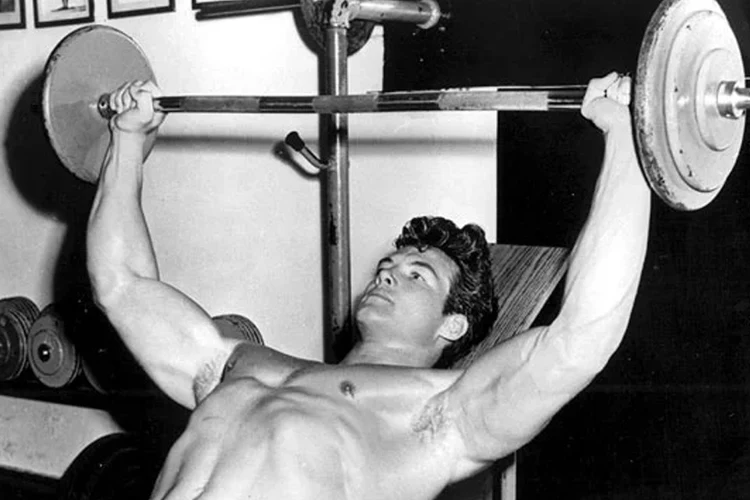
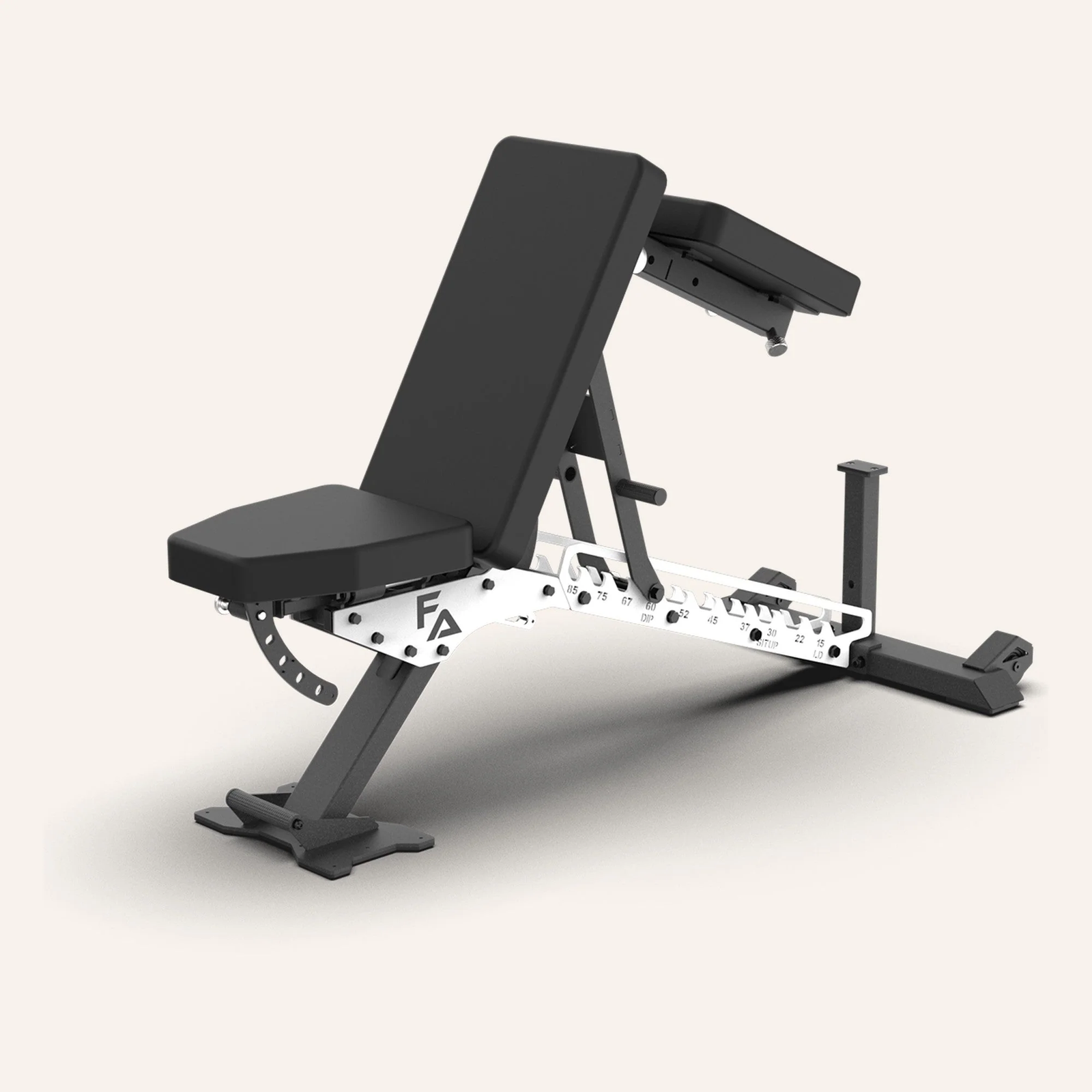
The following is an original modern adaptation, not a reconstruction of Reeves’ exact workouts. It emphasizes the basic movement patterns available with ordinary free weights and a bench. Machines and cables are equally reasonable substitutions if they make a movement more comfortable or easier to progress.
Monday — squat and horizontal press: squat 3 sets of 6–10 repetitions; dumbbell bench press 3 sets of 8–12; supported row 3 sets of 8–12; Romanian deadlift 2 sets of 8–10; lateral raise 2 sets of 12–20; calf raise 2 sets of 10–20. This gives the squat priority before the torso is tired.
Wednesday — hinge and shoulders: Romanian deadlift 3 sets of 6–10; overhead dumbbell press 3 sets of 8–12; pull-up or pulldown 3 sets of 6–12; split squat 2 sets of 8–12 per leg; curl 2 sets of 10–15; triceps extension 2 sets of 10–15. Choose a pulling variation you can control rather than chasing a difficult repetition target.
Friday — balanced hypertrophy: squat or leg press 3 sets of 8–12; incline dumbbell press 3 sets of 8–12; row 3 sets of 8–12; leg curl 2 sets of 10–15; lateral raise 2 sets of 12–20; calf raise 2 sets of 10–20. Keep the final session of the week productive without treating it as a maximum-strength test.
These are working sets, excluding warm-ups. For a beginner, two sets per main exercise and one per accessory may be a more appropriate starting dose. Someone returning after a long layoff can start even lower. The suggested rep ranges are flexible: use a load that allows consistent technique and stop most sets with roughly two good repetitions still possible.
Allow two to three minutes between demanding compound sets when needed, and around one to two minutes for easier isolation work. Shorter rests are an option, not an obligation. To save time, pair curls with calf raises or lateral raises with a seated leg exercise. Avoid pairing two technically demanding lifts if the second movement becomes noticeably worse.

Equipment Worth Exploring
Explore equipment, accessories and gear from our carefully selected range.


Rubber Hex Dumbbells
Rubber-coated hex dumbbell pairs with a stable shape for home and commercial strength training.


Grip Plates
Rubber-coated weight plates with handholds for loading barbells and machines.



Progress without turning every set into a test
The principle of increasing repetitions before load is particularly useful when a program contains many exercises. It gives every lift a clear target without forcing a weight increase every week. Imagine your dumbbell press has a range of eight to twelve repetitions for three sets. Start with a weight that produces ten, nine and eight clean repetitions. At the next session, try for eleven, ten and nine with comparable effort.
When all three sets reach twelve with the same range of motion and similar effort, move to the next available weight. If that increase returns you to nine, eight and eight repetitions, the progression is working as intended. You do not have to add repetitions to every set at once. A single extra clean repetition across the session is progress.
Large dumbbell jumps can make this system awkward. If your gym goes from 20 to 25 kilograms per hand, a sudden 25 percent increase may be too demanding. Extend the rep range temporarily or use adjustable dumbbells with finer increments. Another option is a carefully chosen equivalent exercise that has more available load increments. Do not change all the variables in the same week, because you will lose the ability to judge what actually improved.
Keep a short log of loads, repetitions, effort and anything that changes the exercise, such as bench angle or grip width. A set of twelve with a shorter range of motion is not necessarily an improvement over ten controlled repetitions at the previous depth. Track the movement you mean to improve, rather than merely collecting bigger numbers.
If progress stalls for two or three weeks, review sleep, food intake and exercise order before adding sets. When several lifts are going backward at once, a brief reduction in volume or load may be more sensible than trying harder. Persistent or sharp pain warrants stopping the aggravating exercise and seeking appropriate professional assessment. A repeatable training routine should accommodate the lifter, not the other way around.
What a classic physique can and cannot teach you
Classic bodybuilding can provide direction without becoming a rigid measuring contest. You can prioritize a muscle that seems underdeveloped by moving its exercise earlier in a session or assigning it a little extra weekly work. For example, someone whose shoulders lag behind their chest could add one set of lateral raises on Wednesday while keeping pressing volume unchanged. Observe how the extra work affects performance and recovery over the following month.
Do not assume every feature of a famous physique is achievable through a specific lift. Bone structure, limb lengths and muscle attachment sites influence appearance. Training can increase muscle size; it cannot reliably reproduce someone else’s skeleton or insertions. Likewise, vacuum practice can improve voluntary abdominal control and posing, but it is not a method of selectively removing abdominal fat or permanently narrowing the rib cage.
A sensible nutrition plan supports the goal without requiring a crash diet. Eat enough protein, maintain regular meals and use modest changes in total intake if weight gain or fat loss is appropriate. If muscle growth is the priority, gradually improving gym performance while monitoring body weight and measurements is generally more useful than trying to maintain photo-shoot leanness year-round. If fat loss is the priority, preserve resistance training and avoid forcing progression at the expense of recovery.
The most valuable lesson from Reeves’ example is the distinction between consistency and complexity. Three well-planned visits give you plenty of opportunities to practice and develop the major movement patterns. If a different split fits your life better, use it. The schedule is a tool, not an identity. Build a physique that reflects your own structure and goals, and choose a training week you can still follow six months from now.

Bodybuilding Shirts & Workout Gear
Bodybuilding shirts, tanks and gym gear for lifters chasing muscle, size, symmetry and the pump.


Hercuflex Greek God Gym | Funny Bodybuilding Vest for M Tank Top
Your gym-day look, with a playful “Hercuflex Greek God” twist.

Meme : With Greek God Sculpture T-Shirt
Rep “Premium Gym Meme” humor in and out of the gym.

Evolution Of The Stoic : Vintage Greek God T-Shirt
Make gym days more fun with “Evolution of the Stoic Lifter: Vintage” style.

Ascent Stoic : Meme Shirt & Greek God Marble T-Shirt
Make gym days more fun with “Ascent Stoic Lifter” style.

Principle Stoic Bodybuilder – Meme & Greek God Top T-Shirt
Heavy lifts, good laughs, and a little “Principle Stoic Bodybuilder” energy.

Poise Of The Stoic : Sigma Bodybuilder Greek God T-Shirt
Make gym days more fun with “Poise of the Stoic Lifter: Sigma” style.

The Brodyssey Workout Hoodie
Show off your bodybuilding humor in a laid-back “Hoodie The Brodyssey Greek Mythology” hoodie.

Hustle For That Muscle Gym Sweatshirt
Keep things casual with a little “Hustle For That” attitude.

Old School Weight Strongman – Meme Shirt & Top T-Shirt
Show some powerlifting attitude with a playful “Old School Weight Lifter Strongman Graphic” tee.