Advertising disclosure: This page includes affiliate links that may earn us a commission at no additional cost to you.
Ryan Crouser’s 2020 season is an unusually good reminder that productive training does not need to look impressive from the outside. The Olympic shot put champion lost normal access to training facilities during the pandemic, so part of his preparation took place in a small garage with a barbell, a rack and plates. Rather than trying to preserve every detail of his usual schedule, he reorganised the work around the facilities and competition opportunities he actually had.
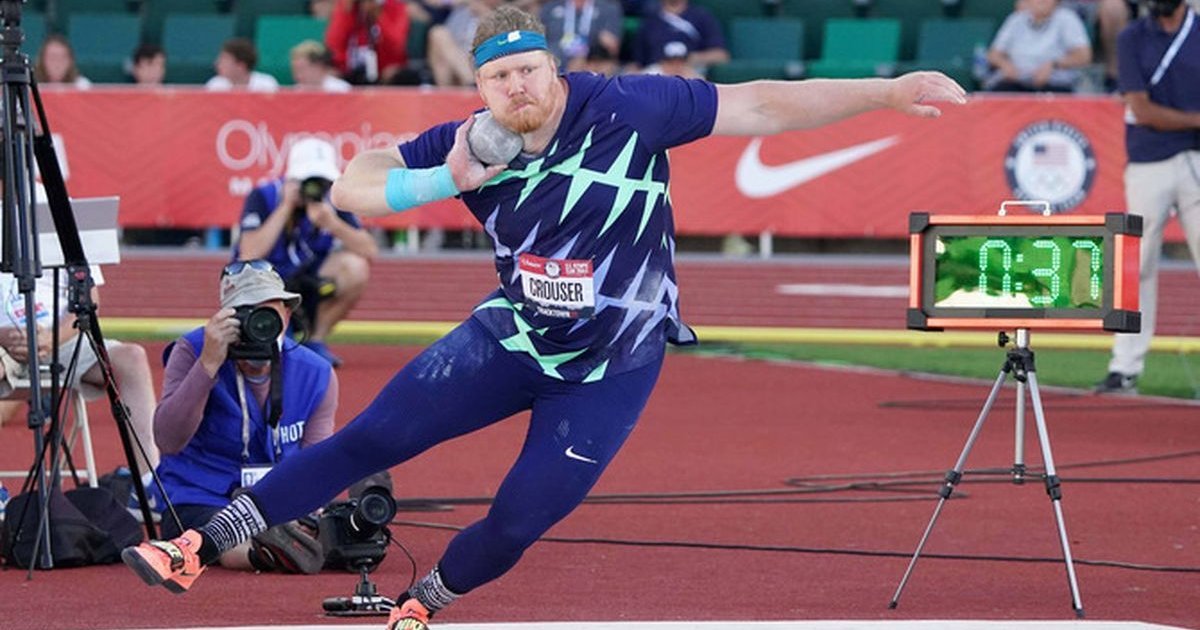
By July he had thrown 22.91 metres. Later that summer he put together four consecutive competition victories, all with winning marks above 22 metres. Those performances were not the result of one magical exercise. The interesting lesson for lifters is the relationship between a manageable strength programme, consistent technical practice and the ability to express strength quickly. A garage can help develop the first of those qualities; it is not a substitute for the others.
When a nine-square-metre garage became the weight room
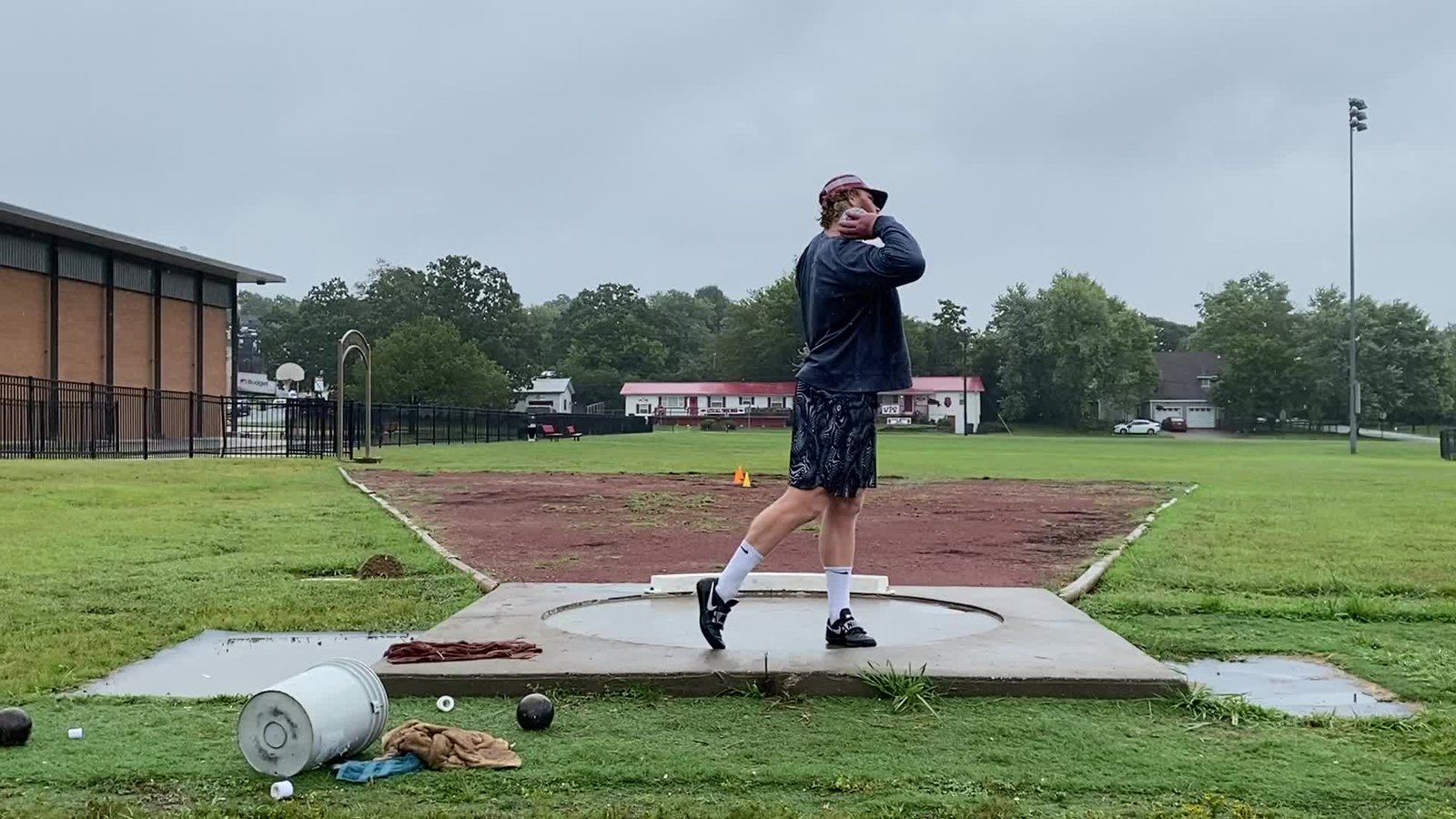
When facilities closed in March 2020, Crouser had recently relocated to Fayetteville. His makeshift weight room occupied about three metres by three metres, with approximately 240 kilograms of weights available. He also improvised ways to keep throwing and doing medicine-ball work outside the garage. The delay to the competition calendar gave him a longer opportunity to develop general physical preparation.
Crucially, he did not try to peak for every competition that might or might not happen. The extended build-up was a chance to work on the qualities that would support later performances. He was already an exceptionally accomplished thrower, and his results in 2020 cannot tell us how much of his progress was caused by the garage programme versus technical changes, recovery, years of training or the unusual calendar.
For a recreational lifter the corresponding decision is much simpler: identify what your available space permits you to do well. A rack with appropriate safeties, a stable bench, a bar and sufficient plates can support a serious strength routine. Measure clearance for the full bar, loading both sleeves, your foot position and the movement of the safety arms. A room that fits a rack on paper is not necessarily a room in which you can train safely. Check the manufacturer’s installation instructions and the floor’s suitability before choosing equipment.
Keep sport-specific throwing in a supervised, designated throwing facility. A heavy shot or medicine ball is not something to launch around an ordinary garage or public space. The point of adapting a training environment is to remove unnecessary obstacles, not to create a new hazard.
Build the strength base without turning every lift into a test
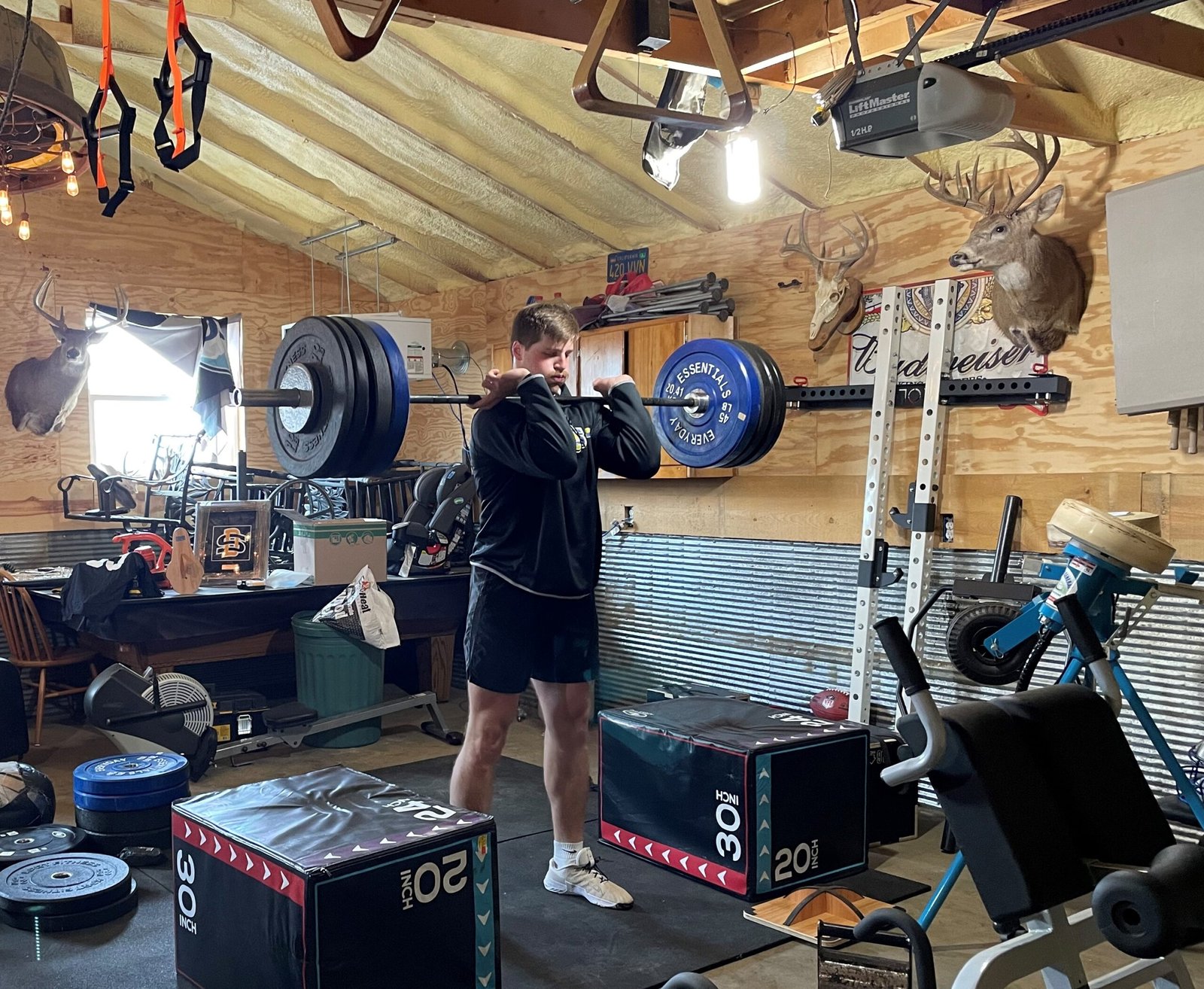
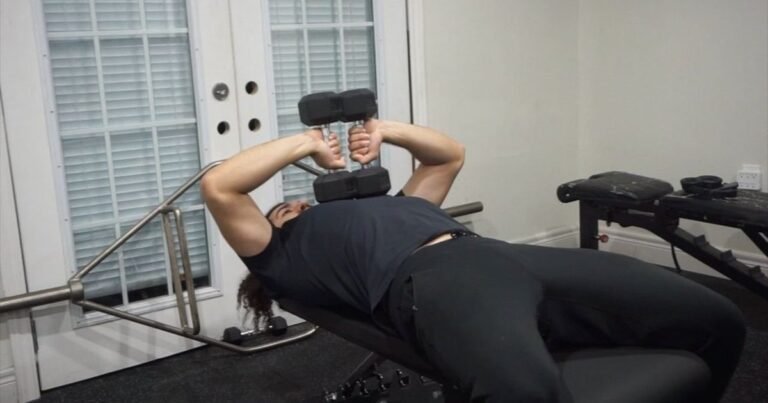
Squats and bench presses were among the lifts Crouser could perform in his improvised setup. These two movements develop different aspects of strength: the squat challenges the legs and trunk under load, while the bench press challenges the chest, triceps and shoulders. Neither replicates a rotational shot put, but both can contribute to the physical resources that an athlete brings to the sport.
There is a temptation to judge a strength session by the heaviest weight lifted. That makes sense during a planned maximal test, but it is a poor default when your main objective is to perform well in a different activity. If your final repetitions deteriorate into slow, grinding efforts and leave you unable to practise the following day, the gym session may have exceeded its useful dose.
A more sustainable starting point for an experienced recreational lifter is to work with a load that leaves about two or three repetitions in reserve. For example, use three sets of five squats, resting long enough to reproduce your technique. Select the weight from your actual capacity rather than an elite athlete’s loading. If all three sets are stable and you finish with a comfortable margin, a small increase the following week is reasonable. If depth or position deteriorates, keep the weight unchanged or reduce it.
Useful accessories do not need to duplicate the main lift. A dumbbell row can train upper-back strength, and a Romanian deadlift can train the hip hinge. Add a modest amount of single-leg work if it suits your experience and goals. Progress the exercises you can perform comfortably, instead of constantly replacing them with more elaborate variants.

Equipment Worth Exploring
Explore equipment, accessories and gear from our carefully selected range.


Foldable Wall Rack
Wall-mounted folding squat rack designed to save floor space between workouts.

Competition Plates
Competition-style bumper plates for Olympic lifts and loaded strength training.

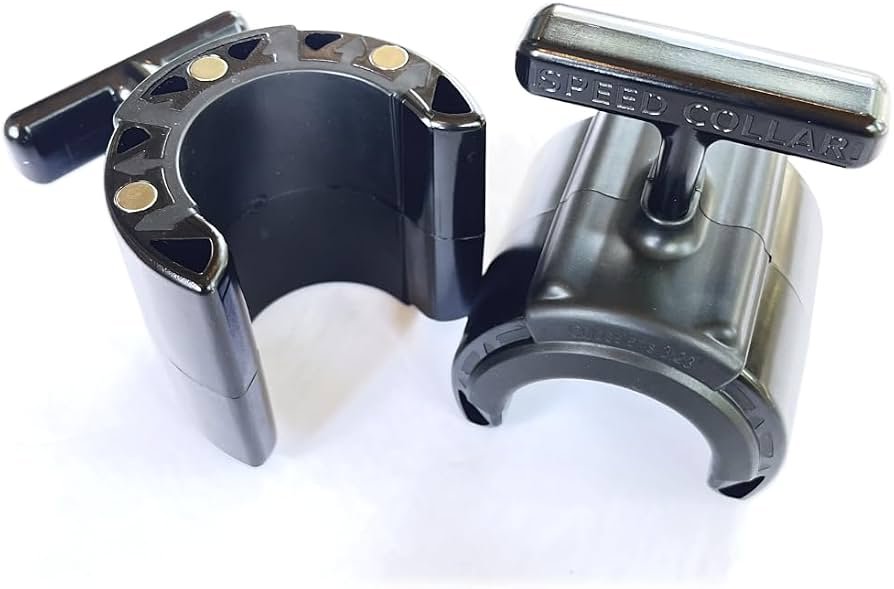
Speed Collar
Quick-release collars designed to secure weight plates on standard two-inch Olympic bars.


Why a strong athlete still needs to practise moving fast
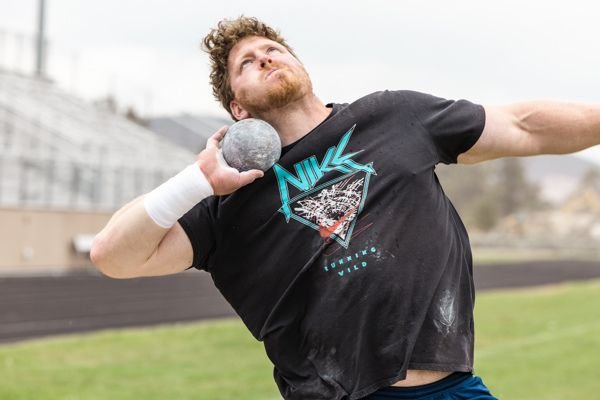
At the highest level, men’s shot put uses a 7.26-kilogram implement. The rotational technique demands balance, timing and rapid force application across the lower body, trunk and throwing arm. Strength is valuable, but the athlete also has to coordinate those segments so that the implement accelerates at the right time. A big squat alone cannot establish that timing.
This distinction applies to many sports. A basketball player needs to use force within a short jump, while a thrower must accelerate an implement within a restricted area. A lifter who has only trained slow heavy repetitions may have a substantial strength base without much practice expressing it quickly. Conversely, a person who only does explosive drills may benefit from adding a measured strength progression.
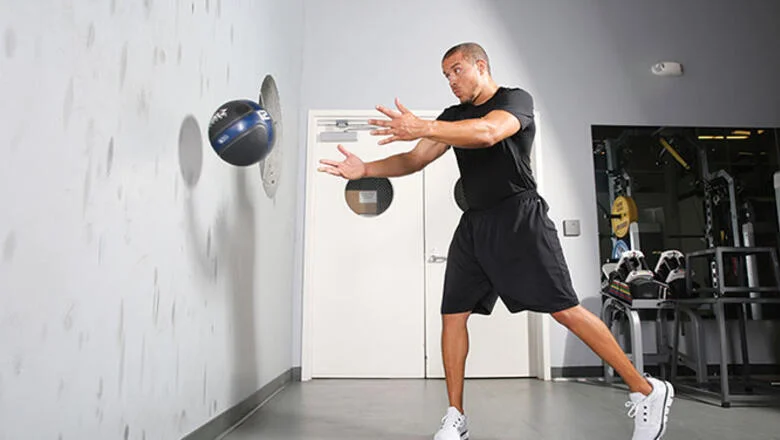
Introduce power work in a format you can control. Low-volume vertical jumps, for example, can be useful for a healthy athlete who already lands comfortably and has an appropriate surface. Perform small sets while fresh; stop when jump height or landing quality declines. If you have a history of joint pain, choose a lower-impact option appropriate to your abilities or seek guidance. Experienced athletes can also practise light medicine-ball drills in an approved training area with suitable space and a wall specifically rated for the exercise.
Do not confuse explosive intent with uncontrolled movement. A fast attempt is useful when the athlete retains control of the start, finish and surroundings. A light drill performed with purpose can have a very different training effect from an exhausting circuit. Put the most technically demanding work early in the session and use enough rest to maintain quality.
A two-day garage programme inspired by the throwing demands
The following is an illustrative programme for a recreational lifter interested in general strength and power, not Crouser’s own training log. It assumes the athlete has already learned the listed barbell exercises, is free of relevant injuries and has access to suitable equipment and a safe training area. A beginner can leave out the jumps and use lighter resistance until the fundamentals are comfortable.
- Day A — lower-body strength: warm up gradually, then perform three sets of three controlled vertical jumps if appropriate. Follow with three sets of five squats, three sets of six bench presses and two sets of eight rows.
- Day B — hinge and upper-body strength: after warming up, practise three sets of three controlled jumps or suitable low-impact power drills. Perform three sets of five Romanian deadlifts, three sets of five overhead presses or incline presses, and two sets of six split squats on each side.
Separate these sessions by two or three days. The strength movements should generally leave two or three good repetitions unused; rest for two to three minutes between harder sets, or longer if needed. Choose a press variant that suits your shoulders and equipment. The power work is optional and should never become a conditioning test. If you’re practising a sport as well, schedule the more demanding lower-body work away from your hardest technical sessions.
In week one, establish comfortable loads and a repeatable warm-up. In week two, add a small amount of load only if the previous session met your technical standard. In week three, repeat that decision rather than automatically adding weight. In week four, reduce one set from each major lift if fatigue is accumulating; otherwise maintain the previous workload and review how your performance and recovery have changed.

Powerlifting Shirts & Lifting Gear
Powerlifting shirts and gym gear for squat, bench and deadlift lifters who live for heavy numbers.

Leg Day Is Calling You Squats, Deadlifts & Gains T-Shirt
Rep “Leg Day Is Calling You” humor in and out of the gym.

Squatzilla Meme Leg Day & Squat Fans Hooded Hoodie
Show off your leg-day humor in a laid-back “Squatzilla” hoodie.

Skeleton Deadlift Decal Water Bottles & Equipment Sticker
Put “Skeleton Deadlift” gym humor on your laptop, bottle, or gym gear.


Never Skip Leg Day Chicken Legs Meme & Bros Tank Top
Bring “Never Skip Leg Day” humor to your next lifting session.

Be Happy Lift Heavy Happy Weights Smiley Face Weight Pl T-Shirt
Show some gym-day personality with “Be Happy Lift”.

Raise The Barbell Shirt – Motivational & T-Shirt
Show some powerlifting attitude with a playful “Raise The Barbell” tee.

More Plates More Dates Gym Meme | Funny Weightlifting D Sticker
A fun “More Plates More Dates Gym Meme” touch for bottles, laptops, and lockers.

I Want You To Lift Heavy – Patriotic Uncle Sam 4th of J Tank Top
Your gym-day look, with a playful “I Want You To Lift” twist.

Measure repeatability before chasing your biggest number
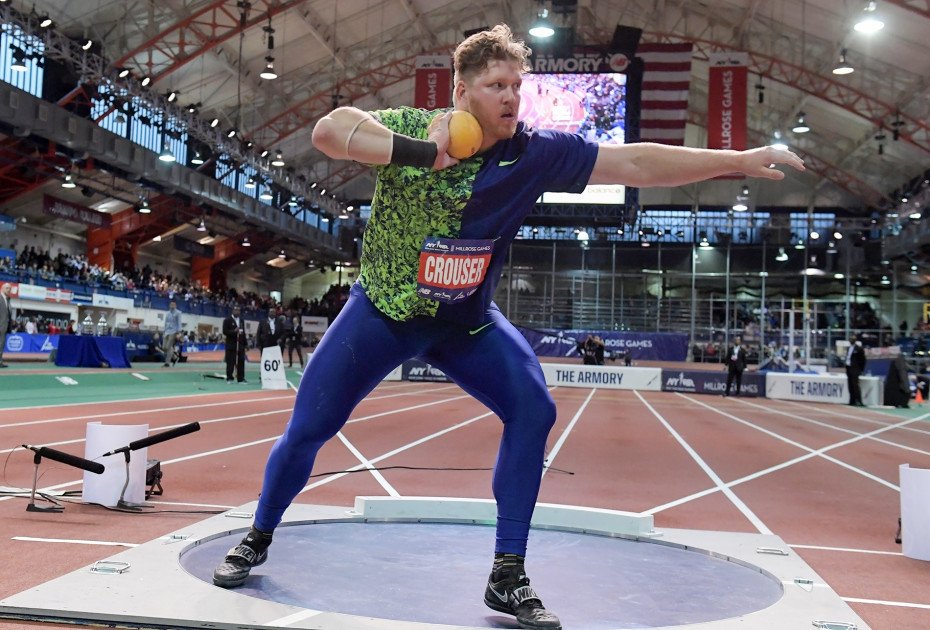
Crouser’s four-meeting stretch in late summer 2020 included 19 measured throws beyond 22 metres out of 20. That is arguably a more useful illustration of consistency than the single longest throw. In 2021 he went on to win the Tokyo Olympic final with 23.30 metres, but even that result does not establish a simple cause-and-effect relationship with his earlier garage programme.
For a gym athlete, try tracking the middle of your performance distribution rather than just the exceptional days. Note the weight, completed repetitions, estimated repetitions in reserve and any changes in movement quality. If the same working weight feels easier over several sessions, or you can use more weight at the same effort while keeping good form, you have evidence that your training is moving in the right direction.
Use similar conditions when comparing your results: the same exercise variation, warm-up, rest periods and range of motion. If you add an optional jump measure, use the same surface and measurement method. Do not compare a fatigued effort at the end of a workout with a fresh effort at the beginning and treat the difference as lost strength. If you are tired after travel, sleep disruption or a particularly hard sport session, it is sensible to adjust the day’s plan.
The wider lesson is to make the fundamentals repeatable. A compact training area may be enough for meaningful strength work, but good programming and safe equipment matter more than the size of the room. Give technical practice its own time, keep heavy lifts within a recoverable workload, and assess the trend across several weeks. That combination is much more useful than trying to recreate the numbers of an Olympic champion.