
Adding a workout to your calendar seems like an obvious way to move more. But the body has an entire day to work with, not just the hour spent exercising. Some people respond to a demanding session by taking fewer walks, sitting longer or skipping the small movements that normally fill their afternoon. Others adapt and maintain their usual activity. That distinction matters for fitness, energy expenditure and the practicality of any ambitious training plan.
A 2026 follow-up experiment in older women offers a useful complication to the simple claim that more workouts always make people less active outside the gym. Its findings suggest that activity compensation can change over months rather than behaving like a fixed daily penalty. The study did not establish a universal best training frequency, but it gives us a more interesting question: what happens to the rest of your day as training becomes routine?
Why a Workout Is Only Part of Your Activity Budget

Daily energy expenditure includes resting metabolism, the energy required to digest food, structured exercise and activity that happens outside planned workouts. The last category is often described as non-exercise activity thermogenesis, or NEAT. Walking around a supermarket, cleaning, taking stairs, standing up repeatedly and doing household tasks all contribute. A formal strength session and a ten-minute walk are different stimuli, but both occupy time and require energy.
Compensation is not necessarily laziness. A hard session can create genuine fatigue. A longer commute to a gym can replace an evening stroll. An older adult may sensibly rest more after an unfamiliar workout. Conversely, feeling stronger may make errands, gardening and stairs easier, so ordinary movement increases. These possibilities explain why adding the estimated calories from a workout to a fixed baseline is not a dependable forecast of total daily expenditure.
There is also a distinction between movement and calculated energy. A person can become more mechanically efficient at a task, and energy use can shift for reasons unrelated to step counts. That distinction becomes crucial when interpreting the 32-week trial: its NEAT estimate was derived from energy measurements, not from a wearable counting every walk.
The practical starting point is to evaluate both parts of a routine. Record what you train and pay attention to how you behave afterward. Neither a large workout-calorie number nor a high step count, on its own, tells the whole story.
Inside the 32-Week Trial: Three Different Exercise Doses

The research followed previously sedentary women aged 60 to 74 who had already completed 16 weeks of supervised combined aerobic and resistance training. Participants continued their assigned schedules through week 32. The groups were organized as one aerobic plus one resistance session per week, two plus two, or three plus three. Those labels describe weekly sessions in each modality, not necessarily six separate gym visits on six different days.
The investigators examined the second half of the program, from weeks 16 to 32. Fifty-seven women contributed body-composition, fitness and inflammatory-marker data, while 44 had the more demanding energy-expenditure measurements. Total expenditure was assessed with doubly labeled water, resting expenditure with indirect calorimetry, and body composition with DXA. Bench-press and leg-press performance provided practical strength outcomes.
NEAT was estimated by subtracting training-related expenditure from a derived activity-expenditure measure. That approach helps study the energy budget, but it cannot show whether a participant walked an extra kilometer, fidgeted more, slept differently or experienced another metabolic change. No objective step-count or accelerometer record was available to distinguish those explanations directly.
This was a continuation of an existing intervention, not a fresh randomization of 57 women into completely new routines at week 16. The results therefore describe changes during an established program, with a modest sample and limited generalizability. They do not tell us what would happen to a 25-year-old powerlifter, someone training through a severe calorie deficit or a person starting six demanding sessions without a gradual build-up.
Still, comparing three different weekly doses over an extended period provides a useful view of what happens after the novelty of training has worn off. That longer horizon is the study’s most interesting feature.

Equipment Worth Exploring
Explore equipment, accessories and gear from our carefully selected range.


FID Bench MAX
Adjustable bench offering flat, incline, and decline positions + adjustable headrest.



The Surprise: Non-Workout Energy Use Rebounded
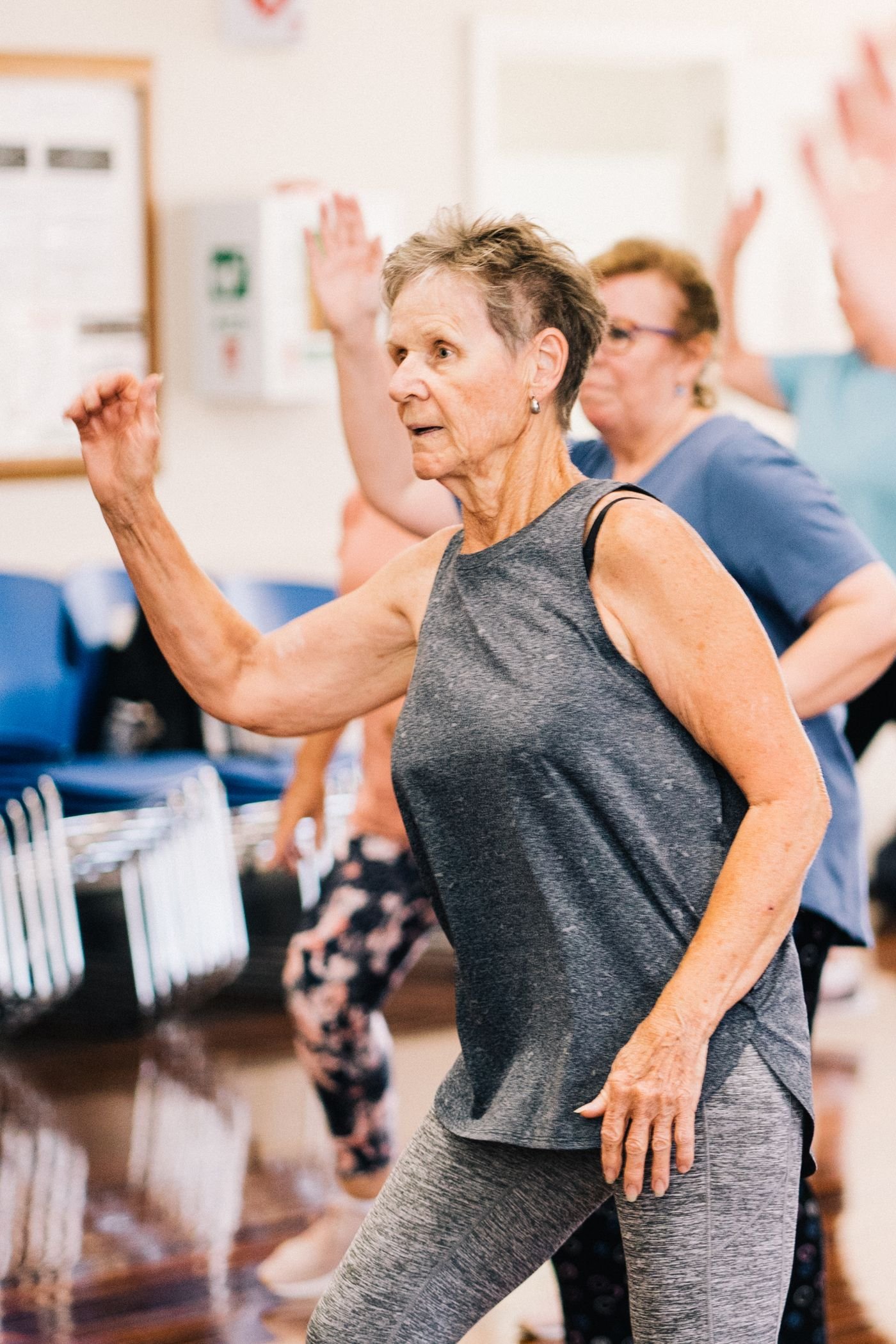
The earlier phase of this research had suggested that the highest-frequency schedule could reduce non-exercise energy expenditure during the first 16 weeks. That observation fits the familiar idea that people compensate for structured workouts by doing less elsewhere. But during weeks 16 through 32, the picture changed. Estimated NEAT increased significantly over time in the three-plus-three group, whereas the lower-frequency groups did not show the same significant within-group increase.
There is an important qualifier: the two-plus-two group still had the highest overall NEAT level. An increase within one group does not mean that group finished with the greatest absolute amount of everyday energy expenditure. The time-by-group interaction reached statistical significance, but the modest number of women with energy data makes it unwise to treat the pattern as a precise prescription.
Total energy expenditure also differed among groups, with the two-plus-two schedule exceeding both the one-plus-one and three-plus-three groups in the reported comparisons. Training-related expenditure increased over time. These findings demonstrate why adding exercise calories and assuming a straight-line rise in total expenditure is too simplistic.
A plausible explanation is behavioral adaptation. During the early weeks, unfamiliar sessions may displace daily tasks or leave people tired. As fitness improves and the schedule becomes predictable, participants may resume more of their normal activities. That explanation is consistent with the pattern, but the trial did not measure every component of daily behavior well enough to prove the mechanism.
For lifters, the lesson is not that a six-session schedule magically raises metabolism after four months. It is that a temporary reduction in spontaneous activity may not persist indefinitely. Equally, a high-volume routine that consistently leaves you exhausted should not be defended by assuming compensation will eventually disappear.

Cardio Shirts & Workout Gear
Cardio and conditioning gym gear for runners, endurance athletes and anyone who earns the sweat.

Cardio Is Calling Decline Decal Water Bottles Meme Sticker
A fun “Cardio Is Calling” touch for bottles, laptops, and lockers.

Cardio Is Hardio – Workout Meme Vest Muscle Shirt For S Tank Top
Add some cardio attitude to training with “Cardio Is Hardio”.

Anti Walking Walking Club Shirt Gymbro Meme Lifting T-Shirt
Bring “Anti Walking Walking Club” humor to your next gym day.

Anti Running Club Tee
Heavy lifts, good laughs, and a little “Anti Running Running Club” energy.

Cardio Heartbeat Hoodie
Show off your cardio humor in a laid-back “Cardio Heartbeat” hoodie.

Shirt – Don'T Quit Do It – Meme & Gains T-Shirt
Show some lifting attitude with a playful “Don't Quit Do It” tee.

Cardio Kills Gains Shirt 'S Meme & Top T-Shirt
Rep “Cardio Kills Gains” humor in and out of the gym.

Negative Cardio Review Cardio Sucks Running , Meme T-Shirt
Heavy lifts, good laughs, and a little “Negative Cardio Review” energy.

Anti Cardio Cardio Club Shirt Meme & Top T-Shirt
Bring “Anti Cardio Cardio Club” humor to your next gym day.

Straight Outta Shape – Out Of Shape Meme T-Shirt
Add a playful “Straight Outta Shape” touch to your casual rotation.
Strength Improved Without a Clear Winner for Body Composition

The study was not just about energy expenditure. Bench-press and leg-press strength improved across the training groups during the extended intervention. That is encouraging: women who maintained supervised resistance training continued to gain measurable strength even after the initial 16 weeks. The results do not, however, establish that the highest frequency was necessary for those gains.
Body weight decreased over the observation period, while the reported changes in fat mass, fat-free mass and aerobic capacity were not significant over weeks 16 to 32. Resting energy expenditure and measured inflammatory markers, including several cytokines, were also broadly unchanged. The absence of significant change is not proof that every person remained identical; it means the study did not detect a reliable average shift with its design and sample.
One mood-related comparison favored the highest-frequency group over the middle group for a depression score. That single between-group result should not be converted into a claim that more exercise sessions treat depression. Mental health depends on many factors, and this study was not a clinical depression-treatment trial.
Training adaptations are goal-specific. Stronger legs may make getting out of a chair easier even if body composition barely changes. A participant can improve a bench press without a large change in aerobic capacity. A weekly schedule should therefore be evaluated against outcomes that matter: strength, independence, conditioning, fatigue, enjoyment and the ability to repeat the plan.
For older adults, strength work also complements balance and aerobic activity. Two well-designed resistance sessions can be a valuable baseline, while additional sessions should be added because they serve a real goal and can be recovered from, not because a larger session count looks more impressive on paper.
Why Exercise Calories Do Not Translate Directly Into Fat Loss

Imagine adding three cycling sessions that a device estimates at 250 calories each. It is tempting to predict 750 extra calories of weekly expenditure, then extrapolate a monthly weight change. That arithmetic ignores potential changes in appetite, movement outside training, efficiency and other components of the energy budget. The workout estimate itself may also be inaccurate.
Earlier human research has described a constrained pattern in which total energy expenditure rises with activity at lower levels but does not continue increasing proportionally forever. Another randomized experiment comparing moderate and higher doses of aerobic exercise found that doubling prescribed exercise energy did not double fat loss. Those findings do not mean exercise fails to burn energy; they mean the body’s response is more complicated than adding a single number to a spreadsheet.
The 32-week study adds a time dimension. Estimated non-training expenditure in the highest-frequency group did not simply remain suppressed. Yet because NEAT was calculated rather than directly observed, we cannot say whether extra walking caused the rebound. We also cannot assume the same response would occur during intentional weight loss, when dietary restriction and recovery demands may alter behavior.
For a practical self-check, separate the metrics. Track resistance-training performance with weights, repetitions and perceived effort. Track aerobic work with duration, intensity and, if useful, heart rate. Track ordinary movement with a consistent device or a simple daily walking routine. Use bodyweight trends only when body composition is actually a goal, and interpret them over weeks rather than after a single hard workout.
Above all, avoid compensating for every workout by deliberately eliminating the rest of your movement. A walk after dinner is not a threat to recovery for most healthy people, and ordinary activity has benefits that extend beyond its calorie cost.
Equipment Worth Exploring
Explore equipment, accessories and gear from our carefully selected range.





Apple Watch Ultra 3
Rugged 49 mm smartwatch with cellular connectivity, GPS and fitness tracking.

How to Combine Cardio and Strength Without Burning Out

The most useful program is not automatically the one with the most sessions. Begin with a manageable weekly structure. For someone returning to exercise, two full-body resistance sessions and two moderate aerobic sessions can provide a clear foundation. Each lifting session might include a squat or sit-to-stand, a hip hinge, a push, a pull and a loaded carry or balance exercise. Use a load that allows controlled repetitions and leave room for technical consistency.
Cardio can be a brisk walk, stationary bike, swim or other comfortable activity. A session does not need to be an exhausting interval workout to count. Gradually increase duration or difficulty, especially if you are older, have been inactive or are managing medical conditions. If balance is a concern, choose stable movements and appropriate supervision. Someone with symptoms, significant limitations or a recent injury should seek individualized clinical guidance.
Consider combining modalities on the same day if that reduces travel and protects recovery days. If maximizing strength is the immediate priority, perform the technically demanding lifts while fresh. On other days, place aerobic sessions where they fit your schedule. There is no need to copy the exact one-plus-one, two-plus-two or three-plus-three research protocols to benefit from the principles.
Watch for the hidden cost of training. Do you routinely cancel walks after leg day? Are you sleeping poorly, dragging through work or struggling to progress in the gym? Those observations may signal that intensity, volume or scheduling needs adjustment. Conversely, if your ordinary movement remains stable and strength is improving, adding a modest amount of training may be sustainable.
Recovery is an input to the program, not a failure to exercise. Plan easier days, maintain adequate nutrition and keep enjoyable everyday movement rather than treating each week as a competition for the largest possible training total.
Funny Gym Shirts & Workout Gear
Funny gym shirts, tanks, hoodies and workout gear for lifters who like training hard.

Motivation – Barbell Meme Strong , Leg Day Squats & T-Shirt
Make gym days more fun with “Gym Motivation” style.

Break the Stereotype Tee
Show some gym-girl attitude with a playful “Break The Stereotype Gym Girl” tee.

Rest Day Sloth – Essential T-Shirt
Show some bodybuilding attitude with a playful “Rest Day Sloth” tee.

Consistency Is Key Stoic Greek God Marble Sculpture T-Shirt
Make gym days more fun with “Consistency is Key Stoic Greek God Marble” style.

One More Rep Shirt: Motivational & T-Shirt
Make gym days more fun with “One More Rep” style.

Lift Together Grow Stronger for Gym Buddies Who Train T T-Shirt
Show some gym-day personality with “Lift Together Grow Stronger”.

Shirt – Let'S Go Girls Strong Meme Top T-Shirt
Heavy lifts, good laughs, and a little “Let's Go Girls Strong Women Graphic” energy.

Discipline Stoic Tee
Show some lifting attitude with a playful “Discipline Stoic Sigma Bodybuilder” tee.

I Want You To Do One More Rep – Uncle Sam Patriotic Ves Tank Top
Bring “I Want You To Do One More Rep” humor to your next lifting session.
GymTok – TikTok Parody Peach Booty Training Graphic for T-Shirt
A t-shirt featuring the GymTok – TikTok Parody Peach Booty Training Graphic for Gym Girls artwork, bringing lifting-inspired humor and distinctive gym graphics to your everyday gear.
A Four-Week Check: Train, Move, Recover, Reassess

You do not need laboratory equipment to learn whether a new schedule fits your life. A four-week self-audit can reveal practical patterns, although it cannot measure NEAT or total energy expenditure with research-grade accuracy. Keep the same step-counting device, if you use one, and compare similar weekdays rather than obsessing over individual daily numbers.
Week 1: Establish the baseline. Keep two strength sessions and two comfortable aerobic sessions. Record the exercises, sets and repetitions, and note your usual walks, sleep and afternoon energy. Avoid changing your diet and training intensity dramatically at the same time if your goal is to understand the schedule.
Week 2: Make one small change. Add five to ten minutes to one or two aerobic sessions, or a modest amount of resistance-training volume, but not both at once. Compare the following day’s energy and ordinary activity with week 1. A temporary dip is information, not proof that your metabolism has slowed.
Week 3: Protect everyday movement. Keep the workouts consistent and schedule a short, easy walk or another enjoyable activity on days when you tend to sit more. If the plan feels too demanding, reduce the extra training before forcing a step target. Good programming leaves enough capacity for the rest of life.
Week 4: Review the trend. Did your strength improve? Were the sessions completed? Did you maintain normal movement, sleep and motivation? If the answers are mostly yes, consider holding the plan rather than adding another session immediately. If progress stalls while fatigue rises, make the week easier or redistribute the workload.
The central finding is a reminder to think in months, not just minutes. In a small group of older women, non-training energy expenditure behaved differently after the program had become familiar. The trial does not establish a universal ideal exercise dose, but it supports a practical principle: build a routine that improves fitness without consuming all the energy you need to live an active day.